
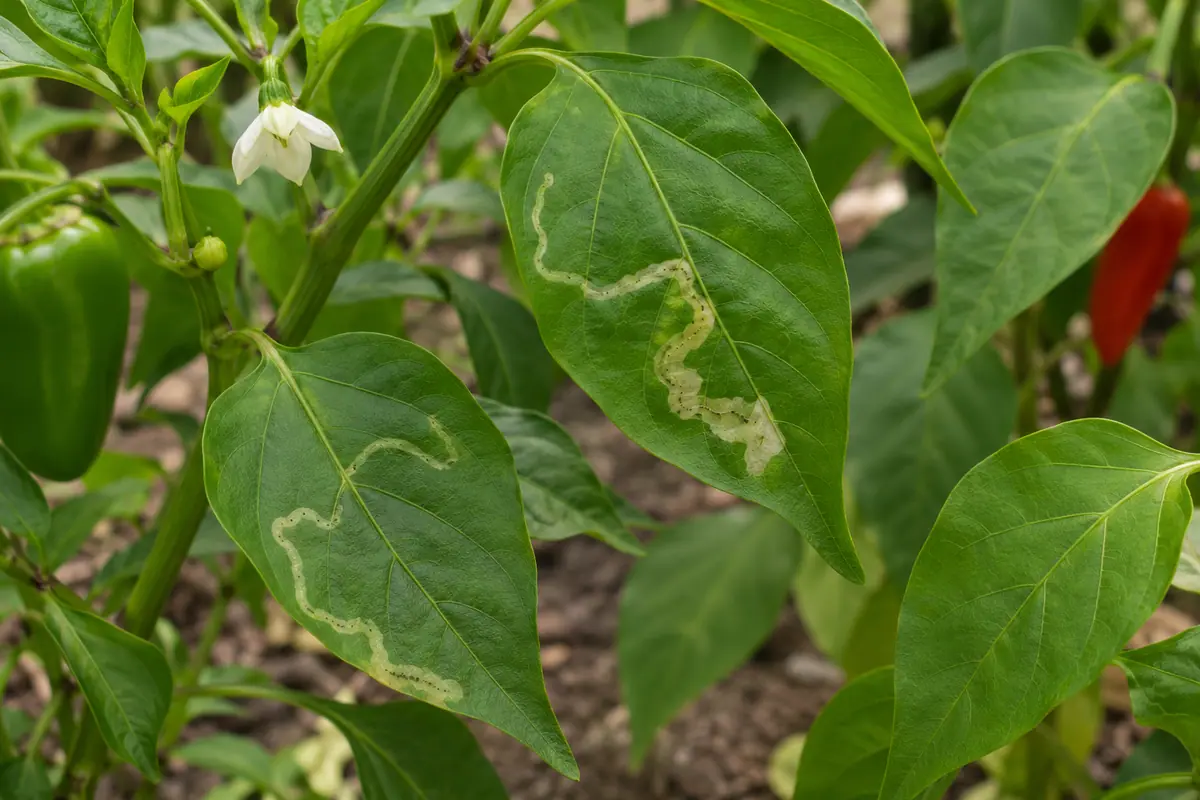
Leaf miners feed inside leaves, leaving pale winding trails or irregular patches between the upper and lower surfaces. Those marks can look alarming on spinach, beans or a favorite shrub. Before cutting foliage or choosing a spray, find out which plant is affected and whether a living larva is still feeding.
A dry brown mine can remain long after the insect has left. Spraying that scar will not restore its green tissue. Fresh injury on a small crop grown for edible leaves deserves a different response from several old marks on a vigorous mature plant. Start with a hand lens, one suspect leaf and a look at the newest growth. The shape of the tunnel helps narrow the problem, but the host, the stage of the insect and the amount of useful foliage left determine what to do next.
Check the host, then check the mine
- Winding trail or hollow blotch: inspect against light for a larva and droppings. Shape alone does not identify the species.
- Old empty mines, strong new growth: monitor. The scar records earlier feeding.
- Active mines on spinach or chard: remove a few infested leaves or crush isolated larvae, preserving healthy foliage.
- Planning the next crop: cover a clean planting before adults lay eggs. Pupae already underneath can defeat the barrier.
Key Takeaways
- Identify the host before assigning a miner species.
- Inspect fresh mines for living larvae before choosing control.
- Keep healthy foliage when removing a few infested leaves.
- Install insect mesh before egg laying on clean ground.
- Judge improvement on new leaves, not permanent old scars.
Table of Contents
Leaf Miners Eat Tissue Between the Leaf Surfaces
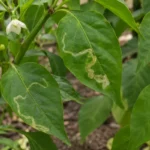
A miner consumes the inner tissue without immediately removing the whole leaf surface. The result can be a thin, papery pocket, a pale trail or a broad discolored area. Hold the leaf toward light and the damaged tissue may look translucent against the surrounding green. Tiny dark specks inside are frass, the insect’s droppings.
Leaf mining is a feeding habit shared by several insect groups. Larvae of flies, moths, sawflies and beetles can make mines. These different groups appear in Colorado State’s leafmining reference; calling every miner a small fly gives the wrong life cycle for hosts such as citrus or birch.
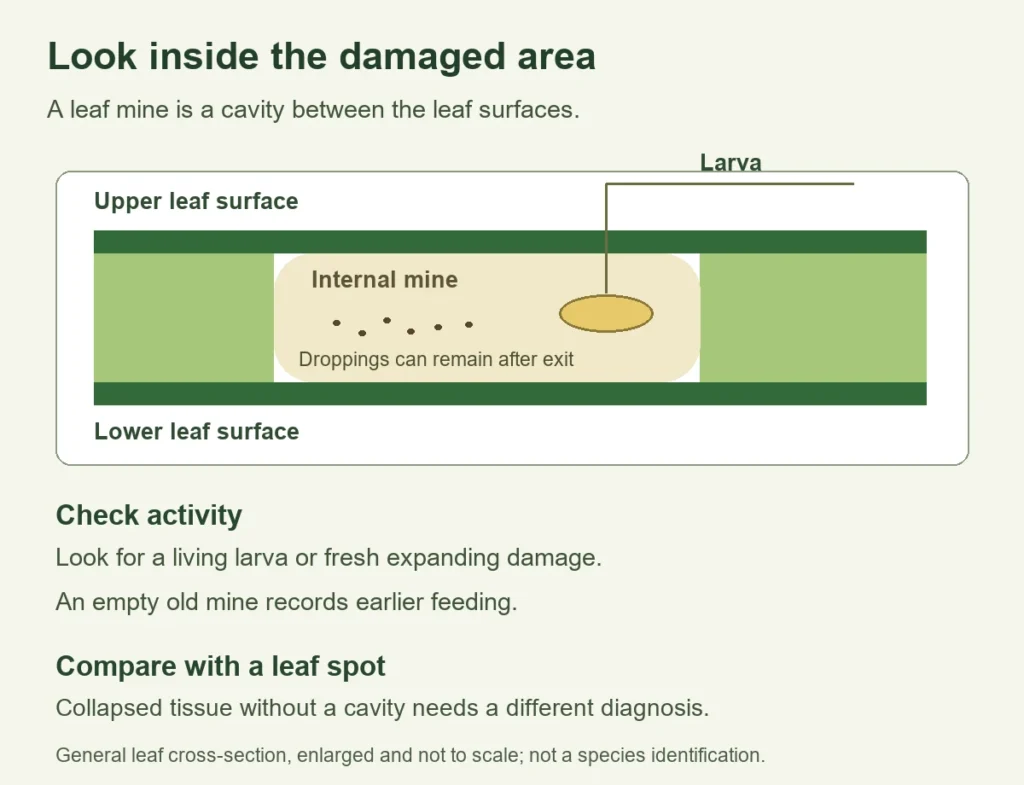
The remaining leaf layers can hide an insect from an ordinary surface spray. They also preserve the damage after feeding ends. Keeping the plant growing well helps it produce replacement leaves; fertilizer cannot refill an eaten tunnel.
Compare Winding Trails, Blotches and Flat Dead Spots
A serpentine mine winds across the blade like a narrow pale line. It often broadens toward the end as the larva grows. A blotch mine occupies a wider irregular patch. Some insects begin with a narrow passage and finish with an enlarged pocket, so both patterns on one leaf do not necessarily mean two pests.
Some blotches pucker upward as tissue dries. These tent-like mines occur on particular host plants; a blister on boxwood needs its own inspection. Mine shape is a clue to combine with the plant, not a shortcut around identifying it.
Test one expendable damaged leaf if the distinction is unclear. Gently separate the suspect area with a fingernail or fine tool. A hollow pocket containing frass or an insect fits mining. Collapsed tissue without a tunnel calls for a different investigation, including leaf spots and environmental injury. A brown mark by itself does not prove either an insect or a fungus.
Photograph the whole plant as well as the leaf. Include the upper and lower surfaces and an undamaged leaf for comparison. A sharply cropped patch can conceal the host and the pattern across the plant, both of which a diagnostic service needs.
Find Current Feeding Before Treating an Old Scar
Choose a relatively fresh pale mine and hold it toward daylight. Look along the broadening end for a small pale larva. A hand lens helps with thin leaves; thick foliage can conceal the contents even when something remains inside. The absence of a visible insect on one leaf does not establish that the whole planting is clear.
Separate signs of present feeding from evidence left behind. An empty cavity, old frass and brown dry tissue can all remain after departure. A larva found in a fresh mine gives firmer evidence of activity. Compare the newest leaves with older marked ones during later checks.
Label a suspect leaf or photograph it from the same angle. Note the crop, approximate leaf age, mine pattern and what you found inside. No universal number of millimeters of expansion per day establishes activity; temperature and the kind of miner affect development. Fresh marks on previously clean leaves are more informative than yesterday’s brown patch looking darker.
Large brown blotches on birch often appear after the larvae have completed feeding and left. That distinction changes the value of treatment. Removing or spraying an evacuated mine cannot kill the insect that made it, and healthy new foliage does not need to match the appearance of old scars.
Match the Response to Plant Age and Harvested Parts
Ask what the damaged leaf contributes. A spinach leaf is the harvest. A leaf on a beet grown for its root supplies the plant even if its appearance is imperfect. Several mines may reduce the quality of edible greens without threatening an established root crop. University of Minnesota’s home-garden guidance makes this distinction explicit.
Young plants have less spare leaf area. Repeated new mines across a small transplant deserve closer attention than a few tracks low on a vigorous bean vine. Consider remaining green tissue, growth and the rate of new injury together; there is no single backyard mine count that fits every crop.
| Plant situation | What to check | Proportionate response |
|---|---|---|
| Spinach, chard or beet greens for leaf harvest | Active larvae and healthy leaves remaining | Remove limited active infestations; protect the next clean planting. |
| Beets grown for roots or mature beans | Plant vigor and fresh injury on newer leaves | Monitor light injury; avoid stripping useful foliage. |
| Small seedlings with repeated new mines | Remaining green area and growth suppression | Seek host-specific help if selective removal would leave too little foliage. |
| Healthy mature birch with old brown blotches | Whether larvae have left and the tree is otherwise sound | Usually monitor; do not remove the canopy for appearance. |
| Boxwood blisters or young citrus flush | Host-specific insect, stage and ongoing damage | Use a host-specific diagnosis; vegetable timing does not transfer. |
In spinach, protect enough healthy leaf growth before harvest to keep the plant productive. For beans, distinguish injury to a small seedling from old scars after the plant has reached flowering and pod development. The same visible track occupies a very different share of the canopy.
Severe leaf loss on fruiting crops can also expose fruit to sun. Check the remaining canopy and exposed fruit as well as damaged leaf surfaces. Declining growth, widespread fresh mines or uncertainty about the pest justify help from a local extension service.
How to Get Rid of Leaf Miners Without Stripping the Plant
For a small number of active vegetable mines, pinch the affected area to crush a located larva, or remove the infested leaf. These direct methods take priority over routine spraying in Maryland’s vegetable guidance. Inspect first: squeezing a dry empty scar changes nothing about the current population.
Remove only what the plant can spare. If a young chard plant has two mined leaves and several sound ones, selective clipping can remove feeding larvae and retain a working canopy. If nearly every leaf is affected, stripping the plant may do more harm than leaving some damaged green tissue. Consider protecting a later clean sowing.
Check leaf undersides too. Spinach and beet miners can lay small whitish eggs there, often in groups. Confirm them in the context of the host and damage before crushing them. Not every pale speck beneath a leaf belongs to a miner.
Keep removed leaves containing live larvae out of the planting. Leaving them beside the crop can allow development to continue. Follow local disposal options, and do not assume an ordinary cool compost pile will kill every surviving stage.
Preserve the natural enemies already working in the garden. Tiny parasitoid wasps can attack vegetable miners; broad sprays may remove those controls and allow more mines later. This disruption can explain outbreaks following insecticide use, as documented by UC IPM. A broader garden pest-control routine should start with confirmed damage and the least disruptive suitable response.
Exclude Egg-Laying Adults Before the Next Infestation
Fine insect mesh works by preventing adult access to a clean crop. Install it before egg laying, secure the edges and inspect for gaps after wind or harvesting. Opening a side and leaving it loose defeats the exclusion, even if most of the bed remains covered.
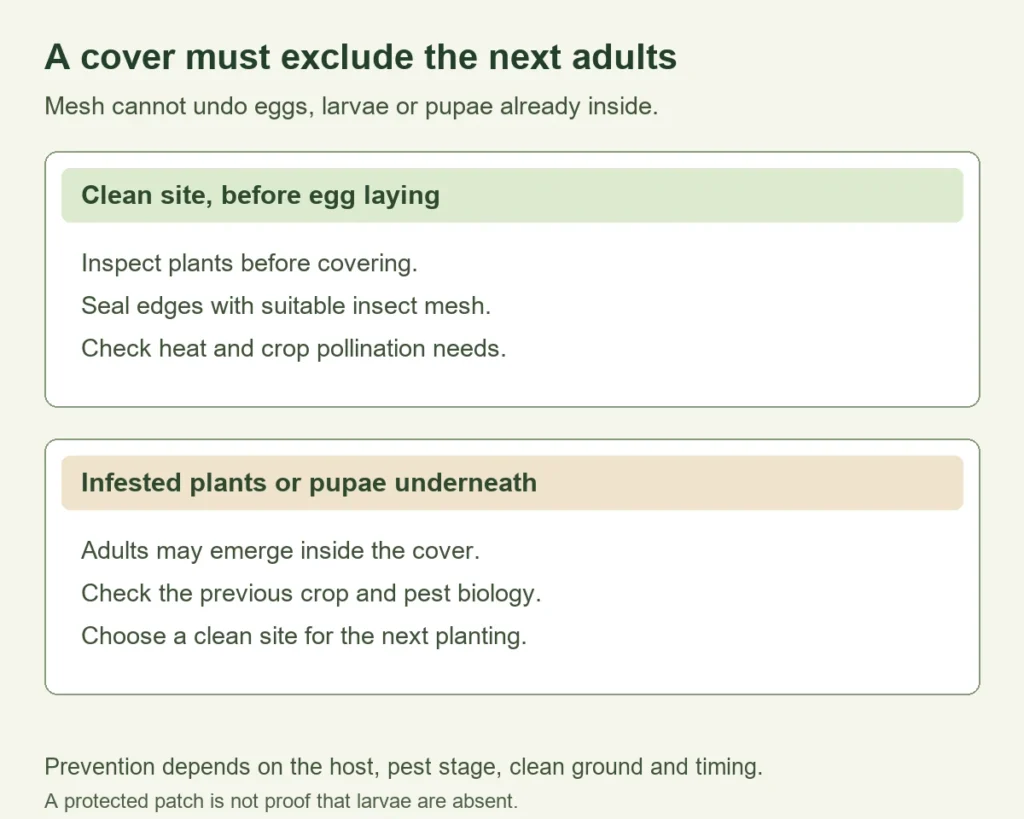
Check the previous crop before covering. Pupae of common vegetable miners can remain in the soil and later produce adults inside a neatly sealed enclosure. Netting over a recently infested site may fail for this reason, as cautioned in Minnesota’s guidance. Move the next susceptible planting to a clean area where possible; inspect any transplants before bringing them under the mesh.
Manage the covered crop as it grows. Check heat buildup and access for pollinators when the crop requires them. Keep growing leaves from lifting loose edges. Protection from flying insects is useful only if the enclosure also permits the plants to grow normally.
Remove infested host weeds and crop residues where they sustain the particular miner. The relevant host plants vary, so clearing every flower around the bed is unnecessary and can remove resources for beneficial insects. Likewise, routine soil disturbance is not a universal remedy: some miners remain inside leaves or plant bases instead of pupating in open soil.
Read Allium, Boxwood and Citrus Symptoms Separately
Rows of pale punctures on garlic or leeks
Allium leafminer females can leave regular rows of whitish punctures on onion, garlic and leek leaves. Larvae may travel into the lower plant, so checking only for a winding trail high on the blade can miss the problem. Superficial scarring from another pest needs a different diagnosis.
Adult flight periods vary by region. Maryland’s spring and fall cover schedules are local examples, not national dates to copy. When planting garlic in fall, check local allium-leafminer alerts before choosing the cover timing. Infested planting material or surviving stages inside the crop can undermine even an early cover.
Blistered boxwood leaves
Boxwood leafminer larvae can overwinter within the leaves. That makes foliage inspection more useful than applying a vegetable-bed soil remedy. Blistered undersides, leaf drop and the condition of nearby shoots help distinguish it from other boxwood problems.
Targeted removal may reduce infested foliage when timed for the pest and the shrub’s condition. Do not transfer a pruning percentage from an established shrub to every young or stressed boxwood. Large losses, suspected disease or uncertainty about the insect warrant a local diagnosis before further cutting.
Curled tender citrus leaves with a dark trail
Citrus leafminer is a moth. Its mines on young flush often carry a dark thread of frass, and damaged leaves can curl. UC IPM distinguishes this pest from the flies responsible for many vegetable mines.
Mature citrus often tolerates the cosmetic injury. Repeated hard pruning to remove every marked leaf encourages new tender flush that is vulnerable to further mining. Assess the tree’s age, vigor and fresh growth before turning a few curled leaves into a repeated pruning cycle.
Check Pest Stage and Label Before Considering a Spray
Ordinary contact sprays have difficulty reaching a larva protected within leaf tissue. Some translaminar or systemic products can reach particular internal feeders, so the answer is not that every pesticide fails. Effectiveness depends on the miner, crop, active stage and product. None restores consumed tissue.
A product’s natural origin does not establish that it spares useful insects. Some home-garden advice describes spinosad as comparatively low impact; UC IPM’s lettuce guidance specifically records harm to parasitoids and beneficial syrphid flies. Treat that as a reason to examine non-target effects and the actual label, not as a general-purpose spray recommendation.
If treatment becomes justified, verify that the current product directions cover the crop, pest and site. Follow application limits, protective equipment, reentry and harvest instructions. Do not transfer commercial field rates to a household sprayer or add a homemade soap mixture.
Photograph clean new leaves before intervening. During later checks, record new mines and plant growth. Yellow sticky traps may indicate small flying adults, but a trapped fly does not identify the contents of a damaged leaf. Fresh foliage and confirmed pest activity remain the useful checks.
Conclusion
Choose one fresh suspect leaf and check what is inside before treating the whole planting. Keep useful foliage, remove isolated active larvae when practical and protect the next crop before adults arrive. Leave an empty old mine out of the treatment decision. What appears on the next clean leaves will tell you more than whether yesterday’s scar is still visible.