
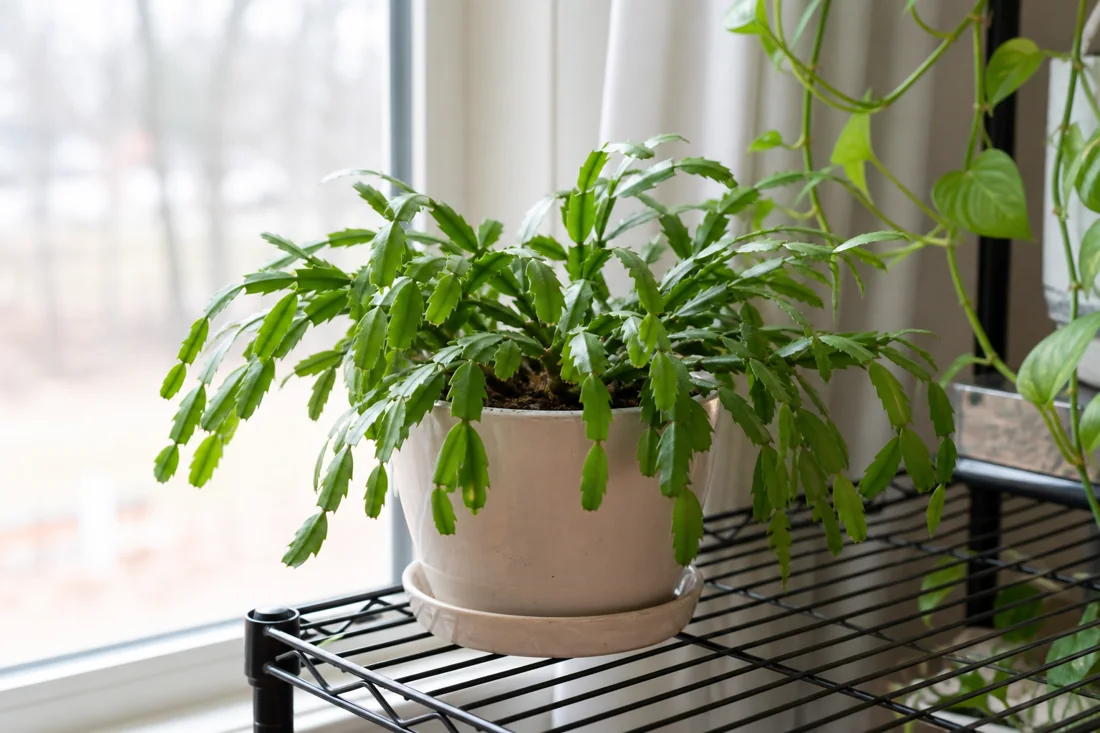
Christmas cactus no flowers usually means the plant never received the cool nights, long dark periods, or dry-enough rest that push stem tips into bud formation. A healthy plant can grow glossy new segments all year and still miss bloom season if evening lamps, warm rooms, heavy watering, or late feeding keep it in growth mode. The first diagnosis is simple: no buds at all is a trigger problem; buds that form and fail to open is a handling, water, heat, or movement problem.
Do the diagnosis before changing everything. Look at the stem tips, the room temperature after sunset, the nearest lamp, and the watering pattern from late summer into fall. A Christmas cactus usually misses bloom season because the conditions around it keep pointing toward growth, warmth, or interrupted nights.
Bloom Reset Diagnosis
Choose the branch that matches your plant before changing care.
Key Takeaways
- Separate missing buds from buds that fail.
- Give cool nights before expecting flower buds.
- Block evening lamps for six to eight weeks.
- Water lightly during the rest period.
- Keep the pot still once buds appear.
Table of Contents
Christmas Cactus No Flowers: No Buds vs. Buds Not Opening
No buds means the plant did not enter its bloom program. Buds that stall, shrivel, or drop mean the program started and then the plant hit a stress point. That split matters because the fixes are opposite in timing. Missing buds need a reset period. Bud drop needs calm conditions after buds are already visible.
Many plants sold as Christmas cactus are holiday cacti, including Thanksgiving cactus types with pointed stem teeth. The bloom rules are close enough for home care: short days, long nights, and cooler temperatures help trigger buds. The exact species label matters less than the plant’s behavior. Healthy green segments with no tip swelling mean the trigger has not happened yet.
The Schlumbergera truncata plant profile is useful for recognizing the segmented growth habit often sold in the holiday-cactus group. Flower buds form at the segment tips, so check the newest outer ends first. Tiny buds look like small rounded nubs, often pink, red, or pale green before they lengthen.
| Symptom | Likely problem | First correction |
|---|---|---|
| Healthy green plant with no buds by late fall | No bloom trigger | Start cool nights and long dark periods |
| Lots of new flat segments, no bud swelling | Too much growth-mode care | Reduce fertilizer and avoid warm nights |
| Small buds appear, then shrivel | Water swing, heat, draft, or movement | Keep moisture even and leave pot in place |
| Buds form on one side only | Uneven light or temperature | Do not rotate after buds form; adjust next season |
| Plant wilts with wet soil | Root stress | Check drainage before watering again |
A normal houseplant care rhythm keeps foliage alive. Holiday-cactus bloom depends on a seasonal change. The same shelf that keeps pothos growing may keep Christmas cactus too warm and bright at night for bud initiation.
The Cool-Temperature Requirement
Cool nights are one of the fastest ways to tell the plant that bloom season is coming. Warm rooms keep the stems in leaf-making mode. A plant sitting near a heat vent, above a radiator, on a warm appliance, or in a room that stays warm late into the evening may produce new segments without forming buds.
A common bloom range is cool and safely above freezing. Flower buds form more reliably under cooler temperatures and short days, which Iowa State University Extension identifies as central conditions for Christmas cactus that does not bloom well. For a home reset, aim for nights around 55-65 degrees F if you can manage it. Cold windowsills that approach freezing can damage tissue.
Use a real thermometer for two evenings. A room can feel cool to you and still sit too warm for a bloom reset. The most useful reading is near the plant, after the heat has run and the room has settled for the night. A bright kitchen or living room often stays warmer than a spare room, enclosed porch, or cool bedroom.
The plant still needs bright indirect light during the day. Darkening the plant all day can weaken it. Cool nights and bright days create the signal: store energy in daylight, shift toward buds during the long night.
How Much Uninterrupted Darkness It Needs
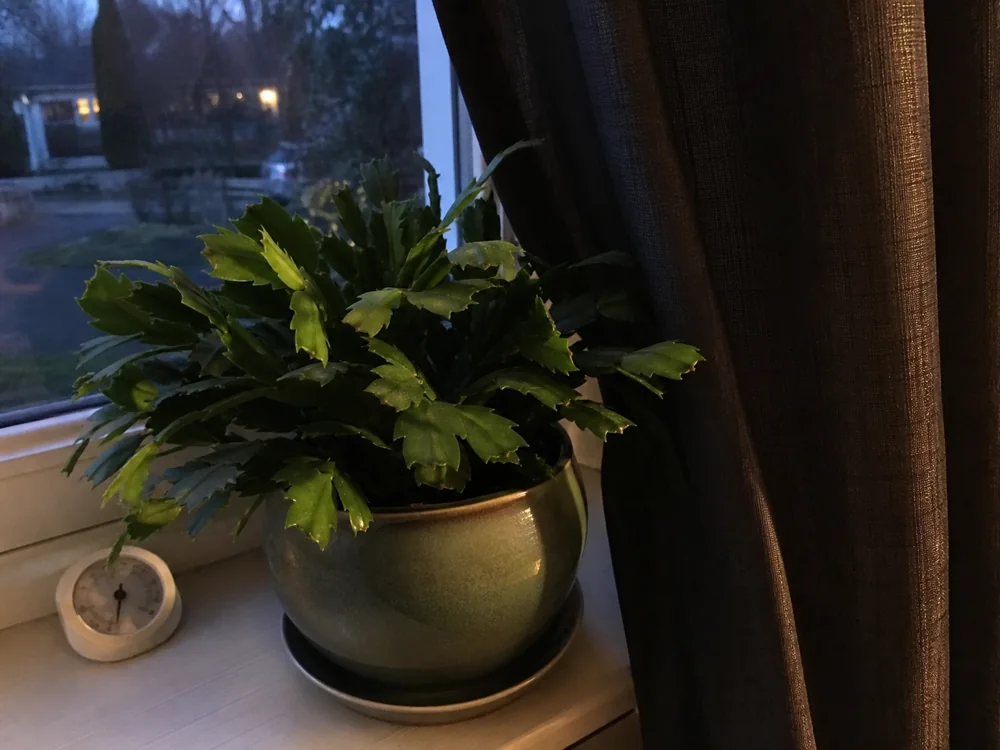
Darkness has to be uninterrupted. A plant can receive plenty of nighttime hours on the calendar and still fail if a lamp, television, hallway light, porch light, or grow light reaches the stems. Even brief evening light can interrupt the long-night signal when it happens night after night.
Give the plant 12-14 hours of darkness each night for about six to eight weeks. A closet can work if the plant comes back to bright indirect light each morning. Moving it twice a day creates mistakes. A better setup is a cool room that naturally goes dark, a windowsill behind a curtain, or a box placed over the plant at the same time each evening and removed each morning.
Check darkness from the plant’s point of view. Stand where the pot sits after the room lights are on. If you can easily see the plant from a lamp across the room, the plant is receiving light. A thin curtain may block street glare and still leak enough room light from behind. Heavy fabric, distance from lamps, and a consistent evening cutoff work better.
The same room may keep a peace lily flowering under bright indoor light, then fail a holiday cactus because the cactus needs a seasonal night-length cue. The seasonal cue matters more than low-maintenance foliage care.
A Week-by-Week Bloom-Reset Schedule
Start the reset about eight weeks before you want flowers. For winter holiday bloom, many homes begin in early to mid October. If the plant already missed the holiday window, the same reset can still help later bloom, provided the plant is healthy and days or room conditions support bud formation.
| Week | What to do | What to watch |
|---|---|---|
| Week 1 | Move to bright daytime light, cool nights, and a dark evening routine | Stems should remain firm, not limp |
| Weeks 2-3 | Keep nights dark for 12-14 hours and water lightly | No buds yet is normal |
| Weeks 4-5 | Continue the same schedule without skipped nights | Look for tiny nubs at segment tips |
| Weeks 6-8 | Hold cool, dark nights until buds are visible | Small buds should begin to swell |
| After buds show | Return to normal bright indirect light and even moisture | Avoid moving, overheating, or drying hard |
Do not judge too early. A plant can take several weeks to show visible bud swelling after the conditions change. The most common failure is restarting warm, bright-night care just before the plant would have responded. A calendar note helps because the first three weeks can look like nothing is happening. Patience protects the reset from accidental changes.
If the holiday window already passed, keep the reset practical. Start the same six-to-eight-week cycle and aim for the next natural bloom opportunity. A healthy plant can set buds outside the exact holiday week when nights stay long enough and the room stays cool enough. Missed timing is easier to correct than weak roots, so avoid panic repotting during the reset.
New green growth with no flowers usually means the plant is comfortable for vegetative growth. That keeps the plant alive and still leaves the bloom trigger unfinished. Reduce fertilizer, keep nights cooler, and hold the dark period. New green segments are not a reason to feed more.
Watering and Feeding Before Bud Formation
Christmas cactus needs less water during the bloom-trigger period than it needs during active growth. The potting mix should avoid weeks of dust-dry stress and still dry partly between waterings. A constantly wet pot keeps roots low in oxygen and can make segments limp, even when the plant looks thirsty.
Water when the upper mix has dried and the pot feels lighter. Let excess water drain. A decorative outer pot can hide standing water, so lift the inner pot after watering. Limp stems with wet soil need a drainage check before another drink. General plant drooping clues are useful here because wet roots and dry roots can both lead to soft-looking foliage.
Stop feeding during the reset. Fertilizer encourages growth, and growth is not the same as bud formation. Feeding can resume lightly after bloom or during the active growing season, depending on the plant’s condition and potting mix. Coffee grounds do not make Christmas cactus bloom on command. They can change moisture and acidity in the pot, and in small indoor containers that risk is larger than any bloom benefit.
If the plant has been fed heavily through summer, flush the pot once with plain water and let it drain well before the cool-dark routine begins. Do not add bloom booster during the dark-period reset. Buds respond to the seasonal signal first; fertilizer becomes useful later only when roots are healthy and the plant is actively growing again.
Artificial Light, Heat, and Moving the Plant
Artificial light is the quiet bloom blocker in many homes. A Christmas cactus on a plant stand may receive enough light from a lamp across the room to break the dark period. Grow lights are even stronger. If a grow light runs for nearby seedlings or houseplants, move the cactus or shield it during the reset.
Heat causes a second problem. Warm nights can cancel the cool cue, and hot drafts can dry small buds after they form. Avoid heat vents, fireplaces, space heaters, sunny windows that overheat in the afternoon, and appliance tops. Bright daytime light is helpful; hot or bright nights are not.
Movement matters after buds appear. Rotating the pot, moving it to a display table, carrying it from a cool room into a warm living room, or letting it dry hard can cause buds to drop. Buds are small commitments from the plant. Keep the conditions boring once they show.
Other blooming houseplants can tolerate different cues. A hibiscus not blooming problem often centers on high light, feeding, and outdoor-season vigor. Christmas cactus asks for the opposite seasonal signal: long nights and a cooler rest.
What to Do After Buds Appear
Once buds appear, stop the hard reset and protect the buds. Keep the plant in bright indirect light, away from heat vents and cold blasts. Water when the upper mix dries, then let the pot drain fully. Do not let the plant sit in a saucer of water, and do not let the mix shrink bone-dry.
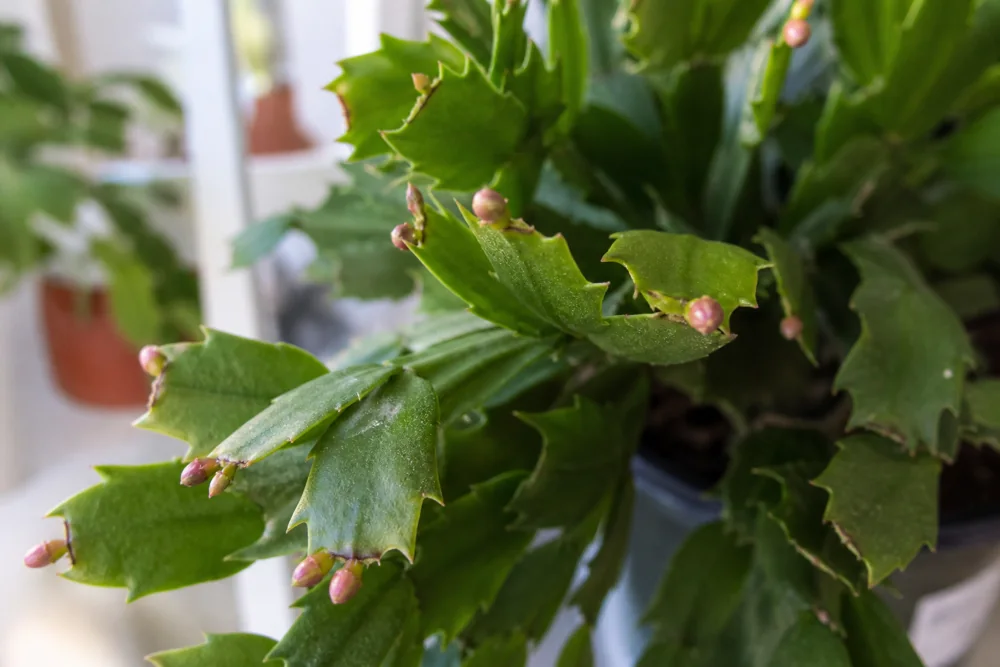
Buds that fail to open often trace to a sudden change. The plant moved from cool to hot, the pot dried hard, the room became drafty, or the plant was rotated after buds had oriented toward the light. A few dropped buds are common. A full drop means the condition changed too sharply.
When buds are pea-sized or smaller, treat the plant as sensitive. Keep the same side facing the window, water before the mix collapses dry, and keep it away from hot air at night. Once buds lengthen and color deepens, the plant can handle normal room display more easily, provided temperature and moisture stay moderate.
After flowering, let the plant rest. Reduce watering slightly for several weeks, then resume normal growth care as days lengthen. Repot only when needed, usually after bloom, and only one pot size larger. A snug, healthy root system often flowers better than a plant moved into a large wet pot.
Conclusion
Christmas cactus no flowers is usually a timing problem before it is a plant-health problem. No buds means the plant needs cool nights, 12-14 hours of uninterrupted darkness, and lighter watering for six to eight weeks. Buds that form and drop need stable moisture, moderate temperatures, and less movement.
Start the reset with one measurable change tonight: check the temperature near the plant, block evening light, and mark the calendar. The first success signal is tiny swelling at the segment tips, followed by buds that stay firm and slowly lengthen.