




Vegetable import and export statistics for 2026 show a clear supply-chain imbalance: the United States bought far more vegetables from global markets than it sold abroad during the first four months of the year. USDA ERS trade data updated on May 19, 2026 puts U.S. vegetable imports at $7.07 billion from January through April 2026, against $2.10 billion in exports over the same period.
The story is not a simple shortage story. Fresh tomatoes, bell peppers, cucumbers, potatoes, frozen potato products, and prepared vegetables move through separate channels, at separate prices, and from separate countries. A grocery shelf that looks ordinary in March may be carrying winter field production from Mexico, greenhouse supply from Canada, frozen potatoes from cross-border processing networks, and canned or prepared vegetables from Europe and Asia. Trade turns seasonal vegetable demand into a year-round market.
Key Takeaways
- Track the $7.07B import flow through April 2026.
- Compare exports at $2.10B, less than one-third imports.
- Watch fresh vegetables, 64.3% of import value.
- Separate Mexico’s share from Canada’s greenhouse-heavy supply.
- Use commodity-level data before judging price pressure.
Table of Contents
2026 Vegetable Trade Snapshot
Source: Garden Insider calculations from USDA ERS Vegetables and Pulses Data, trade and prices by category and commodity, updated May 19, 2026. Period: January-April 2026. Measurement: value in current thousand dollars.
U.S. Vegetable Trade Balance – Imports Dominate Early 2026
The U.S. vegetable trade balance was strongly import-weighted in the first four months of 2026. Imports reached $7.07 billion and 10.76 billion pounds. Exports reached $2.10 billion and 3.37 billion pounds, based on USDA ERS World rows for vegetables only. That leaves an early-2026 vegetable trade gap of about $4.97 billion and 7.39 billion pounds.
Year-over-year movement was softer than the gap itself. From January-April 2025 to January-April 2026, import value was down 0.4 percent and import volume was down 4.3 percent. Export value also slipped 0.4 percent. Export volume fell 2.3 percent. Volume moved down faster than value on both sides, so the market looked tighter by weight than by dollars.
| Trade flow | Jan-Apr 2026 value | Jan-Apr 2026 volume | Value vs Jan-Apr 2025 | Volume vs Jan-Apr 2025 |
|---|---|---|---|---|
| Imports | $7.07 billion | 10.76 billion lb | -0.4% | -4.3% |
| Exports | $2.10 billion | 3.37 billion lb | -0.4% | -2.3% |
| Import minus export gap | $4.97 billion | 7.39 billion lb | Not a USDA published metric | Not a USDA published metric |
These numbers sit beside domestic supply. The vegetable production statistics show how U.S. farms anchor major crops. Trade data shows where supply fills seasonal, regional, and processing gaps. A winter tomato or cucumber is often a trade story before it becomes a retail price story.
Fresh Vegetable Imports – The Largest Trade Segment
Fresh vegetables accounted for $4.54 billion of U.S. import value from January through April 2026, or 64.3 percent of all vegetable imports in the USDA ERS dataset. Frozen vegetables came next at $1.30 billion, followed by prepared or preserved vegetables at $988 million. Exports were more balanced: fresh vegetables still led at $935 million. Frozen and prepared products together made up almost half of export value.
This split matters because fresh vegetables cannot wait quietly in storage. Lettuce, cucumbers, bell peppers, squash, and tomatoes have short shelf-life pressure, cold-chain risk, and strong seasonal timing. Frozen and prepared vegetables move through processing-centered channels where contracts, plants, and industrial buyers carry more weight.
| Market segment | Import value, Jan-Apr 2026 | Import share | Export value, Jan-Apr 2026 | Export share |
|---|---|---|---|---|
| Fresh | $4.54 billion | 64.3% | $935 million | 44.5% |
| Frozen | $1.30 billion | 18.3% | $539 million | 25.7% |
| Prepared or preserved | $988 million | 14.0% | $510 million | 24.2% |
| Dried | $180 million | 2.5% | $101 million | 4.8% |
| Juice and seed | $63 million | 0.9% | $16 million | 0.8% |
The fresh segment also explains why vegetable trade links tightly to the vegetable price statistics. A small supply disruption in fresh vegetables can show up quickly because retailers cannot buffer weeks of product the way they can with frozen or canned vegetables.
Top Vegetable Import Partners – Mexico Carries More Than Half
Mexico was the largest U.S. vegetable import partner in early 2026, supplying $3.92 billion in vegetable import value from January through April. That was 55.4 percent of total U.S. vegetable import value. Canada followed at $1.55 billion, or 21.9 percent. Italy was a distant third at $270 million, helped by prepared and preserved vegetable products more than fresh-field supply.
The top three import partners – Mexico, Canada, and Italy – supplied 81.1 percent of U.S. vegetable import value in the first four months of 2026. That concentration is useful for researchers because it turns a broad “global trade” question into a short supply-chain list: winter fresh vegetables from Mexico, greenhouse and processed supply from Canada, and prepared vegetable products from European processors.
| Rank | Import partner | Value, Jan-Apr 2026 | Share of U.S. vegetable imports | Main interpretation |
|---|---|---|---|---|
| 1 | Mexico | $3.92 billion | 55.4% | Dominant fresh vegetable supplier |
| 2 | Canada | $1.55 billion | 21.9% | Greenhouse, fresh, frozen, and cross-border processing supply |
| 3 | Italy | $270 million | 3.8% | Prepared and preserved vegetable products |
| 4 | China | $167 million | 2.4% | Prepared, dried, garlic, and mixed categories |
| 5 | Peru | $159 million | 2.2% | Asparagus and counter-seasonal vegetables |
| 6 | Belgium | $96 million | 1.4% | Frozen and prepared vegetable supply |
| 7 | Guatemala | $88 million | 1.2% | Fresh and specialty vegetable flows |
| 8 | Netherlands | $77 million | 1.1% | High-value fresh and greenhouse-linked products |
Country shares should not be read as farm-origin shares in every case. Prepared, frozen, and re-exported products can move through processing and distribution countries. For fresh tomatoes, cucumbers, peppers, squash, and asparagus, the country signal is more direct because the product has less time to move through complex intermediate steps.
Top Vegetable Export Markets – Canada, Mexico, And Japan Lead
U.S. vegetable exports were much smaller than imports in early 2026, and the destination pattern was concentrated. Canada bought $978 million in U.S. vegetable exports from January through April 2026, equal to 46.6 percent of export value. Mexico followed at $276 million. Japan bought $261 million. Together, those three markets took 72.1 percent of U.S. vegetable export value.
Canada’s role is not surprising. Distance, cold-chain logistics, compatible retail standards, and year-round cross-border food distribution make Canada the natural first market for U.S. fresh and processed vegetables. Japan’s position reflects a smaller high-value export relationship where processed potatoes, frozen products, and quality standards matter.
| Rank | Export market | Value, Jan-Apr 2026 | Share of U.S. vegetable exports | Main interpretation |
|---|---|---|---|---|
| 1 | Canada | $978 million | 46.6% | Core nearby market for fresh and processed vegetables |
| 2 | Mexico | $276 million | 13.1% | Two-way North American vegetable trade |
| 3 | Japan | $261 million | 12.4% | High-value processed and frozen vegetable demand |
| 4 | South Korea | $64 million | 3.1% | Pacific export demand |
| 5 | United Kingdom | $39 million | 1.8% | Smaller high-income market |
| 6 | Taiwan | $38 million | 1.8% | Pacific processed and fresh demand |
| 7 | Netherlands | $37 million | 1.7% | European distribution and processing channel |
| 8 | Guatemala | $36 million | 1.7% | Regional trade flow |
The export pattern also explains why broad export totals can hide crop-specific strength. Potatoes lead U.S. vegetable exports by value. Lettuce, cauliflower, sweet potatoes, onions, spinach, and carrots remain meaningful fresh export crops. Crop-level value is the cleaner way to read export strength.
Top Imported Vegetables – Tomatoes Lead The 2026 List
Tomatoes were the top U.S. vegetable import by value in January-April 2026, reaching $1.49 billion and accounting for 21.0 percent of import value. Potatoes ranked second at $1.01 billion, followed by the broad “vegetables, other” category at $902 million. Bell peppers and cucumbers rounded out the top five.
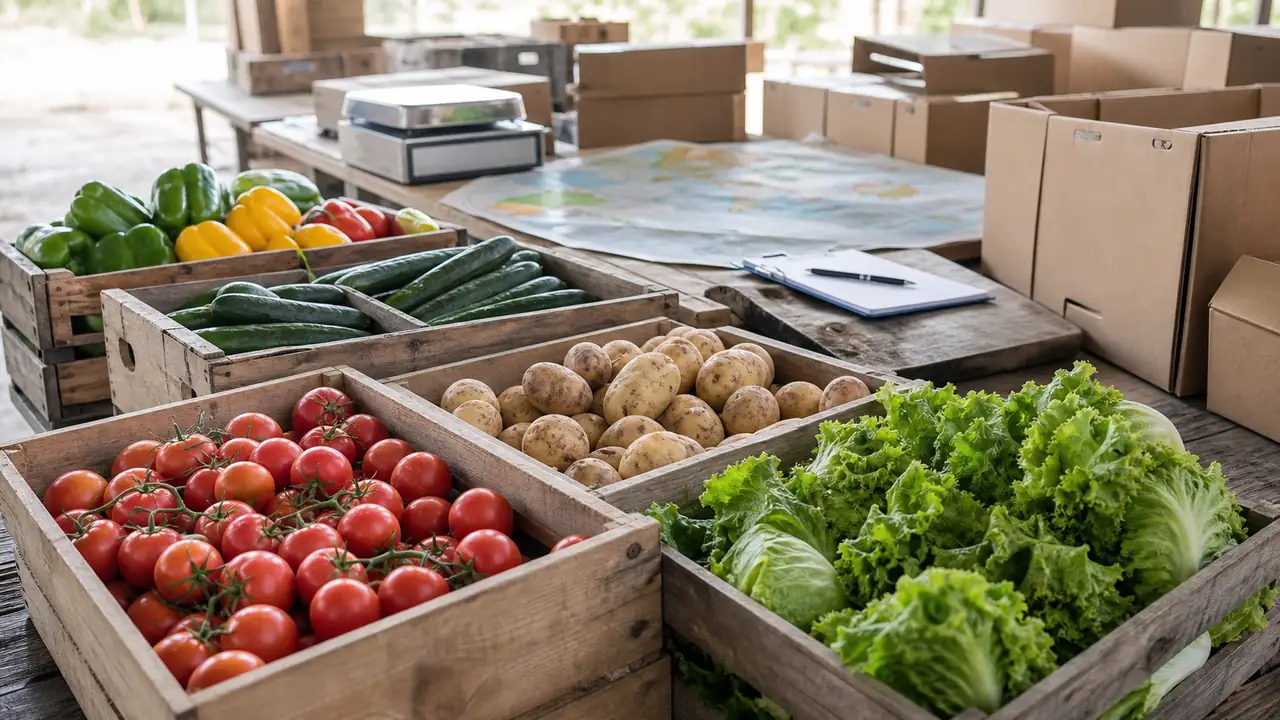
Fresh imports were more concentrated than the all-segment list. Tomatoes alone reached $1.19 billion, or 26.2 percent of fresh vegetable import value. Bell peppers reached $663 million, and cucumbers reached $565 million. These three fresh categories accounted for more than half of fresh import value in the first four months of 2026.
| Rank | Imported vegetable | Total import value, Jan-Apr 2026 | Share of vegetable imports | Fresh import value where relevant |
|---|---|---|---|---|
| 1 | Tomatoes | $1.49 billion | 21.0% | $1.19 billion |
| 2 | Potatoes | $1.01 billion | 14.2% | $257 million |
| 3 | Vegetables, other | $902 million | 12.8% | $258 million |
| 4 | Bell pepper | $670 million | 9.5% | $663 million |
| 5 | Cucumbers | $605 million | 8.6% | $565 million |
| 6 | Broccoli | $350 million | 5.0% | $167 million |
| 7 | Chile pepper | $209 million | 2.9% | $209 million |
| 8 | Squash | $200 million | 2.8% | $200 million |
| 9 | Lettuce | $199 million | 2.8% | $199 million |
| 10 | Mushrooms | $197 million | 2.8% | $135 million |
Tomatoes deserve special caution in any vegetable import analysis. Fresh tomatoes, processed tomato sauce, and other tomato preparations move through separate markets. Market segment and commodity detail make the tomato total useful for scale, then narrower rows are needed for price or supply-chain diagnosis.
Top Exported Vegetables – Potatoes Dominate U.S. Sales Abroad
Potatoes were the leading U.S. vegetable export in January-April 2026, with $719 million in export value. That was 34.3 percent of total vegetable export value, far ahead of tomatoes at $323 million and lettuce at $183 million. Potato exports include fresh and processed forms, so the number reflects both farming scale and processing capacity.
The fresh export list changes the picture. Lettuce led fresh vegetable exports at $183 million, followed by fresh potatoes at $109 million and cauliflower at $84 million. Sweet potatoes, onions, tomatoes, peppers, spinach, and carrots all sat below the top three and still mattered in export channels.
| Rank | Exported vegetable | Total export value, Jan-Apr 2026 | Share of vegetable exports | Fresh export value where relevant |
|---|---|---|---|---|
| 1 | Potatoes | $719 million | 34.3% | $109 million |
| 2 | Tomatoes | $323 million | 15.4% | $48 million |
| 3 | Vegetables, other | $211 million | 10.0% | $78 million |
| 4 | Lettuce | $183 million | 8.7% | $183 million |
| 5 | Cauliflower | $84 million | 4.0% | $84 million |
| 6 | Sweet potatoes | $77 million | 3.6% | $66 million |
| 7 | Onions | $75 million | 3.6% | $54 million |
| 8 | Sweet corn | $56 million | 2.7% | $21 million |
| 9 | Peppers | $54 million | 2.6% | $46 million |
| 10 | Spinach | $43 million | 2.1% | $42 million |
Potato export strength is one reason vegetable trade should not be treated as a single fresh-produce lane. Frozen french fries, dehydrated potatoes, and other processed potato products behave more like food manufacturing than like a crate of field lettuce moving under tight shelf-life pressure.
Import Reliance Signals – Where Retail Supply Is Most Exposed
Import reliance is easiest to see in fresh winter vegetables. Fresh tomatoes, bell peppers, cucumbers, squash, chile peppers, asparagus, and some specialty vegetables entered the U.S. market in large dollar volumes during January-April 2026. These products often fill the seasonal gap between U.S. field seasons or supplement greenhouse supply when domestic production cannot meet retail demand at the desired price.
For consumers, the visible sign is simple: supermarket displays stay full outside local growing seasons. For growers and food businesses, the meaning is more technical. Import-heavy crops face exchange-rate pressure, border logistics, transportation cost, plant disease risk, weather exposure in supplier regions, and policy risk. Any one of those can tighten the shelf within days for fresh items.
| Fresh import rank | Fresh vegetable | Fresh import value, Jan-Apr 2026 | Share of fresh import value | Why the number matters |
|---|---|---|---|---|
| 1 | Tomatoes | $1.19 billion | 26.2% | Largest fresh import category by value |
| 2 | Bell pepper | $663 million | 14.6% | High fresh-market dependence outside domestic peak seasons |
| 3 | Cucumbers | $565 million | 12.4% | Strong winter and greenhouse-linked trade flow |
| 4 | Vegetables, other | $258 million | 5.7% | Mixed specialty vegetables and classification limits |
| 5 | Chile pepper | $209 million | 4.6% | Fresh specialty pepper demand |
| 6 | Squash | $200 million | 4.4% | Seasonal fresh supply support |
| 7 | Lettuce | $199 million | 4.4% | Short shelf-life crop with fast retail sensitivity |
| 8 | Asparagus | $169 million | 3.7% | Counter-seasonal supply from specialized producing regions |
Import reliance does not mean domestic growers are uncompetitive. It often means the market wants fresh vegetables every month, and climate, labor timing, irrigation, and harvest windows are not evenly distributed across the calendar. The vegetable gardening trends report shows the household side of the same pressure: price, freshness, and control are pushing more people toward small edible growing spaces.
2026 Monthly Pattern – March And April Were The Heaviest Import Months
U.S. vegetable import value rose from $1.67 billion in January 2026 to $1.92 billion in March, then eased slightly to $1.88 billion in April. Export value was steadier, moving from $527 million in January to $535 million in April. The import line carried more seasonal swing because fresh winter and early spring supply leans heavily on cross-border flow.
| Month, 2026 | Import value | Export value | Import/export value ratio | What changed |
|---|---|---|---|---|
| January | $1.67 billion | $527 million | 3.18x | Winter fresh imports were already elevated |
| February | $1.59 billion | $497 million | 3.21x | Both flows softened slightly |
| March | $1.92 billion | $540 million | 3.56x | Import value hit the four-month high |
| April | $1.88 billion | $535 million | 3.51x | Imports stayed high; exports held near March levels |
Monthly trade data is useful because annual totals can hide timing pressure. A March import spike in fresh vegetables can affect retail availability and foodservice purchasing before annual production summaries are published.
Trade Data Methodology – What Counts And What Does Not
The core calculations use USDA ERS vegetables and pulses trade data, specifically the trade and prices by category and commodity CSV updated May 19, 2026. The numbers in this report use the Vegetables group only, not dry pulses, and use January-April 2026 because April is the latest month available in that release.
Totals use GeographicDesc = World rows to avoid adding country rows into the same total twice. Partner-country rankings exclude World and use 2026 rows only. Commodity rankings use current-dollar value in thousand dollars. Volume is reported in thousand pounds except for juice rows, which use gallons; juice accounts for less than one percent of trade value in this dataset.
| Claim type | Primary source | Year or period | Measurement used | Confidence note |
|---|---|---|---|---|
| Import and export values | USDA ERS Vegetables and Pulses Data | January-April 2026 | Current thousand dollars | Official monthly trade dataset |
| Import and export volumes | USDA ERS Vegetables and Pulses Data | January-April 2026 | Thousand pounds, except juice rows | Official monthly trade dataset |
| Partner rankings | USDA ERS country rows | January-April 2026 | Value by GeographicDesc | Calculated from partner rows excluding World |
| Commodity rankings | USDA ERS World rows | January-April 2026 | Value by CommodityName | Calculated from World rows to avoid partner duplication |
| Production context | USDA NASS Vegetables 2025 Summary | Published February 2026 | Area, production, price, and value by crop | Latest annual production context, not a 2026 crop-year total |
| Retail price context | USDA ERS Food Price Outlook | 2026 forecast updates | Fresh vegetable CPI forecast | Price context, not trade-volume evidence |
This method keeps the statistics current without pretending the full 2026 year has already happened. When USDA ERS publishes more 2026 months, the year-to-date totals will change, and partner shares can shift as the domestic growing season changes the import mix.
Where To Start With The Data
Price research starts with the fresh import table, then matches tomatoes, bell peppers, cucumbers, lettuce, squash, and asparagus against the vegetable consumption statistics. High import value matters more when the crop is also eaten often, promoted often, or difficult to substitute at retail.
Supply-chain research starts with partner concentration. Mexico and Canada supplied 77.3 percent of U.S. vegetable import value from January through April 2026. Any weather, border, labor, or transportation issue in those two lanes has more practical weight than a small movement in a low-share supplier.
Crop research starts with commodity rank, then splits fresh from processed. Tomatoes lead total imports, potatoes lead exports, and lettuce leads fresh exports. Those three claims are clean enough to cite because each uses a named crop, a 2026 period, a source, and a measurement.
Conclusion
The strongest 2026 vegetable trade signal is the size of the import gap. Through April, the United States imported $7.07 billion in vegetables and exported $2.10 billion, leaving imports more than three times larger by value. Fresh vegetables carried most of that import weight, which is why trade disruptions can be felt quickly at retail when tomatoes, peppers, cucumbers, lettuce, squash, or asparagus are involved.
For research, the cleanest rule is to separate totals from partners and partners from commodities. World rows show the scale, country rows show the supply-chain concentration, and commodity rows show where pressure actually lands. When the next USDA ERS monthly update extends the 2026 series, the first numbers to watch are Mexico’s fresh share, Canada’s export share, and whether import volume keeps falling faster than import value.
Frequently Asked Questions
How much did the United States import in vegetables in 2026?
The United States imported $7.07 billion in vegetables from January through April 2026, according to USDA ERS World-row trade data updated May 19, 2026. The same period accounted for 10.76 billion pounds of vegetable import volume.
How much did the United States export in vegetables in 2026?
U.S. vegetable exports reached $2.10 billion from January through April 2026, with 3.37 billion pounds of volume. That means import value was 3.37 times export value during the first four months of 2026.
Which country supplies the most vegetables to the United States?
Mexico was the largest supplier in early 2026, with $3.92 billion in U.S. vegetable import value from January through April. That equaled 55.4 percent of total U.S. vegetable import value for the period.
Which vegetables does the United States import the most?
Tomatoes led U.S. vegetable imports in January-April 2026 at $1.49 billion, followed by potatoes at $1.01 billion, vegetables classified as other at $902 million, bell peppers at $670 million, and cucumbers at $605 million.
Which vegetables does the United States export the most?
Potatoes led U.S. vegetable exports in January-April 2026 at $719 million, or 34.3 percent of total vegetable export value. Tomatoes were second at $323 million, followed by the broad vegetables other category at $211 million.