


Cucumber plant diseases usually show first as a visible pattern: white leaf coating, yellow angular patches, brown spots, sudden wilt, soft crown tissue, or fruit that rots before it sizes. A sick cucumber vine can decline quickly because leaves, stems, roots, and fruit all depend on consistent water movement through a shallow, heat-sensitive root system. The fastest diagnosis starts with the plant part that changed first.
Look at the leaf surface, then the whole vine. A dusty white film behaves differently from yellow spots between veins. One wilted leaf on a hot afternoon carries less weight than an entire vine collapsing after beetle feeding. Soft tissue at the crown needs a different response from a malformed fruit caused by pollination stress. The goal is to route the symptom to the right first action before the disease moves through the planting.
Cucumber Disease Symptom Router
White powder on leaves
Suspect powdery mildew first. Remove the worst leaves, improve airflow, and confirm before using sprays.
Yellow angular leaf patches
Check downy mildew, angular leaf spot, or early leaf disease. Leaf shape and underside growth decide urgency.
Whole vine wilts suddenly
Look for cucumber beetles, bacterial wilt, root damage, or heat stress. Cut a stem only when wilt persists.
Soft crown, stem, or fruit rot
Improve drainage, remove infected tissue, and stop overhead watering. Rot spreads fastest in wet, crowded vines.
Key Takeaways
- Match the first symptom before choosing treatment.
- Separate leaf disease from heat and pollination stress.
- Remove infected leaves only when airflow stays protected.
- Check vines twice weekly during humid weather.
- Discard virus-infected plants once stunting continues.
Table of Contents
Cucumber Plant Diseases: Symptom Router For Leaves, Vines, And Fruit
Cucumber disease identification works better when the plant is divided into zones. Leaves show mildews, leaf spots, viral mottling, and nutrient-like yellowing. Stems and crowns show wet rot, constriction, and collapse. Roots show their failure through wilt because the root system is hidden. Fruit shows disease, pollination stress, or moisture swings through spots, soft ends, scars, and distorted shape.
A cucumber vine can also look diseased from non-disease stress. Hot afternoons can wilt leaves that recover overnight. Poor pollination can bend fruit without infecting the plant. A crowded trellis can trap humidity and invite mildew. The current cucumber planting setup still matters because spacing, watering, airflow, and harvest rhythm decide how fast disease pressure builds.
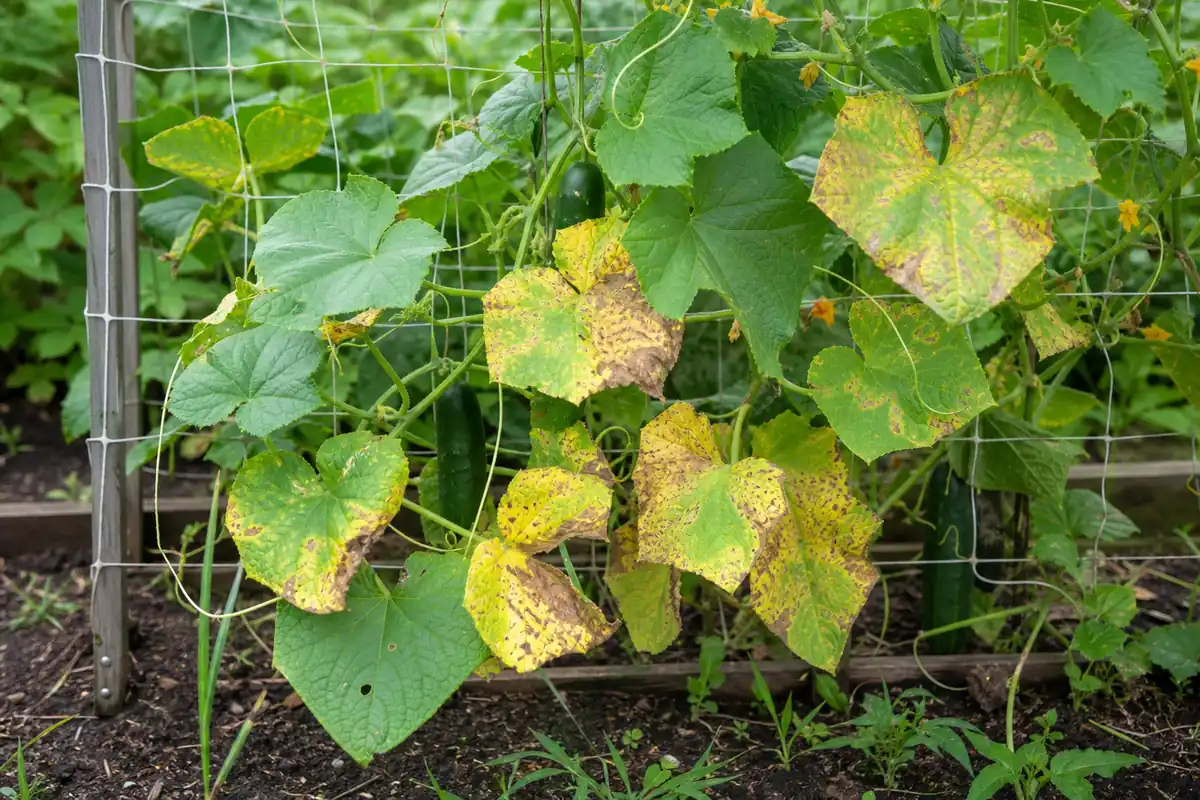
Cucumber problem diagnosis is strongest when visible symptoms are matched to the plant part affected first. A white surface film, angular yellow patches, sudden wilt, stem collapse, and mottled distorted leaves do not ask for the same response. Treating every cucumber problem with a spray can hide the original pattern and delay the one action that matters.
| First symptom | Likely cause | Confirmation clue | First action |
|---|---|---|---|
| White powder on older leaves | Powdery mildew | White, talc-like growth remains visible on the leaf surface and gradually spreads across older foliage. | Remove heavily affected leaves, improve airflow, and monitor clean new growth before choosing a treatment. |
| Yellow angular patches | Downy mildew | Lesions are limited by leaf veins and may show gray or purplish growth on the underside during humid conditions. | Reduce leaf wetness, remove badly infected foliage, and protect healthy growth. |
| Water-soaked or angular brown spots | Angular leaf spot or another bacterial leaf disease | Early lesions look water-soaked, follow veins, and may dry into thin tan areas or holes. | Avoid overhead watering, remove severely affected leaves, and limit handling while foliage is wet. |
| Sudden whole-vine wilt | Bacterial wilt or root failure | Wilt persists during cool morning conditions or follows heavy cucumber beetle feeding despite adequate soil moisture. | Check beetle activity, soil moisture, roots, and the crown before adding more water. |
| Mottled or distorted new leaves | Virus infection | New growth remains distorted or mottled and may occur with stunting or malformed fruit. | Remove strongly symptomatic plants once viral infection is the likely diagnosis and manage insect vectors. |
| Soft or dark crown and stem base | Crown, stem, or root rot | Tissue near the soil line becomes soft, sunken, dark, or water-soaked while the vine declines above it. | Stop wetting the crown, improve drainage, and remove badly rotted plants or tissue. |
| Sunken or rotting fruit lesions | Anthracnose or another fruit rot | Lesions enlarge, become sunken or soft, and differ from uniformly curved fruit caused by poor pollination. | Remove affected fruit promptly and reduce moisture trapped inside the canopy. |
White, Yellow, And Brown Leaf Symptoms Carry Different Warnings
White powder on cucumber leaves usually points toward powdery mildew. The coating often begins on older leaves, then spreads across the upper leaf surface as warm days, humid nights, and crowded foliage favor disease. Early patches can look like dust or pale smudges. Later leaves turn yellow, dry, and lose their ability to feed fruit.
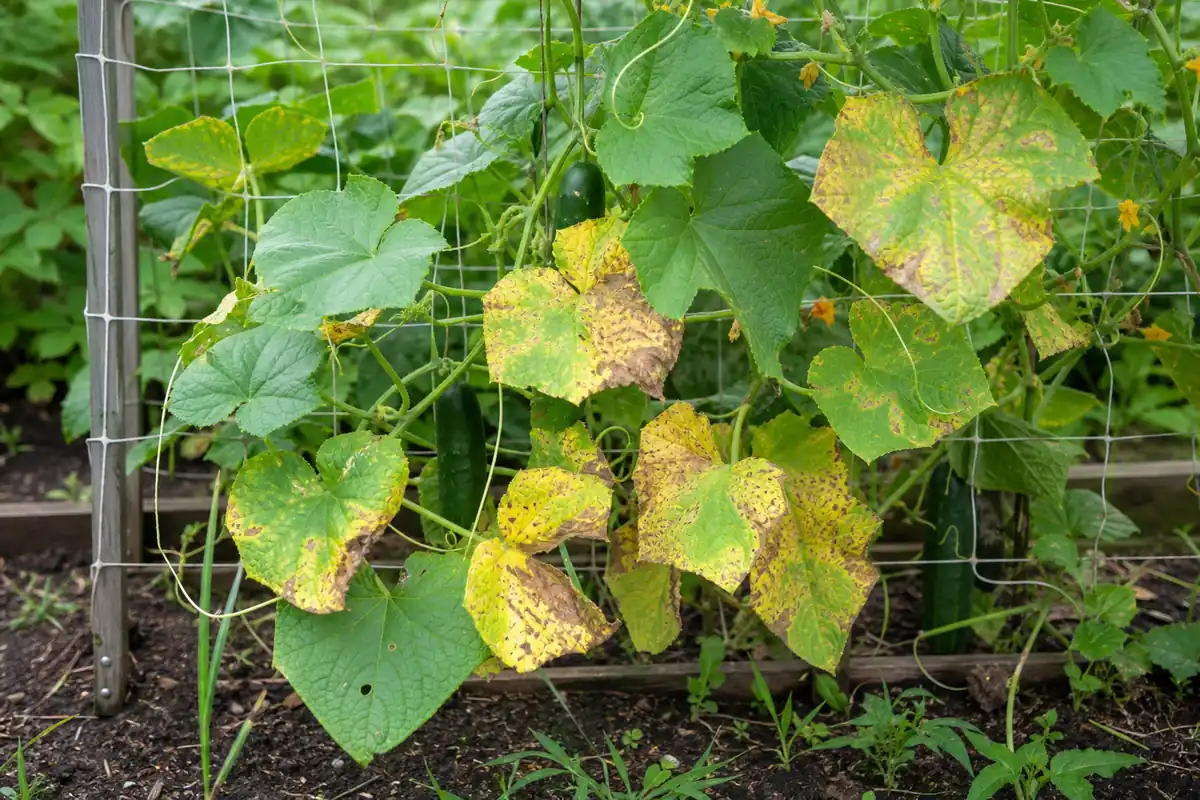
Yellow angular patches need a closer underside check. Downy mildew often creates yellow areas limited by leaf veins, and the underside may show grayish or purplish growth in humid conditions. Angular leaf spot can also make vein-bounded lesions, often with water-soaked tissue that dries into tan or brown areas. Wet weather and overhead watering make both patterns move faster.
Leaf texture helps separate mildew from ordinary yellowing. Powdery mildew sits on the surface and can look talc-like under morning light. Downy mildew changes the leaf from within, so yellow patches follow the vein network before the tissue browns. Bacterial spots often look water-soaked in the early stage, then dry into thin dead areas. A nutrient issue usually fades the tissue more evenly and does not create a clear lesion edge.
Read both sides of the leaf before removing it. The upper surface may show yellowing or white powder first, and the underside often carries the more useful clue: gray downy growth, tiny specks, sticky residue, or tissue that looks wet near the veins. Use morning light if possible. Dew and humidity make downy growth easier to see, and dry afternoon glare can flatten the color differences that separate disease from normal aging.
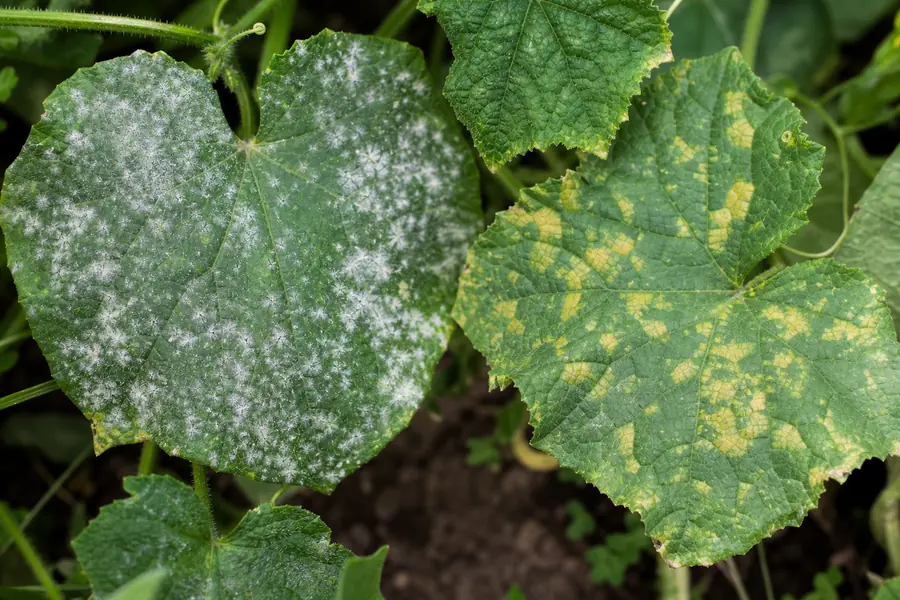
Brown spots on cucumber leaves need lesion reading, not color reading alone. Small tan centers, dark margins, yellow halos, ragged dead areas, and vein-limited shapes all tell a different story. The broader brown spots on plant leaves pattern helps separate dry injury, fungal lesions, bacterial spotting, and tissue collapse before a cucumber-specific leaf spot page takes over.
General yellowing still matters, especially when the whole lower canopy fades. Nutrient shortage, wet roots, spider mites, and old leaves can all look yellow without a true leaf disease driving the problem. The yellowing leaves diagnosis is useful when cucumber leaves fade evenly and spots, mildew, or wilt are not leading the pattern.
Wilting And Vascular Diseases Need A Whole-Vine Check
Wilt is the cucumber symptom that makes timing matter most. A cucumber can wilt temporarily in heat and recover by morning. A vine that stays limp after watering, collapses one runner at a time, or wilts rapidly after cucumber beetle pressure needs a disease and root check.
Bacterial wilt is carried by cucumber beetles and blocks water movement inside the vine. Leaves wilt even when soil moisture is available because water cannot move normally through the vascular system. A cut stem may show sticky strands when the two cut ends are touched together and pulled apart, though home diagnosis is not always clean. Beetle history, speed of collapse, and failure to recover overnight carry more weight than one test.
Fusarium wilt and other vascular problems often appear as one-sided yellowing, stunting, or progressive wilt. Root rot can produce a similar canopy because damaged roots cannot supply the leaves. Persistent wilt should be checked against plant wilting diagnosis until heat, soil moisture, root health, and disease signs separate.
Do not keep watering a vine that stays wilted in wet soil. Saturated soil can suffocate roots and encourage rot. Dig gently near the root zone or check container weight before adding more water. A cucumber with wet soil, sour smell, blackened roots, or soft crown tissue needs oxygen and drainage correction more than another irrigation cycle.
Speed is the useful field clue. Heat wilt often appears during the hottest part of the day and eases after the plant cools. Bacterial wilt can collapse a runner or whole vine even with moist soil. Root rot tends to come with slow growth, yellowing, and a damp base. Mark the first wilted vine with tape, then check the same vine at dawn. A plant still limp in cool morning conditions needs a disease or root investigation.
Cucumber beetle history changes the wilt call. Striped and spotted cucumber beetles chew leaves and flowers, then bacterial wilt becomes a real possibility when vines collapse. Beetle feeding alone can make holes and stress marks. Wilt after beetle pressure deserves faster isolation because the plant can become a source of bacteria for additional beetles. Row cover, early scouting, and removing badly wilted vines protect the planting better than waiting for every leaf to fail.
Stem, Crown, And Root Rot Show Up Low On The Plant
Stem and crown diseases often begin where splashing soil, wet mulch, and dense foliage meet the plant base. The first clue may be a water-soaked patch, a brown constricted stem, soft tissue near the crown, or a vine that wilts from the base outward. These symptoms move faster in heavy soil and humid, still air.
Look at the crown before cutting more foliage from the top. A healthy cucumber crown should feel firm. Soft, sunken, dark, or collapsing tissue near the soil line means the plant is losing its transport point between roots and vines. Trellising can keep leaves and fruit cleaner, and the crown still needs open air and dry surface conditions.
Root rot is harder to confirm without disturbing the plant. Stunted growth, dull leaves, yellow lower foliage, and wilt in damp soil all point toward roots that are not functioning. Pulling the plant is justified when the vine is already collapsing and the bed needs sanitation. If nearby vines still look healthy, avoid tearing through shared soil and roots unless the plant must come out.
Soil splash is a quiet rot driver. Mulch helps when it keeps soil from hitting leaves and stems during rain. Thick wet mulch pressed against the crown can create the opposite problem by holding moisture at the stem base. Keep the crown visible, dry the surface between waterings, and train vines so the lower leaves are not packed against wet soil.
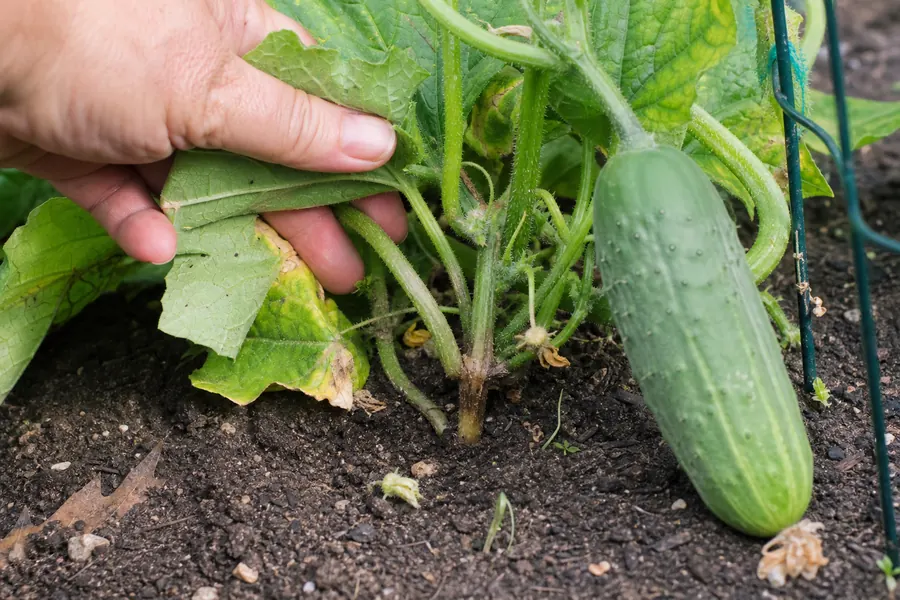
Cucurbit disease management depends heavily on rotation, sanitation, airflow, resistant varieties, and avoiding wet foliage. Those basics are not cosmetic. They reduce the time that leaves, stems, and crown tissue stay wet enough for disease to spread.
Fruit Spots, Rot, And Malformation Boundaries
Fruit symptoms can come from disease, insect injury, pollination stress, or water stress. A cucumber with soft sunken spots, moldy tissue, or watery rot deserves disease handling. A curved or narrow-ended fruit on an otherwise healthy vine often points toward pollination, heat, or uneven moisture, not a pathogen.
Anthracnose and other fruit rots can create sunken lesions that expand as fruit matures. Bacterial problems may create spots or soft tissue under wet conditions. Remove affected fruit promptly because rotting fruit holds moisture and spores inside the canopy. Do not compost diseased fruit unless the compost system gets hot enough to break down plant pathogens reliably.
Malformed fruit needs restraint. Poor pollination can leave one end narrow or curved because seeds did not develop evenly. Heat can reduce pollen movement and bee activity. Water swings can make fruit grow unevenly. Those problems still matter for yield, and they do not need disease treatment by default. A healthy leaf canopy with misshapen fruit needs pollination and moisture checks before fungicide.
Fruit symptoms also change by growth stage. Seedlings, first flowers, heavy harvest vines, and tired late-season plants do not fail the same way. A disease mark on the first fruit can be isolated; multiple symptoms appearing as the vine ages may reflect a canopy that has lost airflow and root strength. The cucumber growth stages help separate early establishment trouble from late-season disease pressure.
Remove suspect fruit early. A rotting cucumber holds moisture against the vine and can become a disease reservoir inside dense foliage. Pick clean fruit on time so the plant does not keep feeding overmature cucumbers. Harvesting also opens the canopy, which makes leaf inspections easier and helps the plant dry faster after rain.
Viral Patterns And When To Remove The Plant
Virus-infected cucumber plants often show a mixed pattern: mottled green and yellow leaves, puckering, stunting, distorted growth, and fruit that looks bumpy, pale, or misshapen. The plant may keep growing, and the new growth looks wrong every time. Viruses are usually spread by insects such as aphids or beetles, depending on the virus.
Cucumber mosaic virus is one of the disease names home gardeners encounter most often. It can affect many plant families, which makes weed control and insect management part of cucumber sanitation. A virus cannot be pruned out of one leaf once it is systemic. Removing a confirmed infected plant protects the rest of the planting more than keeping a weak vine alive for a few poor fruit.
Do not remove a plant from one mottled older leaf alone. Nutrient stress, mites, herbicide injury, and old foliage can create confusing marks. Removal becomes more defensible when the whole plant is stunted, new leaves keep emerging distorted, fruit is malformed, and insect pressure is visible. Clean tools and hands after handling suspect plants.
Virus decisions should protect the planting, not rescue one declining vine. A confirmed infected cucumber can keep acting as an insect-accessible source for nearby cucurbits. Bag the plant, remove it on a dry day when possible, and control weeds that host insects or viruses. Do not save seed from a plant with strong viral symptoms.
Leaf curl can also confuse the call. Cucumbers may curl from heat, wilt, herbicide exposure, pests, and virus. The broader plant leaves curling pattern helps separate direction, tissue age, and recovery before a virus diagnosis is made.
Treatment Limits, Sanitation, And Prevention
Most cucumber disease work begins before a spray decision. Space vines so leaves dry after rain. Water at the soil surface. Harvest often so old fruit does not trap moisture. Remove diseased leaves when they are numerous enough to spread inoculum and not useful enough to feed the plant. Keep enough healthy foliage to shade fruit and fuel new cucumbers.
Sanitation matters because cucumber diseases often survive on infected residue, weeds, volunteer cucurbits, or nearby related crops. Pull collapsed vines and infected fruit from the bed. Rotate cucumbers and other cucurbits when space allows. Use resistant varieties when a disease is known to return in the same garden. A clean trellis, wider spacing, and dry morning foliage reduce more disease pressure than late rescue sprays.
Cucumber disease indexes show why one remedy cannot fit every symptom. Powdery mildew, downy mildew, anthracnose, bacterial wilt, and root rots differ in how they spread and how much treatment can help after symptoms appear. Product labels, crop timing, temperature, and disease stage decide when a spray fits a home garden.
Baking soda and hydrogen peroxide deserve caution. Baking soda sprays can burn leaves when mixed too strong or applied in heat, and they do not cure advanced disease. Hydrogen peroxide can damage tender tissue and beneficial microbes when used carelessly. Use home remedies only as mild, label-safe experiments on limited foliage, never as a substitute for diagnosis, sanitation, resistant varieties, and removing plants that cannot recover.
Prevention is most effective when it is boring and repeated. Start with clean seed or transplants, keep vines off wet soil, avoid working foliage when it is wet, remove infected debris, and rotate away from cucurbits when a bed had serious disease. During humid spells, inspect the lower canopy and leaf undersides every few days. Early removal of a few infected leaves is easier than managing a canopy that has already turned into a damp mat.
Timing decides which prevention step matters most. At planting, spacing and clean mulch reduce splash. During flowering, beetle scouting protects pollination and wilt resistance. During heavy harvest, pruning only the worst lower leaves preserves enough canopy to feed fruit. Late in the season, sanitation matters more than saving every tired vine. A disease router should lead to one clean next move, not a pile of unrelated treatments.
Conclusion
Cucumber plant disease diagnosis starts with the first visible change, not the product shelf. White coating, angular yellow patches, sudden wilt, soft crowns, mottled new growth, and rotting fruit each point to a different level of urgency.
Check leaves, stems, roots, and fruit in that order, then act on the pattern. A recoverable vine keeps opening clean leaves, holds firm stems, and sets straight green fruit in a canopy that dries before evening.
Frequently Asked Questions
What is the most common disease in cucumbers?
Powdery mildew is one of the most common cucumber diseases in home gardens, especially late in the season. It starts as white powdery patches on leaves and can weaken fruit production as foliage dries.
What does a diseased cucumber look like?
A diseased cucumber may show white powder, yellow angular spots, brown lesions, sudden wilt, soft crown tissue, mottled leaves, or rotting fruit. The plant part affected first gives the best diagnostic clue.
Should I remove cucumber leaves with disease spots?
Remove the worst diseased lower leaves when they are spreading spots, touching soil, or blocking airflow. Keep enough healthy foliage to shade fruit and feed the vine during active harvest.
Can a cucumber plant recover from disease?
A cucumber can recover from mild leaf disease when new growth stays clean and moisture improves. Plants with systemic virus symptoms, collapsed crowns, or persistent bacterial wilt usually do not recover well.