



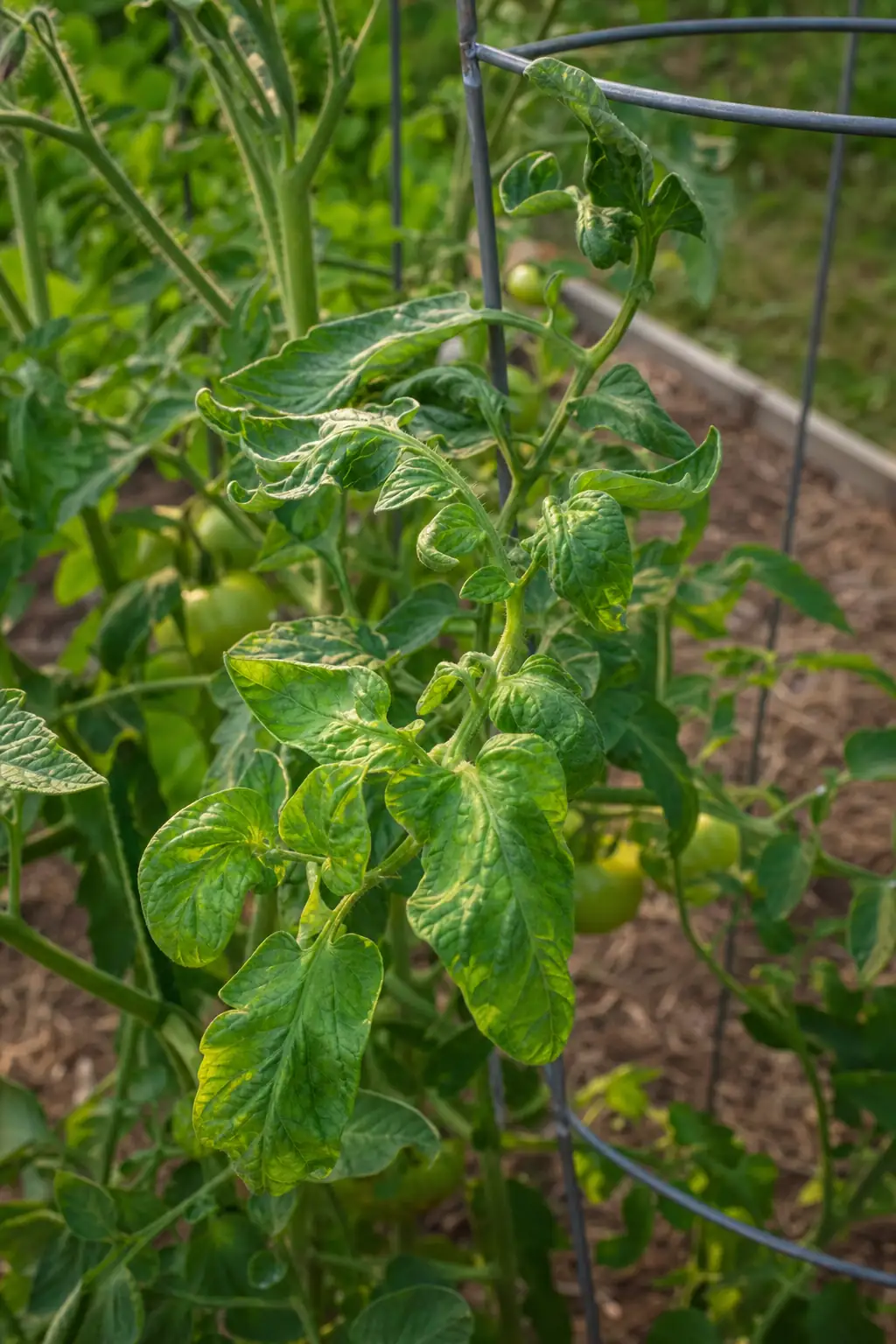
Tomato leaves curling can mean ordinary heat stress, a watering problem, root shock, herbicide drift, insect feeding, or a virus, and the cure changes with the curl pattern. A lower leaf rolled like a taco on a hot afternoon differs sharply from twisted pale new growth at the top of the plant. The first check is direction: up, down, twisted, cupped, or rolled tight around the midrib.
Look at age next. Older lower leaves usually show physiological leaf roll first. Newest growth carries more warning weight because herbicide drift, broad mites, and tomato yellow leaf curl virus often distort young tissue before the rest of the plant catches up.
Fast Curl Pattern Check
Older leaves roll upward
Most often physiological leaf roll from heat, wind, pruning, heavy fruit load, or moisture swings. Stabilize care and watch new growth.
Leaves curl downward with droop
Check soil moisture, root damage, overwatering, and drainage before feeding or spraying.
New growth twists or looks strappy
Suspect herbicide drift, contaminated compost, broad mites, or virus. Stop pruning and inspect closely.
Curling plus yellowing and whiteflies
Isolate the plant and treat it as a possible tomato yellow leaf curl virus problem.
Key Takeaways
- Read curl direction before choosing a remedy.
- Check new growth for herbicide, mite, or virus clues.
- Stabilize water before adding fertilizer or sprays.
- Inspect leaf undersides before blaming disease.
- Judge recovery by clean new leaves.
Table of Contents
Tomato Leaves Curling: Start With Leaf Age And Direction
Tomato leaf curl diagnosis starts faster when you separate ordinary stress roll from distorted growth. Physiological leaf roll usually begins on older, lower leaves. The leaflet edges roll upward toward the midrib, sometimes until the leaf looks thick, leathery, and narrow. The plant may still flower and set fruit.
Twisted new growth carries a different risk. New leaves that emerge small, puckered, strap-like, pale, or ferny can point toward herbicide exposure, broad mites, or virus. Those problems affect growth points, so the newest tissue often looks worse than older leaves.
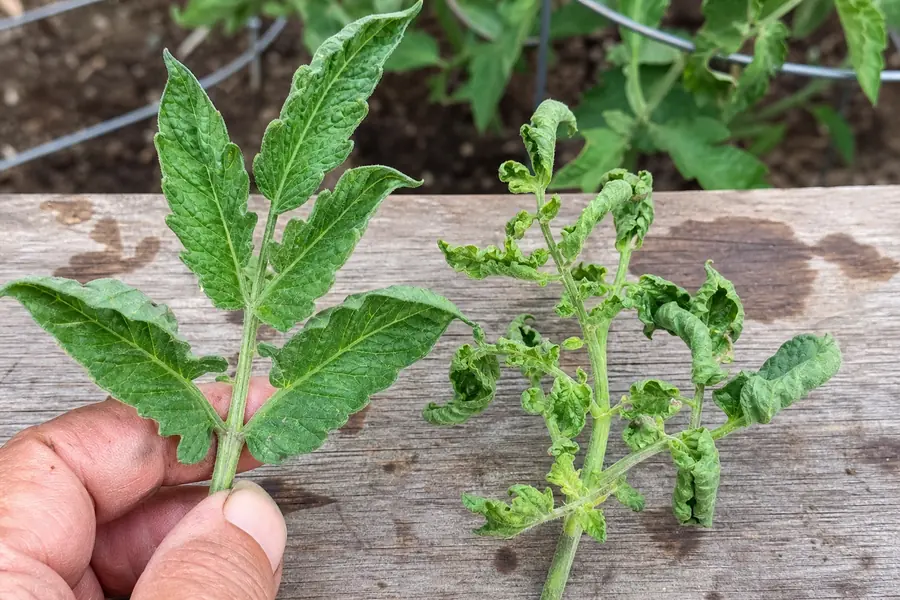
The broad diagnostic logic overlaps with plant leaves curling. Tomato plants add two crop-specific traps: physiological leaf roll is common and often harmless, and tomato yellow leaf curl virus can look urgent because search results over-focus on it. The plant’s age, weather history, insect presence, and growth point condition decide which track fits.
| Visible pattern | Most likely direction | First check | First action |
|---|---|---|---|
| Older lower leaves roll upward | Physiological leaf roll | Heat, wind, pruning, fruit load, moisture swings | Mulch, water evenly, stop heavy pruning |
| Whole plant droops and curls downward | Root or water stress | Soil depth, drainage, pot weight, root damage | Correct moisture and oxygen first |
| Newest leaves twist, narrow, or cup | Herbicide drift or broad mites | Recent spraying, compost/mulch source, underside pests | Remove exposure source and monitor new growth |
| Curling with yellowing, stunting, and whiteflies | Possible TYLCV | Whitefly pressure, region, nearby infected plants | Isolate, manage whiteflies, remove infected plants when confirmed |
Upward Roll, Downward Curl, And Twisted New Growth Point To Different Causes
Upward rolling is the classic tomato stress response. Tomato leaf roll is a physiological disorder often linked with hot dry weather or wind, and the condition does not usually reduce yield or fruit quality. The leaf is reacting to stress; infection is not the default diagnosis.
Downward curl needs a root and water check. Overwatered soil can look like drought because roots short on oxygen cannot move water well. Underwatered soil can curl leaves because the plant is reducing leaf surface exposed to sun and wind. Use the soil profile below the surface: dig a few inches down or check the full container weight before changing the schedule. Wet soil, yellowing, and slow dry-down also belong with signs of overwatering plants.
Twisted new growth is the pattern to slow down for. Purdue Vegetable Crops Hotline describes hormone-type herbicide injury on tomato as curling, twisting, and abnormal new growth. Broadleaf herbicides such as 2,4-D and dicamba can move as drift, residue, or contaminated organic material. A plant can look uneven, with one side or one growing tip worse than the rest.
That unevenness matters. Heat stress usually affects exposed leaves across the plant. Herbicide drift can strike the side facing a sprayed lawn, field, ditch, or compost source. Mite injury concentrates in tender growing tips. Virus symptoms often continue into new growth and may bring yellowing, stunting, and poor fruit set.
Heat, Water Stress, Wind, And Transplant Shock Usually Cause Reversible Roll
Tomatoes roll leaves when the canopy loses water faster than roots can replace it. Hot afternoons, low humidity, wind, black plastic, reflected heat, and a sudden fruit load can all push the plant into that response. The leaf roll may look dramatic near midday and soften by morning after the plant rehydrates.
Recent transplanting can create the same signal. Roots disturbed during planting cannot immediately supply a fast-growing top. A seedling moved from a protected porch to sun and wind may curl as it rebuilds fine roots. That stress should improve as the plant anchors, especially when the growing point stays green and new leaves open normally.
Water deeply enough to reach the active root zone, then let oxygen return to the soil. Frequent shallow watering keeps surface roots busy and leaves the deeper profile dry. A mulch layer steadies moisture and cools the upper soil, which matters most when fruit load rises and daytime heat starts pulling hard through the canopy.
Pruning can intensify leaf roll. Removing too much foliage at once cuts the plant’s shade and changes transpiration balance. Keep lower disease-prone leaves off the soil. Avoid stripping a stressed tomato to bare stems during heat. The right amount of pruning changes by stage; early vegetative plants, flowering plants, and heavy fruiting plants behave differently through tomato plant growth stages.
Root Problems, Nutrition, And Herbicide Drift Change The Recovery Path
Roots decide whether a curled tomato can recover quickly. Compacted soil, planting too deep in wet clay, container heat, root pruning during transplanting, and root-knot nematodes can all reduce water movement. Curling paired with persistent wilt belongs near plant drooping diagnosis, not a leaf-only spray decision.
Excess nitrogen can thicken foliage and push lush growth that rolls under stress. A deficiency rarely explains curling by itself. Feed only after moisture and root function are clear. Fertilizer poured into dry soil can add salt stress around fine roots. Fertilizer added to saturated soil does not restore oxygen.
Herbicide drift creates a more permanent pattern. New tomato leaves may look narrow, twisted, cupped, stringy, or fern-like. Stems can bend, and growth may stack tightly at the tip. If the exposure was light, the plant may outgrow the injury after several clean nodes. If the growing point keeps emerging distorted, recovery becomes less likely.
Do not compost suspicious foliage or use clippings from treated lawns around tomatoes. Some herbicide problems come from drift; others arrive through contaminated hay, manure, grass clippings, or compost. If several unrelated broadleaf plants show odd twisting after the same mulch or compost application, remove the suspect material before diagnosing every plant separately.
Aphids, Mites, Whiteflies, And Other Pest Clues Hide Under Leaves
Pests rarely announce themselves from across the garden. Turn over the newest curled leaves and inspect the undersides, growing tips, and flower clusters. Aphids leave sticky honeydew, shed skins, and clusters of soft bodies. Whiteflies rise as tiny white adults when the plant is disturbed. Broad mites are too small for easy field identification, so their toxin damage often shows before the pest does.
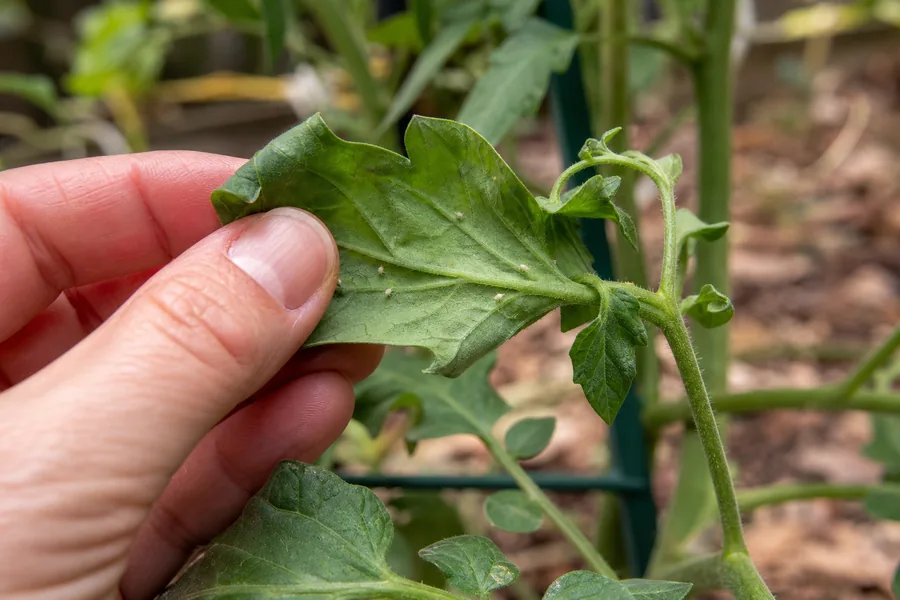
Tomato leaf curling can be environmental, chemical, or biological, and broad mites can distort young leaves after feeding on tender tissue. Broad mite damage can mimic herbicide injury because both can twist new growth. A hand lens helps. A county extension office or diagnostic lab is the safer call when valuable plants keep producing distorted tips.
Whiteflies matter for two reasons. Heavy feeding weakens leaves, and some whiteflies transmit tomato yellow leaf curl virus. Whitefly management in tomatoes starts with monitoring trouble spots, conserving natural enemies, using good cultural practices, and avoiding unnecessary pesticide use. In home gardens, that starts with checking undersides early before the plant is already stunted.
Spider mites can make leaves look dusty, stippled, and curled during hot dry weather. Tap a suspect leaflet over white paper and look for moving specks. A hard blast of water can reduce mites and aphids on sturdy plants. Use gentle handling when a virus or herbicide injury is still possible because damaged new tissue tears easily.
Physiological Leaf Roll And Tomato Yellow Leaf Curl Virus Need Different Decisions
Physiological leaf roll is common, especially in vigorous tomatoes under environmental stress. Physiological leaf curl is often the most common abnormal leaf-growth cause in tomatoes, linked with stress such as excess moisture, high temperature, insufficient water, severe pruning, or root damage. Symptoms usually begin on lower, older leaves.
Tomato yellow leaf curl virus behaves differently. New growth may be small, curled upward, yellowed between veins, and stunted. Flowers can drop, and fruit production may stop on infected plants. The plant often looks compressed instead of simply rolled. Whiteflies and regional disease pressure raise the risk.
TYLCV management relies on whitefly exclusion, reflective mulch, screening, resistant varieties, sanitation, and removal of infected plants. There is no home-garden spray that cures an infected tomato plant. Spraying after virus symptoms show may kill some insects. It does not remove the virus from plant tissue.
Use restraint before pulling a plant. A hot-week leaf roll on lower leaves with normal flowers and clean new growth is usually not TYLCV. A stunted plant with yellow curled new growth, whitefly pressure, and poor new leaves after several days deserves isolation and local diagnostic help. The decision should follow the whole pattern, not the word curl alone.
What To Do Today When Tomato Leaves Curl
Start with the least risky checks. Feel the soil at root depth below the surface. Look under leaves for aphids, mites, whiteflies, and sticky residue. Review the last seven days: heat spike, wind, transplanting, pruning, missed watering, heavy rain, fertilizer, lawn spraying, new mulch, or compost.
Water if the root zone is dry. Improve drainage if the soil stays wet and the plant curls with droop. Add mulch if heat and wind are driving afternoon roll. Stop pruning during active stress. Hold fertilizer until the plant is taking up water normally. These steps solve most reversible cases without creating a new problem.
Escalate when new growth is distorted. Move potted tomatoes away from suspected drift. Remove contaminated mulch if timing points to it. Isolate plants with whiteflies, yellowed new growth, and stunting. Send photos or a sample to a local extension office when the pattern could mean herbicide injury, broad mites, or virus.
Leaves that already rolled may not flatten completely. Recovery shows in the next growth: normal-sized leaflets, straight petioles, new flower clusters, and consistent fruit fill. If new growth opens clean for 10 to 14 days, old curled leaves can stay unless they shade airflow or touch the soil.
Can Curled Tomato Leaves Recover?
Curled leaves recover when the cause is temporary and the tissue is still structurally sound. Heat roll, dry wind, transplant shock, and mild pruning stress can improve after moisture and weather stabilize. A leaf that rolled for several days may stay slightly cupped even after the plant resumes normal growth.
Herbicide and mite-distorted leaves rarely become normal again. The plant’s future depends on whether the growing point can produce clean new leaves. Virus-infected tomatoes usually do not recover in a useful way, especially when stunting and yellowing continue. Pulling a confirmed infected plant protects nearby tomatoes more than nursing one declining plant through the season.
Fruit safety after herbicide drift is a local extension question because the herbicide, exposure level, label, timing, and edible crop interval all matter. Do not guess from leaf shape. If drift is likely, document the date, nearby spraying, photos, and new-growth changes before harvesting affected fruit.
Conclusion
A curled tomato leaf is a clue, not a diagnosis. Upward roll on older leaves usually asks for consistent moisture, shade from stress, and less disruption. Twisted new growth asks for a closer look at herbicide drift, mites, whiteflies, or virus.
Check the root zone, inspect leaf undersides, and watch the next growth point. A recovering tomato opens new leaves that look broad, green, and flat enough to catch the morning light without twisting at the tip.
Frequently Asked Questions
How do you treat curling leaves on tomato plants?
Treat the cause behind the curl. Check soil moisture, heat exposure, wind, recent pruning, roots, herbicide exposure, and pests. Most physiological leaf roll needs more consistent moisture, mulch, less pruning, and time.
Can tomato leaf curl be reversed?
Temporary stress curl can improve. Older rolled leaves may stay cupped. Herbicide injury, mite damage, and virus-distorted leaves usually do not return to normal. Clean new growth is the best recovery sign.
Can overwatering cause tomato leaves to curl?
Overwatering can make tomato leaves curl when roots lose oxygen and stop moving water well. The plant may droop, the soil stays wet, and lower leaves may yellow. Fix drainage and dry-down rhythm before adding fertilizer.
How do you control tomato leaf curl?
Control starts with diagnosis. Stabilize water and mulch for physiological roll, prevent herbicide exposure, monitor leaf undersides for pests, and manage whiteflies where tomato yellow leaf curl virus is a risk. Remove confirmed virus-infected plants.