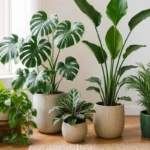

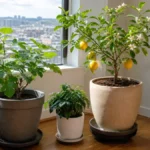
Vegetable gardening trends in 2026 are being shaped by fresh-produce price pressure, smaller growing spaces, hotter weather, and a new appetite for data-driven plant choices. USDA ERS reported fresh vegetable prices up 11.5% year over year in April 2026; farm-level vegetable prices rose 56.3% over the same period.
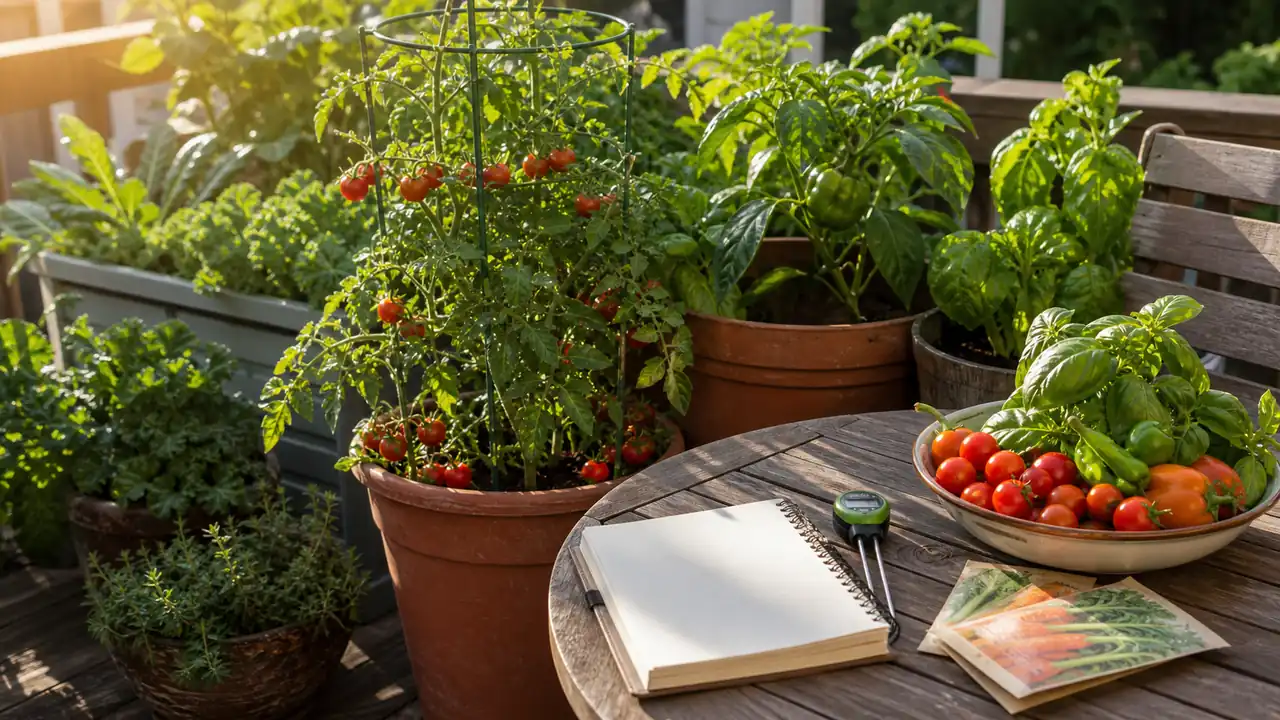
The strongest trend is practical, not romantic: gardeners are treating a few high-use edible plants as a hedge against cost, weather, and waste. A sunny patio with compact tomatoes, basil, peppers, and a moisture meter now sits closer to the center of the vegetable conversation than a large backyard row garden.
Key Takeaways
- Quote fresh vegetables up 11.5% year over year.
- Track farm-level vegetables up 56.3% year over year.
- Use 735.8 million cwt as the production scale.
- Rank tomatoes first by U.S. vegetable production volume.
- Watch compact tomatoes, peppers, chillies, and herbs.
- Treat trend forecasts separately from official USDA data.
Table of Contents
2026 Vegetable Gardening Trend Snapshot
Source basis: USDA ERS Food Price Outlook, USDA NASS Vegetables 2025 Summary, USDA AMS National Retail Report – Specialty Crops, and RHS 2026 trend signals reported by The Guardian. Trend signals are not the same as national U.S. household survey data.
Vegetable Gardening Trends Snapshot – The 2026 Data Behind The Shift
The latest hard data points to pressure around fresh vegetables, not a quiet background year. The USDA ERS Food Price Outlook summary was updated on May 22, 2026 and uses April 2026 CPI and PPI data. ERS reported fresh vegetables up 3.1% from March to April 2026 and up 11.5% from April 2025 to April 2026.
| Signal | Latest Period | Figure | Source Type | Why It Matters For Gardeners |
|---|---|---|---|---|
| Fresh vegetable CPI | April 2025 to April 2026 | +11.5% | Official USDA price data | Higher retail prices make high-use crops feel worth growing at home. |
| Fresh vegetable CPI forecast midpoint | Calendar year 2026 | +7.8% | Official USDA forecast | ERS expects fresh vegetable prices to stay above the long-run pace. |
| Farm-level vegetable PPI | April 2025 to April 2026 | +56.3% | Official USDA price data | Producer prices show stress before the retail shelf absorbs or smooths it. |
| Fresh tomato retail price change | April 2025 to April 2026 | +39.7% | Official USDA price data | Tomatoes stand out as a crop where home growing has clear price logic. |
| Fresh potato retail price change | April 2025 to April 2026 | -3.0% | Official USDA price data | Not every vegetable has the same home-growing price case. |
| U.S. vegetable and melon production | 2025 crop year, released February 2026 | 735.8 million cwt | Official USDA production data | Commercial scale remains huge; home gardens matter most at household routine level. |
| Vegetable grocery ads | June 6-18, 2026 | 95,388 ads | Official USDA retail-ad data | Retail promotions show which fresh items stores are pushing in the current season. |
The trend picture changes when price data is set beside production data. The USDA NASS Vegetables 2025 Summary counted 735.8 million cwt across 28 vegetable and melon crops in 2025. Home gardeners use small spaces to control a few crops they buy often, eat fresh, and notice when prices jump.
Price-Driven Vegetable Gardening – Fresh Produce Costs Are Pushing Practical Crops
Fresh vegetable prices make the 2026 gardening trend feel less ornamental. ERS reported retail fresh vegetable prices 11.5% higher in April 2026 than in April 2025, and fresh tomatoes were 39.7% higher over the same period. A tomato plant on a warm balcony suddenly has a different kind of value when the grocery display carries a sharper price tag.
| Price Measure | Period | 2026 Figure | Garden Trend Signal |
|---|---|---|---|
| Retail fresh vegetables, month to month | March 2026 to April 2026 | +3.1% | Short-term pressure on fresh produce. |
| Fresh vegetable YoY CPI | April 2025 to April 2026 | +11.5% | High-use fresh crops become more attractive in home gardens. |
| Tomato YoY CPI | April 2025 to April 2026 | +39.7% | Tomatoes are the clearest 2026 price-driven home crop. |
| Potato YoY CPI | April 2025 to April 2026 | -3.0% | Bulky storage crops earn space for storage and taste, not price alone. |
| Farm-level vegetables, year over year | April 2025 to April 2026 | +56.3% | Producer volatility can feed interest in resilient household food routines. |
| Fresh vegetable CPI forecast midpoint | Calendar year 2026 | +7.8% | Price pressure spans more than one grocery week. |
The most useful home crops are not always the largest by commercial volume. Tomatoes, herbs, peppers, leafy greens, cucumbers, and beans fit the price-driven trend because they are harvested fresh, used in small amounts, and lose quality quickly after purchase. A damp bunch of basil collapsing in the refrigerator tells the story better than a national average: fresh value often disappears at the household level before the food is fully used.
For broader price context, the current vegetable price statistics page separates CPI, PPI, retail-ad prices, and forecast rows. That separation matters because a home gardener deciding what to grow needs item-level pressure, not one blended grocery number.
Compact Vegetable Gardening – Small Edibles Are Becoming The Default Entry Point
Compact edibles are one of the clearest 2026 trend signals. The RHS forecast reported by The Guardian points to tabletop tomatoes, compact aubergines, chillies, peppers, and hanging-basket cucumbers as growing categories for small spaces. The same piece reported potted herb sales up 10% across RHS retail and tomato sales up 14% in 2025 after a warm, dry season.
| Compact Trend Signal | Year Or Period | Figure Or Evidence | How To Read It |
|---|---|---|---|
| RHS tomato sales signal | 2025 sales, forecast into 2026 | +14% | UK retail signal tied to warm, dry conditions and tomato interest. |
| RHS potted herb signal | Past year reported in 2025 trend forecast | +10% | Retail signal for small edible plants near the kitchen. |
| Tabletop vegetable forecast | 2026 | Tomatoes, aubergines, chillies, peppers | Industry and expert trend signal, not a U.S. household count. |
| Hanging-basket cucumber signal | 2026 | Named by RHS trend coverage | Compact fruiting vegetables are being bred and marketed for limited space. |
| Container-interplanting signal | 2026 | House Beautiful expert trend coverage | Edibles are being mixed with herbs and ornamentals in containers. |
Small-space vegetable gardening works because it cuts the crop list down to plants with fast household feedback. A 12-inch pot of basil, a compact pepper, or a cherry tomato does not need to carry a family’s whole food budget. It only has to change the dinner routine often enough to feel useful. Leaves smell sharp when brushed, peppers color slowly on the plant, and tomatoes can be picked before the skin softens on the counter.
Container depth still decides whether compact vegetable gardening succeeds. Shallow boxes fit herbs and greens; fruiting vegetables need more root volume, water buffering, and sun. The internal container depth chart by vegetable root type gives the practical side of that trend. Container vegetables by size, light, and space helps match crops to a patio, balcony, or windowsill.
Climate-Resilient Vegetable Gardening – Heat, Drought, And Water Timing Are Rewriting Choices
Climate-resilient gardening reaches vegetable beds and containers first. Vegetable gardeners feel it in dry potting mix, blossom drop, bitter lettuce, sunscalded peppers, and cucumber vines that wilt before evening. The 2026 trend sources keep returning to the same pressure: hotter, drier, less predictable conditions make water timing and cultivar choice harder to ignore.
The Guardian’s RHS coverage ties the tabletop vegetable trend to climate adaptation and water scarcity, including interest in drought-tolerant plants and water-storage methods. Better Homes & Gardens’ 2026 trend coverage also frames gardening for ecological repair, water use, native plants, soil health, and data-driven plant care. Those trend signals explain why the same gardener might choose compact peppers, drip irrigation, mulch, and a soil-moisture sensor in the same season.
| Decision Area | 2026 Signal | Vegetable Garden Impact | Practical Crop Direction |
|---|---|---|---|
| Water storage | RHS noted experimentation with water butts and slow-release methods. | Gardeners want to hold rainwater and reduce mains-water dependence. | Mulched containers, drip lines, and crops grouped by water need. |
| Heat tolerance | Trend coverage favors climate-resilient planting. | Cool-season crops need tighter timing; summer fruiting crops need less stress. | Peppers, eggplant, okra, heat-tolerant greens, and shade-timed lettuce. |
| Small-space resilience | Tabletop and container edibles are forecast to grow. | Containers dry faster, so water buffering becomes the weak point. | Deeper pots, self-watering containers, compost-rich mixes. |
| Stormwater and soil | BHG cites demand for plants that help soil and stormwater functions. | Vegetable beds need organic matter, infiltration, and less bare soil. | Cover crops, compost, mulch, and permanent paths. |
The failure state is easy to spot: the plant looks fine at breakfast, then hangs dull and limp by late afternoon. In containers, that swing can happen even when the top inch of mix looks dark. Roots may be sitting in a hot, dry band halfway down the pot. The 2026 resilience trend is really a root-zone trend.
Edible Landscaping Trends – Vegetables Are Moving Into Containers, Borders, And Visible Spaces
Edible gardening is being pulled out of the hidden utility corner. House Beautiful’s 2026 trend coverage points to edible plants staying popular, with compact varieties that can be interplanted with herbs and ornamental flowers in containers. That signal fits the rise of patio vegetables because a small edible display has to look good and produce.
| Visible-Space Trend | Best Vegetable Fit | Why It Works | Risk To Watch |
|---|---|---|---|
| Mixed container planting | Compact peppers, herbs, leaf lettuce | Color, scent, and harvest all sit in one container. | Different water needs can stress one plant in the group. |
| Tabletop edibles | Cherry tomatoes, chillies, dwarf eggplant | Small fruiting plants can be decorative and useful. | Fruit set drops when light is too weak indoors. |
| Patio kitchen gardens | Basil, parsley, scallions, greens | Frequent snips change meals without a large bed. | Repeated harvest needs regular fertility. |
| Edible borders | Chard, kale, herbs, bush beans | Leaf texture and color blend with flowers. | Pest damage is more visible near seating areas. |
| Pollinator-edible overlap | Squash, cucumbers, flowering herbs | Flowers support fruit set and insect activity. | Poor pollination leaves misshapen fruit. |
This trend also explains why edible plants are being judged by more than yield. A compact pepper with glossy leaves, clean fruit, and a tidy habit may win a container spot over a higher-yielding plant that sprawls, snaps, or dries out too fast. The best edible landscaping vegetables produce food without making the patio feel like a temporary storage area.
Precision Vegetable Gardening – Data Tools Are Moving Into Ordinary Beds
Precision gardening is the technology side of the same pressure. Better Homes & Gardens’ 2026 trend coverage names data-driven gardening as one of the year’s themes, including diagnosis apps, soil-moisture sensors, local weather data, and smart irrigation. Homes & Gardens describes precision gardening through microclimates, soil type, moisture management, climate shifts, and site-specific plant choices.
| Tool Or Data Layer | Measured Signal | Vegetable Use Case | Best Fit |
|---|---|---|---|
| Soil moisture meter | Moisture at root depth | Prevents watering from the surface while roots stay dry below. | Tomatoes, peppers, cucumbers, containers. |
| Soil test | pH and nutrient levels | Shows whether poor growth is fertility, pH, or water related. | New beds, raised beds, high-value crops. |
| Local weather forecast | Heat, rain, wind, frost risk | Guides planting, shade cloth, irrigation, and harvest timing. | Season transitions and heat waves. |
| Plant diagnosis app | Visual symptom pattern | Flags likely disease or pest issues from leaf photos. | Tomato leaf spots, mildew, nutrient symptoms. |
| Smart irrigation controller | Water schedule tied to conditions | Reduces overwatering during cool spells and underwatering during heat. | Drip-irrigated beds and container groups. |
Vegetable gardeners still need judgment. A moisture reading cannot see that a tomato rooted only in the top half of a pot after the lower mix stayed cold and wet in spring. A diagnosis app may identify leaf spots without knowing the bed was overhead-watered at dusk for three nights. Precision tools work best when they sharpen observation and keep the gardener looking closely.
Organic And Low-Chemical Vegetable Gardening – The Demand Signal Is Visible But Mixed
Organic and low-chemical vegetable gardening sits between household preference and retail reality. The USDA AMS National Retail Report – Specialty Crops counted 49,608 organic produce ads in the June 6-18, 2026 report window, equal to 16% of total produce ads. That retail signal shows organic produce staying visible in grocery promotions.
| Signal | Period | Figure Or Evidence | What It Can Support |
|---|---|---|---|
| Organic produce ads | USDA AMS June 6-18, 2026 | 49,608 ads | Organic produce remained visible in retail promotions. |
| Organic share of total produce ads | USDA AMS June 6-18, 2026 | 16% | Retail signal, not a home-garden adoption rate. |
| Vegetable ads | USDA AMS June 6-18, 2026 | 95,388 ads | Vegetables carried 30% of total produce ads in that report. |
| BHG ecology trend signal | Published January 2026 | Native plant demand cited up 82% since 2020 | Broader low-input gardening signal; not vegetable-specific. |
| Organic growing practice boundary | Evergreen practice context | Soil health, pest pressure, and inputs | Home growers often use organic methods without formal certification. |
Home gardeners should not confuse an organic grocery ad with certified organic production in a backyard. Certification belongs to commercial standards. A household vegetable bed can still borrow the practical parts: compost, crop rotation, physical pest barriers, resistant varieties, mulch, and careful watering. The internal guide to what defines organic vegetables explains the difference between principles, practices, and certification language.
Vegetable Trend Source Matrix – Which Claims Are Hard Data And Which Are Signals
Trend pages get messy when every source is treated as equal. A USDA price row, a grocery-ad count, a retailer sales increase, and an expert forecast do not measure the same thing. The source matrix below keeps the claim type attached to the number.
| Source | Latest Date Used | Data Type | Use It For | Do Not Use It For |
|---|---|---|---|---|
| USDA ERS Food Price Outlook | Updated May 22, 2026 | CPI, PPI, and forecasts | Fresh vegetable inflation, tomato price pressure, farm-level vegetable volatility. | Counting how many households garden. |
| USDA NASS Vegetables 2025 Summary | Published February 2026 | Crop production, acreage, value | Commercial crop scale, acreage, and value. | Small garden adoption or consumer motivation. |
| USDA AMS National Retail Report | June 6-18, 2026 | Advertised grocery prices and ad counts | Current retail promotion signals and organic produce visibility. | Full checkout prices at every store. |
| RHS trend forecast via The Guardian | Published December 2025 for 2026 | Expert forecast and retail signals | Compact edibles, tabletop vegetables, water-saving trend signals. | U.S. national household statistics. |
| Better Homes & Gardens 2026 trends | Published January 2026 | Expert trend coverage | Ecological gardening, data-driven tools, broader consumer direction. | Official adoption rates for vegetable gardeners. |
| House Beautiful 2026 trends | Published 2026 | Expert trend coverage | Edible landscaping, compact edibles, container aesthetics. | Price, acreage, or production statistics. |
| Homes & Gardens precision gardening coverage | Published 2026 | Trend interpretation | Precision gardening language around microclimates, soil, and moisture. | Official technology adoption rates. |
The safest citation pattern is simple: use USDA for numbers, use trend coverage for direction, and say when a source is not measuring U.S. households. That keeps the 2026 vegetable gardening trend claim clean enough for researchers, writers, and gardeners to reuse without stretching it.
Where To Start With The 2026 Vegetable Trend Data
For a quick citation, start with the USDA ERS price rows. Use the April 2026 fresh vegetable CPI, fresh tomato CPI, and farm-level vegetable PPI together only when the sentence makes clear that retail and producer prices are different measures.
Crop context belongs with the USDA NASS production rows. The 735.8 million cwt figure gives national scale; the tomato, sweet corn, and lettuce rows explain why home gardens work as household-level resilience rather than commercial-supply replacement.
Consumer direction comes from the 2026 trend sources with labels intact. RHS, Better Homes & Gardens, House Beautiful, and Homes & Gardens help explain compact edibles, water resilience, edible landscaping, and precision gardening. Those sources should not be quoted as U.S. household adoption rates.
Conclusion
Vegetable gardening in 2026 is becoming more practical, smaller, and more data-aware. The strongest numbers come from price pressure: fresh vegetables up 11.5%, fresh tomatoes up 39.7%, and farm-level vegetables up 56.3% year over year in April 2026. Those figures do not mean every household needs a large garden. They mean a few fresh crops can carry more household value when they are chosen well.
The best starting point is a crop a household already buys every week, planted in a space that can keep roots evenly moist. A compact tomato, a pepper, two herbs, and a box of greens can tell a gardener more than a long seed list. Success looks like firm fruit, clean leaves, damp-not-soggy soil, and a small harvest close enough to the kitchen that it gets used the same day.
Frequently Asked Questions
What is the biggest vegetable gardening trend in 2026?
Price-driven edible gardening is the strongest data-backed trend. USDA ERS reported fresh vegetable prices up 11.5% year over year in April 2026; fresh tomatoes were up 39.7%. That makes high-use fresh crops such as tomatoes, herbs, peppers, and greens more attractive in small home gardens.
Are compact vegetables really a 2026 trend?
Compact vegetables are a strong trend signal, especially for small spaces. RHS 2026 trend coverage points to tabletop tomatoes, compact aubergines, chillies, peppers, and hanging-basket cucumbers. The same coverage reported tomato sales up 14% in 2025 and potted herbs up 10% across RHS retail.
Which vegetables make the most sense to grow because of prices?
Tomatoes have the clearest 2026 price case because USDA ERS reported fresh tomato retail prices 39.7% higher in April 2026 than in April 2025. Herbs, peppers, salad greens, cucumbers, and beans also make sense when a household uses them often and can harvest them before quality drops.
Does vegetable gardening replace grocery shopping?
No. USDA NASS estimated 735.8 million cwt of U.S. vegetable and melon production across 28 crops in 2025. Home gardens work best as household-level support: fewer wasted herbs, fresher tomatoes, faster greens, and less dependence on the most fragile fresh items.
Is precision gardening useful for vegetables?
Precision gardening is useful when it measures root-zone conditions. A soil moisture meter, soil test, local weather data, or drip timer can help tomatoes, peppers, cucumbers, and container vegetables avoid the wet-dry swings that cause blossom drop, cracking, disease pressure, or stalled growth.