Last Updated April 27, 2026
Pumpkin growth stages move from warm-soil germination to seedling growth, running vines, male-first flowering, pollination, fruit fill, rind hardening, and fall harvest. Each handoff matters because the next stage asks for different care.
A pumpkin patch can look wild by midsummer, with rough leaves shading the soil, tendrils catching nearby stems, and yellow blossoms opening before breakfast. Quieter signals matter more: a female flower that shrivels without swelling, a young fruit that yellows at the tip, a rind that still takes a thumbnail mark. Large healthy pumpkins depend on those stage signals: enough leaf area before fruit load, stable root-zone moisture during fruit fill, and a hard rind before storage.
Pumpkin Growth Stages:
- Germination: warm soil and even moisture start the crop cleanly
- Seedling: first true leaves show the plant is feeding itself
- Vine growth: leaves, nodes, and roots set the fruit-size ceiling
- Flowering: male blooms arrive first, then female fruiting flowers follow
- Pollination: swollen ovaries grow only after pollen reaches the stigma
- Fruit fill: stable water and fruit thinning build larger pumpkins
- Ripening: hard rind, corky stem, and frost timing decide harvest
Table of Contents
Pumpkin Growth Stages Timeline – What Changes From Seed To Rind
A pumpkin does not move through clean calendar boxes. Lower vines may carry young fruit, fresh female flowers, and aging leaves at the same time. The calendar tells you whether the season is long enough; the plant tells you what to do today.
Growing pumpkins in a home garden usually requires more than 100 days to ripen; seeds often germinate in 7-10 days, and male flowers commonly appear for 1-2 weeks before female flowers. That sequence matters because fruit count is decided after the vine has already spent weeks building leaf area.
Pumpkin growing timelines work as flexible stage ranges. Variety, soil temperature, heat, rainfall, and first frost date can move the edges.
| Timing | Main Stage | What You See | Best Decision |
|---|---|---|---|
| Days 1-10 | Germination | Seed swells, root emerges, cotyledons push up | Keep soil warm and evenly damp |
| Week 2-3 | Seedling | First true leaves appear beyond the seed leaves | Protect roots, thin early, avoid wet cold soil |
| Week 3-7 | Vine growth | Large leaves, tendrils, primary and side vines spread | Give space, mulch warm soil, water deeply |
| Week 7-10 | Flowering | Male flowers open first, female flowers show a small ovary | Protect bees and hand-pollinate if fruit set fails |
| Week 8-15 | Fruit development | Pollinated ovaries swell into green pumpkins | Keep moisture even and choose which fruit to keep |
| Week 13-18+ | Maturation | Color deepens, rind dulls, stem turns corky | Harvest before hard freeze and cure carefully |
Vegetable growth stages still move through establishment, vegetative growth, reproduction, and harvest. Pumpkins stretch that pattern because the vine has to build a large solar factory before it can fill a heavy fruit.
Germination And Seedling Stage – Warm Soil Starts The Clock
Pumpkin seed can sit in cold ground looking patient, then rot before the shoot ever breaks the surface. Warm soil speeds the enzymes that wake the seed, and oxygen around the seed matters as much as moisture.
Pumpkins and winter squash should be direct-sown when soil at 2 inches is around 65 F. Pumpkin planting also depends on warm soil, sunny exposure, fertile ground, and deep watering. Those numbers explain why a late May sowing in warm soil can outrun an early May sowing in a wet bed.
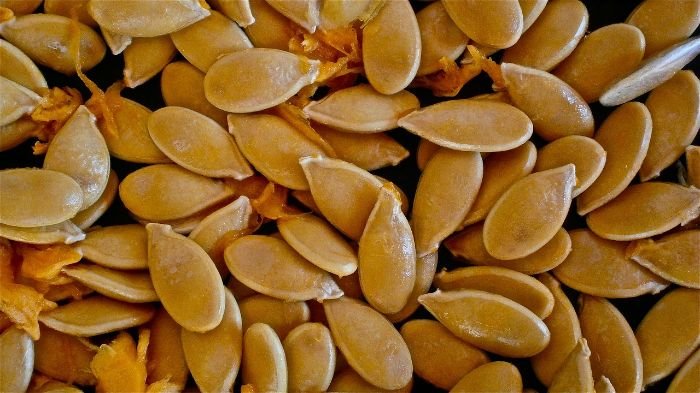
Germination begins when water enters the dry seed. The seed coat softens, stored starch shifts into usable sugars, the radicle breaks out as the first root, and the shoot pulls the seed leaves above the soil. Those first oval leaves are cotyledons. The rougher, lobed leaves that follow are the first true pumpkin leaves.
Good seed-row soil feels warm against your fingertip and slightly damp at one inch deep. It should crumble when rubbed, not smear into a shiny ribbon or smell sour. If the surface dries into a crust after rain, the thick seed leaves may kink under it and fail to open cleanly.
Pro Tip: In short-season gardens, start pumpkins indoors only three to four weeks before transplanting and use a pot large enough that roots are not circling by planting day. Pumpkin roots dislike being handled, so a younger, slightly smaller transplant often beats a big root-bound one.
Direct sowing works well in long warm seasons. Shorter seasons may need transplants, black plastic, or a faster-maturing variety. Choosing vegetables by season and climate matters because pumpkins cannot make up a missing month after nights cool down.
Vine Growth Stage – Leaves Set The Fruit Ceiling
The vine stage is not filler before the exciting part. It is the stage that builds the leaf area, root reach, and node system that later feeds every pumpkin on the plant.
Pumpkin vines grow from a primary vine with side vines branching from it. Tendrils help the vine catch nearby stems and debris, and nodes can root when they touch moist soil. That extra rooting is why vines that run along clean, lightly covered soil often handle heat better than vines left on dry bare ground.
Do not cut leaves just because the patch looks too leafy. Leaves are the sugar source. A pumpkin fruit is a heavy sink for water, minerals, and carbohydrates, and the vine pays for that fruit through photosynthesis. A plant with weak leaf area may set fruit, then stall when the pumpkin reaches grapefruit size.
Gardeners often start pruning after the vines feel unruly, then wonder why the fruit stops sizing. A few redirected vines are fine. Heavy pruning during active fruit fill removes the factory that was feeding the crop.
Spacing changes everything. Standard vining pumpkins need room to run; bush or semi-bush types fit smaller gardens with less sprawl. Pumpkins share close growth logic with seed to squash growth, but pumpkins usually need a longer fruit-ripening window.
For very large pumpkins, the vine stage becomes a size strategy. Giant pumpkin plants may need at least 400 square feet, can gain up to 30 pounds per day during peak growth, and are usually managed down to one fruit per plant. Home gardeners growing carving pumpkins do not need that extreme approach. The principle still holds: too many fruit on a modest vine means smaller pumpkins.
Flowering And Pollination Stage – The Short Window That Decides Fruit Set
Flowering can fool new growers because the first flush may be all male. That is normal. Male flowers open on long thin stems, drop pollen, and train pollinators to visit before female flowers arrive with a swollen ovary under the petals.
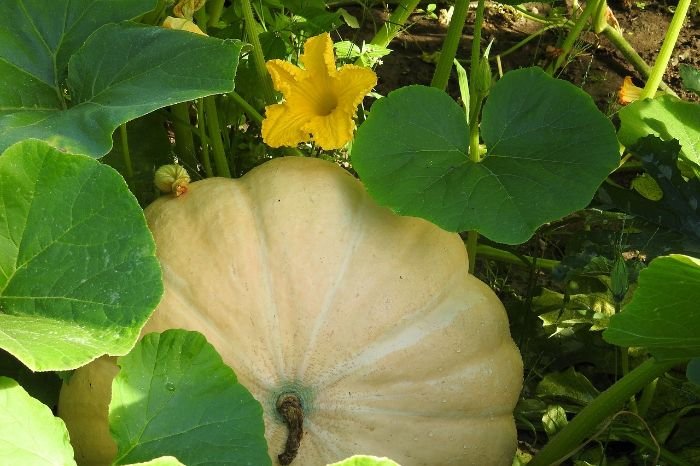
Female flowers are the ones with the tiny pumpkin shape below the bloom. If pollen reaches the stigma inside that flower, the ovary begins to swell. If pollination fails, the small fruit often yellows, softens at the blossom end, and drops from the vine within days.
Bees do most pumpkin pollination. Rain, cool mornings, extreme heat, and insecticide use during bloom reduce visits. A row of herbs and flowers near the vegetable bed can help, and companion plants for vegetables work best when blooms overlap with pumpkin flowering.
Hand pollination is useful when female flowers keep failing. Pick a fresh male flower in the morning, remove the petals, and dab the pollen-covered stamen onto the stigma inside a newly opened female flower. Use a male flower from the same pumpkin type. Giant pumpkins, jack-o-lantern pumpkins, and winter squash can belong to different Cucurbita species, so seed saving and cross-pollination rules get messy fast.
Successful pollination is visible through growth, not flower closure. A pollinated ovary stays firm and begins enlarging within a few days. The surface feels taut, the stem behind it thickens, and the color stays healthy for the variety.
Fruit Development Stage – Size, Shape, And Water Demand
Once a pumpkin sets, the plant shifts from making potential to filling weight. Cell division builds the young fruit structure first; cell expansion adds the water-heavy size that gardeners notice day by day.
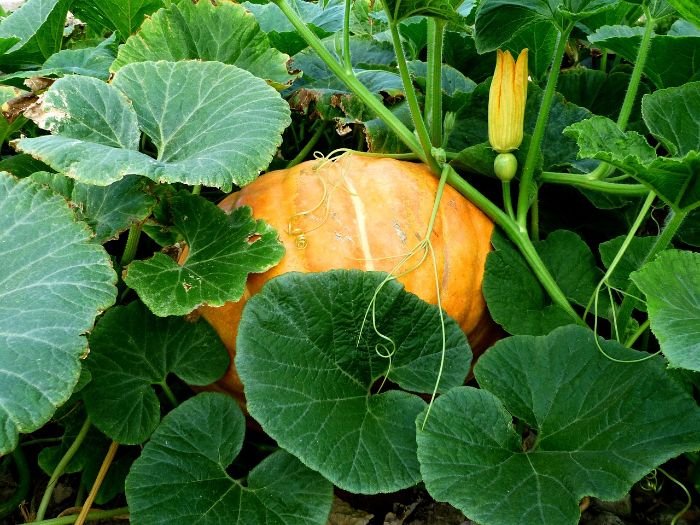
Small and pie pumpkins may move from successful pollination to mature fruit in roughly six to eight weeks. Large carving pumpkins and giant types need longer. The seed packet’s days to maturity still matters because that number usually counts from planting under decent conditions, not from the first flower you notice.
Water stress leaves marks during fruit fill, the main stage for growing large healthy pumpkins. A pumpkin that grows fast after dry soil returns to sudden soaking can crack. A fruit that receives uneven moisture may flatten oddly, stop sizing, or develop weak spots where it rests on wet soil. Use soil moisture monitoring at root depth, not leaf wilt alone, because pumpkin leaves can flag on hot afternoons even when deeper soil still holds water.
Feed for the stage. Early nitrogen builds vine and leaf area. After fruit set, too much nitrogen pushes more vine growth at the expense of ripening and can make soft, split-prone fruit more likely. Compost before planting, then side-dress only as the plant begins running or as first fruit develop if the bed is not already rich.
Set young pumpkins on straw, a board, or a flat piece of cardboard before they get heavy. The surface under the fruit should drain and dry. Move only young fruit with care; the stem hardens as the fruit grows, and a hard twist can break the connection that is feeding it.
For bigger pumpkins, choose early during fruit development. When several young fruit reach baseball to small melon size, keep the strongest on a well-placed vine and remove extras. Stable moisture keeps that chosen fruit expanding evenly; fruit thinning decides how much of the vine’s sugar flow reaches it. Giant-pumpkin growers take the same logic further with one selected fruit, rooted vine nodes, and limited extra vine growth. Do not inject milk or fertilizer into vines. Wounding the vine opens a disease door.
Maturation And Harvest Stage – Rind, Stem, And Frost Cues Matter Together
A pumpkin can look finished before it stores well. Full color is only one signal. The rind, stem, vine condition, and weather forecast have to agree closely enough before harvest.
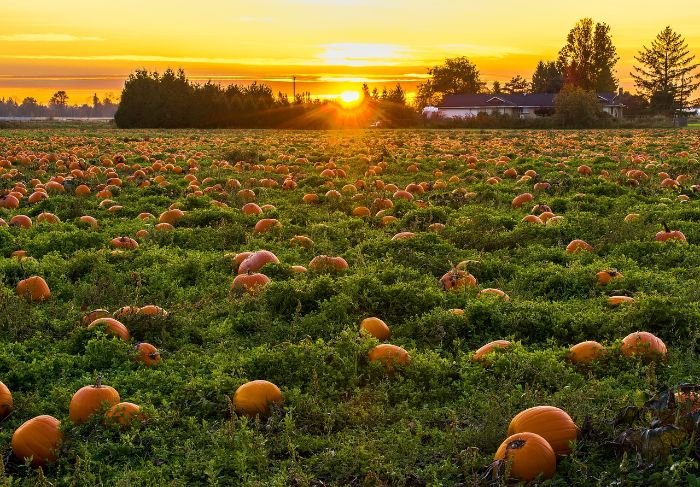
Mature pumpkins resist thumbnail penetration, do not scratch easily, often shift from shiny to dull, and sit on vines that are beginning to senesce. Cut pumpkins with a sharp knife or pruners and leave 3-4 inches of stem attached. That stem is not a handle. It is a storage barrier.
Check harvest readiness through several signals.
| Harvest Signal | What It Looks Or Feels Like | What To Do |
|---|---|---|
| Expected color | Orange, white, blue, tan, or green shade matches the variety | Use color as a first clue, not the final test |
| Hard rind | Thumbnail pressure does not cut the skin easily | Wait if the rind still marks like soft squash |
| Corky stem | Stem dries, hardens, and turns woody near the fruit | Cut with tools and keep a stem stub attached |
| Dulling surface | Gloss fades into a more matte finish | Begin checking every few days |
| Frost forecast | Light frost may kill vines; hard freeze can injure fruit | Harvest before hard freeze even if timing is tight |
Handle pumpkins like storage fruit, not firewood. A bruise under the rind can become the first soft spot in storage. Cut the stem, lift from the bottom, brush off dry soil, and cure in warm dry air if the fruit is mature enough. Field-cure mature pumpkins for one to two weeks in dry sunny weather, or cure indoors around 80 F with good ventilation when the weather turns cold or wet.
Storage works best in a cool, dry, airy place. A 50-55 F range works well for storage. Keep pumpkins off damp concrete, avoid stacking, and inspect them every week. A sound ripe pumpkin feels hard, heavy, and faintly hollow when tapped. A failing one gives a dull softness under the thumb before the rot becomes obvious.
Pumpkin Stage Checks – Match The Fix To The Phase
Pumpkin problems are easier to solve when you name the stage first. A seed that rots, a vine with only male flowers, a young fruit that yellows, and a ripe pumpkin with a soft stem are not the same problem.
Stage-based diagnosis also prevents overcorrection. Extra fertilizer will not pollinate a female flower. More water will not cure vine borer damage. A spray will not harden an immature rind. Scout from flowering through fruit fill, because organic pest control works best before damaged vines stop feeding the crop.
| Stage | Problem Signal | Likely Cause | Best Response |
|---|---|---|---|
| Germination | Gaps in the row, mushy seed | Cold wet soil or crusting | Replant once soil is warm and drains cleanly |
| Seedling | Stem pinched or cut near soil | Cutworms or rough cultivation | Use collars and weed shallowly |
| Vining | Huge leaves, few flowers | Too much nitrogen or not enough time | Stop feeding nitrogen and let vines mature |
| Flowering | Many blooms, no pumpkins | Only male flowers so far or low bee activity | Wait for female flowers and protect pollinators |
| Fruit set | Baby pumpkins yellow and drop | Failed pollination or heat stress | Hand-pollinate morning female flowers |
| Fruit fill | Cracks, flattened spots, slow sizing | Uneven moisture or fruit on wet soil | Water deeply and lift young fruit onto dry material |
| Maturation | Orange fruit with soft rind | Color changed before full maturity | Wait unless hard freeze is coming |
| Storage | Soft stem or sunken spot | Bruising, broken stem, or immature harvest | Use that fruit first and inspect the rest |
Strong pumpkin harvests come from small corrections at the right stage, followed by enough leaf area and root contact for the plant to finish the work.
Conclusion
Pumpkins reward stage reading more than constant intervention. Warm soil starts the crop, leaf area pays for fruit, pollination sets the count, moisture controls expansion, and rind hardening decides whether the harvest stores past the first autumn display.
If the season is short, choose a faster variety and protect the early soil warmth. If the vine is strong and fruit set is poor, watch the flowers at sunrise before adding fertilizer. If the pumpkin has color and the rind still dents, give it more time unless a hard freeze is close.
FAQ
What are the main pumpkin plant growth stages?
The main stages are germination, seedling growth, vine growth, flowering, pollination, fruit development, maturation, harvest, curing, and storage. The most useful field signals are true leaves, running vines, male flowers, female flowers with swollen ovaries, enlarging young fruit, hard rind, and corky stem.
How long after flowering do pumpkins grow?
After a female flower is successfully pollinated, many small and standard pumpkins need about six to eight weeks to reach mature fruit. Large carving pumpkins and giant types often need more time. Count from successful fruit set, not from the first male flower, because male flowers can open for a week or two before females appear.
Why does my pumpkin plant have flowers with no pumpkins?
Most early flowers are male, so a plant can bloom heavily before it is able to set fruit. If female flowers are present and still dropping, the problem is usually poor pollination, rainy mornings, low bee activity, heat stress, or pesticide use during bloom. Hand-pollinating a fresh female flower in the morning is the fastest test.
Can you grow pumpkins in containers through all growth stages?
Yes, with small or bush pumpkin varieties and a very large container. A half-barrel or grow bag around 20 gallons is a practical starting point for compact types, with full sun, frequent watering, and a sturdy surface under developing fruit. Standard vining pumpkins are rarely worth container growing unless you have space for the vines to run outside the pot.
What happens if you harvest pumpkins too early?
An early-picked pumpkin may color up a little. It will not develop the same hard rind, corky stem, or storage life as one matured on the vine. The soft rind loses moisture faster and bruises more easily. Use immature pumpkins quickly, and save long storage for fruit that passed the thumbnail test before harvest.
Should you remove some pumpkins to make bigger pumpkins?
For size, yes. A plant carrying fewer fruit can direct more water and carbohydrates into each one. For carving pumpkins, keeping two to four strong fruit on a healthy vine is often reasonable; for giant pumpkins, growers usually keep one. Remove extras when they are still small so the vine does not spend weeks feeding fruit you later cut away.
How do you know when pumpkins are ready to harvest?
Use several signs together: mature variety color, a hard rind that resists a thumbnail, a duller surface, a dry corky stem, and vines beginning to decline. Harvest before a hard freeze. Cut the stem with pruners and leave a few inches attached so the fruit stores better.
Do pumpkins keep growing after they turn orange?
Sometimes they do. Orange color can arrive before full rind hardening, especially in warm late summer weather. If the rind still scratches easily or the stem is green and soft, the fruit is still maturing. Let it stay on the vine until the harvest signals line up or freezing weather forces your hand.