Updated April 14, 2026
Kale moves from germination to harvest quickly, though the care shifts at each phase. Seeds need moisture close to the surface. Young plants need spacing before roots tangle. Mature plants need cool weather, even moisture, and repeated outer-leaf harvest if you want tender greens over tough, bitter leaves.
Kale often reaches baby-leaf size around 30 days, full harvest around 55 to 75 days, and can keep producing for weeks after that. Heat, drought, crowding, and late pest pressure change the pace fast, so stage-by-stage care is more useful than a generic grow guide.
Vegetable growth stages from seedling to harvest apply broadly across edible crops, but kale needs narrower tracking because it is picked leaf by leaf, handles frost well, and changes flavor fast when temperature and moisture shift.
Key Takeaways:
- Kale moves through germination, seedling, establishment, leaf-building, harvest, and bolting stages quickly in cool weather
- Baby leaves can start around 30 days, and full-size harvest often lands around 55 to 75 days
- Thin or transplant early so roots and leaves expand before warm weather slows quality
- Keep the soil evenly moist and feed during the leaf-building phase for faster, cleaner growth
- Harvest outer leaves first and protect the center so the plant keeps producing
Table of Contents
Kale Growth Stages Follow A Short Timeline With A Long Harvest Window
The main visible shift in kale is from seedling to leaf-building rosette, then into repeated harvest. Progress is strongest when each stage is feeding the next round of usable leaves.
| Stage | What you see | Typical timing | Main care priority |
|---|---|---|---|
| Germination | Seed coat breaks and cotyledons emerge | About 5 to 10 days in warm, moist soil; slower in cool beds | Keep the seed zone moist and loose at the surface |
| Seedling | First true leaves form and roots begin to spread | Week 2 to week 3 | Thin on time and protect small plants from early pest damage |
| Early establishment | Plants widen into a small rosette after thinning or transplanting | Week 3 to week 5 | Water deeply, reduce transplant shock, and keep spacing open |
| Leaf-building stage | Outer leaves expand quickly and the center keeps pushing new growth | Week 4 onward | Feed, water evenly, and scout for chewing insects |
| Harvest stage | Outer leaves reach usable size and can be picked repeatedly | Baby leaves around 30 days; fuller harvest around 55 to 75 days | Pick outer leaves cleanly and protect the center |
| Bolting or late-season shift | Center stem stretches, leaves narrow, and flower buds begin forming | After heat stress, maturity, or second-year regrowth | Harvest remaining quality leaves fast or reset with a new sowing |
Baby kale can be ready around 30 days, mature harvest often lands in the 55 to 75 day range, and repeated outer-leaf picking keeps the center producing longer.
Germination And Seedling Stage Depend On Cool Soil, Clean Spacing, And Surface Moisture
Kale germinates best when the seed bed stays evenly moist near the surface and the soil does not crust over after watering. Sow seed about one-fourth to one-half inch deep and keep the top layer from drying out between irrigations. Most failures at this stage happen below the surface through dry seed, cold soil, or crowded sowing.
For spring crops, direct seed kale as soon as the soil is workable; for fall crops, sow again about three months before the average frost date. Thin full-size plants to 8 to 12 inches apart, while baby-leaf kale can be planted much closer for repeated cuttings with less gap between plants.
Kale seed slows sharply in soil that is too cold or too dry. Once seedlings are up, the first true leaves matter more than the cotyledons. That is the point when crowding starts to cost you. Thin early, before roots weave together and before flea beetles chew enough holes to slow the plant’s first push.
Pro Tip: If you want full-size kale, thin as soon as the first true leaves are easy to identify. Waiting another week usually means roots have already started competing in the same small strip of soil.
Transplant And Early Establishment Decide Whether Kale Takes Off Or Stalls
Indoor-started kale usually moves best when transplanted young, before the roots circle the cell and before stems stretch. Seedlings with several true leaves transplant well if they have been hardened first and watered before planting. Set them at the same depth they were growing in the tray, firm the soil around the root ball, and water deeply enough to settle the soil below the plug.
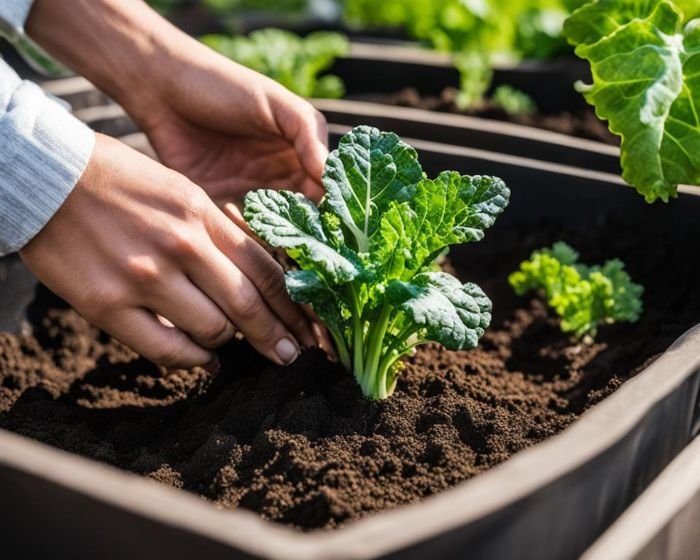
Row covers placed over brassicas right after sowing or transplanting help protect from frost and early insect pressure, and they should come off once heat builds or the plants get too tall for the cover to stay practical. That is especially useful for kale because flea beetle damage is often worst early, when even small holes can slow the whole plant.
Observation: Kale often looks healthy for several days after transplanting even when establishment is already slipping. The clearest sign is not droop alone. It is a center that stops enlarging, paired with outer leaves that stay the same size for most of a week.
This stage is also where site choice starts to show. Kale can grow in sun or part shade, which gives home gardeners some flexibility for late spring and fall beds. Filtered light can still work, though the strongest leaf growth usually comes from brighter exposure and cool soil.
Once the transplant settles, quick early growth decides later quality. The crop may stay alive after a weak start, though it rarely becomes the generous leaf producer most people expect.
The Leaf-Building Stage Needs Fast Regrowth, Feeding, And Early Pest Control
In the leaf-building phase, the plant widens into a rosette, outer leaves stretch longer each week, and the center keeps pushing fresh foliage. This stage decides tenderness, color, and total picking window. Slow leaf growth at this point usually traces back to dry soil, low nitrogen, tight spacing, or insect damage that was ignored a week too long.
Kale has its best flavor and texture when it grows fast without heat or moisture stress. Side-dress when plants are about four inches tall and use about one inch of rainfall or irrigation per week as a baseline. Kale performs best in loamy, well-drained soil with a pH around 6.0 to 7.5, so the feeding plan works best when the bed was prepared for root growth first, using the same basics covered in soil health improvement in garden beds.
Kale is a shallow-rooted crop with high water content, which is why dry periods show up quickly in leaf quality. Leaves lose tenderness first. Yield usually falls next. If the crop is short on water during warm weather, the plant often stays alive and green, though new leaves stay smaller and stronger flavored than they should. The same early warning pattern shows up in underwatering signs and garden recovery steps.
Pest pressure also belongs in this stage, not as an afterthought. Flea beetles scar the leaves early. Cabbage worms and loopers turn later growth ragged. Aphids collect where airflow is poor. Row covers, insect mesh, and fast scouting do more here than complicated rescue steps later on. Bed planning from companion planting vegetables in the home garden can help reduce crowding and make scouting easier, though spacing and timing still do most of the work.
Harvest Starts Earlier Than Full Size And Can Continue For Weeks
Kale reaches usable harvest before it looks fully mature. Baby greens can start around 30 days from seeding, and fuller harvest usually arrives around 55 to 75 days depending on variety, temperature, and whether the plant was transplanted or direct seeded. For repeated harvest, take the outer leaves and leave the center growing point intact.
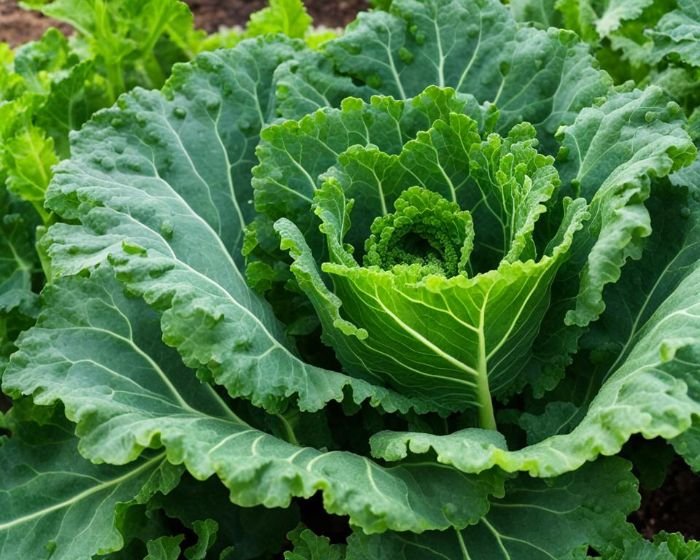
The cut-and-come-again method works best when outer leaves are removed at a tender stage and no more than about eight inches long. Clip or twist the leaf close to the stalk, leave several younger center leaves in place, and come back again once the plant has replaced what you removed. Clean picking keeps the plant acting young during repeated harvest.
Spring kale tastes best before heat and dry weather settle in. Fall kale usually improves as nights cool, and some varieties sweeten after frost. Younger, cleaner leaves are usually the ones people keep picking most often.
Kale is slower to start than many salad greens, though it holds quality longer once cool weather returns.
Bolting And Late-Season Signals Tell You When The Growth Cycle Is Changing
Kale is a biennial by nature, though most gardeners grow it as an annual for leaves. The growth cycle changes when heat, drought, age, or overwintering push the plant toward reproduction. The center starts to lift, stem length becomes obvious, and new leaves come out smaller, narrower, and less lush than the earlier rosette leaves.
Temperature extremes can push kale toward premature flowering, and overheated plants or plants struggling to take up water often produce stronger, more pungent flavor. That means the first sign of stage change is often taste and texture before an actual flower stalk dominates the bed.
- A tight center with broad new leaves means the plant is still in a productive harvest stage.
- A center that rises quickly with smaller, pointed leaves means bolting has started.
- Tough, stronger-flavored leaves after heat usually point to stress even if no flowers are visible so far.
- Cool fall weather with slow, thick regrowth often means flavor is improving again and harvest can continue.
Once bolting starts, harvest the remaining good leaves quickly and decide whether the plant still earns its space. Spring-sown kale that bolts early is usually better replaced with a new late-summer sowing for fall. Overwintered kale can be left for flowers and pollinators in year two if leaf quality is no longer the point.
Conclusion
Kale growth stages are easiest to manage as a sequence of changing jobs. Germination needs moisture close to the seed. Seedlings need thinning and protection. Early establishment needs deep watering and fast recovery. The leaf-building stage needs feed, cool weather, and fast regrowth. Harvest depends on clean outer-leaf picking that keeps the center active.
The plant tells you when the cycle is changing. Bitter leaves, slower regrowth, rising stems, and flower buds all mean the window is shifting. If you stay ahead of those signals, kale gives you one of the longest and most forgiving harvest runs in the vegetable garden.
FAQ
What are the main kale growth stages?
The practical home-garden sequence is germination, seedling growth, early establishment after thinning or transplanting, leaf-building vegetative growth, repeated harvest, and bolting or late-season decline.
How long does kale take to germinate?
Kale often sprouts in about 5 to 10 days in warm, evenly moist soil. In cool spring beds it can take longer, especially if the surface dries out between waterings.
When should kale seedlings be thinned or transplanted?
Thin once true leaves are obvious and plants are still small. Transplant indoor starts when they have several true leaves and a root ball that still holds together without circling heavily.
How far apart should kale plants be spaced?
Full-size kale usually grows best at about 8 to 12 inches apart, with rows wider than that. Baby-leaf plantings can stay much tighter because the harvest happens earlier and the plants are not being held to full size.
When can you start harvesting kale leaves?
Baby leaves can start around 30 days from seeding. Full-size harvest often lands around 55 to 75 days, though weather and variety shift the pace.
Why does kale turn bitter or tough before harvest?
Heat and uneven moisture are common reasons. Slow growth in warm, dry conditions usually gives you stronger flavor and firmer texture long before the plant is actually dead or bolting hard.
What does bolting look like on kale?
The center starts stretching upward, the stem becomes visible, and new leaves come in smaller and narrower. Flower buds follow if the plant keeps moving into its reproductive stage.
Can kale keep growing after frost?
Yes. Kale handles cold well and often tastes better after frost. Growth slows as days shorten and temperatures drop, though outer-leaf harvest can continue long after more tender greens have stopped.