
Last Updated June 03, 2026
Cucumber growth stages move fast once warm soil wakes the seed, and that speed is exactly why small mistakes show up quickly. A vine can race up a trellis and still carry no usable fruit. Baby cucumbers can yellow and shrink behind the flower. One hidden overgrown cucumber can slow the next flush because the plant has shifted energy toward seed maturity.
The crop is simple only when the stages are read correctly. Cotyledons, true leaves, tendrils, male flowers, female flowers, pollinated fruit, and harvest-ready cucumbers each ask for a different kind of care. The gardener who treats every stage as “just keep watering” usually finds the problem after the fruit is already misshapen, bitter, or too large.
Cucumber plants grow through germination, seedling growth, vine and tendril growth, flowering, pollination, fruit sizing, harvest, and decline. Most garden cucumbers reach first harvest about 50 to 70 days from seeding, with fruit often sizing quickly enough to need picking every day or two once production starts.
Key Takeaways:
- Wait for warm soil before direct seeding cucumbers
- Train vines early before tendrils grab the wrong support
- Expect male flowers before the first useful fruit set
- Check fruit daily once cucumbers begin sizing fast
- Remove oversized fruit before it slows new production
Table of Contents
Cucumber Growth Stages – Timeline From Seed To Picking
Cucumbers are warm-season annual vines. The plant spends its first weeks building roots, leaves, and tendrils, then shifts into flower production and repeated fruit set. The edible cucumber is an immature fruit, so harvest happens before seed maturity, not at botanical ripeness.
That pattern makes cucumbers different from crops that have one final harvest. A healthy vine keeps moving through flower, pollination, fruit sizing, and picking at the same time. The broader rhythm fits many vegetable growth stages; cucumbers compress the fruiting stage into a narrow daily inspection window.
| Stage | Typical Timing | What To See Or Feel | Main Care Move | Failure Signal |
|---|---|---|---|---|
| Germination | 3 to 10 days in warm soil | Seed coat lifts, cotyledons unfold, soil stays warm to the touch | Sow after frost risk and keep the seed zone evenly damp | Seeds rot or sit still in cold wet soil |
| Seedling | 1 to 3 weeks after emergence | Two seed leaves, then rough true leaves with a cucumber scent when brushed | Give full sun, gentle watering, and early pest checks | Pale stretched stems or chewed growing points |
| Vine establishment | 2 to 4 weeks after emergence | Rapid stem length, bigger leaves, first tendrils searching for support | Set trellis support and avoid disturbing shallow roots | Vines sprawl into paths or kink after late training |
| Flowering | About 4 to 6 weeks from seed | Yellow male flowers appear first, then female flowers with tiny fruit behind them | Remove row covers and avoid sprays during bloom | Flowers drop with no young fruit swelling |
| Pollination and fruit set | After female flowers open | Pollinated fruit straightens and begins swelling within days | Protect bees and keep root moisture even | Small cucumbers yellow, curl, or collapse |
| Fruit sizing and harvest | Roughly 50 to 70 days from seed | Firm green fruit, smooth skin, quick size increase after warm nights | Pick often, cut cleanly, and remove oversized fruit | Yellow skin, large seeds, bitterness, and slower new fruit |
The timeline changes with soil temperature, variety, pollination, water, and whether the plant is bush, vining, slicing, pickling, or parthenocarpic. A seed packet gives the expected days to maturity. The vine gives the real signal.
Germination And Seedling Stage – Warm Soil Starts The Crop
Cucumber seed hates cold soil. The seed needs warmth, moisture, and oxygen before the radicle pushes out and becomes the first root. In cold wet ground, respiration slows and the seed can soften before it grows. That failure smells faintly sour when the seed is dug up.
Direct seeding works well after frost risk passes and the top inch of soil stays warm. Press seeds about one-half inch to one inch deep, then firm the soil enough to remove air gaps. The soil should feel damp and slightly springy under a finger, not slick or compacted.
Seedlings start with smooth cotyledons, then produce rougher true leaves. Those true leaves carry the plant into real photosynthesis, so light matters immediately. A seedling in weak indoor light stretches fast and forms a thin neck at the soil line. In the garden, flea beetles, cucumber beetles, slugs, and cutworms can erase the growing point in one night.
Transplants need extra care because cucumber roots dislike rough handling. A seedling held too long in a cell can flower early after transplanting, especially if roots circle the pot. Start indoors only when the season needs it, and move plants before the root ball becomes a tight white net.
Pro Tip: Before sowing, push a finger into the top inch of soil at midmorning. Warm, slightly damp soil that crumbles back into the furrow is ready. Cold soil that smears or clumps should wait.
Vine Growth Stage – Tendrils, Leaves, And Roots Build The Yield
From above, the vine stage looks like simple green growth. Inside the plant, the structure that will carry fruit is being built. Leaves enlarge, nodes form, tendrils coil around support, and roots branch near the soil surface. Tendrils respond to touch through thigmotropism, which is why they grab twine, mesh, weeds, and nearby plants with no judgment at all.
Train vines early. Once stems harden and fruit starts adding weight, late moves crack tissue or pull shallow roots. A trellis keeps fruit off damp soil, improves airflow, makes flowers easier to see, and turns harvest into a quick visual sweep with no leaf hunt.
Root-zone moisture matters because cucumber leaves lose water quickly through transpiration. Afternoon wilt that recovers by sunrise points to heat load. A vine still limp by sunrise has a water or root problem. Use soil moisture monitoring to check the lower root zone before changing the schedule.
Soil texture changes the watering pattern. Sand needs smaller, more frequent applications. Clay needs slower watering and drainage attention. A loam that holds together under light pressure and breaks apart under the thumb gives cucumbers the easiest balance of water and oxygen. The same root-zone thinking starts with soil types in gardening.
Mulch helps once the soil is already warm. A rough, airy layer keeps moisture more even and limits splashing soil onto lower leaves. The principle behind mulching to conserve soil moisture fits cucumbers especially well after vines begin spreading.
Flowering And Pollination Stage – Read Male And Female Flowers Correctly
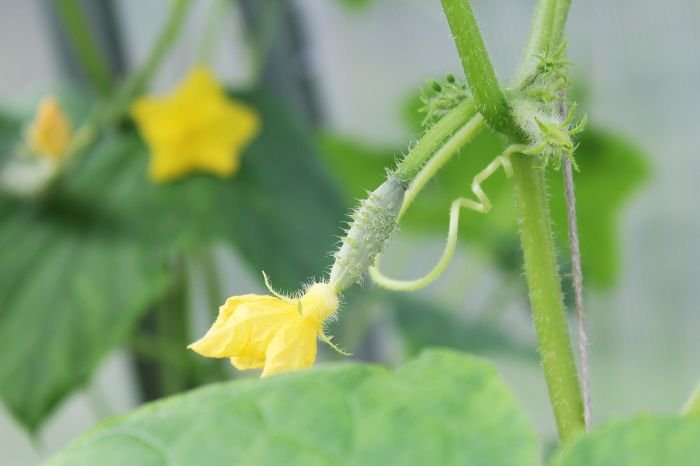
The first yellow flowers on a cucumber vine are usually male. They sit on slender stems with no tiny cucumber behind the petals. Female flowers open later and carry the small ovary at the base. That swelling is the unfertilized fruit waiting for pollen.
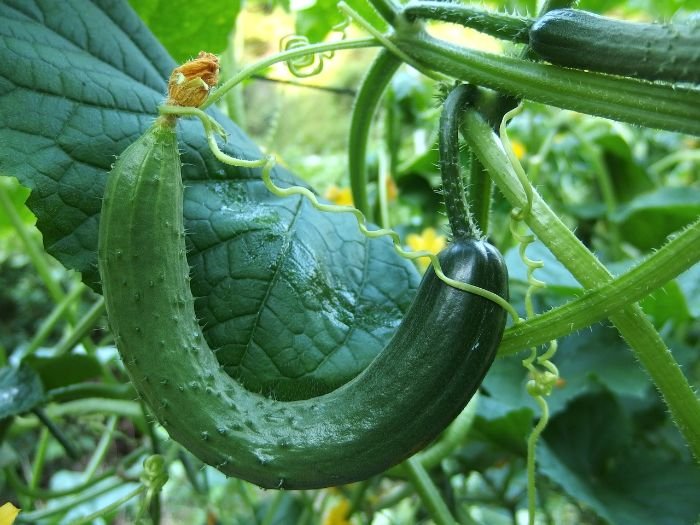
Standard cucumbers need pollen moved from male flowers to female flowers. Bees do most of the work, and good fruit shape depends on enough pollen reaching the flower. The flower window is short, mostly morning, so rain, cold, pesticide use, or low bee activity can leave fruit crooked, narrow-ended, or shriveled.
Fruit set is where hidden failure often starts. A female flower can open, look successful for a day, and then the tiny cucumber yellows because fertilization was incomplete. For full-size straight fruit, 8 to 12 bee visits per flower may be needed under home-garden guidance.
Parthenocarpic cucumbers change the rule because they can set seedless fruit without pollination. Gynoecious varieties carry mostly female flowers and may need a pollen source if the seed packet says so. Read the packet before judging the vine. A plant covered in female flowers is a gift only when the pollination biology matches the variety.
Flowers need access. Remove row covers when flowering begins unless the variety is seedless and grown for protected culture. Avoid spraying during bloom, and build nearby bloom into the garden through pollinator-friendly plants that keep bees working the area.
Observation: I often see gardeners panic over the first dropped flowers. Early male flowers falling is normal. Female flowers with tiny cucumbers that yellow and collapse are a pollination or stress clue.
Fruit Sizing And Harvest Stage – Pick Before The Plant Finishes The Job
A cucumber fruit can size with startling speed after pollination. Warm nights, moist roots, and healthy leaves turn a small green ovary into a harvestable cucumber in days. The skin should feel firm and taut under the fingers, with no yellowing at the blossom end.
Harvest size depends on type. Pickling cucumbers are usually picked small and uniform. Slicing cucumbers stay best before seeds enlarge and skins toughen. Long seedless types should be picked at the size listed for the variety, not at the largest size the vine can force.
Frequent picking is part of plant care. When a cucumber stays on the vine too long, seed development becomes the plant’s main reproductive success. New flowers and small fruit receive less of the vine’s energy. That is why a missed yellow cucumber hidden under leaves can slow a productive plant.
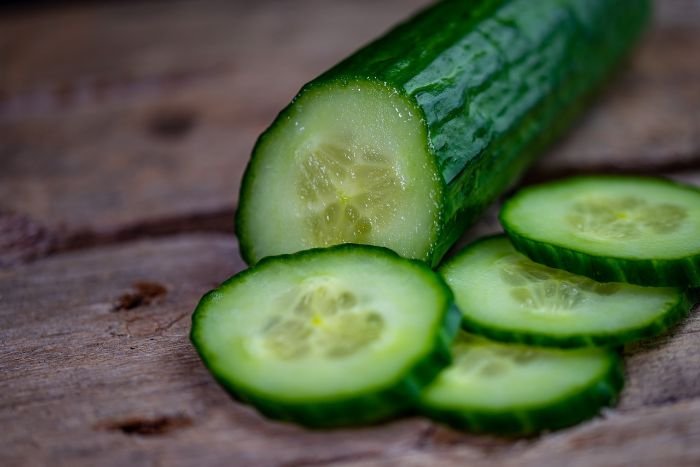
Cut or snap fruit carefully without yanking the vine. Cucumber vines can root at nodes where stems touch soil, and rough pulling breaks those small root contacts. Harvest when leaves are dry to reduce disease spread, then move fruit out of the sun. A fresh cucumber should feel cool, heavy for its size, and crisp when sliced.
Bitterness and misshapen fruit often trace back to stress during fruit sizing. Uneven water, heat, low pollination, and older varieties with higher cucurbitacin levels all play a part. A practical watering schedule for different plant types still needs cucumber-specific checks once fruit starts filling.
Choose The Right Move By Cucumber Growth Stage
Cucumber problems are easiest to fix when the visible stage is named first. A seed that has not emerged, a seedling that flowers early, and a vine with shriveled baby fruit do not need the same response. Stage diagnosis keeps the correction narrow.
| What You See | Likely Stage Problem | Best Move | Wrong Move |
|---|---|---|---|
| Seeds sit for a week with no sprout | Cold or saturated germination zone | Wait for warmer soil and re-sow shallow | Watering more into cold soil |
| Seedlings flower before they make real vines | Rootbound, stressed, or overheld transplants | Direct seed a backup and transplant younger next time | Feeding hard to force vine growth |
| Lots of flowers, no cucumbers forming | Mostly male flowers or poor bee access | Check for female flowers and remove covers at bloom | Assuming the plant is sterile after first bloom |
| Baby cucumbers yellow and collapse | Poor pollination, heat, or uneven water | Protect pollinators and keep moisture even | Spraying during the morning flower window |
| Fruit curves, narrows, or tastes bitter | Stress during fruit sizing | Water deeply, mulch warm soil, and pick sooner | Leaving fruit longer for better flavor |
| New fruit slows after strong production | Oversized fruit left to mature seeds | Search under leaves and remove every large cucumber | Waiting for all fruits to reach one big harvest |
Companions cannot fix a cold seedbed or a missed harvest. The right neighbors can reduce pressure around the crop. Flowers for pollinators, pest-disrupting plantings, and good airflow make companion planting for vegetables most useful before flowering begins.
Conclusion
Cucumber success comes from reading the vine stage before reacting. Cold soil needs patience, seedlings need light and careful roots, vines need support, flowers need pollinator access, and fruiting vines need even water plus frequent picking.
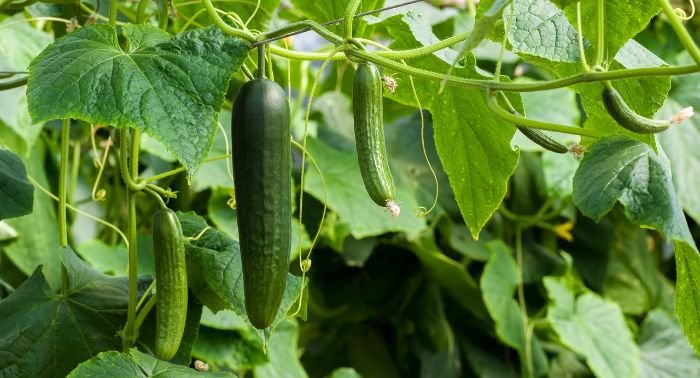
The good signal is easy to see: warm soil, rough green leaves, tendrils gripping the trellis, female flowers swelling into straight fruit, and firm cucumbers picked before the skin starts to yellow.
FAQ
What Are The Main Cucumber Growth Stages?
Cucumbers grow through germination, seedling growth, vine establishment, flowering, pollination, fruit sizing, harvest, and decline. Several stages overlap once flowering starts. A mature vine can carry flowers, tiny fruit, and harvest-ready cucumbers on the same day.
How Long Does A Cucumber Take From Seed To Harvest?
Most garden cucumbers reach first harvest about 50 to 70 days from seed. Warm soil, full sun, and even moisture shorten the wait. Cool soil, transplant shock, poor pollination, or dry roots stretch the timeline.
Why Does My Cucumber Plant Have Flowers But No Fruit?
Early flowers are often male, so they fall without fruit. Female flowers arrive with a tiny cucumber at the base. If those tiny cucumbers yellow or collapse, pollination, heat, or water stress is the likely issue.
Do Cucumbers Need A Trellis?
Bush cucumbers can grow without a trellis. Vining cucumbers are easier to manage on support because fruit stays cleaner, airflow improves, and harvest is faster. Heavy fruit still needs gentle handling so stems are not pulled or kinked.
How Often Should Cucumbers Be Harvested?
Check productive vines every day or two. Cucumbers grow quickly in warm weather, and oversized fruit can slow new production. Pick before yellowing, seed swelling, and skin toughness begin.
Why Are My Cucumbers Bitter Or Misshapen?
Stress during fruit sizing is the usual pattern. Uneven watering, high heat, poor pollination, and older bitter-prone varieties all contribute. Harvest younger fruit, keep moisture even, and choose varieties with better bitterness resistance next season.