
Updated April 25, 2026
Garlic can look slow above ground because its first important stage transitions happen under mulch and soil. A planted clove must root, activate its shoot bud, and spend stored energy before the first green blade appears. After that, the crop moves through spring leaf growth, bulb initiation, clove differentiation, bulb sizing, maturation, harvest, and curing.
Garlic stage reading depends on root timing, leaf count, soil-line thickness, hardneck scapes, softneck neck behavior, and lower leaves browning from the base upward. Those signals tell you when to feed, when to stop feeding, when to cut scapes, when to taper water, and when to lift bulbs before wrappers break down.
The garlic growing timeline usually runs 7-9 months for fall-planted garlic in cold and temperate regions. Softneck garlic in mild climates can finish faster; fall planting still gives the plant a stronger root system and a longer spring leaf-building window before the bulb starts dividing underground.
Key Takeaways:
- Fall rooting sets the bulb-size ceiling before shoots appear
- Spring leaves build both bulb fuel and wrapper potential
- Clove differentiation depends on cold exposure, day length, and plant size
- Hardneck scapes mark a major bulb-sizing handoff
- Harvest timing protects wrappers as much as bulb size
Table of Contents
Garlic Growth Stages Timeline – The Season Moves Underground First
A garlic clove is already a storage organ with a basal plate, a shoot bud, and enough stored carbohydrate to start the next plant. The stage you cannot see in fall sets the size ceiling for the stage you will harvest in summer.
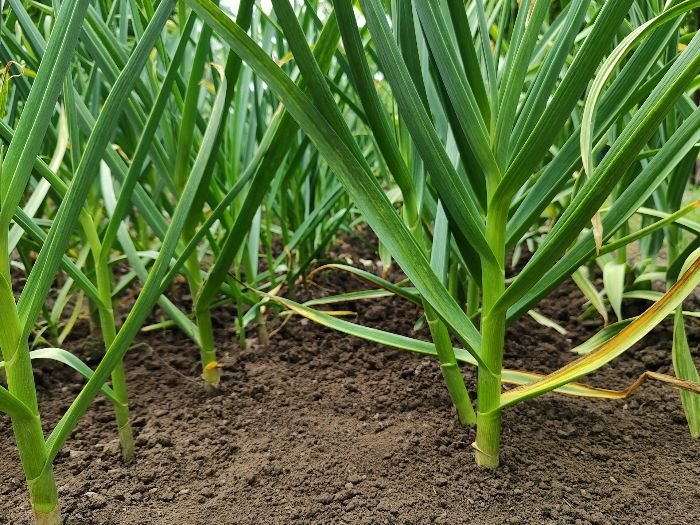
Growing garlic works best in well-drained, moisture-retentive soil with pH 6.0-7.0, fall planting, and harvest timing that often falls between late June and late July depending on variety and climate. Calendar ranges set expectations. Leaf, neck, scape, and wrapper signals decide the correct action.
Vegetable growth stages often move through establishment, vegetative growth, reproduction or storage, and harvest. Garlic bends that pattern because the harvestable part is a divided bulb that forms from modified leaf bases below ground.
| Stage | Typical Timing | What You See | What The Plant Is Building |
|---|---|---|---|
| Clove planting | Fall, before hard freeze | No top growth, or a small shoot in mild weather | Root contact, basal plate activity, cold exposure |
| Rooting and winter hold | Late fall through winter | Bed may look bare under mulch | White roots and stored energy use |
| Spring emergence | Late winter to early spring | Flat green blades push through soil | Leaf area and new root growth |
| Vegetative leaf growth | Spring | Plants reach 12-24 inches with multiple leaves | Sugars, leaf sheaths, future bulb wrappers |
| Bulb initiation | Late spring as days lengthen | Neck thickens; top growth slows | Swelling leaf bases and bulb structure |
| Clove differentiation | Late spring to early summer | Bulb base firms; cloves separate inside | Individual cloves and protective skins |
| Scape and bulb sizing | Late spring to early summer on hardnecks | Curled scape forms; lower leaves start yellowing | Final bulb mass and storage wrappers |
| Maturation and harvest | Early to midsummer | Lower leaves brown; upper leaves stay green | Firm cloves, dry neck tissue, curing readiness |
Garlic Growing Stages By Month
In cold and temperate gardens, the same garlic signals usually follow a seasonal calendar pattern. Mild-winter regions often shift earlier, and spring-planted crops compress the same stages into a shorter season.
| Month | Usual Garlic Stage | Best Read |
|---|---|---|
| October-November | Planting and rooting | Firm cloves, cool soil, roots before hard freeze |
| December-February | Winter hold | Mulched bed, limited top growth, protected root zone |
| March-April | Emergence and leaf growth | Clean green leaves, early feeding, low weed pressure |
| May-June | Bulb initiation, clove differentiation, scapes | Thicker necks, swelling bases, hardneck scape curl |
| June-July | Maturation and harvest | Brown lower leaves, green upper leaves, test bulb filled out |
| July-August | Curing and sorting | Dry necks, papery wrappers, firm bulbs for storage |
Garlic stages vary in duration because rooting, leaf expansion, bulb sizing, and curing respond to different environmental triggers. Management depends on catching each stage handoff before the next process starts. Late fertilizer, late watering, late scape removal, and late harvest all hurt the stage after them.
Clove Planting And Rooting – The Crop Starts Before Shoots
Garlic starts from the flat basal plate, not from the pointed tip. The pointed end carries the shoot. The flat end forms roots. Plant one upside down and the shoot spends energy bending around itself before it reaches light, which leaves less stored food for early rooting.
Growing garlic usually works best with fall planting because roots develop through fall and winter, then support rapid spring leaf growth. In cold regions, plant 6-8 weeks before the first expected hard frost, early enough for root growth without giving strong top growth time to run into freezing weather.
What A Well-Planted Clove Does
Water enters the clove first, a process called imbibition. The stored carbohydrates inside the clove become available to the growing point, roots break from the basal plate, and the first shoot begins pushing upward. Good planting soil feels cool, crumbly, and faintly damp when squeezed. It should hold shape for a second, then break apart under light finger pressure. Slick soil that smears across your palm has too little oxygen for clean root growth.
Large cloves matter because the clove is the startup battery. Larger cloves usually produce larger bulbs the following summer. That does not mean every large clove guarantees a large head. A tiny inner clove starts with a smaller food reserve and a weaker chance of building enough leaves before bulbing begins.
Planting Depth And Spacing
Most home beds do well with cloves planted about 2-3 inches deep and 6 inches apart, with the pointed tip up. Heavy clay needs better drainage more than deeper planting. Loose loam lets roots spread and bulbs expand without pushing against a hard wall of soil. If your bed compacts into a brick after rain, build the row with compost and mineral soil first; soil health improvement matters more here than another handful of fertilizer.
Mulch after planting in cold climates to buffer freeze-thaw cycles. Use straw or chopped leaves that water can pass through. A matted, wet layer pressed tight over the row can keep soil cold and sour in spring, especially in heavy ground.
Pro Tip: Split seed garlic into cloves just before planting, then press the basal plate into loose soil with two fingers. If the clove rocks side to side after covering, the soil is too open around it. Firm the row gently so roots touch soil on all sides.
Spring Leaf Growth – Wrappers Are Being Made Above Ground
Spring garlic leaves function as photosynthetic surface, sheath tissue, and future wrapper support. Each leaf is tied to the layered sheath system that later becomes part of bulb protection. A plant that builds more healthy leaves before bulbing has more sugar production and more wrapper potential around the final head.
Garlic is a moderate to heavy feeder, with nitrogen usually applied at planting and again when shoots are 4-6 inches tall. That timing makes biological sense. In early spring, the plant is making leaves, roots, and pseudostem tissue. Nitrogen fuels chlorophyll and leaf expansion during the period when the crop still has time to turn leaf area into bulb size.
Do not trim leaves to “make the bulb grow.” Removing leaf area lowers photosynthesis at the exact stage that pays for bulb development. A healthy spring plant has flat, blue-green to medium-green leaves that stand upright, with a slight waxy feel when you run a thumb along the blade. Pale, thin leaves paired with slow new growth point to low nitrogen, wet soil, crowding, or cold soil, not a pruning need.
Moisture During Leaf Growth
Garlic roots stay relatively shallow compared with many long-season crops. Garlic is sensitive to moisture stress during bulbing, and the problem starts earlier: dry spring soil shortens the leaf-building window. Probe 3-4 inches down before watering. Good garlic soil at that depth feels cool and slightly cohesive; dry soil falls into warm grains and leaves dust on your fingertips.
Moisture does not mean saturation. If the row smells sour when you pull back mulch, or the soil shines when squeezed, roots are sitting in low oxygen. Garlic tolerates cold better than it tolerates stagnant wet soil.
Weed Competition
Young garlic loses to weeds because it grows as a narrow upright plant with little shade over the soil. Weeds can overtake young garlic unless controlled early. Shallow cultivation and breathable mulch work better than deep hoeing once bulbs begin to swell. Cut weeds at the surface and leave the bulb zone undisturbed.
A canopy check shows whether garlic leaves or winter weeds are capturing spring light first.
Bulb Initiation And Clove Differentiation – Day Length Changes The Job
Bulb initiation and clove differentiation happen mostly below ground. The visible plant may still look like a leafy allium as the base starts swelling, leaf bases thicken, and the plant begins changing from one planted clove into a divided bulb.
Garlic responds to cold exposure, day length, temperature, variety, and plant size. A 2020 study by Muhammad Jawaad Atif and coauthors in Environmental and Experimental Botany found that photoperiod and temperature affected garlic bulbing, with 14-hour light and 30 C treatments producing maximum plant and bulb morphology in their experimental conditions. A home garden is not a plastic tunnel trial. The mechanism still matters: longer days and warming soil act as developmental signals alongside improved growing conditions.
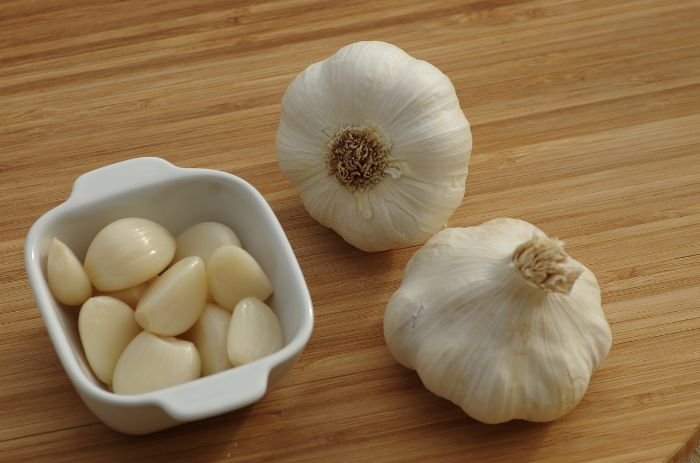
Cold exposure also matters. Most spring-planted garlic without proper cold treatment produces weak shoots and poorly developed bulbs. That is why spring planting often gives rounds, small bulbs, or weak division, especially with hardneck types. The plant may grow leaves; clove differentiation arrives with too little preparation.
What Clove Differentiation Means
Clove differentiation is the stage when the bulb stops being just a swelling base and begins forming distinct clove segments. The growing point and surrounding storage tissues reorganize into separate units, each with its own wrapper. In hardneck garlic, those cloves arrange around a central stalk. In softneck garlic, cloves form in more layers, with smaller interior cloves common.
The change is easier to feel than see. At the soil line, the lower stem becomes thicker and firmer. If you gently clear only the surface soil, the bulb shoulder begins to round. Do not dig repeatedly to inspect it. Bruised young bulbs store poorly, and broken roots slow the sizing stage that follows.
Spring-Planted Garlic Growth Stages
Spring-planted garlic moves through the same stages with a shorter root window, weaker chilling, and a faster shift into bulbing as days lengthen. That shorter sequence raises the risk of rounds, small bulbs, or partial clove separation, especially with hardneck garlic.
Softneck types handle spring planting more reliably because many tolerate milder climates and shorter cold exposure better. Plant as soon as soil can be worked, use large pre-chilled cloves when possible, keep early moisture consistent, and judge success by bulb division along with total plant height.
Why Garlic And Onions Do Not Read The Same
Garlic and onions are both alliums with different harvest logic. Onions build a single layered bulb; garlic divides into cloves. Onion development stages show a related allium day-length pattern, while garlic should be judged by wrapper count and clove separation because both signals decide storage quality.
Stop heavy nitrogen once bulb initiation is underway. Late nitrogen keeps foliage soft and delays dry-down. A plant with lush dark leaves in late bulbing can look impressive and still cure badly.
Hardneck Vs Softneck Garlic Growth Stages – Different Signals Near Bulbing
Hardneck and softneck garlic pass through the same broad stages, then split in the way they signal late growth. Hardneck garlic gives a visible scape. Softneck garlic usually gives a softer neck, layered clove arrangement, and a slightly different harvest read.
| Growth Signal | Hardneck Garlic | Softneck Garlic | What To Do |
|---|---|---|---|
| Scape stage | Forms a stiff central flower stalk that curls | Usually no true scape, though cold stress can trigger partial stalks | Cut hardneck scapes at one curl; monitor softnecks by leaves and neck |
| Clove pattern | Four to 12 larger cloves around a central stalk | More cloves in multiple layers, often with smaller inner cloves | Expect different bulb shape and peeling behavior |
| Climate fit | Performs best with cold winters and shorter vegetative windows | Handles milder winters and longer seasons better | Match type to winter cold before judging growth speed |
| Spring planting tolerance | More likely to form rounds or weakly divided bulbs without chilling | Artichoke and some softneck types tolerate spring planting better | Plant spring garlic early and use pre-chilled cloves when needed |
| Harvest cue | Scape timing plus lower-leaf browning gives a strong countdown | Lower leaves, upper green leaves, and neck softening matter more | Dig one test bulb before harvesting either type |
| Storage behavior | Shorter storage, often 3-6 months by type and cure | Longer storage, often 6-9 months in good conditions | Use damaged hardnecks first and store firm softnecks longest |
Scapes And Bulb Sizing
Hardneck scapes work like a competing sink for sugars. If the stalk stays on the plant too long, energy that could help bulb sizing moves into the stalk and bulbil head. Removing garlic scapes can reduce yield loss by up to 30 percent in poorly fertilized soil, while the reduction is less than 5 percent in well-fertilized soil. Scape timing matters most when the plant is already short on resources.
Cut scapes after they curl once, when they are still tender. Use clean pruners and cut above the top leaf, not down inside the plant. A fresh scape snaps with a wet, crisp break and carries a mild garlic smell on your fingers. A woody scape bends stiffly and the bud end feels fibrous; by then the plant has already spent more energy than needed.
Bulb Sizing After The Type Split
The weeks after scape removal on hardnecks, or after visible base swelling on softnecks, are the final push. Photosynthates from the leaves move into the bulb, cell expansion increases bulb diameter, and individual cloves fill their skins. During dry bulbing weather from mid-May through June, watering every 3-5 days can support bulb sizing before water is tapered as harvest approaches. The rhythm should adjust to rainfall, soil texture, mulch depth, and root-zone moisture.
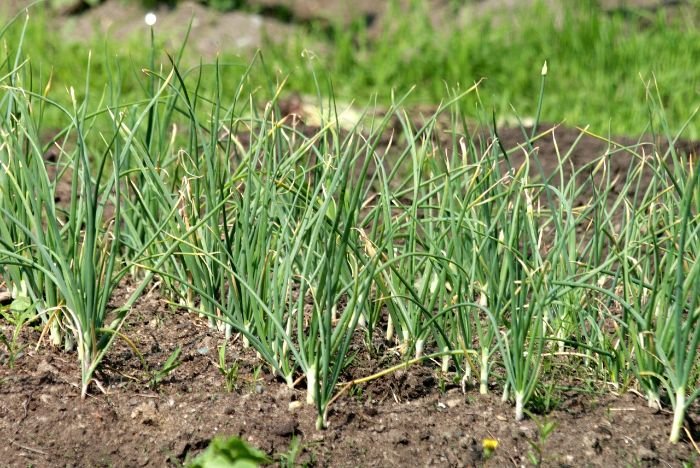
A moisture meter, trowel slice, or finger probe beats surface color. The top inch under straw can look dry with a fine root zone below, or it can look damp with saturated clay beneath it. A simple routine of soil moisture monitoring helps you avoid both mistakes during the short sizing window, and deep watering techniques matter more than frequent shallow splashing during active bulb fill.
Leaving one scape on a hardneck plant can help you judge maturity because the scape eventually straightens as the plant nears harvest. That plant may size a little smaller. For a maturity signal, leave one scape on one plant at the row end, not on the whole crop.
Garlic Bulb Maturation – Leaves Protect Storage Quality
Garlic maturity is a wrapper problem as much as a bulb-size problem. Each green leaf still attached above ground corresponds to living or recently living sheath tissue around the bulb. Let too many leaves die before harvest and the outer wrappers deteriorate underground, leaving cloves more exposed during curing and storage.
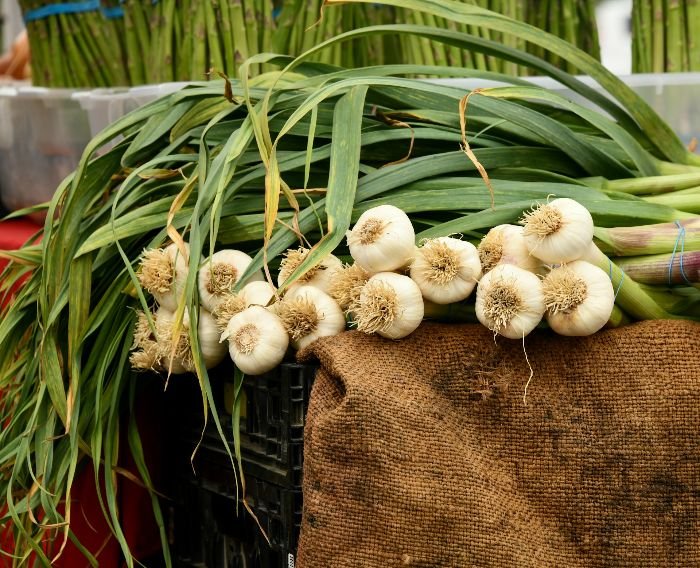
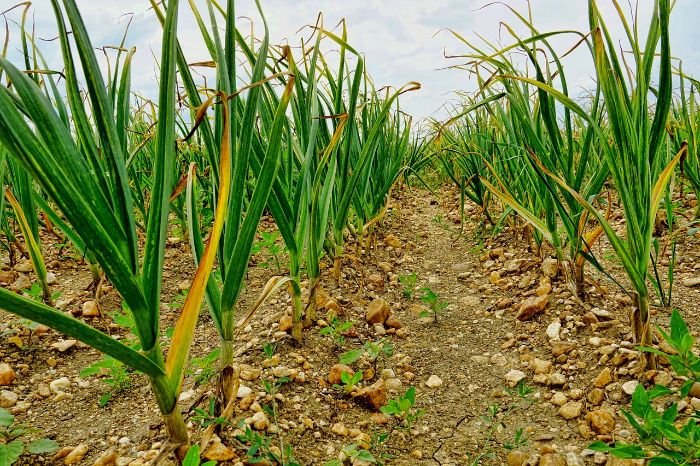
Begin harvest when lower leaves turn brown and half or slightly more than half of the upper leaves remain green. Harvest too early and bulbs stay small; harvest too late and cloves pop from their skins.
| Harvest Signal | What It Means | Best Move |
|---|---|---|
| All leaves green | Bulb is still sizing and wrappers are not mature | Wait, unless disease or weather forces early lifting |
| Lower 3-5 leaves brown, upper leaves green | Bulb is mature enough, wrappers still protect cloves | Test dig one plant, then harvest if cloves fill skins |
| Most leaves brown and necks collapsed | Wrappers are breaking down underground | Harvest at once and use damaged bulbs first |
| Bulb splits open in soil | Harvest is late or moisture swung hard near maturity | Cure carefully, with limited storage expected |
Late watering has two distinct phases. During active bulb sizing, the root zone should stay evenly moist because garlic sizes up considerably in the final weeks after scape removal. Keep irrigation going until at least 50 percent of the leaves have browned. Once bulbs are near full size and lower leaves are already browning, taper irrigation and keep the bed out of saturation because continued watering as foliage withers can stain bulbs and raise disease risk. The soil at lifting should crumble from the bulb with a light brush, not coat the wrappers like paste.
How To Lift Without Damaging The Cure
Use a fork to loosen soil 4-6 inches away from the row, then lift from underneath. Do not yank by the neck. Fresh garlic bruises more easily than it looks, and a bruised clove often becomes the first soft spot in storage. Brush loose soil off by hand and keep bulbs out of direct sun.
Curing finishes the maturation process after harvest. Use a warm, dry, airy place for 3-4 weeks. Keep the tops attached during curing so the neck dries down slowly. A properly cured bulb feels firm and dry, with papery wrappers that rustle when you rub two bulbs together.
Garlic Stage Problems – Fix The Handoff That Failed
Garlic problems make more sense when you connect them to the stage that stalled. Small bulbs at harvest do not start at harvest. They start with weak fall rooting, poor spring leaf growth, late nitrogen, dry bulbing soil, uncut scapes, or harvest after wrappers have already broken down.
| Stage | Problem Signal | Likely Cause | Correction |
|---|---|---|---|
| Fall rooting | Patchy spring emergence | Rotten cloves, upside-down planting, poor drainage | Plant firm seed cloves in drained soil next fall |
| Spring leaf growth | Pale narrow leaves and slow new growth | Low nitrogen, cold soil, weed pressure | Feed early and clear weeds before bulbs swell |
| Bulb initiation | Large green tops and weak bulb division | Too little cold exposure or late spring planting | Use fall planting or pre-chilled adapted seed garlic |
| Bulb sizing | Small firm bulbs with normal wrappers | Dry soil, crowded cloves, uncut scapes | Water during bulbing and improve spacing next crop |
| Maturation | Split bulbs or exposed cloves | Harvest too late or wet soil near maturity | Lift earlier and cure damaged bulbs separately |
| Storage | Soft cloves after curing | Bruising, poor airflow, diseased seed stock | Sort bulbs and replant only clean firm heads |
Gardeners often blame small garlic on summer harvest timing, then find the real problem in spring: leaves stayed thin in April, weeds shaded the row, or the first nitrogen feeding happened after bulb initiation had already started.
Yellow leaves need context. Lower leaves browning in early summer with firm upper leaves usually signal maturation. Yellow tips across most leaves in early spring point to stress. Wet soil carries a sour smell and a slick texture. Dry soil feels warm and gritty below the mulch. Those two failures look similar from across the bed, and they need opposite corrections.
Disease pressure changes the plan. White rot, bulb mites, and aster yellows can ruin the normal timeline because the plant no longer has a clean handoff from leaves to bulb. Many garlic diseases arrive on seed garlic, which is why firm, healthy planting stock from a reputable source matters. If rot, odor, distorted growth, or repeated patch failure appears, treat the bed as a sanitation and seed-stock problem first. Do not save seed from soft, scarred, or odd-smelling bulbs.
Garlic Stage Checkpoints – What To Do This Week
Your garlic bed is still bare after winter, and the mulch lifts easily with firm cloves under one edge plant. Leave the row alone, pull only obvious weeds, and wait for soil warmth in place of digging through the bed to check progress.
Your plants are 4-6 inches tall with several clean green leaves. Feed now, weed shallowly, and loosen any matted mulch so light and air reach the row. Waiting until scapes appear is too late for the main nitrogen push.
Your hardneck garlic has curled scapes and the lower stem feels thicker at the soil line. Cut the scapes this week, then focus on even moisture, not more fertilizer. Use the scapes in the kitchen and let the leaves keep feeding the bulb.
Your lower leaves are browning and the top half of the plant remains green. Dig one test bulb from the edge of the bed. If the cloves fill their skins and wrappers hold tight, harvest the row during dry weather and move the bulbs straight into shade.
Conclusion
Garlic growth stages are easiest to manage through signals: rooted cloves before winter, strong spring leaves before bulbing, scape curl on hardneck types, softening necks on many softnecks, and lower leaves browning with upper leaves still protecting the bulb. Height matters less than the handoff between roots, leaves, cloves, wrappers, and curing.
Next season, plant large cloves in fall, feed when shoots reach 4-6 inches, stop heavy nitrogen before bulb swelling, cut hardneck scapes at the curl, taper water as lower leaves brown, and harvest after a test bulb shows filled cloves with tight skins. Successful harvest shows in firm bulbs, cleanly crumbling soil, tight skins, and papery wrappers after curing.
FAQ
How Long Does Garlic Take To Grow From Clove To Harvest?
Fall-planted garlic commonly takes 7-9 months from planting to harvest. In many cold and temperate U.S. gardens, planting happens in fall and harvest lands from late June through July. Softneck garlic in mild climates can finish faster. Spring-planted hardneck garlic often gives smaller bulbs because the cold and leaf-building windows are shorter.
What Is The Difference Between Hardneck And Softneck Garlic Growth Stages?
Hardneck garlic forms a stiff central stalk and a curled scape during late spring, then finishes with fewer, larger cloves around that stalk. Softneck garlic usually skips the scape stage, forms more layered cloves, and often stores longer after curing. In mild climates, softneck types also tolerate spring planting better than most hardnecks.
When Does Garlic Start Forming Bulbs?
Bulb initiation usually starts in late spring as days lengthen and the plant has built enough leaf area. In many U.S. gardens, that means May into June for fall-planted garlic. The first visible clue is a thicker lower stem or rounded shoulder at the soil line, not a dramatic change in leaf height.
When Do Garlic Cloves Separate Inside The Bulb?
Clove separation begins during clove differentiation, after bulb initiation and before final sizing. The bulb may still look like one rounded swelling from the outside as the internal storage tissues divide into separate cloves with their own skins. This is the stage spring-planted or poorly chilled garlic often misses, producing rounds in place of divided heads.
Can You Plant Garlic In Spring And Still Get Bulbs?
Yes. Expect a smaller crop unless the cloves receive enough cold exposure before bulbing. Spring planting works best with softneck types or pre-chilled seed garlic planted as soon as soil can be worked. Hardneck garlic planted late often forms rounds or poorly divided bulbs in place of full heads.
When Should I Stop Watering Garlic Before Harvest?
Keep moisture even during active bulb sizing, especially in the weeks after scape removal on hardneck garlic. Start tapering once lower leaves are browning, about half the leaves have changed color, and bulbs are near full size. Very dry soil during sizing gives smaller bulbs; saturated soil during final dry-down stains wrappers and raises rot risk.
How Many Leaves Should Garlic Have Before Harvest?
There is no single leaf count that fits every variety. The best harvest signal is a split between browned lower leaves and firm green upper leaves. Many gardeners harvest when the lower 3-5 leaves have browned and the upper half still has color. Each dead leaf can mean one less intact wrapper around the bulb, so waiting for a fully brown plant usually reduces storage quality.
What Happens If You Do Not Cut Garlic Scapes?
Hardneck garlic will send more energy into the flower stalk and bulbil head. In a fertile, well-watered bed the bulb-size loss may be modest. The loss can be much higher when plants are short on nutrition. Cut scapes after they curl once if bulb size is the goal.