
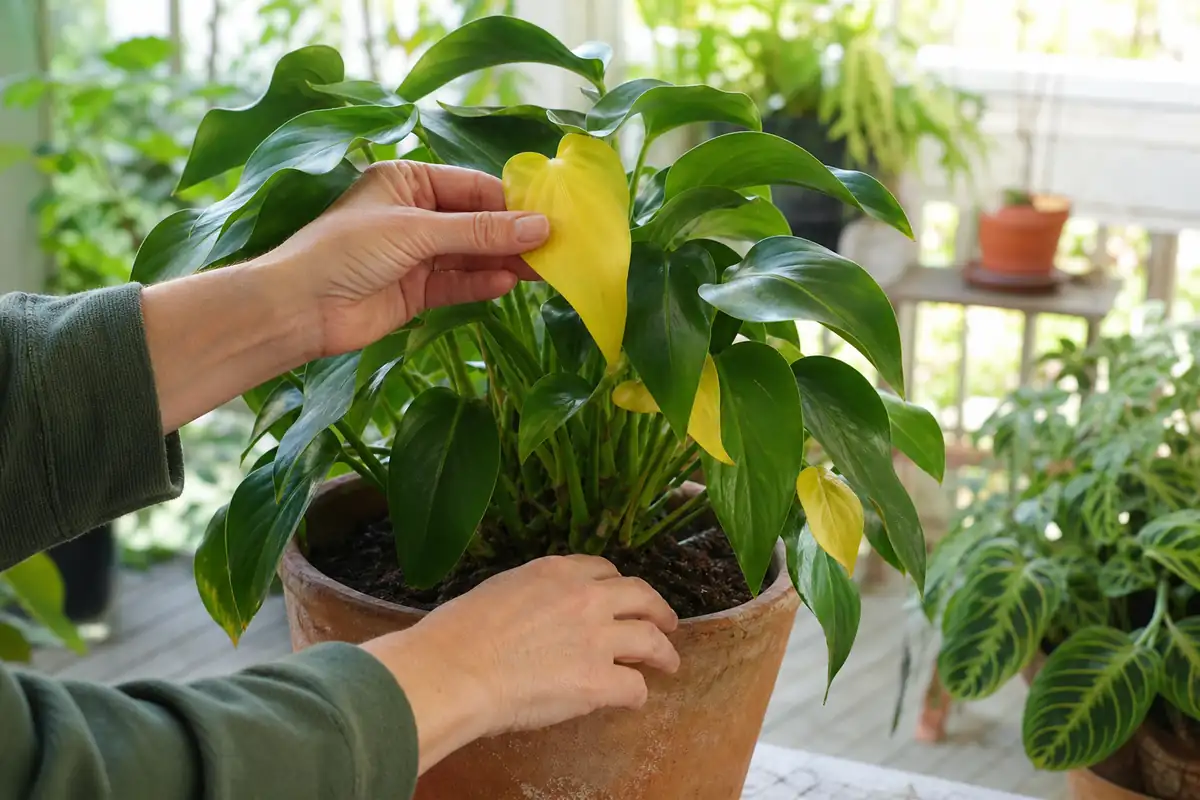
Yellowing leaves are easier to diagnose when you read the pattern before reaching for water or fertilizer. An old lower leaf fading to butter yellow tells a different story from pale new growth with dark green veins. Yellow tips, soft yellow leaves, one-sided damage, and whole-plant paling each narrow the cause further. The speed of change matters too. A single leaf lost during new growth can be normal; several leaves changing in two days point to active stress.
Start with three observations: which leaves changed first, whether the veins stayed green, and how the root zone feels below the surface. Then check light, recent feeding, temperature shifts, pests, and root condition. That order prevents the common rescue cycle of extra watering, extra fertilizer, and repotting all at once. One visible pattern, one likely mechanism, and one measured correction give the plant a cleaner chance to respond.
Yellowing Leaves Diagnosis Matrix
Match the first visible pattern to the first check. Do not treat a nutrient shortage until roots and moisture have been ruled out.
Key Takeaways
- Check which leaves yellow first before changing plant care.
- Test root-zone moisture before adding water or fertilizer.
- Use green veins to narrow chlorosis causes.
- Avoid Epsom salt without confirmed magnesium deficiency.
- Judge recovery by healthy new growth after correction.
Table of Contents
Read Which Leaves Turn Yellow First
Leaf age is the fastest useful clue because plants move some nutrients from older tissue into new growth. Nitrogen, magnesium, and potassium are mobile inside the plant, so shortages often appear on older leaves first. Iron is much less mobile, which leaves young tissue pale as older leaves stay greener. Waterlogged or damaged roots can imitate either pattern by blocking uptake even when nutrients are present.
Which leaves changed first: the oldest at the base, the newest at the tip, or every leaf together? Record that answer before removing damaged foliage. Also note whether yellow tissue sits between green veins, runs along the edge, forms irregular patches, or covers the entire blade. A photo taken on day one makes spread and recovery easier to judge a week later.
Abnormal loss of green pigment is chlorosis. Possible causes include poor drainage, damaged or compacted roots, high soil pH, and nutrient problems, according to the University of Illinois Extension’s overview of yellow leaves and chlorosis patterns. The color names the symptom. Leaf age, veins, roots, and timing identify the cause.
One Older Leaf Can Be Normal
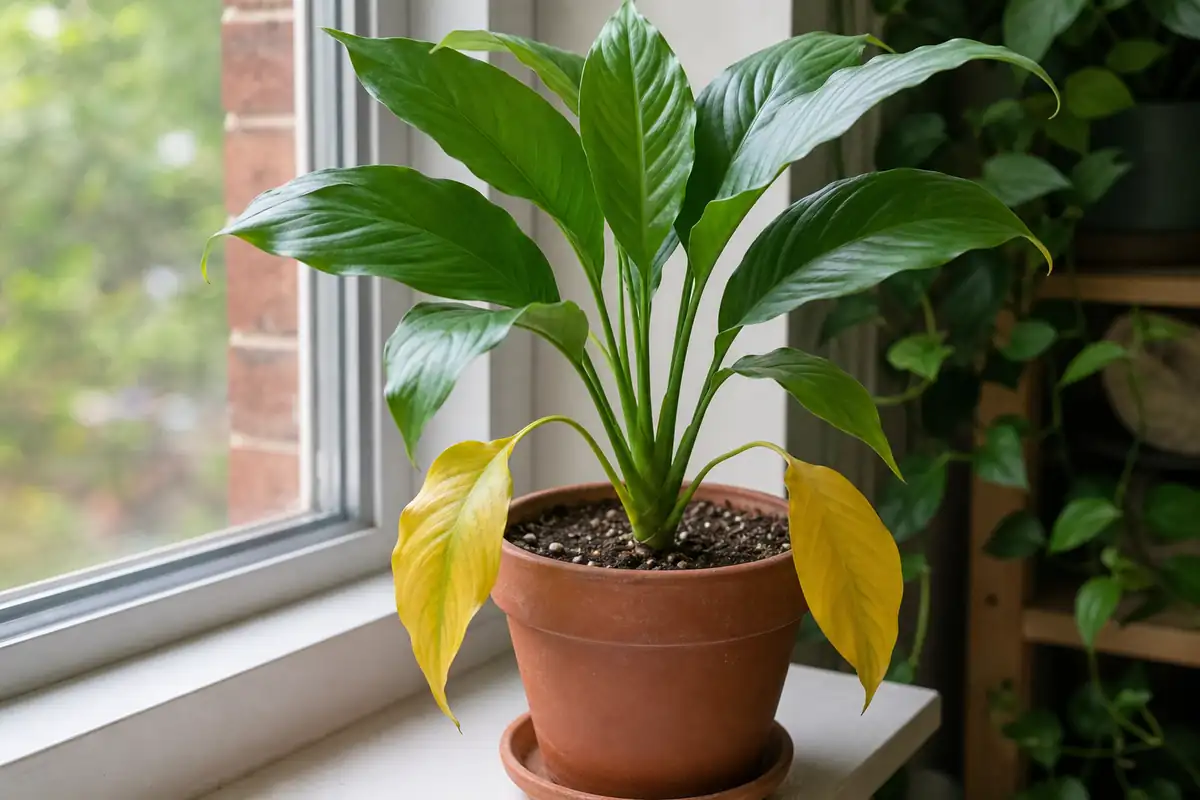
A plant sometimes retires an old shaded leaf as fresh growth opens above it. The leaf usually fades evenly, stays attached for several days, then releases cleanly. New leaves remain firm, correctly sized, and normally colored. This is common after a houseplant adjusts to a new room or a transplant begins active growth.
One or two old leaves turning yellow during healthy new growth can reflect normal resource reallocation, a pattern described in the University of Wisconsin Extension’s 2026 guidance on analyzing yellow leaves. Watch the crown and the next leaf. Expanding yellowing, smaller new growth, or a sour root-zone smell changes the diagnosis.
Several Older Leaves Signal Root Or Nutrient Stress
Multiple lower leaves fading together deserve a root check before feeding. Saturated soil deprives roots of oxygen, dry soil limits nutrient movement, and a tight root ball can contain both wet outer mix and a dry center. Lift a container and smell near the drainage holes. A heavy, cold pot with a stale odor points toward prolonged wetness; a feather-light pot with mix pulled from the wall points toward severe drying.
Uniform yellowing that starts low and moves upward can also fit nitrogen shortage, especially when growth is small and pale. Compare the full symptom set before using fertilizer. The diagnostic details for nitrogen deficiency in plants help separate a true shortage from roots that cannot absorb what the soil already contains.
Observation: Yellow lower leaves on wet soil often feel soft and release with little resistance. Leaves lost to repeated drying usually show crisp edges first and stay papery after they detach.
New Leaves With Green Veins Point Toward Interveinal Chlorosis
Young leaves that open yellow as the veins remain green create the classic interveinal pattern. Iron or manganese may be unavailable, especially in alkaline soil, cold wet soil, or a damaged root system. Adding iron can green a few leaves temporarily. The symptom returns when high pH or weak roots remain unchanged.
Iron chlorosis usually begins on young leaves and often reflects soil pH above the plant’s usable range. The University of Maryland Extension links yellow new leaves with prominent green veins to restricted iron availability, commonly in alkaline soil. Test the root-zone pH before concluding that the soil contains no iron.
Visual diagnosis has limits. Manganese deficiency, root rot, nematode injury, cold roots, and chemical damage can resemble iron chlorosis. A soil test clarifies pH and major nutrients; a tissue test can separate micronutrient problems in valuable landscape plants. Severe yellow-white new growth, scorched margins, and stalled shoot tips warrant faster testing.
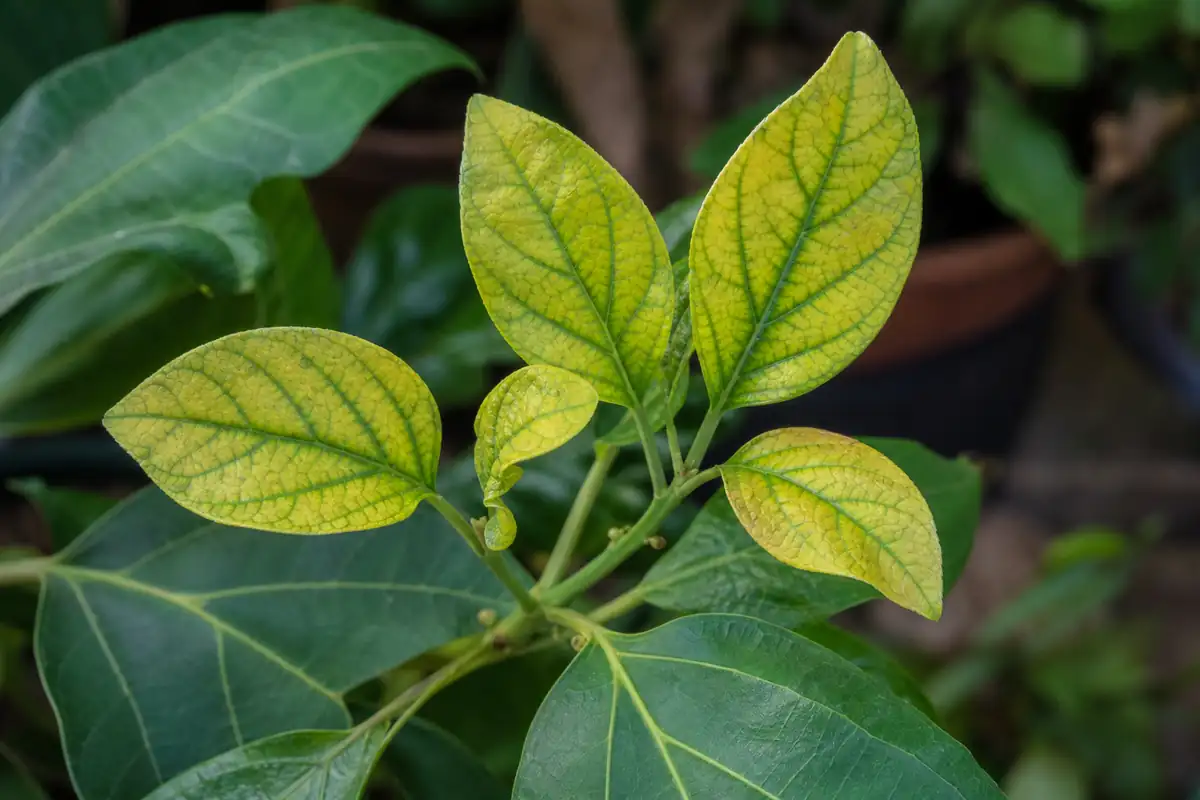
Pro Tip: Compare a yellow leaf with a healthy leaf from the same plant under daylight. Indoor bulbs can hide green vein contrast and make pale foliage look uniformly yellow.
Yellow Tips And Edges Point Toward Root-Zone Stress
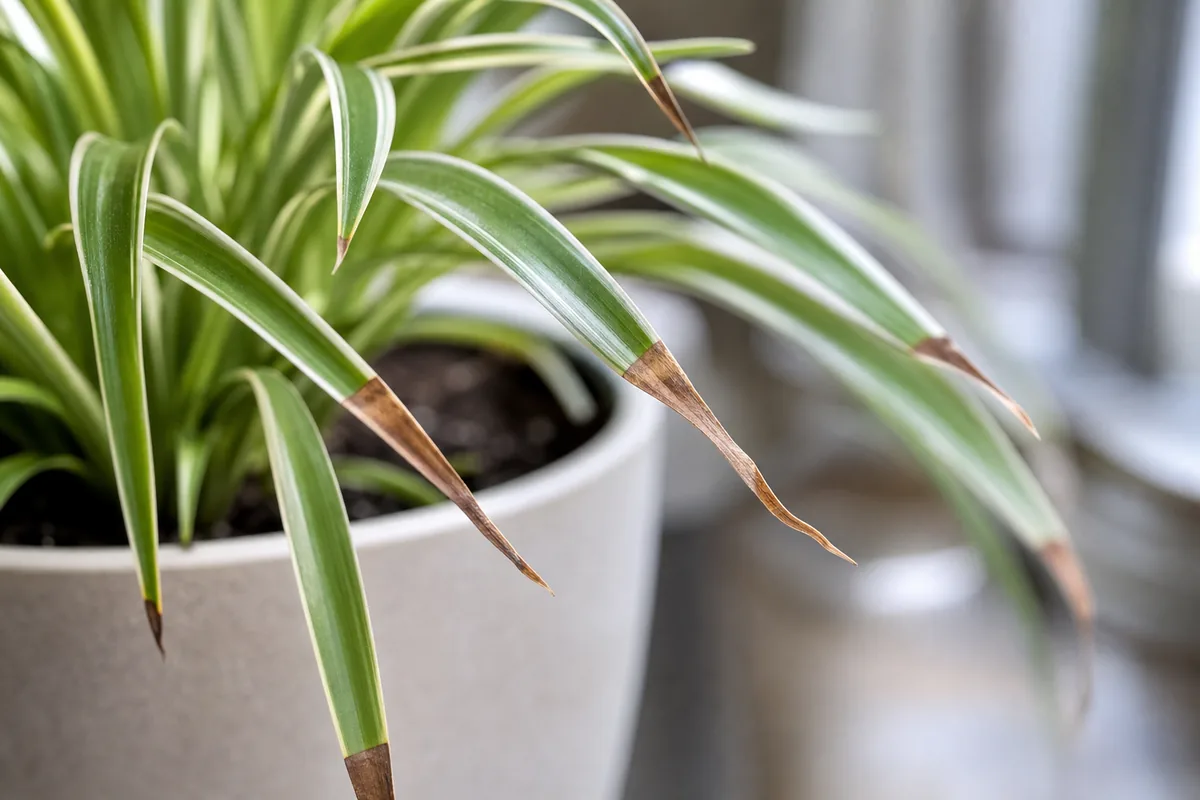
Yellowing that starts at the tip or margin often reflects what roots experienced earlier. A dry root ball can leave a thin yellow edge that turns tan and crisp. Excess fertilizer or mineral buildup can burn the same margin, often with a white crust on the pot rim or soil surface. Potassium shortage can begin on older leaf edges, though that pattern alone cannot confirm it.
Check the sequence. A leaf that softened and yellowed before its edge browned often followed wet-root damage. A leaf that curled, felt dry, and developed a brittle margin followed water loss or salt stress more closely. Flush a container only when it drains freely; pouring extra water through dense, saturated mix makes oxygen loss worse.
Houseplants such as pothos and monstera make the distinction easier because several leaves can be compared on one vine or stem. The plant-specific patterns behind pothos yellow leaves and monstera yellow leaves stay separate from the generic diagnosis when species growth habits change the likely cause.
An Entire Plant Turning Pale Needs A Whole-System Check
Whole-plant yellow foliage rarely comes from one damaged leaf or one isolated nutrient. Low light reduces chlorophyll production and slows water use. Roots stay wet longer, growth stretches, and older foliage begins to drop. Cold soil slows uptake outdoors. A root-bound container can dry rapidly at the center and stay wet around the edge after watering.
Indoor Plants
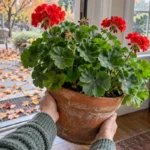
For yellowing leaves on indoor plants, compare the room now with the room two weeks ago. Closed blinds, seasonal sun angle, air-conditioning, heat vents, or a move away from the window can change both light and water use. Inspect leaf undersides for scale, mites, and webbing. Check whether roots circle the pot or block drainage holes.
Garden And Landscape Plants
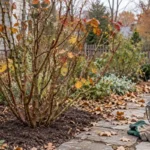
Outdoors, examine the planting area as well as the plant. Compacted soil, a buried root flare, irrigation overlap, recent herbicide exposure, and construction damage can create broad yellow foliage. Penn State Extension’s poor plant health diagnostic patterns place general yellowing, young-leaf yellowing, and old-leaf yellowing in different cause groups. That separation keeps a site problem from being treated as a fertilizer problem.
Yellowing And Drooping Leaves Need A Moisture Check First
Yellow leaves that also hang limp move root function to the top of the list. Both severely dry roots and oxygen-starved wet roots fail to supply leaves normally. Dry-stressed leaves often feel thin or crisp. Wet-stressed leaves feel soft and the pot remains heavy. A sour smell, fungus gnats, or brown mushy roots strengthens the wet-root diagnosis.
Push a wooden skewer into the center of a container or dig four to six inches into a bed near the active roots. Surface moisture is unreliable. Pause watering when the lower profile is wet, and empty cachepots or saucers. Rehydrate a dry root ball slowly enough for the center to accept water. The wider signs of overwatering plants and the diagnosis for plant drooping with wet or dry soil help when leaf color and posture change together.
Roots damaged by long saturation may not recover from a simple dry-down. Remove a failing houseplant from its pot when yellowing spreads despite a watering pause. Firm pale roots can remain. Brown, hollow, slimy, or foul-smelling roots need dead tissue removed with clean tools and a more open mix.
How Do You Fix Yellow Leaves On Plants?
Fix the changed condition in a deliberate order. Give each correction time to produce a signal before adding another treatment. Leaf color may lag behind root recovery, so watch posture, bud activity, and new growth.
Correct Water And Root Oxygen
Measure moisture at root depth. Clear blocked drainage holes, empty standing water, and let a wet mix approach the plant’s normal dry-down range. Rehydrate dry soil in stages so water reaches the root-ball center. Avoid a calendar schedule until the plant shows a repeatable dry-down rhythm.
Restore Usable Light And Temperature
Move a low-light houseplant closer to bright indirect light without exposing pale leaves to abrupt midday sun. Protect outdoor roots from prolonged saturation and sudden cold. A plant recovering from a recent move needs stable conditions more than repeated repositioning.
Test Before Feeding
Use a soil test for pH and nutrient levels when yellowing follows a clear age or vein pattern. Fertilize only after drainage and roots are functioning. A soluble feed can burn dry roots, and nutrients added to saturated soil do not restore oxygen. Recheck the newest leaf after one to three weeks; the oldest damaged leaf is a poor recovery gauge.
Can Yellow Leaves Become Green Again?
A fully yellow leaf usually does not become green again once the plant has dismantled chlorophyll and begun the natural shedding process. Pale tissue in early, reversible chlorosis can regain some color after light, pH, temperature, or root function improves. The more reliable recovery signal is healthy new growth.
Leave a partly green leaf attached when it is firm and free of spreading spots. Remaining green tissue still captures light, and the plant may reclaim mobile nutrients before the leaf falls. Remove a fully yellow leaf when it releases easily or when soft decay and disease lesions make sanitation more important. Clean pruners prevent resistant tissue from tearing.
Color recovery also varies by cause. A dry plant may regain posture within hours, then keep its oldest yellow leaves. Iron chlorosis may improve first in the next flush after pH correction. Root rot recovery is slower and may include additional leaf loss before new roots support stable growth.
Does Epsom Salt Help Yellow Leaves?
Epsom salt helps only when magnesium deficiency is actually causing the yellowing. Magnesium shortage usually begins on older leaves with yellow tissue between veins. Iron chlorosis begins on younger leaves, and overwatering, low light, root rot, or normal aging will not improve from extra magnesium.
Use Epsom salt only after a soil or tissue test supports magnesium deficiency. Adding magnesium to soil that already has enough can interfere with calcium uptake, and foliar Epsom sprays can scorch leaves. The University of Minnesota Extension reaches the same practical limit in its review of Epsom salts as a soil remedy.
Correct the cause named by the pattern. Wet roots need oxygen and drainage. High-pH iron chlorosis needs pH correction or an appropriate chelated treatment. Low-light plants need usable light. A tested magnesium shortage needs a measured magnesium source applied according to the test recommendation and product label.
Conclusion
Yellowing leaves become useful evidence when leaf age, vein color, edges, moisture, and timing are read together. Start at the root zone, then check light and recent changes. Use pH and nutrient testing when the pattern points toward chlorosis. One correction at a time protects roots from the stacked stress of extra water, fertilizer, pruning, and repotting.
Watch the next leaf or bud for one to three weeks. Firm new growth with normal color shows that the plant is rebuilding even when old yellow leaves still fall. A spreading pattern, sour roots, soft stems, or yellow-white new growth calls for another inspection before the next treatment.
Frequently Asked Questions
What is the most common reason for yellowing leaves?
Root-zone stress from too much or too little water is the most useful first check because both conditions disrupt nutrient and water movement. Test moisture below the surface before changing fertilizer. Leaf age, green veins, and the speed of yellowing then narrow the cause.
Should I remove yellow leaves from a plant?
Remove fully yellow leaves when they release easily, turn soft, or develop spreading lesions. Keep a firm leaf that still has green tissue unless sanitation is needed. Cut with clean tools and avoid stripping many leaves from an already stressed plant.
How long should a plant take to recover after the cause is fixed?
Water-stressed plants may improve posture within hours or days. Visible color recovery usually appears in new growth over one to three weeks. Root damage and woody-plant chlorosis can take longer. Worsening yellowing, soft stems, or stalled buds mean the diagnosis should be reopened.