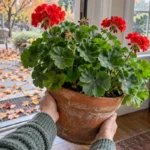
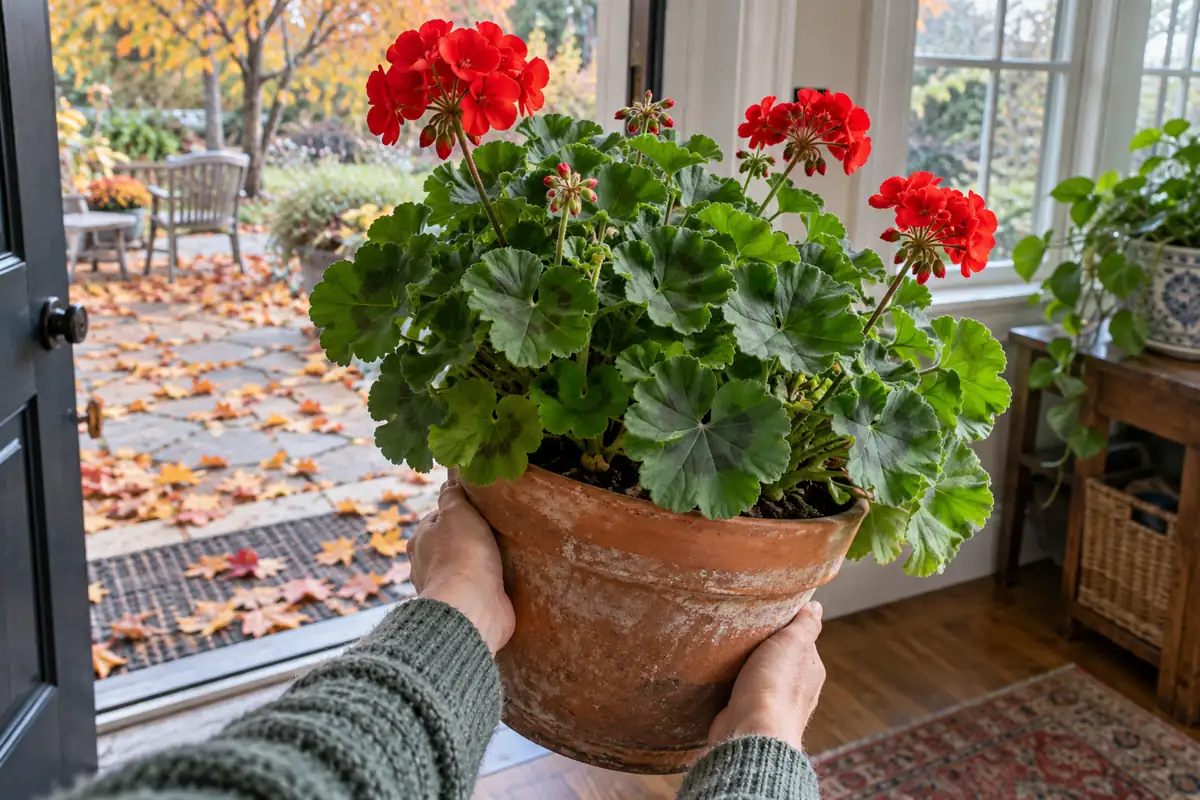
How to overwinter geraniums depends on whether you have a sunny indoor spot, a cool storage room, or space for a few small cuttings. A red-flowered patio pot can still look healthy when the first frost warning arrives. Act at that point, when the stems are firm and the plant has something worth saving.
The awkward part is often finding a place in the house. Heated spare rooms can have too little light. Detached garages may freeze. Your windowsill may hold three small pots with no room for a full-size planter. Those conditions decide which winter routine is workable. Before shaking soil from the roots or cutting the stems back, identify the plant and check where it will spend the next several months. Then give that method its own light, moisture, and spring restart routine.
Choose by the space you actually have
Bright window or grow light
Keep a healthy geranium in its pot as a houseplant. Water after the potting mix dries.
Cool, frost-free storage
Try bare-root storage for common bedding geraniums. Leaves may fall; living stems must survive.
Very little indoor space
Take healthy stem cuttings. Small pots still need light, drainage, and attention during rooting.
These methods are for tender Pelargonium. Hardy perennial Geranium needs care suited to its outdoor site. A warm, dark closet fits none of the three methods well.
Key Takeaways
- Inspect leaf undersides before bringing outdoor plants near houseplants.
- Measure storage temperatures before trusting an unheated garage.
- Prune stretched shoots after correcting weak indoor light.
- Label saved varieties so spring planting preserves their identity.
- Harden new growth gradually before exposing it to outdoor sun.
Table of Contents
How to overwinter geraniums starts with frost sensitivity
Common bedding geraniums belong to Pelargonium. They are tender perennials commonly grown as annuals where cold weather kills them. True Geranium, often called cranesbill, includes hardy perennial plants. Their similar common names hide a different winter decision: a hardy plant suited to your climate usually stays outside. A tender patio geranium needs protection from frost.
Rounded leaves with darker bands and upright clusters of red or pink flowers are familiar features of zonal Pelargonium. Trailing ivy geraniums have a different leaf shape, so foliage alone is not a reliable identification test for every variety. Check the nursery label or botanical name before choosing storage. Iowa State University Extension separates these groups in its annual geranium guidance.
Move, lift, or take cuttings before damaging frost. Leaves that turn limp after a freeze are no longer the healthy starting material you wanted. Use your local forecast, then make the move with enough time to prepare the indoor space. Temporary frost protection can help through a cold night. Months of freezing weather require a winter arrangement.
In mild coastal climates, cold protection may be occasional rather than a move indoors for the whole winter. Fall flowering can continue into January in coastal Georgia when plants are protected from frost, as documented in University of Georgia Cooperative Extension’s geranium bulletin. Your local cold events still decide whether a plant can remain outside.
Choose healthy plants before choosing a method
Turn a leaf over and inspect the underside, stem joints, and flowers. Sticky residue, visible insects, spreading spots, or soft dark stems deserve attention before that pot joins your indoor plants. Keep an uncertain plant separate during diagnosis. Do not carry a heavily infested or clearly rotting plant indoors simply because it still has flowers.
A few old leaves are different from extensive wilting or decay. A single symptom cannot identify a disease. If the damage is spreading and the cause is unclear, choose a healthier plant to save. Taking cuttings from a diseased parent is not a dependable escape from the problem.
Keep potted plants compact with light and drying cycles
A geranium kept in a pot remains a living houseplant. It still needs light to maintain useful growth, and its roots still need air as well as water. A leafy plant pushed into a dark room is not following the bare-root method just because the room is called storage.
Set up the light before bringing the pot inside
Choose a sunny window with room for the foliage, or use supplemental plant lighting. Keep the leaves clear of cold glass and away from a stream of hot air. Watch the new shoots: long gaps between leaves and pale, leaning growth mean the plant is stretching under its current conditions.
Cooler indoor conditions generally suit winter preservation better than a hot, dim room. Roughly 60-65°F is the room example used for potted plants in University of Wisconsin-Madison Extension guidance. Every cultivar does not need to be held at one exact temperature. Correct weak light before pruning repeatedly; otherwise the replacement shoots can stretch again.
If the geranium is already in a manageable pot, leave it there unless the container or drainage is unsuitable. Lift a bed-grown plant carefully and pot it in a container that accommodates its roots without squeezing them into a narrow opening. A large decorative planter that barely fits through the door may be a better parent for cuttings than a practical winter houseplant.
Water the root zone, then let it dry
Check the mix with a finger before carrying over the summer watering schedule. Damp, cool compost that clings to your fingertip does not need another drink simply because a week has passed. When the mix has dried, water thoroughly and let excess water drain. Empty collected water so the pot is not standing in it.
Dense soil and blocked drainage slow the return of air to the roots. Use a drained container potting mix when potting lifted plants, and check the holes before filling the container. Adding a little water every day can leave parts of the root ball persistently wet without solving poor drainage.
Prune an oversized plant back to healthy growth that fits the space, leaving room for its leaves without pressing them against neighboring pots. Later, pinch or cut stretched shoots just above a leaf node to encourage branching. Do not strip a healthy potted plant bare merely to copy a storage photograph. Keeping its leaves and placing it in useful light belongs to this method.
The indoor space may also hold overwintered pepper plants. Plan room for both plants to receive light and for each pot to drain. Their watering needs can differ; sharing a windowsill does not mean sharing a calendar.
Use cool storage to slow bare-root plants through winter
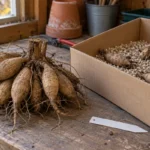
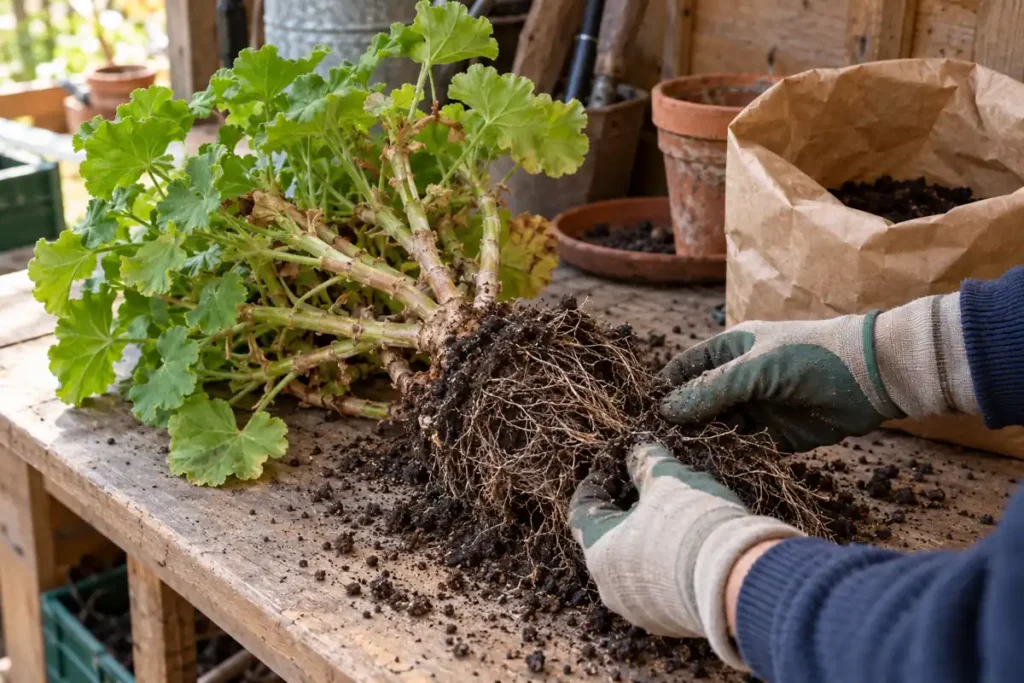
Bare-root storage removes the soil and holds the plant in a low-growth state. The familiar thick stems matter more than a leafy appearance during this period. Leaves can dry and fall, and some branch tips can die back. Enough living tissue may remain for spring recovery.
Check the room first. A thermometer can reveal that a heated basement is much warmer than expected or that a garage drops below freezing. A shelf beside a furnace and an unheated corner of the same basement are different environments, even when they are only a few feet apart. Do not assume the room name describes the temperature the plant will experience.
For the cool, dry approach, Iowa State gives a storage example of 45-55°F; Illinois uses 45-50°F. Keep the plant frost-free throughout storage. A location that freezes overnight is unsuitable even if its afternoon temperature looks right.
Lift, remove soil, and leave air around the plant
- Lift a healthy plant before frost, or ease it from its pot.
- Gently shake and brush loose soil from the roots without tearing them.
- Label the variety before leaves and flowers disappear.
- Place it in a paper grocery bag or hang it in suitable cool storage.
- Leave the bag open and check the plant during winter, including after cold weather changes the temperature in the room you are using.
Brush soil that crumbles away freely; avoid forceful pulling on the roots. Expect a little mess during preparation. A sealed plastic bag is a poor substitute for the open paper-bag arrangement because it holds moisture around the stored tissue.
Keep the storage moisture rules separate
Cool, dry bare-root storage is one approach described by Iowa State. Periodic root soaking belongs to other Extension protocols, including the University of Georgia’s cool, moist basement method. Each set of instructions applies to its own storage conditions.
Choose a documented approach suited to your room. Do not add scheduled soaking to dry storage automatically. If you deliberately use a rehydration approach, follow that protocol and return the plant to appropriate storage afterward. Neither a wet bag nor roots kept in standing water is the goal.
Inspect for changing tissue condition. A leafless plant with firm stems is different from one collapsing into soft decay. Severe shriveling suggests excessive drying. Soft, dark tissue suggests damage that more water will not repair. Reconsider the room and method when either develops; there is no universal monthly soak that corrects both problems.
If a particular geranium matters to you, take a few healthy cuttings before storing the parent. That preserves another opportunity to keep the variety, although both methods can fail. Bare-root storage saves winter space. It also leaves you with a plant that must rebuild later.
Root small cuttings when the parent needs too much space
Cuttings let you keep the variety without keeping the original mature plant. Each successful cutting becomes a smaller plant with the parent’s characteristics. The space saving is useful when a patio container is too large for the house. Small pots still need a suitable growing position, with enough light for the young plants once they have formed roots and begin producing leaves.
Take healthy shoot tips before frost. Short sections around 3-4 inches are used in geranium cutting propagation described by Illinois Extension horticulture educator Ken Johnson. Use clean, sharp cutting tools and remove the lower leaves so foliage will not sit in the rooting medium.
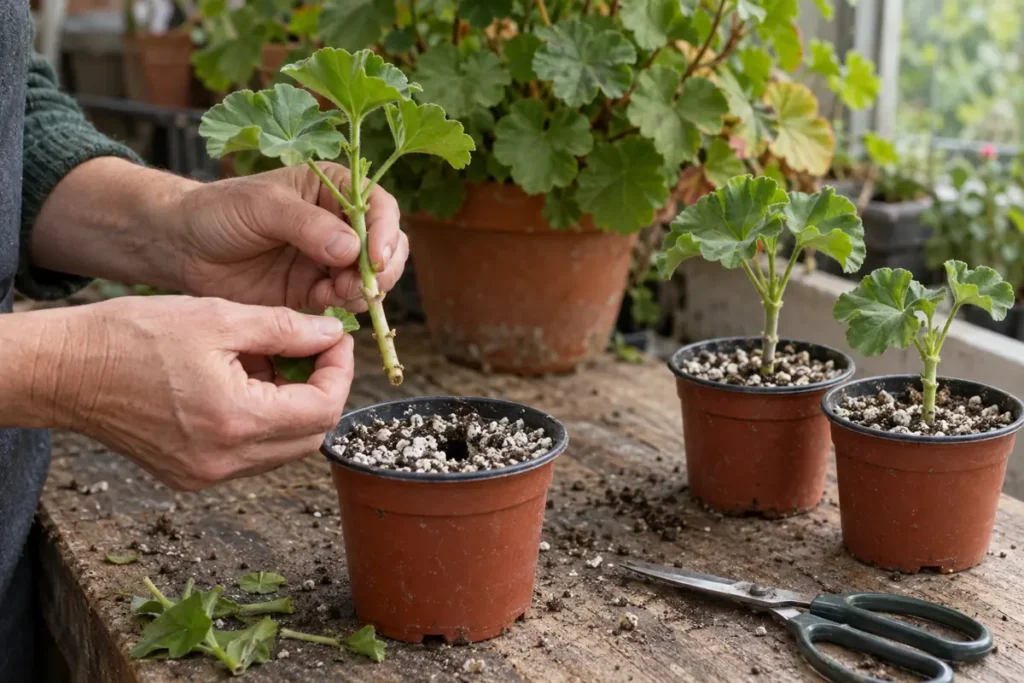
Insert the prepared stem into a porous rooting medium in a container with drainage holes. A commercial propagation mix is one option; perlite and vermiculite are used in Extension methods. Firm the medium enough to hold the stem upright, water it, and allow excess water to escape through the holes before returning the pot to its growing position.
The cutting has no established root system. Keep its rooting medium moist so it does not wilt, without saturating it. Provide bright indirect light during rooting. Move a cutting that droops in hot direct sun to a suitable rooting position before adding more water.
Rooting hormone is included in some protocols. If using it, follow its label for the correct application. A clear cover can reduce moisture loss; monitor it for mold and excessive wetness. Once roots have developed, pot the young plant into normal potting mix and continue indoor care until spring.
Allow several weeks for rooting, with timing influenced by the cutting and its growing conditions. Fresh growth is encouraging; gently checking for resistance can help assess rooting without repeatedly pulling the stem out. A stem that slips freely from the medium has not demonstrated an established root system.
Read winter symptoms before changing water or light
Look at the method before interpreting a symptom. Bare-root leaf loss can be expected. Leaf loss from a wet potted plant needs a different investigation. Adding water to both because they look untidy can make the second problem worse.
- Long, weak indoor shoots: improve usable light, check warmth, then prune the stretched growth.
- A pot that stays wet: postpone watering and examine drainage and room conditions.
- A leafless stored plant: assess stem condition before declaring it dead.
- Soft dark stored tissue: do not respond with more soaking; separate the affected plant.
- Wilting cuttings: check moisture and sun exposure without flooding the medium.
- Mold around covered cuttings: remove decaying material and reconsider wetness and airflow.
Dry leaves are papery and brittle; rotting material may feel soft and smell unpleasant. Those observations help you distinguish drying from decay without identifying the exact pathogen. Extensive damage calls for a different choice than a healthy plant with a few dropped leaves. Remove seriously affected plants from the winter group when there is extensive rot or damage that leaves little healthy material to carry through the season.
Check plants often enough to notice a change before it spreads. A glance at the stems, a feel of the potting mix, and a temperature reading tell you more than increasing water because the weather outside has become colder.
Restart roots indoors before the outdoor season returns
Stored plants need time to regain growth before going outside. Late winter or early spring is the usual restart period in northern Extension examples. Translate that to your local season: prepare the plant indoors before the date when outdoor frost risk normally ends.
Remove dead leaves and prune dead shoot tips back to firm, green living tissue. Brittle brown tips may break easily. Surviving lower stems feel more solid. Pot a viable bare-root plant in drained mix, water it thoroughly, and return it to bright light. Resume watering according to drying as roots and shoots become active.
Give a slow plant time without treating a completely rotted stem as dormant. There must be living material left to recover. Potted overwintered plants and rooted cuttings can be tidied as new growth resumes; their progress will not necessarily match a recently repotted bare-root plant.
Wait until local frost danger has passed before returning tender geraniums outdoors. Introduce outdoor exposure gradually in a sheltered position, then increase light and time outside as the plant adjusts. Indoor-grown leaves meet stronger sun, wind, and changing temperatures at once if a pot goes straight onto an exposed patio.
A surviving plant is ready to join the other garden flowers when the weather and its new growth permit. Keep the plant sheltered if cold weather returns during the transition, even when other gardens in a warmer part of the country are already planted.
Conclusion
Start with one or two healthy plants and a winter location you can actually maintain. Write the variety name and chosen method on a label before moving them. In spring, compare which plants stayed firm, which produced compact growth, and which conditions need changing next winter.
Bring the first pot inside before frost reaches the patio. Firm stems and healthy leaves give you a better starting point than a planter already limp from a freezing night.
Frequently Asked Questions
Can ivy geraniums be kept over winter?
Yes. Ivy geraniums are tender Pelargonium, and a bright indoor potted arrangement is an option. Account for their trailing growth when allocating space. The common bedding-geranium bare-root instructions do not establish equal survival for every ivy cultivar; preserving an unfamiliar variety in a pot keeps its condition visible.
Can scented geraniums be kept as houseplants?
Yes. Scented Pelargonium includes plants suited to indoor containers. Give the particular plant suitable light and drained potting mix. Do not assume every scented species tolerates the same bare-root storage treatment as a common zonal geranium.
Is overwintering worth doing for an inexpensive plant?
It depends on the plant’s value to you and the care space you have. Keeping a favorite color or gifted plant can justify the effort. Buying a replacement may be more practical when the original is unhealthy or the house lacks suitable winter conditions.