
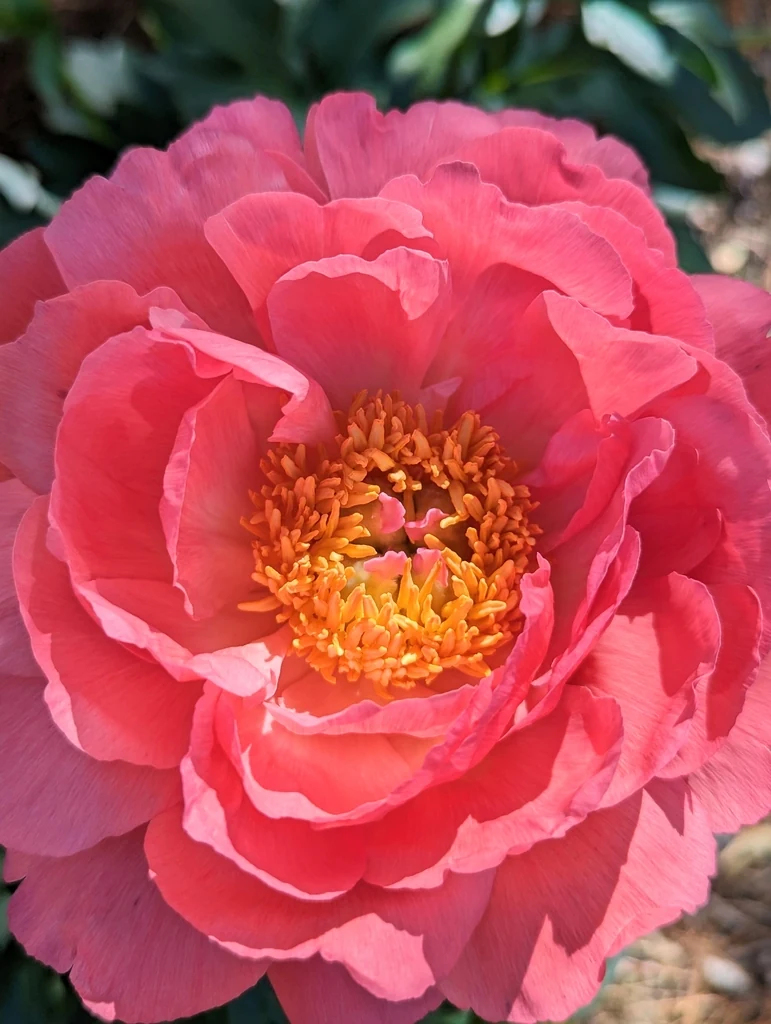
Types of peonies fall into three main garden groups: herbaceous plants that renew their shoots each spring, woody or tree peonies that retain branches, and intersectional hybrids, often sold as Itoh peonies. Start with that growth habit. It determines what remains in winter, how much permanent space the plant occupies and which planting instructions apply.
Flower shape is a separate choice. A peony with a fluffy double flower may belong to a different growth group from another bloom that looks almost identical. An open yellow flower also cannot tell you whether the plant keeps woody branches. Match the plant to your winter climate, drainage and measured bed width, then choose the color, flower form and named cultivar. That order helps prevent buying a lovely bloom attached to a plant that cannot suit the space.
Choose the plant habit first
Herbaceous: choose a returning perennial clump with seasonal stems. Check the cultivar’s width and whether heavy flowers need support.
Woody or tree: choose a deciduous shrub with lasting branches. Keep room for its framework and identify grafted planting stock.
Intersectional or Itoh: compare named hybrids with tree-peony-like flowers and largely herbaceous seasonal growth. Inspect the crown and basal buds before following care instructions.
Single, Japanese, anemone, semi-double, bomb and full double describe flowers, not six additional plant habits.
Key Takeaways
- Identify the growth habit before choosing a flower color.
- Separate six flower forms from the three main plant groups.
- Measure mature spread independently of the stated stem height.
- Match winter chill, summer exposure and drainage to your cultivar.
- Confirm planting stock before measuring crown or graft depth.
Table of Contents
Types of Peonies Differ in What Survives Winter
Look below the flower to the stems and crown. Herbaceous growth returns from buds associated with the underground crown. A woody peony carries a lasting branch structure above soil. Intersectionals combine traits of the two, sometimes retaining short woody pieces with viable basal buds.
| Garden group | Winter structure | Choice that changes care |
|---|---|---|
| Herbaceous | Annual stems die back; crown survives | Allow for a returning clump and possible flower supports |
| Woody or tree | Persistent, bud-bearing branches | Reserve shrub space; do not routinely cut living canes to soil |
| Intersectional, often called Itoh | Seasonal top growth; some plants retain low woody buds | Check the cultivar and actual basal growth, not only the flower |
All three can be long-term garden plants when their climate and site suit them. The distinction between perennials and annuals concerns the life cycle; a herbaceous peony’s disappearing winter stems do not make it an annual.
Herbaceous Peonies Rebuild Their Stems Each Spring
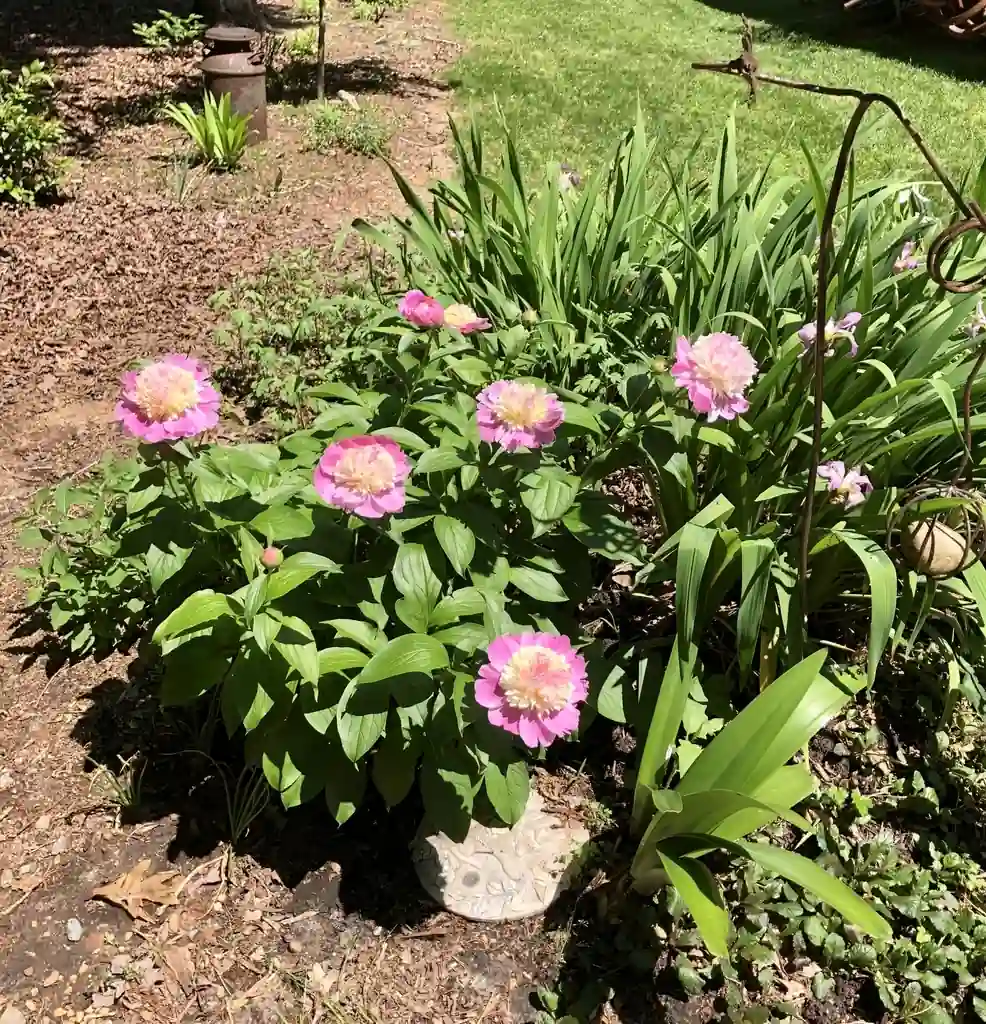
Common garden peonies include Lactiflora cultivars and herbaceous hybrids. They produce a leafy clump through the growing season, then lose their annual top growth. A dormant crown may look unimpressive beside a potted shrub, although it can develop into a broad plant once established.
The new shoots are soft and often reddish, becoming leafy stems as they extend. Later, a heavy flower can pull a flexible stalk outward, particularly after rain. Choose support needs with the flower: densely petaled doubles are often heavier than open singles or Japanese forms.
Fernleaf is a herbaceous specialty
Fernleaf peony, Paeonia tenuifolia, has finely divided foliage that looks feathery beside the broader leaves of common garden peonies. Iowa State University Extension places it among the earliest peonies to bloom and describes plants usually staying below 2 feet tall. It is a herbaceous species, not a fourth mutually exclusive stem habit.
Woodland peonies also need their exact species identified. Woodland describes a growing setting; it does not make every fine-leaved peony suitable for a dark, damp corner. Check species-specific light and drainage needs before substituting an unusual plant for an ordinary sunny-border cultivar.
Woody Peonies Keep a Bud-Bearing Branch Framework
Tree peonies are deciduous shrubs. Their bark-covered canes remain after leaves fall and carry new buds into the next growing season. The American Peony Society separates woody peonies into groups including suffruticosa, rockii hybrids, species and lutea hybrids, with different habits and cold tolerance.
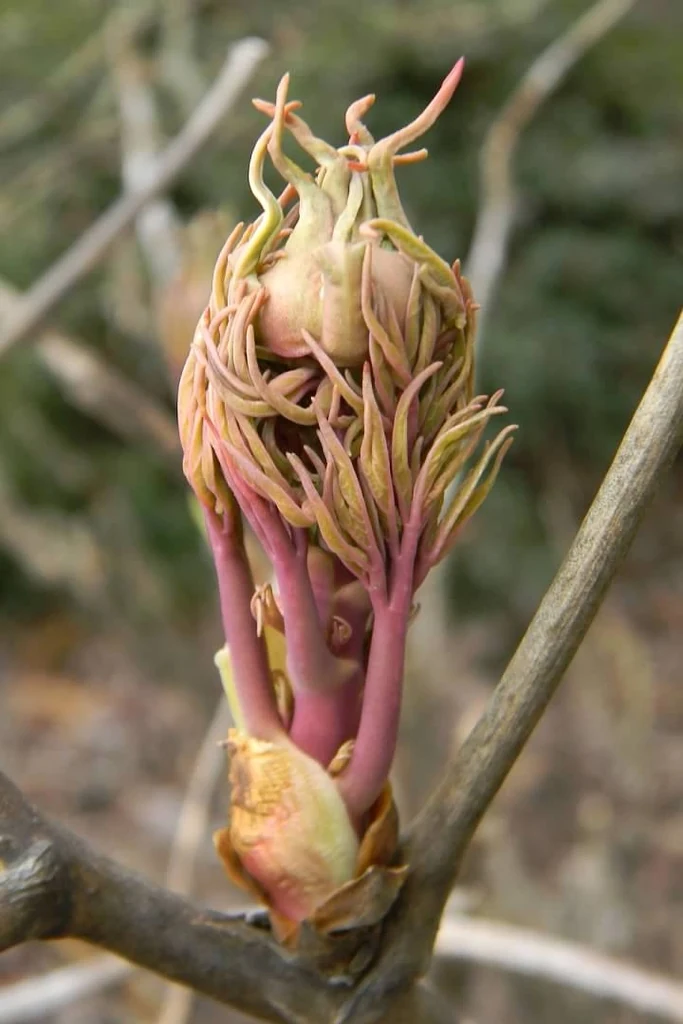
Persistent stems change the garden outline even outside flowering season. Do not give a young woody plant a space measured only around its first few shoots. It needs room for a shrub framework, and winter damage to that framework can affect the shape you expected.
Light shade does not mean deep shade
Some protection from hot afternoon sun can suit woody peonies. Full sun to light shade suits the group in NC State Extension’s plant description; regional success varies across North Carolina. A bright bed protected late in the day is different from dense shade under competing tree roots.
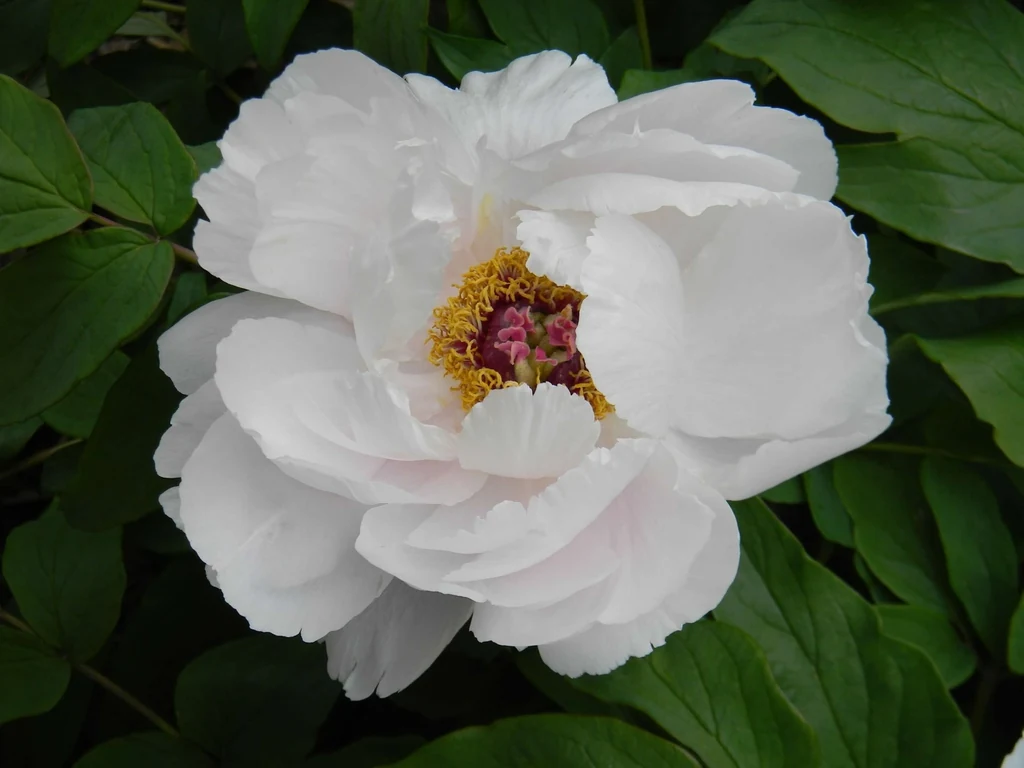
A large flower does not identify the plant group on its own. Read the nursery label and look for persistent branches. The timing and handling of peony cutback depend on whether those stems are annual stalks, permanent wood or low bud-bearing remnants.
Intersectional Peonies Combine Traits of Two Groups
Intersectional peonies result from crosses between botanical sections of the genus. The familiar garden hybrids often combine tree-peony-like foliage and flowers with a clump-forming, largely herbaceous seasonal habit. They can retain short woody basal growth, so a simple rule that every visible stem must disappear is too rigid.
Nursery labels often use Itoh and intersectional interchangeably. In the American Peony Society’s registry terminology, Itoh is a more specific group within the broader intersectional description. For a purchase, the named cultivar and its registered group give you more information than the retail heading alone.
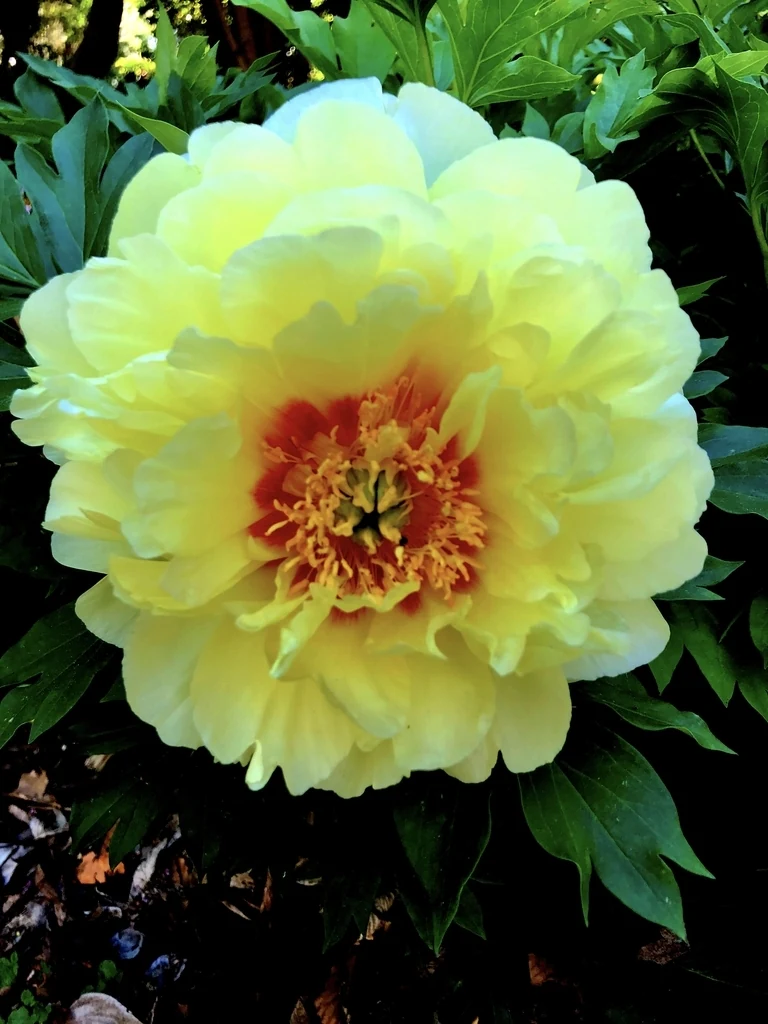
‘Bartzella’ and ‘Garden Treasure’ both offer yellow flowers with red markings, but their registered flower forms and plant descriptions differ. Neither name means that every yellow peony is an Itoh: ‘High Noon’ is a woody lutea hybrid. Similar colors can sit on quite different plants.
A strong-stemmed cultivar may reduce support work, without making weather irrelevant. Compare actual flower carriage, mature spread and exposure. A height given for a flowering stem is not proof that the whole clump will fit a bed of the same width.
Six Flower Forms Depend on Petals and the Center
The six peony flower-form standards distinguish outer petals, inner petal structures and reproductive parts. Examine an open flower from above and from the side. An unopened bud or one partially expanded bloom may hide the features that separate two forms.
| Form | Look at the open flower |
|---|---|
| Single | Open, saucer-like petals with exposed stamens and carpels |
| Japanese | Modified stamens, called staminodes, remain recognizable in the center |
| Anemone | Center structures are more petal-like, called petalodes |
| Semi-double | Extra petal bulk with prominent stamens still visible |
| Bomb | A raised ball of inner petals sits above larger outer guard petals |
| Full double | Dense petals obscure most reproductive structures |
The distinction between Japanese and anemone form can be subtle; a pale fluffy center alone is insufficient. Japanese is a flower-form name, not proof of the plant’s country of origin. Bomb describes the raised inner mound, not the size or hardiness of the whole plant.
Flower form can also alter maintenance. Wet, layered petals add weight at the top of a stem, and tightly packed centers can look very different from the open, pollen-bearing center of a single. Fragrance is another cultivar trait: a full double is not automatically more fragrant than a single.
Compare Named Peony Varieties by Habit and Use
A cultivar name lets you check a plant more precisely than a label such as pink double or yellow tree peony. These examples use the American Peony Society registry for group and flower descriptions. Photographs elsewhere on the page are named only where their source identifies the cultivar.
| Cultivar | Growth group and flower | What to consider |
|---|---|---|
| Bowl of Beauty | Lactiflora herbaceous; Japanese form, pink outer petals and pale lemon center | An open-looking center; do not confuse form with plant origin |
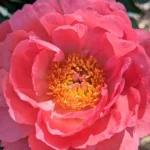
| Coral Charm | Herbaceous hybrid; semi-double coral | Choose for coral color, which can become paler as the flower ages |
| Festiva Maxima | Lactiflora herbaceous; white double with crimson flecks | An early relative bloom window; allow for the weight of a large double |
| Sarah Bernhardt | Lactiflora herbaceous; late rose-pink double | Plan support for the heavy flowers; a cutting choice is not necessarily an unsupported border choice |
| High Noon | Woody lutea hybrid; yellow semi-double with crimson flares | A yellow flower on a lasting shrub; no guaranteed second bloom everywhere |
| Bartzella | Intersectional; yellow full double with red flares | Registered for strong flowering stems; verify mature width separately |
| Garden Treasure | Intersectional; yellow semi-double with red markings | Broad, low habit; compare its footprint with your available bed |
| Cora Louise | Intersectional; white with lavender flares | Registry calls it double; Iowa lists semi-double, so retain that naming caveat |
Check names and support claims before buying
The modern registry note for ‘Sarah Bernhardt’ flower carriage warns that its heavy blooms require support and that similar plants are often confused in commerce. A seller’s generic photograph is not enough to verify the cultivar.
Plant names and market names can also differ. ‘Smith Opus 1’ is sold under MISAKA; those labels do not establish two separate cultivars. Keep the nursery tag and receipt, compare the registered name, and ask the seller about conflicting labels before choosing permanent space.
Some flower-form descriptions legitimately differ between references. For ‘Bowl of Beauty’, Iowa combines Japanese and anemone in its table, and the registry specifically uses Japanese. For ‘Cora Louise’, double and semi-double appear in different references. Color and plant identity remain useful; do not force a photograph to settle a classification disagreement.
Match Winter Chill, Light and Mature Spread
A USDA hardiness zone helps screen winter cold, but it cannot tell you whether a warm site supplies enough winter chilling or whether a crown will sit in water. Select the exact cultivar for local conditions. Near the warm or cold edges of its range, ask a county Extension office or experienced local peony nursery about demonstrated performance.
Measure width before counting plants
A flower-stalk height does not describe a plant’s footprint. Iowa’s growing guidance gives common herbaceous peonies as roughly 2-3 feet tall and potentially 3-5 feet across at maturity. NC State’s woody-peony record gives a 3-5-foot spread with height reaching about 6.5 feet. These are reference ranges, not dimensions for every named plant.
In a 4-foot-wide bed, a single mature peony may occupy much of the planting width. Mark the proposed canopy with a tape measure and leave room for access and neighboring plants. Ask for the cultivar’s expected spread if a listing gives only height.
Check the site after rain and through the day
Common herbaceous peonies generally flower well in sun; woody types can accept lighter shade. Compare direct sun, partial shade and reflected heat at the actual planting spot. A wall can heat a bed late in the day even where morning light looks gentle.
After rain, inspect where water collects and how the soil behaves below the surface. Sticky, slick soil that smears on a spade and holds standing water needs attention before planting. Correcting waterlogged garden soil is a site problem; a different flower color or a more expensive peony will not solve it.
Flowering is a seasonal display, not a summer-long guarantee. Fernleaf and woody plants can start earlier than common herbaceous peonies, with some intersectionals extending the sequence. Choose locally compatible early and late cultivars and expect overlap to vary with spring weather. The foliage must still fit the bed after the flowers finish.
Identify the Crown or Graft Before Planting
Ask whether the plant is a bare-root herbaceous division, an intersectional crown, a grafted woody peony or an own-root woody plant. Those descriptions change the planting reference point. Roots that look broadly similar in a bag can require different treatment.
For herbaceous divisions, the eyes are the buds from which shoots grow. They can appear as firm white or pink points around the crown. Iowa and University of Minnesota Extension guidance places herbaceous eyes shallowly, generally about 1-2 inches below the finished soil surface. Deep burial can inhibit flowering.
Grafted woody peonies use a different planting arrangement. The graft joins the woody plant to a nurse root, and the American Peony Society recommends deep planting, at least 4 inches, to encourage roots from buried woody stem. Confirm the graft location and the nursery’s diagram; do not apply the shallow herbaceous-eye measurement to the entire grafted plant.
Intersectional crowns can carry buds at different levels. Follow instructions for that purchased stock and region, and ask the nursery to identify the planting level if it is unclear. A specialist’s deep propagation-row method is not a universal household planting depth.
Autumn is generally favored for dormant root establishment. A spring-bought container plant is a different situation from a dormant bare root stored into warm weather; check local timing and handle it accordingly. New or recently divided plants may need time before flowering, so first-year bloom is not a reliable test of whether you chose the right type.
Conclusion
Choose a peony by the whole plant: its winter stems, actual mature footprint, local growing conditions and planting stock. Then choose the bloom you want and verify its cultivar name. Keeping growth habit separate from flower form makes the choice clearer and helps protect the crown, branches and future flowers.
Photo credits
‘Coral Charm’, featured: Hope Duckworth. ‘Cora Stubbs’ and ‘Bartzella’: Cathy DeWitt. White woody peony and woody spring bud: Randy Harter. Each photograph: Creative Commons Attribution 4.0. License: https://creativecommons.org/licenses/by/4.0/
Herbaceous photographs: https://plants.ces.ncsu.edu/plants/paeonia-herbaceous-types/ Woody and intersectional photographs: https://plants.ces.ncsu.edu/plants/paeonia-woody-types/ Images converted to WebP without changing flower color or identity. Individual photographs retain their licenses.