Types of blue flowers range from low spring bulbs and woodland perennials to trailing summer plants and flowering shrubs. Blue daze and baby blue eyes offer clearly blue blooms; grape hyacinth and balloon flower often lean toward violet. Choose by the plant’s identity, season and growing conditions as well as its color.
A close-up can hide the difference between a six-inch bulb and a shrub several feet wide. It can also make lavender look blue. Match the botanical name to the foliage and flower shape, then check the mature plant’s needs. A moist woodland flower will struggle in a hot, dry patio pot, regardless of how well its color matches the plan. Pick a low seasonal plant for a changing container, a returning clump for an established border or a shrub where its full width fits. Flowering windows are seasonal guides; local weather, cultivar and frost shift the timing.
Narrow the choice before buying
- Warm, sunny pot: blue daze for a low trailing display; treat it as seasonal where winters freeze.
- Cool spring color: baby blue eyes, cornflower or love-in-a-mist in an appropriate sunny bed.
- Moist woodland shade: Siberian bugloss or Virginia bluebells for spring, not continuous summer bloom.
- Moist summer border: great blue lobelia; it needs a different root environment from dry-site choices.
- Late-season blue: hardy plumbago where spreading is acceptable, or bluebeard in a suitable sunny shrub bed.
Bigleaf hydrangea is conditional: a suitable cultivar and soil chemistry are required for blue flowers.
Key Takeaways
- Read the scientific name before comparing similarly named flowers.
- Check daylight flower color when blue-violet would disappoint you.
- Match soil moisture as carefully as the amount of sun.
- Allow mature width when placing bulbs, groundcovers or shrubs.
- Combine compatible bloom windows for color across several seasons.
Table of Contents
Choose Types of Blue Flowers by Site and Hue
Use three practical color descriptions: clear or pale blue, blue-violet or indigo, and conditional blue. They describe the visual impression, not an instrument-measured color standard. Cultivar, flower age and lighting can change what you see.
For perennial choices, compare your location with the USDA Plant Hardiness Zone Map. Its zones describe average annual extreme minimum winter temperatures. They do not establish summer heat tolerance, soil drainage or the month a plant will bloom. Check those conditions separately.
The dimensions and winter ranges below use North Carolina State Extension plant records as a starting point; a named cultivar can differ. Check the plant tag and local performance before planting. A broader flower choice matched to sunlight helps when the site rules out an otherwise appealing color.
Cool-Season Annuals for Clear Spring Blue
These plants fit cooler flowering periods. Their spring appearance is not evidence that they will keep blooming through hot southern nights.
1. Baby blue eyes
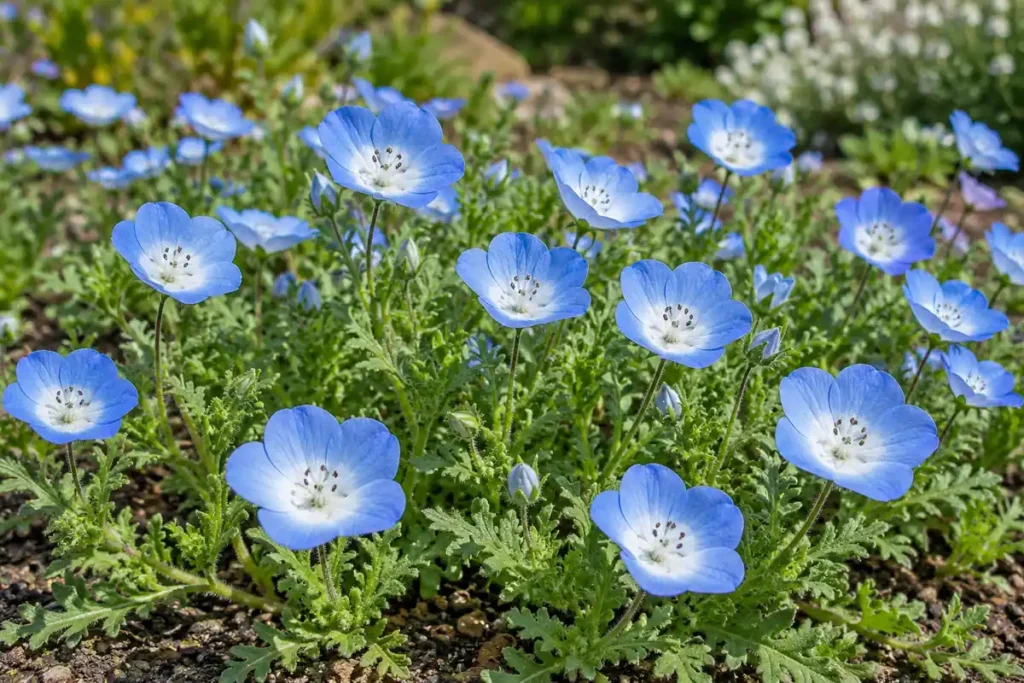
Nemophila menziesii produces clear light-blue flowers close to the ground. The pale center and soft, lobed foliage distinguish it from tiny forget-me-not-like flowers. It is a cool-season annual for sun to partial shade and moist, well-drained soil.
Allow roughly 6 to 12 inches of spread; reported height varies from a few inches to about a foot. Use it for a low spring display in a suitable climate. Hot summer nights can shorten its life, so it is a poor substitute for a heat-loving patio annual.
2. Cornflower or bachelor’s button
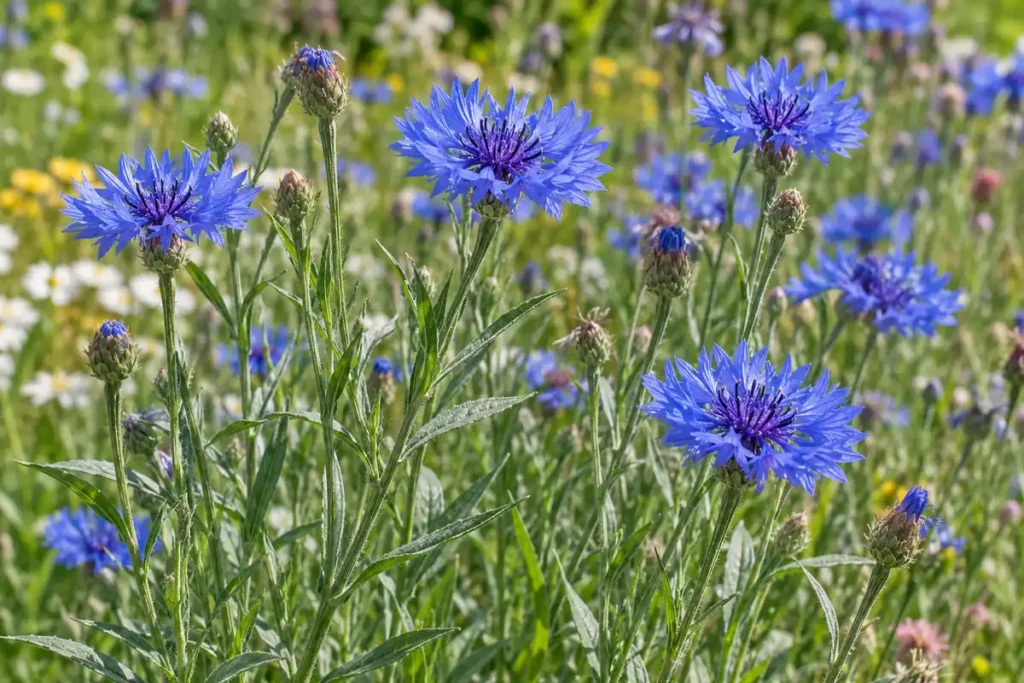
Centaurea cyanus offers a stronger, deeper blue on upright branching stems. Plants commonly reach 1 to 3 feet high and 1 to 2 feet wide. Choose a blue-flowered strain; mixed seed can include other colors.
This cool-season annual suits sun or light shade with drainage. It can reseed readily. Keep it in a managed garden, check local weed guidance and remove unwanted seed heads before they mature. Scattering a nonnative flower outside the garden is a different decision from growing it in a controlled bed.
3. Love-in-a-mist
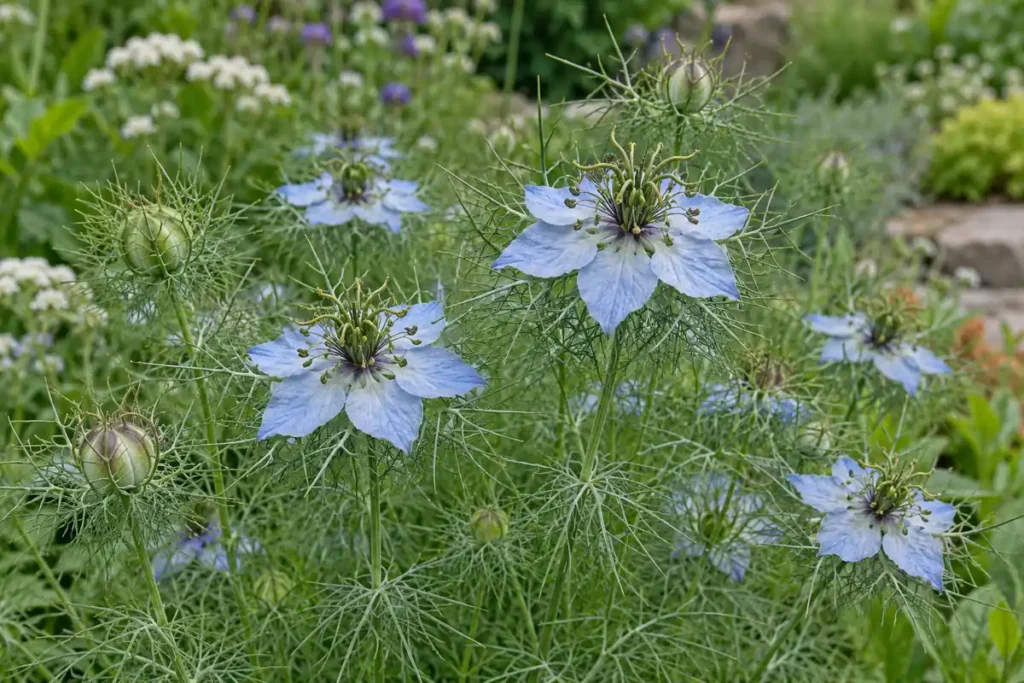
Nigella damascena carries pale blue flowers among threadlike green leaves. The feathery outline and inflated seed capsules distinguish it from a plain blue daisy. A typical plant reaches 1 to 2 feet high and around 1 to 1 1/2 feet wide.
Choose a blue seed strain and direct sow in the locally appropriate cool season. The plant dislikes unnecessary transplanting. Keeping the ornamental pods allows seed development; removing heads limits reseeding. Do not expect the same hot-weather performance as blue daze.
Spring Bulbs and Flowers for Woodland Shade
Early flowers and summer foliage serve different purposes. Plan around the normal resting period of a spring ephemeral instead of watering an empty spot repeatedly because its leaves have disappeared.
4. Siberian bugloss
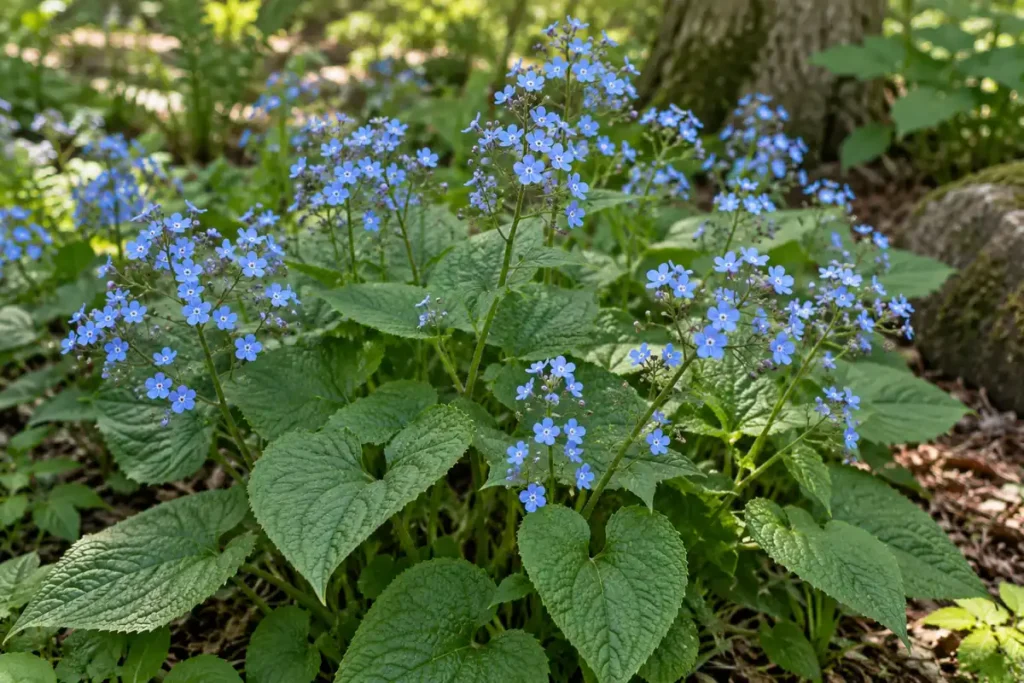
Brunnera macrophylla makes tiny blue spring flowers on airy stems above broad, rough-textured leaves. Give this perennial moist, humus-rich soil and shade or partial shade. Expect about 1 to 1 1/2 feet in height and 1 1/2 to 2 1/2 feet of spread, with winter suitability commonly listed for zones 3 to 8.
Hot sun and drying soil can scorch the foliage. The silver leaves associated with Jack Frost belong to that named cultivar, as Wisconsin Extension’s cultivar account makes clear. Plain green species foliage should not be mistaken for a failed silver-leaf plant.
5. Virginia bluebells
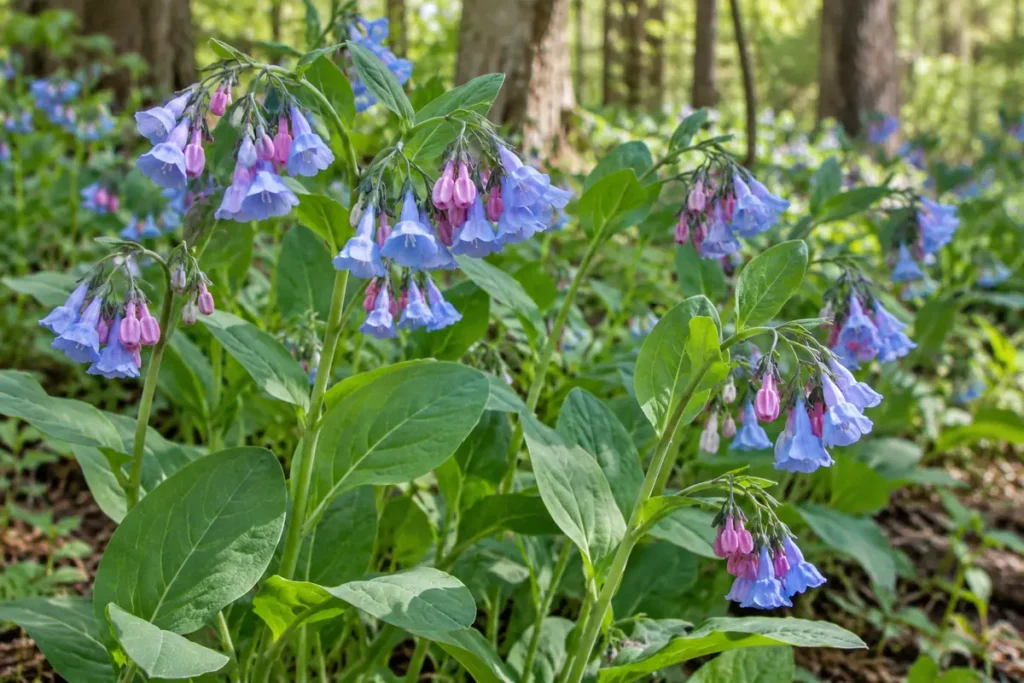
Mertensia virginica is an eastern native woodland perennial. Its smooth blue-green leaves and nodding bells differ sharply from Brunnera’s coarse heart-shaped foliage. Plants reach roughly 1 1/2 to 2 feet high and 1 to 1 1/2 feet wide in moist, suitable shade; the listed winter range is zones 3 to 9.
Pink buds open blue, then the foliage normally dies back toward summer dormancy. Mark the location so later planting does not disturb it. Use compatible later-growing shade companions to fill the seasonal gap. Illinois Extension’s seasonal blue-flower selections also place Virginia bluebells in the spring display.
6. Grape hyacinth
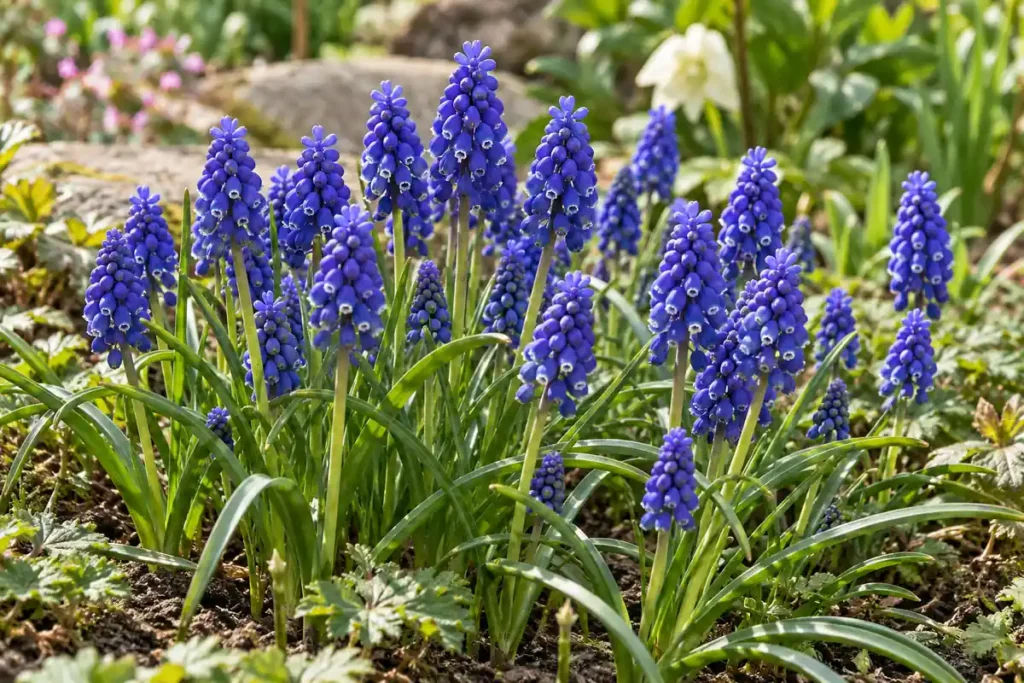
Muscari armeniacum is a low spring bulb, commonly 6 to 9 inches high and about 3 to 6 inches wide before clumps increase. The tight little urns and strap-shaped basal leaves are unlike a tall delphinium spike. Expect a violet-blue impression, not a pale sky-blue carpet.
Plant bulbs in fall according to supplier and local guidance, in sun to partial shade with drainage. The listed winter range is zones 4 to 8. Leave the foliage after flowering until it matures naturally; those leaves replenish the bulb for another season.
Warm-Season Blue for a Sunny Container
7. Blue daze
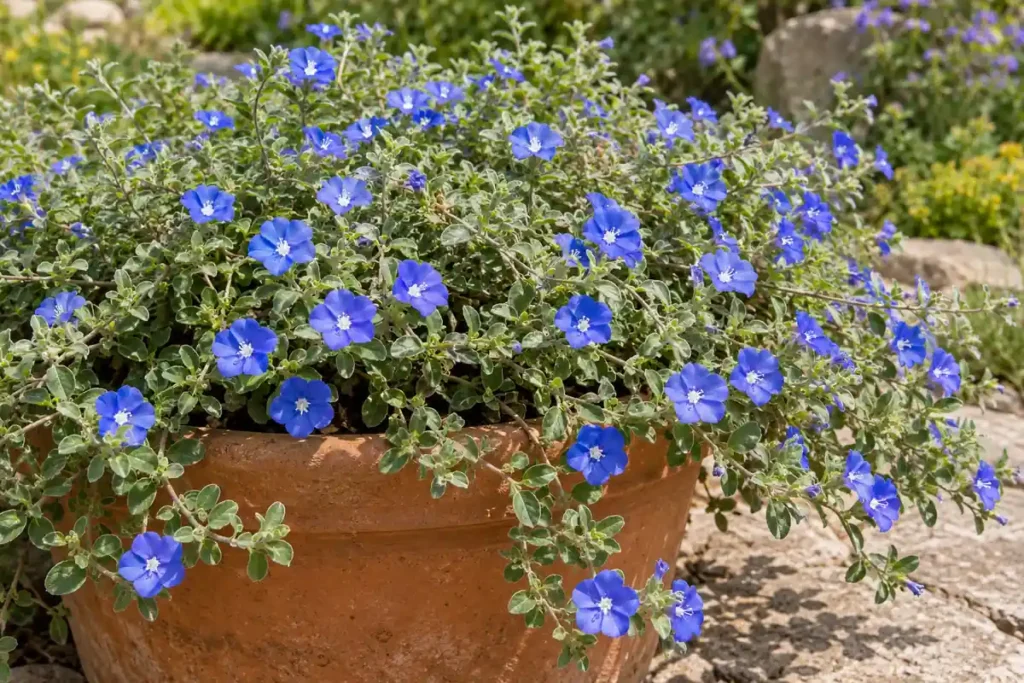
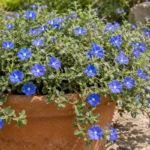
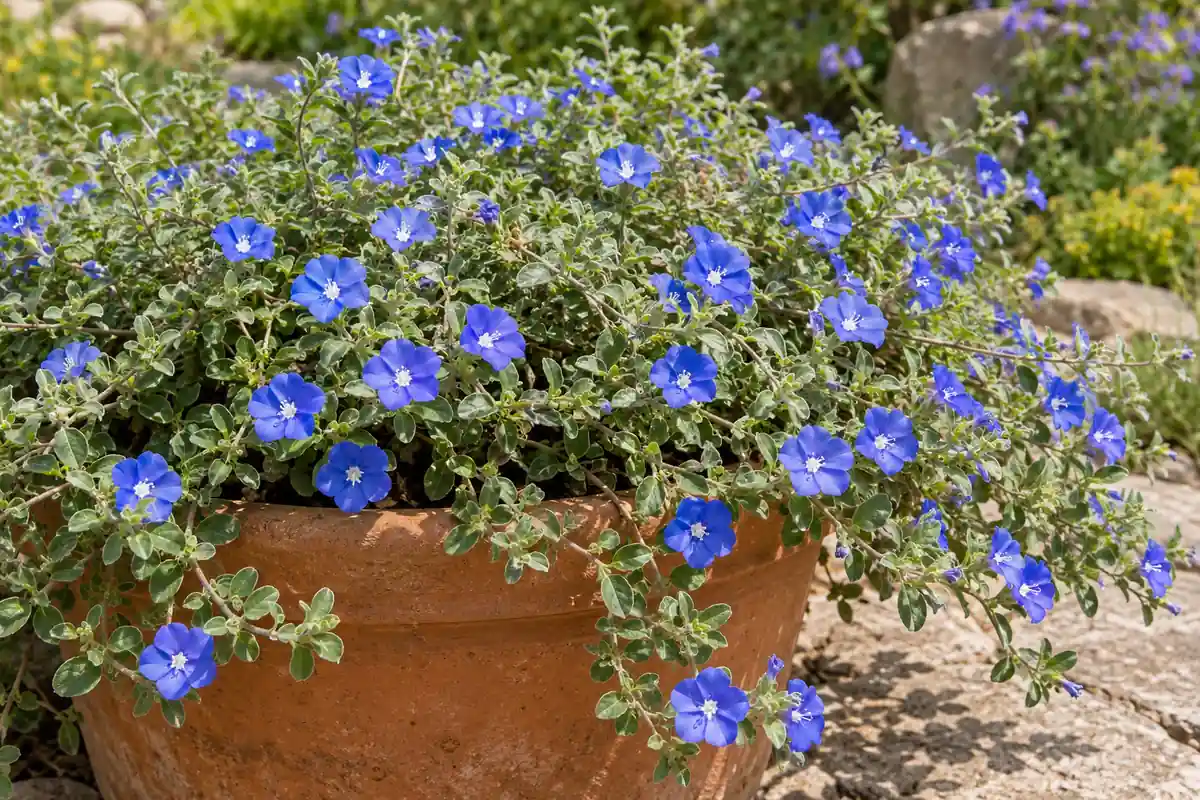
Evolvulus glomeratus has blue funnel-shaped flowers with white centers above small, softly hairy leaves. It is a low spreading or trailing plant, not a twining morning glory. Allow about 9 to 18 inches in height and 2 to 3 feet of spread in suitable conditions.
Use sun, good drainage and adequate water for a warm-season container or bed. Treat it as seasonal color where winters freeze, checking local survival before expecting a return. Flowers can close in cloudy conditions or at night. Recheck in sunshine before diagnosing a lack of flowers as plant failure.
Returning Blue Flowers for Height or Moist Soil
8. Eastern bluestar
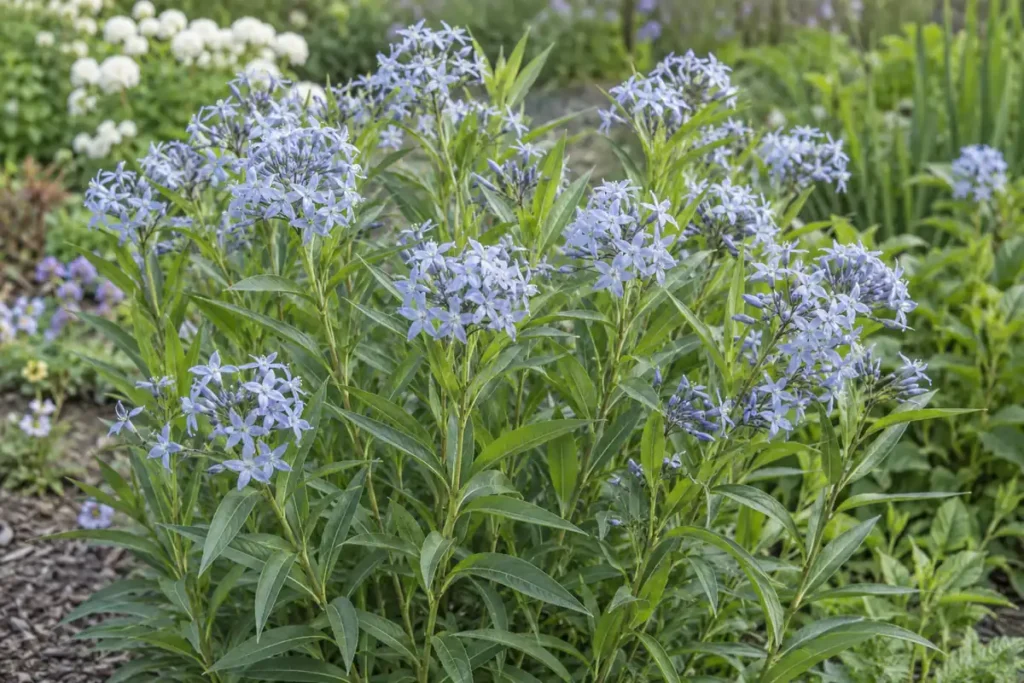
Amsonia tabernaemontana produces small, narrow-petaled pale blue stars in late spring. This eastern native perennial grows about 2 to 3 feet high and wide, with a listed winter range of zones 3 to 9. Give it sun to partial shade and adequate root moisture in drained soil.
The flowers are a seasonal event; the leafy clump remains afterward and can turn golden in fall. Allow the mature width at planting. Deep shade can leave stems floppy, so a brighter position may be needed even when the root moisture is suitable.
9. Balloon flower
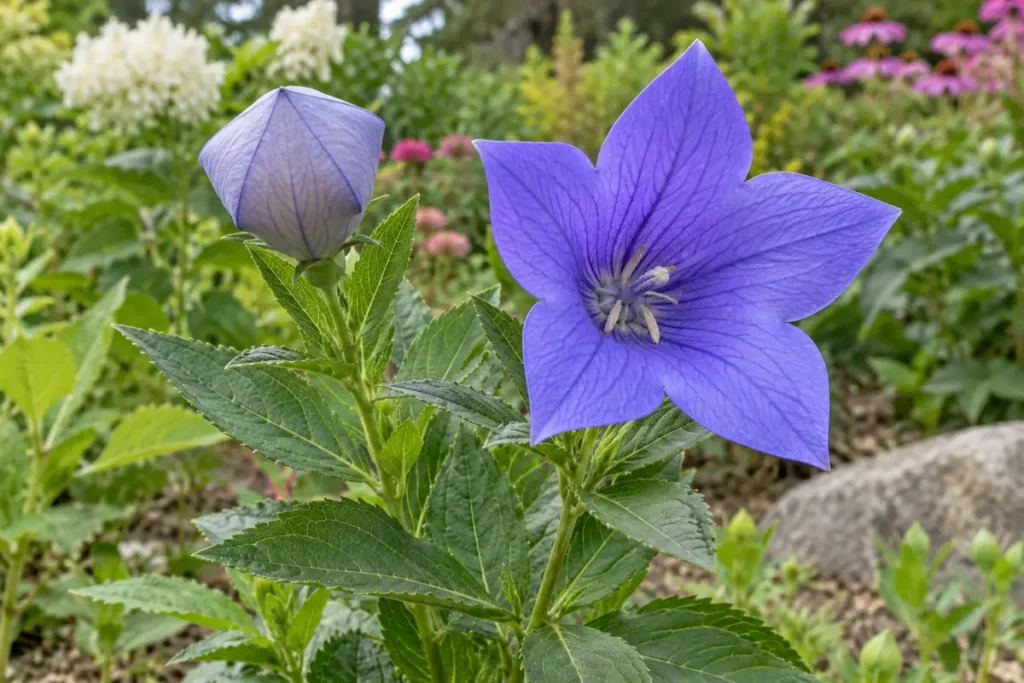
Platycodon grandiflorus is recognizable before opening: the inflated bud looks like a small balloon. Blue selections often have a violet cast and darker veins across the open bell. Other cultivars are white or pink, so read the variety label.
Expect about 1 to 2 feet high and 1 to 1 1/2 feet wide, with sun to partial shade, good drainage and spring-to-summer flowering depending on locality. Zones 3 to 8 are listed in the Extension record. Choose a lasting position because established fleshy roots do not welcome repeated disturbance.
10. Delphinium
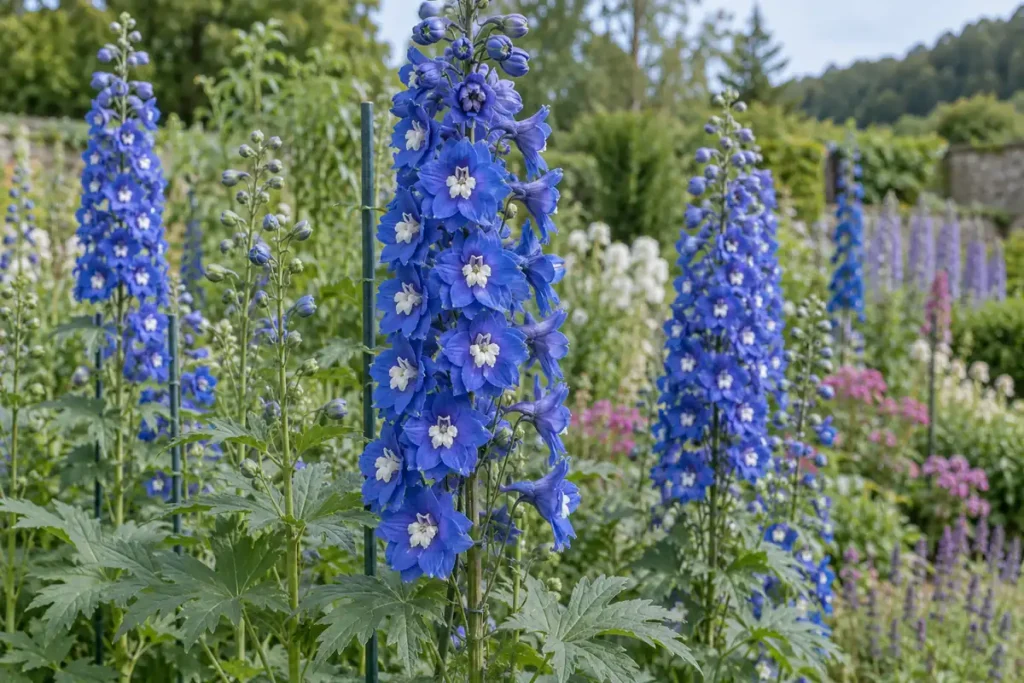
Delphinium elatum selections bring height, commonly 3 to 5 feet with a 2 to 3 foot spread. Some varieties grow taller. Blue flowers may have pale centers, and other named selections lean strongly toward indigo or purple.
Reserve room for support and protection from wind in a suitable sunny, cooler-summer garden. The listed winter range is zones 3 to 7; winter survival alone does not make a hot, humid site suitable. Install support before spikes topple. Delphiniums are poisonous if eaten, so they do not belong among edible flower choices.
11. Great blue lobelia
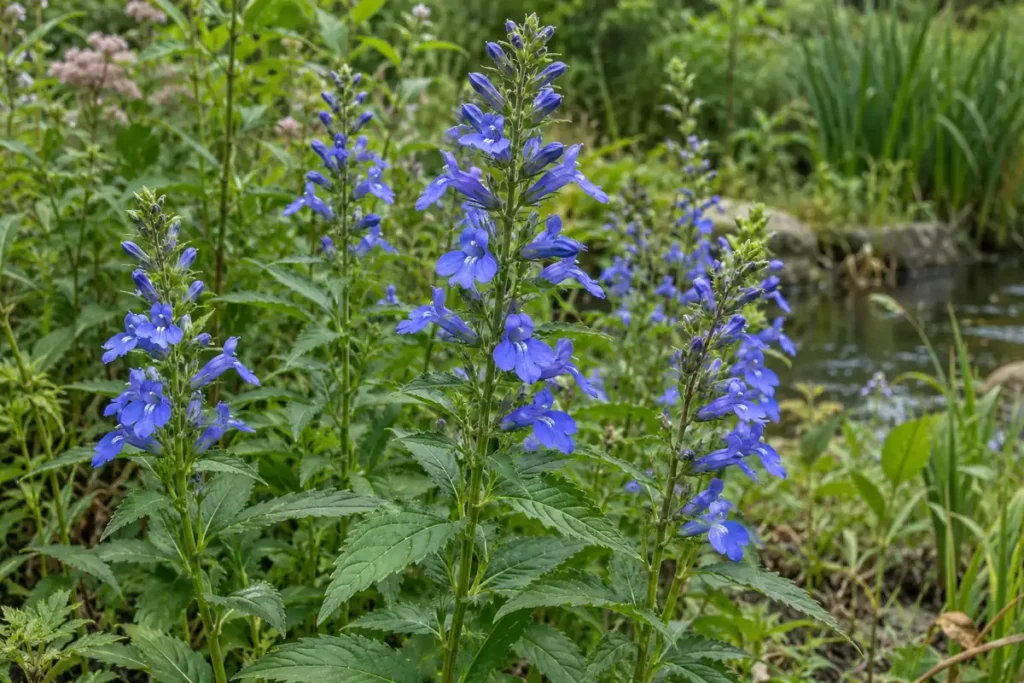
Lobelia siphilitica is an eastern native perennial with blue tubular flowers on leafy upright stems. It commonly occupies the 2 to 4 foot height range, around 1 to 1 1/2 feet wide. Summer-to-early-fall flowers fit a moist border or suitable rain-garden edge, with a listed winter range of zones 4 to 9.
Use partial sun, or sun where moisture remains adequate. It is not a dry gravel-bed substitute for blue daze. Check actual root-zone moisture before choosing the planting spot. Plant parts can be harmful if eaten; grow it as an ornamental.
Late Blue Groundcover and Shrub Choices
12. Hardy plumbago
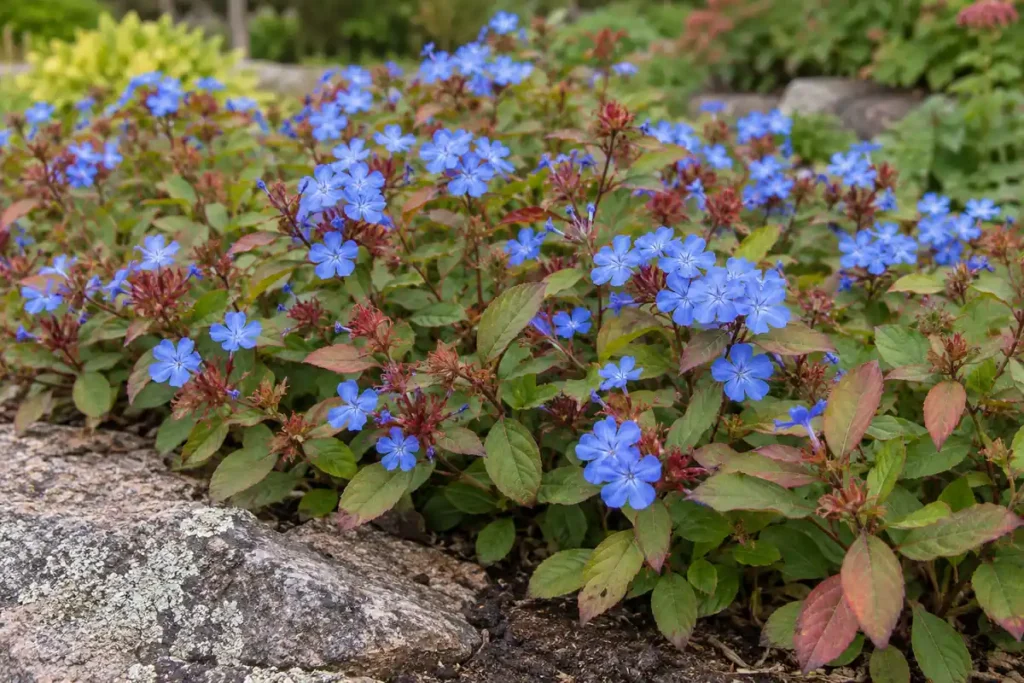
Ceratostigma plumbaginoides spreads by rhizomes into a low mat, roughly 6 to 8 inches high. Blue late-summer and fall flowers stand above leaves that can turn bronze-red. It fits sun to partial shade in drained soil, with zones 5 to 9 listed for winter suitability.
The initial spread may be around 1 to 1 1/2 feet, then expand. Choose a site where that growth can be managed. Do not confuse it with tropical Plumbago auriculata, a different plant with a different scale and cold response.
13. Bluebeard
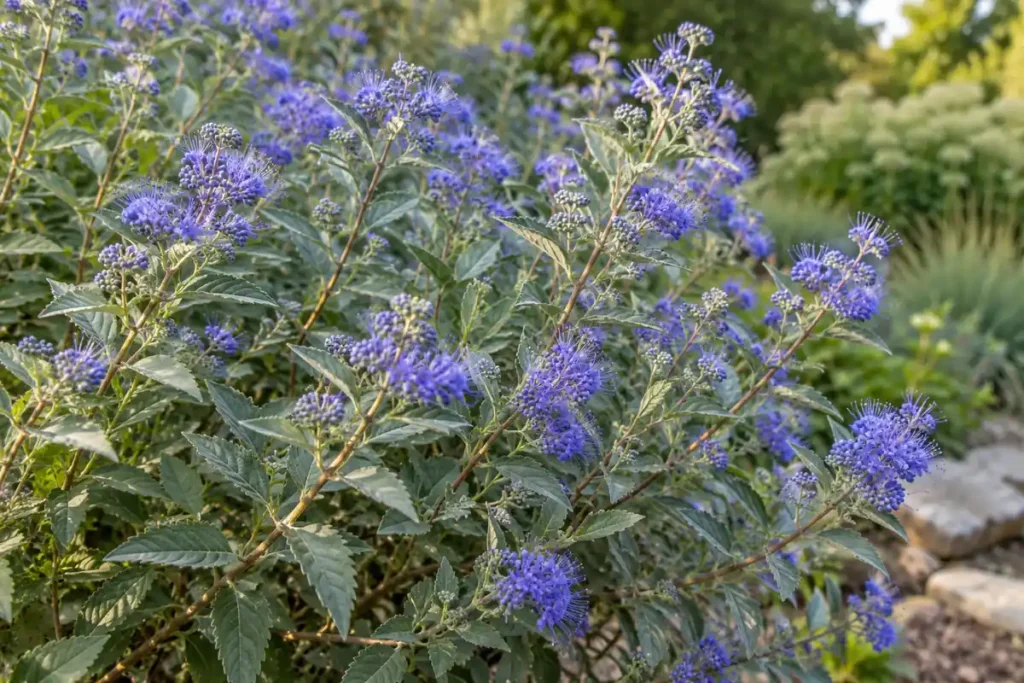
Caryopteris x clandonensis is a small deciduous shrub, commonly about 2 to 3 feet high and wide. Its late blue flowers and fine protruding stamens suit a sunny, well-drained border. The Extension record lists zones 6 to 9.
Cold can kill the stems in colder locations even where roots regrow, changing the woody shape. Flowers develop on new growth. Check local winter performance and pruning guidance before assuming the same structure every year. Avoid placing this drained-soil shrub in the wet pocket chosen for lobelia.
14. Bigleaf hydrangea
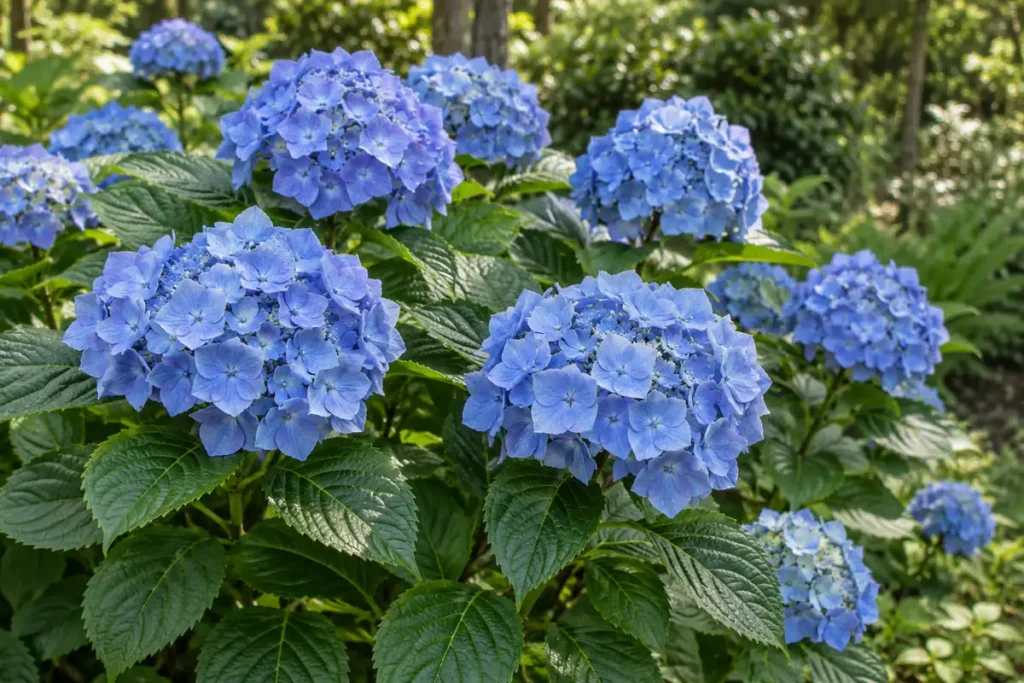
Hydrangea macrophylla can produce blue heads when the cultivar responds and soil acidity allows aluminum uptake. White-flowered selections and other hydrangea species do not all turn blue through acidification. North Carolina State’s bigleaf hydrangea plant record distinguishes the flower colors, growth and cultivar variation.
A typical shrub can occupy 3 to 6 feet in both height and width; a compact named cultivar can differ. Give it suitable partial shade, moisture and local winter conditions. Check the exact cultivar’s hardiness and flowering wood. Begin color decisions with identification and a suitable soil test, not an unmeasured dose of aluminum sulfate.
Build a Seasonal Planting That Fits the Whole Garden
Pair flowering windows only after matching the root environment. A spring woodland patch and a sunny summer container can share a color scheme without sharing soil or watering. Two blue plants are not automatically suitable pot companions.
| Place and season | Start with | Plan around |
|---|---|---|
| Cool, sunny spring bed | Baby blue eyes, cornflower or love-in-a-mist | Seasonal replacement and possible reseeding |
| Moist spring shade | Siberian bugloss or Virginia bluebells | Bluebell dormancy and later shade foliage |
| Low spring bulb edge | Grape hyacinth | Fall planting and leaves retained after bloom |
| Warm summer pot | Blue daze | Trailing width, drainage and frost tenderness |
| Moist summer border | Great blue lobelia | Consistent moisture and room for tall stems |
| Sunny late-season border | Hardy plumbago or bluebeard | Spreading roots versus shrub width and winter conditions |
For a small sunny space, a low spring bulb display followed by a seasonal summer container can be more workable than squeezing in a large shrub. In shade, keep Virginia bluebells for their spring role and choose later companions separately. In a wet bed, begin with moisture-adapted plants instead of trying to keep a dry-site selection alive through saturation.
Leave room for plants with different flowering times if insects are part of the goal. A wider selection of pollinator-friendly plants can fill feeding gaps beyond the blue blooms. Color alone does not establish equivalent nectar or pollen value.
Check local spreading behavior before adding self-seeding nonnative flowers near natural areas. Attractive blue color is not sufficient reason to introduce an unsuitable plant. Use identified nursery plants, keep poisonous ornamentals out of edible harvests and choose the exact cultivar when its color or mature size matters.
Conclusion
Begin with the light, moisture and space you can offer, then select the blue hue and flower shape you want. Use botanical names to compare choices, preserve their seasonal differences and plan for the whole mature plant. A few well-matched selections can give more dependable garden color than a larger collection planted in the wrong conditions.