Purple flowers include the upright spikes of salvia and blazing star, the broad blooms of clematis, and the small faces of pansies. Their shared color can hide very different needs. A sunny, dry border, a partly shaded woodland edge and a hanging basket each call for a different plant.
Start by matching the flower’s shape and leaves, then check its season and mature size. The plants pictured below range from deep violet through lavender, blue-violet and pink-purple. Those differences matter when you are trying to repeat a particular shade. Some species also have white, pink or multicolored cultivars, so keep the botanical name and the nursery label together. For a lasting garden choice, check winter hardiness, summer conditions and the space the plant will occupy after its first season.
Match a flower shape to a name
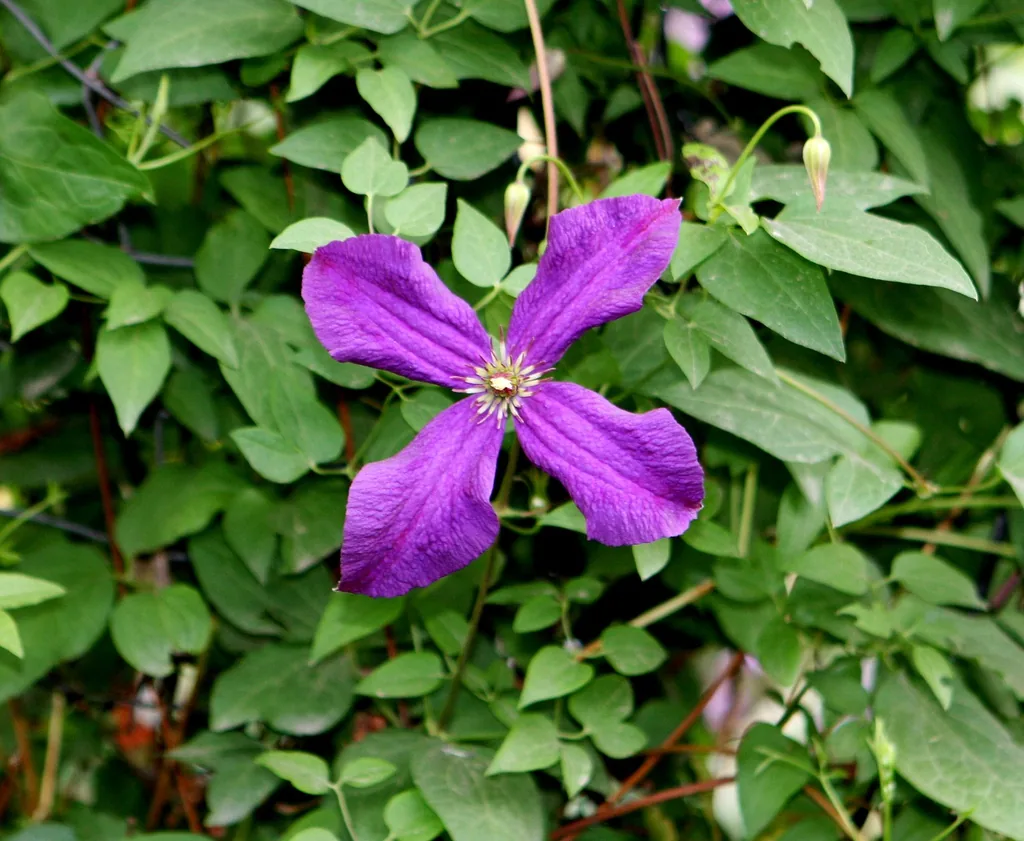 Jackman’s clematis
Broad violet flower
Summer; climber
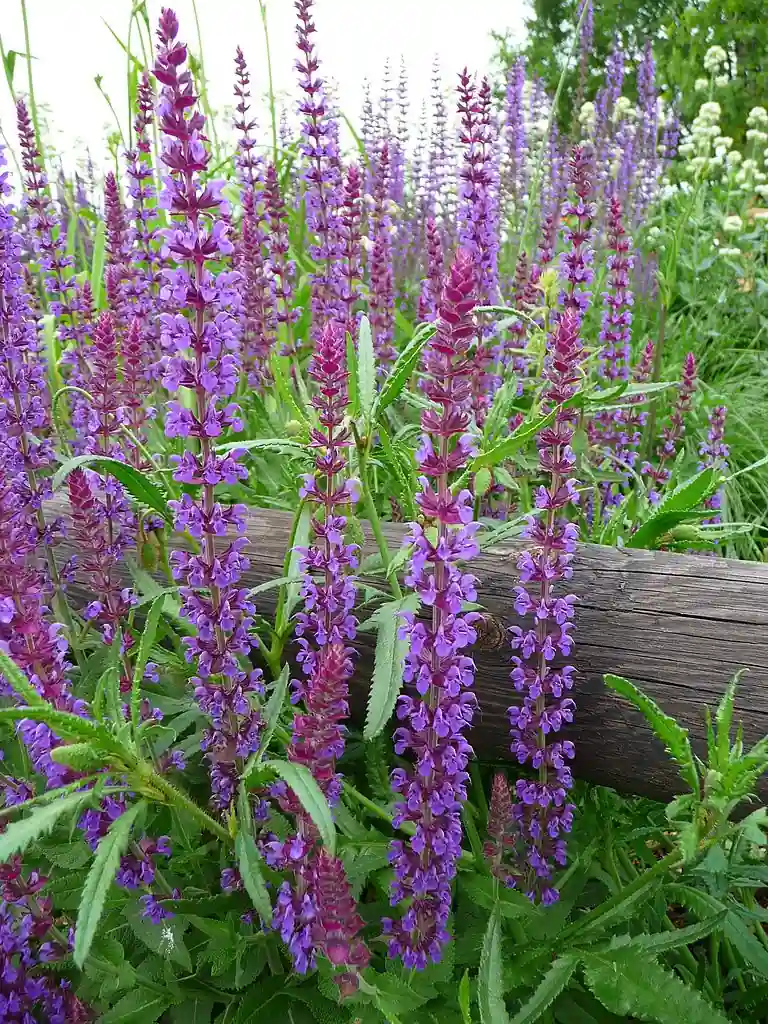 Woodland salvia
Small lipped flowers
Summer; sun; zones 4-8
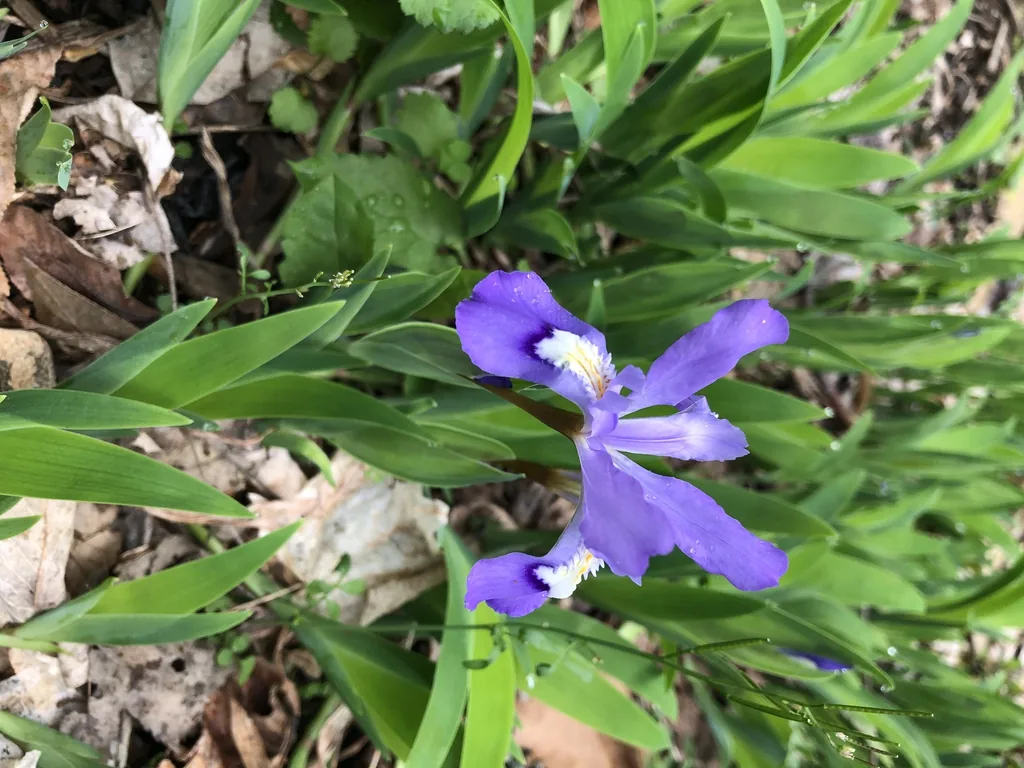 Dwarf crested iris
Yellow-white crest
Spring; part shade; zones 3-9
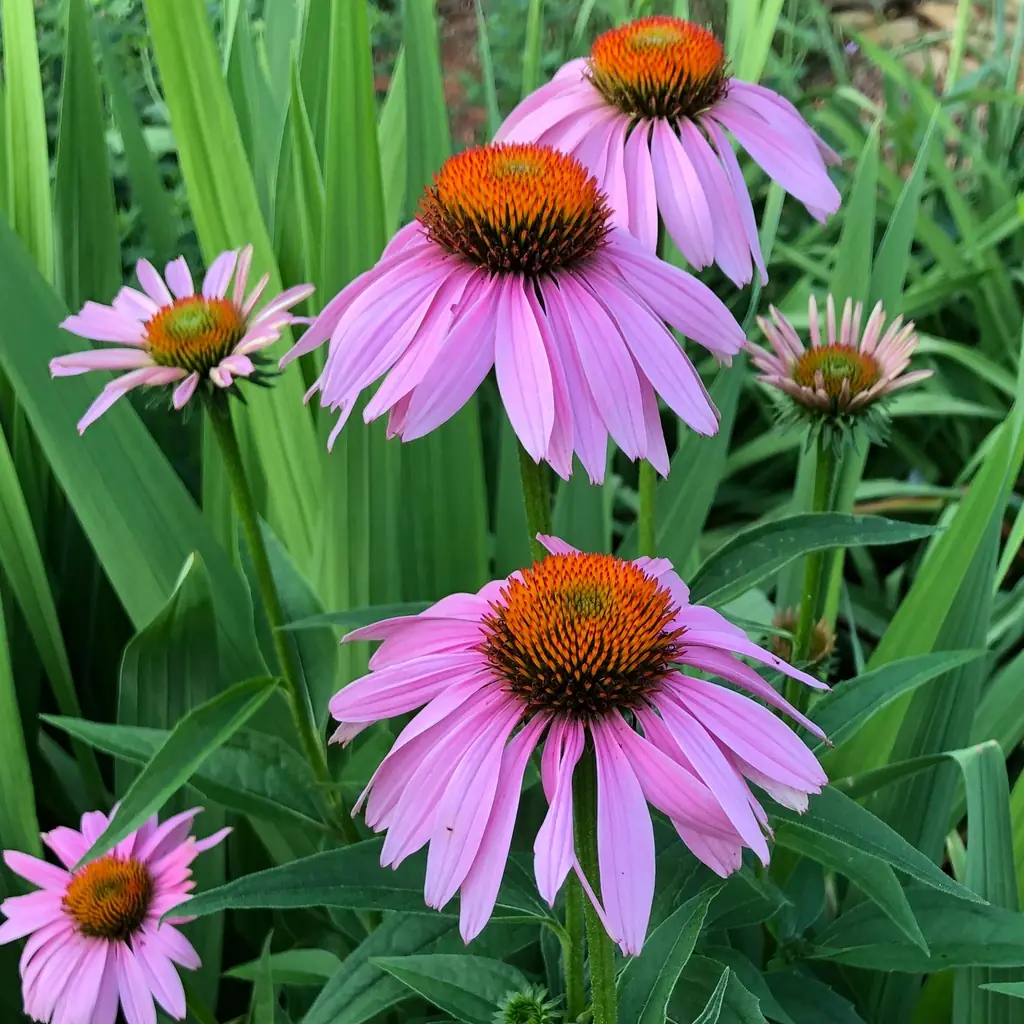 Purple coneflower
Raised central cone
Summer; sun; zones 3-8
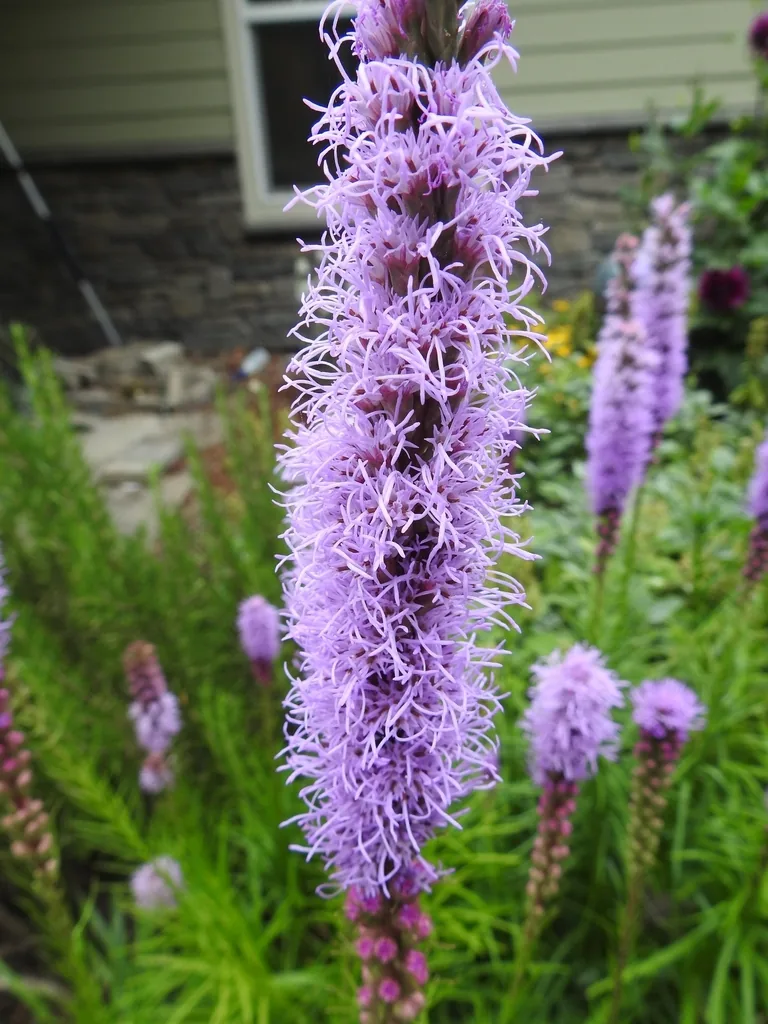 Blazing star
Fluffy upright spike
Summer; sun; zones 3-8
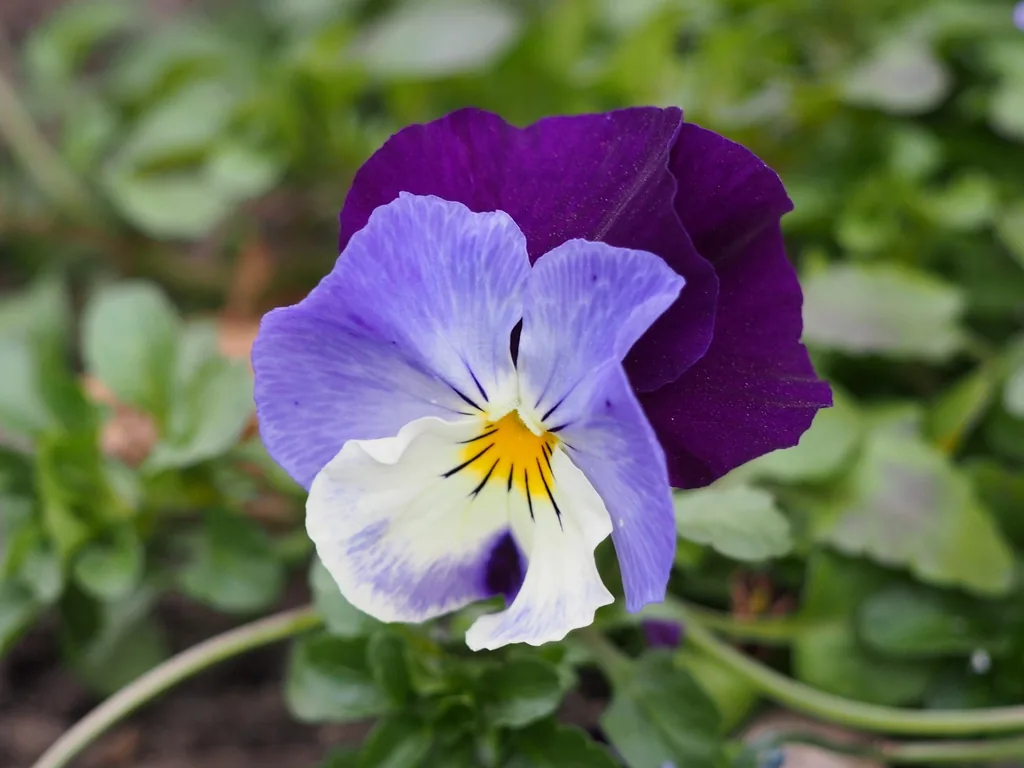 Purple pansy
Overlapping face petals
Cool-season annual
Color varies by cultivar. Compare the whole plant and leaves before settling on a name.
Key Takeaways
- Match flower shape and foliage before choosing a name.
- Check the cultivar when a particular purple shade matters.
- Measure mature width before placing plants beside narrow paths.
- Separate winter-hardy perennials from warm-season and cool-season annuals.
- Combine spring, summer and fall flowers for seasonal succession.
Table of Contents
Purple Flowers for Spring: Mats, Crests and Globes
Spring flowers can sit close to the soil or rise on nearly bare stalks. Compare that habit along with the bloom itself. The same pale lavender shade does not make a woodland iris interchangeable with a sun-loving phlox.
1. Moss Phlox: Small Flowers Over a Spreading Mat
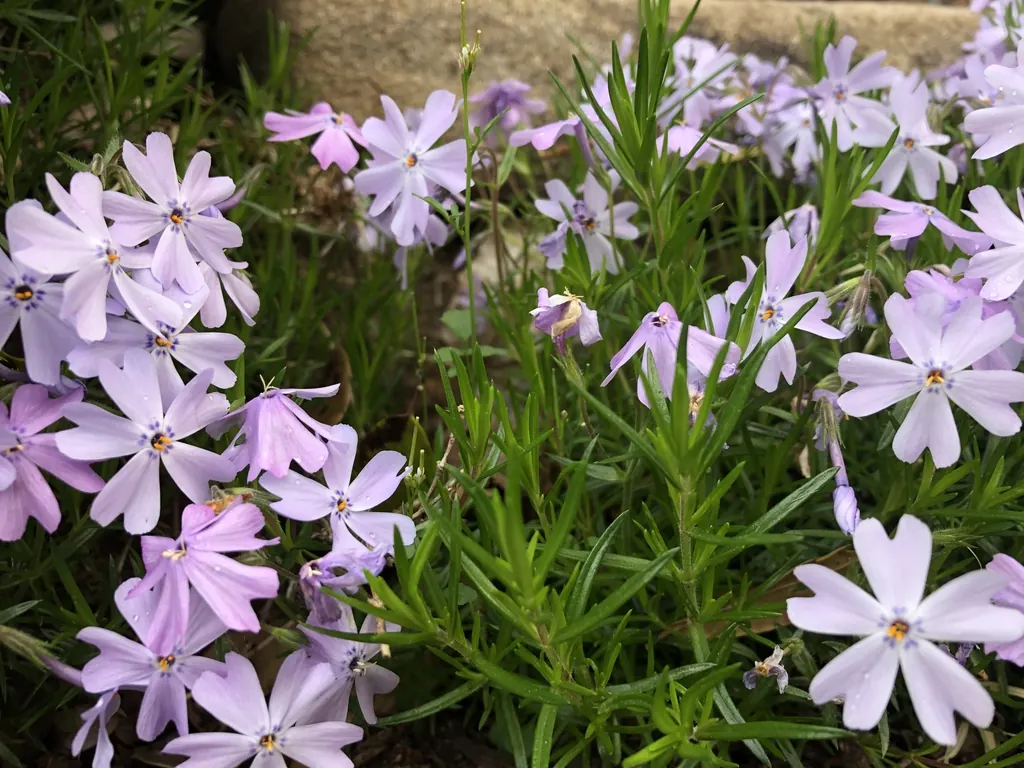
Phlox subulata carries small, flat flowers with notched lobes above narrow, needlelike leaves. Lavender and violet forms make a low spring carpet; pink, reddish-purple and white forms also exist. The pictured flowers are pale lavender.
Allow horizontal room. A plant only 4 to 6 inches tall can spread 2 to 3 feet. Sun and good drainage favor flowering; dappled relief can help in hot, humid summers. An older mat may thin in its center as growth extends outward, so a sparse middle does not automatically mean it needs more fertilizer.
2. Dwarf Crested Iris: A Violet Flower With a Raised Crest
Iris cristata has low fans of leaves and blue-purple flowers marked with a pale patch and yellow or orange crest. This is a small woodland iris, not a tall bearded iris. Its spring flowers stand roughly 6 to 9 inches high.
Choose partial shade and drained soil. The moisture requirement of dwarf crested iris increases in full sun. After flowering, the leaves remain useful near the front of a woodland bed. In a planting beneath trees, check root competition and summer soil moisture as carefully as the amount of shade.
3. Wild Geranium: Lilac Saucers and Deeply Lobed Leaves
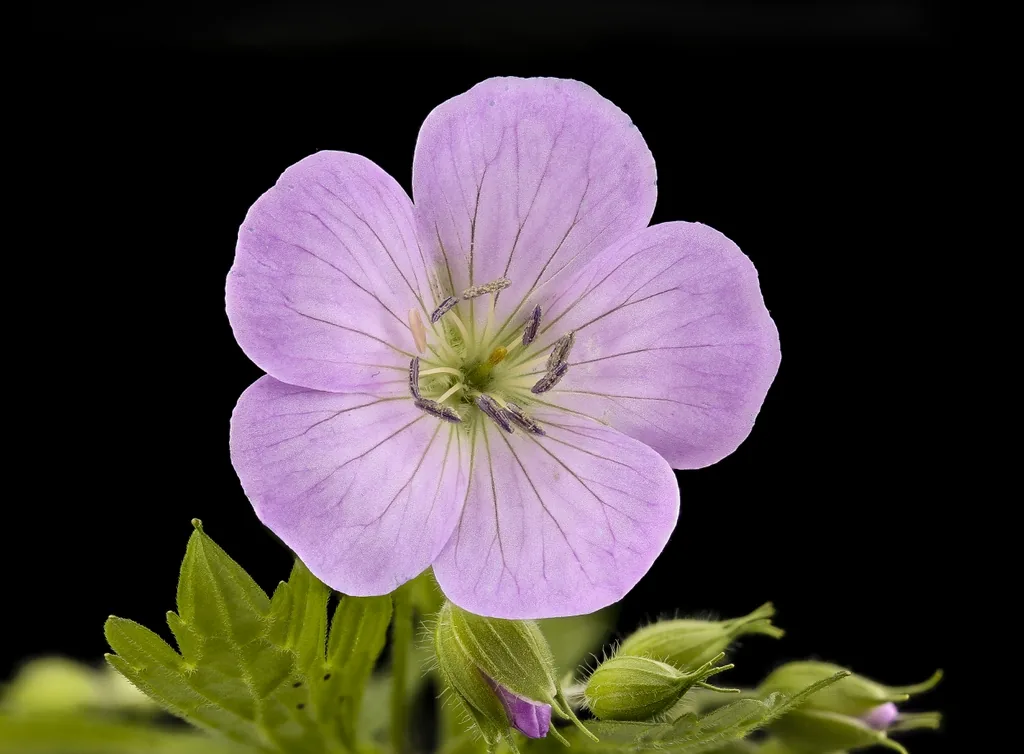
Geranium maculatum bears five-petaled, pink-to-lilac flowers with fine veins radiating outward. The deeply lobed foliage helps distinguish this woodland perennial from the bedding plants commonly called geraniums, which belong to Pelargonium.
Expect a soft lilac or pink-purple effect. Light shade to partial sun and moisture-retentive, drained soil suit it. Foliage may yellow or decline during the hottest part of summer. Plan another plant’s later flowers nearby to extend the color beyond its spring display.
4. Ornamental Allium: Many Small Flowers Form a Globe
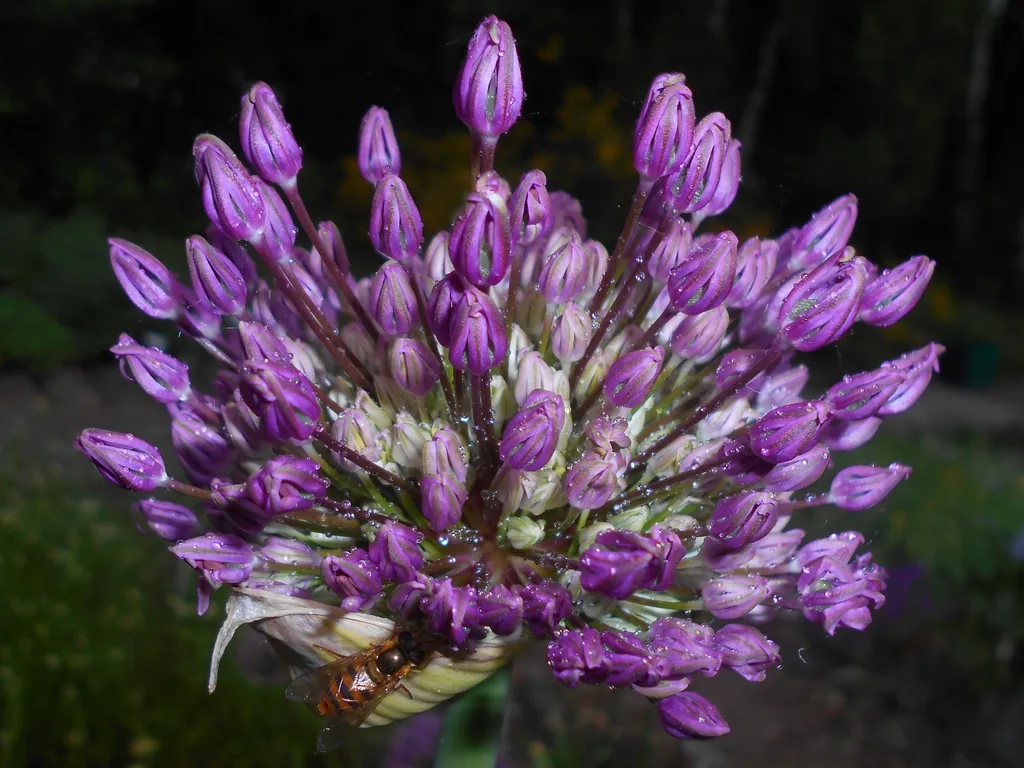
Allium aflatunense raises a rounded cluster on a long, leafless flowering stalk. Each small floret has six parts. The photograph shows the head beginning to open; a fully expanded cluster has a looser, starry appearance.
The flower stalk may reach 30 to 60 inches. Plant this autumn-planted bulb for a spring accent in drained ground, using the bulb’s actual label for spacing. A flowerhead’s width is not the plant’s spreading footprint. Keep ornamental bulbs away from pets that dig or chew, and do not treat an ornamental allium as a food crop.
Summer Spikes, Cones and Tubular Flowers Have Different Habits
5. Woodland Salvia: Dense Spikes of Lipped Flowers
Salvia nemorosa produces upright spikes of small violet-blue flowers, often held among reddish-purple bracts. The leaves have a wrinkled surface and toothed edges. At a distance, the spikes form a stronger vertical line than the individual flowers suggest.
Sun and drained soil suit this clumping perennial. Once a flowering stem has browned, cutting spent stems back to the basal leaves can encourage another flush. NC State Extension’s species description separates that repeat-flowering response from the many differences among cultivars; a second flush is not a promise of constant bloom.
6. Catmint: Lavender-Blue Flowers Over Gray-Green Foliage
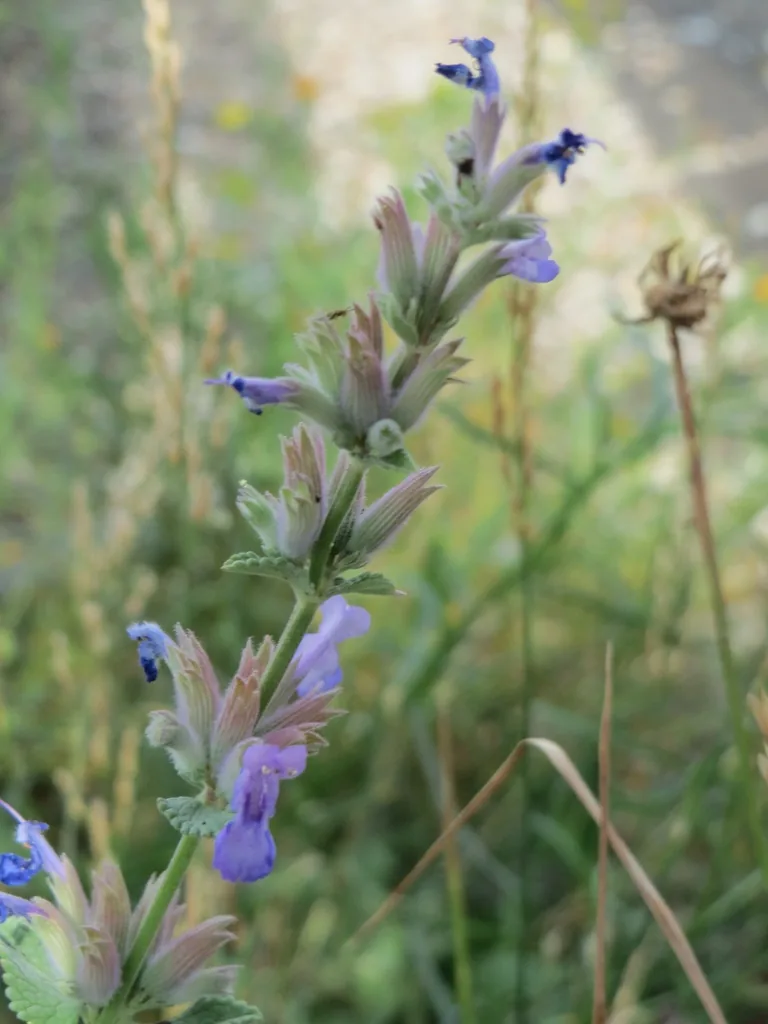
Nepeta x faassenii has small, lipped flowers and softly textured, aromatic foliage. Its lavender-blue stems make a looser outline than salvia’s dense spikes. Check the tag: catmint and catnip are not interchangeable names for the same garden plant.
A modest height can hide a wide footprint. The 18-to-24-inch-tall catmint clump can spread 3 feet. Keep it back from a narrow walkway. It needs drainage, becomes more drought tolerant after establishment, and can benefit from afternoon shade in the hotter South.
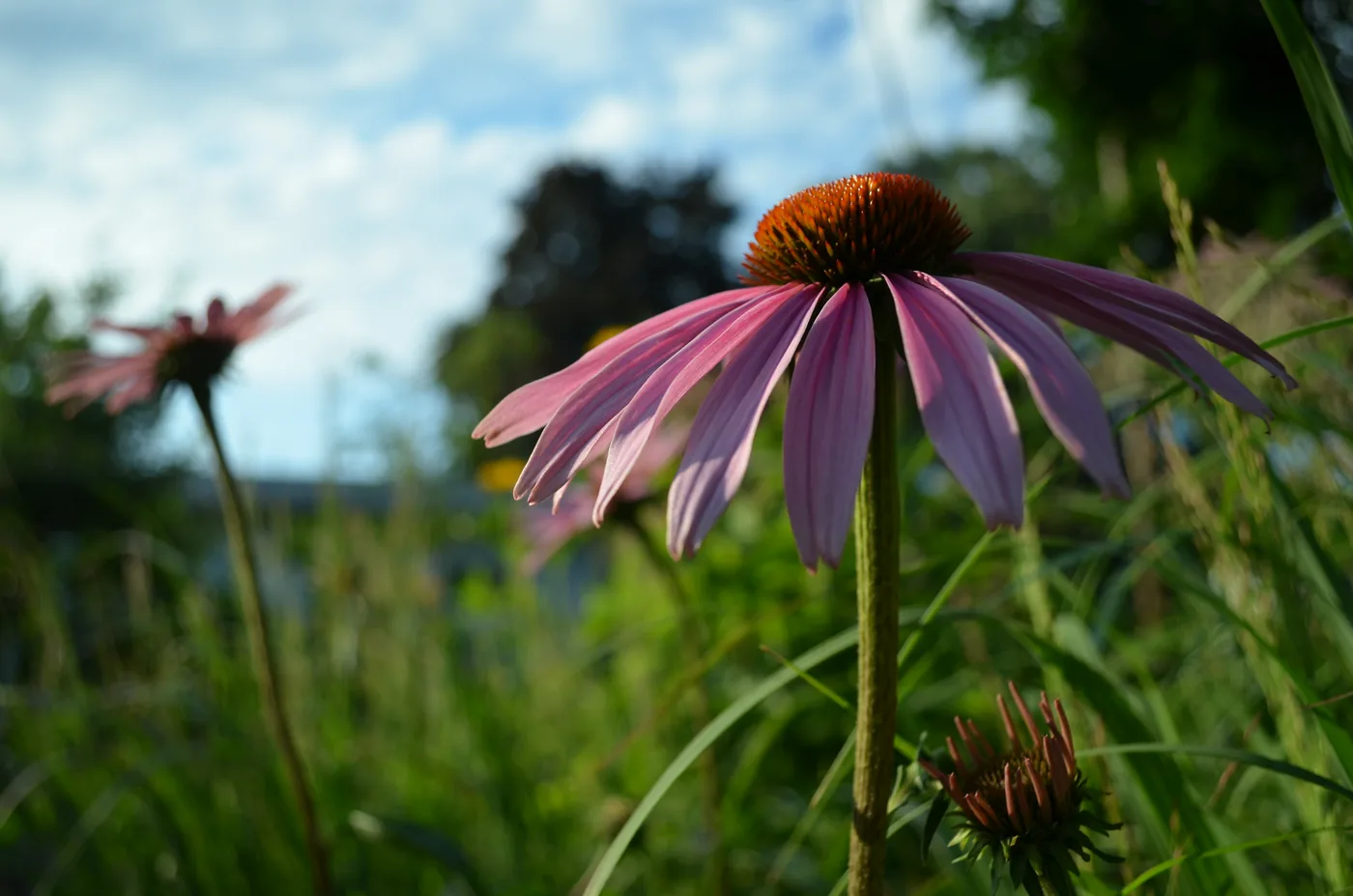
7. Purple Coneflower: Pink-Violet Rays Around a Raised Cone
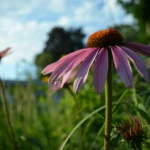
Echinacea purpurea is often pinkish-purple rather than deep purple. Its projecting, spiny-looking central cone and downward-angled rays are useful recognition cues. University of Florida’s purple-plant selection also flags an easy purchasing mistake: breeders have produced coneflower cultivars that are not purple at all.
Allow about 3 to 4 feet of height for the typical species form. Sun to partial shade and drained soil suit it, with greater drought tolerance after establishment. Some seedheads can remain for birds. A double or unusually colored nursery cultivar needs its own size and flower description.
8. Blazing Star: Fluffy Flower Heads Open Down the Spike
Liatris spicata makes tall, narrow spikes of small lavender-purple heads above grasslike leaves. Flowers open from the top downward. That sequence helps separate it from other purple spikes when the plants are in bloom.
This species can reach 3 to 6 feet; use it as a rear or middle accent with shorter plants in front. It is associated with moister sites than some other blazing stars. Give it sun and adequate moisture in drained soil, and keep it out of persistently dry beds.
9. Ohio Spiderwort: Three Petals and Bright Yellow Anthers
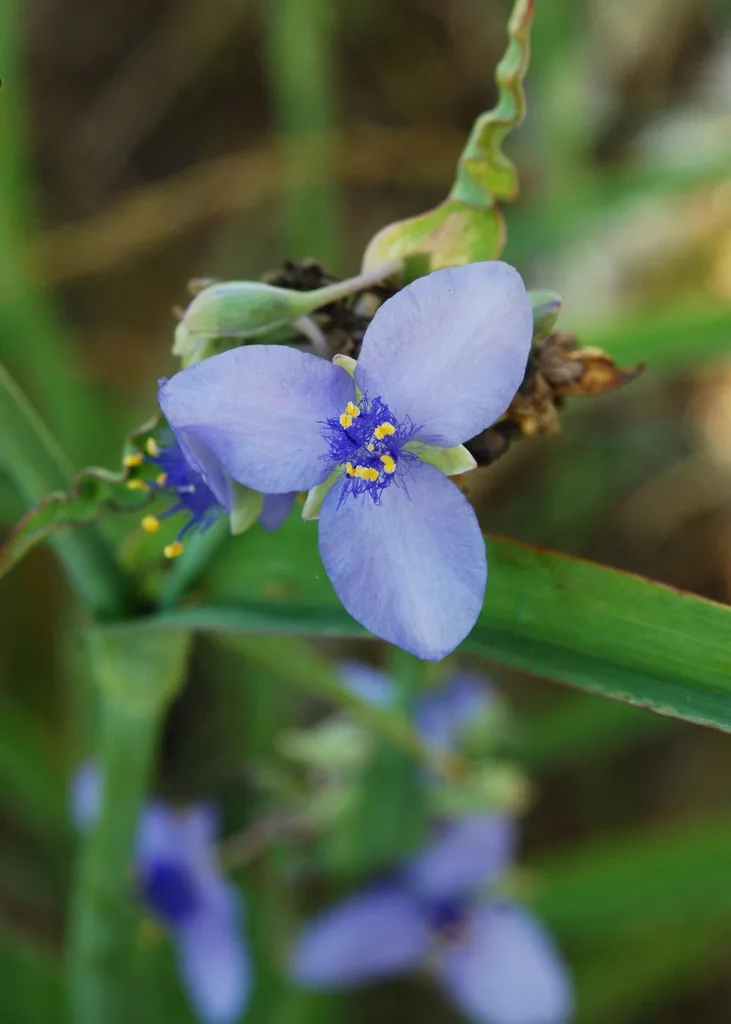
Tradescantia ohiensis carries three broad blue-violet petals around yellow anthers and fine violet hairs. Long, narrow leaves help identify the plant when its flowers have closed. The pictured hue leans toward blue-violet, not royal purple.
An individual flower lasts about a day; successive buds extend the display. Check the plant in the morning before treating afternoon closure as a problem. Sun generally gives more flowers than dense shade. It can spread by seedlings and offshoots, so leave room or remove unwanted volunteers.
10. Wild Bergamot: Lavender Tubes Around a Rounded Head
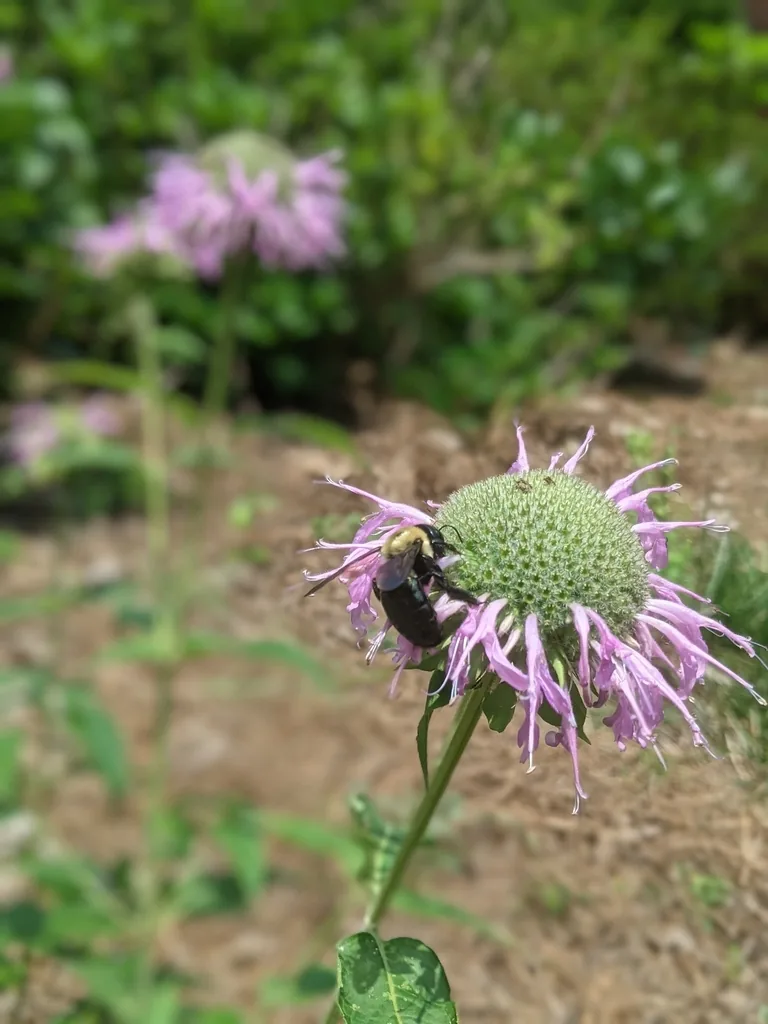
Monarda fistulosa forms lavender to pink-purple tubular flowers around rounded heads on upright stems. Its aromatic leaves and clustered tubes give it a different texture from a daisy or a salvia spike. Typical clumps reach 2 to 4 feet tall and 2 to 3 feet wide.
Give it sun, air movement and enough moisture to avoid prolonged stress. Crowding and drought stress can increase powdery mildew problems. In a planting with flowers across the growing season, its summer bloom can complement earlier and later species. Check whether the species is native to your own region before using it in a native planting.
Late Flowers With Yellow Centers Can Extend the Season
11. New England Aster: Many Violet Rays Around a Small Disk
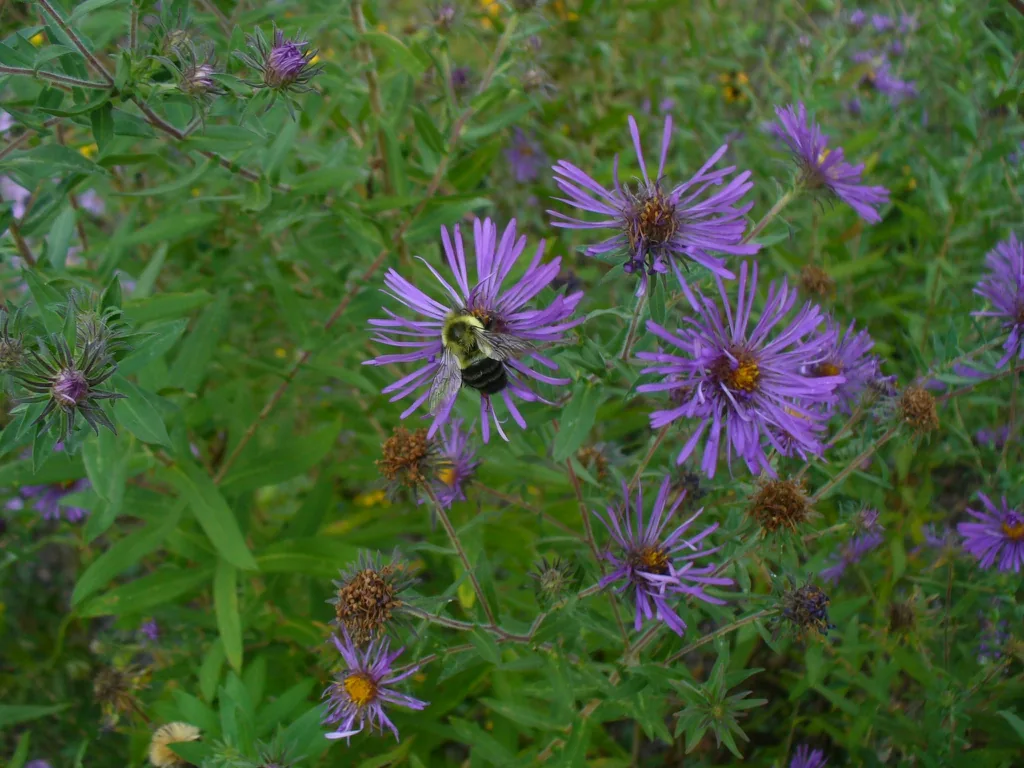
Symphyotrichum novae-angliae has many narrow violet rays surrounding yellow disk flowers. Later in a flower’s life, the center darkens. A cluster of small daisy-like heads in late summer or fall is a useful clue; compare the leaves and whole plant before choosing the species name.
The typical species can form a 3-to-6-foot clump. Leave space toward the rear of a border and check the label for a genuinely shorter cultivar. Spring pinching can produce a bushier plant and delay flowering. Adequate air movement matters because crowded plants can develop leaf disease.
A Climber and Seasonal Bedding Plants Fill Different Spaces
12. Jackman’s Clematis: Broad Violet Flowers on a Climber
Clematis x jackmanii carries large, open violet-purple flowers with pale central stamens. The showy flower parts are sepals. Look for the climbing habit as well as the bloom: a single close-up hides how much support the plant needs.
This vine can reach 10 to 15 feet high and 3 to 6 feet wide. Provide a suitable support, sun to partial sun, and moist, drained soil with a cool, shaded root zone. Do not use a climbing clematis as a substitute for a small edging perennial. Confirm the exact cultivar before choosing a pruning procedure.
13. Purple Petunia: Broad Funnels for Sunny Seasonal Color
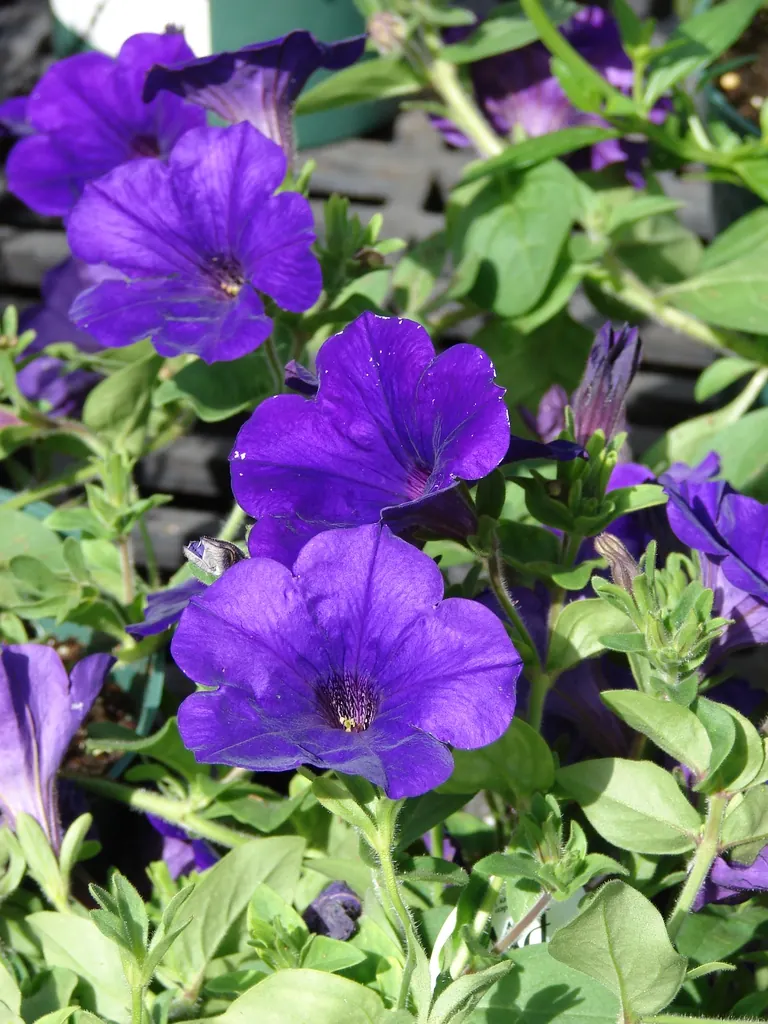
Petunia x hybrida includes purple-flowered selections with broad, funnel-shaped blooms. The photographed plant is recorded as Supertunia Royal Velvet. Other petunias may be pink, white, striped or bicolored, and their spreading habits vary.
Use a labeled purple selection for sunny baskets, containers or bedding. Many US gardeners grow petunias as annuals; the NC State entry gives perennial hardiness only in zones 10-11. That difference between annual planting and perennial survival changes whether you should expect the plant back next year.
14. Purple Pansy: Overlapping Petals for Cooler Weather
Viola x wittrockiana has five overlapping petals, often with a contrasting face or eyespot. Choose a purple or violet cultivar; the photographed bloom combines deep purple, pale violet and white. A species name alone does not specify that pattern.
Pansies are cool-season bedding plants. They can flower through fall, winter and spring in mild settings, then decline as summer heat arrives. Use them for a different season from summer petunias. Neither a broad database zone list nor a flowering nursery pot guarantees winter survival in your garden.
Compare Sun, Winter Hardiness and Mature Space
Check the USDA Plant Hardiness Zone Map for your ZIP code, then account for the limits of perennial winter-hardiness zones. The number describes average annual extreme winter minimum temperature. University of Maine Extension’s interpretation highlights additional limits, including summer heat, drainage, wind and snow cover.
The ranges below follow NC State’s species entries. They describe typical plants, not every cultivar. Bloom seasons are approximate; North Carolina month ranges should not become a nationwide calendar. For allium, use the bulb label for planting distance. Its flowerhead diameter describes the bloom, not mature spread.
| Plant | Winter role/zones | Height | Width/spacing | Usual flowering | Light |
|---|---|---|---|---|---|
| Moss phlox | Perennial, zones 3-9 | 4-6 in | 2-3 ft | Spring | Sun |
| Dwarf crested iris | Perennial, zones 3-9 | 6-9 in | 6-12 in | Spring | Part shade |
| Wild geranium | Perennial; check local fit | About 1-2 ft | 1-1.5 ft | Spring | Light shade/part sun |
| Ornamental allium | Bulb, zones 4-8 | 30-60 in stalk | Use bulb-label spacing | Spring | Sun/part sun |
| Woodland salvia | Perennial, zones 4-8 | 1.5-3 ft | 0.5-2 ft | Summer; possible repeat | Sun/part sun |
| Catmint | Perennial, zones 5-9 | 1.5-2 ft | 2-3 ft | Spring-summer | Sun/part shade |
| Purple coneflower | Perennial, zones 3-8 | 3-4 ft | 1-2 ft | Summer | Sun/part sun |
| Blazing star | Perennial, zones 3-8 | 3-6 ft | 3-18 in | Midsummer | Sun |
| Ohio spiderwort | Perennial, zones 4-9 | 2-3 ft | 1.5-2.5 ft | Late spring-summer | Sun/part shade |
| Wild bergamot | Perennial, zones 3-9 | 2-4 ft | 2-3 ft | Summer | Sun/part sun |
| New England aster | Perennial, zones 4-8 | 3-6 ft | 1-3 ft | Late summer-fall | Sun |
| Jackman’s clematis | Climber, zones 4-9 | 10-15 ft | 3-6 ft | Summer | Sun/part sun |
| Purple petunia | Annual in most US; perennial zones 10-11 | 6-18 in | 1-3 ft | Summer until frost | Sun |
| Purple pansy | Cool-season annual | 4-9 in | 9-12 in | Cool fall/spring; mild winters | Sun/part sun |
A matching winter zone does not settle the planting site. Measure the light, check drainage after rain, and mark the room available at maturity. Choosing flowers for the bed’s actual sunlight comes before repeating the same purple shade everywhere.
Combine Flowering Seasons Without Expecting Constant Bloom
In a suitable northern garden, moss phlox or crested iris can supply spring color, salvia and coneflower can carry part of summer, and New England aster can flower later. Put each in its own suitable exposure. A woodland iris does not need to share the same bed as a sun-loving aster for the colors to repeat across the garden.
Use plant size to arrange the sequence: low mats toward an open edge, medium clumps where their foliage remains accessible, and tall asters where they will not cover smaller plants. Keep the clematis on a separate support. Check width as well as height; a low catmint can spill farther into a path than a tall, narrow spike.
In hotter regions, a purple pansy can be useful during cooler months when it would be a poor summer choice. Petunias serve a warmer-season role. Local heat, rainfall and cultivar performance determine the handover, so check the plants and local nursery advice before scheduling a seasonal change.
Confirm Leaves, Flower Structure and the Cultivar Label
For an unknown purple flower, take a close-up of the bloom and a second photograph showing leaves, stems and the whole plant. Record the season, location and approximate height. A cone, crest, three-petaled bloom or lipped spike can narrow the possibilities. Similar species and garden hybrids can still require a nursery or Extension identification.
Keep the chosen plant’s label after planting. A pale lavender phlox, pink-violet coneflower and deep purple petunia will not produce the same color effect simply because all fit a broad purple palette. Photos also change with lighting; compare an actual flowering plant when a precise shade matters.
Finally, check species-specific safety and spreading behavior. Ornamental allium, iris and clematis have ingestion cautions; color does not establish edibility or pet safety. A flower attracting butterflies is not automatically suitable for release into natural areas. Verify local native or invasive status before using a plant beyond a managed garden bed.
Conclusion
Choose a recognizable flower form first, then match its color, season and mature footprint to the garden. Keep sunny border plants, woodland flowers, climbers and seasonal bedding plants in the conditions that suit them. Several well-matched plants can repeat violet through the year without asking one species to flower in every season.
Photo credits and licenses
Photographs retain their individual licenses. Files were resized and converted to WebP; no flower colors were changed.
- Salvia nemorosa (woodland sage): Salvia nemorosa. Photo: 3268zauber. CC BY-SA 3.0. License: https://creativecommons.org/licenses/by-sa/3.0 Source: https://plants.ces.ncsu.edu/plants/salvia-nemorosa/
- Nepeta × faassenii (catmint): Flower. Photo: AnRo0002. CC0 1.0. License: https://creativecommons.org/publicdomain/zero/1.0/ Source: https://plants.ces.ncsu.edu/plants/nepeta-x-faassenii/
- Phlox subulata (moss phlox): flowers, spring, Haywood County, NC. Photo: Patty Felder. CC BY 4.0. License: http://creativecommons.org/licenses/by/4.0/legalcode Source: https://plants.ces.ncsu.edu/plants/phlox-subulata/
- Echinacea purpurea (purple coneflower): Flowers (Wake County, NC). Photo: Cathy Dewitt. CC BY 4.0. License: http://creativecommons.org/licenses/by/4.0/legalcode Source: https://plants.ces.ncsu.edu/plants/echinacea-purpurea/
- Symphyotrichum novae-angliae (New England aster): Symphyotrichum novae-angliae – Flowers in the fall in Moore County. Photo: Susan Strine. CC BY 2.0. License: http://creativecommons.org/licenses/by/2.0/legalcode Source: https://plants.ces.ncsu.edu/plants/symphyotrichum-novae-angliae/
- Tradescantia ohiensis (Ohio spiderwort): Flower petals. Photo: Geoff Gallice. CC BY 2.0. License: http://creativecommons.org/licenses/by/2.0/legalcode Source: https://plants.ces.ncsu.edu/plants/tradescantia-ohiensis/
- Liatris spicata (spiked blazing star): Flowers in a spike. Photo: Kathleen Moore. CC BY 4.0. License: http://creativecommons.org/licenses/by/4.0/legalcode Source: https://plants.ces.ncsu.edu/plants/liatris-spicata/common-name/spike-gayfeather/
- Allium aflatunense (ornamental onion): Flower. Photo: Salicyna. CC BY-SA 4.0. License: http://creativecommons.org/licenses/by-sa/4.0/legalcode Source: https://plants.ces.ncsu.edu/plants/allium-aflatunense/common-name/ornamental-onion/
- Clematis × jackmanii (Jackman’s clematis): leaves and flowers. Photo: Hardyplants. CC0. License: https://creativecommons.org/publicdomain/zero/1.0/ Source: https://plants.ces.ncsu.edu/plants/clematis-x-jackmanii/
- Viola × wittrockiana (garden pansy): Flower. Photo: Agnieszka Kwiecień, Nova. CC BY-SA 4.0. License: http://creativecommons.org/licenses/by-sa/4.0/legalcode Source: https://plants.ces.ncsu.edu/plants/viola-x-wittrockiana/common-name/pansy/
- Monarda fistulosa (wild bergamot): Monarda fistulosa close-up July 2021. Photo: Hope Duckworth. CC BY 4.0. License: http://creativecommons.org/licenses/by/4.0/legalcode Source: https://plants.ces.ncsu.edu/plants/monarda-fistulosa/common-name/bee-balm/
- Iris cristata (dwarf crested iris): Flower Close-up (Haywood County, NC)-Spring. Photo: Patty Felder. CC0. License: https://creativecommons.org/publicdomain/zero/1.0/ Source: https://plants.ces.ncsu.edu/plants/iris-cristata/common-name/iris/
- Geranium maculatum (wild cranesbill): Flower. Photo: Creator not identified in CC0 record. CC0 1.0. License: https://creativecommons.org/publicdomain/zero/1.0/ Source: https://plants.ces.ncsu.edu/plants/geranium-maculatum/common-name/wild-geranium/
- Petunia × hybrida (garden petunia): Supertunia royal velvet flowers and leaves. Photo: Forest and Kim Starr. CC BY 3.0. License: https://creativecommons.org/licenses/by/3.0/ Source: https://plants.ces.ncsu.edu/plants/petunia-x-hybrida/common-name/petunia/
- Featured purple coneflower: Katie Steiger-Meister, U.S. Fish and Wildlife Service. Public domain. Source: https://www.usgs.gov/media/images/purple-coneflower