




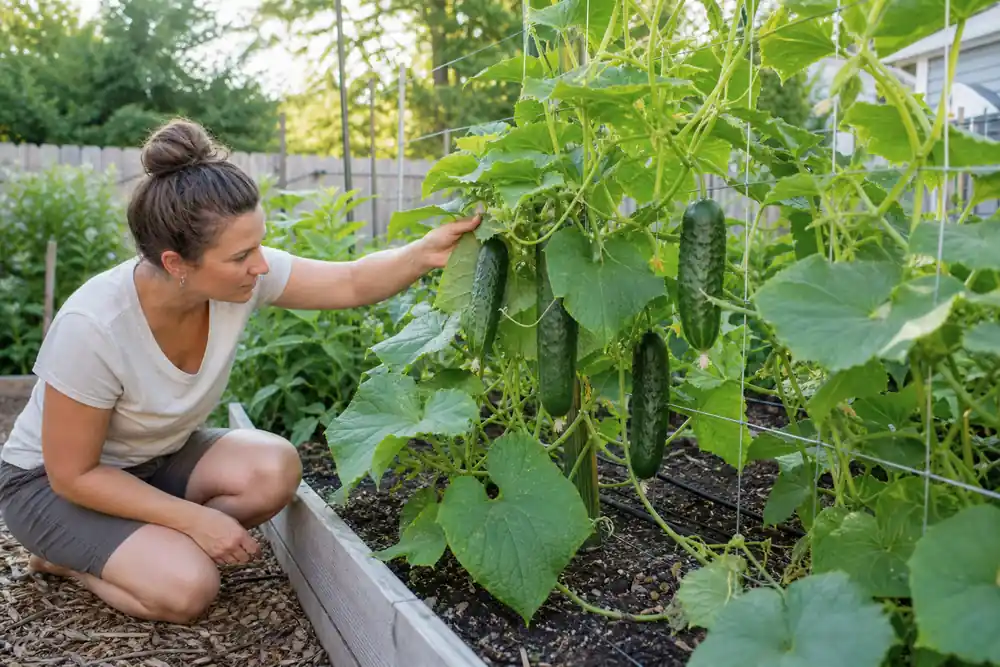
Cucumber planting often looks successful for three weeks, then the vines stall after the first cold night, dry spell, or crowded stretch of growth. Broad leaves can hide the warning signs until flowers drop, fruit curves, or a yellow cucumber disappears beneath the canopy. Productive vines begin with warm soil, open root space, and a clear route for the stems before they start running.
Direct-seed into a warm bed or set out small transplants before their roots circle the pot. Give each plant even moisture, keep bare soil warm before adding mulch, and pick fruit before the seed cavity swells. Those habits protect flowering, reduce misshapen fruit, and stretch a brief flush into a harvest that continues through summer without exhausting the vine.
Plant On Soil Temperature, Not The Calendar
A soil thermometer is more reliable than a warm afternoon. Cold soil slows germination and leaves young plants exposed to pests for longer.
Key Takeaways
- Wait for 65–70°F soil before cucumber planting.
- Choose a vining type for vertical space or a bush type for a compact bed.
- Keep the root zone evenly moist from flowering through harvest.
- Remove row covers when flowers open so pollinators can reach the plants.
- Pick young fruit every few days to keep new cucumbers forming.
Table of Contents
Cucumber Planting Starts When The Soil Is Warm Enough
Cucumbers are tender warm-season plants. A sunny week can make the surface look ready even when the seed zone stays cool and damp. Seeds in that soil may rot, emerge unevenly, or sit long enough for insects to find the first leaves. Plant after frost danger has passed and use a thermometer at one inch deep for the final call.
Direct seeding works once soil is 65°F and becomes more reliable around 70°F. A 70°F reading at one inch deep is the warm-soil target in University of Minnesota Extension guidance, especially where nights still cool sharply. The 65°F direct-seeding threshold from Oregon State University Extension marks the lower practical edge of that range.
What month is best to plant cucumbers? Plant after the last frost once the soil reaches that range. Southern gardens may reach it in April or May. Northern gardens often reach it later. A second crop around July 1 appears in University of Maryland Extension guidance and can work where enough warm days remain before frost.
Black plastic mulch warms the planting strip and keeps early rain from chilling the surface. Lay it over moist, prepared soil, secure the edges, and cut only the holes you need. Organic mulch belongs later. Straw, leaves, or grass clippings put down over cool soil hold that cold in place; wait until the soil has warmed above about 75°F.
Choose Vine Or Bush Cucumbers Before You Mark The Row
Vining cucumbers use space upward or outward. They can cover several feet of ground, climb a fence, or fill a trellis quickly once the main stem starts extending. Their long stems suit a sunny bed edge where a support can sit without shading shorter vegetables.
Bush and dwarf types stay shorter and suit containers, narrow beds, or a garden where a tall frame would block access. They still need sun, water, and air moving through the leaves. Compact growth changes the footprint, not the crop’s need for warm soil.
Give cucumbers at least six hours of direct sun and aim for eight to ten hours where summer heat is not extreme. Morning sun dries dew from leaves and helps a dense canopy recover after rain. A bed shaded by corn, tomatoes, or a fence during most of the day grows long pale stems with fewer flowers.
Pick a disease-resistant variety when mildew, wilt, or mosaic has appeared in the garden before. Resistance does not remove every risk; it gives a vine more time to keep producing when pressure arrives. Rotation still matters. Keep cucumbers out of the same spot after cucumbers, squash, pumpkins, or melons have carried a disease problem.
Prepare A Cucumber Bed That Drains And Holds Moisture
Cucumber roots need water, air, and a surface that does not seal into a crust after rain. Work in finished compost or well-rotted manure before planting if the bed lacks organic matter. Fresh manure is a poor choice near a crop eaten raw because it can carry pathogens and adds a large, unpredictable nutrient load.
What do you put in a hole when planting cucumbers? Put the root ball or seed into the same well-prepared soil used across the row. A handful of rich material in one hole can create a wet pocket or a sharp fertility change around the roots. Mix compost through the bed, follow a soil test for fertilizer, and water the planting hole before a transplant goes in.
Raised beds help where native soil drains slowly. The root zone warms faster and rain leaves the planting strip more quickly. A bed that dries in one day asks for more frequent deep watering, so add compost for moisture holding capacity instead of packing the soil firm.
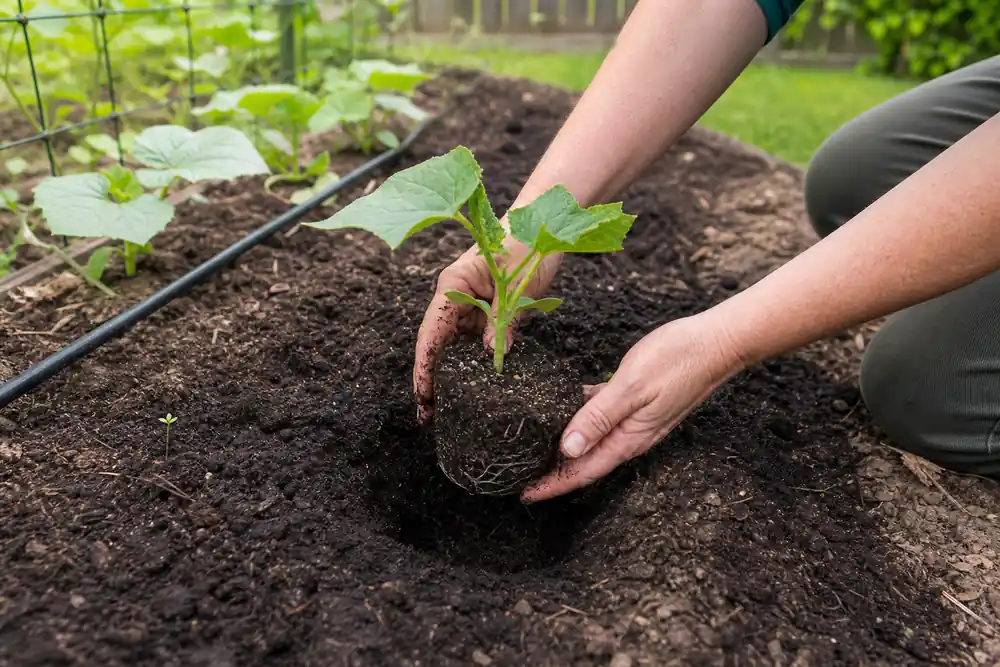
Set transplants into warm soil with only two or three true leaves when possible. A cucumber taproot resents rough handling. Slide the root ball from its pot, keep the stem at the original soil level, and settle water around the edges. Root-bound plants often pause after planting because new roots have to escape a tight circle before the vine can move forward.
Use Cucumber Spacing That Matches The Growing Method
Spacing changes with the variety and the support. A ground-running vine needs room on both sides of the row for leaves and fruit. A trellised vine can stand closer because the foliage rises into a wall and the fruit hangs clear of the soil.
| Growing Method | Plant Spacing | Row Or Hill Spacing | What Changes The Number |
|---|---|---|---|
| Vining cucumbers on the ground | Thin to 8–12 in | Leave 2–3 ft on each side of the row | Long runners need a broad canopy zone |
| Vining cucumbers on a trellis | 9–12 in | Rows can sit closer with a clear picking path | Support height and access from both sides |
| Hills | 2–3 plants after thinning | 5–6 ft between hills | Best for vines spreading on the ground |
| Bush types | 12–18 in | 2–3 ft between rows or hills | Variety habit and container width |
Start with two or three seeds per intended plant position, then cut the extras at soil level once seedlings are established. Pulling unwanted seedlings can tear the roots of the keeper. For wider in-ground plantings, 12 inches in the row and 48 to 72 inches between rows leave space for vines and access. Trellised plantings can use closer in-row spacing because the vines do not spill into the path.
Cucumber spacing has to leave a place for hands. You need to reach the base to water, find beetles on the underside of leaves, and pick fruit before it grows too large. A full row should feel like a leaf wall with gaps for air, not a solid mound that stays damp after a shower.
Water The Root Zone Before Fruit Shows Stress
Cucumbers have a deep main root and many shallow feeder roots. The top few inches can dry fast under broad leaves, especially in a raised bed or container. Water deeply enough to moisten the active root zone, then check the soil before repeating. A finger pushed two inches down gives a more useful reading than leaf color at noon.
About one inch of water a week is a common starting point, with more frequent watering in sand, containers, and hot weather. The exact amount changes with rain, mulch, and plant size. Fruit set and enlargement are the periods where erratic moisture becomes visible as pointed ends, bitterness, or misshapen cucumbers.
Use a soaker hose, drip line, or slow hand watering at soil level. Wet leaves stay vulnerable to disease spread and splash soil onto the lowest foliage. A light layer of mulch after the soil warms limits evaporation and keeps fruit cleaner on ground-grown vines.
Container cucumbers need closer checks because the root ball has a fixed volume of potting mix. A pot large enough for the vine and its support gives more time between waterings. The practical limits for container pot size by vegetable crop help prevent a productive vine from drying out in a decorative pot.
Train Cucumber Vines Before They Cross The Path
Guide a young vine toward the support before it starts lying across mulch. The stem feels flexible at this stage and responds to a gentle turn. Older stems resist movement, split near a leaf joint, or pull new roots loose when they are forced upward.
A trellis saves ground space and lifts fruit into moving air. The plant still needs water at the base and a frame that can carry wet leaves and fruit. A well-built cucumber trellis gives vining types a direct route upward without turning every harvest into a search under leaves.
Use a loose tie below a leaf node only when the vine needs help finding the support. Tendrils will handle much of the holding once they reach netting, a panel, or twine. Tight ties cut into expanding stems and can trap water against the vine.
Ground-grown vines need a clear zone of mulch and occasional redirection. Do not keep lifting and rearranging them after they have rooted at the nodes. Those extra roots help the plant draw water during hot weather and break easily when the vine is moved back and forth.
Keep Flowers Open To Pollinators And Watch The First Fruit
Most standard cucumbers carry male and female flowers on the same plant. Male flowers often open first. Female flowers have a small swelling behind the petals that looks like a tiny cucumber. Bees need to move pollen to those flowers before the fruit can fill evenly.
Cold mornings, rain, low bee activity, and insecticides applied during bloom can reduce fruit set. Remove row covers when flowering begins unless you planted a parthenocarpic type that forms fruit without pollination. A misshapen fruit often starts with incomplete pollination or uneven moisture, not a problem that can be fixed after the cucumber has enlarged.
What not to plant around cucumbers? Avoid crowding them beside tall crops that shade the bed, and do not repeat cucurbits in a spot with a disease history. Research support for scented-herb pest deterrent claims remains limited in Oregon State University Extension guidance. Crop rotation, light, airflow, and enough root space have a larger effect on a cucumber bed than a scented herb placed at the edge. The same evidence limits apply when using companion planting in food gardens to choose a layout.
Act Early On Beetles, Wilt, And Mildew
Check seedlings at least twice a week. Striped or spotted cucumber beetles can spread bacterial wilt as they chew young leaves, scar stems, and feed on flowers, a risk documented by University of Illinois Extension. A plant that wilts during the day and fails to recover after watering deserves a close look, especially when beetle feeding has been present.
Floating row cover protects young plants from beetles and cold nights. It must come off at flowering for bee access. Remove weeds and old cucurbit debris around the bed, keep leaves dry when watering, and discard plants that collapse from a confirmed disease. Disease-resistant varieties and rotation lower the pressure before symptoms arrive.
Powdery mildew begins as pale, floury patches on older leaves. Remove only the worst affected leaves if the plant still has healthy canopy, then improve airflow and check watering. Stripping every leaf exposes fruit to sun and reduces the plant’s ability to feed new growth.
Plant A Second Cucumber Crop For Fall Picking
A midsummer cucumber planting can replace vines worn down by heat, beetles, or mildew. Direct seed into a fresh part of the garden after an early crop finishes, or use a new bed that has not grown cucurbits recently. Warm July soil gives quick emergence and avoids the slow start common in spring.
Count backward from the usual first frost date using the seed packet’s days to maturity, then add a small margin for cooler late-season growth. A 55-day variety planted sixty to seventy days before frost has a reasonable chance to reach regular picking. A long-season slicer planted late may grow vines and flowers without enough warm time to fill fruit.
Water new seedlings carefully through late-summer heat. Temporary thin shade cloth can protect tiny plants during an exceptional heat wave. Return them to full sun once they settle so new roots develop before cooler weather arrives.
Pick Cucumbers Before The Vine Switches To Seed Making
Pick when the fruit is firm, green, and at the size your variety is meant to reach. Pickling types taste best small. Slicers remain good over a wider range, then develop larger seed cavities, thicker skin, and yellowing as they become overmature.
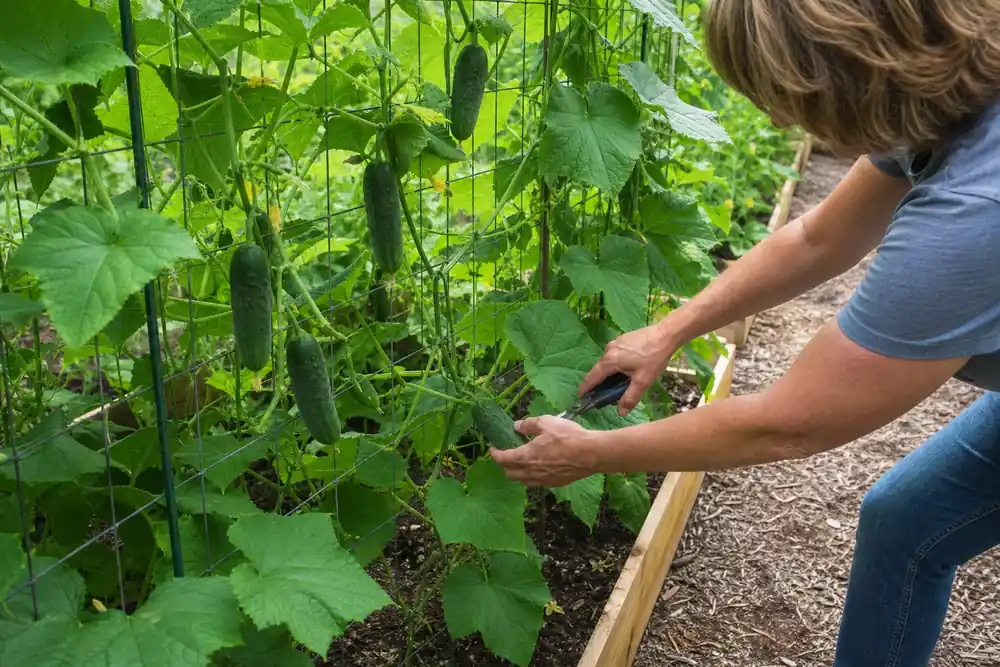
Hold the vine with one hand and cut or snap the fruit with the other. Pulling a cucumber can strip tendrils from a trellis or tear the node where the next flower is forming. Work after leaves dry from dew or rain, since wet handling can spread disease through the canopy.
Check every two or three days in hot weather. A hidden oversized cucumber tells the plant that its reproductive work is done, and new flowers slow. Cucumber growth stages show why new flowers and harvest overlap on a productive vine. Keep water even, pick young fruit, and make room for the next set.
Conclusion
Cucumbers keep producing when their first weeks are warm, open, and evenly watered. A bed with real root room, a place for the vines, and a regular harvest routine avoids many of the failures that show up later as bitter fruit, weak flowers, and tangled growth.
Watch the soil temperature before planting, give each vine a clear route, and pick small fruit before it disappears under leaves. A productive cucumber row makes the next move obvious: another crisp green fruit ready before the first one turns yellow.
Frequently Asked Questions
What Month Is Best To Plant Cucumbers?
Plant after the last frost when soil at one inch deep reaches at least 65°F, with 70°F giving faster germination. That can mean April in a warm region and late May or June in a cooler one. A second sowing around July works when the variety can mature before the first fall frost.
What Is The Best Way To Plant Cucumbers?
Direct seed into warm, well-drained soil, then thin seedlings instead of pulling them. Place vining types where they can spread or climb and give bush types a clear 12- to 18-inch space. Small transplants work when they are planted gently before roots circle the pot.
What Not To Plant Around Cucumbers?
Do not crowd cucumbers beside plants that block most of their sun or leave no access for watering and picking. Avoid repeating cucumbers, squash, melons, or pumpkins in a bed with recent disease problems. Reliable spacing and crop rotation have more effect than unproven companion combinations.
What Do You Put In A Hole When Planting Cucumbers?
Use the same loose, compost-amended soil prepared across the bed and water it before inserting a transplant. Fresh manure and a concentrated handful of fertilizer can burn roots or make the planting hole stay wet. A soil test gives a better reason to add fertilizer than the size of one hole.