



How to grow sweet corn in a backyard garden starts with one detail that seed packets rarely make dramatic enough: corn pollinates by wind, not by a tidy row of flowers waiting for insects. A single long row can look beautiful, with glossy leaves rattling in summer air, then still make ears with missing kernels because the pollen never fell evenly onto the silks.
Sweet corn asks for heat, space, nitrogen, water, and good timing. It also asks for neighbors. Each silk connects to one potential kernel, so the plant needs enough nearby tassels dropping pollen at the same time. In a small garden, the best corn patch is a compact block with plants on several sides. Get that layout right before sowing, and the rest of the care becomes much more forgiving.
Use A Block, Not One Long Row
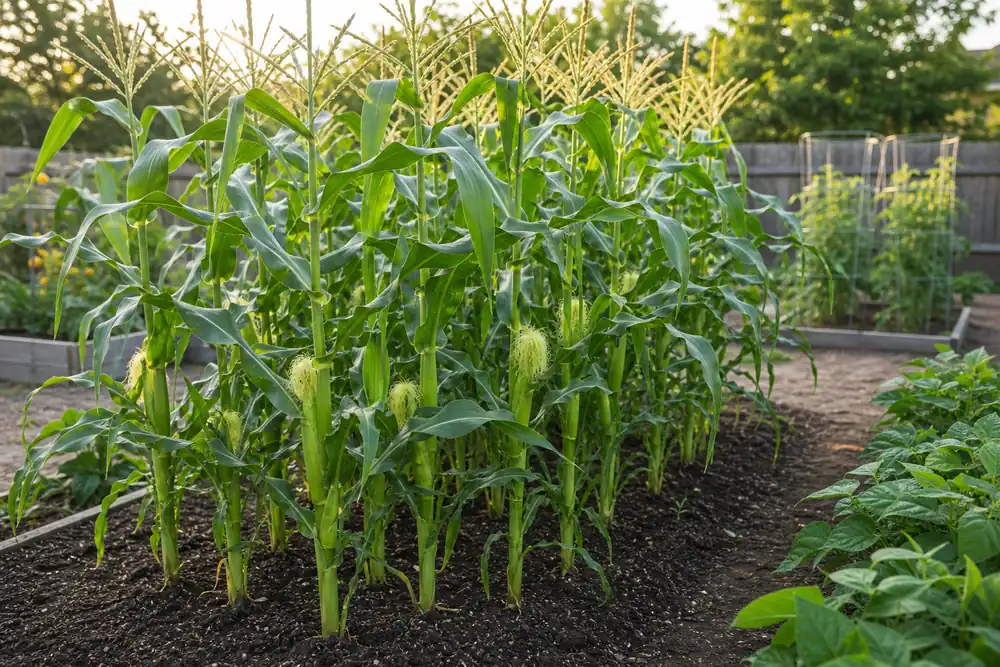
For a backyard corn patch, plant at least 3 to 4 short rows together so pollen falls across nearby silks. One long row along a fence often leaves gaps on the ear because too little pollen lands where it is needed.
Example 3-by-4 block layout: short rows grouped together so pollen can move across nearby silks.
Key Takeaways
- Plant corn in blocks for reliable wind pollination.
- Wait for warm soil before sowing sweet corn.
- Avoid single rows in small backyard gardens.
- Water deeply during tasseling, silking, and ear fill.
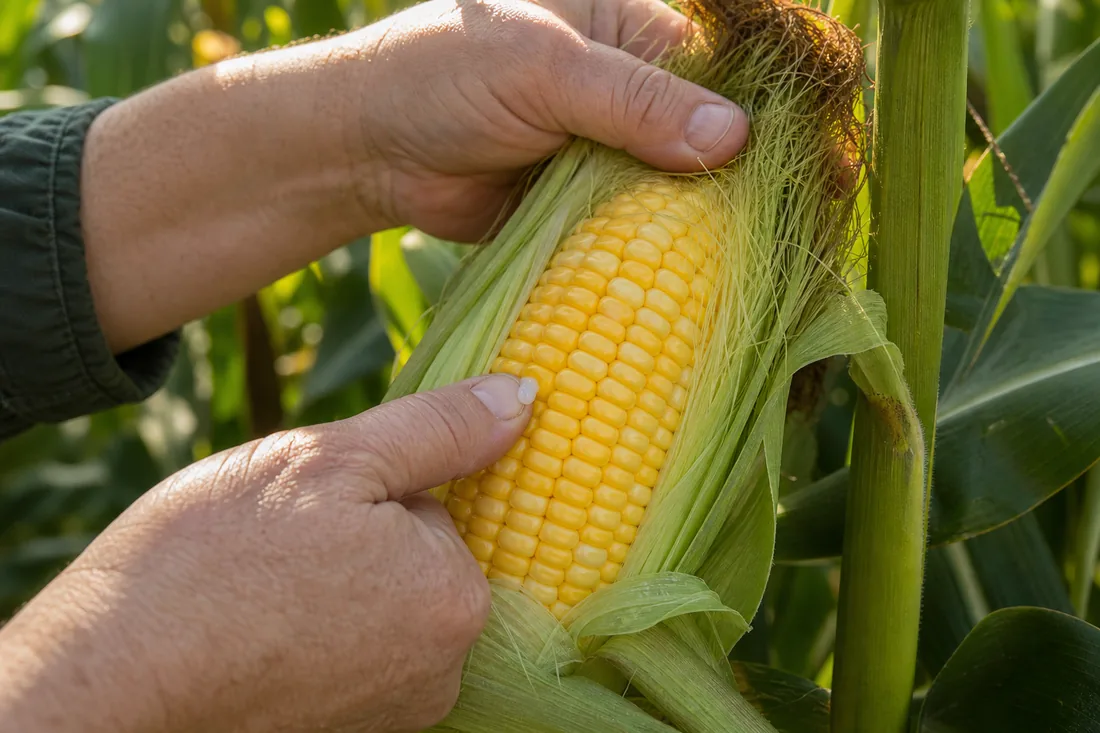
- Harvest when silks brown and kernels release milk.
Table of Contents
Sweet Corn Needs A Pollination Block First
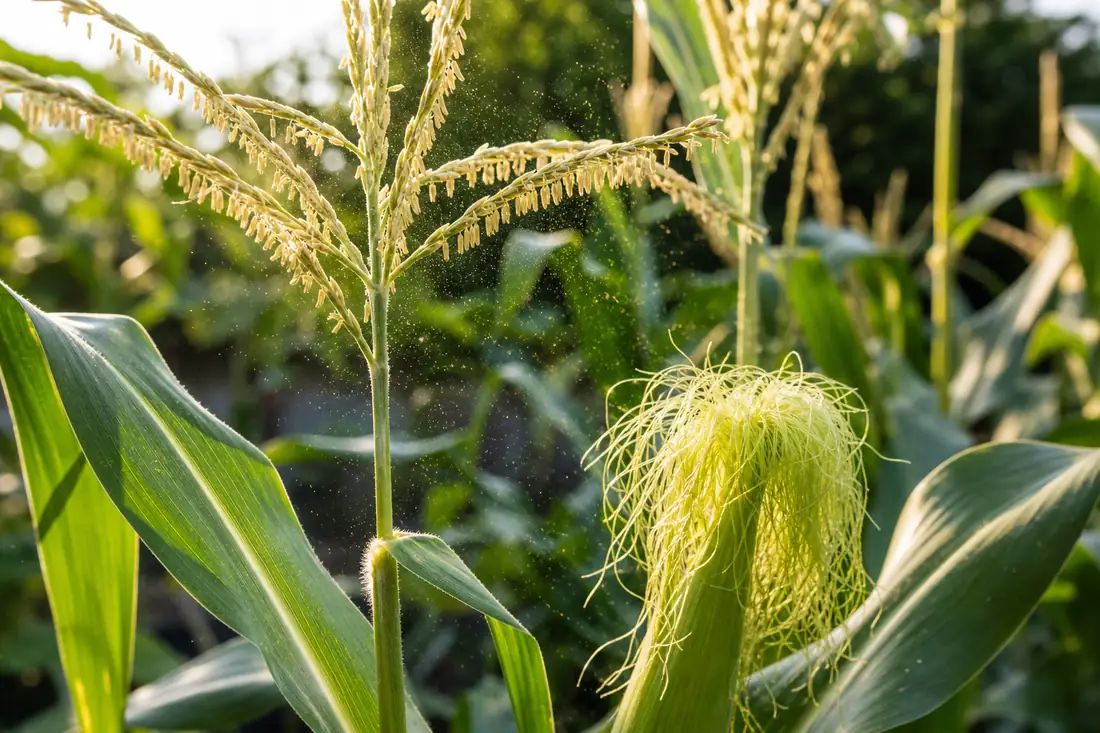
Corn is built for group planting. The tassel at the top sheds pollen, and the silks on each ear catch it. Every silk leads to one ovule. If a silk misses pollen, that kernel space stays blank. That is why poorly pollinated ears have scattered gaps instead of one neat missing section.
Backyard gardeners can grow tall, healthy corn and still get disappointing ears when the layout is wrong. One row along a path may look tidy, then pollen drops mostly straight down or blows away before it reaches enough silks. Short rows grouped together keep plants close enough for pollen to move through the patch.
Plant at least 3 to 4 short rows, even if each row is only 6 to 8 feet long. Four rows of ten plants usually pollinate better than one row of forty plants. The goal is a pollen cloud inside the planting, not a decorative line.
This layout rule matters more than almost any later correction. Shaking tassels by hand can help a weak stand, and it remains a rescue move. The strongest start is physical: enough plants close together, flowering at the same time, with silks ready as tassels shed.
Warm Soil Decides When Seeds Can Start
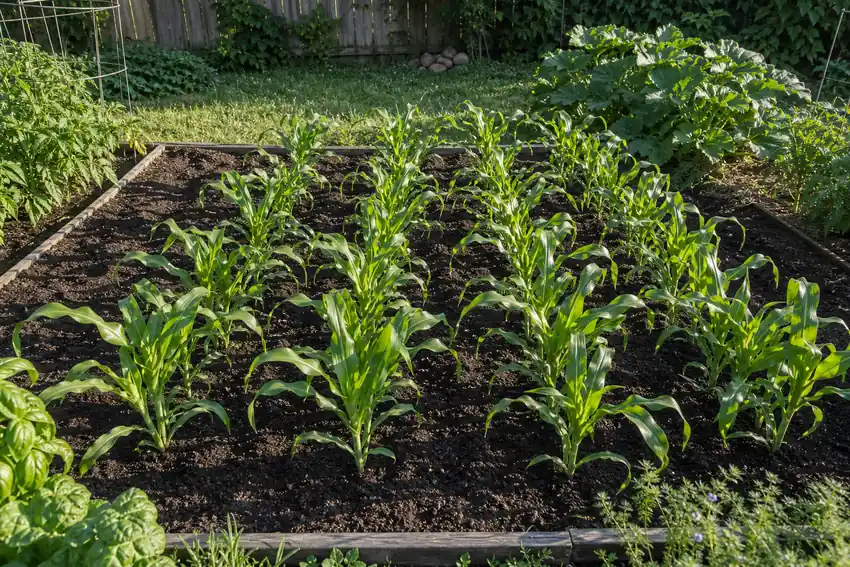
Sweet corn is a warm-season crop. Cold soil delays germination, weakens seed, and gives fungi time to attack before the seedling breaks the surface. A bed that feels pleasant to stand beside in spring can still be too cold an inch below the surface.
Wait until soil is consistently warm at planting depth. Planting after soil reaches at least 50 F gives sweet corn a safer start, with faster germination at warmer temperatures. That timing fits the broader rules for soil temperature for planting: the seed responds to the soil around it, not the first warm afternoon.
Super-sweet and shrunken-kernel types need extra caution because their seed carries less stored energy and can rot more easily in cold, wet soil. Standard sugary types tolerate imperfect spring soil a bit better. If your garden warms slowly, plant a normal sugary or sugary-enhanced variety first, then save the fussiest super-sweet seed for warmer ground.
Direct sowing is usually better than transplanting for backyard corn. Corn roots dislike interruption, and a root-bound transplant can stall. If you must start corn indoors for a short-season garden, use deep cells, transplant very young seedlings, and disturb the root ball as little as possible.
Spacing Controls Ear Size And Airflow
Sweet corn needs enough density for pollination and enough room for each plant to make a full stalk. Too much space weakens pollen transfer. Too little space creates thin stalks, poor ears, and fast moisture stress. The workable middle is close planting inside a block with rows wide enough to walk, weed, and water.
Plant seeds about 1 to 1 1/2 inches deep in warm, moist soil. Space plants 8 to 12 inches apart within the row after thinning. Keep rows about 30 to 36 inches apart unless the variety or seed packet gives a tighter dwarf spacing. Thin when seedlings are a few inches tall by cutting extras at soil level, which avoids pulling nearby roots.
Small gardens need honest math. A 4-by-8-foot bed can grow corn, and it may hold only a modest block. That bed might produce a memorable meal instead of a freezer crop. If space is precious, compare corn against crops with longer harvest windows such as green beans or other warm-season vegetables that keep picking for weeks.
| Backyard layout | Pollination outlook | Best use |
|---|---|---|
| One long row | Weak in most small gardens | Avoid unless hand pollinating heavily |
| 3 short rows | Acceptable with good timing and plant health | Small raised beds or narrow plots |
| 4 or more short rows | Best for reliable full ears | Backyard sweet corn patch |
| Container corn | Variable, variety-dependent | Compact novelty crops with modest harvests |
Feed The Stalk Before The Ear Demands It
Corn is a heavy feeder because it builds a tall grass plant before it fills an ear. Pale leaves, slow growth, and thin stalks usually mean the plant never had enough nitrogen or root space during the fast vegetative stage. Once tassels appear, late feeding cannot fully rebuild the plant frame.
Work compost into the bed before planting, then use fertilizer according to a soil test or vegetable-garden label rate. Corn usually responds well to nitrogen side-dressing when plants are knee-high and again just before tassels develop in light soils. Apply fertilizer beside the row, water it in, and keep it off the leaves.
Too much nitrogen can make lush leaves with weak roots, especially when watering is shallow. The plant needs nutrients and water together. A dry bed cannot move nitrogen into the root zone, and a soaked bed can lose nitrogen below the active roots. Dark green leaves with firm upright stalks are a better sign than sudden floppy growth.
Rotate corn from year to year if space allows. It belongs to the grass family, and repeated corn in the same patch can draw down similar nutrients as pest and disease pressure settle into a pattern. A broader plan for choosing vegetables by season and climate helps place corn where it fits the garden instead of forcing it into the same bed every summer.
Water Deeply During Tasseling, Silking, And Ear Fill
Corn can look tough because the stalk is tall and grassy. The crop is sensitive to dry soil at the wrong time. Moisture stress during tasseling, silking, and ear fill shows up later as short ears, missing kernels, or poor tip fill. The plant may stay green and still fail where it counts.
Aim for about 1 inch of water per week in ordinary weather and more during hot, windy spells or sandy soil. Water deeply so moisture reaches the active root zone. Light daily watering wets the surface, encourages shallow rooting, and leaves the plant vulnerable when a hot day arrives.
Mulch after the soil warms and seedlings are established. Straw, shredded leaves, or untreated grass clippings can slow evaporation and reduce weed competition. Keep mulch away from the stalk base so the crown dries after rain. Corn roots spread widely near the surface, so shallow cultivation is safer than deep hoeing once plants are established.
Drip irrigation or a soaker hose works well in a block because the water reaches rows without soaking leaves. Overhead watering during pollen shed can knock pollen down and make silks less receptive for a short period. Morning watering gives foliage time to dry and leaves afternoon pollination less disturbed.
Pollination Timing Makes Or Breaks The Ear
The tassel appears first, then the silks emerge from the ears. Pollen shed usually lasts several days, and silks must be fresh during that window. Hot, dry weather can dry silks quickly. Heavy rain can shorten useful pollen movement. A healthy block gives the planting more chances because different plants shed pollen across overlapping days.
During silking, walk the patch in the morning and brush a hand gently over tassels. A pale dusting of pollen should fall. Silks should look fresh, moist, and pale at first, then brown after pollination. If silks are drying before pollen is falling, the planting may have been stressed or the variety timing may be uneven.
Hand pollination can help a small block. Tap tassels over a paper bag in the morning, then dust the pollen over fresh silks. Work gently, and repeat for several mornings during peak pollen shed. This helps most when the planting is borderline in a tight space.
Seed type also matters. Sweet corn varieties with different maturity dates may not shed pollen at the same time if planted together. If you want several varieties, separate them by planting date, distance, or type according to seed packet guidance. Mixed corn types can also affect sweetness and kernel texture when pollen crosses in the garden.
Keep Weeds And Pests From Stealing The Early Weeks
Young corn grows upright, and its early canopy is narrow. Weeds can steal light, water, and nitrogen before the corn shades the soil. The first 4 to 6 weeks after emergence are the most important weed-control window.
Cultivate shallowly, pull weeds after rain, and mulch once the soil is warm. Deep hoeing near the stalk can slice surface roots. A weed-free block also improves airflow and makes pest signs easier to see.
Watch for cutworms on young plants, corn earworm at the silk stage, and raccoon damage as ears ripen. Earworm pressure varies by region and season; tight husks help, and some gardeners clip the brown silk tips after pollination to reduce access. Raccoons often arrive the night before you planned to harvest. If they are common in your area, use electric fencing or strong exclusion before ears enter the milk stage.
Do not remove all side shoots, often called suckers, by habit. In good soil with adequate spacing, they do not always reduce yield and may help the plant gather energy. Removing them can wound stalks and open entry points for disease. Focus on water, fertility, and pollination before fussing over every side shoot.
Harvest At The Milk Stage, Then Cook Quickly
Sweet corn quality drops after harvest because sugars begin converting to starch. The best ear in the garden can become ordinary if it sits warm all afternoon. Pick close to cooking time when possible, or chill ears quickly after harvest.
Harvest when silks have browned, ears feel full through the husk, and kernels release a milky liquid when pierced. Clear liquid means the ear is immature. Thick, doughy liquid means the ear is past peak sweetness. Check one ear from the patch before stripping the whole block.
Pull the ear downward with a twist, then keep the plant standing if other ears are still filling. Some varieties produce one main ear and a smaller second ear. The second ear may need a few extra days, especially on plants under stress.
Succession planting extends harvest better than waiting on one large block. Plant another block 10 to 14 days after the first, or choose varieties with different days to maturity if pollen isolation is manageable. The same warm-season planning discipline used for crops like broccoli timing applies here in reverse: corn wants heat, and harvest quality still depends on a narrow stage.
Start With A Block You Can Actually Maintain
A small, well-watered 4-row block usually beats an ambitious patch that dries out and weeds over by July. Start with the area you can water deeply, reach from the sides, and protect as ears ripen. Corn is dramatic in the garden, and it does not reward neglect.
Choose an early or midseason variety for a first backyard crop. Very late varieties can be excellent where summers are long, then they hold the bed for a long time and need more consistent care. In shorter seasons, a 70- to 80-day variety often fits the home garden better.
If you cannot spare enough space for a block, skip sweet corn this year and grow a crop that suits the site. That is good garden math. A garden should produce food, not tall plants that almost made ears.
Conclusion
Sweet corn succeeds in a backyard when the planting is treated like a small field, not a row of ornamental grass. Sow into warm soil, plant a block of short rows, feed before the stalks demand it, and water deeply as tassels, silks, and ears develop. If pollination is weak, the ear will show every missed silk.
Start with a block you can maintain and harvest at the milk stage before sugars fade. The best sign is a full ear under a green husk, brown silks at the tip, and kernels that release a pale milky juice when pressed.
Frequently Asked Questions
Is sweet corn hard to grow?
Sweet corn is space-hungry and timing-sensitive more than technically hard. The main challenge is pollination in a small garden. A block of several short rows, warm soil, deep watering, and good nitrogen usually matter more than complicated daily care.
How many rows of corn do you need for pollination?
Three short rows can work, and four or more short rows are better for most backyard gardens. One long row often pollinates poorly because wind does not move enough pollen across all the silks. A compact block gives each ear more nearby pollen.
What month do you plant sweet corn?
Planting month depends on climate. Sweet corn is usually sown after frost danger has passed and soil has warmed to at least 50 F. In many US gardens that means late spring to early summer. Warm soil matters more than the calendar month.
How far apart should sweet corn be planted?
Most backyard sweet corn grows well at 8 to 12 inches between plants after thinning, with rows about 30 to 36 inches apart. Compact varieties may use tighter spacing. Keep the planting in a block so spacing supports pollination as well as plant size.
Can you grow sweet corn in a raised bed?
Yes, if the raised bed is large enough for a block. A 4-by-8-foot bed can grow a small crop, especially with a compact variety, and it will produce less than a larger patch. Keep moisture even because raised beds dry faster in summer heat.