



Carrot growing can fail long before the orange shoulder appears. Tiny seed dries in the top quarter-inch of soil, a crust seals the row after rain, or a young root reaches a stone and splits into two. The foliage can look healthy above ground even as the root below becomes short, forked, thin, or crowded against its neighbors.
Carrot growing rewards a finely prepared seedbed, patient moisture control, and a willingness to thin seedlings that look too close. Give the taproot loose soil from the surface down, keep the seed line damp through emergence, and sow a second crop in midsummer for crisp fall roots.
Carrot Growing Starts With Four Conditions
The seedbed must stay moist through a 14- to 21-day germination period. Water the surface gently enough that seed does not wash into clumps.
Key Takeaways
- Direct seed carrots into a deep, loose bed; roots do not recover well from transplanting.
- Keep the top layer damp until the thin green hooks emerge.
- Thin seedlings by cutting them to leave one root every 2 to 3 inches.
- Use moderate fertility and avoid fresh manure in the root zone.
- Sow a fall crop 10 to 12 weeks before the first frost for sweeter roots.
Table of Contents
Build A Carrot Bed The Root Can Enter
Carrots need depth more than rich soil. A long variety reaches straight down until it meets a compacted layer, stone, wood chip, fresh manure pocket, or hard clay clod. The tip stops, bends sideways, or divides. That is where forked roots begin.
Choose the deepest, loosest part of the garden and remove stones, old roots, and undecomposed material before sowing. A light sandy loam gives water and air to the root without making the carrot fight for a path. The physical checks in a soil texture analysis show whether the bed needs more compost, drainage work, or a shorter carrot variety.
Work finished compost evenly through the upper soil layer. Avoid putting a handful of rich material into a narrow planting trench. A loose, fertile pocket can make the root branch as it reaches the edge of the pocket. Fresh manure creates the same uneven environment and can push excess leaf growth at the expense of a smooth root.
Heavy soil can still grow carrots when the bed is deep, drained, and free of hard chunks. Select blunt or shorter types for shallow ground. Round or oxheart carrots are a better fit for a container or compact bed than a long Imperator type that needs several inches more depth.
A light sandy-loam soil for well-shaped roots helps carrots grow straight. Minnesota Extension also identifies rocky, heavy, and compacted soil as common causes of forked or split roots.
Sow Carrot Seeds Into A Fine, Moist Surface
Carrot seeds are small and slow. They need close contact with damp particles at the soil surface and cannot push through a thick crust. Rake the top inch until it feels like loose crumbs, level the row, and make a shallow line with the edge of a board or a stick.
Sow about 1/4 inch deep, then cover with screened compost, fine sand, or the lightest soil from the bed. A coarse clod over the row can hold the seed too deep. A bare seed exposed after watering dries before it can send down a root.
Seeds germinate best around 55 to 65°F and can take two to three weeks to emerge. The carrot seed depth and germination guidance places sowing at 1/4 to 1/2 inch, with a moist seedbed until plants are established. Check the temperature at planting depth with the same method used for soil temperature before planting.
Water with a fine rose, a mist setting, or a slow spray aimed above the row. The soil should feel like a wrung-out sponge, not a puddle. In dry wind, cover the row with a board laid slightly above the surface, a strip of burlap, or an old row cover. Lift it every day to check for the first green loops, then remove it immediately.
Thin Carrots Before The Roots Start Competing
Carrot thinning is the part that feels wasteful and pays for the crop. Seedlings that stand shoulder to shoulder grow a thick mat of leaves and a row of narrow roots. Each root needs enough open soil to widen at the shoulder and pull moisture without pressing against the next carrot.
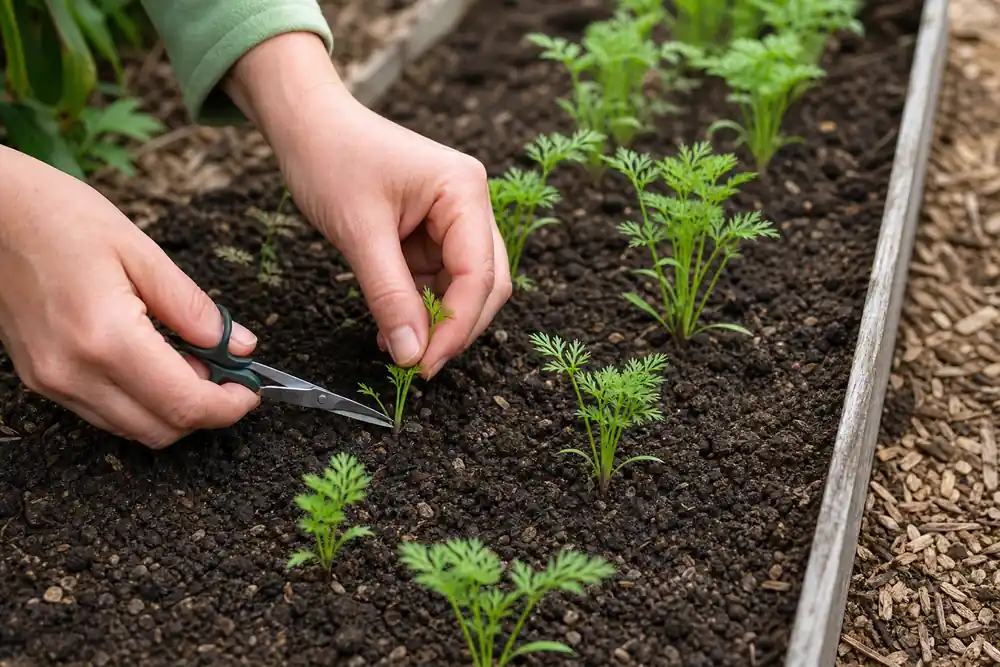
Wait until seedlings have several true leaves and the row is easy to read. Keep the strongest plant every 2 to 3 inches for full-size carrots. A pencil-thick cluster of stems is the signal to thin, not a reason to wait. Once roots have begun swelling, late thinning leaves permanent crowding marks.
Cut unwanted seedlings at soil level with scissors or pinch them cleanly. Pulling can disturb the small taproot beside it. The root sits shallow at this stage, and a tug that seems gentle from above can bend the remaining carrot below the surface.
University of Maryland Extension uses direct seeding in a loose bed and calls for thinning once seedlings reach about two inches tall. The thinning and seedbed advice for carrots supports cutting seedlings, which keeps the nearby roots undisturbed.
Water And Weed Without Disturbing The Taproot
Carrots need even moisture for a smooth root. Dry soil slows growth; a heavy soaking after drought can split the root or leave a coarse texture. Keep moisture consistent from germination through root enlargement, adjusting the schedule for sandy soil, rain, and mulch.
Water slowly so moisture moves down into the root zone. Surface splashes several times a day keep seeds alive during germination, then deeper watering takes over after the plants establish. Reduce irrigation before harvest in a wet spell, since roots close to maturity can crack when the soil swings from dry to saturated.
Young carrot seedlings lose light and water quickly to weed seedlings. Carrot foliage stays low, and a weeded row gives roots room to establish. Slice weeds off at the surface with a stirrup hoe or pull them by hand. Deep cultivation near a carrot row prunes the tip and creates the crooked roots you were trying to avoid.
Mulch after the row has emerged and soil has warmed. Fine straw, leaf mold, or a thin layer of clean compost keeps the surface from baking and reduces weed germination. Leave a narrow open strip over the crowns so the young leaves receive light and the soil can warm in cool weather.
Use Moderate Fertility, Not Coffee Grounds Or Fresh Manure
Carrots need nutrients, though they do not need a heavily fed row. Too much quick nitrogen produces large ferny tops and leaves the root short or hairy. A soil test is the cleanest way to decide whether the bed needs fertilizer before planting.
Do coffee grounds help carrots grow? Coffee grounds add organic material in modest amounts, though they do not reliably acidify a bed or supply a balanced fertilizer. The soil limits of coffee grounds in a garden make them better for a compost pile or a mixed soil amendment than a carrot-row treatment.
Use finished compost across the bed and follow soil-test guidance for fertilizer. Carrots respond poorly to fresh manure and concentrated fertilizer pockets because both change the root’s growing conditions over a short distance. If the leaves are pale after the plants establish, a small side dressing outside the row can help without putting fertilizer against the root tip.
Sow A Second Carrot Crop For Fall Harvest
July and August offer a strong window for fall carrots in regions with a long enough autumn. Warm soil brings quick germination, and cooler days later in the season improve texture and sweetness. The main calculation is time: count back 10 to 12 weeks from the usual first frost, then choose a variety whose maturity fits that window.
Use a new patch of soil if the spring crop had leaf disease or root problems. Late summer rows can dry quickly at the surface, so shade the seed line lightly during a heat spike and water it every day until emergence. Once seedlings have roots, return to deep watering and thin on the same schedule as spring carrots.
Light frost improves flavor in many carrot varieties. The crop can stay in the ground through cool weather with a deeper mulch layer over the bed. The wider timing choices in fall crops before frost help place carrots among other late plantings without crowding the seedbed.
Watch For Forking, Green Shoulders, And Pests
Forked carrots point back to a root-zone obstacle. Dig one misshapen root and inspect the soil at its depth. A stone, thick clod, compacted layer, fresh organic material, or early taproot damage usually appears near the split. Fix the bed before the next sowing; more fertilizer will not remove an obstacle below the root.
Green shoulders form when the upper root pushes above the soil and catches light. Pull a little loose soil over exposed crowns or add a thin mulch layer. The green tissue tastes bitter and signals that the root has lost its soil cover.
Carrot fly and other root-feeding pests need early attention because the damage is hidden. Fine fabric row cover keeps adult insects from laying eggs around new rows, provided the edges are sealed. Rotate carrots to a new area each year and remove old plant debris after harvest.
Harvest At The Size Your Variety Promises
Carrots are ready when the shoulder at soil level reaches a useful diameter for the variety. Brush soil away from one plant and check the color and width. Baby types can be harvested early; storage types gain flavor and size later in the season.
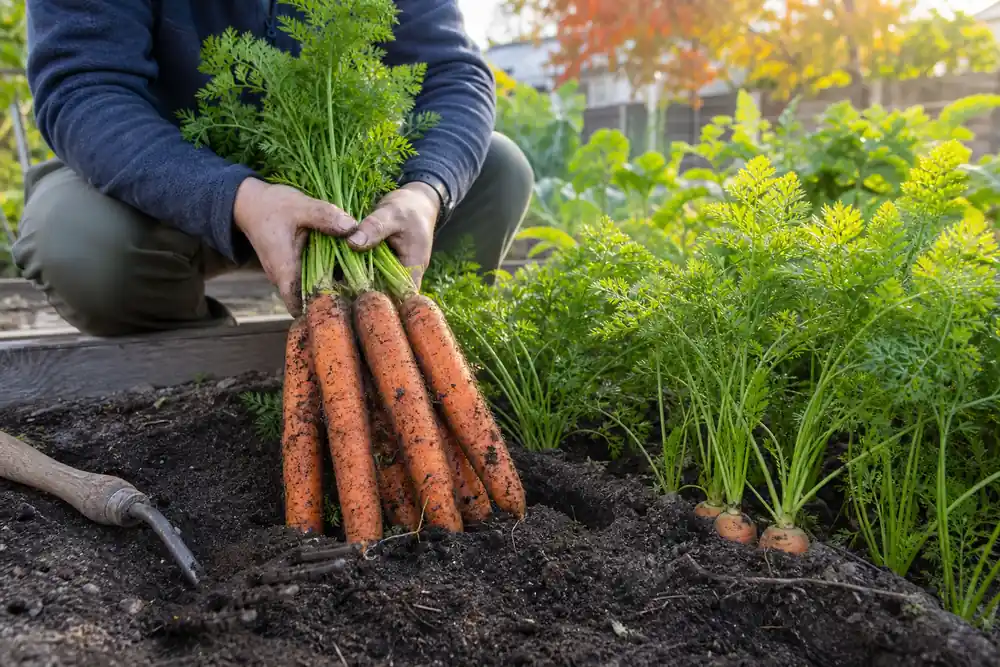
Loosen the soil with a fork beside the row, then lift by the tops. Pulling a long carrot from dry, firm ground can snap the root in half. Trim greens soon after harvest because tops keep drawing moisture from the root.
Most carrots reach usable size in about 55 to 80 days, depending on variety and temperature. Carrot development stages show the change from germination to shoulder growth and harvest. Preserve soil structure, keep moisture even, and give each root room through that process.
Conclusion
Straight, full-size carrots begin with a seedbed that stays loose and damp long enough for the first root to travel down. Thin on time, protect the root zone from weeds and deep hoeing, and keep water even through the long wait below ground.
For a fall row, sow into warm soil before summer ends and let cooler weather finish the crop. The first orange shoulder you brush clean at harvest will tell you whether the soil, spacing, and moisture all held together.
Frequently Asked Questions
What Month Are You Supposed To Plant Carrots?
Plant carrots in spring as soon as the soil can be prepared and is at least about 45°F. Seeds germinate fastest near 55 to 65°F. For a fall crop, sow 10 to 12 weeks before the first expected frost, which often means July or August in many regions.
Do Coffee Grounds Help Carrots Grow?
Coffee grounds are not a reliable carrot fertilizer or a way to change soil pH quickly. Add small amounts to compost or mix them through soil with other organic material. Carrots respond better to a deep, loose bed and fertilizer based on a soil test.
What Is The Trick To Growing Carrots?
Keep the seedbed evenly moist until germination, then thin early so each carrot has 2 to 3 inches of space. Loose, stone-free soil lets the taproot grow straight. Those three details prevent most problems with poor emergence, thin roots, and forks.
How Long Do Carrots Take To Grow?
Many carrots reach a usable size in 55 to 80 days from sowing. Cool weather can slow the calendar and improve flavor. Check the shoulder at soil level; the seed packet date shifts with variety and soil conditions.