
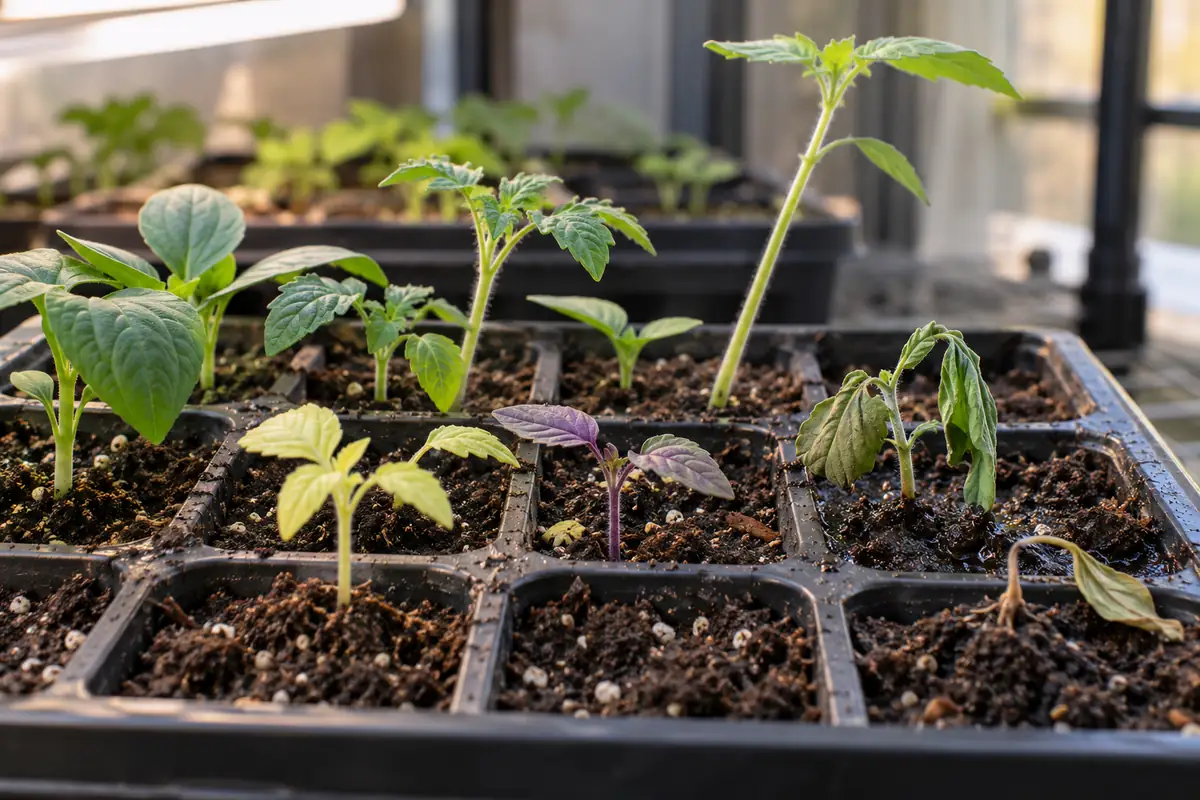
Seedling trouble rarely gives a clean diagnosis from one symptom. A wilted seedling may need less water, not more. Purple leaves may reflect cold or wet roots before a fertilizer shortage. Green growth on the mix can signal persistent moisture without proving disease.
The quickest route to a useful answer is pattern first, treatment second. Check how many seedlings are affected, whether the root zone is wet or dry, what the stem base looks like, and whether growth is stretching, stalling, yellowing, purpling, wilting, or collapsing.
Find the Symptom, Then Make One Check
Key Takeaways
- A symptom is a clue, not a diagnosis. Use moisture, distribution, stem condition, roots, light, and temperature to narrow the cause.
- Wilt in wet mix can come from oxygen-limited roots. More water can make the problem worse.
- Purple foliage can reflect phosphorus stress, while cold or wet roots can reduce phosphorus uptake.
- A visibly collapsed seedling with a constricted, soft stem has a poor recovery outlook from damping-off.
- Leggy growth improves only after the light or temperature problem is corrected. Existing stretched stem tissue does not shorten again.
Table of Contents
Diagnose Before You Treat
Start by asking where the failure appears.
One weak seedling among healthy neighbors points toward an individual problem. One variety failing across a tray raises seed viability or crop-specific germination needs. Random bad cells make uneven moisture, sowing depth, seed-to-media contact, compaction, or localized disease more relevant. A whole tray declining together points toward a shared growing condition such as light, temperature, moisture, salts, or poor aeration.
Next, inspect the root zone and stem base. A wet mix with a firm stem sends diagnosis toward oxygen stress. A pinched, water-soaked stem at the soil line sends diagnosis toward damping-off. A green surface layer with firm seedlings points toward persistent moisture rather than proof of disease.
GardenInsider already covers broad wilt diagnosis in Plant Drooping: What Wilting Leaves Are Telling You. Seedling troubleshooting needs a narrower sequence: identify the visible pattern, make the first discriminating check, then choose the action.
A useful check should change the next move. If a wilted seedling sits in dry mix, moisture moves up. If the same posture appears in saturated mix, oxygen stress moves up. If the stem base is pinched and soft, disease moves up. The visible symptom may stay the same while the action changes completely.
Germination, Emergence, and Early Growth
No Germination or Very Poor Germination
Poor germination can come from seed viability, unsuitable temperature, moisture problems, excessive planting depth, poor aeration, high soluble salts, dormancy, light requirements, or pre-emergence damping-off.
Penn State Extension explains how germination depends on species-appropriate moisture, temperature, oxygen, and, for some seeds, light. Saturation and compaction reduce gas exchange around germinating seed.
The pattern matters more than the empty cell alone. One variety failing while neighboring varieties emerge points toward seed quality or a crop-specific requirement. A tray-wide failure moves shared temperature, moisture, depth, aeration, drainage, and salts higher on the list.
Damping-off can act before emergence. Seed or young tissue can rot before a shoot becomes visible, so no sprout does not always mean germination never started.
Patchy Emergence
Patchy emergence often points toward uneven conditions before disease.
Compare moisture across the tray. Look for dry edges, wet low spots, crusted cells, inconsistent sowing depth, or seeds sitting with poor contact against the mix. Check whether failed cells belong to one variety or follow a physical pattern across the tray.
Tray position can help too. Failure concentrated along one edge may point toward uneven drying or light exposure. Failure in a low, slow-drying section makes excess moisture more plausible. Scattered empty cells across several varieties keep sowing depth, contact, and seed quality in play.
If failures follow one wet or compacted area, root-zone conditions deserve attention first. If failures follow one variety, viability or germination requirements move up.
For normal crop development rather than failure diagnosis, use Vegetable Growth Stages.
Leggy or Stalled Seedlings
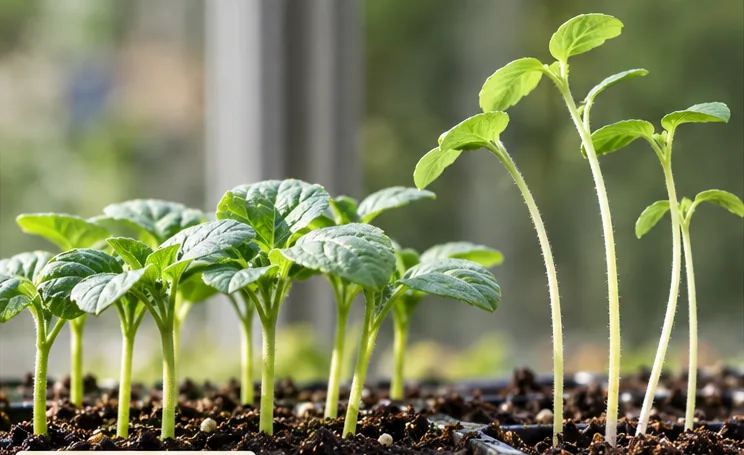
Long, thin stems usually point toward inadequate usable light. Excessive post-germination warmth can also contribute to spindly growth.
Avoid one universal fixture-distance rule. Light exposure depends on fixture output, distance, runtime, crop, and growth stage. University of New Hampshire Extension uses daily light integral, or DLI, to combine intensity with duration.
A seedling leaning toward a window or stretching with long internodes moves low usable light higher on the list. Thin growth in an overly warm setup makes temperature more relevant. Normal shape with almost no new growth shifts attention toward fertility, temperature, or root-zone limits.
Better light can prevent more stretching, but old elongated tissue stays elongated. Recovery means stronger new growth, not a shorter old stem.
Crowding can amplify the problem because neighboring seedlings compete for light and airflow. Thinning helps only when crowding contributes to the pattern. A sparse tray with long stems still needs a light and temperature check rather than routine thinning.
Yellow, Purple, or Wilted Seedlings
Slow Growth With Yellow Foliage
Slow growth plus yellow foliage can point toward nitrogen deficiency. University of Minnesota Extension documents pale older leaves, thin growth, and poor development in seedlings grown in nitrogen-deficient media.
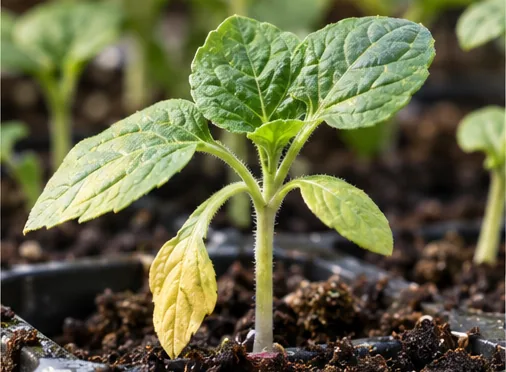
Yellow color alone does not settle the diagnosis.
Yellowing with wet mix and wilt moves root oxygen stress higher. Yellowing without saturation, paired with slow growth, makes fertility history and growing medium more useful. Concentrated fertilizer salts near young roots can injure seedlings, so feeding is not a safe default response to pale leaves.
Purple and Stunted
Purple foliage can reflect phosphorus stress, but the root zone should be checked before fertilizer changes.
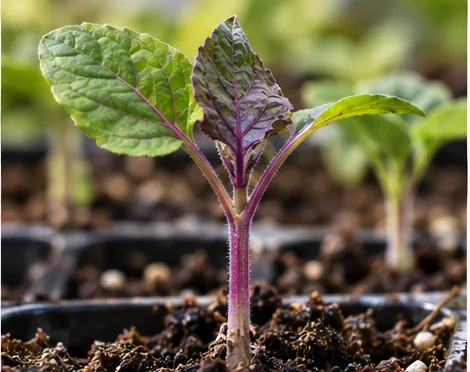
Texas A&M AgriLife notes poor phosphorus uptake in tomato roots under cold soil conditions. Utah State Extension also links purple foliage with phosphorus stress and cold, wet soil.
Use a simple order:
- Check root-zone temperature and moisture.
- Review fertility and pH history.
- Correct obvious cold or wet stress.
- Consider nutrient diagnosis if symptoms continue.
Avoid one universal phosphorus-lockout temperature. Crop and root-zone conditions change the response.
Wilt While the Mix Is Wet
A wet root zone changes the meaning of wilt.
University of Minnesota Extension describes an overwatering response where oxygen-limited roots generate ethylene and foliage develops an epinastic, wilt-like posture. More water can prolong the stress.
Check the mix before watering again. If the root zone is already wet, inspect drainage, container condition, and how long saturation has lasted.
For broader overwatering diagnosis, see Signs of Overwatering Plants. Seedling diagnosis stays narrower: can the root zone regain oxygen before root or stem damage becomes severe?
Damping-Off, Algae, and Root Damage
Damping-Off Has More Specific Signs Than Wilt
Damping-off can kill seed before emergence or attack young seedlings after emergence. Penn State Extension describes seed rot, stem and root infection, and collapse in young seedlings.
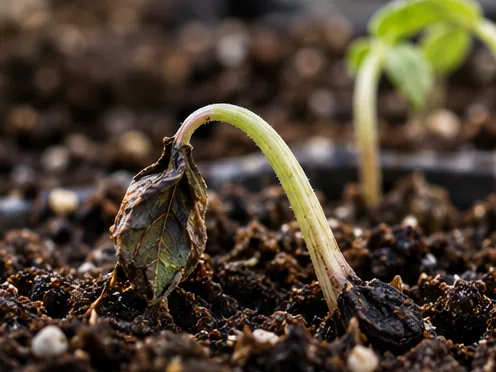
Post-emergence signs carry more weight than general droop:
- soft or water-soaked tissue
- discoloration near the stem base
- thinning or constriction at the soil line
- root loss
- collapse
A visibly collapsed seedling has a poor recovery outlook. Remove the failed seedling and correct disease-favoring conditions around the remaining tray.
The discriminating check is stem condition. General wilt with a firm stem and saturated mix raises root oxygen stress. A soft, constricted stem at the soil line plus collapse raises damping-off. A green surface layer with firm seedlings raises moisture management, not disease.
Broader symptom-versus-sign logic is covered in Diagnosing Common Plant Diseases.
Green Algae and Fuzzy Growth
A green algae layer mainly signals a surface staying wet for long periods. Utah State Extension notes algae is not directly harmful by itself, although persistent wetness can favor other seedling problems.
Fuzzy or cobweb-like growth deserves more concern when it appears on symptomatic plant tissue. University of Minnesota Extension lists fungal growth on infected plant parts among possible damping-off signs, especially when soft tissue, stem damage, root loss, or collapse also appear.
Fungus gnats are not proof of damping-off. Their presence can support a persistent-moisture diagnosis without identifying a disease.
Root Damage After Waterlogging
Prolonged saturation can damage roots and lower recovery odds. Root color and texture can support diagnosis, but no universal color threshold decides whether a seedling must be discarded.
UC ANR IPM notes some plants affected by Pythium root disease can produce new roots and recover when wet conditions improve.
A collapsed damping-off stem is a different case. Do not apply a conditional root-recovery outlook to a seedling with a destroyed stem base.
Smell, texture, and drainage history can add context around damaged roots. A mix staying saturated for days raises concern even before root loss becomes obvious. Improvement after drainage returns supports an environmental cause, while continued decline with soft stem or root tissue raises disease higher.
Rescue, Restart, and Prevent a Repeat
Recovery becomes clearer when three separate questions are asked:
- Can further damage stop?
- Can damaged tissue reverse?
- Can useful growth continue?
A seedling can continue growing even when damaged tissue never returns to normal.
Poor Recovery Outlook
Restart or discard becomes more realistic when a seedling has visibly collapsed from damping-off or when seed and young tissue already rotted before emergence.
Conditional Recovery
Recovery depends on remaining root and stem function after prolonged waterlogging, major root damage, severe stretch, or stalled growth with an uncertain root system.
Better Recovery Outlook
Improvement is more likely when the cause is corrected early, including inadequate light before severe weakness, mild nutrient deficiency, cold-root phosphorus stress, green algae without root or stem disease, and light or heat injury with healthy growing tissue remaining.
Avoid stacking several fixes at once. Change the factor supported by the symptom pattern, then watch new growth.
Prevention should match the failure mode.
- For poor germination, use viable seed and follow crop-specific temperature, depth, dormancy, and light requirements.
- For leggy growth, provide enough usable light and avoid unnecessarily warm post-germination conditions.
- For nutrient problems, match feeding to the medium and crop stage and avoid concentrated fertilizer around germinating seed and young roots.
- For damping-off, manage moisture, use clean media and containers, avoid crowding, and correct conditions around remaining seedlings after a collapse appears.
FAQ
Why are my seedlings tall and falling over?
Low usable light is a common cause. Excessive warmth and crowding can also contribute. Check light at plant height, runtime, temperature, and spacing. Better conditions can improve new growth, but an already stretched stem will not shorten.
Why are my seedlings yellow even though the mix is wet?
Wet mix plus yellowing and wilt moves root oxygen stress higher on the list. Check drainage and root-zone moisture before watering or fertilizing again.
Can leggy seedlings recover?
Often, yes. Better light and suitable temperature can stop further stretching and support stronger new growth. Existing elongated tissue will remain elongated.
Why are my seedlings turning purple?
Purple foliage can reflect phosphorus stress. Cold or wet roots can also reduce phosphorus uptake. Check root-zone conditions before automatically adding phosphorus.
Can seedlings recover from overwatering?
Mild cases can improve after drainage and watering conditions are corrected. Recovery becomes less certain after major root or stem damage or disease.
What does damping-off look like?
Common post-emergence signs include soft or water-soaked tissue, a thin or constricted stem near the soil line, root loss, and collapse. Damping-off can also kill seed or young tissue before emergence.
Is green algae on seed-starting mix dangerous?
Green algae mainly signals persistent surface moisture. It does not prove damping-off. Disease becomes more likely when seedling tissue also shows softening, stem constriction, root loss, or collapse.
When should I give up and restart seedlings?
Restart when a seedling has visibly collapsed from damping-off or when seed and young tissue already rotted. Waterlogging, legginess, nutrient stress, and cold-root problems can have better recovery prospects when corrected before severe structural damage.