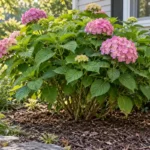
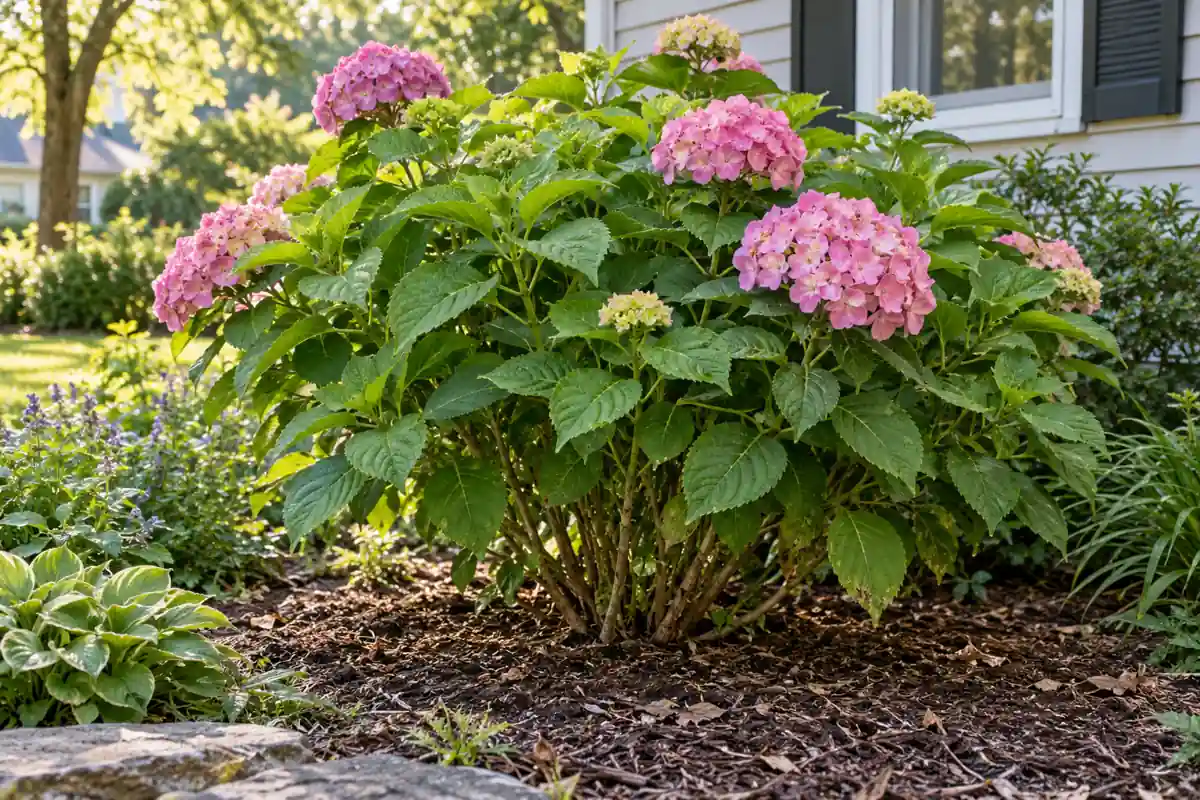
Hydrangea fertilizer is useful when a plant needs nutrients; it cannot replace flower buds lost to pruning, frost or deer. A vigorous shrub with green leaves and few blooms may already have enough food. Adding another high-nitrogen product can encourage more leafy growth without correcting the reason flowers are missing.
Start with the plant’s identity, recent care and soil conditions. Check whether its flower buds form on old or new wood, whether roots are dry or waterlogged, and what fertilizer the surrounding bed has already received. A soil report can then guide a specific addition. Established garden shrubs, recent transplants and plants in pots need different decisions. Once feeding is justified, the useful details are the product’s analysis, the treated area, local timing and the label’s application directions.
Should you fertilize now?
Healthy and flowering: extra fertilizer may be unnecessary. Check existing bed and lawn feeding.
Green leaves, no blooms: pause feeding and check plant type, pruning, frost, browsing and light.
Weak or yellowing growth: inspect drainage and soil moisture, then test the affected planting area.
Wilted or heat-stressed: correct the root-zone problem first. Postpone fertilizer.
Feed when the evidence supports a nutrient need, the plant is not stressed, and the product and local season fit.
Key Takeaways
- Check pruning and frost history before blaming missing nutrients.
- Sample differently managed planting areas separately for useful soil results.
- Match the fertilizer analysis to the nutrients actually needed.
- Measure the treated area before calculating a label-based dose.
- Count existing lawn and potting-mix feeds before adding more.
Table of Contents
Check Flower Buds Before Buying More Fertilizer
A hydrangea can rebuild a full green canopy after losing its flower buds. That is especially frustrating with an old-wood bloomer: the plant looks healthy because its roots and leaf buds survived, even though the buds carrying the expected flowers did not.
Find the cultivar label or purchase record. The differences among hydrangea types change how a pruning or winter event affects flowering. A mophead flower shape alone does not tell you whether a particular cultivar reblooms.
| Plant group | Flowering wood | Check before feeding |
|---|---|---|
| Bigleaf, mountain and oakleaf | Typically old wood; cultivar exceptions apply | Lost stems or buds after cutting, winter injury, late frost or browsing |
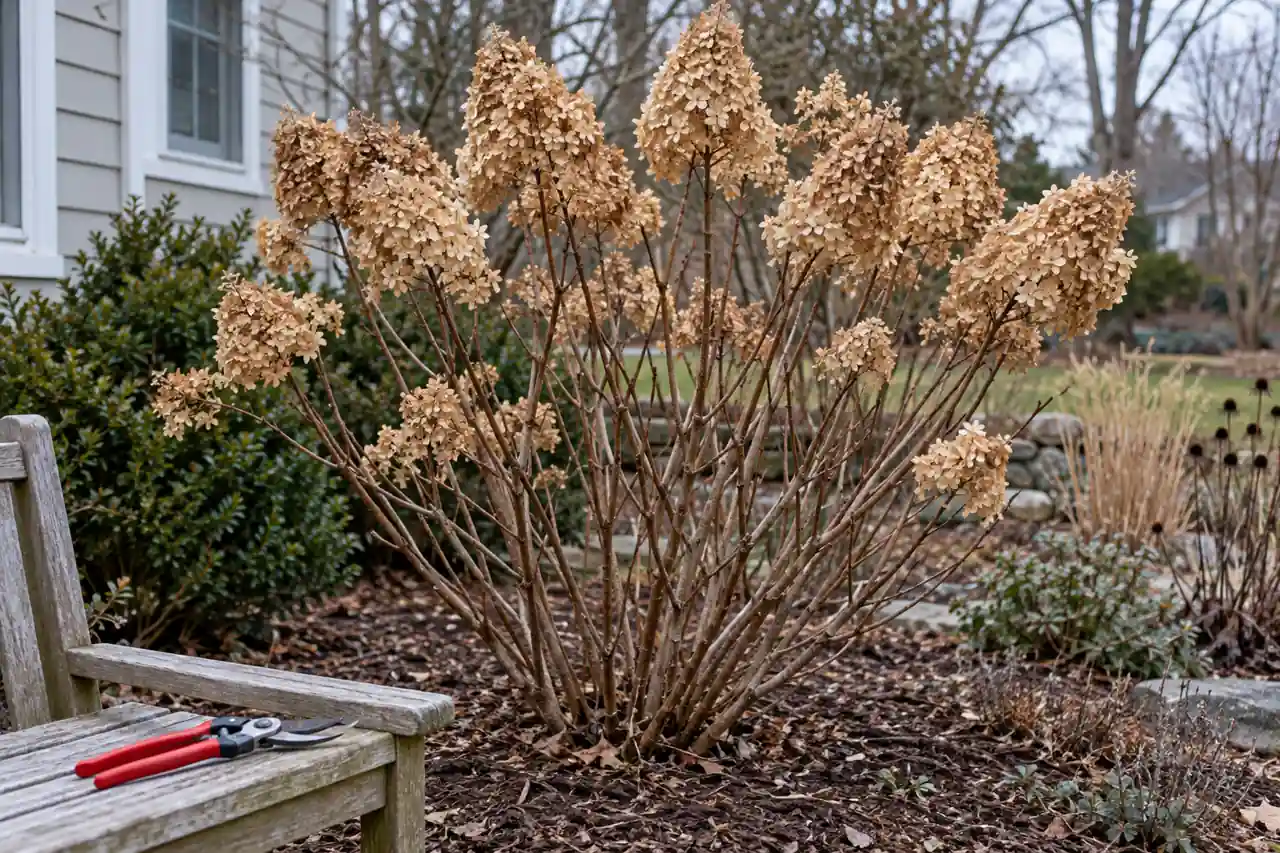
| Smooth and panicle, including Limelight | New growth | Light, root conditions, shoot growth and pruning history |
| Reblooming cultivars | May flower on old and new growth | The named cultivar’s behavior; new growth does not guarantee immediate replacement blooms |
For a panicle hydrangea, the implications of Limelight pruning timing differ from those of cutting an old-wood bigleaf plant. Keep the feeding decision separate from the cutting procedure.
Look at the site as well. A shrub shaded by a growing tree may flower less than it did several years ago. Record the summer light reaching the plant and check the needs of its species in your climate. Moving a heat-sensitive bigleaf into harsh afternoon sun simply to increase light can create another problem.
Finally, count nitrogen already reaching the roots. A nearby lawn may be fertilized even when the hydrangea itself has never been fed. Excess nitrogen can favor leaf and stem growth, so a lush, nonflowering shrub is a poor reason to add more without checking the cause.
Read Leaf Symptoms Alongside Soil Conditions
Yellowing shows that something needs investigation. It does not identify the missing ingredient. Note whether the newest leaves are pale between greener veins, whether older leaves are yellowing more uniformly, or whether damage is concentrated at dry brown margins.
Interveinal yellowing on young leaves can fit iron chlorosis associated with unsuitable soil pH. Older-leaf yellowing can fit nitrogen shortage. Root damage, saturation and other stresses can produce overlapping symptoms, so neither pattern is a sufficient reason to apply a nutrient on its own.
Move mulch aside and inspect soil below the surface at several points. Wet soil may smear on the trowel and remain slick beneath a dry-looking top layer. A dry, crumbly root zone points to a different watering decision. Check the plant again after the hottest part of the day: temporary afternoon wilt in moist soil is different from persistent wilt in a drying bed.
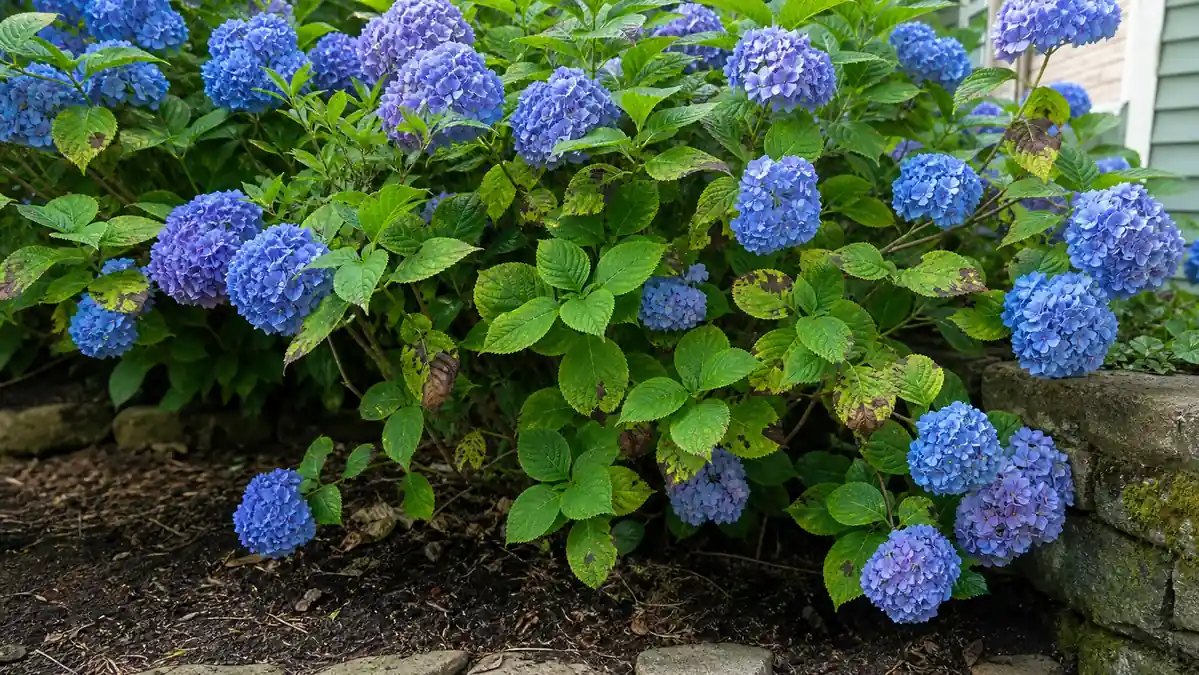
Discrete lesions also deserve a different investigation from generalized pale growth. The pattern of brown spots on hydrangea leaves can indicate disease or environmental injury that fertilizer will not correct.
Take a sample that represents the hydrangea bed
Ask a local laboratory or Extension service for its ornamental-shrub sampling instructions. Explain the plant, symptoms and past amendments. Choosing between a soil test kit and laboratory test depends on whether you need a rough screening result or an interpreted amendment recommendation.
- Separate the hydrangea bed from a lawn, a differently amended border or a troubled container.
- Clear surface mulch and collect small subsamples across the uniform planting area at the depth the laboratory specifies.
- Mix those subsamples in a clean container and submit the requested amount using the laboratory’s handling instructions.
- Keep the result with the bed name, plant identity and fertilizer history so the recommendation can be applied to the right place.
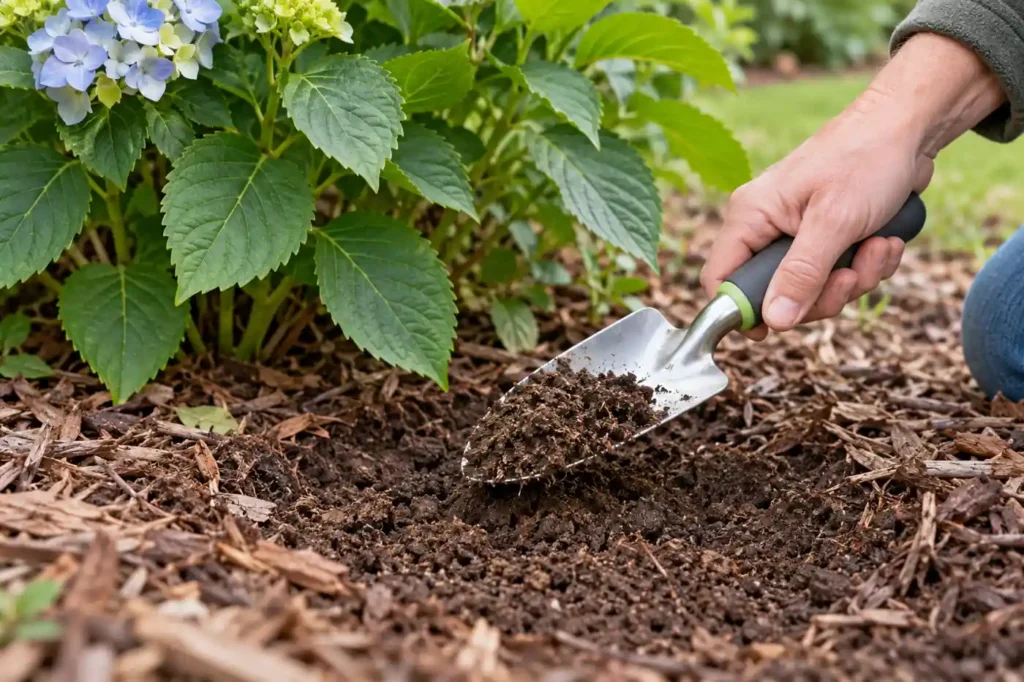
The report can identify pH and nutrient categories such as phosphorus and potassium. Read what was actually measured and recommended; a standard test does not diagnose dead flower buds, poor light or every root problem.
Choose Hydrangea Fertilizer From the Soil Report
The best fertilizer for hydrangeas is the one that supplies a demonstrated need at a suitable rate. A bag labeled for hydrangeas does not automatically fit every soil, and an all-purpose product is not automatically unsuitable. Compare the guaranteed analysis and directions after deciding whether feeding is needed.
A balanced, slow-release product is one option when its nutrients fit the soil and plant. If phosphorus and potassium are already sufficient, repeating a balanced feed adds nutrients that may not be needed. University of Maryland Extension’s fertilizer analysis and nutrient-selection guidance makes that distinction.
Reading a 10-10-10 label
First number: percentage by weight of nitrogen.
Second number: available phosphate, expressed as P2O5.
Third number: soluble potash, expressed as K2O.
One pound of 10-10-10 contains 0.10 pound of each declared component. This explains the analysis; it is not a dose for one shrub.
The release form also matters. Slow-release materials supply nutrients over time; water-soluble products can deliver them more quickly. Neither form makes an excessive total amount safe. Follow the actual formulation’s rate and repeat-application directions.
Be cautious with a high-phosphorus bloom booster. Phosphorus is a nutrient, not a replacement for lost buds or adequate light. Extra phosphorus can also interfere with the aluminum pathway involved in blue flowers on responsive hydrangeas. Soil need and the flower-color goal must agree with the product choice.
Choose a Feeding Window for Your Region
When feeding is justified, spring is a commonly recommended opportunity for established plants. The spring feeding and species-specific care recommendations from Oregon State Extension include a balanced slow-release fertilizer. Other regional sources give different programs.
| Source and setting | Published timing example | Condition to retain |
|---|---|---|
| Oregon State Extension hydrangea care | Spring, using a balanced slow-release feed | Check whether the plant and soil need those nutrients |
| Clemson Extension, South Carolina bigleaf hydrangeas | Light applications in March, May and July | A regional, species-specific program; not three mandatory feeds for every shrub |
| University of Connecticut hydrangea guidance | Late spring and midsummer, with no application after August 15 | New England context; keep the formulation and local growing season in view |
Choose one locally suitable program and follow the product’s instructions for it. Do not combine every listed feeding opportunity. General woody-plant guidance may also discuss late-fall feeding, which is not a reason to add an automatic fall dose to a hydrangea program.
Plant condition overrides a date. Postpone fertilizer if the root zone is drought-stressed, saturated or facing extreme heat. A wilted shrub needs a moisture and site assessment first. Frozen ground and a heavy-rain forecast are also poor conditions for broadcasting fertilizer.
Apply a Measured Amount Across the Root Zone
Read the unit on both the recommendation and the bag. An amount per 100 square feet describes a treated area. An amount per container describes a different situation. The shrub’s height alone cannot tell you how many tablespoons to use.
For an area-based recommendation, measure the planting area that will actually receive fertilizer. A 5-foot by 4-foot section is 20 square feet, one-fifth of 100 square feet. Scale a valid product-area rate to that measured area; first confirm that the analysis, recommendation and label agree. This area calculation does not establish that the shrub needs feeding.
Weigh or measure the product as its directions specify. Cups of different granular fertilizers can have different weights. Substituting a scoop from another bag can change the amount applied even when the scoop looks familiar.
- Check that the shrub is not under active water or heat stress and that the timing suits the chosen program.
- Calculate and set aside only the required amount. Include nutrients from previous products when deciding whether another application is warranted.
- Distribute granules evenly over the appropriate soil area beneath the shrub, following the label. Avoid a concentrated pile against the woody crown.
- Keep fertilizer off leaves and paved surfaces. Sweep spilled granules from paths before they can wash toward drains.
- Water in as directed, accounting for current soil moisture and runoff risk. Record the product, analysis, amount and date.
Some granular directions allow application over mulch; others specify placement in contact with soil. Follow the product instead of digging into the root zone to mix fertilizer deeply. Large roots are not a target to expose, and a circle of visible granules against the stems is not better placement.
Separate New Plantings From Container Feeding
A newly planted garden shrub
Focus on establishment: a suitable planting depth, contact between the root ball and surrounding soil, drainage and watering. Routine fertilizer at planting is discouraged in University of Maryland’s woody-plant guidance. A new hydrangea does not need fertilizer added to its planting hole simply because the move was stressful.
Check what the nursery plant and amended bed already contain. Later feeding depends on establishment, soil need and local advice. Avoid turning a regional recommendation for an established bigleaf shrub into a first-week treatment for every transplant.
A hydrangea growing in a pot
Read the potting-mix packaging for any incorporated feed, then choose directions specifically suitable for container plants. The constrained medium, drainage and existing fertilizer charge change the decision. A garden-bed rate should not be converted into an improvised pot dose.
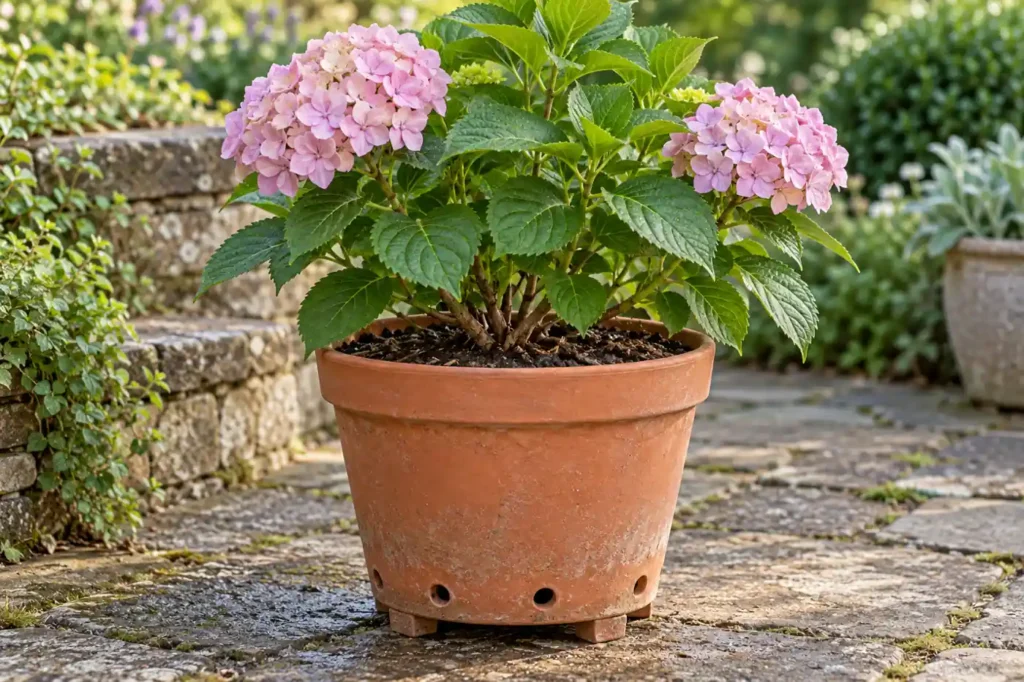
Look at how water moves through the pot. A dry root ball can shed water rapidly down gaps at the edge; a saturated mix can remain heavy and wet. Neither observation establishes a nutrient deficiency. Correct the water problem and check the label before adding a stronger or more frequent feed.
Do not prescribe a monthly liquid feed from the calendar alone. The formulation, container directions, medium and plant condition determine whether a repeat application is appropriate.
Separate Flower Color From Plant Nutrition
Blue and pink changes occur in responsive bigleaf and some mountain hydrangeas through soil chemistry and the plant’s genetics. Acidic conditions can make aluminum more available to the plant, contributing to blue coloration. The fertilizer’s N-P-K numbers do not act as a flower dye.
A white-flowering or panicle hydrangea will not become blue because you buy an acidifying feed. Confirm the named cultivar before treating color as a soil problem. Changes within a flower’s normal aging process are also different from a deliberate blue-pink adjustment.
For a color-responsive plant, test the soil before adding sulfur, lime or aluminum sulfate. A useful amendment rate depends on starting pH, soil texture and buffering, plus the intended result. Repeated unmeasured additions can move the root environment in the wrong direction or damage roots.
High phosphorus can complicate the blue-color goal by affecting aluminum uptake. That does not mean withholding a nutrient the soil truly needs. Ask for local interpretation when the nutrient recommendation and desired flower color appear to conflict.
Allow for time and reassessment. A bag promising blue flowers does not establish the cultivar’s response or a safe application rate in your bed. Keep color amendments and ordinary fertilizer in the same treatment record so they are not unknowingly repeated.
Check New Growth Before Feeding Again
Watch the next normal flush of growth and the plant’s water response. Old damaged tissue may remain damaged, and missing flower buds will not reappear because a feed was applied. Look for healthier new growth consistent with the problem that was identified.
If leaf margins turn brown soon after feeding, record the amount and timing and reassess root-zone conditions. Avoid adding another product to counter the damage. Persistent decline calls for photographs, the soil report and the application history to be reviewed together by local Extension or another qualified plant diagnostic service.
A sound treatment record can also justify doing less. If the shrub grows and flowers normally with no supplemental fertilizer, continue observing it. Repeat feeding should follow a supported need and the chosen program.
Conclusion
Begin with the hydrangea’s buds, roots and growing conditions. Test the actual planting area when nutrition or pH needs clarification, then select an analysis and dose that fit the result. Keep new plantings and containers separate from established garden-bed programs.
Measure before applying, avoid feeding during stress, and record every product already used. If flowers are missing, return to plant identity, pruning, weather and light before reaching for another bag.