
Malabar spinach is a heat-loving climbing vegetable with thick, glossy leaves and soft stems that wind around a support. Its botanical name is Basella alba. It is unrelated to true spinach, the low-growing crop that often struggles once summer becomes hot.
Give this vine warmth, moist soil with drainage and a secure trellis, and it can produce repeated leaf harvests through the warm season. A cool spring bed may leave it almost motionless. That slow start does not automatically mean the seed failed or the plant needs more fertilizer.
Plan the support and watering access before planting. In a small bed or patio pot, the challenge changes as the vine grows: first you are keeping a shallow seed zone moist, then supporting a leafy canopy with a much larger demand for water.
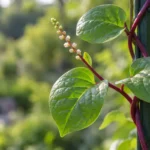
Identify: Look for fleshy oval or heart-shaped leaves on a twining vine. Red-stem forms are often sold as Rubra; this is not ordinary cool-season spinach.
Start: Sow in warm, draining medium about one-quarter inch deep. An overnight soak can help hard seed. Plant outdoors after frost risk and once the soil has warmed.
Grow and pick: Secure the support, maintain moist roots with drainage, and pick selected tender leaves or tips. Retain healthy foliage to power the next growth.
Key Takeaways
- Choose warm summer conditions rather than a spring spinach calendar.
- Separate seed germination warmth from the vine’s later heat needs.
- Install firm supports before soft stems begin wrapping nearby plants.
- Check root moisture before treating every drooping leaf with water.
- Leave healthy foliage and growing points after each small harvest.
Table of Contents
What Malabar Spinach Looks Like as It Grows
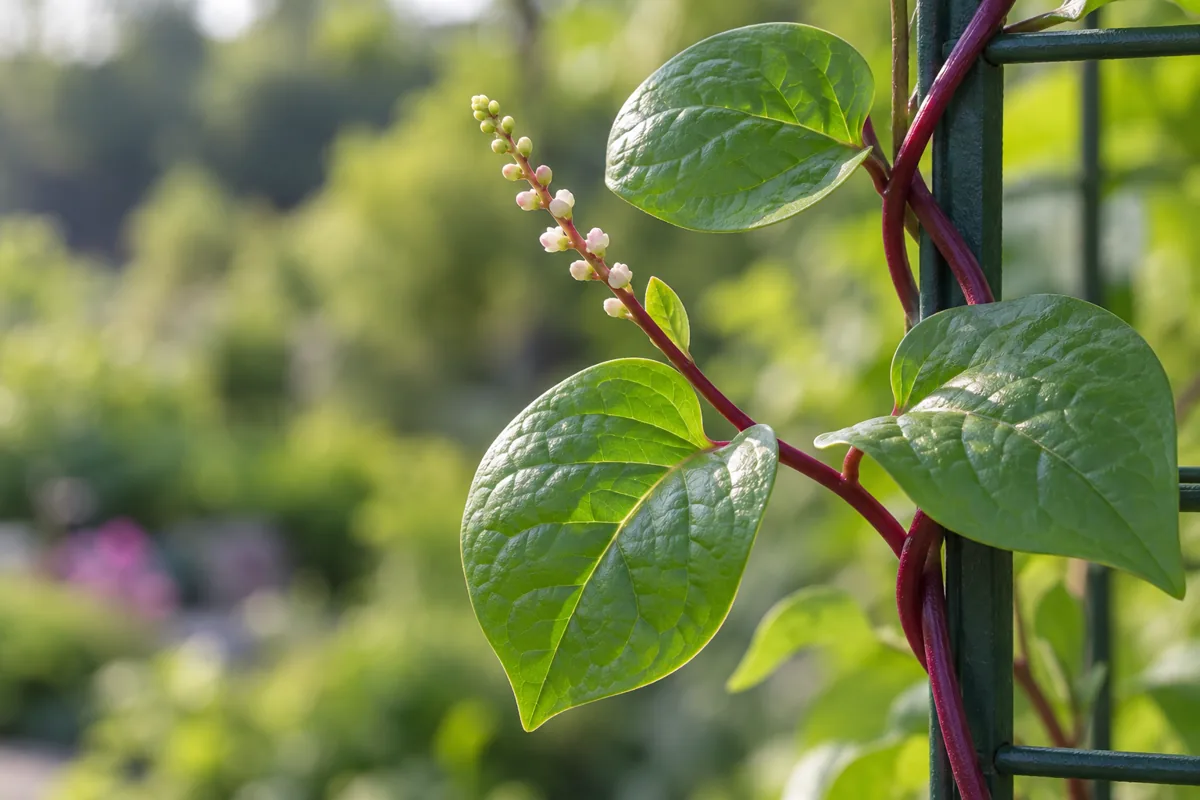
A young Malabar spinach plant develops thick, smooth leaves with a noticeable fleshy feel. Established shoots wrap around supports without making the grasping tendrils seen on peas. Green-stem and burgundy-stem forms are both grown, with the red forms often showing pinkish veins against green leaves.
Names on packets can be confusing. Basella rubra appears in older references and seed catalogs, and Rubra remains a familiar gardening label for red-stem plants. Kew’s Plants of the World Online treats B. rubra as a synonym of the accepted B. alba. A different stem color does not establish a different chilling requirement or superior yield.
True spinach, Spinacia oleracea, grows as a low rosette. Basella becomes a soft, climbing vine and is frost tender. In cold-winter gardens it is grown as a summer annual; in suitable frost-free climates it can persist as a perennial. Check the plant name before applying advice written for ordinary spinach.
Small pale pink or white flowers appear along short spikes from the leaf axils, where leaves meet stems. Dark purple to nearly black fruits can follow. Those structures are part of the vine’s reproductive stage, not a sudden leaf disease.
Start Seeds or Cuttings When Warmth Can Sustain Them
Two temperature stages explain many slow starts. Seed can germinate in moderately warm medium, and the established vine grows much faster in summer heat. A pot can produce healthy seedlings at temperatures that still leave later stem growth slow.
| Stage | Temperature guidance | What to check |
|---|---|---|
| Seed germination | UF/IFAS describes about 65 to 75 degrees F and two to three weeks in favorable conditions. | Medium temperature, seed condition and consistent moisture. |
| Outdoor planting | Wait until frost risk has passed and soil is warm; UF’s regional method uses about 65 to 75 degrees F. | Actual soil warmth and forecast, not the frost date alone. |
| Rapid vine growth | Warm weather around 80 degrees F and above favors growth. Growth stays slow with nights consistently below 60 in Wisconsin Extension’s guidance. | Night temperatures before adding fertilizer to a healthy, stalled plant. |
How to grow Malabar spinach from seed
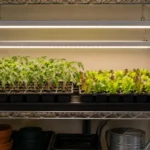
In a short-summer garden, starting indoors can give the crop a head start. Wisconsin Extension’s Malabar spinach propagation guidance uses six to eight weeks before the local last frost for indoor sowing. Hold those starts in suitable warmth and light, then plant only after outdoor conditions are warm enough.
- Check the packet for any existing coating or pretreatment.
- For ordinary hard seed, optionally soak in clean water overnight.
- Fill draining cells or pots with evenly moistened seed-starting medium.
- Sow about one-quarter inch deep, following the packet where it differs.
- Keep the seed zone warm and moist without leaving the container waterlogged.
- Provide useful light as seedlings emerge and check new leaf growth.
Gentle seed-coat abrasion with sandpaper or a file is another Extension method for speeding germination. It should affect only the tough outer coat. Deep cuts can damage the living seed inside, so an overnight soak is easier to manage when you are uncertain about abrasion.
Expect variation. Wisconsin describes ten days to three weeks for germination, and the UF-associated Alachua growing program allows fourteen to twenty-eight days under its conditions. Before discarding a quiet tray, check the medium’s overnight temperature, moisture history and seed depth.
For direct sowing in an already warm region, UF/IFAS describes waiting roughly two to three weeks after the last frost, with warm soil still the deciding condition. Its seed-row method starts seeds one to two inches apart, then thins them. For garden transplants, about a foot apart is a useful starting point from UF and Wisconsin guidance; initial seed spacing is not mature vine spacing.
Root a healthy stem tip instead
A cutting can bypass seed germination when you already have a correctly identified, healthy Basella plant. Take a growing stem tip that includes a node, cutting below that leaf attachment point. Remove lower leaves that would sit in water or buried medium, and retain upper foliage.
Place the node in clean water or moist, draining potting medium in a warm, protected position with bright light. Monitor rooting and refresh water or moisture as needed. Move a rooted cutting gently into its growing container, then acclimate it to outdoor sun and wind before planting. A detached leaf without a stem node is a different piece of plant material.
Build a Root Zone and Support That Can Carry the Vine
Install the trellis before stems reach neighboring plants. The soft leading shoot needs something it can wrap around, such as a slender pole, string or accessible mesh. Guide it gently toward the support and leave room for the stem to thicken.
Plan for vigorous growth without treating a potential vine length as a mandatory trellis height. Wisconsin describes annual vines reaching about ten feet in favorable conditions. Shorter supports can work with redirection and pruning if the frame remains stable and the foliage stays reachable.
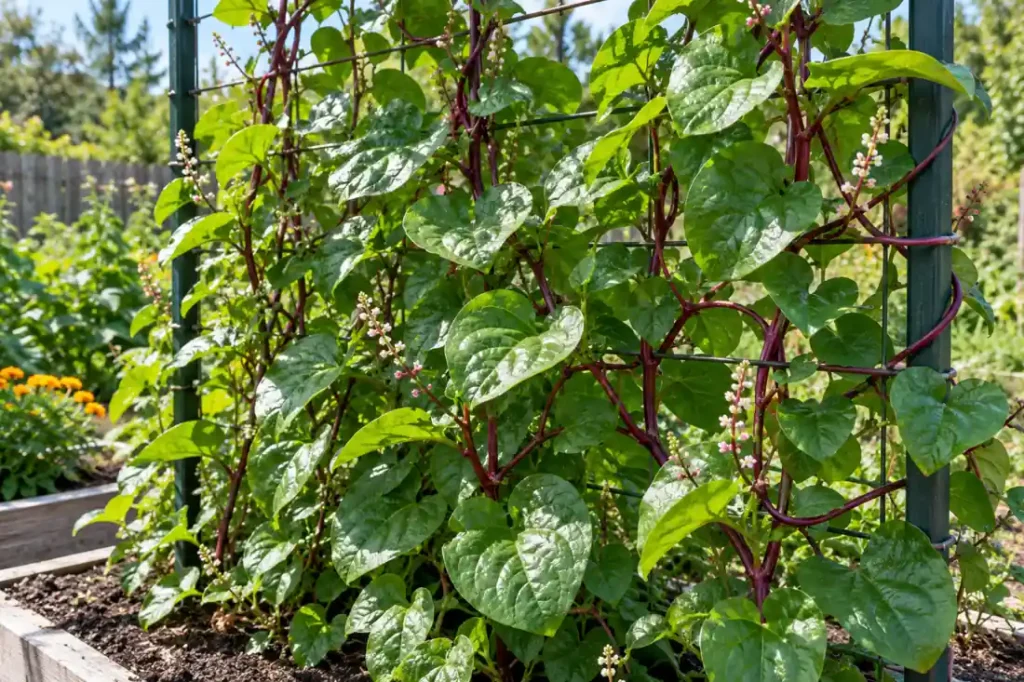
A leafy vine catches wind. Match the support to the pot or bed anchorage, not only to the weight of the bare stem. Practical garden trellis choices by climbing habit start with grip and anchorage. Position the frame so you can pick without stretching over a railing or leaning into an unstable pot.
In beds, aim for fertile soil with organic matter, moisture retention and drainage. In pots, use an airy container potting mix and keep heavy, compacted yard soil out of the root space. Open drainage holes let excess water escape after irrigation.
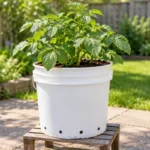
Container culture is possible. UF/IFAS Extension agent Ralph Mitchell describes a Florida vine grown in a fifteen-gallon pot with a cone-shaped support. That is a workable example from his garden, not a tested minimum for every patio. Choose enough root space and water buffer for the canopy you intend to maintain.
If a pot repeatedly dries before you can water it or the whole frame tilts in wind, change the setup. More frequent irrigation, greater root volume, a better-supported frame or a less exposed position may be needed. The drainage and stability checks used when starting a container garden still apply as the vine grows.
Manage Moisture and Fertility for Tender Leaf Growth
Full sun suits this warm-season crop. Some afternoon shade can help leaf size and succulence in intense heat, as described in the Florida cultivation guide from UF/IFAS. In a cool northern garden, excessive shade can remove warmth and light that the vine already lacks.
Check the root zone below the dry surface crust. Damp, loose medium feels different from a powdery surface over a dry pot; both differ from a heavy, saturated mass. Lift a manageable container slightly to learn its watered and dry weights. That comparison becomes useful as summer leaves increase water demand.
Water a dry root zone thoroughly and let excess drain. Empty water that remains trapped in a saucer. A drooping plant in wet, heavy medium needs a drainage check before another drink. Constant saturation reduces the air available to roots.
Consistent moisture helps maintain tender foliage. Dry conditions can encourage flowering and poorer leaf quality. Shortening days can also trigger reproduction, so increasing irrigation will not prevent every flower spike.
Use a soil test to guide amendments in a garden bed. For pots, consider the nutrients already included in the mix and follow the fertilizer label for edible container crops. Commercial field rates are not spoonful instructions for a single patio pot. Rule out cool nights, wet roots and insufficient light before feeding a stalled plant more heavily.
Harvest Leaves and Tips Without Stopping Regrowth
Begin modestly when the vine is actively adding healthy foliage and can spare tender leaves. A recently transplanted plant that is still recovering needs its leaves. UF/IFAS gives about seventy days from seed to maturity in favorable conditions; that is not a deadline for every first pick.
Select young, healthy leaves that have expanded enough to handle without tearing. Support the leaf and pinch or snip its stalk close to the vine, keeping the main stem intact. For a shoot harvest, cut a tender growing tip above a retained healthy leaf node.
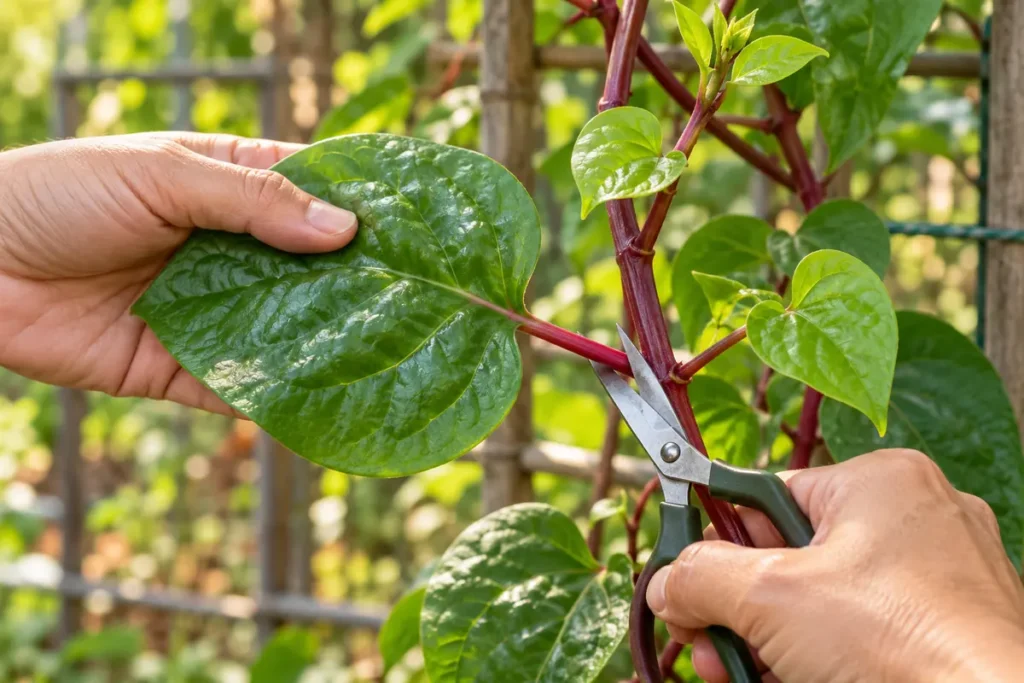
Tip pruning changes where the next shoots develop and can keep growth within reach. Leave a substantial working canopy rather than stripping the plant to bare stems. There is no single harvest percentage that fits a small, cool-grown start and a vigorous midsummer vine.
Watch the response between picks. Expanding leaves and developing side shoots show that growth continues. Slow replacement, persistent wilt or a shrinking canopy calls for a lighter harvest and a root-zone or weather check. Redirect an overlong soft shoot across its support before it tangles around another crop.
Recognize Flowers, Dark Fruit and the End of the Season
Short spikes of pale flowers can appear as days shorten or the root zone dries. Older foliage may become more bitter around flowering. Check moisture and favor tender new growth, then accept that the plant may also be responding to season.
Do not drought-stress a productive leaf crop just to force fruit. If the goal is leafy growth, a healthy vine without flowers can be doing exactly what you want. A flowering vine does not need to be flooded to return it to an imagined earlier stage.
Dark fruits follow the small flowers and their purple juice stains hands and surfaces. Remove unwanted clusters before they drop where seedlings would be difficult to manage. Kew documents naturalization beyond cultivation, and warm, frost-free sites deserve particular attention to seedlings and spreading stems.
Check local Extension or nonnative-plant guidance before allowing self-seeding near natural areas. The plant’s behavior in one frosty northern garden does not establish its behavior in a subtropical yard. A broad claim that it is either invasive everywhere or harmless everywhere misses those conditions.
In cold-winter gardens, pick suitable remaining leaves before frost and clean up the annual vine afterward. Protected cuttings are an optional way to retain material, provided you can supply warmth and suitable light. Do not expect an exposed outdoor vine to survive frost because it is called a perennial.
Diagnose Slow Growth, Wilt and Leaf Damage Before Treating
Start with the change you can observe. Seed that has not emerged, a cool-stalled transplant and a large thirsty vine need different corrections. Check temperature and root conditions before assuming every weak plant needs fertilizer.
| Sign | Check first | Next action |
|---|---|---|
| No shoots after two weeks | Seed-level warmth, depth and moisture history | Correct conditions and allow the packet’s germination interval before replacing firm seed. |
| Healthy transplant barely grows | Cold nights and cool soil | Wait for sustained warmth; avoid forcing growth with extra fertilizer. |
| Leaves droop in hot weather | Dry, lightweight pot versus saturated, heavy pot | Water the dry root zone; restore drainage where water is trapped. |
| Dark spots spread across leaves | Lesion pattern, nearby pests and persistently wet foliage | Remove affected leaves and seek local diagnosis if new foliage continues to develop spots. |
Malabar spinach is not immune to pests or disease. Leaf spots, snails and nematodes can affect plants, as documented in UF/IFAS’s growing guidance. A spot alone cannot identify a pathogen, and a Florida pest list is not a statement that every pest occurs in your yard.
For young plants, compare stem-base condition, light and medium when investigating seedling problems. A thin stem leaning toward a window needs useful light; a collapsing stem in saturated medium needs a separate root and drainage assessment.
Conclusion
Plant Malabar spinach for summer warmth, give the twining stems a stable support and keep roots moist with room to drain. Pick lightly at first and leave foliage for the next growth. When the vine changes, check temperature, root moisture and season before changing the care routine.
Frequently Asked Questions
Can you save Malabar spinach seed from the dark fruits?
Yes. Mature fruits can be dried whole for planting the following year, a method described by Wisconsin Extension. Keep material labeled and dry, and collect it before it drops into unwanted locations. Staining fruit juice is normal. Seed saving still depends on the vine reaching fruit maturity before local frost.
Will a Malabar spinach stem root where it touches soil?
It can root where nodes contact moist soil. This can produce new rooted sections, and it can also carry a vine beyond the intended bed. Keep trailing stems lifted when containment matters and remove unwanted rooted growth, particularly in warm climates.
Why do cut Malabar spinach leaves feel slippery?
The fleshy leaves contain mucilage, which gives damaged or cut tissue a slippery texture. That is a normal feature of correctly identified Basella. It differs from a leaf becoming soft, decayed or moldy, so judge plant health by the whole leaf and growing conditions.