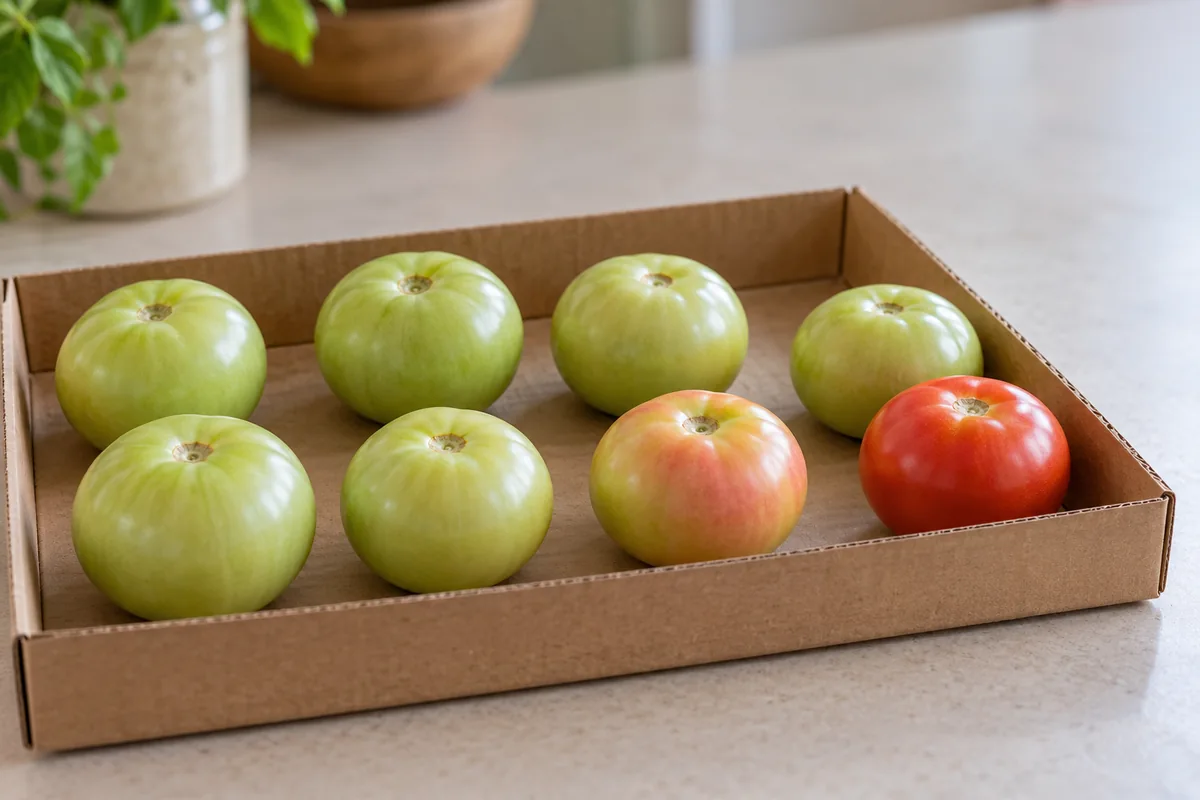
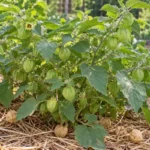
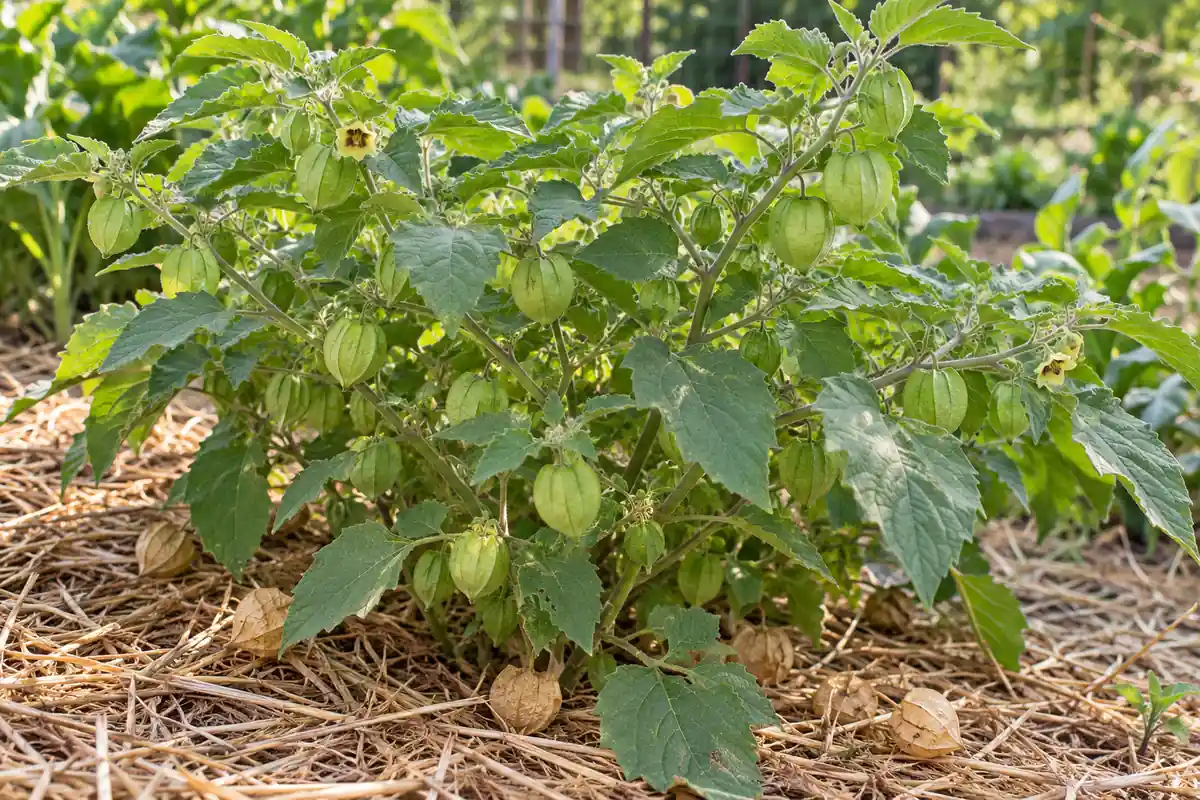
A ground cherry plant produces small berries inside papery husks on low, spreading branches. Choose an identified edible garden variety, give it warm growing conditions and leave access beneath the canopy for harvesting. Harvest only fully ripe fruit from a known edible variety. Green fruit, leaves, stems and husks are not for eating.
The common name covers several Physalis species, so the seed label matters. A compact garden ground cherry and a taller Cape gooseberry can need different amounts of space and growing time. For familiar yellow-fruited garden types, dry tan husks and golden berries help signal maturity, usually after fruit drops. A crisp husk may rustle against the mulch as you lift it; open it and inspect the berry too. Falling alone does not establish ripeness, and a lantern-shaped husk does not identify an unknown plant as edible.
Identify, grow, then check the fruit
- Before planting: check the species and cultivar. Aunt Molly’s is sold as Physalis pruinosa; Cape gooseberry is commonly Physalis peruviana.
- For outdoor growth: choose sun, warm soil after frost danger and space for branching stems. Install any cage before the canopy spreads.
- At harvest: inspect known cultivated fruit for a dry papery husk and its fully ripe color. Typical garden ground cherries turn yellow to gold.
- If fruit is green, damaged or unidentified: keep it out of the harvest. Do not taste an unknown plant to identify it.
Key Takeaways
- Read the scientific name before comparing growing times or size.
- Start seeds in warm medium and harden seedlings gradually.
- Plant at the original root-ball level unless cultivar guidance differs.
- Leave room beneath spreading branches to retrieve dropped husks.
- Inspect berry color as well as the dry outer covering.
Table of Contents
Ground Cherry Plant Identity Determines Space and Harvest Stage
Garden ground cherries belong to the nightshade family with tomatoes and tomatillos. They are herbaceous plants, not cherry trees. Small hanging flowers develop into berries enclosed by an inflated calyx, the covering that later becomes papery.
That covering occurs across many Physalis species. Keep the seed packet or nursery label through the season. A volunteer beside a garden bed, an ornamental lantern plant and a purchased edible cultivar should not be treated as interchangeable simply because their fruit has a husk.
| Plant label | Growing decision | Harvest distinction |
|---|---|---|
| Garden ground cherry, such as P. pruinosa | Choose a cultivar suited to your frost-free season and spreading habit. | Typical sweet-fruited types ripen yellow or gold inside drying husks. |
| Cape gooseberry, P. peruviana | Check its potentially longer season and larger plant size. | Follow the named cultivar’s maturity guidance. |
| Tomatillo | Use tomatillo-specific growing and pollination advice. | Common types are harvested firm and green as fruit fills the husk. |
Seed Savers Exchange identifies Aunt Molly’s as P. pruinosa and describes a P. peruviana variety that matures later. UC Marin’s growing notes concern P. peruviana in a mild climate. Neither makes every plant called ground cherry behave the same way in a short northern summer.
For an unknown plant, get a reliable identification from a local Extension service before considering any harvest. The Physalis identification and poisonous-parts reference from North Carolina State Extension cautions against consuming unripe fruit and other plant parts. A photograph or a husk color is not a substitute for knowing what you planted.
Warm Seed Mix and Gradual Hardening Prepare the Transplant
Choose the likely outdoor planting window first, using local frost risk, soil warmth and the cultivar’s season. Work backward for indoor sowing. Do not copy a Minnesota spring date into a Florida garden or assume a late Cape gooseberry will finish within a short annual season.
University of Minnesota Extension’s ground-cherry seedling protocol gives the following setup. Its temperatures refer to the growing medium, not simply a warm room or a heat mat’s packaging.
| Stage | Minnesota protocol example |
|---|---|
| Indoor start | About six to seven weeks before outdoor planting |
| Sowing | One-quarter inch deep in a clean soilless starter |
| Before emergence | Growing medium around 75-85 F |
| After emergence | Around 70 F medium and bright overhead light |
Check moisture more often when using bottom heat. A tray can dry faster than expected, and a wet-looking surface does not tell you whether every cell is evenly damp. Avoid compensating for slow emergence by adding fertilizer to an unexamined tray.
Once seedlings develop, acclimate them gradually to outdoor sun and wind. Begin with sheltered exposure and increase it over roughly one to two weeks. In the Minnesota hardening example, seedlings return indoors when nights fall below 55 F. Plant out after frost danger passes and the soil warms.
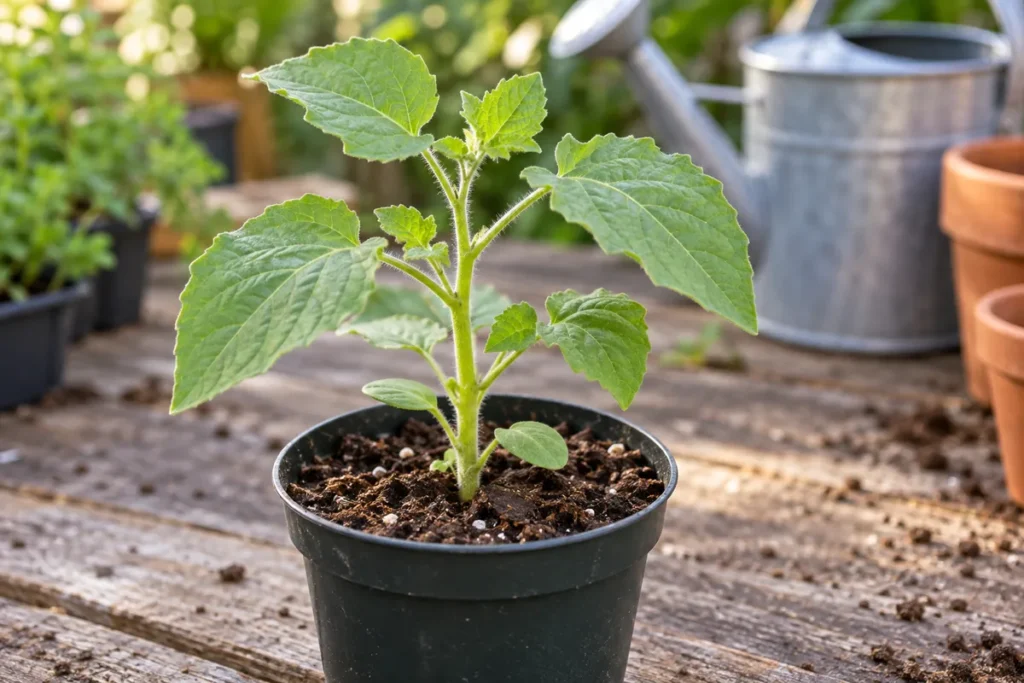
Leggy growth, yellowing or collapse calls for a closer look at seedling growing conditions and symptoms. Warmth helps a warm-season crop, but it cannot correct insufficient light, waterlogging or damaged stems by itself.
Set the Root Ball Level and Allow the Canopy to Spread
Choose a sunny site with well-drained soil and a reachable harvest area. Preparing the planting space before branches spread lets you position a cage, water the roots and later retrieve fruit without repeatedly pushing through the plant.
Set the transplant at approximately its nursery soil level as a cautious default. Kansas State’s ground-cherry instructions specify that depth. Some nursery advice recommends deeper tomato-style planting, so the recommendations are not unanimous. Avoid assuming every Physalis stem responds like a tomato stem; follow reliable guidance for the named crop.
Spacing recommendations also differ. Plan for the cultivar’s mature habit, how you will support it and the room needed for air movement and harvesting. Numbers from different growing instructions are useful starting points, not proof of one highest-yield arrangement.
| Published example | Plant spacing | Apply it thoughtfully |
|---|---|---|
| Minnesota Extension | 18-24 inches in all directions | Check actual cultivar spread and harvest access. |
| Seed Savers Exchange | At least two feet | Leave room for the branching canopy. |
| Kansas State’s sprawling-plant example | About four feet | Allow the wider footprint and avoid crowding neighboring crops. |
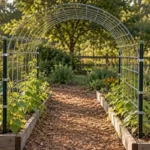
A cage can lift some branches and improve access underneath. Install it early and make sure the fruit landing area remains reachable. Support changes the shape you manage; it does not eliminate the need for roots, light and airflow.
For a patio plant, consider container volume, drainage and stability together. A small pot that dries rapidly or tips with the canopy needs attention. Do not borrow a tomato’s gallon recommendation and present it as a tested minimum for every ground cherry.
Water the Root Zone and Avoid Feeding Leaves at Fruit’s Expense
Begin with soil condition and existing fertility. A prepared vegetable bed may already supply what the plant needs. Dark green growth is not a reason to add another fertilizer dose automatically.
Excess nitrogen can favor leafy growth and delay fruiting. Advice ranging from heavy feeding to little added fertilizer reflects different soils, species and growing contexts. Use a soil test for nutrient decisions and account for amendments already applied.
Keep moisture reasonably even in the active root zone. Rainfall, soil texture, heat and container size change the watering decision. Check below the surface with a small tool where roots will not be disturbed. A cool, damp layer under dry mulch calls for a different response from a root ball that is dry throughout.
Water the soil without repeatedly splashing the leaves. A canopy that stays wet and crowded creates a different disease environment from an open, evenly watered bed. If last season’s related nightshade crop had disease, consider crop-family rotation and local diagnostic advice when planning the next planting.
Flowers with little fruit are a reason to check weather, sun, moisture and feeding history. Buying another plant is not automatically the answer: cultivated ground cherries can self-pollinate. The multiple-plant recommendation familiar from some tomatillos should not be transferred to all ground cherries.
Harvest by Known Identity, Dry Husk and Ripe Berry Color
Spread a suitable clean mulch beneath the plant before fruit begins dropping. Dry tan husks are easier to see against a clear landing area than beneath weeds and dense foliage. Mulch improves access and reduces direct soil contact; it does not make fallen fruit sterile.
Pick up naturally dropped fruit and inspect each piece. The husk should feel dry and papery, and the berry inside should have reached the ripe color of the known cultivar. Typical yellow-fruited garden ground cherries develop a smooth golden berry. A green berry inside a brown covering is not ready for eating.
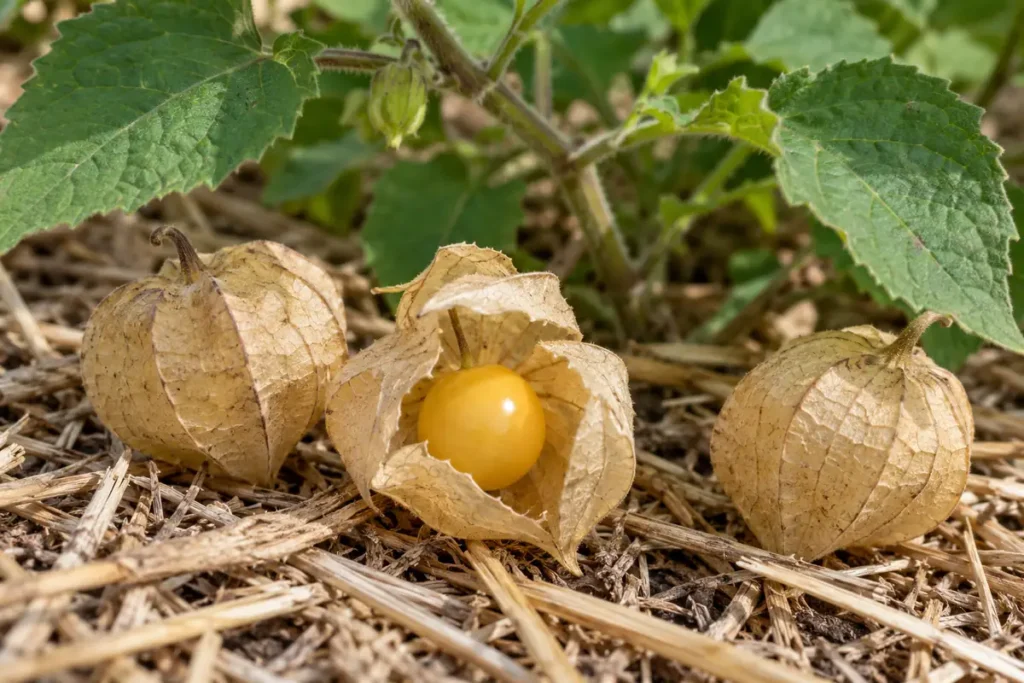
Keep these checks together
- Known edible cultivar, dry husk, fully ripe berry: inspect for damage and remove the inedible covering.
- Fruit still green or otherwise immature: do not eat it, even if it has fallen.
- Unknown plant or uncertain maturity: do not taste it to decide.
Fully ripe fruit is the requirement in the ground-cherry harvest instructions from Seed Savers Exchange. Do not shake branches to fill a basket with immature husks or assume a windowsill will make every prematurely dropped green fruit suitable for consumption.
Retrieve unwanted fallen fruit too. Missed berries can leave many volunteer seedlings in the bed the following season. At cleanup, look under low branches and through the mulch, then monitor the area during the next growing season. Self-seeding from an annual garden crop differs from the rhizome spread of some wild perennial Physalis.
Check Flowering Conditions and Pest Evidence Before Treating
A ground cherry can be productive without being trouble-free. Inspect leaves, stems and the soil line when growth changes. Damage patterns help narrow the next check, but a hole or yellow leaf does not identify a cause on its own.
| What you see | Check first | Next move |
|---|---|---|
| Large leafy plant with little fruit | Sun, temperature stress, moisture and nitrogen history | Correct the limiting condition before adding feed. |
| Chewed leaves and dark caterpillar droppings | Leaf undersides and stems for a matching feeding insect | Identify the pest and choose a targeted response. |
| Seedling cut near soil level | Stem damage and the surrounding soil for cutworm evidence | Confirm the cause before protecting replacement seedlings. |
| Fruit drops while still green | Weather, plant damage and growing conditions | Exclude immature fruit from harvest and investigate the stress. |
Local Florida IFAS observations include spider mites on ground cherries; other cultivation guidance lists flea beetles, whiteflies and caterpillars. Scout for the actual organism. Avoid a blanket spray intended to cover every possible pest, particularly around flowers and beneficial insects.
If the season ends before fruit ripens, revisit the species and cultivar as well as the sowing date. A longer-season Cape gooseberry in a short northern summer may need a different plan from an early garden ground cherry. The next useful change can be seed selection, not more fertilizer.
Conclusion
Start with a known garden variety and a growing window suited to it. Raise warm, well-lit seedlings, transplant without assuming tomato-style burial and leave room for branching growth and harvest access. Check soil and weather before feeding or treating pests. At harvest, combine known identity with a dry husk and genuinely ripe fruit, then clear missed berries to limit next year’s volunteers.