How to store onions depends first on whether the bulb is whole and dry or already cut. Sound, cured onions need a cool location with air circulating around them. Cut onions belong in a tightly sealed container in the refrigerator. A damp bag of whole bulbs and an open bowl of onion slices are both poor matches for the food inside.
Variety changes the longer-term plan. A good storage onion can last for months under suitable conditions; a poor keeper may give you only a few weeks. The same shelf cannot erase that difference. Sort the bulbs, check that their necks and outer skins are dry, then choose a place whose temperature and moisture you can actually monitor. If you only have a warm kitchen cupboard, plan smaller supplies and earlier use. A cupboard is not equivalent to a cold, ventilated storage room.
Choose storage by the onion’s condition
- Whole, cured storage variety: use mesh, a wire basket, or a ventilated crate. Aim for 32-40°F and 65-70% relative humidity when storing a harvest for months.
- Whole everyday or poor-keeping onions: use a cool, dark, ventilated place and plan prompt use. Do not assume every variety will last all winter.
- Cut onion: refrigerate in a tightly sealed container and use within 7 days under Iowa State’s household guidance.
Keep rotting bulbs out of every storage batch. Prevent whole stored onions from freezing.
Key Takeaways
- Sort whole onions for dry necks, firm bulbs, and damage.
- Choose breathable containers for intact cured onions kept in storage.
- Check temperature and humidity before trusting a basement or garage.
- Use poor-keeping varieties first and inspect stored bulbs regularly.
- Refrigerate cut onions in sealed containers and date the leftovers.
Table of Contents
Dry Necks and Sound Skins Set the Storage Starting Point
A cured dry onion has a dry neck and papery outer scales. The skin may rustle as you turn the bulb; the flesh underneath should feel firm. A thick neck that has not dried properly is a different starting point from a tight, thoroughly dry neck. Keep the sound thick-necked bulbs in a use-first group, not at the bottom of a long-term supply.
Homegrown onions need their harvest and drying stage completed before this storage arrangement. The onion harvest and curing stages prepare the neck and skins for keeping. Moving a freshly lifted bulb into a closed box does not complete that work. Purchased dry onions also need sorting; a store bag can conceal bruises or soft bulbs.
Turn each onion and inspect the neck, base, and sides. Separate visibly moldy, collapsing, or rotting bulbs and discard them. Sound bulbs that were accidentally cut or bruised during harvest are not long-storage candidates. Use suitable damaged produce promptly with the handling its condition requires; never treat visibly rotten tissue as simply another use-first category.
Harvest damage can begin with a puncture from digging tools. A tine through the bulb is easy to miss after the skin dries around the wound. Check those marks before adding a bulb to the keeper crate. Gentle sorting now is easier than finding a soft onion buried among the rest later.
How to Store Onions in a Cool, Dry Storage Space
For a properly cured, long-keeping harvest, the Iowa State storage target is 32-40°F with 65-70% relative humidity. This is a cool, moderately dry environment. It is not a promise that any room called a basement or cellar already supplies those conditions.
Take readings near the onions. A shelf beside a furnace may be warmer than the opposite wall. A damp corner can leave skins moist even when the air feels cool. Temperature and moisture act together: warmth can encourage sprouting, and dampness can encourage decay. A breathable crate cannot compensate for a wet, warm room.
The dry-bulb storage conditions in Iowa State horticulturist Aaron Steil’s onion guidance connect the cold range with ventilation and sound, cured bulbs. Start by checking those conditions, then choose a manageable amount to keep. Months of storage require more than placing the harvest somewhere out of sight.
A suitable basement, cellar, or garage can work if it remains dry enough and above freezing. An unheated garage changes with the weather. Move the onions before temperatures fall below 32°F; a mild afternoon does not describe the coldest overnight conditions. Keep the bulbs protected from rodents and away from places where rain or leaking water can reach them.
If you cannot maintain the cool range, shorten the storage plan. Buy or keep smaller amounts, use poor keepers first, and inspect the supply more often as conditions change. Planning earlier meals is more realistic than borrowing a several-month storage estimate from a room you do not have.
Variety Changes How Long a Bulb Can Keep
Onions differ in keeping ability before you choose a container. Copra and Stuttgarter are examples of good keepers in Iowa State guidance. Walla Walla and Candy are poor keepers that may last only a few weeks. Good harvesting, curing, and storage still matter for all of them; the variety is part of the answer, not a substitute for those conditions.
Color alone cannot set the storage timetable. A red, yellow, or white skin identifies an appearance, not a universal keeping class. Check the cultivar name on the planting label or purchased bag before setting aside a large supply for long-term storage.
Sweetness is also an incomplete shortcut. Iowa State lists Sweet Sandwich among cultivars that can keep for months under suitable handling, even though its name suggests sweetness. Use the specific cultivar’s storage description. When you know a variety is a poor keeper, place it in the early-meal group rather than giving it the same expectation as a dedicated storage onion.
Keep named groups separate in a mixed harvest. A simple label on the basket helps you use the shorter-lived group first. Inspect both groups; a keeper cultivar with a damaged neck can fail sooner than a sound poor keeper you use promptly. Variety tells you what may be possible, and the bulb’s actual condition tells you whether it is a candidate.
Mesh and Open Crates Let Air Reach the Bulbs
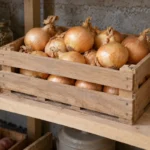
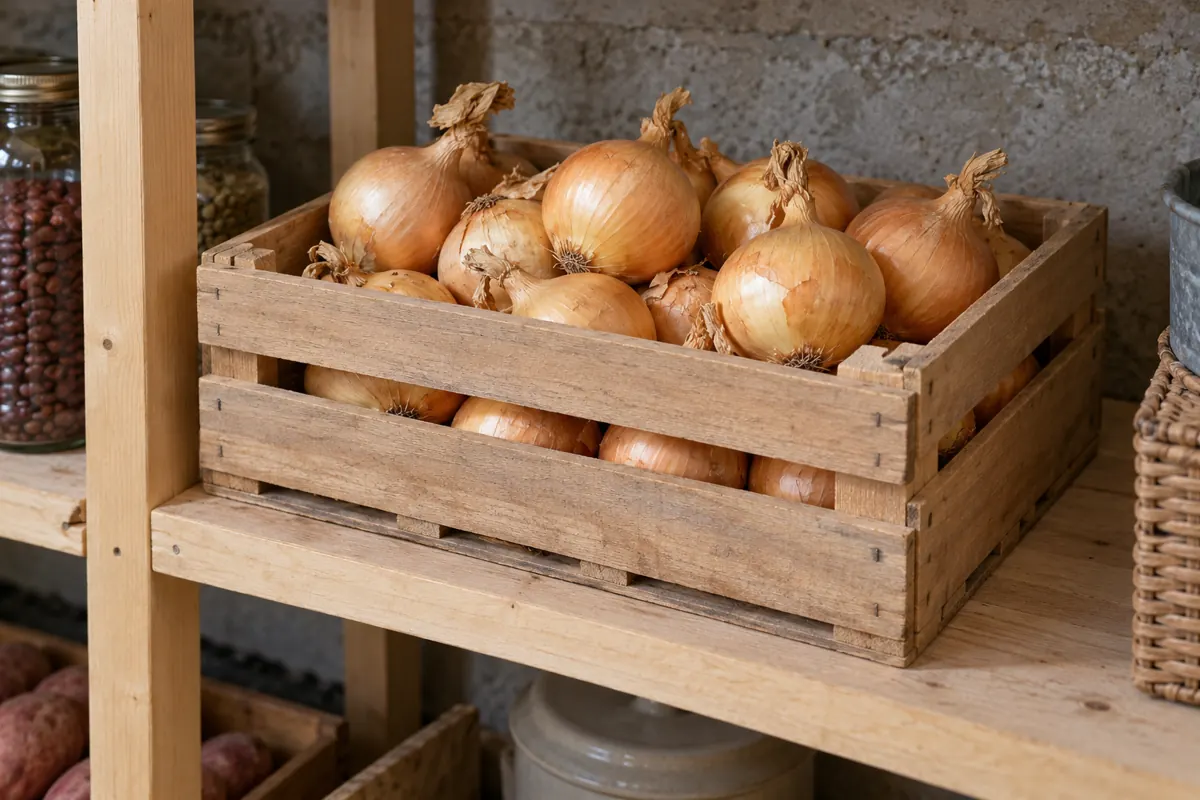
Choose a mesh bag, wire basket, or ventilated crate for whole cured bulbs. Open sides allow air to move around the skins. A sealed plastic bag traps moisture and can develop condensation, leaving a wet environment around onions that need dry storage.
Arrange the supply so you can reach and inspect it. Packing every spare bulb into an inaccessible deep box makes it harder to find the one becoming soft. Several small containers can be easier to rotate than one large heap. Leave openings unobstructed and keep the container clear of wet surfaces.
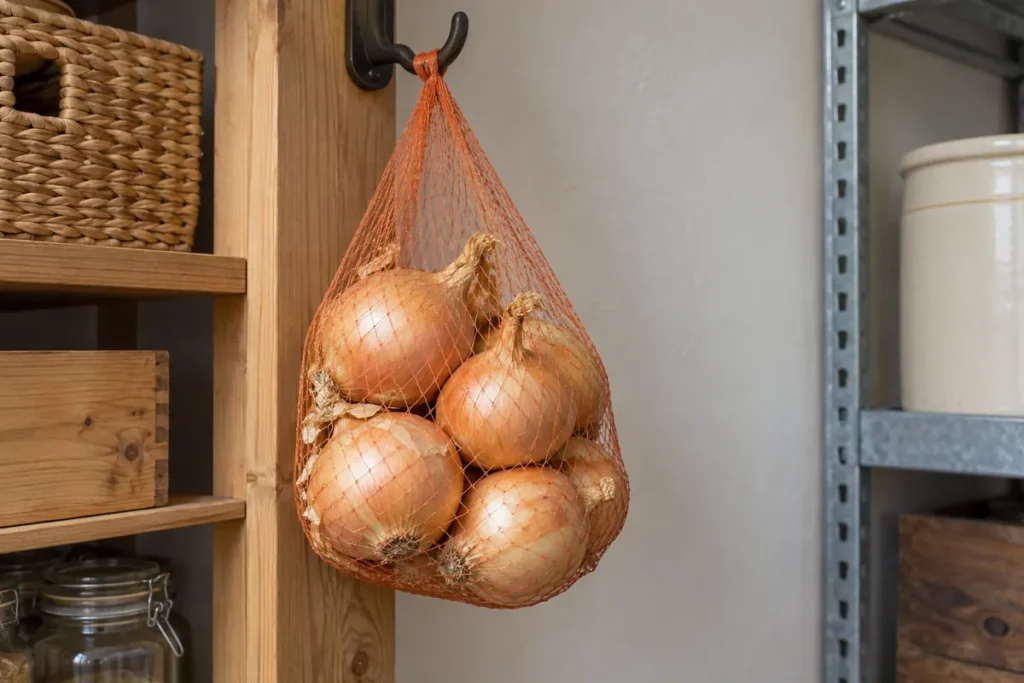
Feel the outside skins during inspection. Papery, dry scales differ from damp layers that cling together. Check the room and container if moisture appears. Switching from a sealed bag to mesh helps air reach the bulbs, and moving the supply away from a damp area addresses the surrounding condition.
A mixed harvest of garden vegetables does not need one shared storage arrangement. Some crops need more humidity than dry onions. Keep the onion supply in its own suitable space instead of placing every harvested crop in the same closed produce bin.
Match a Pantry or Refrigerator to Its Actual Conditions
Use a cool, dark, well-ventilated kitchen location for a small everyday onion supply. Iowa State’s household produce guidance recommends using whole onions kept that way within about 4 weeks. That is a practical kitchen recommendation, separate from the months possible for selected keeper varieties in cold storage.
A cupboard over the oven is a poor example of a cool pantry. Cooking warms it, and closed doors may limit airflow. Check the actual shelf during normal kitchen use. Move the basket if the skins become damp, bulbs begin softening, or repeated warmth makes sprouting more common.
Refrigeration is not automatically forbidden for whole onions. Cold, dry household refrigerators can suit long-term onion storage in the guidance of University of Minnesota postharvest horticulturist Cindy Tong. The arrangement still matters. A sealed, damp bag or moisture-holding drawer creates a different environment from cold storage with suitable airflow.
| Location | Useful for | Check first |
|---|---|---|
| Cool pantry | Small whole-onion supply for near-term meals | Heat, dampness, airflow |
| Cold ventilated storage space | Sound cured keeper varieties | Actual temperature, humidity, freezing risk |
| Refrigerator | Sealed cut-onion leftovers; whole bulbs if cold and dry | Separate packaging for cut and whole onions |
Pick the arrangement you can maintain. A room name, basket style, or online storage tip cannot establish its temperature. Keep the short-use kitchen group separate from the harvest you are trying to hold for winter, and change the plan when the conditions change.
Cut Onions Need Sealed Refrigeration
Once you cut an onion, its exposed flesh needs a different handling routine. Place the unused half or slices in a tightly sealed container in the refrigerator. The household onion handling directions from Iowa State recommend using refrigerated cut onions within 7 days.
Write the cutting date on the container or record it where you track leftovers. The date on a purchased bag is not the date you sliced the bulb. Cut only what you need when you have no plan for the remainder, and return the unused portion to the refrigerator during meal preparation.
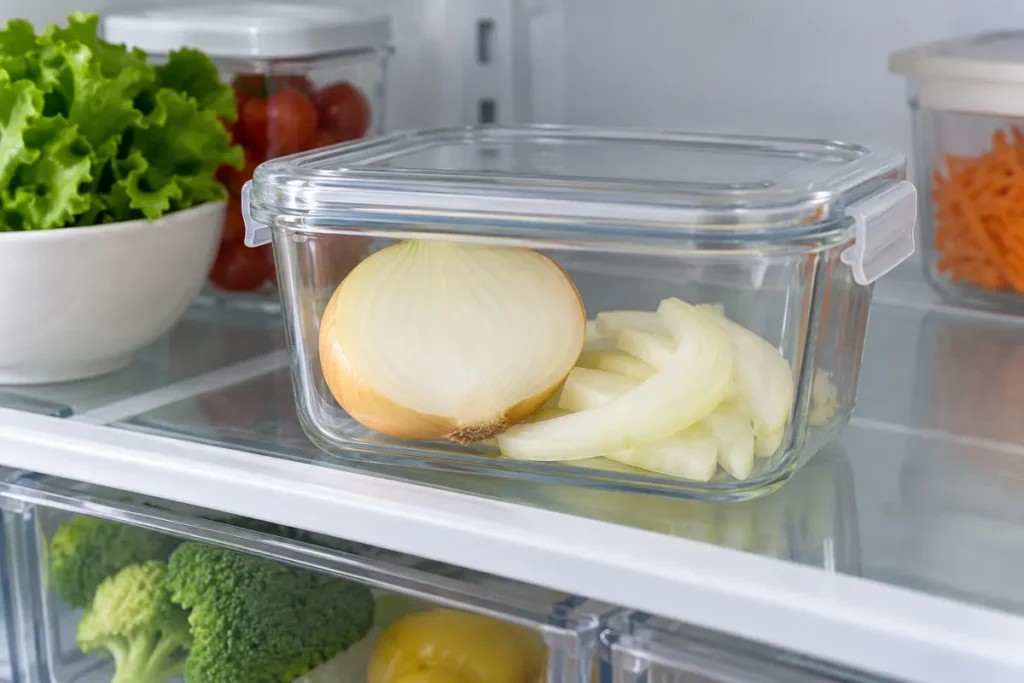
Do not return a cut bulb to the whole-onion crate. Open mesh may suit dry outer skins; it does not provide the sealed refrigeration specified for exposed cut flesh. Likewise, the room-storage guidance for intact bulbs cannot justify leaving a bowl of chopped onion in the pantry.
Plan a meal for the remaining portion before it becomes forgotten. A soup, sauce, or skillet dish can use onions alongside separately prepared frozen pepper portions. Handle each ingredient according to its own storage method. A freezer bag of peppers does not extend the refrigerator timetable of onion leftovers.
Inspect for Sprouting, Damp Necks, and Soft Decay
Stored onions remain a supply to inspect, not a box to forget until spring. Turn bulbs gently and check the neck and base. Remove any onion beginning to rot. A fresh-looking outer scale can conceal a softened area underneath, so appearance from across the shelf tells you less than examining the bulb.
Sprouting suggests that the storage plan is losing quality. Warmer conditions encourage it. Check the room temperature and use the remaining suitable supply sooner. A sprout alone does not give a complete food-safety verdict; assess the whole bulb’s condition and do not make an automatic safety promise from a green tip.
Rot is a different problem from a dry, papery outer scale. Soft, watery tissue or a sunken neck deserves attention. Water-soaked neck scales becoming gray or dark brown occur with Botrytis neck rot in Utah State University Extension’s storage-disease descriptions. That is one possible cause, not a diagnosis for every discolored onion. Discard visibly deteriorating bulbs instead of trimming them and returning them to storage.
After removing a bad bulb, inspect nearby onions and reconsider moisture, ventilation, and the original curing quality. Check after changes in weather or household heating, especially when using a garage or basement. Better packaging cannot repair already rotting tissue. Its value is helping the remaining sound supply stay in a suitable environment.
Conclusion
Sort the onions into sound keepers, sound use-first bulbs, and spoiled bulbs to discard. Put the whole supply in breathable containers in a place you can monitor, and refrigerate cut leftovers in sealed containers. Check the necks, skins, and room conditions as storage continues. The useful timetable is the one that fits your variety and actual storage space.
Frequently Asked Questions
Should I wash whole onions before storing them?
Keep whole dry storage onions dry. Iowa State’s household cleaning directions call for rinsing onions under cool running water right before use. Washing a long-storage batch and putting it away wet creates moisture where the skins should be dry.
Can braided onions hang without a basket?
Yes. Properly cured onions with dry tops can be braided and hung from a suitable support. They still need cool, moderately dry storage and air circulation. Braiding does not change a variety’s keeping ability or protect it from freezing.
What if I do not know the onion variety?
Do not assign a several-month storage promise from skin color or sweetness. Keep a manageable supply, use it sooner, and inspect its condition. Save the cultivar information with the next garden harvest if long storage is part of your plan.