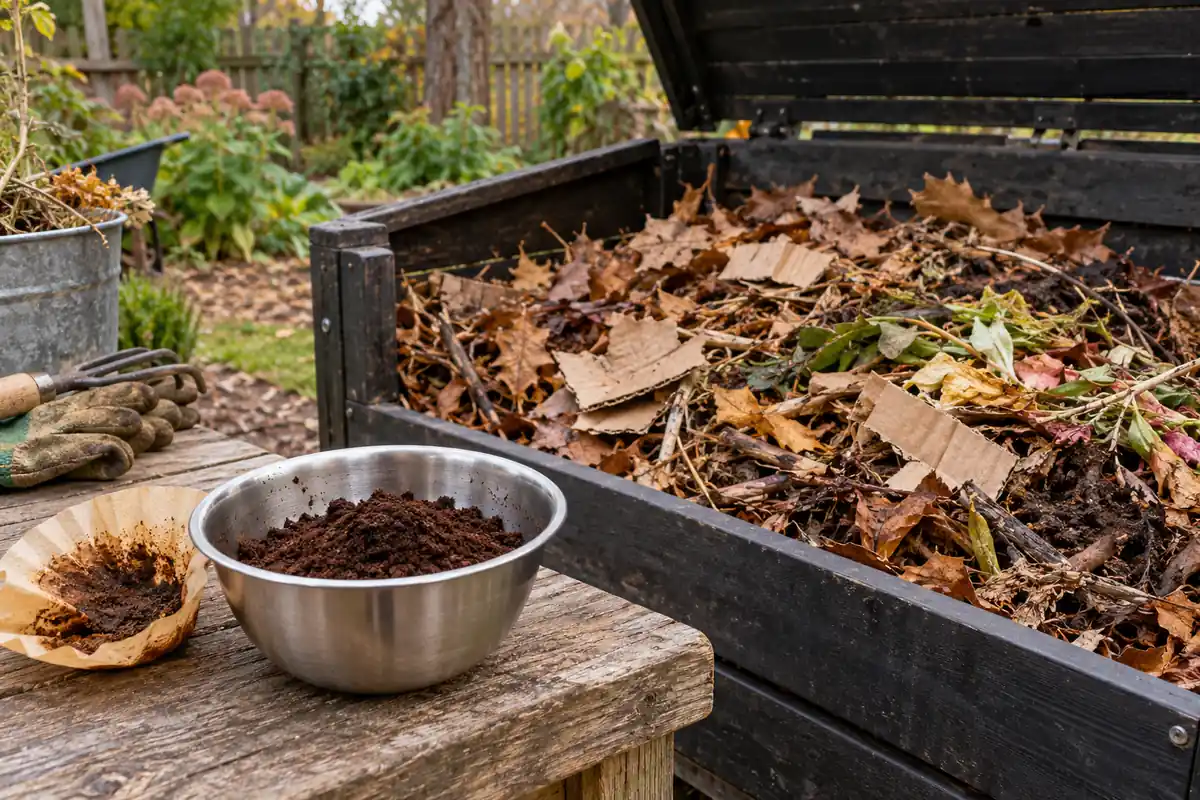
Coffee grounds for plants are best handled as an ingredient in mixed compost, rather than a daily fertilizer scattered around roots. Used grounds contain organic matter and nutrients, but they can also inhibit growth when added directly to soil. Composting changes the material before it reaches a growing bed. Keep grounds to no more than 20% of the compost pile by volume, mixed with other ingredients.
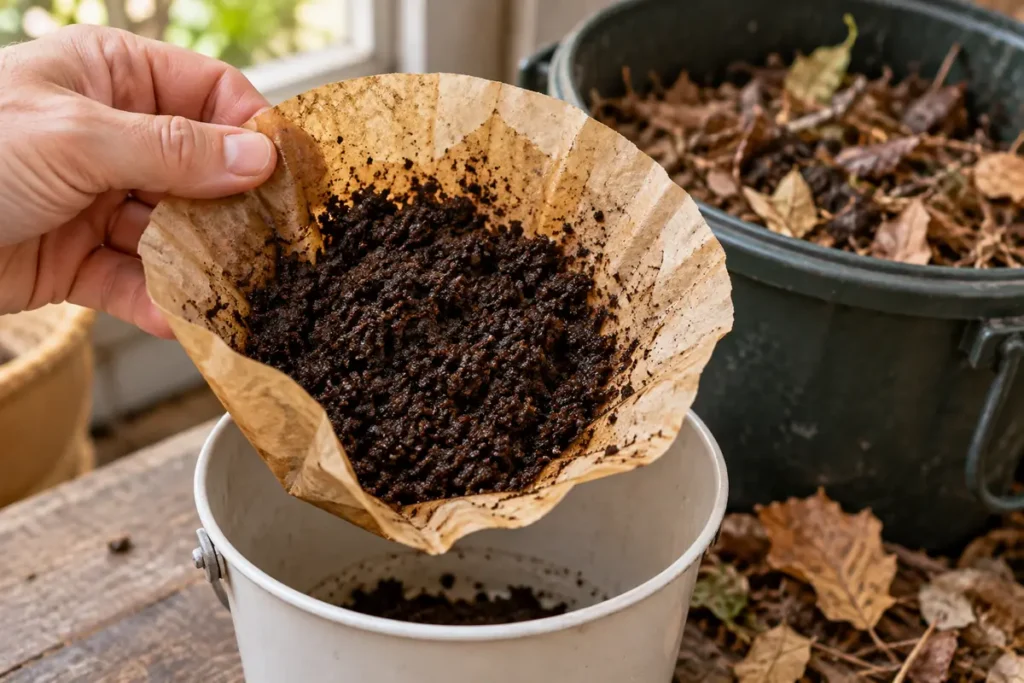
A filter of damp grounds can look much like rich soil. Rub it between your fingers and the fine particles smear together; an earthy compost with leaf fragments breaks apart differently. Those textures matter when water needs to pass through a surface. Before adding another scoop, identify whether you have brewed grounds, unused coffee or finished compost. The plant’s stage and the problem you hope to solve matter more than its name.
Where should this coffee go?
- Damp grounds left after brewing: mix into a diverse compost pile. The coffee share must stay at or below one-fifth of total input volume.
- Unused ground coffee: keep it out of pots and seed rows. It is a different material from the spent grounds tested in many garden studies.
- Finished mixed compost: use according to the bed’s needs. Its coffee content does not make it a special treatment for every plant.
- A thick layer already around plants: remove exposed excess gently and check whether irrigation reaches the soil underneath.
Key Takeaways
- Distinguish brewed residues from unused coffee before choosing a use.
- Balance fine, damp grounds with coarser materials during composting.
- Keep uncomposted coffee away from germinating seeds and small pots.
- Test garden soil before trying to correct suspected acidity problems.
- Check water penetration when repeated deposits form a surface crust.
Table of Contents
Coffee Grounds for Plants Change as They Decompose
Spent grounds have already been through brewing. Calling them fresh because they came from the machine this morning can obscure that distinction. Unused ground beans have not undergone that extraction. Finished compost containing grounds has undergone another process: decomposition with other organic materials.
These three materials should not share one application instruction. A scoop of mature mixed compost is not equivalent to a scoop taken from an espresso machine. Nor does an unopened bag of old ground coffee become a measured garden acidifier simply because you no longer want to drink it.
Nitrogen in organic material must pass through biological transformations before plants can use it. Microbes doing that work also need nutrients. Their activity can temporarily compete with roots for available nitrogen. Total nitrogen in grounds therefore does not tell you how much plant food a tomato or rose receives today.
Dark color is no measure of readiness.
If a plant is pale or growing slowly, examine moisture, drainage and its normal feeding requirements before changing the soil. Coffee does not replace a suitable fertilizer program, and more nitrogen is not a proven antidote to every problem caused by raw grounds.
Mix Grounds Into Compost Without Creating a Dense Mat
Keep coffee a minority of the feedstock. A modest household supply can fit into a larger, varied pile; a bucket from a cafe can overwhelm a small bin. Judge the supply against the other material you actually have, not against how much coffee is available for free.
The coffee-ground composting instructions from Oregon State University Extension give an example of three volume parts leaves, one fresh grass clippings and one spent grounds. That puts coffee at 20% of the input volume. It is an example, not a requirement to reach that percentage.
Five equal input volumes, one coffee portion
Example: three gallons of leaves, one gallon of grass clippings and one gallon of grounds. Coffee is one of five input gallons. Measure volume, not weight; this is not a soil-mixing rate.
- Check the collected material. Separate plastic pods, foil and other packaging. Ordinary paper filters can join the compost.
- Cool hot grounds. Break up filter-shaped clumps so they can mix through the pile.
- Add varied ingredients. Distribute grounds among suitable compost materials, including dry, fibrous material that keeps the mass from packing tightly.
- Inspect the mixture after wetting and turning. A heavy, sticky mass needs a different correction from a dry, inactive pile. Adjust moisture and structure to what you find.
Do not keep adding coffee just because a calculated proportion is below the ceiling. Texture and moisture still govern airflow. A sour-smelling clump that compresses into a wet slab needs attention even if your ingredient estimate says 15% grounds. Mix in appropriate coarse, dry material and reassess.
Ordinary mold on collected grounds can enter a working compost pile, according to the Oregon instructions. That is a composting statement, not a reason to spread moldy material through indoor pots. Collect only what you can manage; another composter or a local organics collection may be a better destination for surplus.
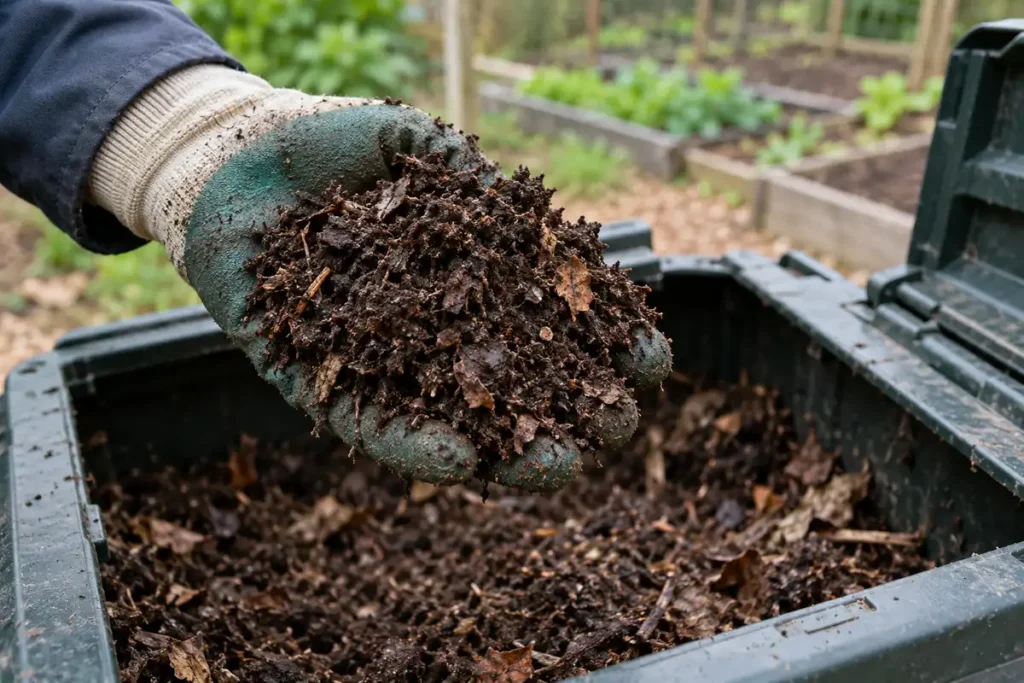
Wait for the whole mixture to mature before using it around plants. A change from recognizable feedstock to loose, earthy material is a useful practical check. Color alone cannot prove maturity, and no fixed calendar date fits every pile, season and maintenance routine.
Direct Soil Use Can Suppress Growth Despite Better Water Retention
Some published advice permits direct incorporation; other guidance recommends composting first. Those instructions should not be blended into an invented universal safe dose. They involve different assumptions about material, soil and exposure.
| Evidence | What it says | What it does not establish |
|---|---|---|
| Washington State University Extension | Compost grounds before garden use; avoid raw applications around seeds. | That all coffee-containing compost is harmful. |
| Oregon State University Extension | Allows a specified, limited incorporation method and warns against excess. | A rate suitable for every crop, bed and pot. |
| Hardgrove and Livesley, 2016 crop experiment | Direct spent-ground amendments reduced growth in five tested species. | The response of every plant to every possible application. |
Reduced growth occurred in broccoli, leek, radish, viola and sunflower in the Hardgrove and Livesley experiment, including at the lowest tested field amendment of 2.5% by volume. That is a tested treatment, not a universal toxicity threshold. The researchers found that nitrogen and pH alone did not explain the growth suppression; other plant-inhibiting effects were likely involved.
Better water holding did not mean better plant growth in that experiment. Adding fertilizer did not remove the growth concern. This matters if you are tempted to mix grounds into an occupied vegetable bed and compensate with extra feed.
A separate physical problem develops at the surface. Fine particles can settle into a tight coating. After drying, that coating may resist wetting. Water beading on the top and dry soil beneath it mean irrigation is failing to reach the root zone; the apparent mulch is obstructing the job it was meant to help.
For ordinary home use, the compost route avoids treating a living bed as the place to process a recurring waste stream. The research review of coffee-ground garden uses by Linda Chalker-Scott at Washington State University distinguishes raw material from composted material and cautions against thick stand-alone layers.
Grounds Cannot Predictably Correct Soil Acidity
The acidity of a drink, the pH of a batch of grounds and the pH of a garden bed are different measurements. Brewing changes the material, and decomposition changes it again. Soil also resists pH change to differing degrees depending on its properties.
Reported values for used grounds vary. Oregon State describes commonly near-neutral material; the cafe samples measured in the Hardgrove and Livesley study were acidic. Neither observation supplies a dependable recipe for changing the pH of an entire bed.
For blueberries, azaleas or rhododendrons, start with the soil where roots are growing. A plant that needs acidic conditions can struggle in unsuitable soil even after months of coffee additions. Yellow leaves are a reason to investigate, not proof that the next filter of grounds is the missing treatment.
Choose a soil test suited to the pH or nutrient question and follow a crop-specific recommendation. Keep track of amendments already applied. Adding several products together makes it harder to judge which change helped or caused a new problem.
Plant Stage and Root Space Matter More Than a Coffee-Loving List
A mature outdoor shrub, a tray of germinating seeds and a houseplant in a small pot have different growing conditions. A general list saying that roses, tomatoes and hydrangeas love coffee hides those differences. It also skips the more useful question: does this plant need anything the material can supply?
| Growing situation | Check first | Practical choice |
|---|---|---|
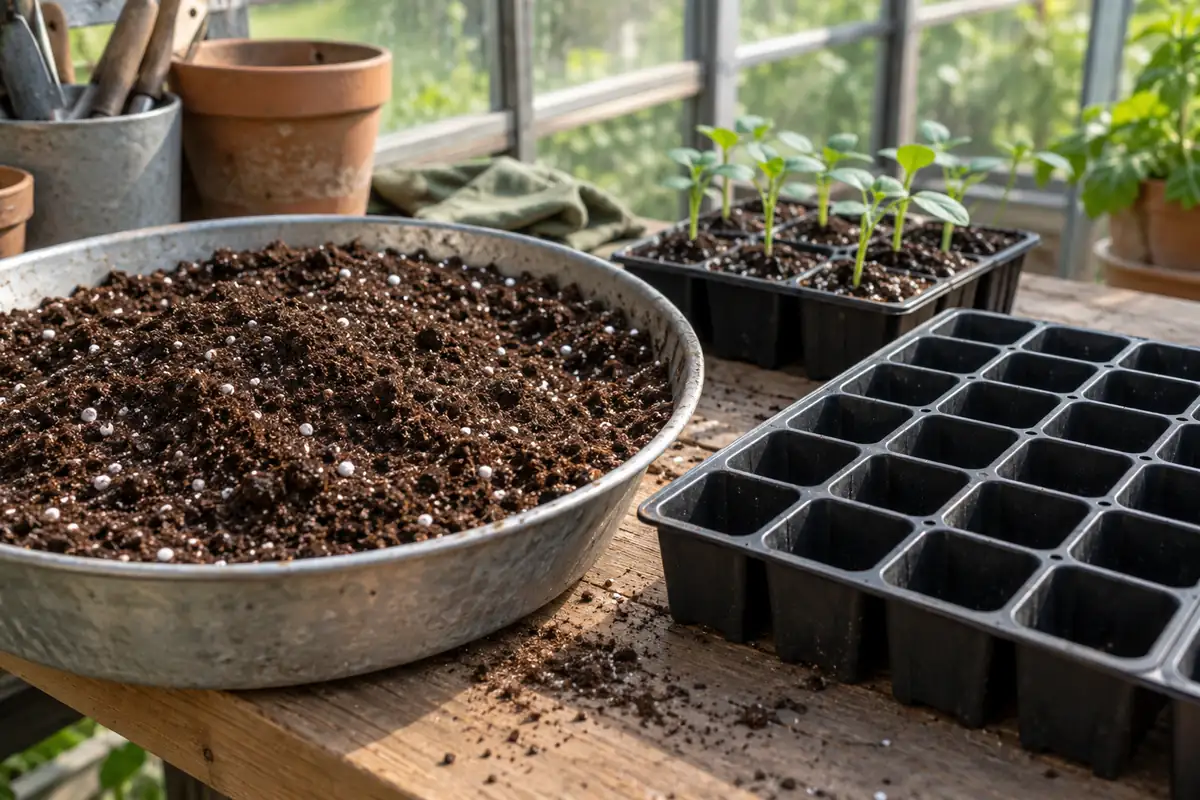
| Seed tray or recently sown bed | Medium, emergence conditions and exposure to raw grounds | Leave uncomposted grounds out of the sowing zone. |
| Small houseplant pot | Drainage, existing feed and surface condition | Use suitable potting medium and plant-specific feeding. |
| Established garden bed | Whether more nutrients or organic matter are needed | Consider mature compost within the bed’s amendment plan. |
| Acid-loving shrub with poor growth | Actual root-zone pH, moisture and symptoms | Test and correct the identified problem. |
Small pots leave little room for repeated experimental additions. A wet coating near the stem also makes routine moisture checks harder: the surface you touch may be the coffee layer, not the growing medium. Remove that confusion and inspect the material the roots actually occupy.
For established beds, improving soil with compost and organic matter starts with soil condition and existing fertility. Mature compost is still an amendment, not something every bed needs without limit.
Caffeine Experiments Do Not Validate a Coffee-Ground Slug Barrier
Slug damage often prompts a ring of grounds around a seedling. The ring is easy to see; its effectiveness is a different matter. Controlled caffeine experiments do not establish that loose used grounds will protect garden plants.
Repellent and toxic effects were measured with caffeine solutions in the work of Robert Hollingsworth, John Armstrong and Earl Campbell, recorded by the USDA Agricultural Research Service. A measured solution and a handful of brewed residues are different treatments. Coffee strength, remaining caffeine and exposure are not interchangeable.
Do not rely on grounds to protect a newly planted crop, or turn that research into an unmeasured homemade spray. Inspect the actual damage and pest, then select an established control suited to that pest and plant. A missing leaf can have more than one cause.
The same caution applies to claims about cats, ants and plant diseases. A household waste does not become a reliable repellent because it has a strong smell. Keep its composting role separate from the garden problem that needs treatment.
Remove Excess, Then Recheck Water and New Growth
If you have already added grounds, inspect before disturbing roots. A removable layer on top is different from grounds mixed through the entire bed. Stop further applications and note where, when and how much material was added.
| What you notice | First move | Recheck |
|---|---|---|
| A dark crust with water sitting above it | Gently remove exposed excess without digging through roots. | Does irrigation wet the soil below? |
| Slow seedlings after raw-ground additions | Stop additions; inspect moisture, sowing conditions and stems. | Does new growth improve after the identified condition changes? |
| Coffee-rich compost feels sticky and smells sour | Mix with suitable coarse, dry feedstock and correct excess moisture. | Does the mixture loosen and the sour smell ease? |
| Yellow leaves despite repeated coffee use | Check roots, water and feeding history; test soil when indicated. | Does the diagnosis fit the affected leaves and root conditions? |
Timing is a clue, not a diagnosis. Coffee added just before decline deserves attention, but it does not establish the cause of every yellow leaf or collapsed stem. Compare the affected area with nearby plants and look beneath any surface deposit. Wet soil, dry pockets, damaged roots and disease can require different corrections.
When seedlings wilt, yellow or collapse, examine the pattern and stem condition before adding more feed. Seek local Extension help if damage continues or the cause remains unclear. Do not dig out a whole planted bed merely because an online list labels coffee toxic.
For the next batch, change the destination: put ordinary spent grounds into a manageable compost mixture. Keep a record of recurring cafe deliveries so a useful ingredient does not become more material than the pile can handle.
Conclusion
Route used grounds to diverse compost, keep the input proportion limited and judge the finished material before garden use. Leave raw grounds out of seed trays and small pots. Treat suspected acidity, nutrient shortages and pest damage as separate problems that need their own checks. If a coffee layer already blocks watering, remove exposed excess and observe the root zone before making another change.