



Last Updated July 13, 2026
The history of corn starts in Mexico with teosinte, a wild grass whose small, hard seed cases looked nothing like the thick ears gardeners know today. Corn emerged through many rounds of selection. Indigenous farmers selected plants with more exposed kernels, larger ears, softer grain, and better harvest value until maize became a crop that could feed villages, travel with people, and keep changing across the Americas.
That long change matters because corn still carries two identities. In a backyard, sweet corn is a warm-season vegetable that needs heat, pollen, water, and timing. In history, maize is one of the great domesticated grasses, shaped through thousands of years of seed saving, movement, landrace formation, and later breeding. The ear in a summer garden is a recent branch on a much older plant story.
Corn Origin In 30 Seconds
Corn, or maize, began from teosinte in southwest Mexico about 9,000 to 10,000 years ago. Early maize was still partly wild when people carried it south. Later improvement happened in several regions, with ancient DNA showing movement back toward Central America and modern genetics pointing to a major highland-teosinte contribution just over 5,000 years ago.
| Feature | Teosinte | Modern corn |
|---|---|---|
| Ear size | Small seed-bearing branches with few hard kernels | Large ears with many exposed kernels |
| Seed protection | Kernels enclosed in tough cases | Kernels exposed on a cob for harvest |
| Seed release | Seeds can shatter and spread from the plant | Ears stay intact and depend on people for planting |
| Best historical read | Wild ancestor and gene source | Domesticated crop shaped by Indigenous selection and later breeding |
Key Takeaways:
- Trace corn back to teosinte in southwest Mexico.
- Separate first domestication from later crop improvement.
- Read ancient DNA as a less linear corn story.
- Keep sweet-corn growing advice outside this history.
- Treat hybrids as recent branches of a deeper crop.
Table of Contents
History Of Corn Timeline From Teosinte To Modern Ears
Corn history works best as a timeline with overlapping evidence. Archaeology shows old cobs, kernels, pollen, and food remains. Genetics shows ancestry, hybridization, and movement beyond the shape of old plant fragments. Written records arrive much later, after maize was already central to food systems across the Americas.
Ancient DNA work from the Smithsonian-led 9,000-year maize history evidence has sharpened the timeline. Early selection began in Mexico, then partly domesticated maize moved south, continued changing, and later carried genetic material back toward Central America. That pattern is messier than a simple origin point followed by a straight spread.
| Approximate period | What changed | Why it matters |
|---|---|---|
| 9,000 to 10,000 years ago | People in southwest Mexico began selecting teosinte plants. | The crop began as human-guided selection before modern corn existed. |
| 7,500 to 7,000 years ago | Partly domesticated maize moved into Central and South America. | Improvement continued after movement across regions. |
| About 5,000 years ago | Modern maize ancestry gained a major contribution from highland teosinte. | Genetic mixing helped maize become more productive and adaptable. |
| 4,700 to 4,000 years ago | Maize became a stronger staple in parts of Central America. | Food systems and settled communities could rely on a more useful crop. |
| After 1492 | Maize moved across oceans through colonization and trade. | A crop built in the Americas became global. |
| 1800s to 1900s | Open-pollinated varieties, then hybrids, changed yield and uniformity. | Modern corn fields became more standardized and productive. |
The timeline also separates origin history from practical growing. Domestication, movement, and breeding explain how maize became a crop; spacing, pollination blocks, soil warmth, and harvest timing belong with how to grow sweet corn, where the plant behaves as a backyard crop.
Where Corn Originated In Mexico
Corn originated in Mexico, with the strongest domestication signal tied to teosinte in the lowlands of southwest Mexico. Teosinte still looks like a grass to an untrained eye. It forms small seed-bearing structures with hard casing around each seed. The edible payoff is tiny compared with a modern cob.
That gap between teosinte and corn is exactly why maize is such a powerful domestication example. People kept the plants that made gathering easier: kernels that were less sealed, ears that held more grain, stalks that put energy into a harvestable structure, and plants that fit human food rhythms. Seed saving turned small differences into inherited crop traits.
Modern research has also complicated the old single-origin story. A mixed-origin maize model from UC Davis describes modern maize as carrying a major contribution from highland teosinte, with about one fifth of the worldwide maize genome linked to that second wild relative. The Mexican origin remains; the ancestry becomes more dynamic.
For gardeners, the useful lesson is that domestication rarely stops with the first useful plant. Selection continues wherever people save seed, trade seed, and favor traits that matter in their conditions. A crop can begin in one region and still become what people recognize only after thousands of local choices.
How Teosinte Turned Into Corn
Teosinte turned into corn through selection on traits a person could see and use. Slightly larger seed clusters gave more food. Kernels held together on a central cob made harvest easier. Seeds that stayed attached depended more on human planting, and that dependence strengthened the crop-human relationship.
The genetic changes behind that transformation affected branching, seed casing, kernel exposure, ear size, and plant architecture. The teosinte-to-corn trait shift is dramatic because the ancestor and crop look very different while remaining close enough for teosinte to contribute genes to maize breeding.
Domestication also created a tradeoff. Wild teosinte can spread its own seeds. Modern corn keeps kernels locked onto a cob. That makes harvest efficient for people and leaves the plant highly dependent on people. An ear left in the field may rot, feed animals, or sprout in a crowded clump; it cannot scatter itself the way a wild grass can.
That dependence answers the common question about why corn cannot grow well in the wild. Modern maize is highly domesticated. It can germinate outside cultivation, and the cob structure, kernel density, and seed attachment make long-term wild survival difficult without human selection, planting, and protection.
Ancient DNA Changed The Corn Domestication Story
Older corn histories often made the path sound complete before maize left Mexico. Newer ancient DNA evidence gives a more active map. Early maize moved south before full domestication was finished. Central America and South America then became part of the crop’s improvement.
The Smithsonian research on ancient cobs from the El Gigante rock shelter in Honduras found Central American corn with South American ancestry. That points to people carrying maize varieties back toward Mesoamerica, adding diversity that may have improved productivity and resilience. The path moved with people, seed, food, climate, and local selection pressure.
That changes the scale of credit. Corn was shaped across many fields, villages, and generations. Indigenous farmers across regions kept selecting, exchanging, and adapting maize until it became a staple crop. Genetic evidence helps recover some of that movement where old written records cannot.
Archaeological remains still matter. Cob size, kernel rows, starch grains, and dated plant fragments tell what plants looked like and when people used them. Genetics adds the ancestry layer: which populations mixed, which traits moved, and when the crop became more productive. Together, they show a crop still being made while it was already feeding people.
Maize Across The Americas
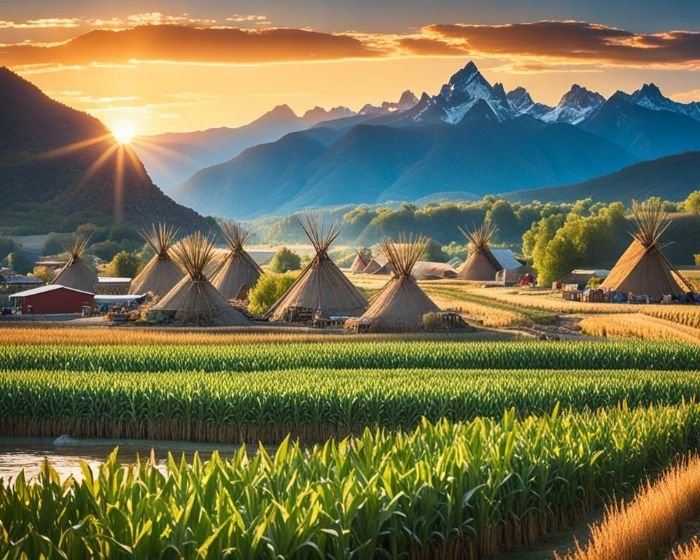
As maize moved through the Americas, it changed into landraces suited to local food, altitude, day length, rainfall, storage needs, and culture. A highland maize line faced a different season from a lowland tropical line. A flour corn used for grinding needed different kernel qualities from a popcorn, flint corn, or later sweet corn.
That local adaptation is why maize became more than one crop in practice. It could become tortillas, tamales, hominy, beer, porridge, animal feed, ceremonial food, and stored grain. A single species carried many food systems because farmers kept selecting for local use. The wider cultural history of vegetables follows that same pattern across maize, beans, squash, chili, roots, and other food crops.
In North America, maize also became part of the well-known Three Sisters planting pattern with beans and squash. That system is more than a romantic garden image. Corn gives height, beans add climbing growth and nitrogen-fixing partnership, and squash shades soil with broad leaves. The system shows plant behavior and food culture working together.
For a home gardener, the historical point is practical. Modern sweet corn, field corn, popcorn, flour corn, and ornamental corn belong to different human goals. The plant shares a common origin, and the seed packet reflects a selected use.
How Corn Spread Around The World
After 1492, maize moved from the Americas into Europe, Africa, and Asia through colonial trade, forced exchange, and global agriculture. It grew quickly in many warm regions and could produce a lot of grain from a relatively small area. Those traits made it attractive far from its origin.
Global spread also changed the word corn. In much of the English-speaking world, corn once meant the main grain of a region. In the United States, corn came to mean maize. That naming shift still causes confusion when older European records use corn in a broad grain sense instead of the American maize sense.
Maize fit many foodways because it could be dried, ground, boiled, roasted, fermented, fed to animals, or used as a staple starch. Its spread changed food systems unevenly. Colonial movement changed diets, economies, land use, and labor systems. A crop selected by Indigenous farmers became a global commodity in systems that often separated the plant from the people who made it possible.
Today, corn sits in home gardens and global data tables. Sweet corn uses large acreage in U.S. vegetable production; field corn dominates far larger grain and feed systems outside the vegetable category. The scale difference is clearer in vegetable production statistics, where sweet corn appears as a vegetable crop separate from the full global maize economy.
From Landraces To Hybrid Corn
Landraces are locally adapted maize populations shaped by repeated seed saving. They are often variable on purpose: slightly different ears, kernels, colors, heights, and maturity windows can help a crop handle uneven conditions. That variation is one reason maize could travel so widely and still remain useful.
Modern hybrid corn moved in a different direction. Breeders crossed selected parent lines to produce uniform plants with predictable yield, timing, height, and ear traits. Hybrid seed helped reshape commercial corn production in the 20th century because fields became more even and productive, especially when paired with fertilizer, mechanization, pest management, and irrigation.
That shift changed seed saving. Hybrid seed usually gives less predictable results when saved and replanted by a home grower. Landrace seed invites local adaptation across seasons. Hybrid seed favors consistency from a controlled cross. Both systems can be useful because they answer different farming questions.
The modern ear in a backyard garden sits at the end of that long breeding chain. A sweet-corn hybrid bred for tenderness and sugar is a recent food experience compared with the deeper maize story. Sweet-corn mutation and cultivar history deserves its own page because it follows a narrower path than maize domestication as a whole.
What Corn History Means For Gardeners
Corn history gives gardeners a sharper way to read a seed packet. Sweet corn, popcorn, flour corn, dent corn, flint corn, ornamental corn, and landrace maize serve different purposes. They differ in kernel texture, sugar conversion, harvest timing, drying behavior, pollination needs, and kitchen use.
The first decision is use. Fresh eating rewards sweet corn harvested at the milk stage. Popcorn needs dry mature kernels that pop. Flour corn needs grinding quality. Ornamental corn may be chosen for color and ear shape more than flavor. A garden can grow any of these when the season length and harvest expectation match the seed.
The second decision is isolation. Corn is wind-pollinated, so nearby varieties can cross. Sweet corn planted beside field corn, popcorn, or ornamental corn may receive pollen that changes kernel quality in the current ear. That matters in a small garden where one block may sit close to another. The vegetable garden guides give the practical crop-level decisions; corn history explains why the crop carries so many forms.
Pro Tip: If you grow more than one corn type, separate them by time or distance. A later planting that sheds pollen after the first block has finished silking can protect eating quality better than a small gap across the same yard.
History also adds respect for variation. The most interesting corn may be the less uniform ear. Sometimes the old value sits in color, drought tolerance, storage, meal quality, ceremonial use, or a local line that kept producing where imported seed failed.
Conclusion
Corn began as teosinte, then became maize through thousands of years of Indigenous selection, movement, and adaptation. The strongest evidence now points to a crop that kept changing as it traveled, mixed, and fed more people across the Americas.
A modern ear of corn feels simple in the hand: husk, silk, kernels, cob. Its history is less simple and more interesting. Each row of kernels carries the work of ancient seed saving, regional landraces, genetic mixing, and the later breeding that turned a wild grass into one of the world’s defining crops.
Frequently Asked Questions About Corn
Where did corn come from originally?
Corn came from teosinte in Mexico, especially the southwest Mexican domestication region. Modern evidence points to first selection thousands of years ago, followed by later genetic mixing and regional improvement across the Americas.
Why can’t corn grow in the wild?
Modern corn keeps many kernels attached to one cob, so it scatters seed poorly compared with a wild grass. It can sprout without help, and long-term survival depends heavily on people planting, spacing, protecting, and selecting it.
What did corn originally look like?
The wild ancestor looked more like a grass than a corn plant with large ears. Teosinte carried small seed structures with hard coverings and only a few kernels, far from the thick cob and exposed kernels of modern maize.
Did Native Americans domesticate corn?
Yes. Indigenous peoples in the Americas domesticated maize from teosinte and continued improving it through seed saving, movement, and local selection. The process involved many generations and several regions.
How was teosinte turned into corn?
People repeatedly saved seed from plants with more useful traits: larger seed clusters, less protective casing, kernels held on a cob, and plants that gave more food. Over many generations, those choices changed the plant’s form.
Does teosinte still exist?
Yes. Teosinte still exists as wild relatives of maize, especially in Mexico and Central America. It remains important for understanding corn evolution and for breeding because wild relatives can carry useful genetic traits.