


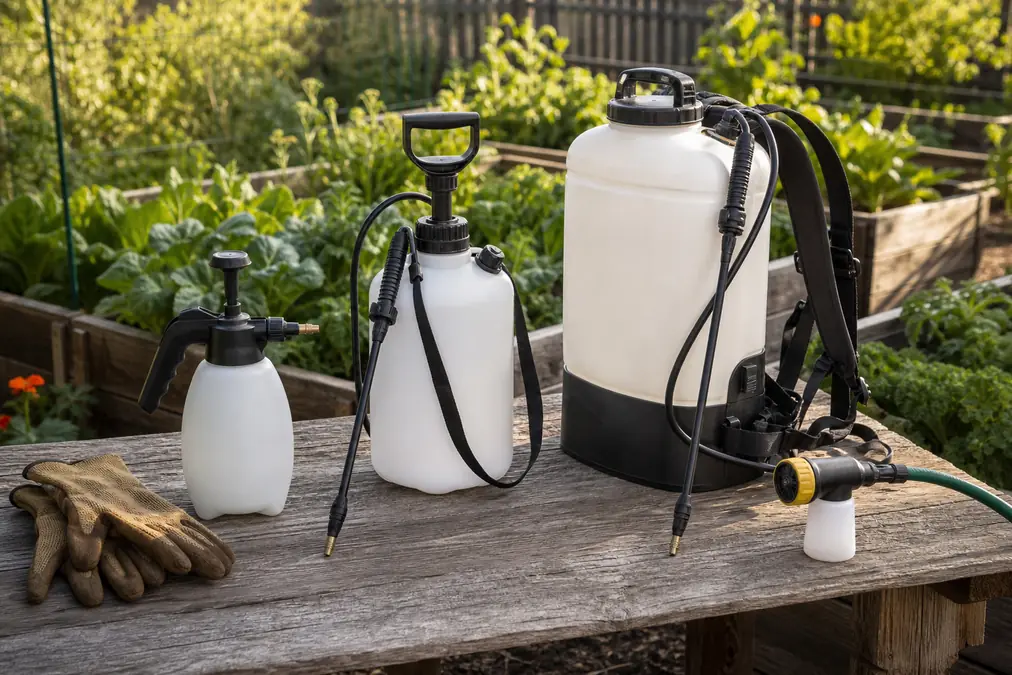
A garden sprayer should match the job before it matches the sale tag. The same tool that mists seedlings well may waste product on shrubs, strain your wrist along a fence line, or leave herbicide residue where tomatoes grow.
The right choice comes from four field checks: what you spray, how much area you cover, how precise the nozzle must be, and how safely the tank can be cleaned afterward. A good sprayer leaves an even damp coat, holds pressure without leaking, and feels boring in the hand because nothing is fighting you.
Key Takeaways
- Match sprayer type to area, product, and reach.
- Choose tank size by finished weight, not capacity alone.
- Use dedicated tanks for herbicides and edible crops.
- Test nozzles with water before mixing any product.
- Clean seals, wand, and nozzle after every session.
Table of Contents
Garden Sprayer Types – Start With the Job, Not the Tank
Garden sprayers divide into a few useful families: trigger bottles, hand pump sprayers, one- to two-gallon compression sprayers, hose-end sprayers, backpack sprayers, and battery-powered sprayers. Each one changes fatigue, coverage, precision, and cleanup.
A trigger bottle works for a few houseplants, seed trays, or a small neem test on one shrub. The weak point is output. Your fingers do all the pumping, the spray pattern changes as your grip tires, and the bottle becomes sloppy when tilted.
A hand pump garden sprayer suits spot treatments, small vegetable beds, and patio plants. The tank holds pressure after pumping, so the wand can apply a more even coat than a trigger bottle. Look for a stable base, a pressure-release valve, and a wand long enough to keep your face away from drift.
Backpack sprayers serve larger rows, hedge lines, and repeated pest or disease programs. The tank rides on your shoulders, and the pump handle keeps pressure moving as you walk. Fit matters. A loose shoulder strap makes the tank sway, and a hard bottom edge can bruise your lower back after twenty minutes.
| Sprayer Type | Best Use | Watch Before Buying |
|---|---|---|
| Trigger bottle | Seedlings, houseplants, tiny spot use | Hand fatigue and uneven spray |
| Hand pump sprayer | Small beds, shrubs, patio plants | Seal quality and pressure release |
| Hose-end sprayer | Large lawn or broad liquid feeding | Dilution accuracy and overspray |
| Backpack sprayer | Rows, hedges, larger properties | Full weight and strap comfort |
| Battery sprayer | Long sessions with repeated coverage | Battery life, cleaning, and repair parts |
Hose-end sprayers are tempting because the garden hose supplies the water and reach. They are better for broad liquid feeding or lawn-scale applications than for precise pest treatments on vegetables. If hose length, diameter, or kink resistance is already a problem, fix that first; choosing a garden hose for watering jobs affects the sprayer’s flow and reach.
Pump, Backpack, or Battery Sprayer – How Pressure Changes Coverage
Pressure controls droplet size, coverage, and drift. Too little pressure spits and leaves dry patches. Too much pressure makes a fine mist that floats away in wind and can land on leaves, flowers, skin, or nearby beds you never meant to treat.
Pump sprayers lose pressure as the tank empties, so the first ten feet may spray differently from the last ten. A good model lets you add pressure easily, releases pressure safely before opening, and keeps the wand pattern stable as the tank gets lighter.
Backpack sprayers keep pressure more consistent over a long pass. They also make mistakes bigger because they carry more liquid. Before using one with any pesticide, fill it with plain water and walk the actual route. Listen for sloshing, feel the shoulder straps, and see whether the wand reaches the underside of leaves without twisting your wrist.
Battery sprayers reduce pumping fatigue. That helps when grip strength is limited or the job repeats often. The tradeoff is maintenance. A battery unit adds a charger, switch, pump, filter, and more parts that must be flushed clean. Buy one only when saved labor matters more than simple repair.
Sprayer Match Check
Garden Sprayer Size – Buy the Weight You Can Carry Cleanly
Tank size looks simple until the sprayer is full. One gallon of water weighs a little over eight pounds before the tank, wand, pump, and straps are added. A two-gallon sprayer can feel manageable on the bench and awkward by the time you reach the far bed.
Small gardens usually do better with a one-gallon tank because it encourages fresh mixing and full cleanup. A half-empty three-gallon tank is not a bargain. It tempts you to store leftover mix, and many products should be used the day they are mixed.
Large rows, orchards, hedges, and fence lines may justify a backpack sprayer. Even then, filled weight should match the person using it. Put water in the tank at the store if allowed, or compare the loaded weight at home before mixing anything active. A sprayer that throws your posture off will be used too fast, too tired, or not at all.
Observation: I often see gardeners buy too much tank for the first season. The extra capacity feels efficient in the aisle, then turns into stale leftover mix, sore shoulders, and a sprayer that stays in the shed.
Nozzle and Wand Features – The Spray Pattern Decides the Result
The nozzle determines whether the liquid lands as a cone, fan, stream, or coarse shower. A fine cone can coat small leaves, but wind moves it easily. Fan patterns cover rows more evenly. Narrow streams reach cracks and hard surfaces, yet they can blast soil onto leaves if used around crops.
Adjustable brass nozzles are useful when they turn smoothly and shut off cleanly. Cheap nozzles often jump from stream to mist with very little control. Plastic nozzles can work well for light use, especially when replacements are easy to find.
Wand length matters more than many buyers expect. A longer wand lets you reach under leaves and into shrubs without bending over the tank. For low vegetable beds, the wand should let the spray stay below leaf height. For shrubs, it should reach the inside canopy without forcing your shoulder into a raised angle.
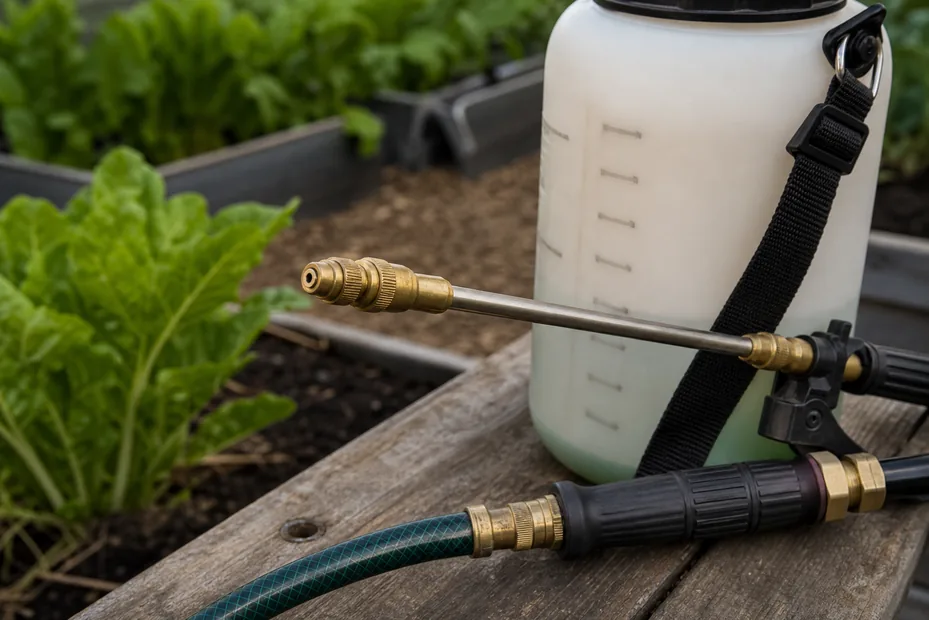
Pro Tip: Test the nozzle with plain water on a sheet of cardboard. A good pattern leaves even damp coverage from edge to edge. Dry stripes, heavy center spots, or side drips mean the nozzle needs cleaning, adjustment, or replacement.
Chemical Safety and Dedicated Tanks – The Label Controls the Tool
A garden sprayer becomes part of the product you put inside it. Herbicide residue, copper residue, oil films, soap, and fertilizer salts can linger in seams, hoses, wands, and seals. The safest setup is separate, clearly marked equipment for herbicides, edible-crop sprays, and fertilizer or water-only uses.
EPA’s pesticide label guidance is the first rule for any pesticide product. The label decides crop, pest, dilution, protective equipment, timing, storage, disposal, and reentry limits. A sprayer that cannot measure, hold pressure, or clean out properly is the wrong tool for that product.
The National Pesticide Information Center’s safe pesticide use guidance reinforces the same practical habit: read the label, use protective equipment, mix only what is needed, and keep people, pets, and water bodies out of the exposure zone.
Gloves matter because mixing and cleanup often put more liquid on the user than the actual spray pass. Thin fabric gloves soak through quickly. For routine garden work, choosing gardening gloves by task and material helps separate grip, thorn protection, and chemical-resistance needs.
Water-only jobs deserve their own decision too. If the task is gentle watering, not applying a product, a watering can with the right rose head may give better control than a sprayer.
| Use | Best Tank Rule | Why It Matters |
|---|---|---|
| Herbicide | Dedicated sprayer only | Residue can injure vegetables and ornamentals |
| Fungicide or insecticide | Label-matched tank and clean wand | Coverage and safety depend on correct dilution |
| Fertilizer or seaweed feed | Separate from pesticides when possible | Salts and films can clog nozzles |
| Plain water | Keep a clean water-only sprayer | Useful for testing, rinsing, and gentle foliar mist |
Build Quality and Repair Parts – Where Cheap Sprayers Fail First
Most sprayer failures start at seals, hoses, handles, and nozzles. Thin tanks may last long enough for water and fail when left in sun. Weak pump handles can flex under pressure. Poor shoulder straps turn good tanks into tiring ones.
Before buying, check the pressure-release valve, gasket, hose connection, wand trigger, nozzle threads, and pump handle. Parts should feel replaceable, not fused into one disposable unit. A sprayer used with oils, copper, soaps, or fertilizers needs parts that can be removed and rinsed.
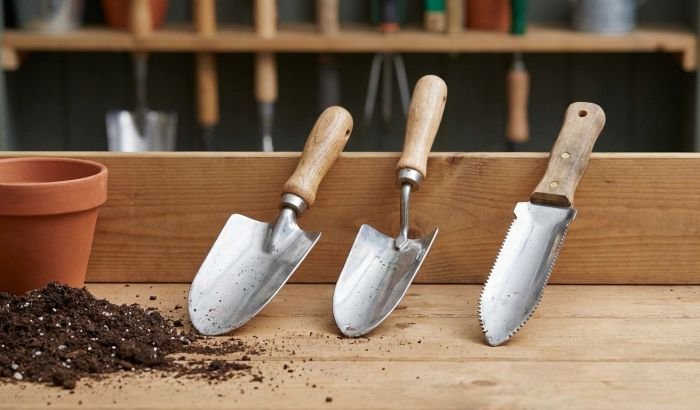
For larger tool decisions, the same buying logic applies across the shed. Gardening tools should match the work, body, storage conditions, and replacement parts. A sprayer is no different. It is a pressure tool, a measuring tool, and a cleanup job in one body.
Maintenance starts before storage. Release pressure, empty the tank according to the product label, rinse the tank, run clean water through the wand, remove the nozzle, and let parts dry before closing the lid. Freezing weather can split tanks and hoses, so winter storage should be dry and indoors.
Where To Start
Your garden has a few raised beds and occasional insect or disease pressure. Start with a one-gallon hand pump sprayer, adjustable nozzle, pressure release, and a wand long enough to reach under leaves. Test the pattern with water this week.
You manage long rows, hedges, or a large fence line. Try a backpack sprayer filled with plain water before using any product. Walk the route, adjust the straps, and stop if the tank shifts against your back.
You need weed control near paths or gravel. Buy a dedicated herbicide sprayer and mark it clearly. Store it away from edible-crop tools and never move it into vegetable or fruit work later.
Your main task is liquid feeding over broad lawn or ornamental areas. A hose-end sprayer may fit, provided the product label allows that delivery and the hose reaches without kinking. Test dilution with water first.
Conclusion
The best garden sprayer is the one that fits the actual job: small tank for spot work, backpack for long passes, hose-end only where broad dilution makes sense, and battery power when pumping fatigue changes the work. Tank size, nozzle control, and cleanup access matter more than a large capacity number.
Start with plain water before any product goes in. Keep the sprayer that holds pressure, leaves an even pattern, reaches the target without wrist strain, and rinses cleanly. The right tool should finish the row with dry gloves, an empty tank, and no mystery residue waiting for the next crop.
Frequently Asked Questions
What size garden sprayer should I buy first?
A one-gallon hand pump sprayer fits most small home gardens. It is light enough to carry, large enough for several beds, and small enough that you are less tempted to store leftover mix. Move up only when you regularly cover long rows or hedges.
Is a backpack sprayer worth it for a home garden?
A backpack sprayer is worth it when coverage takes more than 20-30 minutes with a hand sprayer. It saves hand pumping and holds more liquid, but the full tank weight and strap fit must feel comfortable before any product is mixed.
Can I use the same sprayer for herbicide and vegetables?
No. Use a dedicated herbicide sprayer and keep it out of vegetable, fruit, and ornamental foliar work. Residue can remain in hoses, seals, nozzles, and tank seams even after rinsing, and a small amount can injure sensitive plants.
Which nozzle pattern is best for garden spraying?
A fan pattern works well for even row coverage, a cone pattern helps coat small leaves, and a stream is better for cracks or hard surfaces. Test with water on cardboard first so you can see stripes, drips, or uneven coverage before spraying plants.
Should I choose a battery garden sprayer?
Choose a battery sprayer when pumping fatigue limits the work or when repeated coverage is part of your garden routine. Check battery life, wand quality, replacement parts, and cleanup access before paying more for the motor.