

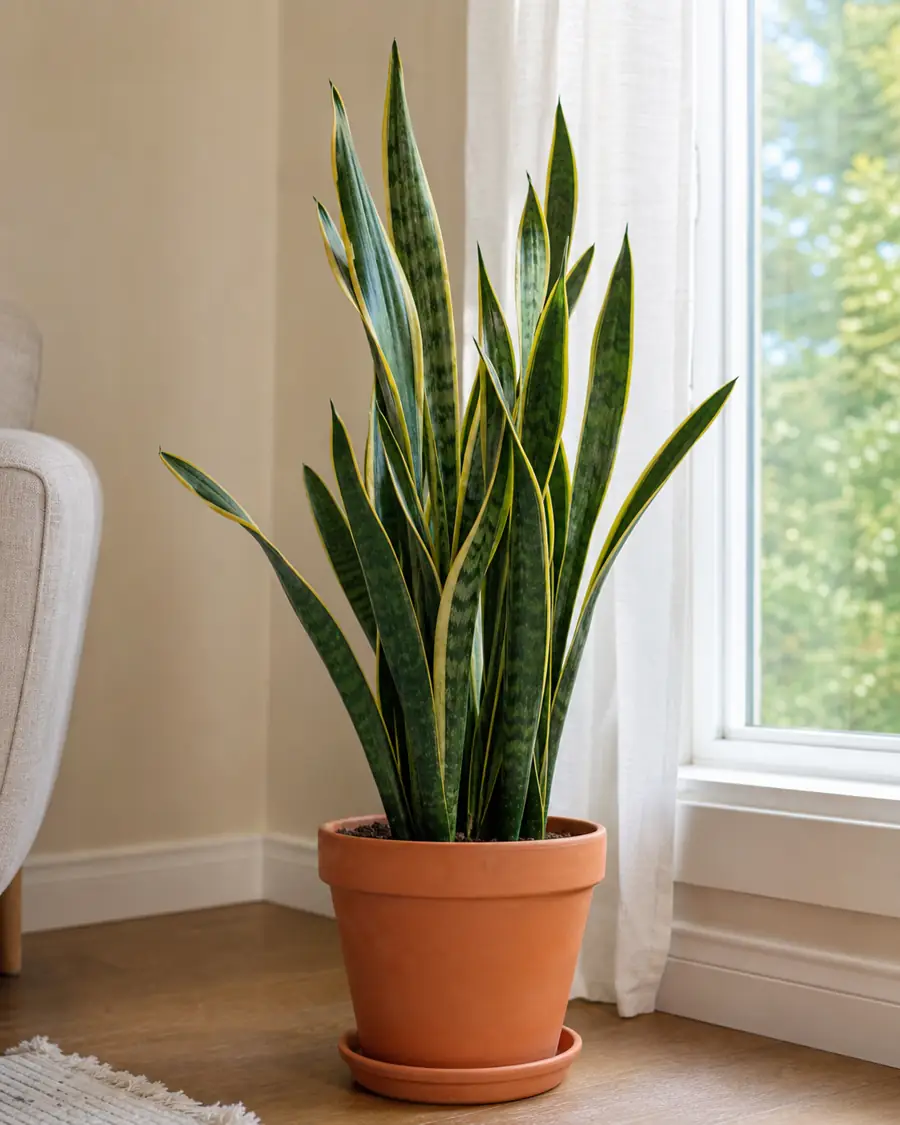
Snake plant care goes wrong when a tough-looking plant is treated like a thirsty tropical. Those stiff leaves hold water for a long time. Roots inside a dense, cool pot can stay wet long after the surface feels harmless. The result is often a plant that looks fine for weeks, then develops soft bases, yellowing leaves, and a sour-smelling pot.
A low-maintenance houseplant still needs a clear routine. Give it enough light to use water, let the root zone dry fully, and keep excess water moving out of the pot. That small amount of restraint produces firmer leaves and fewer rescue jobs.
Snake Plant Care At A Glance
Place the pot in bright indirect light, water only after the mix dries through the root zone, and keep it above 50 F. A drainage hole matters more than a weekly watering day.
Key Takeaways
- Place the pot near bright, filtered window light.
- Check soil deep in the pot before watering.
- Use a draining pot and gritty mix to protect roots.
- Empty the saucer after watering so roots stay airy.
- Act on soft leaf bases before rot reaches the rhizome.
Table of Contents
Snake Plant Care Starts With Dry Roots
Snake plant, now classified as Dracaena trifasciata, stores moisture in thick leaves and rhizomes. That reserve explains why a missed watering rarely causes trouble. Water held around the roots creates the larger risk because wet potting mix loses air spaces and roots cannot function normally.
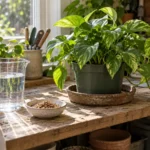
Start with a pot that has a hole in the bottom and a saucer you can empty. Then use a porous houseplant mix with perlite, pumice, coarse bark, or cactus mix worked through it. A decorative cachepot is fine when the nursery pot comes out for watering and drains completely before it goes back in.
Slow growth is normal. A healthy plant may add only a few leaves in a season, especially in a small pot or a dim room. Thick leaves should feel firm and springy when pressed gently. A soft, folded, or darkened base points to a root-zone problem, not a need for fertilizer.
Observation: I often see root rot begin after a plant is moved into a larger decorative pot. The new ring of unused mix stays wet around a small root mass, even when the top inch feels dry.
Choose Light For Upright Growth And Better Leaf Color
A snake plant can tolerate a north window or a room set back from a window. Growth slows in those positions. Brighter indirect light helps the plant use moisture, hold its upright shape, and keep variegated margins more distinct. The University of Minnesota’s indoor light guidance places snake plant among foliage plants that handle lower light. North Carolina Extension limits direct sun to part of the day.
An east window is an easy starting point. A few feet back from a south or west window also works when a sheer curtain softens the hottest light. Move the pot farther from the glass if leaves develop pale, dry patches after a sunny spell. In a dim corner, water much less often because the mix will stay wet longer and new leaves may emerge narrower or smaller.
Turn the pot a quarter turn every month if leaves lean toward one side. Do not rotate it every few days. A plant needs time to orient its leaves, and an unchanged position makes changes in growth easier to read.
Water When The Entire Root Zone Is Dry
A calendar cannot tell you when a snake plant needs water. Room temperature, light, pot size, pot material, and the amount of root mass all change dry-down speed. Terracotta releases moisture through its walls. Glazed ceramic and plastic hold it longer. Winter light slows water use enough that a plant can stay dry-side comfortable for several weeks.
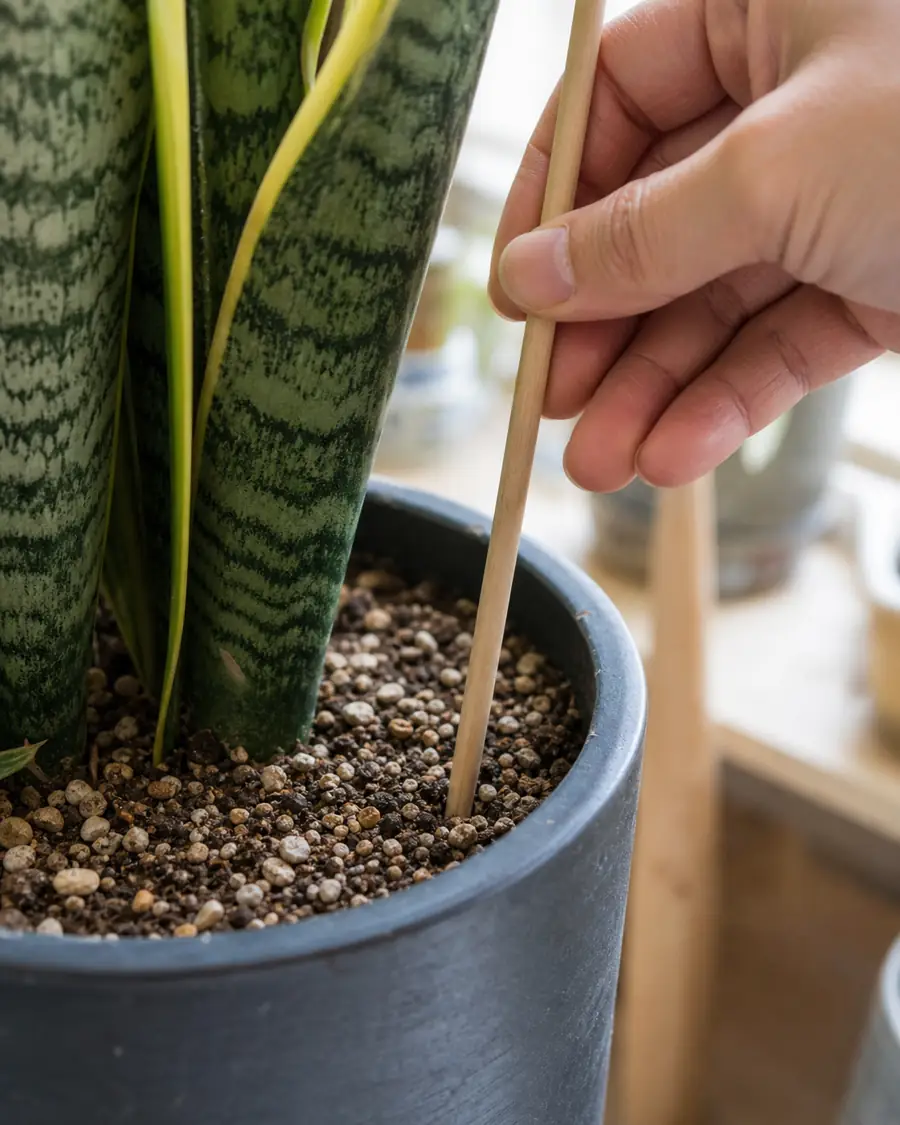
Push a wooden chopstick, skewer, or moisture probe down near the inner edge of the pot. Pull it out after a few seconds. Dark particles clinging to it mean the lower mix is still wet. When the tool comes back mostly clean and dry, water slowly until a little runs from the drainage hole. Empty the saucer after ten minutes. This deeper check follows the root-zone logic behind houseplant care basics. A succulent-leaved plant can take much longer to dry down.
Use The Pot”s Weight As A Second Check
Lift the pot before watering and again after it drains. A dry snake plant pot feels noticeably lighter because the mix contains air instead of a reservoir of water. This comparison becomes more useful after two or three watering cycles, when the difference between dry and freshly watered weight becomes familiar in your hands.
Plants sharing one room can run on very different schedules. A larger leafy plant can use water faster because active growth draws more moisture from its pot. Let each pot dry at its own speed. A written note of the last watering date can reveal a seasonal slowdown without turning the date into the reason to water.
Pro Tip: Leave the plant unwatered for one extra day when the lower mix feels only slightly cool or damp. Snake plant roots handle that short wait far better than another dose of water in an already moist pot.
During active summer growth, many indoor plants land near a 2 to 4 week rhythm. Winter can stretch that interval to a month or longer. The dry-between-waterings rule used for succulents is a safer baseline than weekly watering. Watch the pot and leaves, then adjust for your home.
Wipe dusty leaves with a soft damp cloth once a month, holding each leaf near its base so it does not bend sharply. Dust can dull the mottled surface and make pest checks harder. Skip leaf-shine sprays and heavy oils. They leave residue that catches dust again and adds nothing to the plant’s growth.
Look along the leaf bases during that cleaning. Firm tissue, dry mix, and clean leaf joints show that the pot is functioning well. Cottony white clusters, webbing, or a wet smell give you a reason to inspect the plant before a small problem grows larger.
Pot Size And Soil Texture Control Root Air
Roots need both moisture and oxygen. A compact peat-heavy mix can look dry on top. The lower half can stay dark, cold, and wet. Water remains trapped in small pores, and the thick snake plant rhizome sits in the zone where trouble builds.
Choose a pot only 1 to 2 inches wider than the root ball when repotting. A pot far larger than the roots holds a broad reservoir of unused mix. Missouri Botanical Garden describes a well-draining mix with sharply reduced watering from fall into late winter, a combination that fits its drought-tolerant leaves.
Repot in spring or early summer if roots split the pot, the plant tips because the rhizomes have filled it, or water races through a root-bound mass without wetting the mix. Use a heavier pot for tall varieties. A wide, low terracotta pot often holds a large plant more safely than a narrow, lightweight one.
| What You See | Likely Condition | First Correction |
|---|---|---|
| Firm leaves and dry lower mix | Normal dry-down | Water slowly until excess drains, then empty the saucer. |
| Yellow lower leaf with wet, heavy pot | Root zone staying wet too long | Pause watering and move the pot into brighter indirect light. |
| Soft, dark leaf base or sour mix | Root rot may be advancing | Unpot, remove rotted tissue, and repot in dry fast-draining mix. |
| Wrinkled leaves with dry, light pot | Plant has gone too long without water | Water thoroughly once and let excess drain away. |
Recognize Early Overwatering Damage Before It Spreads
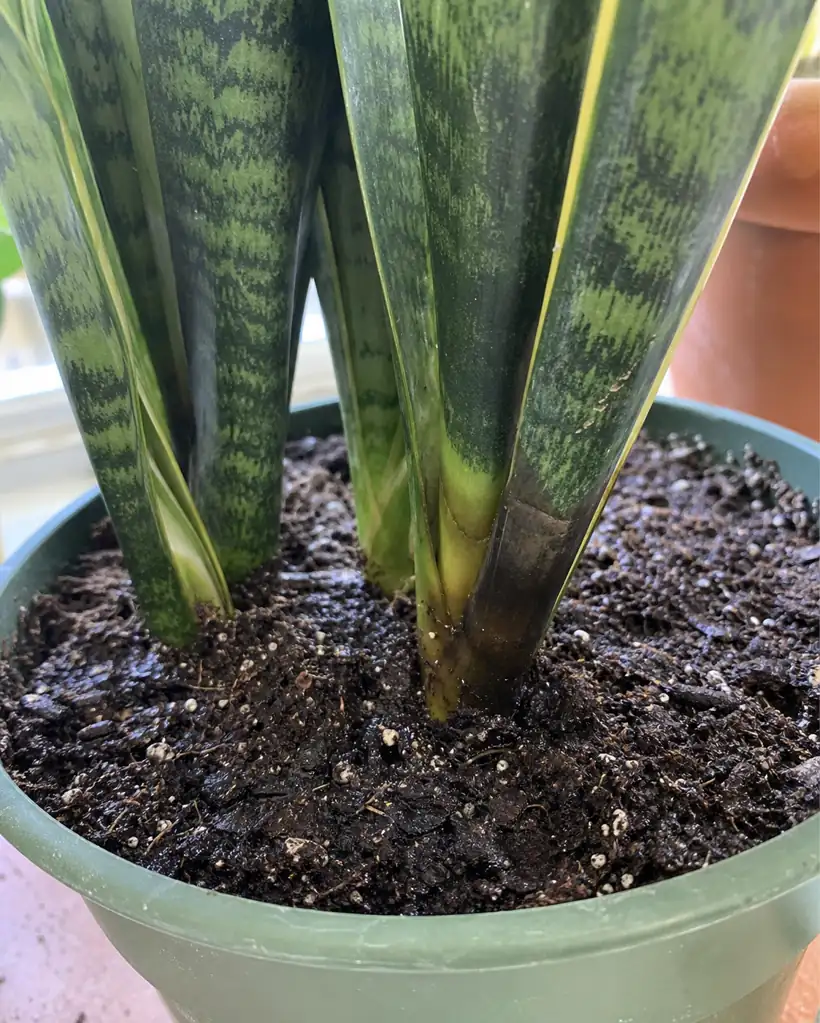
Overwatering does not always mean too much water in one sitting. It often means water arrives again before the previous moisture has left the root zone. The first warning can be a leaf that loses its rigid edge near the soil line. Later, the base turns yellow-brown, feels mushy, and may pull away from the rhizome with little resistance.
Take the plant out of its pot when the base is soft or the mix smells sour. Trim black or hollow roots with clean shears, remove leaves that are collapsing from the base, and let healthy tissue air dry briefly. Repot into fresh dry mix and wait several days before watering. Use snake plant mushy leaves and root rot when a close diagnosis of the damage is needed.
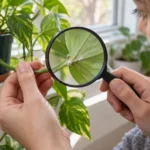
Mealybugs and spider mites can also weaken a plant, though they leave different clues. Mealybugs look like tiny white cottony clusters in leaf joints. Spider mites leave pale stippling and fine webbing. Neither pest makes the leaf base wet and soft, so avoid treating a drainage problem with insect spray.
Placement Changes The Tradeoffs: Pets, Cold Glass, And Slow Growth
Where should you place a snake plant in your house? Choose a bright room where the pot will not be bumped, chilled by winter glass, or soaked by a humid bathroom with little light. Bedrooms work when the window gives enough daylight and the plant stays out of reach of pets. The plant uses CAM photosynthesis and takes in carbon dioxide mainly at night. One pot does not meaningfully clean the air of an occupied room. Open windows, filtration, and source control do that work.
Snake plant has one honest drawback for homes with curious animals. The ASPCA lists mother-in-law’s tongue, another common name for snake plant, as toxic to cats and dogs because of saponins. Keep the pot on a stand or in a room pets cannot enter. If an animal chews the leaves and develops vomiting or diarrhea, contact a veterinarian promptly.
Do not chase fast growth with heavy feeding. Feed a balanced houseplant fertilizer at half strength once a month during warm, bright growth only if the plant is actively making new leaves. A plant sitting in low light or cold soil will not use much extra fertilizer, and salts can build up in the pot.
Conclusion
Give the plant bright indirect light, a draining pot, and enough time for the lower mix to dry. Those three conditions make snake plant care quiet and reliable.
Firm leaf bases, a light pot, and dry mix below the surface are the signs worth waiting for.
Frequently Asked Questions
Is snake plant a good indoor plant?
Yes, when the pot drains and the soil dries fully between waterings. It tolerates ordinary indoor humidity and lower light better than many houseplants, though bright indirect light produces fuller growth.
Where should I place a snake plant in my house?
Place it near an east window or a few feet back from a bright south or west window. Keep leaves away from cold winter glass, heat vents, and spaces where pets can chew them.
Are snake plants good for allergies?
Snake plants do not treat allergies or clean an entire room’s air in a meaningful way. Wipe dust from the leaves with a damp cloth and use established indoor-air measures when allergies are a concern.
What is the disadvantage of snake plants?
Slow growth, pet toxicity, and root rot from frequent watering are the main tradeoffs. A slow-growing plant may look unchanged for months, which makes drainage and soil checks more useful than frequent fertilizer changes.