

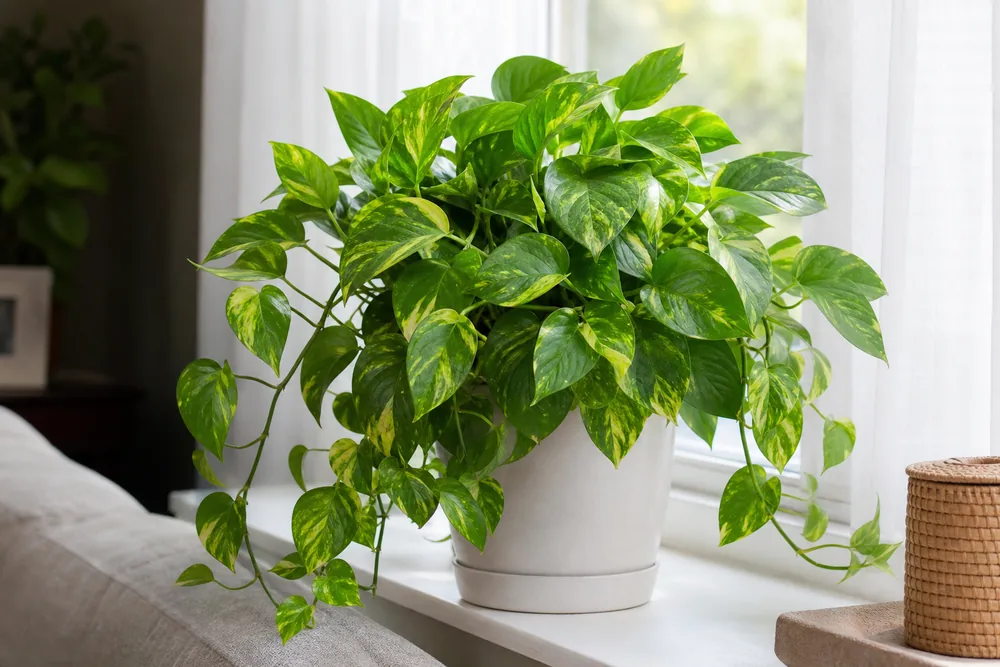
Pothos plant care gets easier when you treat each vine as a light and root-oxygen problem before you reach for more water. A healthy pothos has firm stems, glossy heart-shaped leaves, and new growth close enough to the pot that the plant still looks full after the vines lengthen. When the pot sits in dim light, soggy mix, or a decorative cachepot with standing water, the same plant can stretch into bare ropes with yellowing leaves at the base.
Bright indirect light, a draining potting mix, watering after the upper mix dries, and pruning before the stems become bare form the basic routine. Pothos tolerates indoor mistakes better than many houseplants, but the same houseplant care checks for light, dry-down, and drainage still apply. Fuller vines come from small corrections made early, when the leaves still feel firm and the roots still have air.
Pothos Care Conditions At A Glance
Give pothos bright indirect light, water only after the top 1 to 2 inches of mix feel dry, use a draining pot, and prune long stems back to a leaf node when the plant starts thinning near the crown.
Light
Bright, indirect light keeps variegation sharper and internodes shorter. Low light keeps the plant alive and slows new leaves.
Water
Water deeply, then empty the saucer. Wait for the upper mix to dry before watering again.
Roots
Use a loose indoor potting mix and a drainage hole. Sour smell, black roots, or sticky wet soil means oxygen is missing.
Shape
Let vines trail for length, or train them upward when you want larger leaves and tighter growth from aerial roots.
Key Takeaways
- Place pothos in bright indirect light for fuller vines.
- Water after the top mix dries, then drain fully.
- Avoid coffee grounds in pots; compost them first.
- Prune long bare stems before crown growth thins badly.
- Check roots and leaves monthly for care drift.
Table of Contents
Pothos Plant Care Starts With Light You Can Read On The Leaves
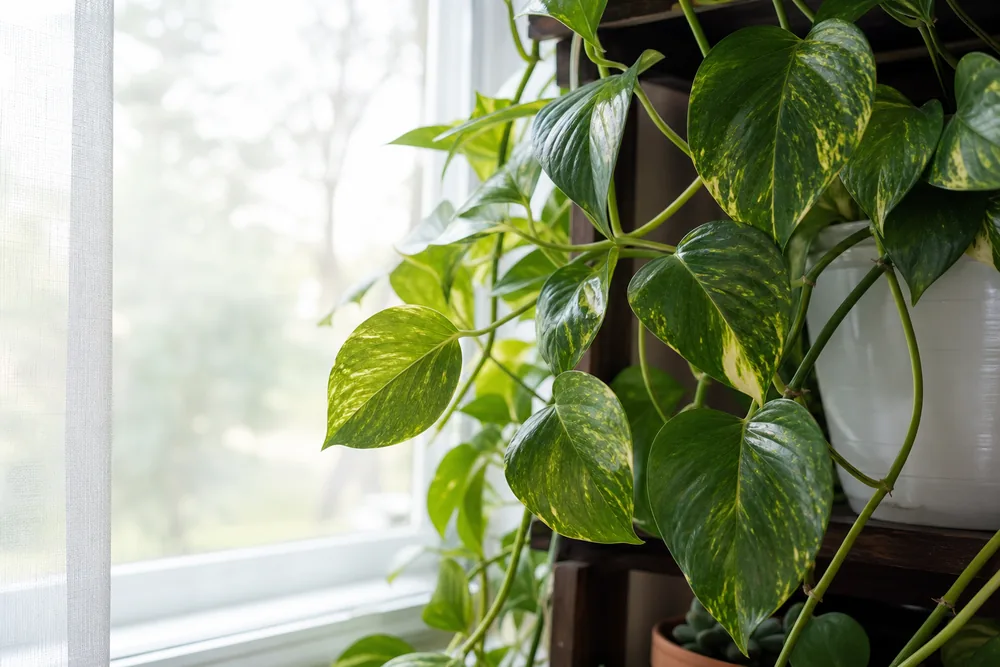
A darker room can keep pothos alive; full growth has a fuller leaf pattern on the vine. In bright indirect light, new leaves usually sit closer together, variegated patches stay cleaner, and the crown keeps producing side shoots. In weak light, stems stretch between leaves because the plant is spending growth on reach instead of density.
Pothos grows best in bright indirect light, and low light can reduce variegation. That shows up first on Marble Queen, Pearls and Jade, and other pale cultivars. Their white or cream tissue has less chlorophyll, so low light often turns the plant slow, thin, and greener.
A good indoor placement is near an east window, a few feet back from a bright south or west window, or behind a sheer curtain where the leaves receive strong ambient light without hot sun on the blade. Direct sun can bleach or scorch patches, especially on pale leaves that already have less green tissue.
If the plant leans hard toward one side, rotate the pot a quarter turn every week. If the new leaves are smaller than the older leaves and the vine feels lanky between nodes, move it closer to light before adding fertilizer. Low light changes what the roots can use, so feeding a dim plant often creates softer, weaker growth.
When the goal is faster extension and denser foliage, pothos light requirements deserve more attention than another watering routine. Light decides how much energy the plant can spend on leaves.
Watering Pothos By Root Oxygen And Pot Weight
Pothos watering fails most often when a weekly habit ignores the pot, the room, and the season. A small plant in bright light may dry quickly. A large plant in a deep plastic pot across the room may stay damp long after the top surface looks pale.
Houseplants die or decline from improper watering more than from any single factor, and houseplant watering guidance ties timing to pot size, container drainage, light, and how fast the soil mass dries. That matters with pothos because the roots need both moisture and oxygen. Saturated mix fills the pore spaces with water, and roots begin to brown when oxygen stays low.
Use a finger test before watering. If the top 1 to 2 inches feel dry and the pot feels lighter than it did after the last soak, water until moisture runs from the drainage hole. Empty the saucer after the pot drains. If the mix still feels cool and damp below the surface, wait.
Leaves that curl inward and feel thin often point to thirst. Leaves that yellow in damp mix point toward low root oxygen. That distinction matters because both problems can make the plant look tired from across the room.
Observation: Pothos often declines after it gets moved into a pretty outer pot with no drainage. The grow pot drains once, then sits in a hidden puddle, and the oldest leaves begin yellowing from the crown within a few weeks.
Garden plants and houseplants grow in different soil volumes. The same root-zone logic applies: soil moisture levels matter because roots need water and air at the same time.
Soil, Pot Size, And Fertilizer Shape The Root System
A pothos root ball should smell earthy, hold together lightly, and release some extra water soon after watering. If the mix smells sour, clings like cold paste, or stays wet for more than a week in normal indoor conditions, the potting mix is working against the plant.
Use a loose indoor potting mix with drainage material such as perlite, bark fines, or coarse coconut coir. Heavy garden soil in a small indoor pot compacts after repeated watering, and the lower root zone stays wet after the top looks dry. A drainage hole is required for a soil-grown pothos that you want to keep for years.
Pot size changes the drying pattern. Moving a small cutting into a large pot surrounds its roots with more wet mix than they can use, especially in winter. Step up one pot size when roots circle the bottom, when water runs through too fast because the root ball has crowded the mix, or when the plant wilts soon after a full watering.
Feed during active growth. Feeding every two or three months during the growing season is enough for many indoor foliage plants, and winter fertilizer can stop when no new growth is visible. A low-light pothos may need even less because it cannot turn extra nutrients into strong leaves.
Pro Tip: Flush the pot with plain water every few months if you fertilize regularly. Let water run through the mix for a minute, then let the pot drain fully; the pale crust on the soil surface is often soluble salts, a cue to flush before feeding again.
Climbing Or Hanging Changes The Way Vines Fill Out
Should pothos climb or hang? Hanging gives the easiest trailing look. Climbing gives the plant a support that its aerial roots can grip. The right choice depends on the shape you want from the same vine.
A hanging pothos sends stems downward or sideways. It works well on a shelf, bookcase, cabinet top, or hanging basket where long vines can fall without being brushed or pinched. The tradeoff is crown thinning: older stems can lose leaves near the pot as the active tips keep growing farther away.
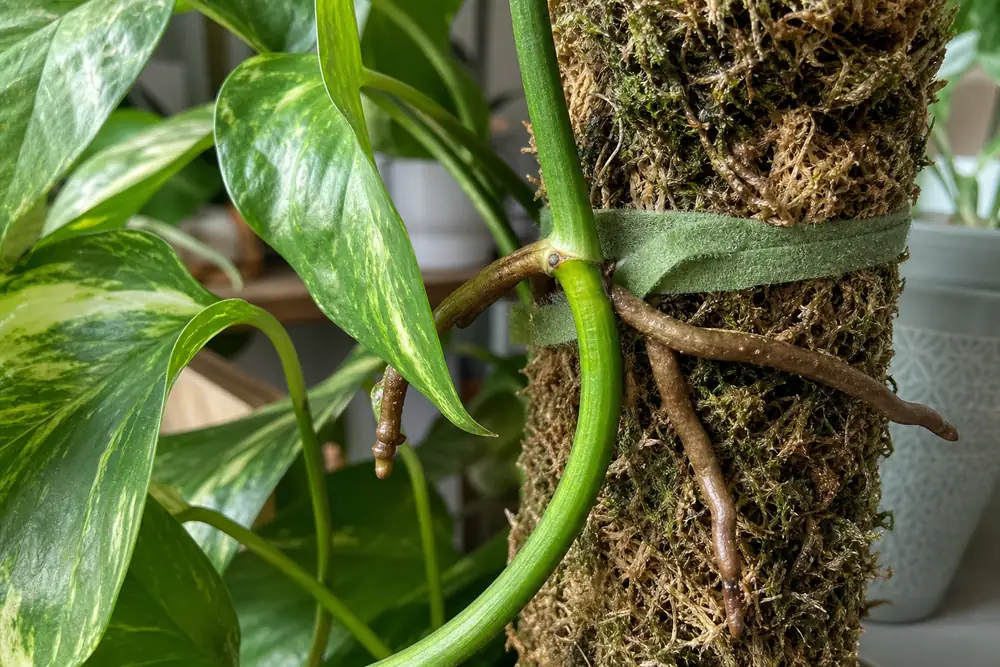
A climbing pothos uses brown aerial roots to cling to a moss pole, coir pole, rough plank, or trellis. Supported vines with enough light can produce larger, mature leaves. Indoors, the change is usually gradual, and the growth often looks tighter because the stem receives support and light more evenly.
Choose hanging if you want soft length and easy placement. Choose climbing if the plant has enough light, you can keep the support slightly textured, and you want leaves facing outward from the stem. A moss pole in a dim corner still leaves the vine short on light.
Pruning And Propagation Keep Bare Stems From Taking Over
Long vines look healthy until the pot loses its center. Once a pothos has most of its leaves at the tips, the plant still grows, and the crown looks tired and empty. Pruning solves that earlier than repotting or fertilizer.
Cut a long stem just above a leaf node, where the leaf and aerial root point meet the vine. New growth can break from nodes left on the plant, and the removed cutting can root if it has at least one node below the water or soil surface. Clean scissors matter because crushed tissue dries badly and can rot before roots start.
For a fuller pot, root several cuttings and tuck them back into the same container once roots are established. One vine may keep most growth at one tip; added cuttings create more rooted growing points at the crown. That is why a newly refreshed pothos often looks better with five short cuttings than with one very long stem wrapped around the pot.
Prune during active growth when possible. Spring and summer cuttings root faster in warm rooms with brighter light. Winter cuttings root more slowly, and a cold windowsill can stall root growth in water.
Growing Pothos In Water Works Best As A Managed Setup
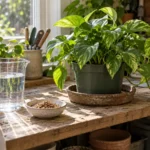
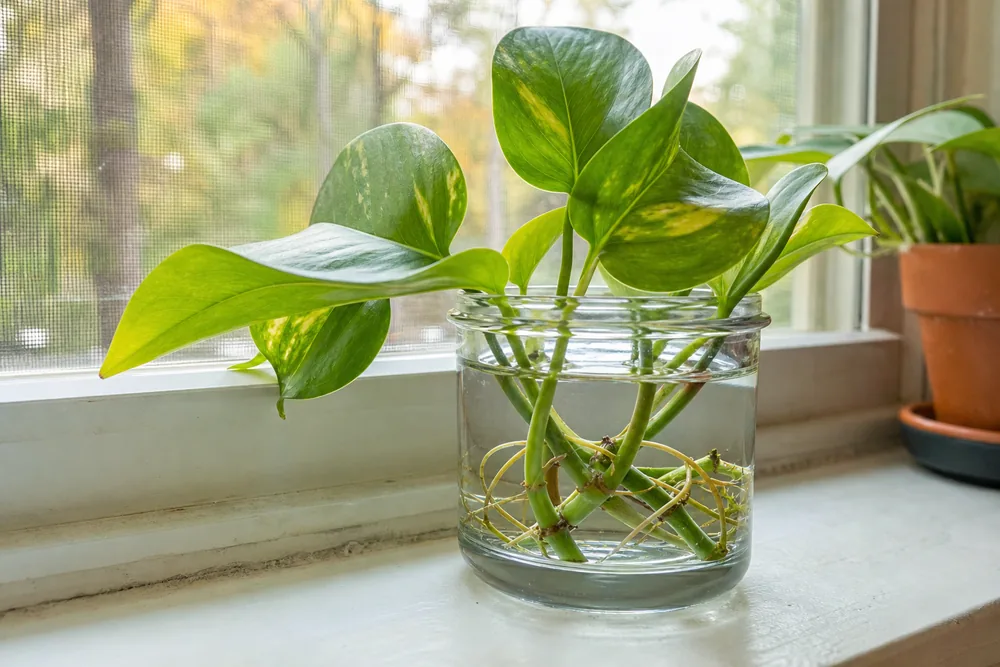
Pothos can grow in water for months or years. Water culture needs active care because the jar becomes the root environment. The cutting has no potting mix to hold nutrients, buffer temperature, or hide algae.
Start with a cutting that has one or two nodes below the water and leaves above the rim. Keep the container in bright indirect light, change the water when it clouds, and rinse the glass if algae coats the sides. Roots grown in water are pale, smooth, and adapted to that constant moisture; roots grown in soil become thicker and better matched to air pockets in potting mix.
Water-grown pothos needs diluted liquid fertilizer after roots are active because plain water supplies too little nutrition for long-term leaf production. Use a light dose, then replace the water regularly so fertilizer salts stay diluted around the roots.
Moving a long-established water pothos into soil can work, and the plant may pause as it builds roots suited to potting mix. Keep the soil lightly moist for the first couple of weeks after transfer, then move toward the normal dry-down rhythm. Moving a soil-grown pothos into water is more stressful; soil roots often shed or rot before new water roots replace them.
Common Problems Show Which Care Lever Moved Too Far
Pothos problems usually trace back to light, water, roots, temperature, or pests. The fastest correction starts with the symptom pattern, then checks the pot before adding another product.
| What You See | Likely Cause | First Correction |
|---|---|---|
| Yellow lower leaves with wet mix | Overwatering, poor drainage, or low root oxygen | Let the pot dry down, empty saucers, and inspect roots if smell turns sour |
| Small new leaves and long gaps between nodes | Low light | Move closer to bright indirect light before fertilizing |
| Brown crispy tips on otherwise firm leaves | Dry air, salt buildup, irregular watering, or old stress | Flush the mix, stabilize watering, and remove fully dead tips |
| Blackened leaf margins or collapsing stems | Root rot risk or cold, wet conditions | Check roots, cut rotten tissue, repot into fresh draining mix |
| Sticky leaves, cottony patches, or small bumps | Scale, mealybugs, or other pests | Isolate the plant and clean stems and leaf joints thoroughly |
Root rot and blackened leaf margins can occur with overwatering, and low light can cause loss of variegation; the pothos plant profile lists both problems among common culture issues. Those two issues often arrive together in real rooms: a dim corner slows water use, then the pot stays wet too long.
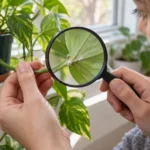
If the main symptom is yellowing, pattern matters. One old yellow leaf near the base can be normal aging. Several yellow leaves in damp mix point toward water and roots. Yellow leaves plus soft stems need faster action. More detailed yellowing patterns sit in pothos yellow leaves, where the shape of the symptom changes the likely fix.
Many overwatering signs begin below the soil surface before the leaves look dramatic. A clear plastic nursery pot inside a cachepot helps you check root color and standing water before damage spreads.
Coffee Grounds, Pets, And Other Care Myths Need Narrow Handling
Coffee grounds rarely make pothos greener, bushier, or happier in a normal indoor pot. They can compact, hold moisture unevenly, grow mold on the surface, and make it harder to read the real moisture level. Used grounds belong in compost or outdoor soil in modest amounts; keep thick layers off houseplant mix.
Coffee grounds contain compounds that can feed soil organisms. Evidence for consistent soil pH lowering is weak, and coffee grounds in soil are better treated as compost material than as a targeted plant fix. A struggling pothos usually needs better light, drainage, root inspection, or pruning before it needs any kitchen remedy.
Pet safety also needs clear limits. Pothos contains insoluble calcium oxalates, and the ASPCA toxic plant listing for devil’s ivy identifies it as toxic to dogs, cats, and horses, with oral irritation, drooling, vomiting, and difficulty swallowing among the listed signs. Keep vines above chewing height, especially when tips trail from shelves or water jars.
Air-cleaning claims deserve the same restraint. Pothos can be part of a calmer indoor plant shelf. A few pots in a living room cannot replace ventilation, filtration, or source control for indoor air problems. Treat the plant as a living ornamental vine first, then care for it in the conditions your room actually gives.
Conclusion
Pothos stays full when the care rhythm follows what the leaves and roots show. If new growth is close together and glossy, keep the light and watering pattern. If stems stretch, leaves yellow, or the pot stays wet for days, correct the condition before adding fertilizer or remedies.
Start with the next watering: feel the mix, lift the pot, check the saucer, and look at the newest leaves. A well-kept pothos should feel firm in the hand, with clean green vines moving outward from a crown that still looks alive.
Frequently Asked Questions
How to make a pothos happy?
Give it bright indirect light, a draining pot, and a dry-down watering rhythm. A happy pothos has firm leaves, visible new nodes, and no sour smell from the potting mix.
Should pothos climb or hang?
Let pothos hang when you want trailing length from a shelf or basket. Train it upward when the room has enough light and you want aerial roots to grip a pole or board for tighter, larger-looking growth.
Do coffee grounds help pothos grow?
Coffee grounds are a poor direct amendment for pothos pots. They can hold moisture and compact near the surface, so composting them first is safer than spreading them over indoor potting mix.
How do you take care of indoor pothos?
Place indoor pothos in bright indirect light, water when the upper 1 to 2 inches of mix dry, empty the saucer, prune long bare vines, and feed lightly during active growth.