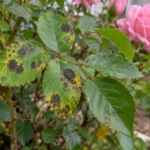

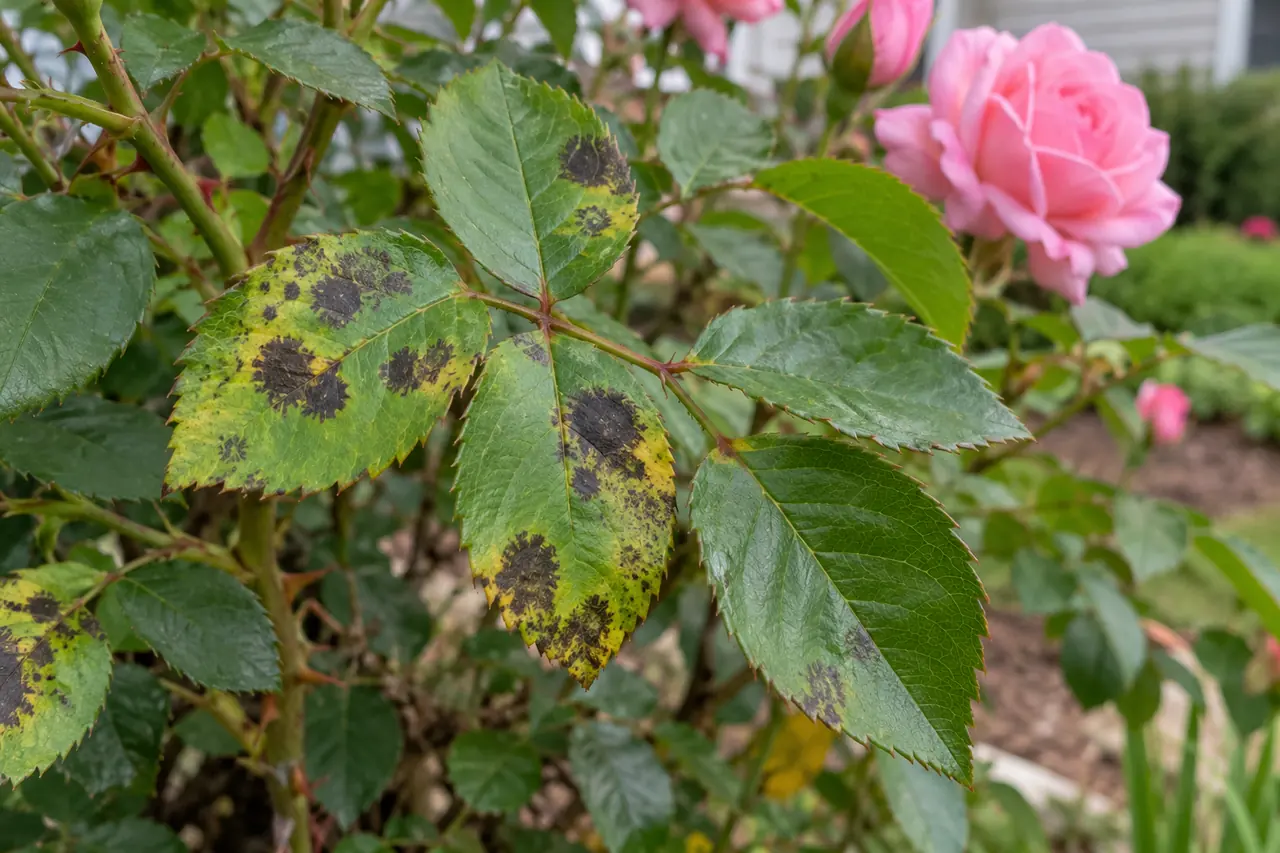
Black spot on rose leaves calls for checking the lesion pattern before removing foliage or choosing a spray. Irregular dark spots with fringed edges, yellowing around them, and lower leaves dropping after wet weather fit the disease, but other rose problems produce dark patches too. A rose that still carries plenty of green foliage needs a different response from one repeatedly stripped by disease. Look closely at both sides of several leaves, then inspect the fallen leaves and canes beneath them. Existing dead patches will not turn green again. Recovery depends on preserving useful leaf area, reducing infection sources, and protecting the next flush under the conditions in your garden. A bucket of fallen leaves and a change in watering placement are better starting points than pulling every marked leaf from a living bush.
Match the spot before treating the rose
Fringed black lesions with yellowing: black spot is plausible. Inspect several leaves and collect fallen infected material.
Smooth purple spots with tan centers, or angular vein-bounded patches: investigate a look-alike disease before selecting a product.
Mostly green leaves with scattered marks: retain useful foliage. Judge improvement by cleaner new growth, not disappearing old spots.
Key Takeaways
- Compare lesion edges before choosing a disease-specific rose treatment.
- Keep functional green foliage while collecting fallen infected leaves.
- Direct irrigation below leaves to shorten artificial wet periods.
- Inspect new growth after wet weather for fresh lesions.
- Match preventive sprays to diagnosis, severity, and label instructions.
Table of Contents
Black Spot on Rose Leaves Has a Fringed Lesion Pattern
A round dark mark is a clue, not a complete diagnosis. The classic black spot lesion develops an irregular, feathery margin rather than a sharply printed circle. Yellowing spreads around affected areas, and leaves drop prematurely. Several ages of lesions on the same shrub give more information than one close photograph.
The fungus Diplocarpon rosae infects rose tissue. Its characteristic lesion pattern and lower-leaf progression are described in University of Maryland Extension’s black spot disease guidance. Start near the base, then compare leaves higher up. A darkening leaf that remains partly green still differs from one already yellow, brittle, and ready to fall.
Separate black spot from other dark lesions
| Visible pattern | Possible cause | Next check | First action |
|---|---|---|---|
| Irregular black spots with fringed edges and yellowing | Black spot | Inspect lower leaves, fallen material, and canes | Reduce infection sources and prolonged leaf wetness |
| Smooth maroon or purple spots developing tan centers | Cercospora leaf spot | Compare older and younger lesions | Confirm the disease before product selection |
| Angular purple, red, or brown areas bounded by veins | Downy mildew | Photograph the underside and note cool, wet conditions | Seek a diagnosis when the pattern is unclear |
| Windowpanes, ragged holes, or clean pieces missing | Chewing insects or other physical damage | Inspect both leaf surfaces for active feeding | Identify the pest before selecting control |
Those look-alike disease signs appear in Maryland Extension’s Rose: Identify and Manage Problems. Cercospora also affects roses selected for black spot resistance. Downy mildew damages tissue between veins, producing a more angular outline, and growth underneath the leaf is an additional clue when present. Mixed infections remain possible.
When tissue is missing, inspect the pattern of holes in rose leaves to identify the cause. A fungicide will not stop an insect chewing. For an uncertain specimen, photograph the whole plant, both leaf surfaces, and the transition between healthy and damaged foliage before asking local Extension for help.
Wet Foliage Allows Repeated Infection Cycles
Black spot spreads when susceptible foliage stays wet long enough for infection. Rain splash, dew, and overhead irrigation connect infected material with fresh leaves. Young tissue is vulnerable, so a newly expanding shoot might acquire lesions with older damaged leaves still attached.
Oregon State University’s Rose Black Spot guidance emphasizes positive identification, sanitation, and conditions that favor disease. Water remaining on foliage matters more than the garden merely feeling humid. Notice whether droplets still cling to the lower canopy after neighboring open plants have dried.
Compare two positions on the same rose. An outer leaf exposed to morning sun might dry quickly. A shaded leaflet inside a dense crossing of canes stays glossy and wet longer. That difference helps locate a persistent infection opportunity. It does not prove which pathogen is present; the lesion pattern still needs its own check.
The next season’s infection does not come only from leaves lying on the ground. Dark irregular lesions on infected canes also carry the fungus through unfavorable weather. A tidy bed with diseased stems remaining above it still contains an infection source.
Trace the pattern back through recent weather and irrigation events. Did the first leaves drop after a long rainy period? Are the lowest leaves repeatedly splashed from the bed? Is one rose enclosed by neighboring shrubs? Record those conditions alongside cultivar identity. Weather-driven infection still occurs in a carefully watered garden.
Natural rain and overnight dew remain sources of leaf wetness even after an irrigation nozzle is changed, so additional measures depend on cultivar and disease pressure. The purpose of an irrigation adjustment is to remove avoidable wetting, leaving cultivar choice, canopy conditions, monitoring, and any justified preventive control to address the remaining pressure.
Reduce Inoculum Without Stripping the Working Canopy
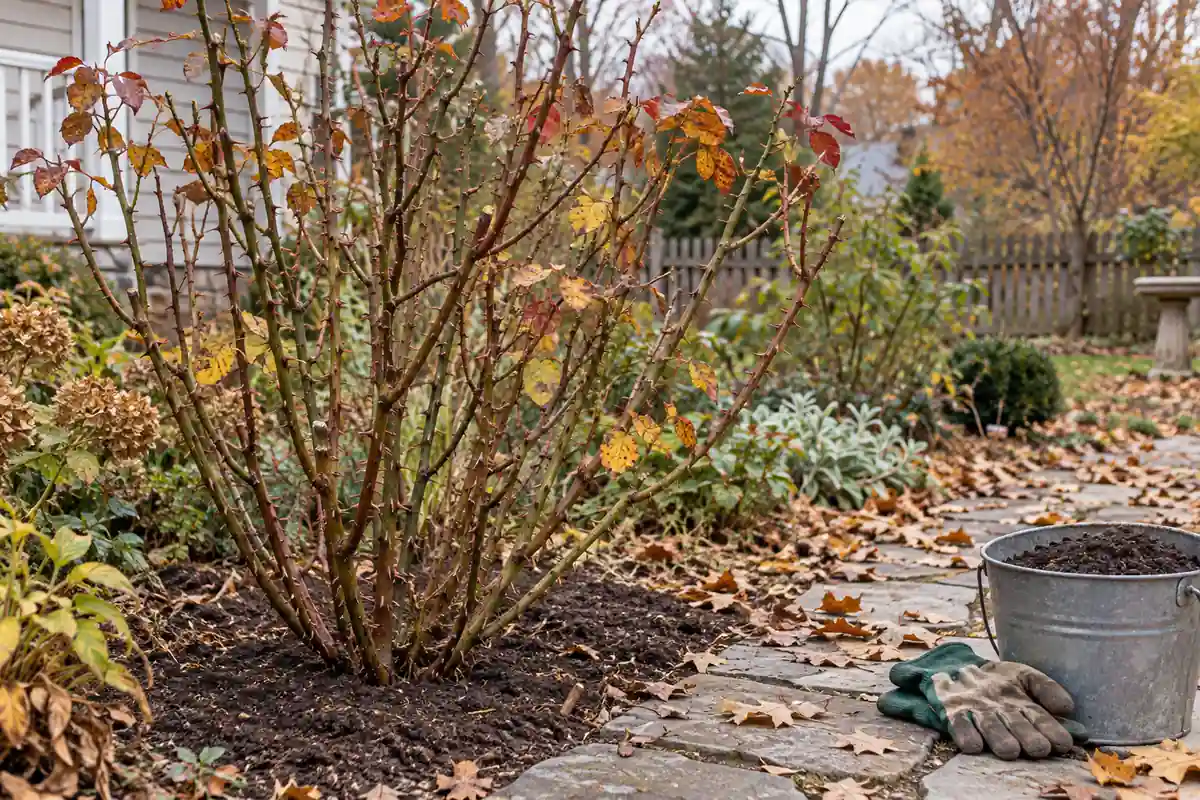
Begin with fallen diseased leaves. They no longer supply energy to the rose, and collecting them reduces material carrying fungal spores. Lift litter gently around the base. Aggressive raking injures shallow roots or scrapes bark.
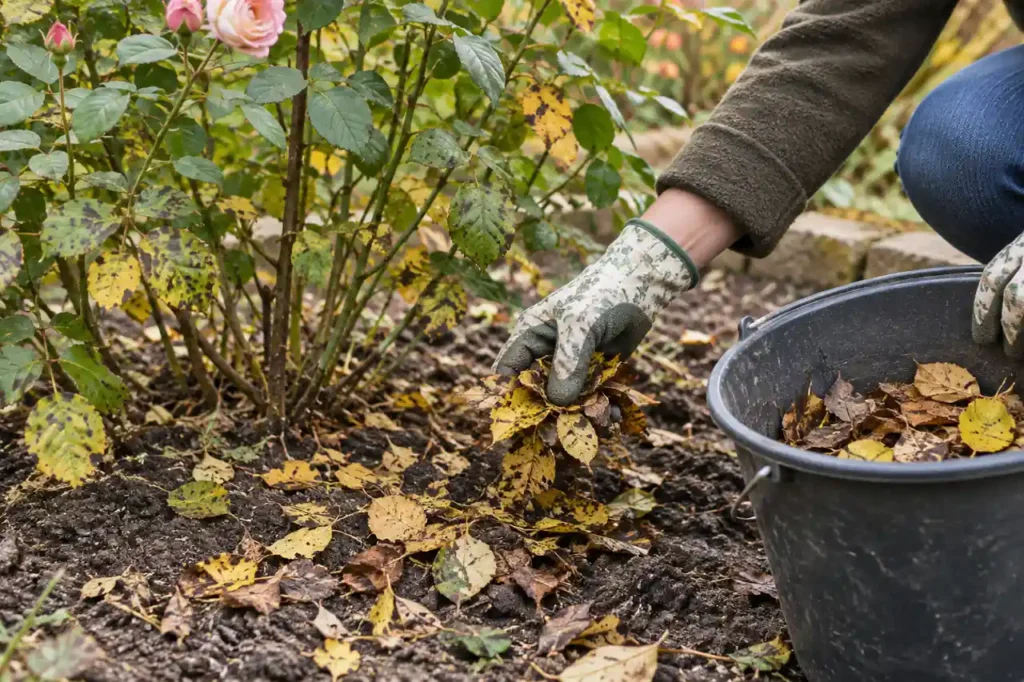
Attached leaves require judgment. A badly deteriorated yellow leaf and a mostly green leaf with a few marks contribute differently to the canopy. Selective removal of severely affected material is compatible with preserving photosynthetic area. Making the bush completely bare to remove every visible spot creates an additional stress.
Dark lesions will not heal into clean green leaf tissue. Removing every marked leaflet therefore becomes an endless appearance-based task during an active outbreak. Set the immediate objective around infection sources and plant function, then assess what happens on the next leaves.
Choose cane cuts for disease and season
Clearly diseased or dead canes deserve attention. A spot on a leaf alone leaves the need to shorten healthy stems unproven. Match selective cuts to the rose’s structure and suitable local timing. Seasonal pruning changes with plant type and growth stage; extensive fall cutting solely for neatness is a poor substitute for diagnosis.
Gather removed material as you work. Leaving it beneath the shrub defeats the cleanup. If a cane lesion is difficult to distinguish from old bark, mechanical injury, or another disease, photograph it before cutting. Ask the diagnostic service whether it needs a fresh sample; a fragment collected later might be unsuitable.
Cold protection remains a separate decision. A tender grafted rose and a hardy shrub rose need different winter protection, regardless of whether both had spotted leaves. Sanitation should complement that care without turning into unnecessary hard pruning or excessive covering.
Shorten Leaf Wetness With Watering and Airflow
Put water where the roots use it. A hose or wand directed toward soil avoids extending the canopy’s wet period each time you irrigate. Keep the stream gentle enough to limit splash, and move around the root zone. Keep a forceful jet away from the crown.
Prolonged overhead wetting favors rose black spot, a connection described in Maryland Extension’s Watering Trees and Shrubs. The correction concerns the route of irrigation. Withholding needed root water from a thirsty rose adds drought stress without resolving natural rain or dew.
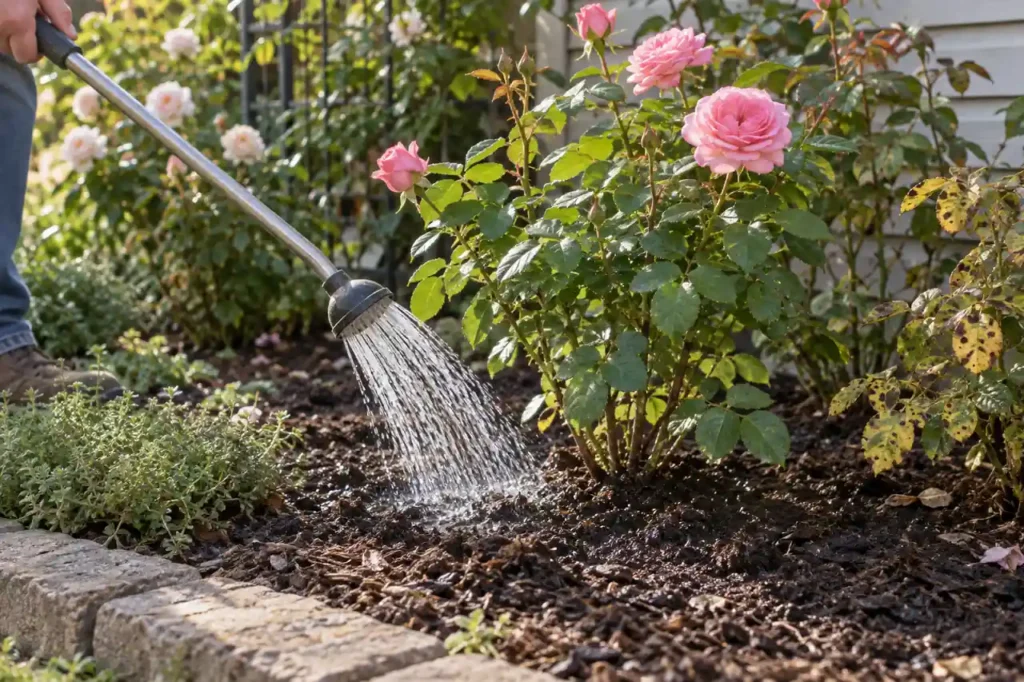
Probe soil before repeating irrigation. Dry litter at the surface sometimes covers cool, damp soil below. If the root zone remains wet, adding more water because the leaves look unhappy compounds the problem. Inspect the plant’s water supply separately from the lesions.
Airflow depends on the surroundings as well as the rose. Dense neighboring growth, an enclosed corner, or overlapping canes slow evaporation from foliage. Where space permits, reduce crowding through suitable selective maintenance. An actively stressed bush needs protection from drastic cutting.
Pro Tip: Take a photograph of the same lower shoot before cleanup, then photograph its newly expanded leaves after subsequent wet weather. A matching viewpoint helps separate old visible injury from fresh infection.
Morning light is useful because it helps foliage dry earlier. Before moving an established rose, observe actual shade and wetness through the day. A location advertised as sunny might lose its morning light behind a fence and receive only late afternoon sun.
A surface cover used for moisture conservation belongs around the root zone, with the plant base kept clear. Avoid burying fallen diseased rose leaves under fresh material and treating their disappearance from view as completed sanitation.
Fungicides Protect Susceptible Growth Under Defined Conditions
Choose disease control after narrowing the diagnosis and judging the damage. Recurrent heavy leaf loss on a susceptible rose in a persistently wet climate warrants a different discussion from scattered cosmetic marks on a vigorous shrub. The cost of treatment includes application work, exposure precautions, and possible harm beyond the target fungus.
Preventive black spot control is described by Oregon State as effective when a labeled fungicide is used correctly, with lower-risk cultural steps favored first. Already necrotic areas will remain visible. Success means less new infection, not a spotless old leaf.
Maryland’s disease-specific guidance describes repeated protective applications under substantial local disease pressure. That is not a universal spray calendar for every American rose. Product labels, weather, cultivar susceptibility, the identified disease, and local requirements determine whether and how a particular treatment is appropriate.
Read the whole use case on the label
A product mentioning fungal disease somewhere on its packaging is not enough. Confirm that roses, the target disease, the intended site, application method, and any relevant limits match your situation. Follow protective equipment, re-entry, rain, storage, and disposal instructions. Observe restrictions protecting pollinators and avoid contaminating flowers or surrounding habitat.
Do not combine household soap, baking soda, milk, or multiple garden products into an improvised cure. Apparent improvement after a spray might coincide with drier weather. Unsuitable mixtures also injure foliage. Without a supported application and a matching label, the mixture adds another possible cause of damage.
Where identification remains uncertain, pause disease-specific spraying and obtain a diagnosis. Downy mildew is a different disease problem even when its spots resemble black spot. General sanitation and improved growing conditions are useful first steps. Fungicide selection still requires a matching disease and label.
Judge Recovery by Fresh Leaves and Retained Vigor
A spotted rose does not automatically need replacement. Record whether damage is increasing, whether the shrub retains a working canopy, and whether new shoots develop cleaner leaves. Some cosmetic injury is tolerable; repeated severe defoliation requires reassessing the plant and its site.
Which leaves appeared after the last long wet spell? That question separates a fresh infection cycle from marks that were already present. Keep inspection notes brief: date, recent wet weather, leaf position, and changes in leaf drop. There is no dependable promise that every stressed rose will flower again within a fixed number of weeks.
Disease-resistant cultivars reduce risk to an extent determined by cultivar and regional pathogen populations. A rose sold as black spot resistant still needs inspection for Cercospora and other problems. If replacement becomes necessary after repeated failure, ask local rose growers or Extension which cultivars perform under your climate and disease pressure.
Reconsider the planting position before buying another susceptible rose for exactly the same enclosed wet corner. A new label will not change morning shade, crowded growth, or water repeatedly landing on foliage. Improving those conditions makes cultivar selection more useful.
During the next active growth period, look for leaves that expand normally and remain attached through wet weather. Continued rapid loss despite accurate diagnosis and a suitable management plan deserves local reassessment. Seek a specimen diagnosis when the response leaves the cause uncertain.
Conclusion
Before the next wet period, choose one representative shoot to monitor and remove fallen infected material beneath it. If new lesions appear, document their edges and underside before changing treatment. A clearer diagnosis is more useful than another round of stripping leaves.
When a rose repeatedly loses most of its canopy, reassess cultivar, site, and disease control with local advice before replacing it. A workable outcome is visible in newly expanded green leaflets that remain on the canes, with the old yellow litter no longer accumulating at the base.
Frequently Asked Questions
Should I replace the soil beneath a rose with black spot?
Wholesale soil replacement is not the normal response. The infection sources of concern are diseased rose leaves and cane lesions. Collect fallen material and address the plant’s condition. Excavation risks damaging established roots.
Can I reuse homemade compost containing diseased rose leaves?
Keep that compost away from rose planting areas. Oregon State’s sanitation guidance specifically cautions against amending soil near roses with homemade compost containing diseased rose material. Follow local disposal guidance for the removed debris.
Is a black coating on sticky rose leaves the same disease?
Sticky honeydew with a dark surface coating points toward sooty mold associated with sap-feeding insects, including aphids. It differs from black spot lesions developing within leaf tissue. Inspect tender shoots for insects and consider both problems if the leaf also has distinct necrotic spots.