Updated April 17, 2026
Petunia varieties split into four distinct growth types, and the one you pick at the nursery determines whether you spend the summer deadheading, watching blooms rot in the rain, or doing nothing at all while the plant covers the ground by August.
Most gardeners choose by color. That is the last filter that should apply. A Wave petunia in full sun can spread three feet or more and cover a container edge in eight weeks – but in a six-inch pot, it dries out within a day. A grandiflora can produce five-inch blooms that smell strongly at dusk, but one week without deadheading in humid weather turns them into a mass of brown mush. The choice starts with how your garden is set up, what your summer climate does to plants, and how much time you have on Saturday mornings.
Key Takeaways:
- Match petunia type to maintenance habit before choosing color or size.
- Deadhead grandifloras every 7-10 days or bloom production drops sharply.
- Wave and multiflora types are self-cleaning and hold up in rain without deadheading.
- Skip grandifloras in USDA zones 8-10 during humid summers to avoid botrytis damage.
- Test fragrance at dusk in the nursery – most petunia scent opens in low light, not midday.
Table of Contents
The Four Petunia Types – Why Growth Habit Decides Performance
Walk into any garden center in late spring and you will see petunias in dozens of colors and cell pack sizes. What the label rarely tells you is that two plants in identical pots can behave completely differently in the same garden – one spreading three feet, the other staying neat and eight inches wide. That difference is growth type, and it is the most important thing to understand before buying.
The four main types are grandiflora, multiflora, milliflora, and spreading (Wave). Each has a distinct flower size, plant size, and maintenance demand.
| Type | Bloom Size | Plant Size | Deadheading | Rain and Heat Tolerance | Best Fit |
|---|---|---|---|---|---|
| Grandiflora | 3-5 inches | 10-14 in. tall | Required weekly | Low | Sheltered containers, cool climates |
| Multiflora | ~2 inches | 10-12 in. tall | Self-cleaning | High | Beds, mass plantings, rainy regions |
| Milliflora | ~1 inch | 8 in. tall/wide | None needed | Moderate | Small containers, borders, edging |
| Spreading/Wave | ~2 inches | 4-8 in. tall, 2-4 ft. spread | Self-cleaning | High | Ground cover, large hanging baskets |
How much of your garden time are you willing to give this plant every week? If the answer is “not much,” that rules out grandifloras regardless of how good they look at purchase. The rest of the decision follows from there.
Grandiflora Petunias – Stunning in Photos, Demanding in the Garden
Grandifloras produce the largest blooms of any petunia type – anywhere from three to five inches across – and in cool, dry weather they earn every inch. Some named varieties, including ‘Daddy’ and ‘Cascadia’, carry a genuine evening fragrance that other petunia types mostly lack. Walk past a pot of these at dusk and the scent is distinct, almost powdery, heavier than you would expect from an annual. That is the appeal side.
The cost is maintenance frequency. Grandifloras are not self-cleaning. Spent blooms stay on the plant, and in rainy or humid weather those dead flowers trap moisture and develop botrytis within days. The University of Minnesota Extension notes that grandifloras are particularly prone to rain damage compared to smaller-flowered types – the large petals collect and hold water in a way compact types do not. Deadheading every seven to ten days is the minimum to keep these plants productive and presentable through summer.
Observation: I often notice that gardeners with grandifloras in high-humidity climates spend more energy removing botrytis-damaged blooms by late July than actually enjoying the plants. The color at purchase does not account for what repeated rain does to five-inch petals over eight weeks.
Where grandifloras consistently perform: northern gardens with low summer humidity, sheltered front-door containers where they get checked daily, and anywhere the season stays cool and relatively dry. Double-flowered grandifloras like ‘Pirouette’ add a second layer of visual weight but need even more attentive deadheading – the layered petals hold moisture longer, and one wet week left unchecked can take the whole plant back to near-bare stems.
The genuine advantage of grandifloras beyond size is color depth. Many of the richest burgundy, near-black, and detailed bicolor patterns appear first in grandiflora genetics before crossing into smaller-flowered types. If a specific, unusual color combination matters more than anything else, grandifloras give you the widest palette. That is worth something.
Multiflora, Milliflora, and Wave – Where Low Maintenance Meets Real Color
Multiflora petunias are the practical center of the category. Blooms run about two inches across – smaller than grandifloras, but produced continuously on compact plants that typically stay ten to twelve inches tall and spread a similar distance. The key advantage is that most modern multiflora varieties are self-cleaning: spent flowers drop on their own rather than hanging on the plant and turning brown. Clemson Cooperative Extension lists multifloras as the better choice for gardeners who want continuous color without consistent deadheading, particularly in regions with regular summer rainfall.
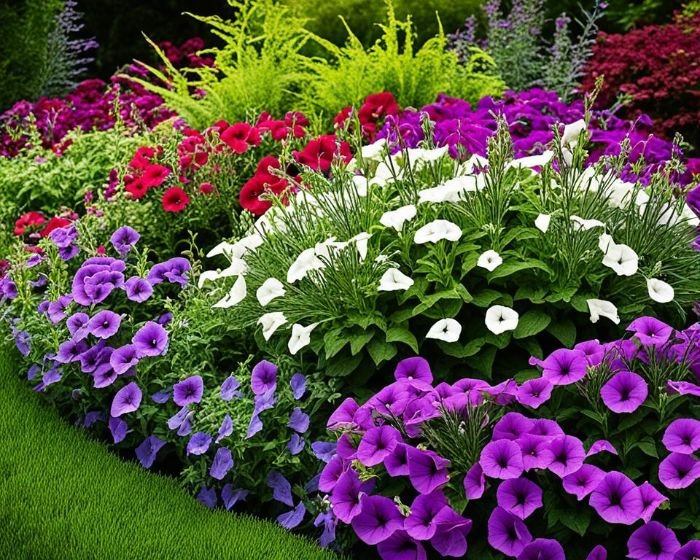
Millifloras are a smaller subset. Plants max out around eight inches tall and wide, and each bloom is roughly one inch across – barely the size of a quarter, but stacked so densely across the plant that the foliage underneath disappears by mid-June. Millifloras bloom earlier in the season than grandifloras or multifloras, and they require no deadheading at all. For small containers, window boxes, or border edging where a compact, rounded shape matters, millifloras deliver on the low-maintenance promise in a way larger types often do not.
Pro Tip: If you want Wave petunias to branch more densely early in the season, cut stems back by one-third when plants reach about 12 inches – before they begin trailing heavily. Most gardeners wait until mid-summer when the plant looks sparse; earlier cuts produce a noticeably thicker plant through August.
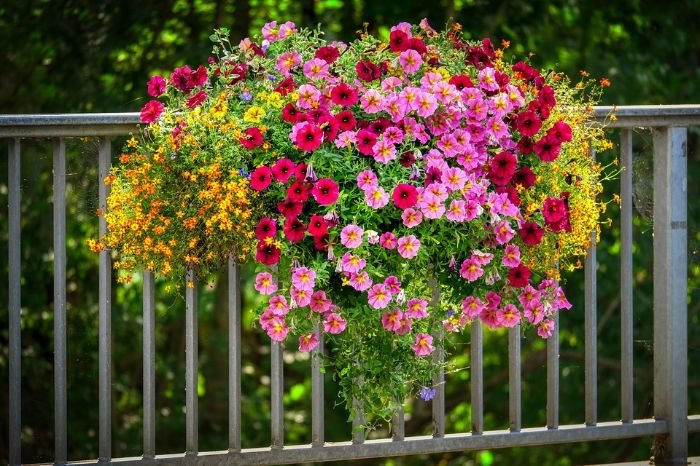
Wave petunias occupy their own category because the growth habit is fundamentally different from the others. Ball Seed Company introduced the original Wave series in 1995, creating a spreading petunia that covers two to four feet of ground by end of season while maintaining blooms along the entire length of each trailing stem. Unlike a mounding plant that simply widens, Wave petunias trail low and root as they extend. In a large hanging basket or at the edge of a raised bed, that trailing quality creates a visual that compact types cannot replicate. For container gardening on balconies and small patios, this spilling habit can define the entire look of the space from June through frost.
Heat and Humidity in Your Region – How Climate Narrows the Right Choice
Petunias grow as annuals across the US, but the version of summer they encounter varies enormously by region. In the Pacific Northwest, where summers stay mild and relatively dry, grandifloras perform reliably through September. In the Southeast – Georgia, Florida, Louisiana – the combination of temperatures above 90°F and consistent humidity creates conditions where grandifloras frequently struggle and sometimes fail entirely by late July.
The Old Farmer’s Almanac specifically flags the South as a challenging region for large-flowered petunias, recommending multiflora and spreading types because of their thicker petal structure and stronger resistance to fungal issues. The logic is direct: smaller petals dry faster after rain, self-cleaning varieties do not accumulate dead plant material, and the newer hybrid series were selectively bred for exactly this problem. When looking at heat-tolerant plants more broadly, this same pattern recurs across annuals – smaller-flowered varieties in each species tend to outperform large-flowered counterparts in hot, humid climates.
Practical thresholds that help narrow the decision:
- USDA zones 3-6 (northern US): All four petunia types are viable; grandifloras perform reliably in dry summers.
- USDA zones 7-8 (transition zone): Grandifloras are possible but need deadheading twice weekly during wet periods; multiflora or Wave carries lower risk.
- USDA zones 9-10 (deep South, desert Southwest): Skip grandifloras for bed plantings; Easy Wave or Supertunia Vista tolerate sustained heat with consistent watering.
One honest failure state: even heat-tolerant Wave petunias can stall in containers during extreme heat if the pot is too small. A six-inch pot in full afternoon sun in zone 9 can dry out in under twelve hours. Container size directly affects heat performance – go larger than feels necessary, and expect to water daily in August regardless of variety.
Named Petunia Series – What Wave, Supertunia, And Tidal Wave Actually Mean
Nursery tags use brand names alongside type names without explaining how they relate. A few series are worth understanding by name because they perform distinctly from the base type they belong to.
| Series | Developed By | Growth Habit | Self-Cleaning | Standout Feature |
|---|---|---|---|---|
| Wave | Ball Seed Co. | Low trailing, 2-4 ft. spread | Yes | Original spreading type, introduced 1995 |
| Easy Wave | Ball Seed Co. | Compact spreading | Yes | Smaller spread, better suited to mid-size containers |
| Tidal Wave | Ball Seed Co. | Upright to 16-22 inches | Yes | Can be planted as a dense petunia hedge row |
| Supertunia | Proven Winners | Mounding to trailing | Yes | Wide color range, vigorous and reliable rebloomer |
| Supertunia Vista | Proven Winners | Mounds 24 in., spreads 3-5 ft. | Yes | Landscape-scale coverage from a single plant |
Tidal Wave is the outlier in the Wave family. Unlike the low-trailing original, Tidal Wave grows upright and tall – sixteen to twenty-two inches by mid-season – with a bushy structure that fills vertical space in a way standard spreading petunias do not. Planted in a row twelve inches apart, Tidal Wave Silver forms something close to a flowering hedge by July. Proven Winners’ Supertunia Vista series operates at an entirely different scale: in a large container, a single plant can trail four feet while mounding to two feet tall. That is a different plant than what most people picture when they hear “petunia.”
Understanding which growth category each series falls into matters when mixing annuals in a planting scheme. The same habit-first approach that applies here guides selecting other summer flowers – knowing what a plant physically does before choosing color simplifies decisions for begonia varieties and other annuals that share similar bed space with petunias.
Three Questions Before You Buy
How much time can you realistically spend on one planting per week? Less than ten minutes rules out grandifloras entirely. The difference in workload over a twelve-week season is not small, and a neglected grandiflora by late July looks worse than a well-chosen multiflora ever does at its worst.
Where exactly will this plant go, and what is the container or bed size? Wave and Supertunia Vista are the wrong choice for small pots or tight borders – they overwhelm the space within six weeks and stress quickly in containers too small to hold moisture. Millifloras and compact multifloras serve contained spaces without fighting them. For hanging baskets, trailing grandifloras or spreading types give the overflow baskets are built for, but only if the basket is at least twelve inches across to hold enough soil moisture through a hot afternoon. For anyone building out a container garden on a balcony or patio, the Wave family and Supertunia Vista offer the most visible impact per plant.
What does your summer actually look like between June and August? If thunderstorms come through most weeks, multiflora or Wave is the reliable path and the decision is mostly already made. If your summers are dry and the main challenge is heat rather than humidity, a wider range of types will work and the choice shifts back to habit and color preference. A useful resource when evaluating heat tolerance across plants more broadly is the University of Minnesota Extension guide on growing petunias, which covers specific variety performance under different climate conditions. Answer all three questions before walking to the color display and the decision mostly makes itself.
Conclusion
The best petunia for your garden is the one that matches how you actually garden, not how you intended to garden in an optimistic moment at the nursery in May. Grandifloras deliver the largest blooms and the deepest color range, but they ask for consistent attention every week of the season. Multifloras and millifloras work quietly through summer with almost no intervention. Wave and spreading types do something the others cannot – they cover ground, fill baskets, and move in the wind in a way that transforms how a space looks by August.
The practical rule: if you can smell one at dusk and it stops you mid-step, that grandiflora is worth the deadheading commitment. If you want color that holds through rain and still looks right in September without extra work, choose a self-cleaning type in the right size for your space, plant it in full sun after the last frost date, and step back. The stems will trail over the edge, the blooms will keep coming, and the bed will look fuller at the end of summer than it did in June.
FAQ
What is the difference between grandiflora and multiflora petunias?
Grandifloras produce blooms between three and five inches wide and require weekly deadheading to stay productive. Multifloras produce smaller blooms – around two inches across – on more compact plants that are self-cleaning, meaning spent flowers drop without manual removal. Multifloras also tolerate rain and heat noticeably better than grandifloras, making them the more reliable choice for most US garden conditions, particularly in the Southeast and Midwest where summer thunderstorms are regular.
Can you grow petunias in partial shade?
Petunias need at least six hours of direct sun to bloom consistently – partial shade reduces flower production noticeably. That said, four to five hours of direct morning sun with afternoon shade is tolerable in climates where afternoon temperatures regularly exceed 95°F, since afternoon shade extends bloom life and reduces petal scorch on large-flowered types. Below four hours of direct sun, most petunia types produce mostly foliage with sparse, irregular flowering regardless of variety.
What happens if you skip deadheading grandifloras for two weeks?
Bloom production drops sharply. The plant redirects energy toward seed development once spent flowers remain on stems, and new bud formation slows within ten days. In humid conditions, dead blooms also develop botrytis, which can spread to healthy buds and tissue nearby. A mid-season hard cut – trimming the plant back by one-third – can restart bloom production, but it means two to three weeks of sparse color while the plant recovers. Consistent weekly deadheading avoids this cycle entirely.
Are Wave petunias annuals or perennials?
Wave petunias are annuals in all but frost-free climates. In USDA zones 10-11, they can survive outdoors year-round. In most of the US, they complete their lifecycle in one growing season and are replanted each spring after the last frost date. Some gardeners take stem cuttings in fall and overwinter them indoors under grow lights, then replant in spring – a practice that preserves a specific color but requires the space and consistent light of indoor propagation through winter.
Which petunia type performs best in a hanging basket?
Trailing grandifloras, original Wave, and Supertunia trailing varieties all work in hanging baskets, but basket size matters as much as variety. A twelve-inch basket dries out quickly in July heat, and most spreading petunias are vigorous enough to exhaust soil moisture within a day in zones 7 and above. Use the largest basket that is practical – fourteen to sixteen inches is a better floor – fill it with a moisture-retaining mix, and plan to water daily during peak summer heat. Easy Wave is somewhat more forgiving of irregular watering than original Wave in container situations.
Why do petunias stop blooming in the middle of summer?
The most common cause is heat stress combined with root binding in undersized containers. When temperatures stay above 90°F for extended periods, many petunia types slow or halt flowering temporarily. A second common cause is underfertilization – petunias are heavy feeders and deplete container soil nutrients within four to six weeks without supplemental feeding. A water-soluble fertilizer applied every ten to fourteen days maintains the phosphorus levels that support continuous flowering. Cutting the plant back by one-third in mid-July, followed by consistent fertilizing and watering, usually restarts bloom production within three weeks.
Do petunias have a fragrance?
Some do, and the ones that do are strongest at dusk rather than midday – which surprises most people who test a plant in the bright midday nursery and detect nothing. Certain grandiflora varieties, particularly some purple and bicolor types, carry a noticeable evening fragrance with a faint powdery quality. Multifloras and Wave petunias are largely unscented. Fragrance is not universally present even within the same labeled variety, as growing conditions can affect scent expression. If fragrance matters, evaluate the plants in the late afternoon before committing.