
Last Updated June 10, 2026
A jasmine that once covered a fence in flowers can turn into a tangle of bare stems, leafy whips, and blooms that sit too high to enjoy. A hard haircut usually creates more bare stems and fewer flowers when timing, plant type, and support are ignored. Pruning jasmine works when the cut follows the plant’s flowering habit, growth form, and support.
Summer jasmine, winter jasmine, star jasmine, and tender potted jasmine respond to different pruning windows. A cut that refreshes winter jasmine after bloom can remove the next flower display from a summer-flowering climber. A well-pruned jasmine keeps air through the center, young flowering side shoots, a tied framework, and enough leafy growth to feed the next bloom cycle.
Key Takeaways
- Jasmine pruning starts with plant type: summer jasmine, winter jasmine, star jasmine, or tender indoor jasmine.
- Most jasmine pruning is safest soon after the main bloom cycle, so new growth has time to mature before the next display.
- Thinning cuts open tangled growth; shortening cuts control reach; tying in often solves shape problems before cutting does.
- Overgrown jasmine can be renovated, and hard pruning may reduce flowers for one to three seasons as the frame rebuilds.
- Aftercare matters: water, mulch, light, support ties, and measured feeding help pruning produce flowers with fewer soft leafy whips.
Table of Contents
Choose The Right Jasmine Pruning Plan
The right pruning plan begins with the jasmine in front of you. Some plants sold as jasmine are true Jasminum species, and others, such as star jasmine, are different woody climbers with jasmine-like fragrance. That difference changes the pruning window and the amount of growth to remove.
If the plant label is gone, use the bloom season and growth habit. White summer flowers on a vigorous twining vine often point to common jasmine. Yellow flowers on bare arching stems in winter point to winter jasmine. Glossy evergreen leaves with white pinwheel flowers point to star jasmine. Tender indoor plants with fragrant white flowers and flexible stems need lighter pruning and more careful training.
| Jasmine type | Main pruning window | Cut level | Main goal |
|---|---|---|---|
| Common or summer jasmine | After the main summer flowering period, often late summer to early autumn | Remove flowered stems to lower side shoots, thin weak growth, shorten long leaders | Build mature shoots for next season’s early flowers |
| Winter jasmine | Immediately after winter or early spring flowering | Cut flowered stems to strong side shoots and thin older congested canes | Replace bare old stems with new arching growth |
| Star or Confederate jasmine | After flowering for shape, spring for light thinning or renovation | Tie in, thin, and shorten long shoots; reserve heavier cuts for overgrown plants | Keep an evergreen screen dense and attached to support |
| Arabian, Chinese, or tender potted jasmine | After a flowering flush or as active growth resumes indoors | Tip-prune, remove weak stems, and guide flexible shoots around a small support | Keep the plant compact, leafy, and able to bloom indoors or under glass |
| Newly planted jasmine | First year after planting | Remove dead or damaged growth and tie young shoots in place | Build roots and a low framework before stronger pruning begins |
Plant choice also affects pruning later. A small courtyard, narrow fence, or container needs a different jasmine than a long wall. If the plant has outgrown its place every season, choosing the right jasmine may be the longer-term fix; choosing the right jasmine helps match size, fragrance, hardiness, and support before pruning becomes constant repair work.
Time Jasmine Pruning By Flowering Habit
Jasmine pruning is mostly a timing problem. The plant has to finish flowering, then grow enough new wood or side shoots to carry the next season’s flowers. For true Jasminum types, the clean rule is to prune summer jasmine just after flowering, prune winter jasmine immediately after flowering, and renovate vigorous plants when they outgrow their space.
Bloom season tells you what the plant is protecting. Summer jasmine often carries early flowers on growth made the previous year, then can flower again on current-season tips. Winter jasmine flowers on the previous year’s growth, so late pruning can leave a green shrub with few yellow flowers the next winter. Star jasmine usually needs light handling; prune star jasmine after flowering to keep it within the available space and preserve evergreen coverage for its summer scent display.
| Season or signal | Use this cut | Leave this growth | Why it protects flowers |
|---|---|---|---|
| After summer jasmine flowers fade | Shorten flowered shoots to a lower side shoot and thin crowded stems | Fresh strong shoots that can ripen before cold weather | New mature stems can carry the next early bloom |
| After winter jasmine finishes bloom | Cut back flowered stems and remove some old canes near the base | Young green stems that will arch and mature during spring and summer | Next winter’s flowers form on new growth made after pruning |
| Star jasmine has finished its main scent display | Tie in stray shoots, trim side growth, thin congested stems | Healthy evergreen framework attached to wires or trellis | Light pruning keeps cover and limits flower loss |
| Frost damage appears in spring | Wait for live buds to show, then cut dead tips to living wood | Firm green or brown stems with swelling buds | Waiting separates dead tips from slow-to-wake stems |
| Active bird nests are present | Delay structural pruning and make safety cuts away from the nest area | Nesting cover until the nest is inactive | Jasmine vines and shrubs can hide nests inside dense growth |
Timing also has a climate layer. In mild regions, jasmine may keep growing longer into autumn. In colder gardens, late soft growth can be damaged by frost. Stop heavy shaping early enough for new shoots to firm up before the first cold snap. Jasmine varieties matter because summer, winter, evergreen, and indoor types use different bloom cycles and pruning windows.
Make Clean Cuts That Build A Flowering Framework
Clean jasmine pruning uses a small number of cuts in the right places. Start with sharp bypass pruners for pencil-thick stems, loppers for old woody canes, gloves for twining growth, and soft ties for training. Clean blades before moving into living stems, especially after cutting diseased or dead material.
Look for the framework before clipping. A wall or trellis framework is the main set of stems that stays tied to support. Winter jasmine builds from the low base that sends arching shoots outward. Container plants may use a small hoop, cane, or tripod. Prune side growth back to that structure and keep the healthiest low shoots for future cover.
| Cut type | How to make it | Use it for | Jasmine response |
|---|---|---|---|
| Dead or damaged cut | Cut back to firm living wood or to a healthy junction | Frost-blackened tips, brittle stems, disease-damaged growth | Redirects energy into living shoots |
| Thinning cut | Remove a full stem at its base or at a larger branch | Congestion, crossing stems, old canes, weak interior growth | Improves air movement and light inside the plant |
| Shortening cut | Cut a long stem back to a side shoot or leaf pair facing the open area | Overlong leaders, floppy side shoots, stems reaching windows or paths | Encourages branching near the cut |
| Tip pinch | Remove the soft growing tip with fingers or snips | Potted jasmine, tender indoor jasmine, young training shoots | Creates bushier growth with less stress than a hard cut |
| Tie-in before cutting | Move a flexible stem into place and secure it loosely to support | Gaps on trellis, arch training, young shoots heading outward | Fills space and saves flowering wood |
Long stubs dry back and can carry dieback into the stem. Flush cuts against the trunk or cane can damage the collar that closes the wound. Aim for a small angled cut just above a side shoot, bud, or leaf pair. If a stem is thick and woody, remove it in sections so the vine does not tear from its support.
Heading and thinning cuts matter because one creates branching near the cut and the other removes congestion from the framework. Jasmine usually needs both: thinning for old tangled stems, then shortening for a controlled outline.
Train Jasmine On Trellises, Arches, Fences, And Pots
Much of jasmine pruning is training. The plant looks fuller when long flexible stems are spread sideways or diagonally across a support. Vertical stems race upward and leave bare lower growth. Sideways training creates more side shoots, and those side shoots are where many flowers appear close to eye level.
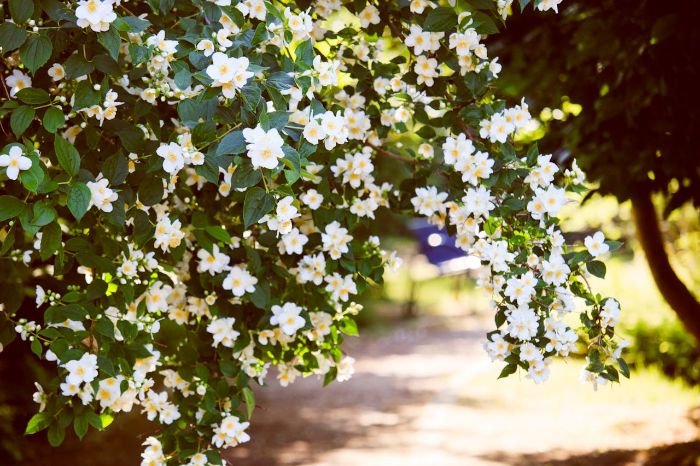
Support choice should match growth strength. Common jasmine can cover a large wall or pergola and needs firm wires, trellis, or an arch. Winter jasmine is a shrub with arching stems, so it can spill over a bank, form a loose hedge, or be tied flat against a wall. Star jasmine twines slowly at first, then forms a dense evergreen screen as stems mature. Thoughtful early planting and tie placement reduce pruning pressure later; planting jasmine at the right depth, distance, and support makes shaping easier after the first season.
| Growing form | Training move | Pruning move | Result to look for |
|---|---|---|---|
| Wall or fence climber | Tie main stems diagonally across horizontal wires | Shorten side shoots after bloom and thin old congested stems | Flowering growth spread across the whole support |
| Arch or pergola | Guide two or three main stems over the frame | Remove stems that hang into walkways and shorten side shoots after flowering | Clear passage with flowers at nose height |
| Winter jasmine shrub | Let young stems arch naturally from the base | Cut older flowered stems to lower side shoots after bloom | Fresh green canes replacing older bare wood |
| Groundcover or bank | Pin or guide stems where coverage is needed | Trim edges after bloom and remove woody mats in stages | Coverage that stays inside paths and bed edges |
| Container jasmine | Wrap soft shoots around a cane, hoop, or small trellis | Tip-prune after flowering flushes and thin weak stems inside the pot | Compact leafy growth with room for light and airflow |
Loose ties matter. Use soft twine, flexible plant tape, or adjustable clips, then check them twice a year. A tie that was harmless in spring can bite into a woody stem by autumn. Replace tight ties before they girdle the plant, and spread new shoots into gaps before reaching for pruners.
Renewal Pruning For Overgrown Jasmine
Overgrown jasmine needs a staged plan. Severe cuts can revive a plant that has outgrown a fence, collapsed under its own weight, or become bare at the base. They can also reduce flowers during recovery. Use renewal pruning for plants whose structure has failed or whose frame has outgrown its support.
Start by removing dead, brittle, diseased, and detached growth. Then find the lowest healthy stems that can become the new framework. If the plant is still attached to a strong support, reduce bulk in sections. If the support has failed, cut the top weight first, repair or replace the support, then tie in new shoots as they appear.
| Overgrown problem | Pruning response | Recovery expectation | Follow-up |
|---|---|---|---|
| Bare base with flowers high above eye level | Remove some of the oldest stems low after flowering and shorten upper growth to side shoots | Fewer flowers during the first recovery season | Tie new low shoots sideways to rebuild coverage |
| Plant pulling away from wall or fence | Cut top weight by sections and reattach the framework to firm wires | Less wind-rock and fewer broken stems | Check ties again after new growth hardens |
| Dense tangled screen with little air inside | Thin crossing stems, remove dead wood, and shorten leaders that dominate the plant | More light reaches inner buds | Repeat light thinning after the next flowering period |
| Old jasmine has filled the wrong space | Cut the frame low in spring or after flowering, keeping healthy basal shoots where possible | One to three seasons of reduced bloom can follow hard renovation | Select new shoots early and train them before they tangle |
Renovation creates many soft shoots. Keep the ones that arise from low, useful positions and remove crowded extras before they harden. Feeding heavily after a hard cut can push long leafy growth that tangles fast. Compost mulch, regular water during dry spells, and patient tie-in usually produce a better frame.
Pruning Jasmine For More Blooms
More flowers come from the right mix of pruning, light, mature shoots, and plant balance. Shade, drought, weak support, and excess nitrogen can keep jasmine from flowering even after accurate pruning. If a jasmine grows leaves fast and produces few buds, look at the whole growing setup before making deeper cuts.
Flowering also depends on letting new shoots mature. Hard cutting at the wrong moment can trade the next display for vegetative regrowth. Light thinning after bloom is usually enough for plants that already flower well. Plants with bare lower growth need selective renewal because surface shearing leaves the interior shaded and old.
| Flowering symptom | Likely pruning link | Correction | Extra check |
|---|---|---|---|
| Lots of leaves and very few flowers | Pruning too late or feeding too much nitrogen after pruning | Move structural cuts to the after-flowering window and reduce high-nitrogen feeding | Confirm the plant receives enough sun for its type |
| Flowers mainly at the top | Vertical stems were left to climb straight upward | Train new shoots sideways and thin older bare stems after bloom | Check that lower stems receive light |
| Flower buds form, then drop | Stress after pruning can expose a water problem | Keep moisture even during bud formation and after cuts | Use watering jasmine guidance for containers and dry spells |
| Plant blooms every other year | Heavy pruning is removing too much mature flowering wood | Switch to lighter annual thinning and keep more young side shoots | Review frost exposure and winter dieback |
| Long whippy stems with sparse side shoots | Growth is being allowed to run past the support | Shorten to outward side shoots and tie new growth across the frame | Use firmer support wires or a wider trellis |
Deadheading is optional for most garden jasmine. Removing spent clusters can tidy a small potted plant or a jasmine near a doorway. The main bloom benefit comes from after-flowering pruning, light, and mature shoots, so spend time on the structure first.
Care After Pruning Jasmine
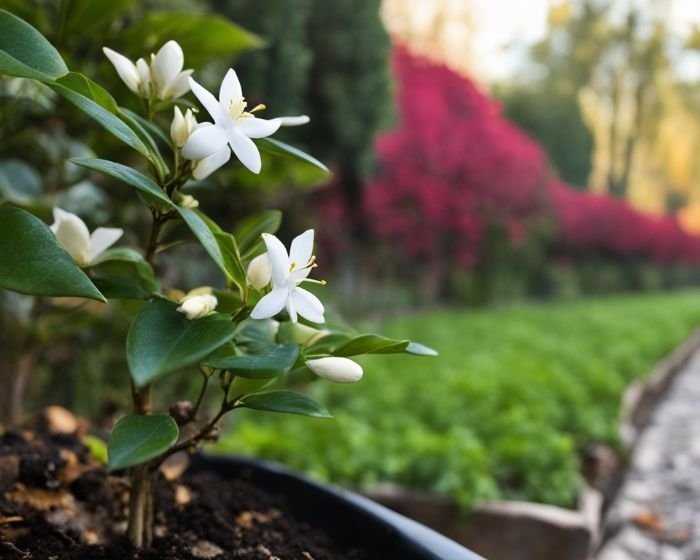
Pruning asks a jasmine to replace wood, seal wounds, and redirect growth. Aftercare should support that work and avoid forcing weak shoots. Water deeply during dry spells, mulch the root zone with compost, and keep mulch away from the crown and woody stems. Container jasmine needs closer watering because the root zone dries faster after warm windy days.
| Aftercare step | What to do | Why it matters after pruning |
|---|---|---|
| Water | Soak the root zone during dry periods, then let the soil drain | New shoots need moisture, and soggy roots weaken recovery |
| Mulch | Apply compost or leaf mold over the root zone and keep it off stems | Mulch cools soil, moderates moisture, and feeds soil life |
| Feed | Use light spring feeding for containers; avoid heavy nitrogen after hard cuts | Excess nitrogen pushes leafy growth at the expense of buds |
| Tie | Secure new shoots loosely before they harden | Early training fills gaps and prevents breakage |
| Monitor | Watch for scale insects, mites, dieback, and drought stress on new growth | Stressed new shoots show problems quickly after pruning |
Do a second small check four to six weeks after pruning. Remove shoots growing into gutters, vents, doors, or tight corners. Retie stems that have pulled away from support. Keep healthy shoots that fill lower gaps, since those are often the stems that make next year’s plant look fuller.
Common Jasmine Pruning Mistakes
Timing errors create the fastest loss of flowers. Cutting summer jasmine deep in spring can remove developing flower shoots. Cutting winter jasmine long after bloom lets old wood keep dominating the shrub. Shearing the outer surface can also leave a plant green on the outside and bare inside.
Another common error is treating every jasmine as the same plant. Star jasmine, winter jasmine, common jasmine, and tender potted jasmine share a fragrance theme and grow in different ways. Matching the cut to the plant prevents most repeat problems.
| Mistake | What happens | Cleaner move |
|---|---|---|
| Pruning all jasmines in the same month | Flowering wood can be removed before it blooms | Use bloom season and plant type to set the pruning window |
| Shearing the outside every year | The surface gets leafy and the center loses light | Thin some stems to the base or to a main branch |
| Cutting every stem to one length | The plant looks flat and sends many crowded shoots from the same height | Stagger cuts to side shoots and keep a layered framework |
| Ignoring support ties | Stems break, sag, or grow into windows and gutters | Tie flexible shoots into gaps before shortening them |
| Heavy feeding after pruning | Soft green shoots grow fast and flower lightly | Use compost mulch and measured container feeding |
| Pruning in heat or drought | New shoots wilt and the plant recovers slowly | Water first, prune during milder weather, and shade small containers from afternoon heat |
Repeated pruning problems usually come from timing errors, removing too much living wood, or using shape cuts where thinning cuts would solve congestion; those common pruning mistakes show up in many shrubs and vines.
Conclusion
Pruning jasmine starts with plant identity, follows the flowering window, and finishes with cuts that protect the flowering framework. Identify whether the plant is summer jasmine, winter jasmine, star jasmine, or tender potted jasmine. Prune after the right flowering window, keep a tied framework, thin old congested wood, and shorten side shoots where shape or access needs control.
A reliable bloom plan is repeatable: remove dead growth, tie useful shoots into space, cut flowered stems back to strong side shoots, and give the plant water, mulch, and time to mature new wood. Done this way, pruning gives jasmine a lower, cleaner, more flower-ready frame and ends the yearly fight with tangled growth.
FAQ
When should jasmine be pruned?
Summer jasmine is pruned after its main flowering period, usually late summer to early autumn. Winter jasmine is pruned immediately after flowering in late winter or early spring. Star jasmine needs light shaping after flowering, with spring reserved for dead, damaged, or congested growth.
Can jasmine be cut back hard?
Established summer and winter jasmine can recover from hard renovation when they have outgrown their space. Flowering may drop for one to three seasons as the plant rebuilds a new frame. Recently planted jasmine, stressed container jasmine, and frost-damaged plants need lighter staged cuts.
How far back can I prune star jasmine?
Light shaping is usually enough for star jasmine. For an overgrown plant, shorten long shoots to side shoots and thin weak or crowded stems. Severe renovation can reduce flowering, so keep a healthy evergreen framework whenever the plant still covers its support well.
Why did my jasmine stop flowering after pruning?
The usual causes are pruning too late, removing mature flowering wood, heavy nitrogen feeding, shade, drought, or frost damage. Let the plant regrow after the next bloom cycle, then switch to lighter thinning and training cuts.
Should I remove dead flowers from jasmine?
Deadheading can tidy a small plant near a door, patio, or indoor support. Garden jasmine usually gains more from pruning flowered stems back to healthy side shoots after the display ends.
What tools are needed for pruning jasmine?
Use sharp bypass pruners for most shoots, loppers for older woody canes, gloves for twining stems, and soft ties for training. Clean blades before pruning living stems and again after removing diseased material.