




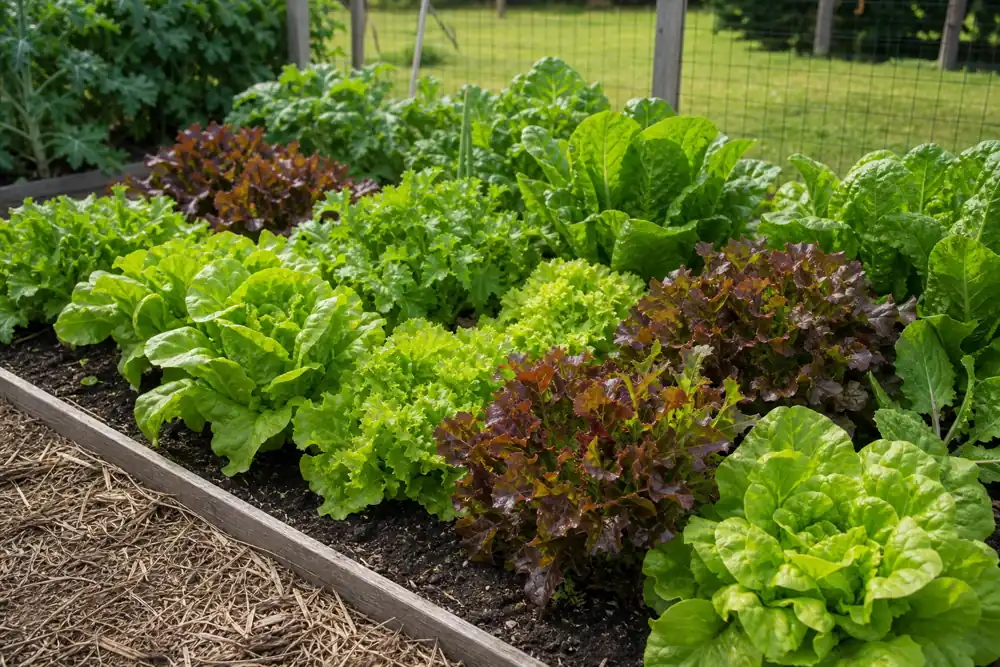
How to grow lettuce well starts with treating it like a cool-season crop, not a small summer vegetable. Lettuce seed can sprout fast, leaves can size quickly, and a bed can look ready for salad in a few weeks. Then one hot spell can turn tender leaves bitter, send the center upward, and change the whole crop from crisp to tough.
The trick is to build the season around the plant’s comfort range. Sow when soil is cool enough for quick germination, thin before seedlings crowd, water before leaves wilt, and use shade cloth when warm afternoons begin pushing the crop toward bolting. A good lettuce bed should feel cool at the root zone and look open enough that every plant has room to form clean leaves.
Use Cool Weather First, Shade Cloth Second
For repeated salads, sow small patches every 10 to 14 days during weather cool enough for tender leaves.
Table of Contents
Key Takeaways
- Sow lettuce when soil is cool and workable.
- Thin seedlings early for better leaf shape.
- Water shallow roots before leaves lose crispness.
- Avoid summer heat without shade or fast harvests.
- Restart small patches every 10 to 14 days.
Match Lettuce To The Cool Part Of Your Season
Lettuce makes its best leaves when the weather stays mild. Cool nights, bright mornings, and evenly damp soil let the plant build thin, sweet leaves before it starts preparing to flower. Heat changes that rhythm. The center tightens, the stem stretches, and the leaves often taste sharper before the flower stalk is obvious.
Spring is usually the easiest window. Sow as soon as the bed can be worked and the soil is no longer cold enough to stall germination. Fall can be even better in warm regions because seedlings start as heat fades, then mature into cooler nights. The broader spring planting calendar helps place lettuce beside peas, spinach, radishes, and other crops that prefer the same early season.
Soil temperature matters more than the calendar on the seed packet. Lettuce can germinate in cool soil; hot soil can reduce germination and push seedlings into stress before they have real roots. University of Minnesota Extension’s lettuce planting guidance keeps the crop in cool-weather windows for that reason. The same root-zone logic behind soil temperature for planting explains why spring air can feel ready as a bed still moves slowly.
Think in short waves. A whole packet sown at once can leave you with too many mature leaves during one week and no good salad a month later. Small sowings every 10 to 14 days keep the bed producing with harvest still manageable.
Choose Leaf Type By Speed, Heat Risk, And Space
Leaf lettuce is the easiest starting point because it matures quickly and can be picked outer-leaf style. The plants stay open, which makes thinning, watering, and checking for slugs easier. Loose-leaf types also forgive imperfect spacing better than heading lettuce.
Romaine grows upright and gives crisp ribs, so it fits narrow rows and containers well. Butterhead forms soft, folded heads with a silky texture that bruises easily under rough watering or crowded leaves. Crisphead lettuce is the slowest and most heat-sensitive choice for many home gardens. It needs a longer cool window and more even moisture, so warm climates often get better results from leaf, romaine, or small butterhead types.
Seed packets often list days to maturity, and those numbers assume favorable weather. A 45-day leaf lettuce can slow in cold spring soil or rush toward bitterness in heat. Use the days as a planning range, then let leaf texture and plant shape make the final call. Utah State University Extension’s lettuce type and spacing guidance is useful when choosing between loose-leaf, romaine, butterhead, and crisphead types.
| Lettuce Type | Best Use | Spacing | Watch For |
|---|---|---|---|
| Loose-leaf | Fast salads and cut-and-come-again harvest | 4 to 8 inches | Crowding that traps damp leaves |
| Romaine | Upright plants and crisp ribs | 8 to 10 inches | Tip burn in heat or uneven moisture |
| Butterhead | Soft heads and tender leaves | 8 to 12 inches | Slug hiding spots inside folded leaves |
| Crisphead | Cool regions with a longer spring or fall | 12 inches or more | Slow heads and heat-triggered bolting |
Sow Lettuce Seed Shallow And Keep The Surface Damp
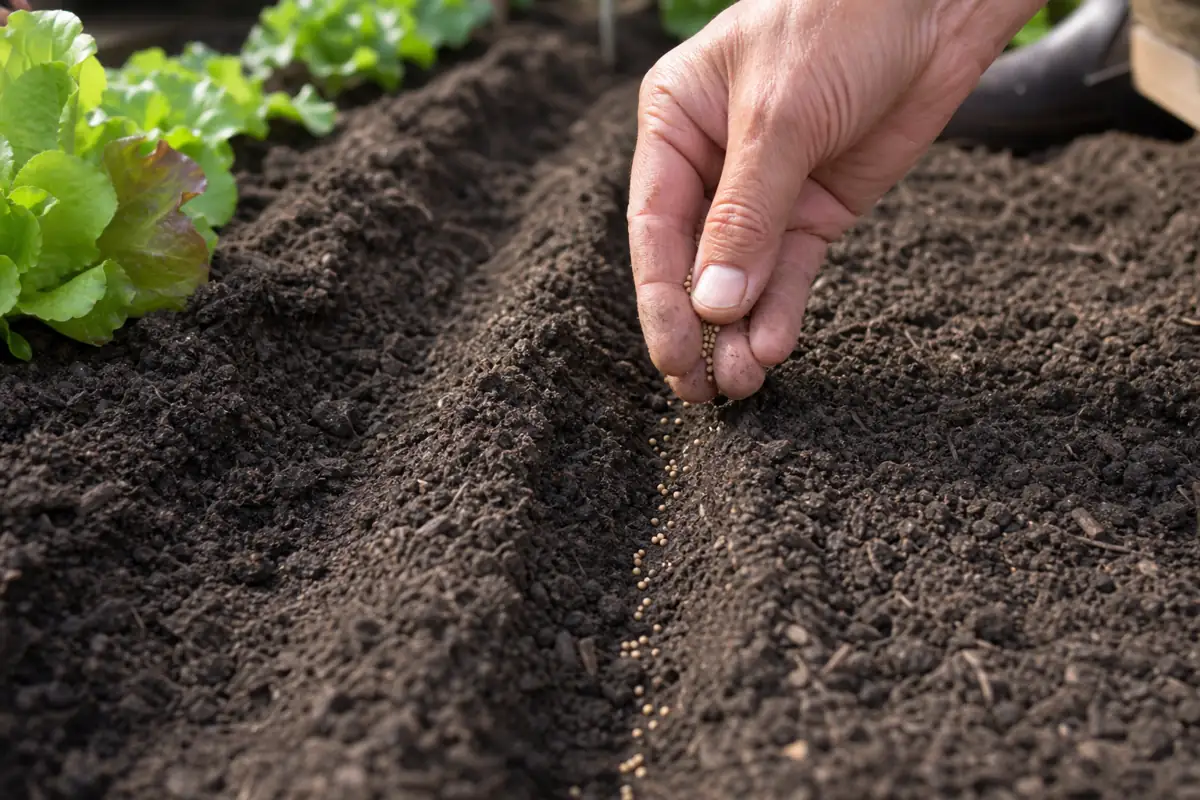
Lettuce seed is small, flat, and easy to bury too deeply. A light cover of fine soil or compost is enough. If the seed disappears under a thick crust, the sprout can run out of energy before it reaches light. The surface should feel like a wrung-out sponge, not a slick mud layer.
Direct sowing works well in spring and fall beds. Draw a shallow furrow, sprinkle seed thinly, cover lightly, and press the surface so seed touches soil. Use a gentle shower setting or watering can rose. A hard blast from a hose scatters seed into clumps, and those clumps become weak seedlings that need more thinning later.
Indoor starts help when outdoor soil is too cold, too wet, or occupied by another crop. Sow in cell trays, keep the mix evenly damp, and give the seedlings strong light as soon as they emerge. Long, pale stems mean the plants are stretching. Move them closer to light or place them outside in bright shade during mild days, then bring them in before cold nights.
The seed-starting window should stay short. Lettuce transplants best before roots circle the cell and before the plant begins leaning for space. A stocky seedling with a few true leaves handles transplanting far better than a crowded tray with tangled roots.
Thin And Transplant Before Leaves Touch
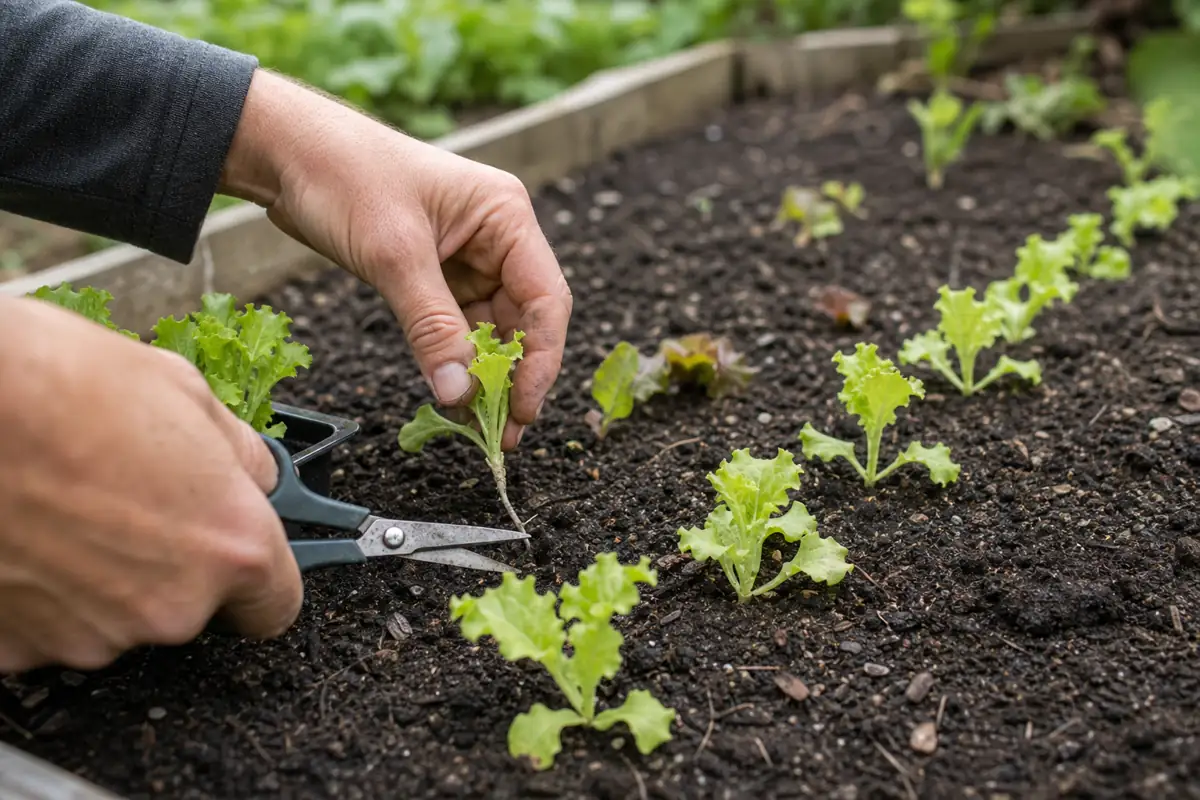
Thinning feels wasteful only until the bed becomes a tangled mat. Lettuce roots are shallow, leaves overlap quickly, and crowded seedlings hold moisture against one another. That dampness invites rot, slugs, and thin pale growth. Remove extras early when the leaves are still small enough to lift without disturbing neighbors.
Use scissors for dense rows. Snip unwanted seedlings at soil level and leave neighboring roots undisturbed. In looser sowings, lift extras with a fork and replant the strongest ones in gaps. Water first so the soil releases roots without tearing them. A fresh transplant should sit at the same depth it grew in the tray or row, with the crown above the soil surface.
Spacing depends on the harvest plan. Baby leaf lettuce can grow closer because it is cut young. Full-size romaine, butterhead, and head lettuce need enough room for the outer leaves to open without pressing hard against the next plant. If leaves stay wet after morning, the row is too crowded or airflow is blocked.
For a mixed vegetable bed, place lettuce where taller crops will not smother it. Light afternoon shade helps later in the season, and young lettuce still needs bright light for compact growth. The wider planning logic in choosing vegetables by season and climate helps keep cool-season greens out of the hottest part of the rotation.
Water Shallow Roots Before Leaves Wilt
Lettuce tells on the root zone quickly. Leaves that were crisp in the morning can turn limp by afternoon when the top few inches dry. The plant has shallow roots and a large leaf surface, so small water swings change texture fast. Once leaves wilt hard, they may recover shape after watering; eating quality often loses its clean snap.
Water deeply enough to moisten the active root zone, then let the surface breathe. Frequent tiny sprinkles can keep the top crust damp without moving enough water into the root area. A finger check or slim trowel tells more than the surface color. Cool, damp soil an inch or two down usually means the plant has what it needs.
Mulch can help after seedlings are established. Use a thin layer of clean straw, shredded leaves, or fine compost between rows, keeping it away from the crown. Thick wet mulch pressed against lettuce stems can create a sour smell and soft tissue. The same moisture-saving principle behind mulching to conserve soil moisture works best when the crown stays dry and the roots stay cool.
Fertility should be gentle. Lettuce needs enough nitrogen for leaf growth. Excess fertilizer can make soft growth more attractive to pests and more prone to burn in dry soil. Compost worked into the bed before planting is often enough for short leaf lettuce. Longer romaine or heading crops may need a light side-dressing once growth is underway.
Use Shade Cloth To Stretch The Salad Window
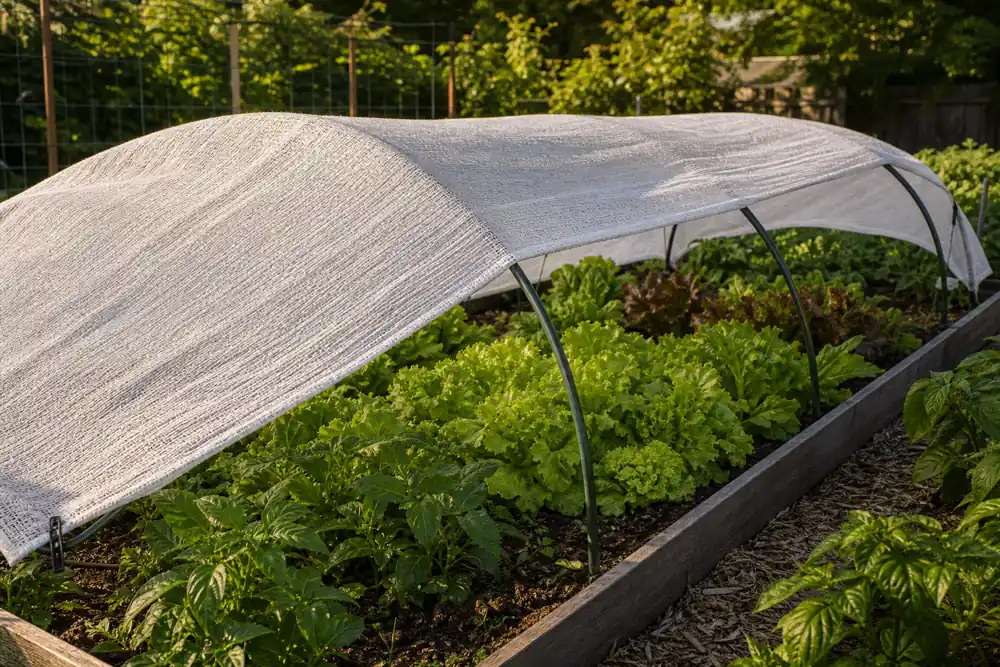
Shade cloth buys time; it does not turn lettuce into a heat-loving crop. Once days run hot and nights stay warm, the plant still wants to bolt. A light shade cover can lower leaf temperature, reduce afternoon wilt, and keep the root zone from heating as quickly. It works best before the plants are already bitter.
Use hoops, stakes, or a low frame so the fabric does not lie on the leaves. Open sides matter because trapped heat under a low cover can be worse than open sun. For lettuce, 30% to 40% shade cloth is usually a practical range in hot spells. Heavier cloth may weaken growth if the bed already gets limited morning light.
Set shade before the worst part of the day, especially when a warm forecast follows a mild week. A sudden jump from cool growth to hot sun is when tender leaves suffer most. University of Maryland Extension includes shade for warm-weather lettuce as a practical way to reduce heat pressure. If plants wilt every afternoon even under shade and the soil is damp, the bed may be past its useful spring window. Harvest young leaves and start a new fall sowing later.
Heat recovery for damaged plants starts with cooling the site and protecting the root zone. That same pattern fits lettuce during a short heat wave, especially before the center stem begins rising.
Harvest Lettuce While Leaves Still Feel Cool And Crisp
The best harvest often happens before the plant looks impressive. Young leaves are mild, thin, and crisp. Older leaves can still look large and green as the flavor turns sharp, especially after heat or water stress. Pick in the morning when leaves are cool and full of moisture.
For loose-leaf lettuce, harvest outer leaves and leave the center growing. For baby leaf patches, cut about an inch above the crown and let the plants regrow if the weather stays mild. Romaine and butterhead can be picked as whole heads or leaf by leaf. Whole heads are cleanest when cut at the base with a sharp knife before the center begins to stretch upward.
Regrowth depends on temperature and plant health. A cut patch may give two or three useful harvests in cool weather. Under heat, regrowth often comes back smaller, tougher, and more bitter. When the plant sends up a central stalk, harvest the usable leaves and clear the bed.
For closer harvest-stage cues, the existing guide to lettuce growth stages covers the shift from seedling to peak flavor to bolting without turning this grow guide into a harvest timeline.
Start With A Small Bed And Repeat It
A beginner lettuce bed should be small enough to water and harvest without delay. One four-foot row of loose-leaf lettuce can teach more than a large patch that matures all at once. Sow a short row, thin it well, and watch how the leaves react to morning sun, afternoon heat, and missed watering.
Cool spring gardens can run two or three small sowings before summer heat takes over. Hot-summer regions often get better lettuce in fall, when late-summer sowings mature into cooler nights. The same cool-season logic applies to peas and broccoli; lettuce moves faster and gives you more chances to restart.
I often see lettuce fail from ambition, not neglect. A small patch watered at the right time tastes better than a huge bed that bolts before the kitchen can use it.
Conclusion
Lettuce rewards timing more than fuss. Sow in cool soil, thin before plants crowd, keep shallow roots evenly damp, and bring shade cloth in before hot afternoons turn leaf growth into a flower stalk.
Start with a small row and repeat it during weather that works with you. The best sign is simple: leaves that snap cleanly in the morning and rinse into a bowl with a cool, sweet smell.
Frequently Asked Questions
What Is The Best Way To Grow Lettuce From Seed?
Sow lettuce seed shallowly in cool, damp soil, then thin early so leaves do not crowd. Keep the seedbed evenly moist until germination. For repeated harvests, sow small patches every 10 to 14 days during cool weather.
What Month Do You Plant Lettuce?
Most gardeners plant lettuce in early spring and again in late summer for a fall crop. The exact month depends on frost dates and soil temperature. In many US gardens, March to April and August to September are common lettuce windows.
Does Lettuce Need Full Sun?
Lettuce grows best with full sun in cool weather and light afternoon shade as temperatures rise. In hot regions, morning sun with shade cloth or natural afternoon shade can keep leaves tender for longer.
How Do You Keep Lettuce Growing In Summer?
Use heat-tolerant varieties, sow small patches, water before wilting, and cover the bed with 30% to 40% shade cloth during hot afternoons. Once lettuce bolts and turns bitter, fall reseeding is usually better than forcing the same plants.
How Many Times Can Lettuce Regrow After Cutting?
Loose-leaf lettuce often regrows two or three times in cool weather if you cut above the crown. Regrowth slows and flavor declines as heat builds. Whole-head lettuce usually gives one main harvest.