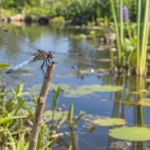

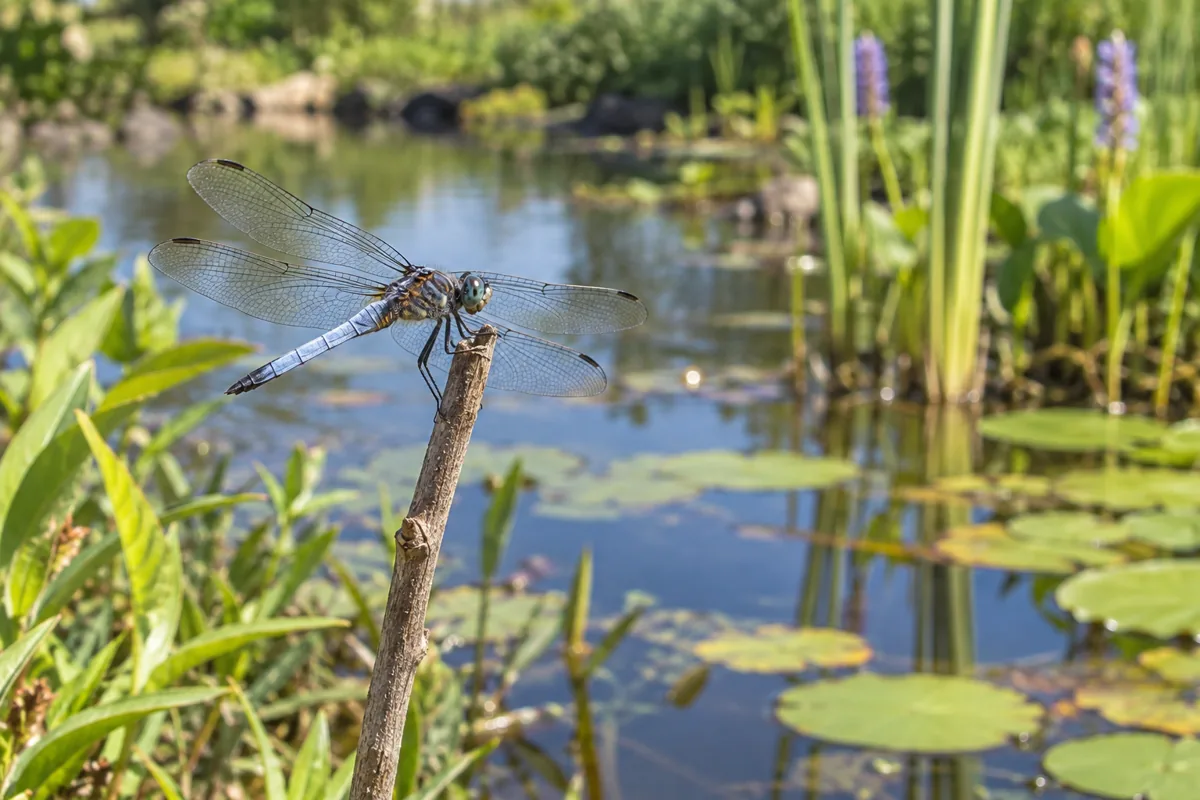
How to attract dragonflies to your yard depends on which part of their life you can support. Flying adults need hunting space, sunny resting places and shelter. Their young develop underwater, where they hide among plants and catch small aquatic prey before climbing out to become winged adults.
A flower border can help visiting adults by supporting other insects. It cannot replace that underwater nursery. If you want more than occasional visitors, the pond’s vegetation, water persistence and fish population matter as much as the flowers beside it.
Choose the route your property can maintain safely. A planted wildlife pond, an existing koi pond and a dry patio offer different opportunities. Each can contribute something useful, with realistic expectations about breeding and mosquito control.
No pond: Add sunny perches, wind shelter and locally suitable flowers and grasses that support insect prey. Adults may visit from nearby water.
Breeding habitat: Provide suitable freshwater, underwater cover and firm stems rising above the surface. A fishless wildlife pond avoids an added source of nymph predation.
Existing fish pond: Improve vegetation and emergence routes, then watch for shed larval skins. Passing adults alone do not prove that young survive there.
Key Takeaways
- Separate visiting adults from the goal of successful breeding.
- Keep firm emergence stems extending above the water surface.
- Choose aquatic plants by function and local species suitability.
- Provide sunny perches beside sheltered vegetation and hunting space.
- Manage mosquito sources separately from attracting their natural predators.
Table of Contents
How to Attract Dragonflies With Habitat for Both Life Stages
The most conspicuous dragonfly is the one darting over the lawn. Much of its life has already happened elsewhere. Aquatic nymphs live below the surface, generally with six jointed legs, visible wing buds and drab bodies that blend with their surroundings. They are predators, not little winged insects waiting on a flower.
The aquatic nymph stage and above-water emergence connect the pond to the flying adult. Missouri Department of Conservation describes nymphs sheltering around underwater vegetation and roots. Their development can extend well beyond one gardening season, depending on species.
- Adults use suitable water and associated surfaces for egg laying.
- Nymphs develop below the surface, finding cover and small animal prey.
- Mature nymphs climb out onto a firm surface and shed their skin.
- Winged adults use the surrounding landscape for hunting, resting and reproduction.
A pond with attractive flowers and a bare, steep liner can leave gaps in that sequence. So can a richly planted basin that dries before its aquatic residents finish developing. Look at what each stage can physically use, from underwater stems to a stable exit above the waterline.
Choose Between a Wildlife Pond, a Fish Pond and a Dry Yard
If you can create a wildlife pond
Start with a safe site, its water supply and the maintenance you can sustain. Check buried utilities and local pond requirements before excavation. Plan where excess water will go, keeping overflow and contaminated runoff away from buildings and the pond’s habitat. A liner, basin or design needs to suit the actual property.
Choose a position with some sunlight, nearby wind shelter and room for marginal vegetation. Deep overhead shade can limit basking and aquatic plant growth. A heavy canopy of shedding leaves also adds cleanup work. In hot locations, some shade can moderate the exposure of a small water body.
Where young children can reach water, plan protective access barriers and constant close supervision. The American Academy of Pediatrics specifically includes ponds in its touch-supervision guidance. Animal escape ledges do not provide that protection. Choose the dry-yard approach if secure access and supervision cannot be maintained.
If you already have koi or goldfish
Fish can eat aquatic nymphs. More cover may give some larvae hiding places, and adults can still visit a fish pond. Neither observation establishes that the pond is a reliable nursery. Check for emergence evidence before deciding that passing dragonflies prove the fish are having no effect.
Add suitable planted refuges and above-water stems where they fit the pond’s operation, keeping their foliage, roots and stems clear of strong pump suction. If breeding is a priority and the space is safe, a separate fishless wildlife basin offers a different habitat. Keep existing pet fish responsibly; releasing them into natural water is not a solution.
A half-barrel or small patio pond can add habitat, although its limited volume makes drying, overheating and freezing important checks. There is no single gallon capacity or depth that guarantees dragonflies across the United States. A small decorative bowl and a persistent planted pond should not carry the same expectations.
Give Nymphs Underwater Cover and a Firm Way Out
Build habitat through the waterline. Submerged vegetation gives nymphs places to shelter and ambush prey. Marginal plants provide stems that continue into the air. Floating or broad leaves can add cover and shade, with open water remaining between plant groups.
Varied shallow shelves and suitable deeper areas let different plant forms occupy the pond. A gently sloping or stepped edge also helps animals that enter the water find a way out. Secure stones and plant baskets so they do not shift when wet. Smooth vertical walls offer fewer escape options.
Choose the exact water garden plants for each pond zone using the species’ crown depth, mature size and regional suitability. Pickerelweed (Pontederia cordata), locally native blue flag irises, arrowheads (Sagittaria species), rushes and sedges are possible marginal choices in appropriate regions. The botanical name and your state matter; a common name on a nursery tag is not enough.
| Structure | Job in the habitat | What to check |
|---|---|---|
| Submerged stems | Underwater cover for nymphs and small aquatic prey | Locally suitable species; growth controlled around open water and intakes |
| Firm emergent stems | Climbing and anchoring surfaces above the waterline | Stems remain upright and extend out of the water |
| Floating or broad leaves | Patchy cover and shade | Permitted species and open surface between plant groups |
| Land plants and bare perches | Prey insects, wind shelter and adult resting places | Regional plant fit, sunny landing points and flight space |
Do not transfer a British native-plant list directly to an American pond. Yellow flag iris (Iris pseudacorus), frogbit and water-milfoil names can conceal different regional invasive risks. Check the exact species against current state guidance before buying or moving plants. Avoid collecting pond plants from wild waterways.
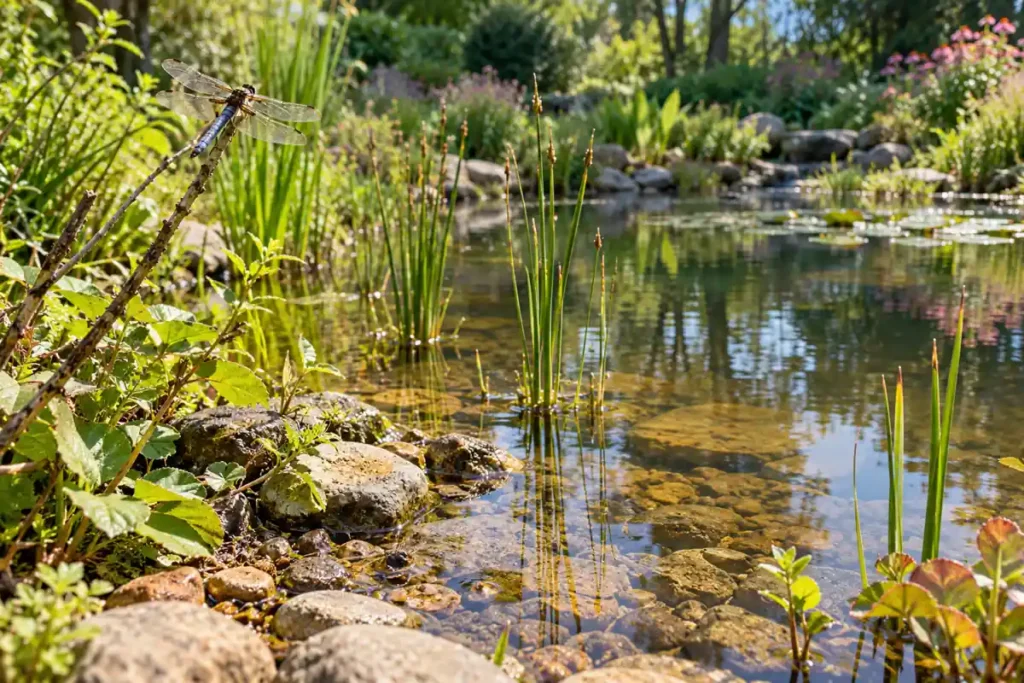
A fountain is optional equipment, not a breeding requirement. Strongly churned water and exposed intakes can conflict with planted refuges. Preserve quiet vegetated areas where the feature allows them. Dragonfly species differ in their use of ponds, streams and other wetlands, so one garden design will not suit all of them.
Make a Pondless Garden Useful to Hunting Adults
Dragonflies catch insects; they do not visit nectar flowers in the same way as bees. A border helps indirectly by sustaining flying prey and giving adults sheltered places to rest. The British Dragonfly Society includes native wildflowers and reduced mowing among ways to support that food supply.
Plant a locally suitable mix with flowers available across the growing season, leaving enough room for each group to mature without shading every bare perch or blocking the pond margin. A sequence of pollinator-friendly plants sustains insect activity beyond one brief flush of bloom. Keep some upright grass or perennial stems beside open hunting space. A carefully maintained patch can supply structure without turning every part of the yard into dense growth.
Add a secure bare twig or leave a suitable existing stem as a perch. Put a flat stone where it receives sun and keep nearby vegetation available for shelter. An adult can move between a warm, exposed landing point and protected foliage as conditions change. Place sticks away from paths and seating where they could become a hazard.
Layered plants that support wildlife through the seasons keep more insect life and shelter in the yard after the first flowers finish. Avoid routine broad insecticide treatment over those habitat patches. It can remove the prey the garden is meant to sustain.
In arid gardens with limited water, put effort into adapted plants and shelter you can maintain. A tiny pond that repeatedly dries may offer less reliable juvenile habitat than expected. Adult visitors remain a realistic goal if dragonflies occur in the surrounding landscape; their arrival is never guaranteed.
Manage Mosquito Sources Separately From Dragonfly Habitat
Both nymphs and adults eat mosquitoes among other prey. Natural predators have limited effectiveness in mosquito management, a distinction made explicitly in University of Maine Extension’s guidance. Adult sightings do not establish a reduction in bites or protection from mosquito-borne disease.
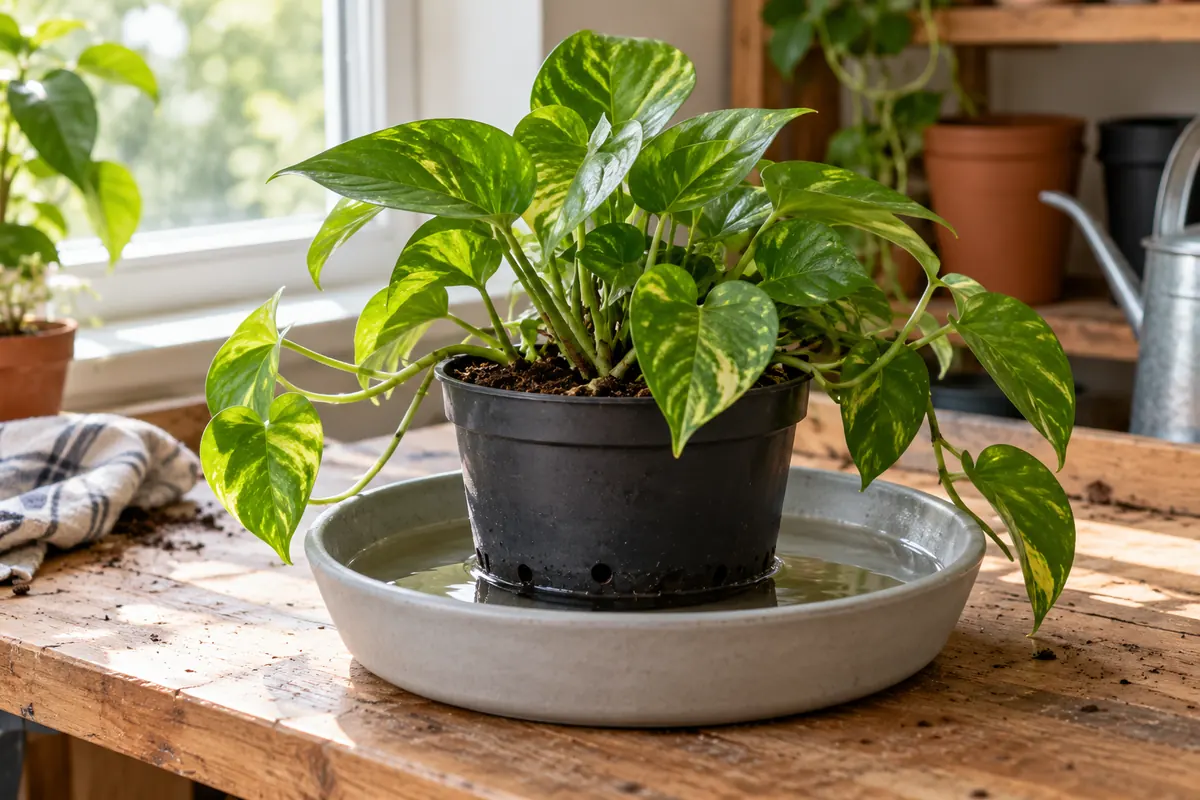
Walk the property and remove unintended water-holding containers. Empty and scrub birdbaths and other small removable water sources weekly, following CDC guidance. Turn over unused buckets, clear water-trapping debris and keep stored rainwater screened. A saucer behind a pot needs attention even when the pond looks healthy.
A maintained wildlife pond is a different object from a neglected bucket. Inspect it for mosquito larvae and manage its water and vegetation. Emptying the whole habitat weekly would remove the conditions aquatic nymphs need. Persistent mosquito problems call for local vector-control advice, not an assumption that another perch will fix them.
Where water cannot be removed or covered, a suitable EPA-registered Bti larvicide may be appropriate. Identify the problem, check that the specific product label permits that water-body use, and follow its directions. Bti acts on mosquito larvae, not already biting adults. Avoid improvised doses or claims that every pond treatment is harmless to all aquatic life.
Preserve Habitat During Cleanup and Watch for Emergence
A little natural debris is part of a pond ecosystem. A thick, sour-smelling load of decomposing leaves or a surface closed by spreading plants calls for a water-quality and maintenance check. Remove excessive material in stages, preserving underwater cover and firm emergence stems wherever practical. Routine total draining removes habitat as well as dirt.
Look at stems immediately above the waterline. A dry, hollow larval shell with gripping legs can remain after the adult has emerged. This shed skin is an exuvia. It is stronger evidence of completed development at that location than a dragonfly simply passing overhead, assuming the shell is correctly identified.
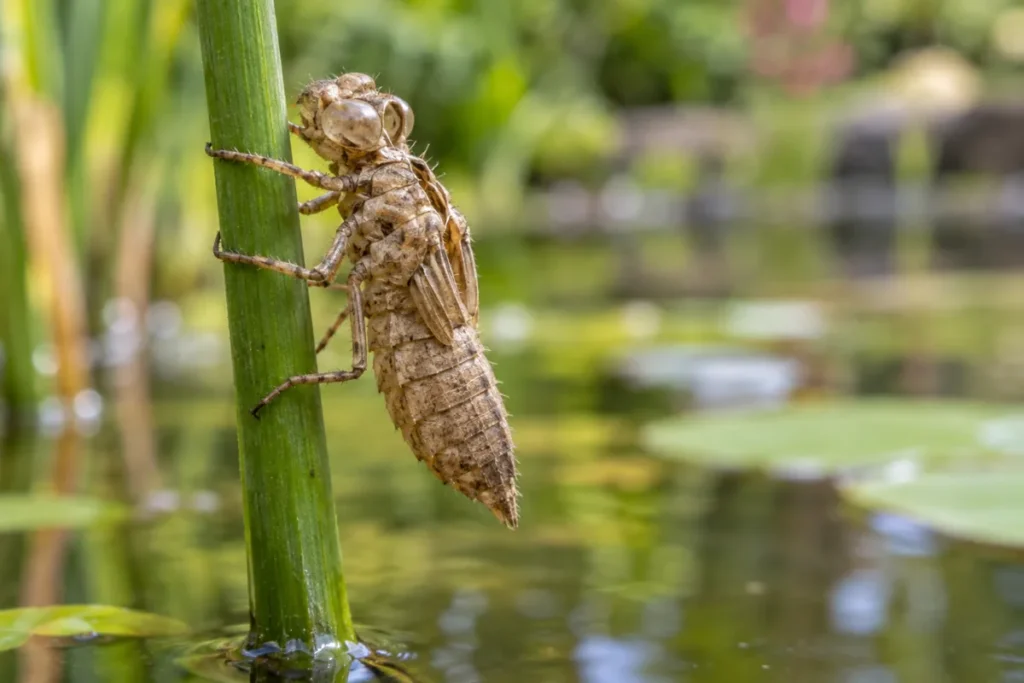
Record dates, weather, adult behavior and any emergence signs alongside notes on water loss, fish, plant changes and cleanup, so a later change in activity has some context. A single shell does not prove a lasting breeding population, and failing to find one does not prove that no dragonflies developed. Some signs are easy to miss.
| What you notice | Check next | Action |
|---|---|---|
| Adults visit, no emergence signs found | Water persistence, fish, underwater cover and exit stems | Correct a clear habitat gap and continue observing. |
| Small basin repeatedly dries | Leakage, heat and realistic replenishment | Improve the design if feasible or focus on adult habitat. |
| Mosquito larvae persist | Incidental containers and the actual pond condition | Use source reduction and appropriate labeled control. |
| Aquatic plants fill every gap | Species identity and spreading growth | Thin selectively, retaining cover and emergence routes. |
Keep expectations tied to local species and seasons. A stream specialist may not use a small still-water pond, and a cold or dry spell changes what adults you see. Improve the physical conditions you can identify instead of rebuilding the whole garden after a quiet week.
Conclusion
Give flying adults a usable hunting garden and give aquatic young appropriate cover, water and a way out. Choose locally suitable plants, keep fish and maintenance tradeoffs in view, and separate mosquito management from wildlife watching. Even a pondless yard can contribute adult habitat without promising a breeding population.
Frequently Asked Questions
Should I buy dragonfly larvae to stock the pond?
Let local adults find suitable habitat rather than buying larvae as a guaranteed shortcut. Moving aquatic organisms can introduce unwanted species or other problems. Check with your state wildlife agency before any proposed release, and do not transfer animals or plants from natural waterways to stock a garden pond.
Can dragonflies sting or bite?
Dragonflies cannot sting. A large individual may deliver a pinching bite if handled. Observe adults and emergence shells in place; catching them is unnecessary for making or assessing habitat.
Are dragonfly and damselfly nymphs the same?
They are related aquatic predators. Damselfly nymphs typically have three leaflike external gills at the tail end; dragonfly nymphs lack those conspicuous tail gills. Body color alone is insufficient for identification. Observe pond animals without removing them from their habitat.