


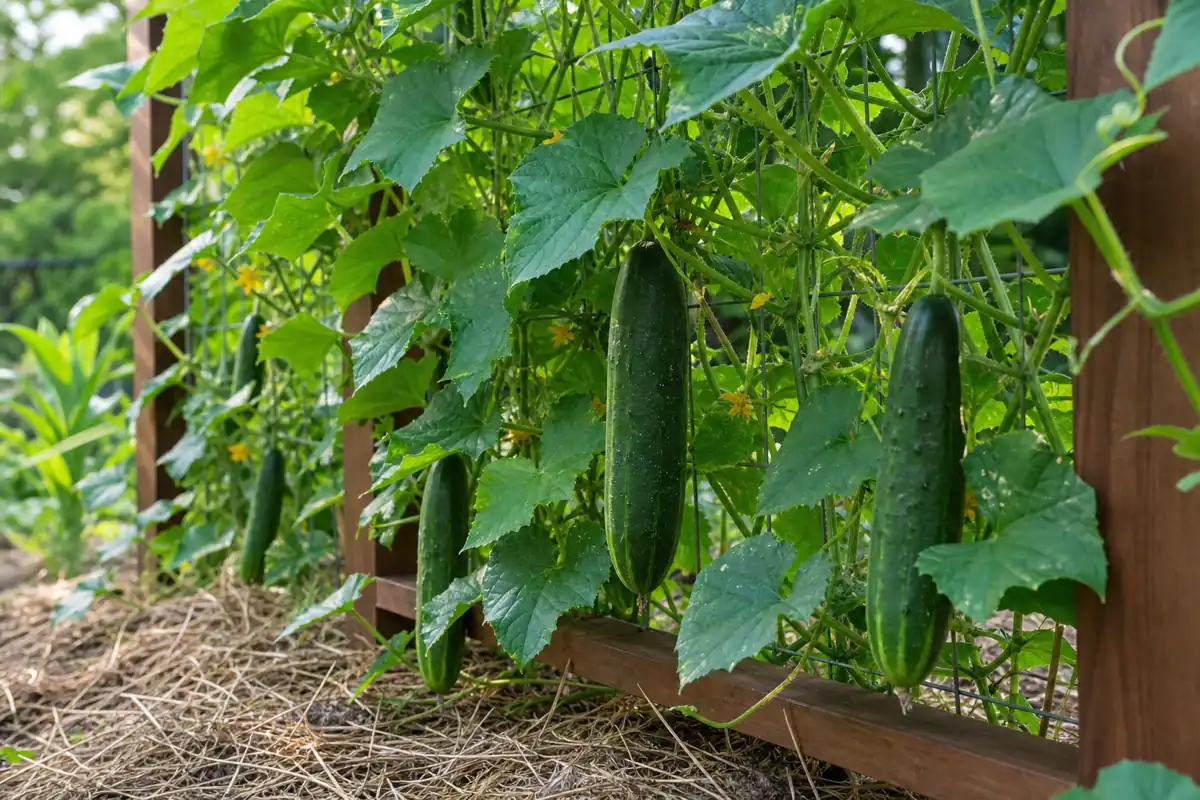
A cucumber trellis changes the crop before the first fruit reaches picking size. Vines that sprawl across damp mulch hide yellowing cucumbers under leaves, bend fruit against the soil, and make every harvest feel like a search through rough stems. Lift those vines early, and the plant shows you more: tendrils gripping support, yellow flowers opening at eye level, and green fruit hanging where air can move around the skin.
The best support is the one your bed can hold before the vines become heavy. A narrow row, a raised bed, a windy yard, and a small patio edge all ask for different structure. Choose the frame first, plant into warm soil, then train the vine when the stems are still soft enough to move without cracking.
Pick The Trellis By The Space You Actually Have
Set the trellis before planting. A mature cucumber vine is too brittle and too shallow-rooted for late wrestling.
Key Takeaways
- Install support before cucumber roots fill the bed.
- Match trellis strength to vine type and wind.
- Train tendrils early, then support heavy fruit separately.
- Avoid weak netting for long, heavy slicing cucumbers.
- Check ties weekly as stems thicken and fruit gains weight.
Table of Contents
Choose The Cucumber Trellis That Fits The Vine
Cucumber vines look light in the seedling stage, then gain weight quickly once leaves, tendrils, flowers, and fruit overlap. The support has to carry living growth, wet leaves after rain, and fruit that may size in only a few days. A thin decorative frame can look fine in May and fold in July.
The first decision is the cucumber type. Bush cucumbers make shorter vines and can use low panels, cages, or a compact teepee. Vining cucumbers need a taller support with more surface area. Most garden slicers and picklers behave like warm-season annual vines, and the Cucumis sativus plant profile describes the species as a trailing or climbing vine with tendrils, which explains why early contact with support matters.
Height depends on both the vine and the gardener. Six feet is enough for many home trellises because the top remains reachable and the vine can be guided sideways if it keeps growing. Taller frames can work; harvest becomes awkward when a ripe cucumber hangs above shoulder height. A support that lets you see the underside of leaves and fruit will save more time than a taller frame that turns picking into a stretch.
Soil warmth still controls the start. Cucumbers resent cold ground, and a trellis cannot compensate for a seed that sits in wet, cool soil. The timing logic in soil temperature for planting fits cucumbers well because root activity and seedling speed decide how soon the vine can begin climbing.
Think about your hands before you think about the picture. Reach both sides of the support, water at the base without soaking leaves, and leave yourself a way to remove a missed fruit before it turns yellow and seedy. Those practical answers matter more than symmetry.
A-Frame Supports Carry Vines Without Stealing The Bed
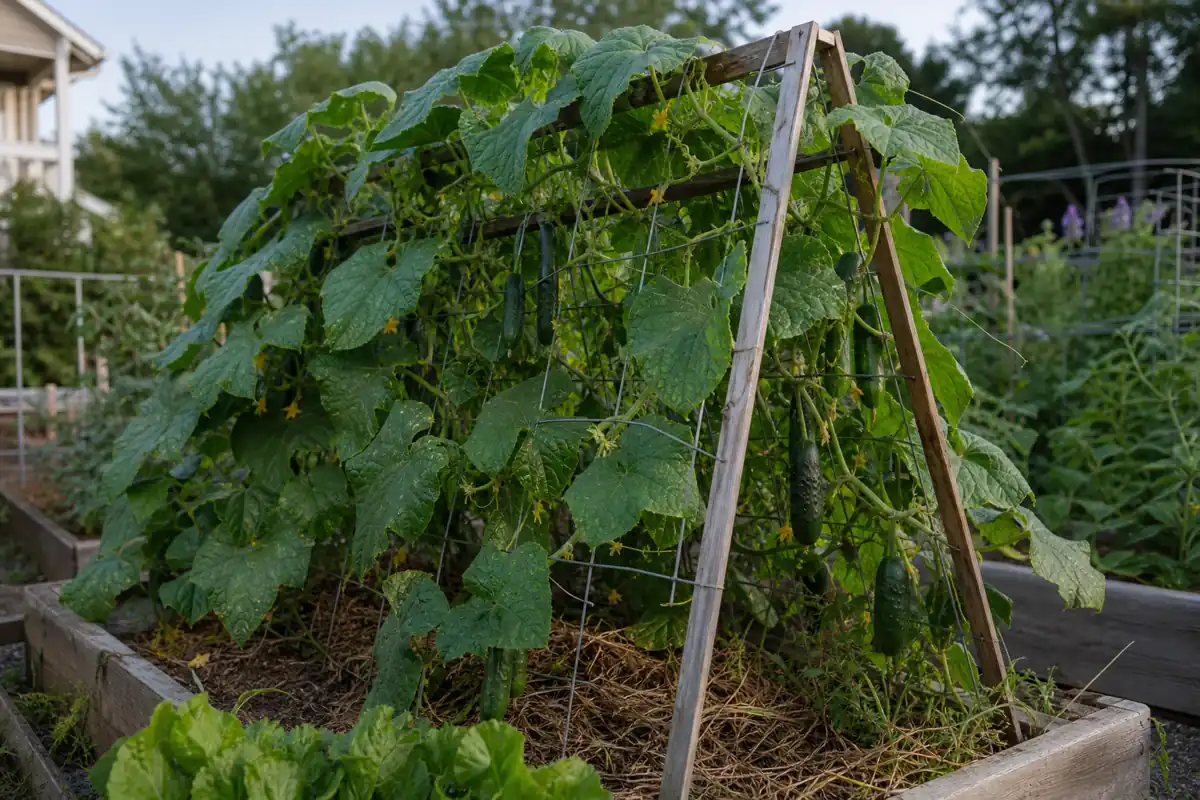
An A-frame trellis works well in raised beds because it creates two sloped climbing faces over a narrow footprint. The angle gives tendrils many places to grip, and the fruit hangs through the structure where it stays cleaner than fruit lying on mulch. When the leaves are brushed, a fresh cucumber scent rises from the rough foliage, and harvest becomes a quick scan along the shaded underside.
Build the frame from wood, bamboo, metal conduit, or two rigid panels hinged at the top. The bottom legs need to sit wide enough that the frame cannot close under weight. If the bed has loose, fluffy soil, push stakes outside the frame and tie the legs to those stakes. The frame should feel stubborn when you shake it before planting.
Set plants along the outside edges so roots have open soil and vines can climb toward the frame. Give each plant enough room for airflow. Crowded cucumber foliage holds moisture, and trapped dampness raises disease pressure, especially after humid nights. The spacing and culture recommendations for cucumbers from Clemson Cooperative Extension keep that air movement in the planting plan, where it is easiest to protect.
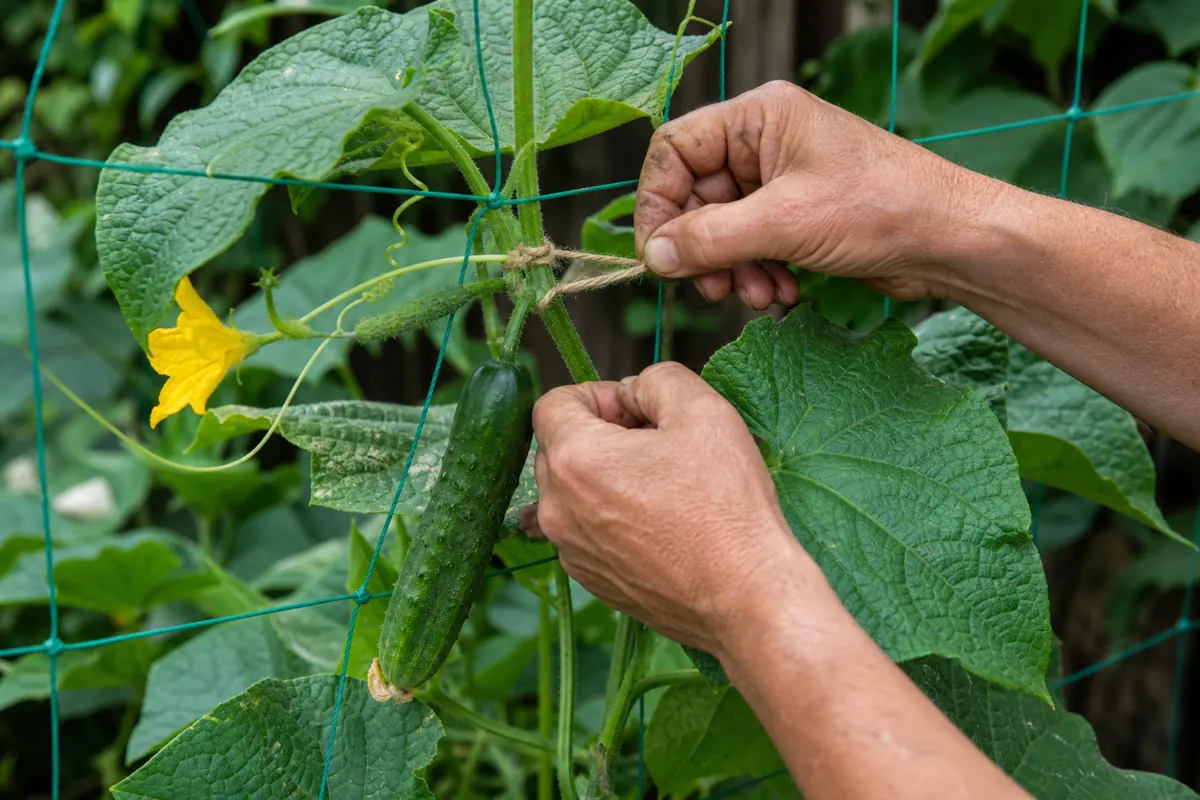
Do not weave young stems tightly through the frame. Guide the main vine with a loose tie, then let tendrils do most of the holding. Cotton twine, soft plant tape, or a loose jute loop should touch the stem without pinching it. If the tie leaves a crease after a windy day, it is too tight.
Cattle Panels Make The Strongest Arch Or Wall
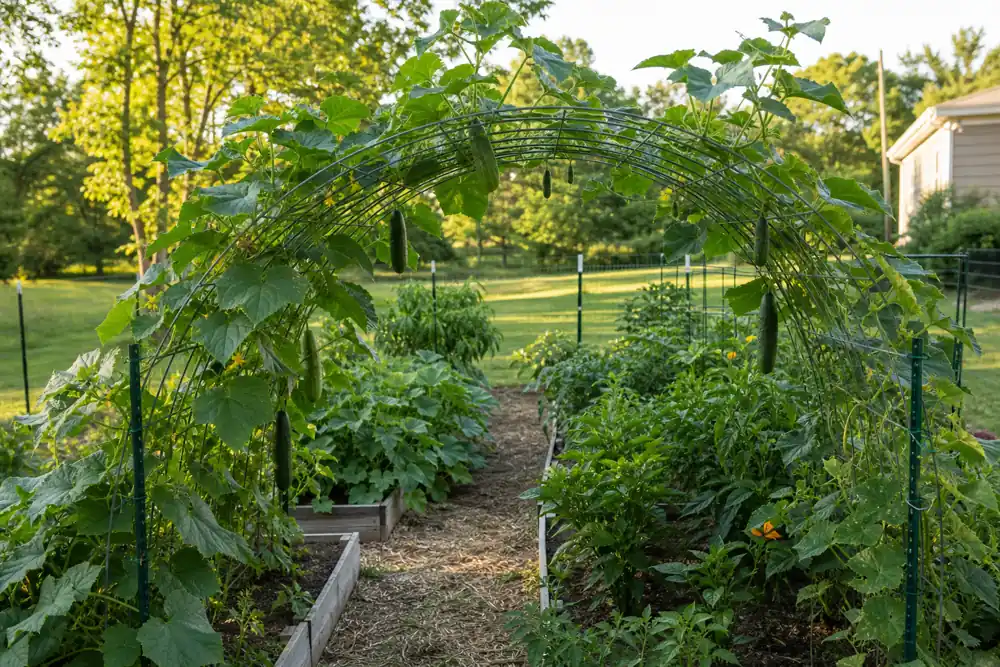
A cattle panel is the best choice when strength matters more than portability. The welded grid handles heavy vines, rain-loaded foliage, and fruit without sagging. It also gives cucumbers a wide surface of metal squares, so the tendrils can grip and the stems can be redirected without much tying.
For an arch, bend the panel between two beds or two rows and pin both sides with T-posts or heavy stakes. The curve should be broad enough to walk under without brushing wet leaves against your shoulders. For a wall, stand the panel upright along the north side of the bed in the Northern Hemisphere so it does not cast the deepest shade over sun-hungry plants.
Metal heats in full sun. In most gardens, cucumber tendrils wrap the grid more than the main stem presses against it. If your summers run hot, keep the root zone mulched after the soil warms and water deeply enough to reach the active roots. Soil moisture checks matter more once vines climb because leaf area increases and water loss rises. A practical soil moisture monitoring habit keeps the plant from swinging between wilt and soggy roots.
Cattle panels also make harvest cleaner. Fruit hangs below leaves, and the grid holds stems away from the soil. Pick when fruit is firm, glossy, and still sized for the variety. A hidden overgrown cucumber can slow the next flush, a pattern that shows up clearly in cucumber growth stages once the vine is flowering and fruiting at the same time.
Netting And String Trellises Save The Narrowest Space
Netting and string systems fit tight rows, fence lines, and small gardens where a rigid frame would block a path. They save space because the support stays flat and they need stronger top tension than many gardeners expect. Loose netting becomes a hammock once wet vines lean into it.
Use a top rail that will not bow. Metal conduit, a wood rail, or a sturdy fence line works better than a thin garden cane stretched across a long run. Anchor the bottom so the net does not lift when wind moves through the foliage. The openings should be large enough for your hand to pass through, because small mesh traps leaves and makes harvest fiddly.
String trellises work best when each plant gets its own vertical line. Tie the string to a top rail, secure the bottom near the plant, and spiral the young vine gently around it as the tendrils begin searching. The string should be firm, not cutting. A loose, slightly rough natural fiber gives tendrils more grip than slick plastic twine.
Observation: I often see narrow-row cucumbers fail because the trellis was installed after the vines had already started crawling. The stems have memory by then. Move them too far, and the main vine splits near the crown.
Netting is also the easiest place to overplant. More vines do not mean more useful cucumbers if airflow disappears and flowers hide inside a damp wall of leaves. Give each plant room to face the sun, then let vertical growth create the yield.
Install Support Before Vines Start Running
Set the trellis before sowing or transplanting. Cucumber roots stay relatively shallow and dislike disturbance, so late post-driving can tear roots just when the plant is preparing to climb. A young seedling can be guided with one finger. A three-foot vine with flowers has already become fragile.
For direct seeding, place seeds at the base of the support after the soil is warm enough for quick germination. The home-garden cucumber timing guidance from University of Minnesota Extension ties cucumber planting to warm soil and frost-free conditions, which matches the way trellised vines need early momentum.
For transplants, plant near the support and water the root ball in without burying the stem. Cucumber seedlings can sulk when roots are roughed up, so slide them from the pot with the root ball intact. If the plant is already flowering in the cell pack, pinch the first flower and give the roots a few days to settle before fruit load begins.
| Trellis Type | Best Use | Weak Point | Setup Check |
|---|---|---|---|
| A-frame | Raised beds and small plots | Legs can spread under weight | Stake all four lower corners |
| Cattle panel | Heavy vines, arches, windy sites | Needs strong posts | Shake the panel before planting |
| Netting | Narrow rows and fence edges | Sags when wet | Tension top and bottom edges |
| String | Single-row training | Can cut stems if tight | Use soft ties and weekly checks |
| Teepee | Compact varieties and containers | Limited fruit load | Choose bush or smaller-fruited types |
Spring timing can vary by region, frost date, and bed warmth. If the garden still swings between cold nights and warm afternoons, the broader spring planting calendar helps place cucumbers after cool-season crops and away from cold soil.
Train Vines Without Strangling The Stems
Young cucumber stems are soft, ridged, and easy to bruise. The goal is to aim the main vine toward support until tendrils take over. Use loose figure-eight ties, soft clips, or strips of cloth. The tie should hold direction, not weight.
Once tendrils grip, leave them alone unless they are pulling the vine into a tight bend. Tendrils coil with surprising force, and removing too many can leave the plant dependent on your ties. If a heavy cucumber begins bending a side shoot, support the fruit with a soft sling or harvest it young if the variety allows.
Pruning is optional in most home gardens. Remove yellow lower leaves that touch soil, damaged leaves that trap moisture, and vines that block a path. Avoid stripping the plant open in hot weather. Leaves shade fruit and feed the plant, and sudden exposure can leave cucumbers pale or sun-scalded.
Water at the base, then let foliage dry. Mulch helps reduce soil splash once the bed is warm, and mulching to conserve soil moisture is especially useful under a trellis because roots and vines occupy different layers of the same small bed.
Keep Fruit Straight, Clean, And Easy To Pick
Vertical growth helps fruit hang with fewer pressure points. A cucumber lying on soil may curve around mulch, flatten on one side, or collect grit in the ridges. A hanging cucumber grows with more open space around it, so the skin stays cleaner and the shape is easier to judge at harvest.
Straight fruit still depends on pollination, variety, water, and harvest timing. Trellising improves visibility and airflow; it does not erase every stress signal. Poor pollination can still leave fruit narrow at one end. Uneven moisture can still make growth pulse after dry spells. The structure simply lets you catch those problems sooner.
Pick often once the vine starts producing. Many cucumbers move from perfect to oversized in a short window during warm weather. A fruit that feels firm and cool in the morning can become duller and seedier if left for several more hot days. Daily harvest checks also keep the vine from pouring energy into one hidden yellow fruit.
Clean picking matters on a trellis. Hold the vine with one hand and cut the cucumber with snips or a knife. Pulling can tear the stem, yank tendrils from the support, or loosen shallow roots near the base. The best sound is a small crisp snip, not the rip of vine tissue.
Start With The Support Your Bed Can Hold
A narrow, windy bed needs a flat panel or netting on the north side with hard anchors. The first task is stability, then vine training. A beautiful arch that rocks in wind will damage stems once leaves and fruit add weight.
A wide bed that can be reached from both sides is a strong place for an A-frame. Plant along the outer edges and keep the center open for airflow and picking. This setup gives a small garden the most useful fruit visibility without turning the whole bed into one cucumber wall.
The strongest long-term frame is usually a cattle panel. It costs more effort at setup; the grid handles heavy growth and can serve peas, beans, or flowering vines in another season. The support earns its space when it stays rigid after a summer storm.
Conclusion
A good cucumber trellis starts with the bed, not the catalog picture. If the support can resist wind, hold wet foliage, and keep fruit within reach, the vine has a better chance to climb cleanly and produce where you can see it.
Install the structure before planting, train stems when they are soft, and check ties once a week as the vine thickens. The payoff is easy to spot: straight green cucumbers hanging above the mulch, dry enough to brush clean with your thumb.
Frequently Asked Questions
What Is The Best Trellis For Cucumbers?
A cattle panel is usually the strongest cucumber trellis for vining types, especially in windy gardens or heavy summer growth. An A-frame is better for raised beds where both sides need to stay reachable. Compact bush cucumbers can use a shorter panel or teepee.
How Tall Should A Cucumber Trellis Be?
Most home cucumber trellises work well at 5 to 6 feet tall. That height gives vining cucumbers room to climb and keeps harvest within reach. If the vine outgrows the top, guide it sideways so the frame stays easy to pick from.
Do Cucumbers Need A Trellis?
Cucumbers can grow on the ground. A trellis saves space and keeps fruit cleaner. Trellising is especially useful for vining cucumbers in small gardens, humid areas, or beds where hidden fruit often becomes oversized before harvest.
How Do You Train Cucumbers Up A Trellis?
Start when the vine is young and flexible. Aim the main stem toward the support, add a loose tie below a leaf node, and let tendrils grip the frame. Check ties weekly because stems thicken fast once warm weather pushes growth.
Can Cucumbers Grow Vertically In Containers?
Compact cucumbers can grow vertically in containers if the pot is large enough to hold moisture and resist tipping. Full-size vining slicers need more root room and stronger support, so a short decorative teepee in a small pot usually fails under fruit weight.