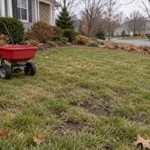



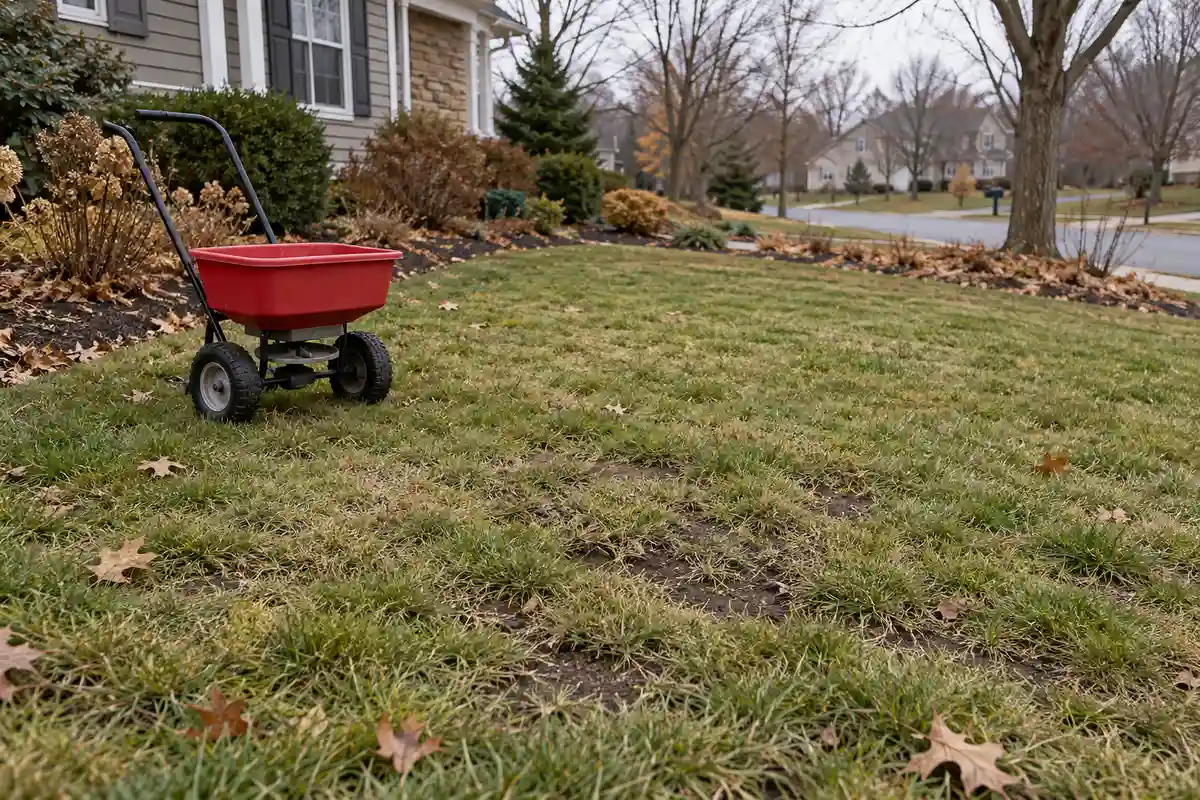
Dormant seeding lawn repairs can begin after the normal fall growing window closes, provided the soil stays cold enough to keep grass seed from sprouting until spring. The difficult part is judging that cold window. A frosty windshield can sit above soil that still encourages germination, leaving tender seedlings exposed to the next freeze. A thin northern lawn with visible soil may be a reasonable candidate; a dense lawn, an unstable slope, or a region with unreliable winter cold changes the decision. Local Extension advice matters because even neighboring states differ in what they recommend for homeowners. Start by separating seed placement from growing a new lawn before winter. You need a suitable grass, contact with the ground, and a spring care plan. Winter sowing can let growth begin as spring soils warm, with losses and repairs still possible.
Sow for Fall Growth, Sow for Spring, or Wait?
Fall establishment is still possible
Use your local active seeding window. Seedlings need time to develop before freezing weather.
Winter placement is locally recommended
Wait for sustained cold. Minnesota uses soil below 40 degrees F; Iowa uses 40 degrees F or lower. Seed must stay ungerminated.
Cold or ground conditions are unreliable
Delay. A forecast warm spell, waterlogged ground, deep snow, or an unprotected washout makes placement uncertain.
Regional limit: Illinois Extension discourages winter dormant seeding for homeowners because it is difficult to do successfully.
Key Takeaways
- Confirm regional recommendations before buying seed for winter placement.
- Remove leaf barriers so seeds can reach exposed soil.
- Avoid extra seed applications borrowed from unrelated lawn mixtures.
- Inspect vulnerable patches after thaws for movement and pooling.
- Arrange spring moisture care before seedlings begin to emerge.
Table of Contents
When Dormant Seeding Lawn Repairs Can Wait for Spring
A cold night does not close the germination window. Soil stores heat and responds more slowly than the air, especially beside pavement or on a sunny slope. A warm spell can let moist seed germinate after growth in the existing lawn has slowed. Once the seed produces a vulnerable young plant, later freezing and drying can defeat the repair.
The intended winter condition is a period of cold soil that delays emergence. Dormant seed has no rooted seedling to maintain during the waiting period. Brown winter turf alone cannot establish whether newly scattered seed will remain unsprouted. Newly sown seed responds to conditions at its landing place.
Use the local window with a temperature trend
Soil below 40 degrees F is the cold-soil trigger for Minnesota dormant seeding in University of Minnesota Extension guidance. Iowa State University Extension uses soil at 40 degrees F or lower with sustained cool conditions. These are regional criteria. Minnesota’s typical window extends from early November to mid-March; Iowa describes late November or early December, with February also possible.
Follow the measurement method used by your local turf program. Keep depth, location, and reading time consistent so changing technique does not masquerade as cooling. Compare representative parts of the repair area over several days and consider the forecast. General soil temperature measurement also explains why a shaded patch and a sunlit edge can behave differently. There is no single nationwide thermometer depth that makes every lawn ready at the same reading.
Keep active fall seeding available where it still fits
If your region still has a normal establishment window, active fall overseeding aims for germination and developing roots before winter. Maryland Extension’s tall fescue calendar generally places that work from mid-August to mid-October. Its schedule should not be substituted for Minnesota’s cold-window method.
Winter placement can also be a poor homeowner choice. University of Illinois Extension calls it difficult and does not suggest it for homeowners. Where local advice favors late summer, early fall, or spring, choose that window. After a missed deadline, reassess the lawn and the remaining local opportunities before scattering seed.
Prepare the Surface So Seeds Reach Soil
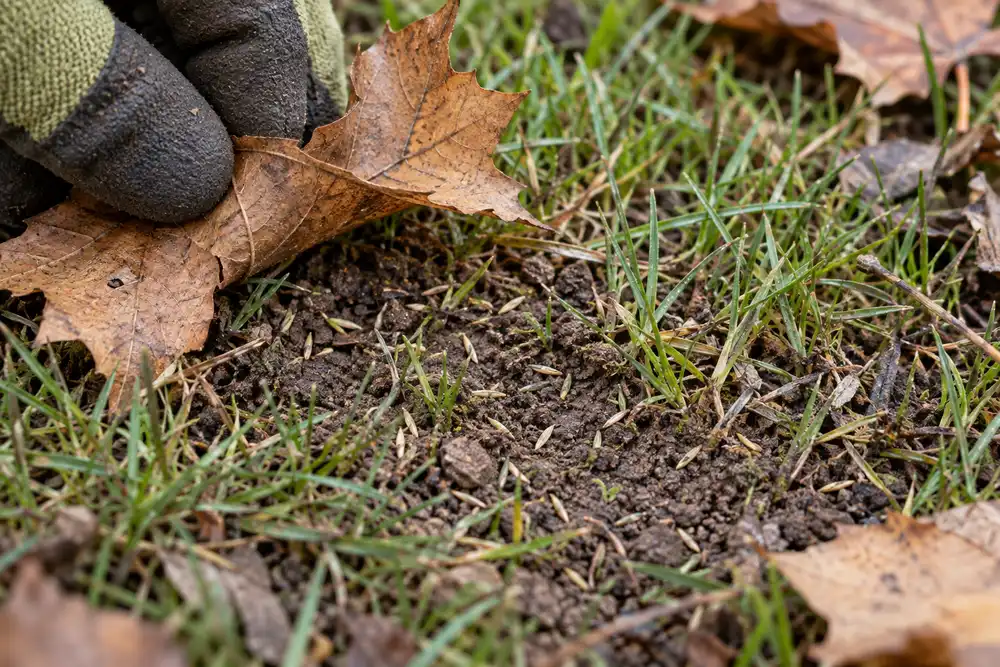
Lift a dry leaf from the repair area. A crisp rustle above a smooth, damp underside reveals a physical barrier between seed and soil. Grass seed resting on that leaf can move with wind or cleanup and never occupy a useful germination site. Remove accumulated leaves before sowing, and keep checking where wind repeatedly piles them.
| Surface condition | Preparation decision | Reason to stop |
|---|---|---|
| Thin grass with exposed soil between plants | Remove debris; retain the existing plants. Extensive soil disturbance may be unnecessary. | Seeds remain suspended on a continuous canopy or thatch layer. |
| Small bare patch with workable soil | Correct the cause of the gap; prepare a firm, lightly textured surface using local lawn advice. | Standing water, smeared soil, or repeated traffic keeps damaging the patch. |
| Dense turf or heavy thatch | Assess whether overseeding is useful and what renovation is actually needed. | Broadcast seed has no route to the ground. |
| Bare incline or runoff channel | Stabilize water movement and plan an appropriate erosion blanket. | Flow will carry soil and seed downhill before rooting. |
Seed-to-soil contact gives emerging roots access to moisture and a place to anchor. Thatch and a dense canopy can separate the seed from that surface. In a thinning lawn with soil already visible, the Minnesota approach often needs little preparation. Routine aggressive raking or core aeration is unnecessary solely because you chose winter sowing.
A bare repair needs a closer inspection. Press a small lump between your fingers: soil that smears shiny and sticks to the glove responds differently from crumbs that break apart with light pressure. Avoid working saturated ground. Footprints and equipment can compact it, reducing pore space and leaving the next spring roots in the same poor conditions that weakened the original lawn.
Why is the patch bare? Repeated dog traffic, shade, pooling, or a discharge from a downspout can prevent another planting from lasting. Correct the identifiable cause first. A small, flat repair with suitable exposure is a more manageable winter trial than renovating an entire failing lawn with its drainage still unresolved.
Choose Grass Seed for the Site and Measure the Amount
The grass that survives next summer matters more than the promise printed on the front of the bag. Select a locally recommended cool-season species or mixture for the lawn’s sunlight, traffic, irrigation, and climate. Kentucky bluegrass, tall fescue, fine fescues, and perennial ryegrass have different establishment and maintenance characteristics. A fast-germinating ingredient is not automatically the best long-term occupant.
Read the label before comparing bag sizes
Species and cultivar names, purity, germination percentage, test date, and weed seed information allow a more useful comparison than a picture of thick turf. The Minnesota seed-selection guidance treats site suitability and label quality as linked decisions. Choose a product that meets the regional recommendation, and retain the label for later troubleshooting.
Fine fescues can fit some lower-input and shaded northern lawns. Other sites require different traits. A shade label cannot compensate for a place where tree roots, dense shade, and repeated wear prevent acceptable turf. If that spot has failed through several seasons, reconsider the surface use or planting before ordering more of the same seed.
Calculate from the recommended rate for that product and task
Use the rate for the chosen grass and whether you are filling thin turf or establishing bare soil. Species differ in seed size and recommended application rates, so a universal pounds-per-thousand figure can underseed one mixture and waste another. Illinois Extension’s normal new-lawn rates, for example, differ between Kentucky bluegrass and tall fescue; those figures are not a national dormant-seeding prescription.
Measure the area actually receiving seed. As an arithmetic example, suppose the appropriate product or local instruction specifies 4 pounds per 1,000 square feet for your particular task. A 250-square-foot repair then needs 1 pound: 250 divided by 1,000, multiplied by 4. The assumed rate illustrates the calculation only. Replace it with the rate that applies to your seed and site.
Buying reserve seed for possible spring repairs is separate from increasing the amount you spread now. Unused seed should remain dry and stored as directed, with its identity and label intact. Doubling an application to compensate for an uncertain winter does not correct poor placement, erosion, or early germination. It adds expense before those causes are resolved.
Warm-season lawns need their own regional plan. Buffalograss can be dormant-seeded under Colorado State University Extension’s regional method, with preparation suited to that species. Bermudagrass, zoysiagrass, and other Southern lawns require their own local establishment recommendations. Use the method that applies to the grass you are actually planting.
Spread Seed Evenly Without Burying or Losing It
Weigh the total amount before opening the spreader. A hopper filled by eye makes it difficult to tell whether the first half of the lawn received most of the seed. For a small repair, mark the edges and measure the quantity for that patch. On a larger thin area, a drop spreader can give more controlled placement along boundaries than throwing seed broadly.
Divide the measured total into two equal portions. Apply one portion across the area in one direction, then the other across the same area at right angles. Each pass receives half the total seed. Two full applications would double the intended amount. Keep the gate closed during turns and when crossing paths so piles do not accumulate at the edges.
Match the finishing step to the surface
Visible soil between established plants may already give seed an adequate landing place. A bare patch may need the gentle surface preparation or light finishing specified for the chosen seed. Keep small turf seeds at the placement depth specified for the product. Avoid a thick covering of soil, compost, or leaves. Deep covering can separate the emerging shoot from the surface it needs to reach.
Inspect several points after spreading. Tiny tan seeds sitting among dark soil crumbs look different from a pale pile caught on flattened grass. Touch the existing canopy gently to see whether seed has reached the ground, without sweeping it into a new mound. If most of the application remains on debris, correct the barrier before sowing additional seed.
Pro Tip: Weigh the empty container and the measured seed together before dividing the application. Record the repair area, product, total amount, and sowing date on the bag label or a lawn sketch. That record makes a bare spring corner easier to investigate than relying on a remembered spreader setting.
Freeze-thaw movement can improve contact during winter. A dense leaf mat or flowing water can still prevent successful placement. A loose, freshly worked seedbed is also vulnerable to movement. Prepare only as much ground as the site’s problem requires, then protect the surface where the exposure warrants it.
Protect Placement Through Snow, Thaws, and Runoff
Seed remains loose until roots anchor a seedling. On a slope, flowing water can remove it well before spring growth begins. A shallow groove cutting through the patch, gritty sediment on the path below, or seed collected in a low corner identifies a placement problem. Deal with surface runoff and erosion before repeating the application.
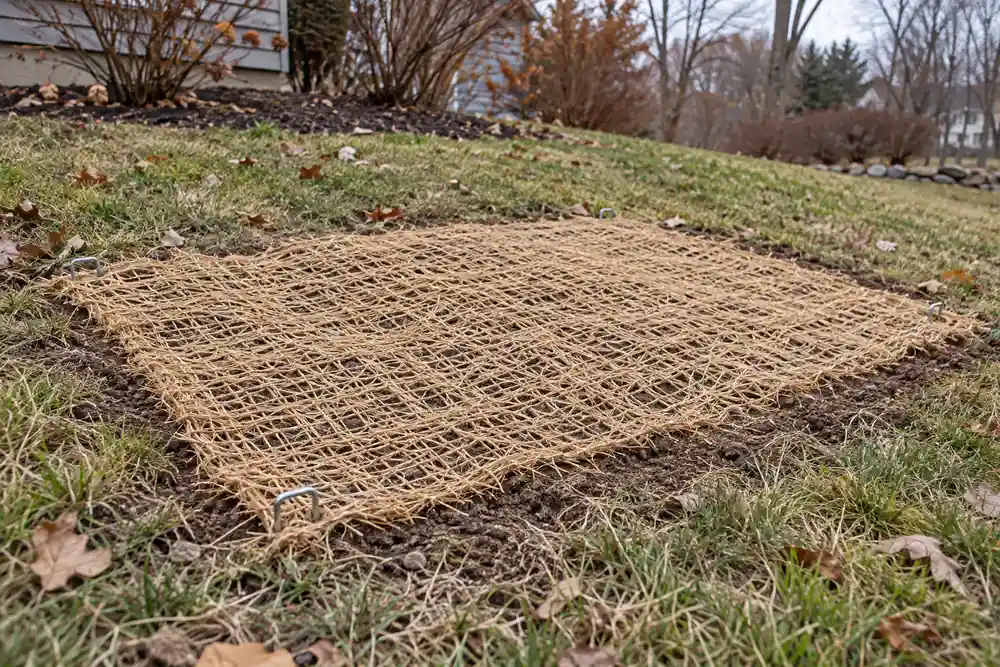
Where appropriate, a seed-compatible erosion-control blanket can hold an exposed repair through weather and allow later growth. Match it to the slope and installation instructions. Keep the material in contact with the soil and secure edges and overlaps as directed. A blanket floating above a hollow or lifting in wind leaves space for runoff to move underneath.
Snow changes access and visibility. Sowing onto melting snow is allowed in Minnesota guidance. Visible ground makes it easier to judge where the seed lands. A deep intact cover hides bare areas and channels, making an even application harder to assess. Do not assume snowfall will hold every seed exactly where it was scattered.
Observation: A patch that feels slick underfoot and carries a bright silt line after a thaw is moving soil as well as water. Inspect once the ground can be approached without rutting it. Repeated washouts need a corrected water route or stronger stabilization before another seed application.
Weather can also create a biological failure. A prolonged warm spell may allow germination; a later freeze or drying period can then damage those young plants. There is no dependable national loss percentage for that sequence. Keep the project small enough that spring patching remains practical, and allow room in your seasonal lawn maintenance for checking the result.
Care for Spring Germination Before Summer Stress Arrives
Spring emergence changes the job. New roots occupy a shallow layer that can dry even when deeper soil remains damp. Moisture that was sufficient for seed waiting through winter may become inadequate for seedlings growing through windy, sunny weather. Base watering on the actual seedbed and developing plants. A calendar date alone cannot identify their moisture needs.
Have moisture care ready when growth appears
Winter precipitation may cover the cold waiting period, so daily irrigation aimed at immediate germination does not fit every dormant application. Once spring growth begins, use the local establishment guidance for keeping the seedbed moist without saturating it or washing seed away. A dry pale surface that feels dusty beside emerging blades calls for a different response from dark soil that smears wet on your fingertip.
A winterized irrigation system creates a practical gap if seedlings emerge before it is ready. Decide how you will supply water when conditions require it, including hose access or another suitable method. Supply that moisture gently. A forceful stream can displace seedlings and restart erosion on the patch you protected during winter.
Which part of the lawn would dry first if a warm, windy week arrived before your irrigation system reopened? Identify that spot before sowing. Its exposure affects whether you can maintain spring seedlings, even if the entire lawn met the cold-soil condition in winter.
Resolve the crabgrass-preventer conflict before application
Many spring preemergent crabgrass treatments can inhibit grass seed establishment, as University of Maryland Extension’s crabgrass guidance cautions. A treatment designed to interrupt weed germination can also interfere with wanted seedlings. The dormant sowing date does not automatically make a later herbicide compatible.
Before using a product, read its label for the grass species, seeded lawn status, waiting periods, and local restrictions. Tell a lawn-care service about the seeded areas before a scheduled application. Limited uses around newly seeded turf are permitted for some products, with product-specific conditions. Avoid treating one exception as approval for every crabgrass preventer.
Assess the repair by pattern before adding more seed
Compare emergence across the patch with the seed mixture, soil warmth, and moisture conditions in mind. Different grasses need different conditions and can emerge at different speeds. A universal deadline measured from the winter sowing date would ignore differences in spring conditions. Sparse areas directly below a water channel suggest a different cause from a uniform delay across still-cold ground.
Keep traffic off vulnerable seedlings and follow your local mowing guidance once they are established enough to tolerate it. Avoid pulling up plants repeatedly to inspect the roots. Record where growth succeeds and where it fails, then repair genuine gaps during an appropriate local window. Winter placement can lead to an earlier spring start. Survival through the first hot, dry period still depends on rooting, moisture, and a grass suited to the site.
Conclusion
Choose a repair area you can protect through winter and maintain through spring. Confirm that local recommendations favor cold-season seed placement, use a suitable product at the appropriate rate, and keep its label with the measured area and application record. Cold soil alone cannot correct a dense canopy, a recurring washout, or a spring herbicide conflict.
Judge the result after growing conditions return. Seedlings appearing across the intended surface, remaining upright after gentle watering, and developing without repeated disturbance give you a useful basis for continued care. If the same corner stays empty, investigate its water movement, contact, and exposure before adding more seed. A smaller successful repair teaches you more about the lawn than an unmeasured application across every weak spot.
Frequently Asked Questions
Can dormant seeding give me a green lawn during winter?
No. The intended seed stays ungerminated during the cold period and grows later when spring conditions permit. Winter greening of a warm-season lawn through actively growing ryegrass is a different practice with its own regional timing and competition risks.
Will birds eat grass seed that waits through winter?
Birds and other animals can remove exposed seed before it germinates, one of the winter-loss risks identified by Iowa State University Extension. Good placement and appropriate surface protection still matter, with no guaranteed loss percentage. Assess genuine spring gaps before deciding whether another application is needed.
Can I replace eroded soil immediately during a wet thaw?
Wait until the ground can be approached and worked without smearing or creating ruts. Diagnose where the water entered before restoring the surface, and avoid assuming all displaced seed is still in place. Reapply only when ground conditions and a suitable local seeding window allow it.