



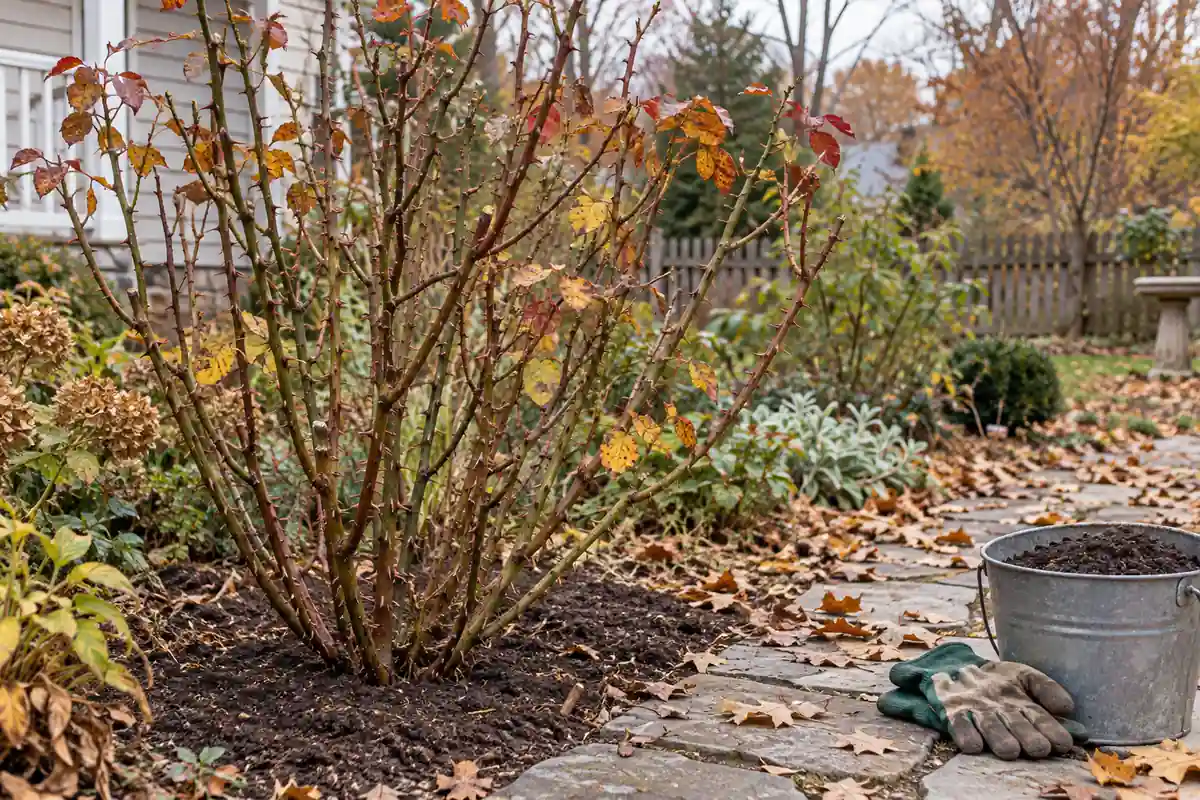
How to prepare a rose bush for winter depends on which part of the plant cold can damage: the roots, the graft near the base, or the long canes carrying next year’s flowers. An established cold-hardy shrub may need little extra work. A tender hybrid tea in the same yard needs protection around its lower stems. A rose in a pot faces another problem because its roots lack the surrounding earth’s insulation.
Start by identifying the rose and checking its local hardiness. Then stop encouraging tender growth, clear diseased debris, and match protection to the plant’s vulnerable tissues. Timing matters as much as the material: enclosing an actively growing rose too soon can create a warm, damp pocket. Leave healthy wood in place, protect only what needs it, and plan when to remove the covering in spring.
Does your rose need a winter cover?
Check its cultivar, hardiness, and growing location first. Clean up and maintain moisture before freezing; add insulation only at the locally recommended dormant stage.
Adapted hardy shrub
Keep healthy canes. Ordinary seasonal care and locally appropriate mulch are often enough.
Check hardiness and graftingTender bush or climber
Protect vulnerable basal tissues. Preserve and secure a climber’s long stems separately.
Choose the right insulationRose in a container
Protect the whole root ball through suitable ground burial or cool dormant storage.
Choose a pot storage methodStill growing through a mild fall? Avoid heavy enclosure now. A cold night, a dormant bush, and frozen soil are different conditions. Schedule spring uncovering as part of the job.
Key Takeaways
- Confirm cultivar hardiness before buying or building winter protection.
- Stop late feeding as cold weather slows seasonal growth.
- Bring mound soil from elsewhere to avoid exposing roots.
- Secure climbing stems to preserve next season’s flowering wood.
- Check stored pots for drying throughout their dormant period.
Table of Contents
How to Prepare a Rose Bush for Winter: Protect the Vulnerable Tissue
A rose’s size does not tell you how much cold it tolerates. The named cultivar’s hardiness and the way it was propagated matter more. A vigorous shrub can still be poorly adapted to your winter, and a small rose can be quite hardy. Find the plant tag or purchase record before treating every bush in the bed alike.
Hardy shrubs and tender modern roses
Many landscape, species, and old garden roses tolerate Iowa winters without elaborate protection; hybrid teas, grandifloras, and floribundas more often need help there, as reflected in Iowa State University Extension’s rose overwintering methods by plant type. It is a regional comparison, not a promise that every shrub rose survives every northern winter.
Compare the cultivar’s recommended hardiness range with your location. Then consider the planting site: an exposed bed with drying wind differs from a sheltered border. A recently transplanted rose also deserves attention because its roots have had less time to establish. Extra protection for that first winter need not mean burying every hardy shrub under a large soil mound.
The graft union changes what must survive
A grafted rose joins the desired flowering variety to a different root system. The junction may look like a swollen, knobbly area where several canes meet. If only the rootstock survives, new growth may belong to that plant. The flowering variety you bought can be lost even though shoots return.
An own-root rose has no separate rootstock variety, but it can still suffer cold injury. A graft placed below ground has soil around its vulnerable junction, which is why Colorado State University Extension specifies a buried union when planting roses in its climate. Do not dig up an established bush merely to look for a buried union or change its depth this fall. If the junction is hidden, nursery records are more useful than disturbing the roots.
Finally, separate stem protection from root protection. Climbers may need their long flowering framework preserved; potted roses need attention around the container. A tree rose has an elevated graft, so a mound at ground level cannot protect that upper junction. In a severe winter climate, that form needs a specialized local protection plan.
Slow New Growth Before Cold Weather Hardens the Canes
Soft new shoots are a poor starting point for winter. Repeated feeding, bloom cutting, and unnecessary pruning can keep a rose producing fresh growth when it needs time to harden. Let the seasonal slowdown happen. Leave a cold-region bush time to mature its existing growth.
Regional stopping dates differ. University of Minnesota Extension uses August 1 for feeding and mid-September for deadheading tender roses; Illinois Extension uses August 15 and October 1. Those dates illustrate different local schedules. If autumn has already arrived, skip a catch-up feeding and follow your local rose recommendations.
Leaving spent flowers to form hips reduces repeated cutting. It does not mean ignoring broken stems or disease. Work through three separate tasks before insulation goes on:
- Collect diseased fallen foliage from around the bush.
- Check moisture in unfrozen soil and water only if needed.
- Tie loose canes and remove wood that is broken or diseased.
Clear infected leaves without stripping the whole garden
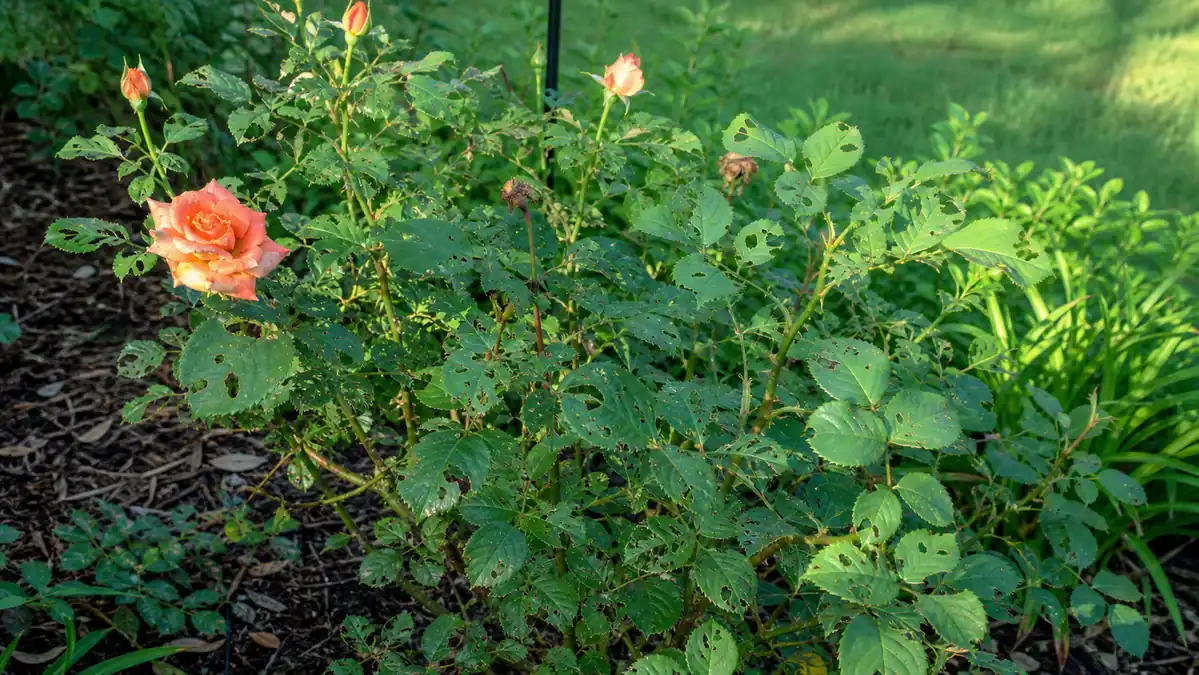
Black-spotted leaves lying beneath a rose can carry disease into the next season. Oregon State University Extension’s fall rose guidance identifies infected foliage as a cleanup priority. Pick it out before piling protection over the base, and dispose of it according to local yard-waste rules. Do not reuse that infected litter as the rose’s winter blanket.
A wet leaf may be slick and almost black where several leaves have stuck together; dry infected leaves can crumble when handled. Neither condition makes the material suitable insulation. The job is to remove disease-bearing rose debris, not to clear every healthy leaf from every garden bed.
Keep roots supplied without soaking them
Check beneath the surface before watering. Dry soil that falls apart into pale crumbs needs a different response from dark clay that smears across a finger. Water a dry root zone before freezing prevents absorption; leave an already wet bed alone. A winter mound will not repair a site where rainwater collects around the crown.
Moisture checks remain part of seasonal garden care even after flowers stop. Cool weather reduces demand. Living roots still need some moisture.
Keep autumn cuts limited to damaged wood or a genuine wind problem. Tall canes swaying hard enough to rock the base may need tying or modest shortening. Do not cut every bush to a fixed height. Pruning timing for repeat-blooming and once-blooming roses differs, especially when last year’s canes carry the next flowers.
Mound Tender Roses After Dormancy to Limit Freeze-Thaw Damage
Winter insulation should buffer cold and temperature swings around vulnerable tissues. It should not turn the bush into a little greenhouse. A heavy enclosure installed during warm autumn weather can delay cooling and hold dampness against a plant that has not settled into dormancy.
A single frosty morning is not the same as a hard killing frost or frozen ground. Illinois uses a hard killing frost and substantial leaf drop as covering cues. Minnesota separates mulch after hard frost for hardy shrubs from crown insulation after ground freezing for tender hybrid teas. Check the method recommended for your rose and region before installing it.
Use the November garden checklist to organize materials and other cold-weather chores, then let local conditions determine the rose’s covering day. Preparing supplies early is different from covering early.
| Rose and region | Documented protection | Timing condition |
|---|---|---|
| Adapted hardy shrubs in Minnesota | 2-4 inches of mulch | After the first hard frost |
| Tender hybrid teas in Minnesota | 8-12 inches of soil or compost over the crown | Once the ground freezes |
| Tender roses near Chicago | 10-12 inches of soil, then 10-12 inches of loose leaves, hay, or evergreen branches | Mound after hardening; add the loose layer after the mound freezes |
| Roses in Central Oregon’s high desert | Collar containing approximately 6-8 inches of bark mulch | After ground freezing |
These are separate local methods, not interchangeable layers. A few inches of routine shrub mulch and a deep mound over a tender graft serve different purposes. In a mild, wet winter region, do not copy the Chicago recipe simply because it is thicker.
Build the mound without taking soil from the roots
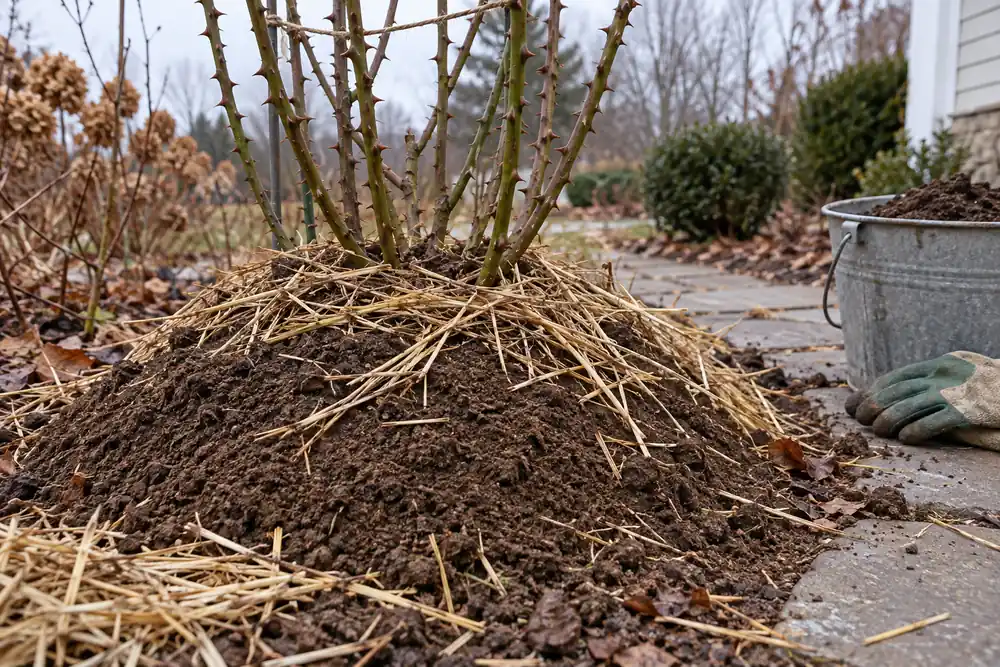
For a tender bush that needs hilling, bring in loose, well-drained soil or a suitable soil-compost mixture. Illinois Extension’s winter hilling and drainage guidance warns against scraping soil from around the same plant. That can expose or injure the roots you are trying to protect.
Clear the base, loosely gather awkward canes if needed, and place the imported material around the lower stems and vulnerable junction to the locally recommended depth. Do not carve a ring-shaped trench around the bush to obtain the soil. The surrounding root area should remain intact.
Handle the material before spreading it. A drained mixture breaks into crumbs and smells earthy; a saturated mass feels sticky and holds together in heavy slabs. Do not pack those slabs against the rose. Drainage remains important even when the mound eventually freezes.
Add the prescribed loose insulating layer at the correct stage for that method. Where wind would scatter it, a wire collar can keep material in place. Keep leaves or straw loose and airy. After a storm, check that erosion has not exposed the lower stems or left water collecting at the base.
Keep Climbing Canes Stable Without Trapping Winter Heat
A climbing rose needs more than a protected base if its long canes are vulnerable to cold. Losing those stems can mean losing much of the framework, and for roses flowering on older wood, losing the next bloom. Cutting everything down to fit a cover defeats that purpose.
Begin with the support. Replace failed ties and secure loose stems with soft ties that hold them without cutting into the bark. A locally hardy climber may stay on its trellis with appropriate basal mulch. A tender climber in a severe winter location may need additional cane insulation.
Lower only canes that can bend safely
Some cold-region methods involve removing canes from their support, gently laying them down, pinning them, and covering them. Suitability depends on the cultivar, stem flexibility, and available space. Cold canes become harder to bend; forcing a stiff, rough-barked stem until it cracks creates an injury that protection cannot undo.
If a cane resists or begins splitting, stop. Illinois describes an alternative with straw packed around supported canes, held with twine, and secured by an outer burlap wrap. That is a method for protecting the stem framework, not proof that a thin piece of burlap replaces protection around a tender graft.
Keep the ties accessible for spring removal. Avoid fastening wraps so tightly that they cut into stems or prevent inspection after wind loosens the material. A covered climber still needs a sound trellis and intact canes.
Rose cones have real limitations
Extension advice differs on foam cones. Iowa discourages them because fitting the plant may require heavy fall pruning and winter sunlight can warm the enclosed air. Illinois allows them when installed at the proper dormant stage, ventilated, anchored, and used with basal protection.
Choose a well-drained mound and suitable loose insulation if a cone would require cutting away healthy wood or you cannot keep it ventilated. Do not seal the whole rose inside plastic to make it waterproof. A cover that traps warm, wet air conflicts with keeping the plant dormant.
Temporary overnight frost covers have a different job. They help during a short cold event; they do not supply a complete winter plan for a tender graft, a long climbing framework, or exposed container roots.
Insulate Potted Roots and Check Moisture During Storage
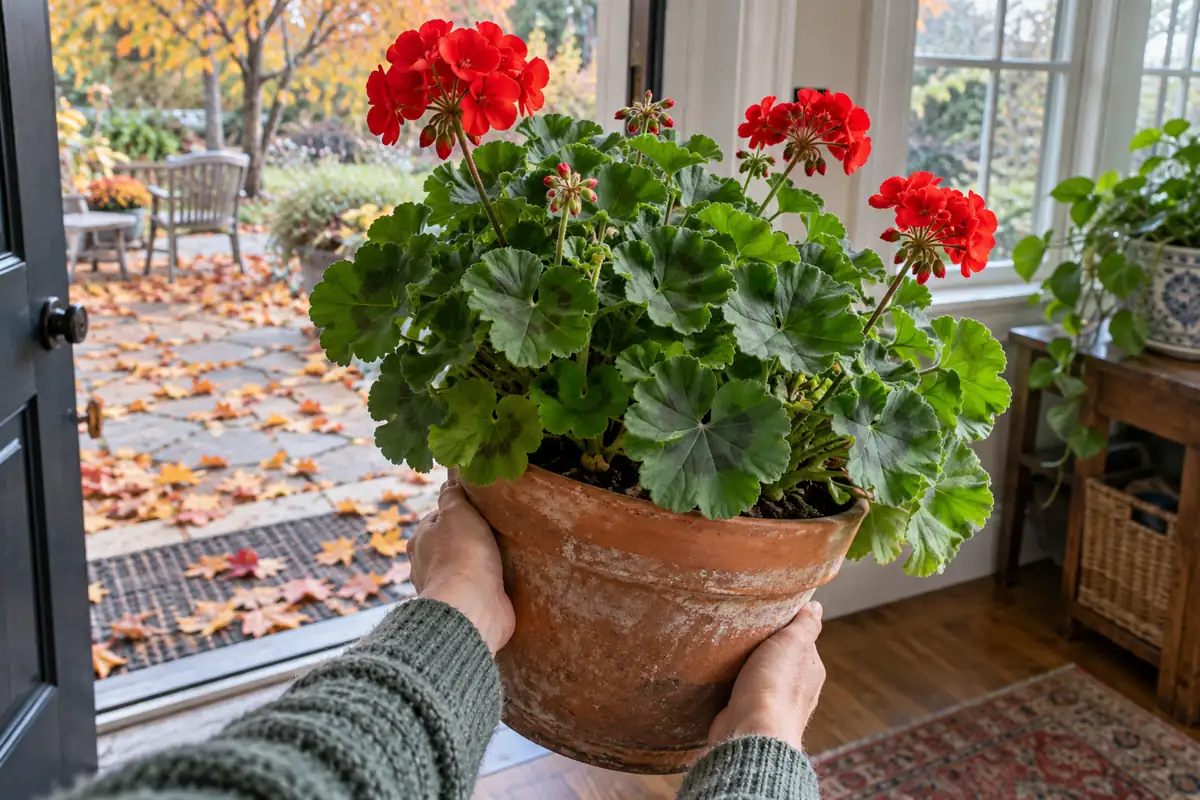
A rose rated for your climate can still struggle when its roots spend winter above ground in a pot. Soil surrounding an in-ground root system buffers temperature changes. A container on a deck or balcony loses that protection around its sides and underneath.
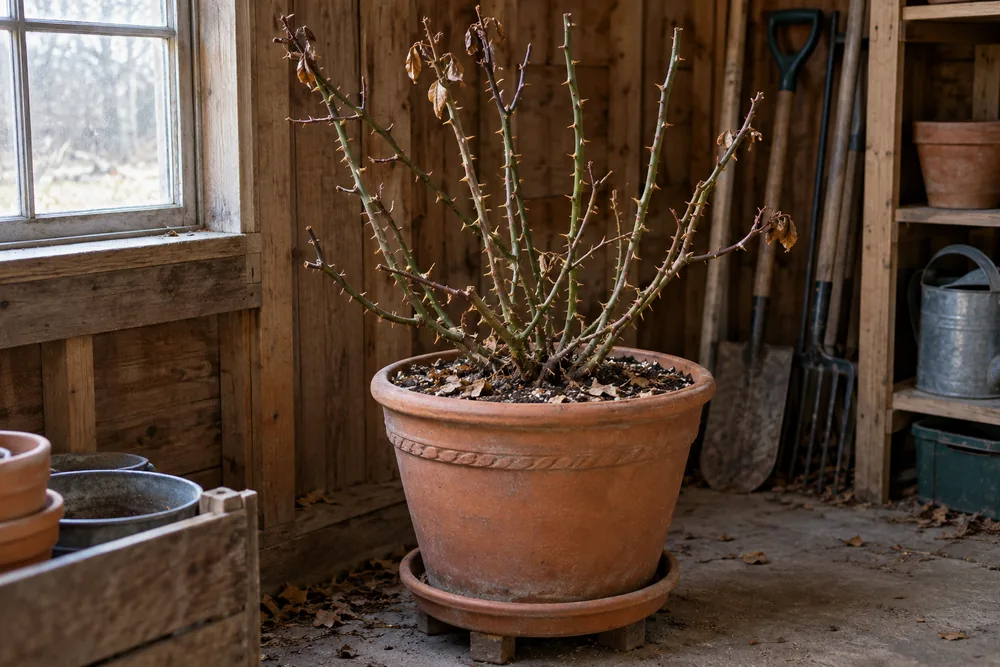
Adding mulch to the pot’s surface does not protect the entire root ball in severe cold. For dormant container roses in Iowa, two documented options are sinking the intact pot into sheltered garden soil or using a cool protected garage or shed. Choose the method before the ground becomes too hard to dig.
Ground storage or a genuinely cool room
For ground storage, prepare a sheltered place with drainage. Once the rose is dormant, and before ground freeze, set the pot into the ground and backfill around it. Follow the locally appropriate protection for the lower canes as well. Burial buffers the roots; it does not automatically make a tender stem or graft cold-hardy.
For indoor dormant storage, measure the actual temperature. Iowa’s example is a garage or shed consistently around 30-45 F, not a heated basement or a shed that becomes just as cold as the open yard. An unheated building’s name does not tell you its winter temperature.
Check the potting mix periodically. A dry pot feels lighter, and loose mix near the surface can look pale and dusty. Dark, clammy mix that sticks to a finger needs no extra water. Keep the root ball from drying completely. Empty any saucer that collects water beneath it. Dormancy lowers water demand; it does not eliminate it.
A miniature rose kept actively growing in a sunny indoor position is a different arrangement. It needs light and ongoing care. Do not put a leafed-out houseplant rose in a dark room and follow the sparse watering used for dormant storage.
Dry winters require their own moisture checks
Winter water also matters outdoors in dry regions. Oregon State University Extension’s Central Oregon guidance calls for watering during snow-free periods when the ground is unfrozen, with a regional interval of about four to six weeks. That high-desert advice is not a watering schedule for rain-soaked gardens elsewhere.
Before adding water, check the soil and whether it can absorb moisture. Frozen soil or a saturated bed needs a different response from an unfrozen, dry root zone. Let the root-zone condition determine whether to water.
Remove Winter Cover Before New Shoots Grow Through It
Protection has a removal stage. Once the worst winter cold has passed and the ground thaws, watch for swelling buds and new shoots beneath the covering. Leaving insulation indefinitely can hide growth, hold moisture, or expose tender shoots to an abrupt change when you finally uncover them.
Use local weather and the rose’s development to choose a removal date. Even Iowa guidance distinguishes southern and northern parts of the state. A March date suitable in one garden can be premature in another.
Take away loose outer materials, loosen ties, and carefully remove temporary mound soil without dragging it across new buds. Work gently around the original soil line. Resume normal seasonal mulch placement after the temporary winter protection is gone; do not leave a dense wet collar pressed against emerging stems.
Look for firm buds and living canes before deciding how much survived. Green growth above a graft is different from vigorous shoots coming only from below it. Trace those shoots to their origin before treating them as recovery of the flowering cultivar.
Cold-damaged tips do not automatically mean the whole rose is lost. Wait for growth to make living portions clearer, then remove confirmed dead or damaged wood at the appropriate pruning stage. An own-root rose and a grafted rose can respond differently after extensive cane loss.
Keep a short record of where protection worked and where problems appeared:
- A washed-down mound calls for better material retention next winter.
- A wet crown calls for drainage attention before adding cover.
- Broken climbing stems call for better support and gentler handling.
- A dried storage pot calls for more frequent moisture checks.
Change the action that failed. More insulation alone cannot correct every winter problem.
Conclusion
Protect the part of the rose that your winter threatens. Keep an adapted shrub’s healthy wood, insulate a vulnerable crown or graft when local conditions call for it, preserve a climber’s canes, and give a container’s roots more than a surface layer of mulch.
Before the next cold spell, check the plant label, root-zone moisture, and available materials. Gather supplies without enclosing a still-growing bush. When the correct dormant stage arrives, install the chosen protection and set a spring reminder to inspect and remove it. Leave the spring inspection reminder with your garden notes so it is easy to find.
FAQ
Can I use compost in a rose winter mound?
Illinois allows a loose, well-drained soil-compost mixture for hilling. The material must drain; compost that stays saturated is a poor choice. Check the method recommended locally before replacing an entire soil mound with another material. Use imported material without excavating around the rose’s roots.
How should I water a miniature rose kept growing indoors?
Water when the soil surface feels dry, following Iowa’s indoor miniature rose guidance. Keep the actively growing plant in a sunny window or under plant lighting, away from heating sources and cold drafts. This is ongoing houseplant care, separate from maintaining a dormant pot in a cool garage.
Should I add lime when preparing roses for winter?
Only if a soil test and a locally appropriate recommendation show that it is needed. Lime changes soil chemistry; it is not winter insulation. A routine cup per bush can be inappropriate where soil already has a suitable or high pH. Separate any soil correction from the decision to protect the crown or roots.