

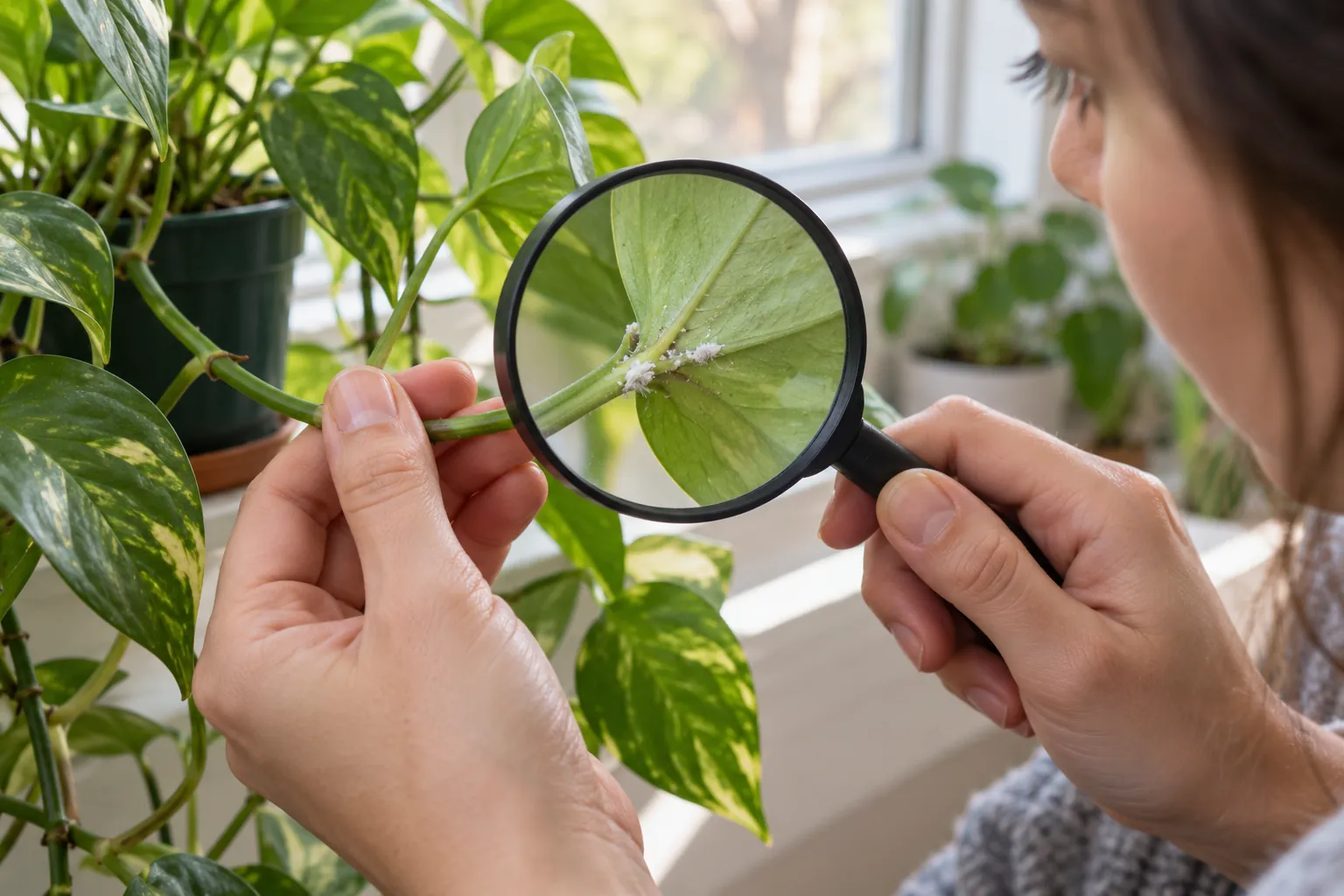
Mealybugs on houseplants often become visible as white cottony patches tucked into leaf joints, along stems, or underneath leaves. Before spraying, look through a magnifier for an actual wax-covered insect. White mineral residue and other pests can resemble the first signs. Once you find mealybugs, separate the plant from the rest of the collection and inspect the places its leaves normally hide.
Removing a few exposed insects is only the beginning. Their waxy covering and sheltered positions make contact treatments uneven, and a clean-looking leaf can sit above an overlooked colony. The next decision depends on how far the infestation extends, whether the plant can tolerate handling, and whether the roots are also affected. Start with careful inspection and physical removal, then choose any pesticide by its current indoor-plant label. Repeated checks tell you whether the population is shrinking or returning to the same protected spots.
Match the finding to the next action
White patch; identity uncertain: Inspect for a waxy oval body. Hard deposits without insects may be mineral or fertilizer residue.
A few insects in leaf joints: Isolate the plant, remove reachable insects gently, and inspect neighboring plants.
Colonies across several stems: Check concealed growth and the pot. Choose a labeled indoor-plant treatment only after assessing plant tolerance.
Repeated return or declining roots: Investigate missed sites and possible root infestation. A badly damaged plant may be better discarded.
Key Takeaways
- Isolate the affected plant before handling the rest.
- Inspect leaf joints, undersides, stems, and the pot rim.
- Remove reachable insects gently and record their hiding places.
- Test plant tolerance before any labeled contact treatment.
- Recheck new growth and nearby plants during routine watering.
Table of Contents
Identify Mealybugs on Houseplants Beneath the White Wax
The white material is a clue, not the whole insect. Mealybugs have a small oval or elongated body beneath a waxy coating, often with short filaments around the edge. A hand lens can reveal body segments or slow movement. Look where a leaf stalk joins the stem and along the underside of leaves, especially near folds that shelter a colony.
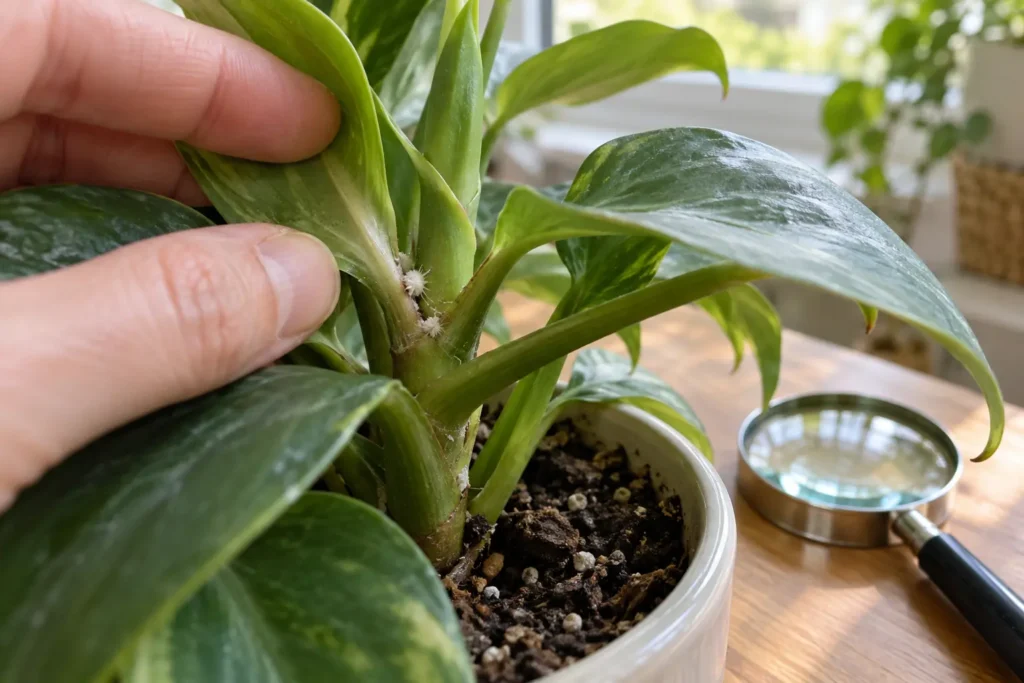
Sap feeding can leave a plant with yellowing leaves, weakened growth, or dieback. Some mealybugs also produce sticky honeydew, which can support black sooty mold. University of Maryland Extension connects those symptoms with feeding activity. Yellow leaves or a sticky surface alone do not identify the insect; inspect the plant itself before choosing treatment.
| Finding | What to examine | Next step |
|---|---|---|
| Cottony patches in leaf joints | An oval waxy body, filaments, or slow movement | Isolate if insects are confirmed. |
| Hard white rim or dried splash marks | Mineral deposits; check separately for insects | Review water and fertilizer deposits. |
| White insects that flutter from leaves | Other pests, including whiteflies | Identify the flying insect before treating. |
| Dark flies near potting mix | Soil insects rather than a cottony leaf colony | Inspect the growing medium separately. |
Salt deposits can build up on containers or leave residue where water dries. The mineral and fertilizer deposit guidance from Maryland Extension treats that as a different problem. A crust that flakes from a pot rim has a different texture from the soft wax clustered around a living insect. Both conditions can occur on the same plant, so finding deposits does not end the pest inspection.
Photograph the insect close enough to show its body and record where it was found. Include a wider view of the affected stem. That combination is more useful for identification than a photograph of one yellow leaf. Scale insects and cottony egg masses can complicate the picture; seek local Extension help when the body is not clear.
Isolation Interrupts Contact Between Infested and Clean Plants
Move the affected plant away from touching foliage and shared work areas. Keep its saucer, supports, and tools with it until they have been inspected and cleaned. Incoming plants, pots, and tools can introduce mealybugs into indoor collections, a route described in University of California IPM guidance. Inspecting those items can reveal a source that leaf treatment would miss.

Inspect neighboring plants in good light. Turn each pot, follow the stems, and open leaf joints carefully. Leaves that were touching the infested plant deserve particular attention. A large collection needs an orderly inspection sequence so the same plant is not repeatedly checked as an overlooked neighbor continues carrying insects.
A separate location still has to suit the plant. Cold drafts, excessive sun, or a dark cupboard can cause additional decline and make pest damage harder to interpret. Maintain appropriate light and watering during isolation. Moving a stressed plant into unsuitable conditions does not make it easier to recover.
The habits that keep houseplants growing well remain part of recovery. Avoid adding fertilizer merely because leaves are yellow. Excess nitrogen can encourage tender growth, and UC IPM describes that growth as favorable to mealybug problems. Find the reason for poor growth before trying to feed the plant out of it.
No fixed number of isolation days proves that every insect is gone. Look for new colonies, insects in previously affected joints, and clean growth over repeated inspections. Keep notes on those observations. A plant’s release from isolation should reflect what you find, including the condition of nearby plants.
Physical Removal Reaches Exposed Insects Without Coating Foliage
A few accessible insects can often be removed with a damp cotton swab or careful handpicking. Support the leaf so it does not bend sharply at the stalk. Lift the waxy material and inspect beneath it, rather than wiping the surface until it looks cleaner. Dispose of removed insects and used swabs without transferring them to another pot.
Work from the visible colony into nearby concealed growth. Inspect the back of the leaf stalk, the stem below it, and any overlapping leaf base. A plant can carry several separate colonies. Removing the most obvious patch gives you a better view, though it does not establish that the whole plant is clear.
Sturdy foliage may tolerate a directed rinse that dislodges exposed insects. Delicate leaves and easily bruised growth need gentler handling. Keep the pot stable and prevent unnecessary soaking of the growing medium. The force needed to remove a pest should not tear the plant you are trying to preserve.
Prune a heavily occupied shoot if removing it leaves a viable plant. Check the remaining stem joints before putting tools away. Where pothos vines and leaf nodes overlap, separate them gently to inspect the sheltered surfaces. Crowded growth can hide a second colony immediately behind the first.
Physical removal works best as an inspection process as well as a cleanup. Record which parts held insects and revisit those locations. Fresh wax in an old hotspot or a colony on a new leaf gives you a reason to investigate further. A photograph from the same angle makes small changes easier to recognize.
Wax and Sheltered Growth Limit Contact Treatment
A contact product has to reach the insects it is meant to affect. Waxy coverings and tight leaf joints can prevent uniform contact. The mealybug management guidance from UC IPM describes these obstacles and the need for continued monitoring. A single application cannot be judged solely by the amount of foliage it wetted.
Keep alcohol use limited to individual insects
UC IPM describes swab treatment with an isopropyl alcohol solution of 70% or less for small infestations. Its guidance calls for testing a small part of the plant one to two days beforehand, and some plants may need a more dilute solution. Maryland Extension cautions that alcohol contacting leaves can damage them. Those cautions matter even when the insect is easy to reach.
If using that spot method, dab the individual insect with the tested solution. Do not turn it into an untested whole-plant spray or assume every plant tolerates the same concentration. Stop if the treated tissue develops injury. Physical removal remains an option when leaf sensitivity or inaccessible growth makes spot treatment unsuitable.
Match a pesticide to the actual indoor use
Insecticidal soaps, horticultural oils, and other products have different labels and plant restrictions. Select a product whose current label permits the indoor site, the plant, and the target pest. Follow its dilution, application, testing, and retreatment directions. Dish detergent is not interchangeable with a formulated insecticidal soap.
The IPM sequence of identification and monitoring helps keep treatment tied to actual findings. A systemic product also needs the correct label and purpose; watering an insecticide into a pot should not be an automatic response to white wax. Reassess where the population survives before adding another product.
Root Feeding Requires Evidence Below the Pot Rim
Some mealybugs feed around roots and remain hidden during a foliage inspection. A declining plant with few visible insects may warrant a closer look, especially after the growing conditions and aboveground hiding places have been checked. Yellowing alone is insufficient evidence for a root infestation. Water stress and other root problems can produce similar decline.
Start with the accessible pot surfaces. Examine the rim, drainage openings, stakes, and the outside of the container for insects or waxy material. UC IPM includes pots and supports among places that can harbor mealybugs. A colony on a stake can replenish nearby foliage even after the leaves have been cleaned.
If root inspection is justified, handle the plant carefully and compare actual organisms with photographs or a diagnostic submission. White particles in a potting mix can also be perlite, salts, or fungal growth. A white speck without an insect body does not identify a root mealybug. Root condition, waxy colonies, and recognizable insects need to be evaluated together.
Drainage still needs its own assessment. Saturated mix, standing water in a cachepot, and soft damaged roots can complicate recovery. Maintaining drainage through the pot addresses the growing conditions; it does not establish whether insects are present or eliminate a confirmed root infestation.
A foliar swab cannot reach insects hidden in the root ball. Avoid repeatedly applying the same leaf treatment to solve a problem it cannot contact. Root mealybugs can be difficult to manage, and a badly affected plant may need disposal. Ask Extension for identification and an appropriate local response before attempting a treatment around the roots.
Separate Cottony Colonies From Flying Soil Insects
A collection can have more than one pest at the same time. Cottony colonies on stems and small dark flies around moist potting mix describe different locations and feeding stages. Inspect both rather than expecting one pesticide to address every insect in the room.
When tiny flies rise from a pot, look for evidence in the growing medium. Fungus gnat larvae in potting soil need a different diagnosis from wax-covered insects attached to leaves. A sticky card can show flying activity, though it does not reveal the extent of a concealed leaf infestation.
Bti treatment with Mosquito Bits for fungus gnats targets the relevant feeding larvae in growing media under matching label directions. It is not a mealybug treatment. Keeping those jobs separate prevents repeated soil applications from becoming a substitute for removing insects tucked into leaf joints.
White flying insects disturbed from foliage deserve identification too. Whiteflies are one possibility; some male mealybugs also have wings. A flying insect’s color does not settle which pest produced a cottony patch. Photograph the attached insects and the flyers separately when both are present.
Keep the inspection records separate. Note where insects occur, what they look like, and which plant surfaces were treated. That makes a returning soil fly different from a new waxy colony on a stem. The University of Minnesota Extension indoor-insect guidance uses pest-specific identification for these different houseplant problems.
Returning Colonies Reveal Missed Shelter or Continued Infestation
Inspect the plant each time you water, as Maryland Extension recommends in its indoor mealybug monitoring advice. Revisit the same leaf joints, undersides, and pot surfaces, then check developing growth. Small new colonies can be easier to miss than the original cottony patch.
Separate residue from live activity. Old wax can remain after insects are removed; a magnifier helps you look for bodies and movement. New wax spreading into a previously clean joint or insects appearing on fresh growth indicates continuing activity. Record those findings before deciding whether a label-directed repeat treatment is needed.
Monitor plant tolerance as well as the pest. New scorch, damaged leaf surfaces, or bruised stalks after treatment should change how you proceed. Repeating an injurious method can leave the plant weaker even as visible insects decline. Keep treatment dates and affected areas in the same notes as the insect observations.
If colonies keep returning, inspect previously missed supports and neighboring pots. Reconsider the root zone when the plant’s decline warrants it. An indoor collection does not need an increasingly strong mixture; it needs an accurate account of where the insects survive and which treatments the plant can tolerate.
Discarding a heavily infested, badly damaged plant can protect the rest of the collection from an ongoing source. Contain it before carrying it past clean plants and dispose of infested material appropriately. Recheck the former location and nearby plants afterward. Removing one plant does not prove that every other pot is clear.
Conclusion
A clean leaf joint is encouraging; clean new growth and repeated inspections tell you more. Keep the plant apart, handle delicate foliage gently, and return to the places that held insects. Continued waxy colonies call for a fresh inspection of their shelter and the plant’s condition before another treatment.
Frequently Asked Questions
Can mealybugs arrive on a new plant that looks clean?
Yes. Small insects can be concealed beneath leaves or in leaf joints. Inspect incoming plants carefully and keep them apart long enough to make repeated observations before mixing them into the collection.
Should every yellowing houseplant be removed from its pot?
No. Check light, watering, visible pests, and accessible pot surfaces first. Root inspection needs a reason, such as continuing unexplained decline or evidence suggesting a hidden infestation.
Does black sooty mold identify mealybugs?
No. Several sap-feeding insects produce honeydew that supports sooty mold. Look for the actual insects before choosing a treatment.