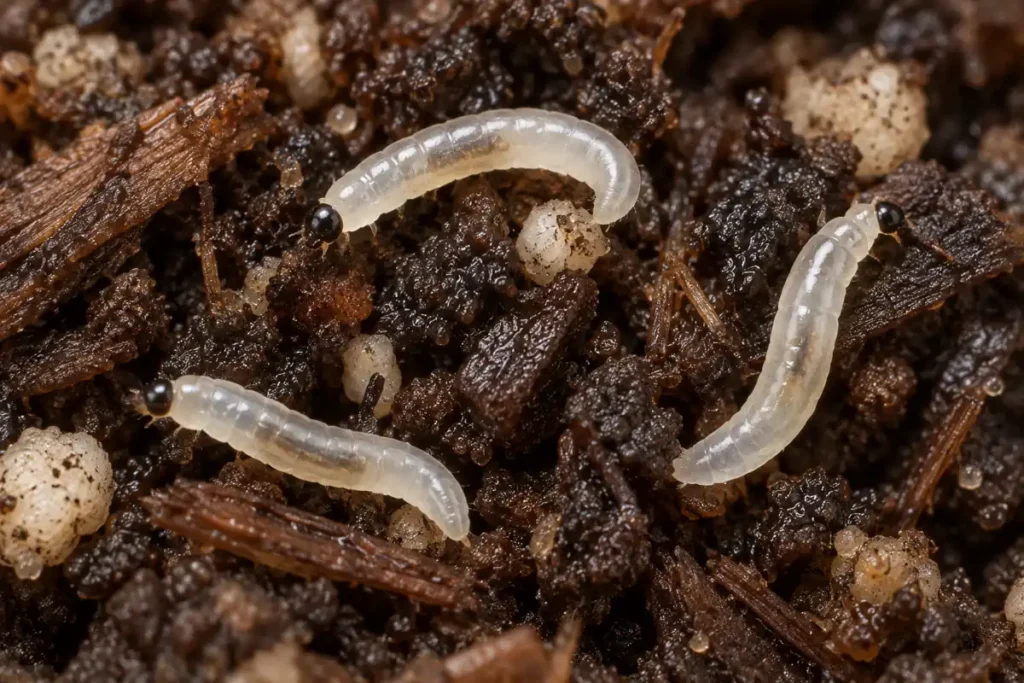
Fungus gnat larvae are pale, legless worms with a shiny dark head, usually found in damp potting mix. Tiny black flies near a plant suggest a problem, but the flying stage cannot tell you which pot contains larvae or whether roots are being damaged. That distinction matters before you change watering or reach for a treatment.
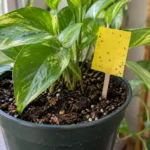
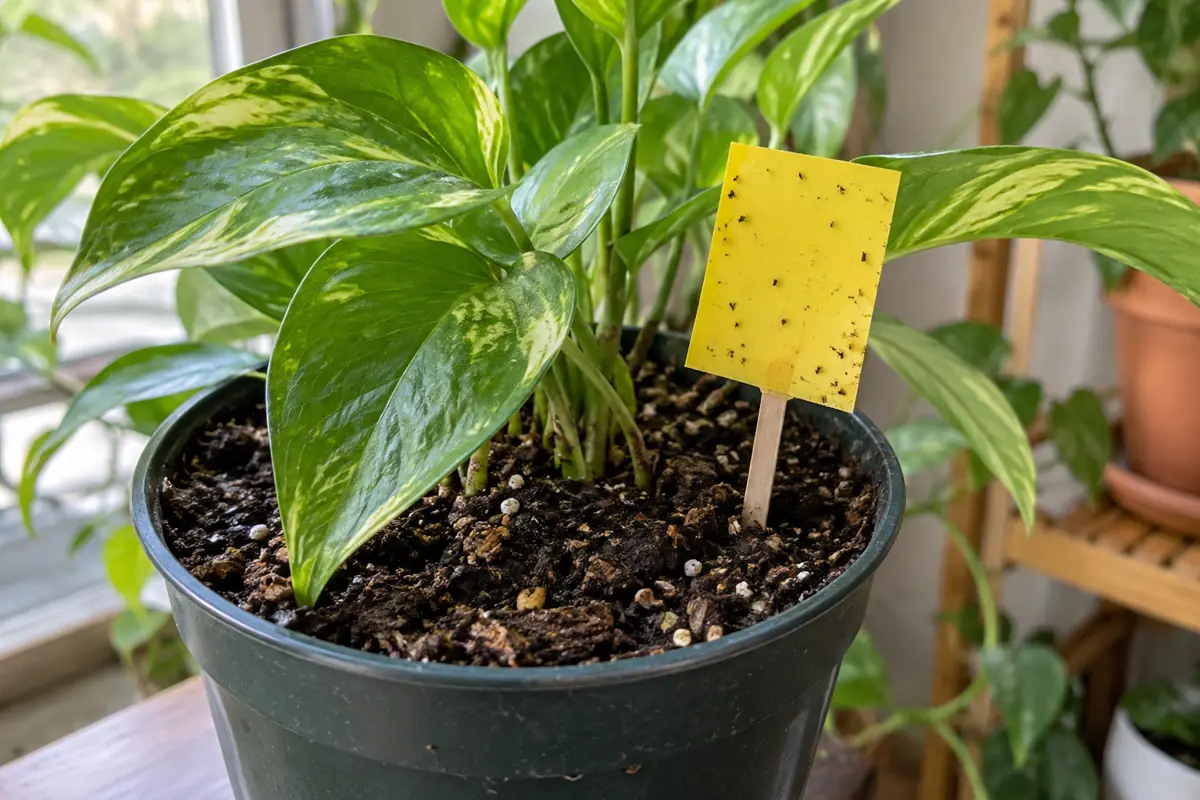
A yellow sticky card catches adults. A small raw potato piece can help reveal larvae feeding in the mix. Together with a moisture check, those observations narrow the source without dismantling every plant on the shelf. A vigorous mature plant and a tray of fragile seedlings also need different responses. Start with the insect you can actually see, check where it is developing, and adjust the wet conditions without pushing the plant into drought.
Match the insect to the next check
Small dark flies around a pot
Watch the mix when watering; look for flies running on it. Mark that pot as a suspect and monitor it.
Pale worm with a black head
Inspect damp mix or a temporary raw potato monitor. Correct moisture and drainage in the source pot.
Tiny creatures jumping from soil
Check whether the animal jumps and has legs. Consider springtails before choosing a gnat treatment.
Wilted seedling without confirmed larvae
Compare wetness, drainage, and stem condition. Diagnose the plant problem before treating insects.
Key Takeaways
- Look for a dark head on pale, legless larvae.
- Compare suspect pots before disturbing the whole collection.
- Use potato pieces briefly, then discard each monitor.
- Adjust surface drying to the plant’s moisture needs.
- Check seedling roots and stems before blaming gnats.
Table of Contents
Identify fungus gnat larvae by shape and movement
Look close to the surface of moist organic mix, especially around decaying plant fragments. The larva has a slender, whitish or translucent body without visible legs and a distinct dark head capsule. Against a dark piece of bark, the body may be easier to see than it is against pale perlite. A hand lens helps separate the black head from a soil particle stuck to the animal.
Size alone is a poor identifier. Cornell Integrated Pest Management describes small, pale larvae living near the surface; immature individuals can be difficult to notice among fine roots and wet fibers. Check the combination of body shape, head, movement, and location. A tiny organism in a blurry phone photo may remain unidentified even when the pot also has flying gnats.
Adults fly; springtails jump
Adult fungus gnats resemble tiny, delicate mosquitoes, often with long legs and antennae. Their bodies are commonly about 1/16 to 1/8 inch long. They may walk over soil, make short flights around pots, or collect near windows. Finding one on a window establishes adult activity, not the location of every breeding pot.
Springtails are a different animal. Their legs and jumping movement separate them from soft larvae moving through the mix. Most are scavengers associated with moisture and decomposing material. UC IPM’s springtail guidance distinguishes their usual nuisance role from the occasional injury possible in young plants. Do not classify every white speck as a root-eating larva.
If insects appear mainly at a drain or around fruit, broaden the identification before changing plant care. Location is a clue, not proof: fungus gnats can wander away from pots. Other small household flies can rest near a plant. A clear close-up and notes about where the insects emerge are more useful than the label “gnats.”
Find the source pot with a potato check
Begin with the wettest suspects, recently purchased plants, and containers where flies run across the mix during watering. That last observation is a practical source-finding cue described by Iowa State University Extension and Outreach. Compare pots individually. One damp container tucked inside a decorative outer pot can sustain insects even when neighboring plants dry normally.
A temporary potato monitor makes the hidden stage easier to inspect. Cornell’s raw potato check for larvae uses a small piece, roughly one square inch, with the cut surface contacting the mix. It is a presence check, not a treatment recipe.
- Cut a small piece from a raw potato and place the exposed face against the suspect pot’s surface.
- Keep track of which pot received it and when it was placed.
- After a few days, lift it and inspect the underside and nearby mix with a hand lens.
- Look for pale, dark-headed larvae, then discard the piece. Replace it only if further monitoring is useful.
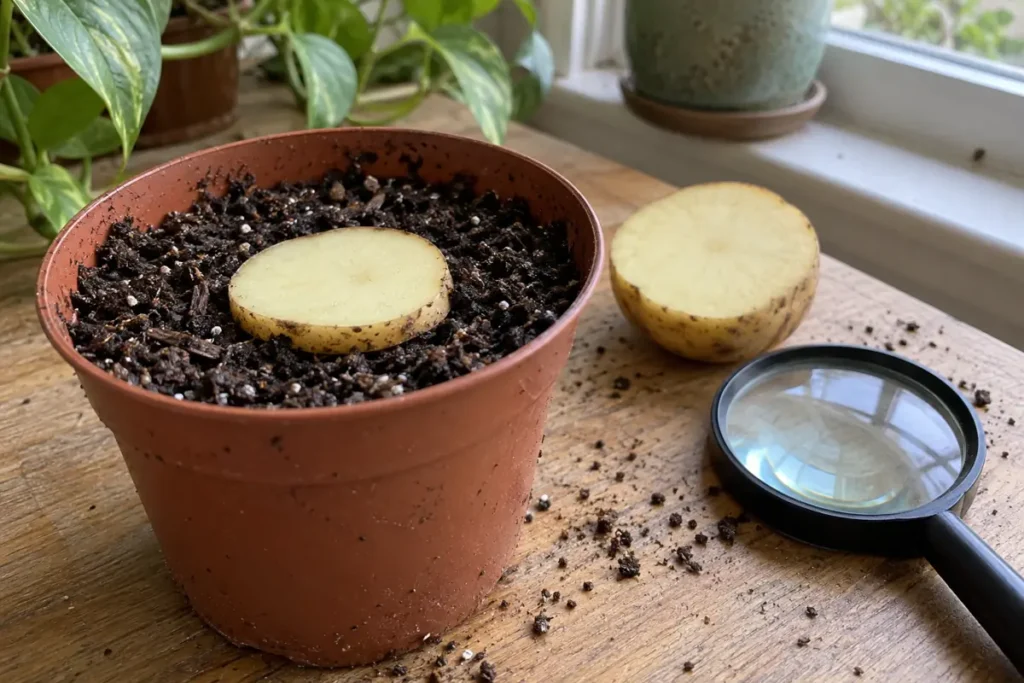
A positive observation connects larvae to that container. An empty underside leaves the question open. It does not prove the mix is free of larvae, and there is no dependable household sensitivity percentage for this check. Avoid watering an already wet plant simply to make a monitor work.
Yellow sticky cards answer a different question: are flying adults active nearby? Use them as adult monitors, positioned so foliage does not stick to them. The contrast between adult activity and a positive larval sample can help prioritize pots. Use a fresh card for each comparable observation period. A crowded old card cannot show when those adults were caught.
Why adults keep appearing after a change
Fungus gnats pass through egg, larva, pupa, and adult stages. Moist growing media give females somewhere to lay eggs and give larvae access to fungi and decomposing material. A room with several damp pots can contain multiple stages at once. Catching adults does not remove the immature insects already developing below them.
Development speeds change with temperature. UC IPM gives a generation of about 17 days at 75 degrees F, an example of how quickly overlapping populations can develop in a warm setting. It is not a countdown to successful control in every home. A cooler room, different media, and repeated sources change what you see.
That overlap explains a frustrating sequence: you improve watering, clean a saucer, and still find a fly the next morning. The adult may come from a stage that was already present. It may also come from another container you have not checked. Neither possibility can be resolved by adding more traps to the original pot alone.
Keep a short record with the pot name, watering date, adult activity, and whether larvae were seen. A simple note such as “potato positive; mix still heavy; several adults at rim” gives you a more useful comparison later than a room-wide impression that there are fewer insects.
Separate the two changes you want: fewer insects developing in the source and a plant receiving suitable care. Check the lower mix even when the surface is drying. Also watch for wilt from excessive drying: a falling adult count does not justify starving roots of water. The insect count and the plant’s condition both belong in the decision.
Separate larval feeding from other root problems
Larvae commonly feed on fungi and decaying organic material. At high populations they can also injure tender roots, making seedlings and young plants more vulnerable than an established houseplant with a larger root system. Adult gnats are primarily a nuisance; their presence alone does not establish root injury.
Give a struggling seedling closer attention when larvae are confirmed in its cell or tray. Compare neighboring plants, the pattern of failure, and the stem at soil level. A soft, pinched stem suggests a different investigation from a firm stem on a plant sitting in wet mix. Seedling symptoms and stem condition can distinguish several problems that look like general wilting.
There is no visual leaf pattern that proves fungus gnat feeding. Yellow leaves, weak growth, and drooping can accompany several root disorders, including unsuitable watering and insect injury. Inspect the growing conditions before attributing every symptom to an insect you found nearby.
Read the wet pot before adding water
Drooping leaves on an unexpectedly heavy pot deserve a drainage check. Dark, wet mix smeared on a finger differs from loose surface crumbs over a root zone that is beginning to dry. A sour odor, soft stem tissue, or deteriorating roots raises concern beyond an ordinary adult-gnat nuisance; smell alone still does not identify a pathogen.
Reserve root inspection for a plant whose condition justifies it. Repeatedly uprooting healthy plants adds disturbance without clarifying the source. Start with accessible observations. If the insect or plant problem remains unclear, a local Extension diagnostic service can use a sharp photograph, plant history, and appropriate sample to narrow it.
Reduce breeding moisture without stressing the plant
Allowing an appropriate surface dry-down between waterings makes the mix less favorable for fungus gnats. The plant decides how far that can go. A drought-tolerant mature houseplant, a fern, and newly emerged seedlings cannot all follow the same depth or number of days without water.
Use the plant’s normal moisture requirements, then examine why its container stays wet. Houseplant watering cues combine light, pot weight, and root-zone moisture to decide when another watering is needed. After light levels fall or growth slows, review whether the plant still uses water at its previous rate.
For a snake plant, persistent wetness warrants a different response from that for a moisture-sensitive seedling. Letting a suitable plant dry further can help. For a young tray, avoiding standing water and keeping drainage working are safer starting points than forcing the entire root zone to become dry.
- Empty water retained in saucers and outer pots after drainage.
- Check that outlets are not blocked and that the nursery pot is not sitting in pooled water.
- Remove fallen leaves and other loose, decaying material from the surface.
- Inspect damp stored media and newly introduced plants when insects keep appearing.
If water leaves slowly or the lower mix stays saturated, pot drainage and retained water need attention. A dry crust does not establish that the deeper root zone has regained air space. Correct the retained water before relying on repeated surface dry-downs.
Repotting can be useful when persistently unsuitable or infested media need replacement and the plant can tolerate handling. It is a conditional step, not an instruction to strip every root in the room. A fragile plant already under stress may need diagnostic advice before another disturbance. Check the source pot first and use fresh, appropriate media if repotting is justified.
Read the response before changing treatments
Look for agreement between observations. Fewer adults, no newly observed larvae in comparable checks, and improving drainage make continued monitoring reasonable. Larvae still present in a damp pot point back to that source. Flies concentrated elsewhere suggest another breeding site or a different insect.
| After the first correction | What it means | Next check |
|---|---|---|
| Adults remain; larvae still found | The source is still active | Recheck retained water and plant-appropriate irrigation |
| Adults remain; potato check empty | Larval presence remains uncertain | Compare other pots and confirm adult identification |
| Adult activity falls; plant wilts | Pest numbers and plant health are diverging | Check for excessive drying or an unresolved root problem |
| Several vulnerable seedlings decline | Root or stem injury needs closer diagnosis | Inspect the failure pattern and seek diagnostic help if unclear |
A household spray aimed at flies cannot correct wet growing media. Cultural management is the first step in Iowa State’s home-houseplant guidance. Biological treatments mentioned in fungus gnat monitoring and management from UC IPM address particular stages and settings; they do not make every household insecticide an appropriate soil treatment.
If additional control is needed, use only a product whose current label permits the intended pest and use site, or ask Extension for a suitable option. A mosquito-control brand name, retailer comment, or greenhouse recommendation is not enough to establish instructions for an indoor pot. Avoid combining several remedies before you know which stage and source remain active.
There is no reliable universal date for declaring every collection clear. Continue monitoring as the source conditions change. Investigate ongoing activity with another source check.
Conclusion
Identify the pale, dark-headed larva, connect it to a source, and correct the conditions in that container. Use adult cards and temporary potato checks for different stages. Reduce persistent wetness within the plant’s moisture needs. Give wilt its own diagnostic check. Clearer evidence leads to a smaller, better-directed correction.
Frequently Asked Questions
Can a newly purchased plant introduce fungus gnats?
Yes. Plants and growing media can bring immature stages into a collection. Inspect new arrivals and monitor suspect pots. Adults can also enter from outside, so a store is not the only possible source.
Can fungus gnats develop in damp organic material outside pots?
Yes. Moist organic material and debris can support development. If repeated checks do not identify a source pot, examine other damp material near the plants before deciding whether repotting is justified.
Do adult fungus gnats bite?
Adult fungus gnats do not bite. Their nuisance role is separate from the potential for high numbers of larvae to damage tender plant roots. Confirm the insect before applying that description to an unidentified household fly.