



Last Updated May 05, 2026
Sweet potatoes are easy to misread because the vines and the harvest do not develop at the same speed. A bed can look vigorous above ground, even as the edible storage roots below stay small, misshapen, or late. That is why the sweet potato growth cycle makes more sense when you read it by stage first and plant size second.
The most important handoff happens early. Sweet potato root number is largely decided soon after slips are transplanted. Root swelling and final size happen later. Gardeners who only watch vine length usually react too late, because the crop has already spent its first decisive weeks underground.
Most home garden crops take about 90-120 days from planted slips to harvest, with variety, heat, and planting date shifting the finish. The crop moves through transplant recovery, storage root initiation, vine expansion, bulking, harvest, and curing. Each stage gives different signals, and above-ground growth does not always reflect root progress below the soil.
Key Takeaways:
- Sweet potatoes grow from slips, not seed potatoes
- Root number is set early; root size is built later
- Large vines do not guarantee a large harvest
- Even moisture matters most during establishment and bulking
- Curing finishes the crop timeline and improves storage quality
Table of Contents
Sweet Potato Growth Timeline – Root Count Is Decided Before The Vines Look Impressive
Sweet potatoes follow the same broad pattern as other vegetable growth stages: establishment, active vegetative growth, storage or fruit development, and harvest. What makes this crop different is that the harvestable part is a storage root, not a stem tuber like a regular potato, so early root behavior matters more than tall top growth.
A realistic home-garden sequence moves through the same stages even when weather stretches or compresses the timing. When the crop underperforms, diagnosis should start with the stage that lost heat, moisture, root room, leaf area, or harvest timing.
| Stage | Typical Timing After Transplanting | What You See | What Matters Most | What Commonly Goes Wrong |
|---|---|---|---|---|
| Slip transplant and recovery | Days 1-14 | Wilted slips recover, new leaves begin | Warm soil, buried nodes, even moisture | Cool soil, damaged slips, dry or saturated planting holes |
| Storage root initiation | Roughly days 2-30 | Little to see above ground beyond stable recovery | Healthy adventitious roots becoming storage roots | Pencil roots, fibrous roots, weak root set |
| Vine expansion | Weeks 3-8 | Runners spread, canopy closes, leaves enlarge | Leaf area, weed control, moderate fertility | Too much nitrogen, shade, early weed competition |
| Root swelling and bulking | Midseason through the last third | Vines stay active as roots enlarge below | Even moisture, light, warm soil, leaf health | Drought swings, compact soil, oversized canopy with poor root fill |
| Maturity and harvest | About 90-120 days, sometimes longer | Growth slows, some yellowing, usable root size on a test plant | Dig before frost, handle gently, taper water | Waiting into cold soil, skinning roots, cracked roots |
| Curing and storage prep | First 7-10 days after digging | Fresh skins toughen and sweetness improves | Warm shaded airflow and gentle handling | Cold storage too early, bruised roots, washed roots staying wet |
Manage the crop by sequence, not only by calendar date. Early weeks protect root number, midseason protects leaf area, bulking protects water consistency, and harvest protects skin quality before curing.
Slip Establishment And Early Root Set – The Yield Ceiling Is Built First
Sweet potatoes start from slips, which are rooted or unrooted vine cuttings taken from sprouted roots. They do best when set into truly warm soil, usually at least 65-70 F. During this first window, the crop prioritizes anchoring, clean adventitious root formation, and the early root decisions that shape later storage-root number.
The early storage root initiation window matters because the first 2-30 days after transplanting influence how many roots are set up to swell later. Under good conditions, new roots can begin within a day. That fast start only helps if the slip base stays warm, moist, and undisturbed.
What Healthy Establishment Looks Like
A healthy slip may droop right after planting, then firms up within days as roots take hold. New leaves appear at the tip, the stem stays green without collapsing at the base, and the plant stops looking like a cutting and starts looking anchored. Slips with several buried nodes usually perform better because each buried node offers another rooting point.
Soil condition matters more than feeding at this stage. A loose, warm bed with good drainage supports root initiation far better than a rich, waterlogged planting row. If your ground seals after rain, stays cold, or resists a trowel a few inches down, soil health improvement should come before the next crop goes in.
What Reduces Root Set Early
Cool soil delays establishment. Dry soil at the buried nodes forces the plant to survive instead of committing to storage roots. Saturated soil lowers oxygen and can leave the slip base soft or rotted. Excess nitrogen also creates trouble here, because the plant can be pushed toward foliage before the storage-root foundation is set properly.
This is also when misshapen roots often begin. A slip that starts in compacted, crusted, or unevenly watered soil may still make vines later. The underground architecture is already weaker than it looks from above.
Vine Growth And Canopy Care – Leaves Feed The Storage Roots
Once the slips are established, the vines become the crop’s sugar factory. The leaves capture light, drive photosynthesis, and feed the storage roots that will bulk later. This is why sweet potato vine care should focus on leaf health, spacing, moisture, and weed control, with less attention on forcing extra top growth.
Healthy midseason vines spread fast, shade the soil, and gradually suppress weeds. The best home-garden rhythm is simple: keep the bed evenly moist, remove competition before the canopy closes, and avoid overfeeding. In mixed beds, even sensible companion planting for vegetables still has to leave the sweet potatoes enough light and elbow room to build a broad canopy.
Moisture is especially important here because vine growth and root development are still running together. A weekly irrigation target around 1 inch is a useful baseline in warm weather. A better habit is checking the active root zone. Simple soil moisture monitoring beats watering by habit, especially in sandy ground that dries fast or heavier beds that stay wet too long below the surface.
Big Vines Are A Signal, Not A Guarantee
A sweet potato plant with long runners is not automatically succeeding underground. Large vines can mean the crop is healthy and building fuel. They can also mean the plant got too much nitrogen, too much shade pressure, or a late start that pushed it toward leaf growth more than root fill. A balanced crop shows active vines, even moisture, and no severe stress during its first month.
I often notice that gardeners trust the canopy too much. The bed looks full in July, so everything seems fine. The real decision may have been made back in the first month when the slips were cold, unevenly watered, or planted into soil that stayed tight below the top inch.
Should You Prune Sweet Potato Vines?
Usually no. Prune only if you need to reopen a path, improve airflow around neighboring crops, or keep the bed manageable in a very small space. The leaves are what feed the roots, so heavy pruning removes the plant’s energy source right when the storage roots need it most. A light tidy cut is different from treating pruning as a yield trick.
Vine care works best when it stays boring: protect leaf area, avoid nutrient excess, and keep the root zone consistently moist without turning the bed waterlogged.
Should You Lift Or Move Sweet Potato Vines?
Do not lift vines on a fixed schedule. Sweet potato runners can root where nodes touch moist soil, and repeated lifting breaks small roots, stresses the canopy, and rarely solves a yield problem that began during early root set.
Move vines only when they block paths, smother neighboring crops, or make harvest access difficult. In small beds, guide runners early while the stems are still flexible so the canopy stays readable and the rooted sections stay intact.
Root Swelling And Bulking – Size Arrives After The Canopy Is Built
Root swelling is the stage most gardeners are waiting for, and it depends on root-set, canopy, soil, and moisture decisions made earlier. By the time roots visibly bulk, the crop is cashing in earlier decisions about root set, leaf area, soil condition, and water supply. Some adventitious roots have already committed to becoming storage roots; now they need carbohydrates from the canopy and enough water to expand.
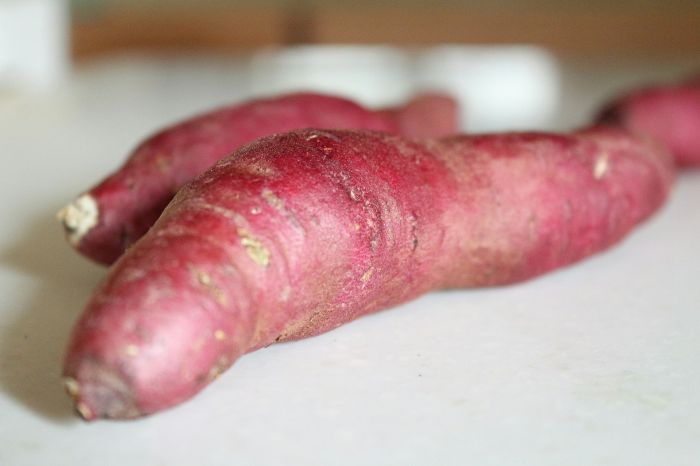
The bulking stage often lands in the last third of the season, and the shift is gradual, not abrupt. This is when drought swings hurt most. A plant that set good roots early can still finish small if the soil dries hard during bulking. A very wet bed can also produce cracked, rough, or poor-storing roots even when the vines stay green.
How To Read A Crop That Is Bulking Well
A bulking crop usually keeps a full green canopy, shows little midday stress except in extreme heat, and stays rooted in warm, friable soil. The plant often looks calm, not dramatic. You usually do not see the roots themselves until you sacrifice an edge plant or wait until harvest, so the best signs are consistency: no sharp wilting cycles, no pale nutrient flush, and no late-season weed pressure stealing water and light.
If your season is short, a test dig from one outside plant can help once the crop approaches its expected maturity window. Dig gently, check the root size and shape, then decide whether the bed needs more time or whether cold weather risk is starting to outweigh additional bulking.
Why Roots Stay Thin Or Uneven
The classic frustration is big vines with small roots. Most of the time, the cause is one of five things: the slips went into cool soil, the first month was too dry or too wet, nitrogen stayed too high, the bed was compacted, or planting happened too late for the variety to finish. Shade also slows the crop because the leaves do not generate enough surplus to fill the storage roots aggressively.
Another failure pattern is long thin pencil roots or twisted small roots. That usually points back to early stress and unstable moisture, not to a late-season harvest mistake. Bulking can enlarge what the crop already set. It cannot fully rewrite a weak foundation.
Harvest Timing And Curing – The Crop Still Has One More Stage
Most sweet potatoes are ready about 90-120 days after slips are planted, though long-season varieties and cooler regions can push the crop later. Harvest should happen before frost and before the soil turns cold enough to hurt quality. Sweet potato vines may still look alive when the roots are ready, so calendar timing, variety maturity, and a test plant together give a better read than foliage alone.
As harvest approaches, many gardeners reduce or stop routine irrigation for the last 2-4 weeks if the soil already holds enough moisture and the crop is close to size. That taper helps lower the risk of splitting and reduces mess at digging time. Do not let the bed turn bone dry much earlier than that, or the crop loses bulking time when it still needs it.
What A Ready Plant Looks Like
Growth slows, some leaves may yellow, and a test plant should give roots with usable size and color for the variety. The roots should feel firm, not watery or brittle, and the skin should still be handled gently because fresh sweet potatoes bruise and skin easily. Dig with a fork well outside the crown, lift from below, and never yank by the vines.
Why Curing Belongs In The Growth Cycle
Curing finishes the crop after harvest. Warm, shaded airflow lets minor skin damage heal, improves keeping quality, and starts the flavor shift that makes sweet potatoes taste sweeter after storage. A common home-garden target is 80-85 F with 85-90 percent humidity for 7-10 days, followed by storage around 55-60 F in a dry, cool place.
Freshly dug roots are still fragile and incomplete from a storage standpoint. If you skip curing, the harvest is more vulnerable to breakdown, and the flavor stays flatter. In practical terms, the sweet potato growth cycle ends when the roots are cured and stable, not when they first leave the soil.
Sweet Potato Growth Problems By Stage
Start With The Stage That Broke Down
Sweet potato problems become easier to solve when you connect the symptom to the stage that failed. Big vines, cracked roots, stalled slips, and pencil-thin harvests do not point to the same mistake. Stage-based diagnosis separates early root-set problems, bulking stress, season-length limits, and harvest damage.
| Plant Signal | Stage Likely Affected | What It Usually Means | Best Next Move |
|---|---|---|---|
| Slips wilt hard and never restart | Establishment | Cold soil, damaged slip bases, or a dry planting hole | Replant only into warm, evenly moist soil and bury several nodes |
| Huge vines and tiny roots | Early root set and fertility balance | Too much nitrogen, late planting, shade, or weak first-month conditions | Reduce nitrogen next season and protect the first 30 days |
| Long pencil-thin roots | Storage root initiation | Early drought, excess heat, or unstable soil moisture | Keep moisture even after transplanting and avoid hot, dry starts |
| Misshapen, forked, or cracked roots | Bulking | Compacted soil, uneven water, or late harvest pressure | Loosen the bed before planting and smooth out watering swings |
| Healthy top growth and small harvest at frost | Season length | Variety ran too long for the climate or slips were planted too late | Use earlier varieties, warmer beds, or faster planting next season |
| Skinned or bruised roots at digging | Harvest and curing | Rough lifting or washing roots too soon | Handle gently, cure separately, and use damaged roots first |
Water stress deserves special attention because it can show up at more than one stage. Early dryness hurts root set. Midseason stress slows leaf production and bulking. Late drought followed by heavy irrigation can split roots. If the bed repeatedly slips into that pattern, underwatering signals and response matter more than a stronger fertilizer program.
Conclusion
Sweet potato growth stages are easiest to manage when you stop judging the crop by vine drama alone. The first month builds root potential, the canopy fuels the middle of the season, bulking fills the harvest, and curing finishes what digging started.
If you protect the early root-set window, avoid nitrogen excess, keep moisture even through bulking, and harvest before cold soil wins, the crop becomes much easier to read. The best harvests usually come from clean stage handoffs: warm establishment, balanced canopy growth, even bulking moisture, careful harvest, and proper curing.
FAQ
What Are The Main Sweet Potato Growth Stages?
The main stages are slip establishment, early storage root initiation, vine expansion, root swelling and bulking, harvest maturity, and curing. The most important practical shift is that root number is set early; root size is built later.
When Do Sweet Potato Roots Start Swelling?
Sweet potatoes set up storage roots during the first few weeks after transplanting, and visible swelling usually builds later as the canopy expands and sends sugars back into the roots. In many home gardens, the most noticeable bulking happens through midseason and the final third of the crop, provided the soil stays warm, loose, and evenly moist.
Why Are My Sweet Potato Vines Big But The Roots Small?
This usually points to a stage mismatch more than a lack of growth. Excess nitrogen, cool early soil, shade, compaction, or drought during the first month can all produce lots of vine with weak storage-root set below ground.
Should You Prune Sweet Potato Vines?
Usually no. Light trimming for access or airflow is fine. Heavy pruning removes leaf area that feeds the storage roots. If yield is the goal, protecting healthy canopy is usually better than cutting it back.
How Long Do Sweet Potatoes Take To Grow?
Most home-garden varieties need about 90-120 days from planted slips to harvest. Some finish earlier in very warm climates. Longer-season varieties or cooler summers can push the crop beyond that range.
When Should You Stop Watering Sweet Potatoes Before Harvest?
Many gardeners taper or stop routine irrigation during the last 2-4 weeks before harvest if the roots are close to size and the soil is not already dry. The goal is to reduce splitting and make digging cleaner without sacrificing the final bulking period too early.
Do Sweet Potatoes Need Curing After Harvest?
Yes. Curing helps toughen the skin, improves storage life, and starts the flavor change that makes the roots sweeter. Freshly dug sweet potatoes are more fragile and less stable than cured ones.
Can Sweet Potatoes Keep Growing If The Vines Still Look Healthy In Fall?
Sometimes, though not indefinitely. If the crop is near maturity and cool nights are arriving, leaving it longer can cost quality more than it adds size. A test dig and the frost forecast are better guides than green vines alone.