

Last Updated May 05, 2026
Plant disease diagnosis usually fails before any treatment starts. Gardeners see a spotted leaf, assume infection, then spray for the wrong problem. The same yellowing, wilting, browning, or leaf drop can come from fungi, bacteria, viruses, waterlogged roots, heat, chemical drift, or simple physical damage.
Good plant disease identification reads the whole pattern first. You need to know which plant is affected, which part changed first, how fast the damage moved, what the weather did, and whether there are real pathogen clues on the tissue. That process tells you whether a foliar spray, a root-zone fix, sanitation, or full plant removal is the next move.
Plant disease diagnosis should move through a fixed sequence: pattern, visible signs, disease group, lookalikes, treatment limits, and prevention. Skipping that order leads to sprays on water stress, nutrient problems, pest damage, or viral disease that cannot be cured by spraying.
Key Takeaways:
- Most plant disease mistakes happen when symptoms are treated before the full pattern is checked
- Symptoms are plant reactions; signs are the pathogen itself or direct evidence it left behind
- Fungal, bacterial, viral, and root diseases do not have the same treatment limits
- Overwatering, poor drainage, heat, nutrient stress, and herbicide drift often mimic disease
- Early sanitation, dry foliage, airflow, and root-zone correction usually matter more than spraying first
Table of Contents
Where To Start When A Plant Looks Diseased
Start with diagnosis before treatment. Identify the host plant, map where the damage appears, check whether the problem moved over time, look for pathogen signs, then rule out water, heat, nutrition, herbicide drift, pest feeding, and root stress. Only after that sequence does a spray, pruning cut, sanitation step, or removal decision make sense.
- Identify the plant and the plant part affected first.
- Check whether the pattern is spreading or tied to a recent event.
- Look for signs such as spores, ooze, pustules, fuzzy growth, or rotted roots.
- Inspect roots, drainage, weather, watering, and recent exposure history.
- Match the likely disease group before choosing treatment.

Symptoms And Signs Are Different Clues
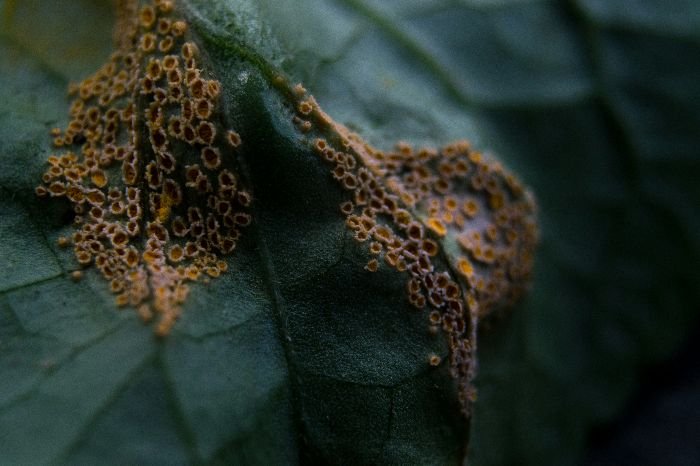
Symptoms are the plant’s response: spots, wilt, chlorosis, dieback, distortion, collapse. Signs are the pathogen itself or direct evidence it left behind: spores, fuzzy growth, pustules, ooze, fruiting bodies, or rotted roots. Separating symptoms and signs sharpens diagnosis fast, especially when you compare a whole-plant photo with close shots of the damaged tissue.
If you only photograph the ugliest leaf, you lose context. Whole-plant shape, nearby plants, irrigation pattern, mulch splash, and sun exposure all matter. A clean diagnosis usually starts with one wide shot, one medium shot, and several close images of the front, back, stem, and root zone.
Whole-Plant Pattern Beats A Single Bad Leaf
Ask how many plants are affected. One plant in one container suggests a root-zone or exposure problem more often than a contagious outbreak. One species across a bed suggests a host-specific pathogen. Several unrelated species showing damage at the same time points more strongly toward weather, watering, or chemical injury.
Then ask where the damage began. Lower leaves often hold splash-borne fungi first. Newest growth often shows viral distortion, herbicide drift, or bacterial soft tissue damage first. One side of a hedge or one edge of a vegetable row can expose wind-driven spread, mower splash, reflective heat, or an irrigation problem.
Ask What Changed In The Last 7-14 Days
Recent change is one of the best diagnosis tools in the garden. Heavy rain, long dew periods, overhead irrigation, sudden heat, a new fertilizer pass, a herbicide application nearby, recent pruning, or a fresh batch of nursery plants can all shift the odds. A blight-like collapse after warm wet weather tells a different story than the same collapse after one cold night or a missed watering cycle.
Most home-garden disease problems become easier to name when you line up five facts: host plant, plant part, pattern across the planting, speed of change, and visible signs. Treatment starts to make sense only after that sequence is clear.
Plant Disease Symptoms Matrix – What The Pattern Usually Means
Symptom patterns work best as triage, not as a replacement for close inspection of the whole plant and root zone.
| Symptom pattern | Common disease direction | Where to inspect next | Frequent lookalike | Best immediate move |
|---|---|---|---|---|
| White powder on leaves, stems, or buds | Powdery mildew | Upper and lower leaf surfaces in crowded growth | Spray residue or dust | Remove worst leaves and improve airflow |
| Yellow patches above with gray or purple growth below | Downy mildew | Leaf undersides early in the day | Nutrient chlorosis or sun stress | Stop overhead watering and thin wet foliage |
| Brown or black spots, often with a yellow halo | Leaf spot disease | Older leaves, splash zones, and lower canopy | Fertilizer burn or splash injury | Remove infected leaves and keep soil off foliage |
| Fast browning of leaves, stems, blossoms, or fruit tissue | Blight | Stem lesions, fruit lesions, and weather history | Frost damage or scorch | Prune infected tissue and dry the canopy fast |
| Orange, rust, or cinnamon pustules | Rust disease | Leaf undersides and repeated host plants nearby | Corky edema or physical scarring | Remove infected leaves and reduce leaf wetness |
| Mottled leaves, curling, distortion, or ring patterns | Viral disease | Newest growth and insect-vector activity | Herbicide drift | Isolate the plant and plan for removal if the pattern holds |
| Water-soaked lesions, black veins, or ooze | Bacterial disease | Soft tissue, petioles, and stem breaks | Mechanical injury | Avoid handling wet plants and remove infected tissue |
| Wilt in moist soil, yellowing from below, brown crown or roots | Root, crown, or vascular disease | Roots, crown tissue, drainage, and smell of the soil | Overwatering or compaction | Inspect the root zone before spraying anything |
Diagnosis becomes more accurate when one follow-up question is clear: is the pattern moving like an infection, or did it appear after a weather, watering, or exposure event? That split saves a lot of false diagnoses.
Common Plant Diseases And How To Recognize Them
Not every plant disease offers the same path after identification. Some can be suppressed early. Some are mostly sanitation problems. Some require plant removal because curative treatment is not realistic in a home garden.
Common Disease Groups And Their Treatment Limits
| Disease group | Hallmark clues | Typical spread pattern | Best immediate move | Treatment limit |
|---|---|---|---|---|
| Foliar fungal diseases | Powder, concentric spots, mildew, rust pustules, blighted patches | Often starts on wet, shaded, crowded leaves | Remove infected tissue and reduce leaf wetness | Early suppression is possible; damaged leaves do not heal |
| Bacterial leaf and stem diseases | Water-soaked lesions, angular spots, ooze, blackened veins | Moves with splash, tools, and handling wet foliage | Sanitation and dry handling come first | Curative options are limited in home gardens |
| Viral diseases | Mosaic, rings, distortion, stunting, strange color breaks | Often spread by sap-feeding insects or infected material | Isolate and remove confirmed plants | No spray cures viral infection in the plant |
| Root and crown diseases | Wilt in wet soil, yellowing, brown roots, soft crown tissue | Shows first in low oxygen or poorly drained root zones | Inspect roots and fix drainage fast | Leaf sprays add little if the root zone remains unhealthy |
| Vascular wilts and canker-blight problems | One-sided wilt, streaking, branch dieback, stem lesions | Moves through internal tissue, pruning wounds, or infected soil | Prune to healthy tissue only if the host and disease allow it | Full recovery is often limited once vascular tissue is blocked |
Treatment limits matter. Many fungicides protect clean tissue and slow fresh spread. They do not reverse tissue that is already necrotic. Viral diseases do not become curable because the foliage was sprayed harder. Root diseases keep advancing when drainage, oxygen, and soil structure stay wrong.
Once the likely disease group is clear, low-value treatment drops away: viral disease needs removal, root disease needs root-zone correction, and fungal disease needs early protection of clean tissue.
Named Disease Patterns Gardeners Meet Most Often
Common disease patterns become easier to manage when the first visible signs, likely hosts, first action, and treatment limit are kept together.
| Disease pattern | Typical signs | Plants often affected | First action | Treatment limit |
|---|---|---|---|---|
| Powdery mildew | White powdery growth on leaves or buds | Squash, roses, bee balm, phlox, cucumbers | Remove worst leaves and improve airflow | New tissue can be protected; old white patches do not heal |
| Downy mildew | Yellow patches above, gray-purple growth below | Cucurbits, basil, lettuce, ornamentals | Stop overhead watering and remove infected foliage | Often moves fast in cool wet conditions |
| Leaf spot diseases | Dark spots, halos, lower-canopy spread | Vegetables, shrubs, perennials | Remove infected leaves and reduce splash | Repeated wet leaves drive spread |
| Rust | Orange or cinnamon pustules, often on leaf undersides | Hollyhock, roses, beans, ornamentals | Remove infected leaves and avoid wet foliage | Repeat infections need host cleanup |
| Blight | Rapid collapse, stem lesions, fruit lesions | Tomatoes, potatoes, vegetables, ornamentals | Remove infected material and protect clean tissue | Severe outbreaks often outrun home treatment |
| Root and crown rot | Wilt in moist soil, brown roots, soft crown | Containers, vegetables, perennials | Inspect roots and correct drainage | Sprays add little without root-zone correction |
| Viral mosaic | Mottling, rings, distortion, stunting | Vegetables, ornamentals | Isolate and remove confirmed plants | No spray cures infected plants |
| Bacterial leaf spot or soft rot | Water-soaked lesions, ooze, blackened veins | Vegetables, ornamentals | Avoid wet handling and sanitize tools | Curative options are limited |
Plant Disease Lookalikes That Lead To Wrong Treatment
Many plant problems look infectious from a distance. The closest lookalikes usually come from water, roots, heat, salts, or chemical exposure.

Root Stress Often Imitates Disease
A plant can wilt, yellow, stall, and drop leaves simply because its roots have lost oxygen. Saturated containers and slow-draining beds are common culprits. If the mix stays wet for days, begin with signs of overwatering plants, then inspect whether proper pot drainage or larger soil drainage solutions are failing the root zone.
Wilting also deserves context. Midday collapse that recovers by evening reads differently from a plant that stays limp in cool morning air. Plant wilting causes and symptoms can separate heat load, water stress, vascular blockage, and root decline.
Exposure And Nutrition Problems Distort Leaves Too
Sun scorch can bleach or brown exposed tissue in a way that resembles blight. Wind burn can dry margins and turn them papery. Fertilizer salt injury can create leaf-edge necrosis and spotting that looks infectious in photos. Herbicide drift can twist new growth, cup leaves, and mimic viral infection with surprising accuracy.
Mites and other sap-feeders complicate diagnosis even more. Fine stippling, bronzing, webbing, and deformed tips may look like disease at first glance. That is why whole-plant pattern, root-zone condition, and close inspection for real signs should come before any spray plan.
Plant Disease Treatment Decisions After Diagnosis
Once the pattern points in a believable direction, the next step is containment and confirmation. The first moves should protect clean tissue and stop spread conditions.
- Remove the worst infected leaves, stems, or fruit if the plant still has enough healthy tissue to carry on.
- Bag heavily diseased debris and move it out of the planting area.
- Stop overhead watering for now and water the root zone early in the day.
- Sanitize pruners, knives, and hands after touching suspect plants.
- Check nearby plants of the same host before the outbreak feels larger than it is.
- Choose treatment only after the disease group is reasonably clear.
| Likely problem | Spray value | Sanitation value | Removal value | Main caution |
|---|---|---|---|---|
| Early fungal leaf disease | Moderate if timed early | High | Low unless severe | Damaged leaves do not heal |
| Bacterial disease | Low to limited | High | Moderate to high | Handling wet plants spreads problems |
| Viral disease | None for cure | Moderate for tools and vectors | High | Keep infected plants out of propagation |
| Root or crown disease | Low | Moderate | High if the crown is gone | Drainage correction matters first |
| Abiotic lookalike | None | Low | Low | Fix water, heat, salts, or exposure first |
Any spray decision should follow the product label, crop type, harvest interval, and disease match. Spraying an unknown problem wastes time and can add stress to plants already damaged by heat, drought, root decline, or chemical exposure.
For foliar fungal outbreaks, sanitation and dry foliage usually come before any spray program. If blight is the likely direction and healthy tissue is still worth protecting, homemade organic sprays for blight make more sense after infected material is removed and the canopy is opened.
Remove the whole plant when the disease is viral, when bacterial collapse is severe, when the crown is rotting through, or when recovery would cost more time than replacement. Good diagnosis sometimes ends with removal. That is still a successful decision because it protects the rest of the bed.
Preventing Plant Diseases Before They Start
Prevention is mostly about moisture control, spacing, sanitation, and repeat-cycle pressure. Disease pressure drops when leaves dry quickly, roots stay aerated, and old inoculum does not sit in the same place season after season.
| Prevention pressure point | What to change | Diseases it helps reduce |
|---|---|---|
| Leaf wetness | Water at the soil line, irrigate early, widen spacing | Mildew, leaf spots, blights, bacterial leaf diseases |
| Root oxygen | Improve drainage, avoid saturated containers, loosen compacted beds | Root rot, crown rot, wilts |
| Old inoculum | Remove diseased debris, rotate crops, clean tools | Rust, leaf spots, blights, wilts |
| Host repetition | Avoid the same crop family in the same bed every year | Vegetable blights, wilts, recurring leaf diseases |
| Plant stress | Correct watering, nutrition, spacing, and soil structure | Opportunistic disease escalation |
| New plant introduction | Inspect nursery plants before planting them into the garden | Viral, bacterial, and foliar disease entry |
Keep Leaves Dry And Roots Aerated
Water early, direct the flow at the soil line, and give plants enough spacing for air movement. Choose staking, trellising, pruning, or thinning methods that let foliage dry after dew or rain. Root-zone health matters just as much. Beds with chronic compaction or low oxygen keep inviting root disease back into the garden.
Break The Repeat Cycle In Soil And Debris
Many pathogens survive on old leaves, infected stems, volunteer plants, and contaminated soil. Clean debris at the end of the season, rotate crop families when you can, and avoid putting the same host into the same problem bed every year. Practical crop rotation principles help lower host pressure, especially in vegetable gardens where leaf spots, blights, and wilts can repeat quickly.
Build Plants That Recover Faster
Plants under constant root stress, compaction, and erratic moisture are easier targets. Long-term soil health improvement lifts drainage, aggregation, biological activity, and root exploration. That does not make a garden disease-proof. It does make future outbreaks less likely to turn into a full-season drag.
Conclusion
Plant disease identification gets easier when you stop treating isolated symptoms as the full answer. Start with pattern, separate symptoms from signs, rule out the common lookalikes, then decide whether the problem belongs to fungal, bacterial, viral, root, or vascular territory. That sequence gives you better odds of protecting the plants that still have a future.
FAQ
What are the most common plant diseases in gardens?
Common garden plant diseases include powdery mildew, downy mildew, rust, leaf spot diseases, blights, root and crown rots, bacterial leaf spots, viral mosaics, vascular wilts, and cankers. The fastest way to narrow them down is to compare the plant part affected, spread pattern, weather history, visible signs, and root-zone condition.
What should I do first when I think a plant has a disease?
Start by isolating the pattern before treating. Photograph the whole plant, inspect leaf tops and undersides, check stems and roots where possible, review recent watering and weather, then remove the worst infected tissue if the plant still has enough healthy growth. Avoid spraying until the likely disease group is clear.
How can I tell if a plant disease is fungal, bacterial, or viral?
Fungal diseases often show powder, rust pustules, fuzzy growth, or defined leaf spots. Bacterial problems more often show water-soaked tissue, ooze, blackened veins, or rapid soft collapse. Viral disease is more likely when you see mosaic color patterns, curling, rings, distortion, and stunting with no fungal growth or ooze present.
What is the difference between symptoms and signs in plant disease identification?
Symptoms are what the plant does in response to damage, such as wilting, yellowing, spotting, or dieback. Signs are the pathogen itself or direct evidence it leaves on the plant, such as spores, mildew, pustules, bacterial ooze, or rotted roots.
How can I tell plant disease from pest damage or nutrient problems?
Plant disease usually follows a spread pattern and often shows signs such as spores, mildew, pustules, ooze, or rotted tissue. Pest damage often includes chewing, stippling, webbing, frass, or visible insects. Nutrient problems usually follow leaf age, soil condition, or repeated growth patterns rather than jumping between plants after wet weather. Check the whole plant, leaf undersides, roots, and recent weather before choosing treatment.
When should I remove a diseased plant instead of treating it?
Remove the plant when the pattern strongly suggests viral disease, severe bacterial collapse, advanced crown rot, or a host that is already more infected than healthy. Removal also makes sense when the plant sits close to valuable crops of the same type and spread risk is high.
Do fungicides cure infected leaves?
No. Fungicides protect clean tissue and can slow new infection when timing and disease match are right. Leaves that are already necrotic, blighted, or heavily spotted do not become healthy again after spraying.
Should I compost diseased leaves?
That depends on the disease and on how hot your compost system runs. In most home gardens, it is safer to remove heavily diseased material from the planting area, especially when blight, rust, leaf spot, wilt, or bacterial collapse was present.