
Rare houseplant trends in 2026 are shifting from novelty hunting toward collectible plants with story, texture, variegation, and survivability. The official U.S. data does not isolate “rare houseplants” as a category, so the strongest baseline comes from USDA NASS: foliage plants for indoor or patio use reached $931.6 million in 2024 sales, up 34.7 percent from 2019.
The collector signal sits on top of that larger market. Garden Media Group’s 2026 trend work, reported by Better Homes & Gardens and Homes & Gardens, places plant collecting among the year’s defining garden movements, especially for Gen Z and Millennials. The rare-plant story has moved beyond a $500 leaf cutting on a shelf into curated indoor collections: variegated foliage, unusual cacti, sculptural euphorbias, compact collector plants, and plants that feel distinctive without demanding a greenhouse.
Key Takeaways
- Use $931.6M as the foliage market floor.
- Track foliage growth at +34.7 percent.
- Label rare-plant demand as a trend signal.
- Watch cacti/euphorbia interest more than doubling.
- Separate collector value from care difficulty.
Table of Contents
2026 Rare Houseplant Trend Snapshot
Sources: Garden Insider calculations from USDA NASS 2024 horticultural data, released December 16, 2025; 2026 trend reporting from Better Homes & Gardens, Homes & Gardens, Ideal Home, Real Simple, and The Sill. Official sales data and trend signals are separated throughout.
Rare Houseplant Market Base – Foliage Sales Give The Floor
Rare houseplants are part of a much larger foliage market. USDA NASS reported $931.6 million in 2024 sales for foliage plants for indoor or patio use, up from $691.5 million in 2019. That 34.7 percent increase is the best official market baseline for rare foliage demand because rare plants usually sit inside the same grower, wholesale, retail, and online channels as everyday pothos and philodendrons.
The same data shows why rare plants spread beyond specialist collectors. Foliage plants sold as pots represented $844.4 million, or 90.6 percent of foliage value. Wholesale sales represented $885.2 million, or 95.0 percent of foliage value. A rare plant trend can begin in collector circles and still travel through the mainstream plant bench once growers can produce enough stable, attractive, saleable plants.
| Market measure | 2024 value | 2019 value | Change or share | Rare-plant reading |
|---|---|---|---|---|
| Foliage plants for indoor or patio use | $931.6 million | $691.5 million | +34.7% | Closest official market base |
| Potted flowering plants for indoor or patio use | $1.29 billion | $1.20 billion | +7.2% | Indoor/patio plant context beyond foliage |
| Foliage plants sold as pots | $844.4 million | Not separated here | 90.6% of foliage value | Main finished-houseplant format |
| Foliage wholesale value | $885.2 million | Not separated here | 95.0% of foliage value | Shows scale behind retail supply |
| Mail order and internet horticulture sales | $507.4 million | Not separated here | All horticulture channel | Relevant to online collector supply |
The houseplant market trends report gives the broader production context. Rare houseplants need that context because collector demand becomes commercially meaningful only when plants can be propagated, shipped, displayed, and kept alive after purchase.
Collector Demand – Plant Collecting Becomes A 2026 Signal
Better Homes & Gardens reported Garden Media Group’s 2026 plant-collecting signal as a shift toward individuality, meaning, and plants that stay with owners for years. The strongest point is behavioral: younger gardeners are using swaps, local sales, and collector groups to find rare cultivars, unusual foliage, and plants with a story.
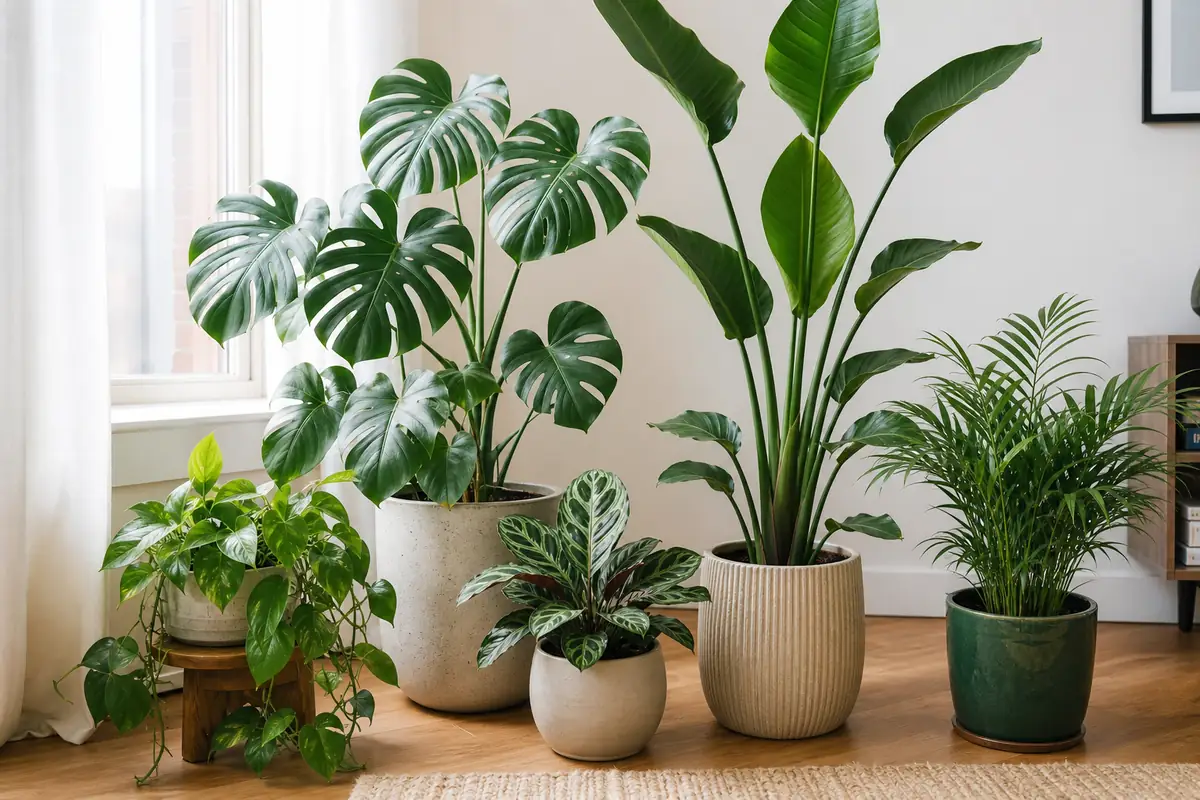
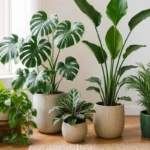
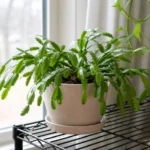
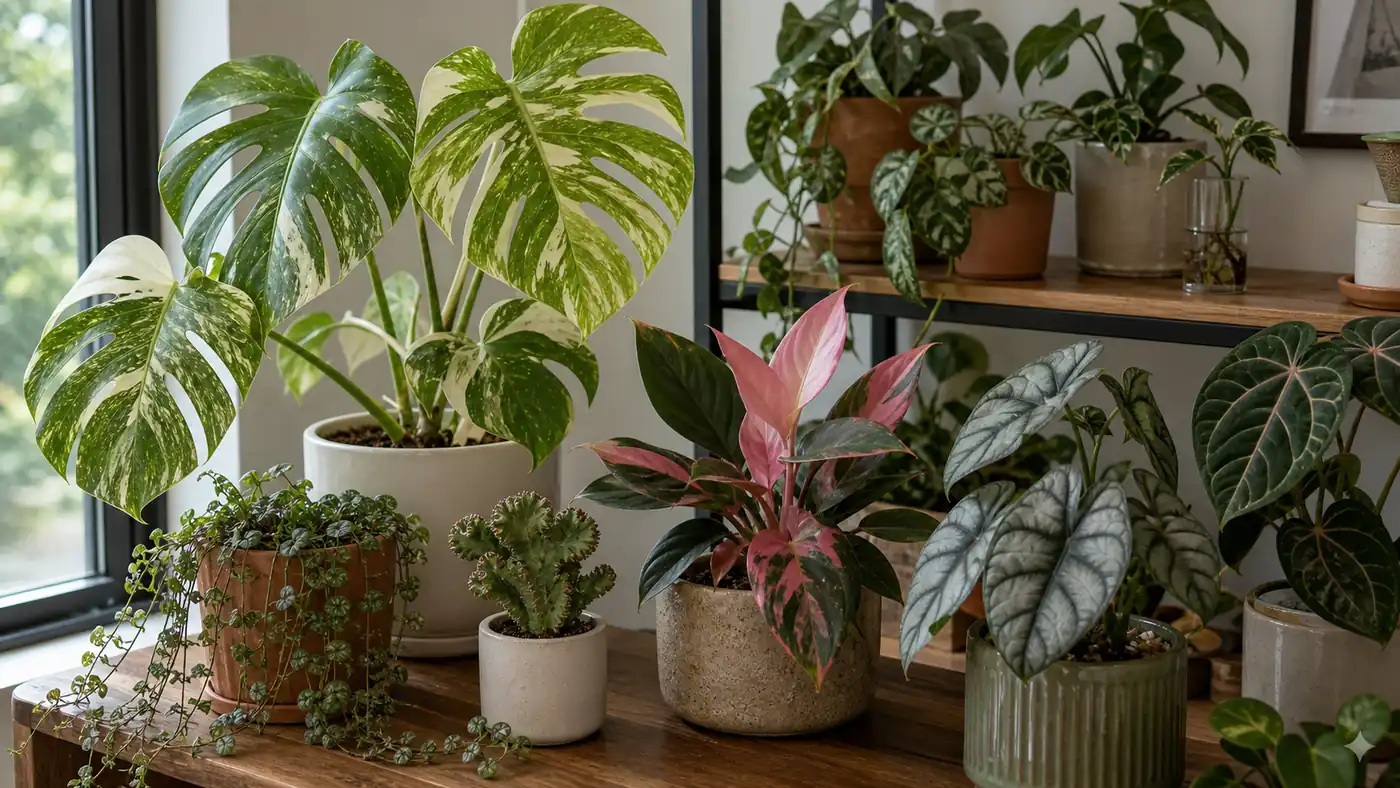
Homes & Gardens framed the same 2026 signal around rare houseplants as collectibles. Its examples included Euphorbia lactea crested ‘Mermaid Tail’, Chinese evergreen ‘Khanza Pink’, Philodendron ‘Jungle Boogie’, zebra plant, Monstera ‘Thai Constellation’, and string of turtles. Those plants are not rare in the same way. The common thread is visual identity: variegation, sculptural form, unusual leaf pattern, or a plant habit that makes the collection feel personal.
| Collector signal | 2026 evidence | Evidence type | How to read it |
|---|---|---|---|
| Plant collecting | Named as a defining 2026 garden trend | Garden Media/BHG trend signal | Rare plants fit a broader collecting movement |
| Generational pull | Gen Z and Millennials called out in trend reporting | Trend signal | Younger buyers are linked to plant collecting behavior |
| Collector channels | Swaps, local plant sales, social collector groups | Behavior signal | Rare demand often forms outside mass retail first |
| Rare houseplant examples | Six collectible examples named by Homes & Gardens | Trend signal | Shows breadth across aroids, succulents, trailing plants, and patterned foliage |
| Collection motive | Achievement, progression, control, and slow joy | Trend interpretation | Explains repeat buying and cultivar chasing |
This is the key difference between rare and merely expensive. Rare-plant demand is strongest when the plant gives the owner a visible collecting reason: a cream-splashed leaf, a serrated philodendron edge, a metallic alocasia surface, or a sculptural euphorbia crest that looks different from ordinary shelf plants.
Rare Aroids – Variegation And Leaf Pattern Drive The Visible Trend
Aroids remain central to rare houseplant demand because they deliver visible status in one leaf. Ideal Home’s 2026 houseplant trend reporting named Philodendron ‘Pink Princess’, Philodendron ‘White Princess’, and variegated Monstera forms as examples of rare, distinctive houseplants. Real Simple’s 2026 list added Alocasia ‘Silver Dragon’ and Philodendron ‘Birkin’ as plants moving into the spotlight.
The official NASS table does not isolate rare aroids. It does show that familiar aroid-adjacent production categories already have a market floor: pothos reached $27.5 million in 2024 foliage value, philodendron reached $18.6 million, spathiphyllum reached $28.6 million, and aglaonema reached $27.9 million. Rare forms build on those known genera and habits, then add color instability, variegation, compactness, or unusual leaf texture.
| Rare-plant lane | 2026 examples | Official market proxy | Collector appeal |
|---|---|---|---|
| Variegated monstera | Thai Constellation, White Ghost-type forms | Foliage category, no species breakout | Cream variegation and statement leaves |
| Collector philodendron | Pink Princess, White Princess, Birkin, Jungle Boogie | $18.6M philodendron value | Color, striping, serration, compact display |
| Patterned aglaonema | Khanza Pink, Silver Bay-type foliage | $27.9M aglaonema value | Color and low-light compatibility |
| Spathiphyllum/peace lily lane | Variegated or specialty peace lily forms | $28.6M spathiphyllum value | Flower-and-foliage contrast |
| Pothos and trailing foliage | Variegated pothos, string of turtles | $27.5M pothos value plus trailing plant retail | Easy propagation and shelf display |
Care still decides whether rare aroids become repeat purchases. Philodendron soil mix matters because a rare plant with weak roots loses value quickly. Philodendron variety choice also matters because some plants are bought for color, others for leaf size, and others for a compact collector shelf.
Sculptural Rare Plants – Cacti And Euphorbias Gain Collector Energy
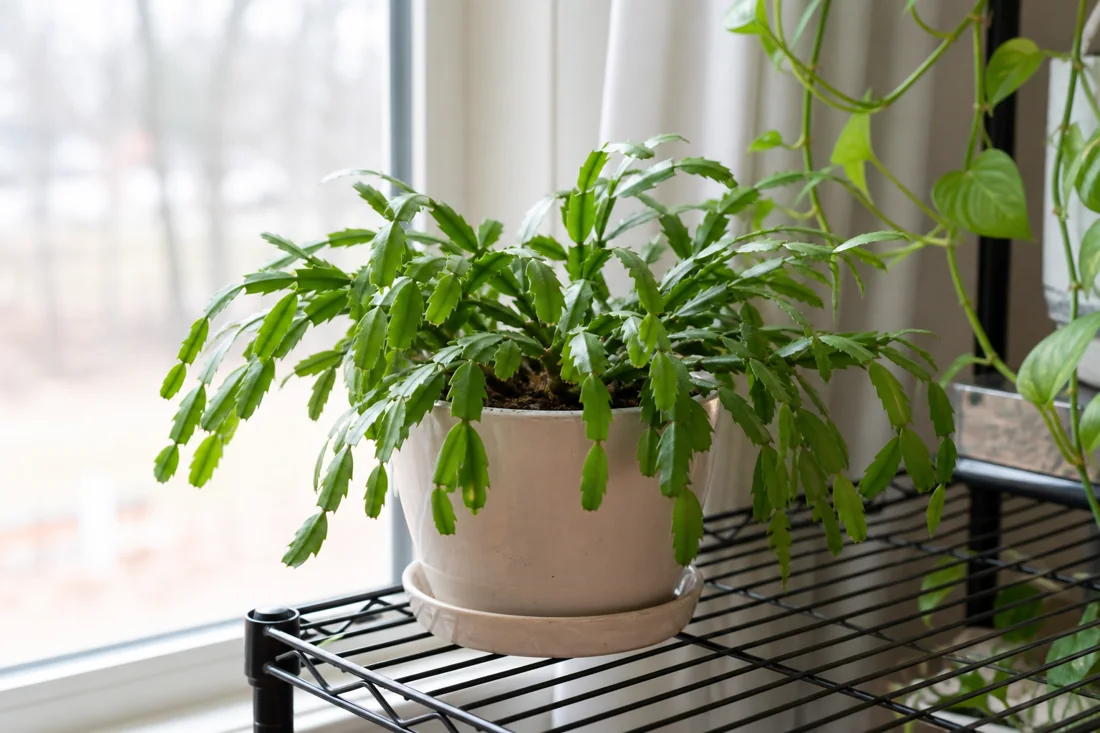
Rare houseplants are not only variegated aroids. The Sill’s 2025 report with 2026 predictions said unusual cacti and euphorbias had category interest more than double year over year. That signal lines up with NASS data: cacti and succulents reached $67.6 million in the 2024 foliage table, equal to about 7.3 percent of foliage value.
A separate NASS cacti and succulents table listed 40.7 million plants sold and $65.0 million in sales value. The table scope is different, and the signal is still useful. Sculptural low-water plants have measurable production volume, and rare euphorbia forms give collectors a path that is less humidity-dependent than many tropical aroids.
| Sculptural plant signal | Value or claim | Source type | Rare-plant reading |
|---|---|---|---|
| Cacti and succulents in foliage table | $67.6 million | Official 2024 NASS data | Low-water collector lane has measurable value |
| Share of foliage value | 7.3% | Garden Insider calculation | Small share, visible niche |
| Cacti and succulents state table | 40.7 million plants sold | Official 2024 NASS data | Unit-volume support |
| Cacti and succulents state table value | $65.0 million | Official 2024 NASS data | Closely aligned with foliage-table value |
| Unusual cacti/euphorbias | Interest more than doubled year over year | The Sill retail trend signal | Collector demand moving toward sculptural plants |
This lane also explains why rare does not always mean fussy. A crested euphorbia or unusual cactus can look collectible and still use a low-water routine. The tradeoff moves from humidity management to light, drainage, and safe handling.
Rare Plant Risk – Price, Propagation, And Care Split The Market
Rare houseplant demand has three practical constraints: price, propagation, and care stability. A plant becomes more accessible when tissue culture, nursery propagation, and grower scale increase supply. The same plant can lose collector status once it becomes common enough to appear at chain retail. That cycle is why rare plant value changes faster than ordinary foliage plant value.
Care risk is just as important as supply. The low maintenance houseplant statistics report shows why plants such as ZZ plant and snake plant succeed with wide care margins. Many rare aroids need narrower margins: bright indirect light, stable moisture, airy mix, warmer temperatures, and sometimes higher humidity. A curled alocasia leaf, a mushy cutting node, or a variegated leaf browning at the edge turns collector value into a care problem.
| Rare-plant risk | Where it shows up | Data or evidence layer | Buyer implication |
|---|---|---|---|
| Supply expansion | Rare plants become easier to buy | Propagation and retail signal | Prices can soften as availability rises |
| Care difficulty | Humidity, light, soil, shipping stress | Plant-care evidence | Rare does not always mean beginner-friendly |
| Variegation instability | Leaves revert or lose desirable color balance | Collector trait risk | Individual plant quality affects value |
| Shipping damage | Cuttings, thin leaves, cold-sensitive plants | Online retail risk | Mail-order plants need stronger acclimation |
| Trend turnover | One plant spikes, another cools | Trend-source evidence | Collections should avoid one-plant speculation |
The practical pattern is clear. Manageable care, stable visual traits, and enough supply give a plant the best chance of becoming a 2026 staple. Perfect humidity needs and fragile cuttings keep the specialist plants in a narrower buyer lane.
Rare Houseplant Segments – Which Signals Are Strongest In 2026
The strongest 2026 rare-houseplant signals fall into five segments: variegated aroids, sculptural cacti and euphorbias, compact collector foliage, patterned low-light plants, and nostalgic or story-driven plants. These are not equal in data quality. Official sales data supports the broader foliage and cacti/succulent base. Trend reporting supports collector behavior and named plant examples.
Real Simple’s 2026 popular houseplant list helps show the middle market. Alocasia ‘Silver Dragon’ is described as rare and visually distinctive. Philodendron ‘Birkin’ is positioned as rare and easier to maintain. Rex begonia, prayer plant, aglaonema ‘Silver Bay’, and senecios also point toward the same theme: buyers want collector texture, color, and movement without losing the plant within a month.
| Segment | 2026 examples | Data strength | Best use in citation |
|---|---|---|---|
| Variegated aroids | Monstera Thai Constellation, Pink Princess, White Princess | Strong trend signal, weak official species data | Collector visibility and variegation demand |
| Sculptural succulents/euphorbias | Crested euphorbia, unusual cacti, senecios | Official cacti/succulent value plus trend signal | Rare plants beyond tropical foliage |
| Compact collector foliage | Philodendron Birkin, string of turtles, rex begonia | Trend signal | Small-space collecting and shelf displays |
| Patterned low-light plants | Aglaonema cultivars, Silver Bay-type forms | Official aglaonema value plus trend signal | Rare look with easier placement |
| Story-driven plants | Plant swaps, local collector finds, unusual cultivars | Behavior trend signal | Collecting as identity, not only price |
The indoor plant benefits statistics report adds one caution. Rare plants may increase attention, satisfaction, and care routine because they are meaningful to the owner. They should never be framed as air purifiers or health devices. The collector value is emotional, visual, and behavioral.
Source And Methodology Notes – How The Trend Signals Were Treated
Rare houseplant data was separated into three layers. Official production data came from NASS and was used only for market base and category values. Trend signals came from 2026 garden and houseplant reporting. Named plant examples were treated as directional examples, not national sales rankings.
| Source | Latest period used | Evidence type | How it is used |
|---|---|---|---|
| USDA NASS Horticultural Specialties | 2024 data, released Dec. 16, 2025 | Official census data | Foliage value, pots, wholesale share, cacti/succulent value, genus-level production proxies |
| Better Homes & Gardens 2026 trends | 2026 trend reporting | Garden Media trend signal | Plant collecting, Gen Z/Millennial collector behavior, rare cultivars |
| Homes & Gardens collectible houseplant trend | 2026 trend reporting | Houseplant trend signal | Rare houseplants as collectibles and named collector examples |
| Ideal Home 2026 houseplant trends | 2026 trend reporting | Houseplant trend signal | Rare distinctive houseplants, RHS sales signal, jungle foliage context |
| Real Simple 2026 popular houseplants | 2026 trend reporting | Houseplant trend signal | Emerging collector plants such as Alocasia Silver Dragon and Philodendron Birkin |
| The Sill Plant Trend Report | 2025 report with 2026 predictions | Retail trend signal | Rare manageable plants, cacti/euphorbia interest, care-confidence cues |
Where To Start
Market-size citations should start with NASS: foliage plants for indoor or patio use reached $931.6 million in 2024 sales, up 34.7 percent from 2019.
Collector-demand citations should use 2026 trend sources. Plant collecting, rare cultivars, unusual foliage, and social collector groups are trend signals, not official sales categories.
Rare aroid claims should use careful wording. Philodendron and pothos have official category values, and rare cultivar demand should be tied to the broader foliage market rather than treated as its own national sales category.
Sculptural-plant claims can use both layers. Cacti and succulents reached $67.6 million in NASS foliage value, and The Sill reported unusual cacti/euphorbia interest more than doubling year over year.
Conclusion
Rare houseplant trends in 2026 are strongest when official market data and collector behavior are read together. NASS gives the $931.6 million foliage market and 34.7 percent growth. Trend sources show why some buyers are moving toward variegated aroids, sculptural euphorbias, unusual cacti, compact collector foliage, and plants with a story.
The best rare plant purchase matches the plant’s visual trait, supply level, and care margin to the room instead of chasing the rarest name on a tag. A speckled monstera leaf opening cleanly, a serrated philodendron pushing a new blade, or a crested euphorbia holding firm in gritty mix gives the collector trend a living, measurable shape.
Frequently Asked Questions
Are rare houseplants trending in 2026?
Yes, rare houseplants are a clear 2026 trend signal. Better Homes & Gardens and Homes & Gardens both connect plant collecting with rare cultivars, unusual foliage, and collector behavior. Ideal Home also names rare distinctive houseplants as a houseplant trend.
How big is the rare houseplant market?
There is no official U.S. category called rare houseplants. The closest official base is foliage plants for indoor or patio use, which reached $931.6 million in 2024 sales in USDA NASS data.
Which rare houseplants are mentioned in 2026 trend reports?
Trend reports mention Monstera Thai Constellation, Philodendron Pink Princess, Philodendron White Princess, Philodendron Birkin, Alocasia Silver Dragon, Chinese evergreen Khanza Pink, Euphorbia lactea crested Mermaid Tail, and string of turtles.
Are rare houseplants becoming easier to buy?
Some rare plants become easier to buy as propagation improves and growers scale production. A plant can move from collector rarity to mainstream retail when supply increases, so rarity can change faster than ordinary foliage demand.
Are rare houseplants harder to care for?
Some are harder, especially thin-leaved aroids or humidity-sensitive plants. Others, such as sculptural cacti, euphorbias, and some aglaonema cultivars, can be visually unusual with a wider care margin when light and drainage are right.