





Zucchini moves through five practical garden stages: seeding and germination, seedling establishment, vegetative growth, flowering and pollination, and fruit development through harvest. Under warm conditions, seeds can emerge within about a week, while mature plants can produce harvestable fruit only days after successful pollination.
Each stage has a visible transition. Cotyledons and true leaves mark early establishment, rapid leaf expansion signals vegetative growth, male and female flowers mark the reproductive phase, and swelling fruit behind a female flower confirms successful pollination. Following those markers is more useful than relying on calendar dates alone because temperature, cultivar, soil conditions, and transplant timing can shift the schedule.
Key Takeaways:
- Zucchini seeds commonly germinate in about 5-10 days in warm soil.
- Seedlings move into vegetative growth as true leaves expand and the plant develops a broad canopy.
- Flowering begins with male and female blossoms, and fruit forms only after successful pollination.
- A pollinated zucchini can reach harvest size within roughly 4-8 days.
- Most cultivars reach harvest within roughly 50-65 days, although variety and growing conditions affect timing.
Table of Contents
| Stage | Approximate timing | What you will see |
|---|---|---|
| Seeding and germination | About 5-10 days | Seed coat splits, root emerges, and cotyledons appear above the soil. |
| Seedling establishment | Early weeks after emergence | True leaves form and the root system expands. |
| Vegetative growth | Before flowering | Large leaves, thicker stems, and rapid canopy growth develop. |
| Flowering and pollination | Later vegetative period | Male flowers appear, followed by female flowers with a small ovary behind the bloom. |
| Fruit development and harvest | About 4-8 days after pollination | The ovary enlarges rapidly into a zucchini ready to pick at about 6-8 inches long. |
Stage 1 – Seeding and Soil Preparation
The seeding stage begins with soil selection and environmental preparation, both of which directly influence germination success and early plant health. A well-prepared seeding environment lays the groundwork for vigorous root development and future fruit production.
Selecting Soil and Creating Ideal Germination Conditions
Zucchini seeds germinate best in loose, nutrient-rich soil that offers both good drainage and consistent moisture retention. Sandy loam or loam with a pH between 6.0 and 7.0 provides the optimal structure and acidity for early root establishment. This type of soil provides adequate drainage while retaining enough moisture for the seeds to germinate.
Clear the planting area of weeds, rocks, and compacted debris to minimize competition and mechanical resistance for emerging seedlings. Incorporate organic matter such as compost or aged manure to enhance soil fertility and provide slow-release nutrients that support uniform seedling development.
A soil thermometer can be used to confirm conditions before sowing, ensuring the substrate has reached the minimum 60°F (15°C) required for optimal metabolic activation.
Alongside soil quality, temperature and moisture play a significant role in successful zucchini germination. It is recommended to sow zucchini seeds when the soil temperature reaches around 60 to 70 degrees Fahrenheit (15 to 21 degrees Celsius). This ensures that the soil is warm enough to promote quicker germination.
Planting Techniques for Optimal Germination
When planting zucchini seeds, it is crucial to follow some key techniques to optimize germination rates and seedling development.
- Sow the seeds at a depth of 1 inch (2.5 centimeters) into well-prepared, moist soil.
- Space seeds approximately 3 feet (90 centimeters) apart to give each plant room to expand and ensure proper air circulation.
- After planting, water gently to settle the soil and initiate hydration. Avoid overwatering, as it may cause seed rot or promote fungal issues.
Label planted areas to keep track of different zucchini varieties and monitor germination progress over time.
By applying these sowing methods and starting with optimal soil conditions, you provide your zucchini plants with the stable foundation needed for vigorous growth and productive harvests.
Stage 2 – Seedling Stage – Caring for Young Plants
Once germination occurs, focus shifts to nurturing the seedlings through controlled light, water, and nutrient management to build strong plant structure. This early stage is critical for establishing a resilient root system and disease-resistant foliage, both of which impact final yield quality. Proper care during this stage ensures that your seedlings receive the necessary light, water, and nutrients to thrive.
Light, Water, and Nutrient Requirements
Zucchini seedlings require full-spectrum light for at least 6 to 8 hours daily to promote compact growth and prevent stem elongation. If natural sunlight is limited, use grow lights positioned 4 to 6 inches above the seedlings to replicate optimal light conditions and avoid leggy growth. Continuous exposure to sufficient light promotes sturdy stem development and prevents seedlings from becoming leggy.
In addition to light, water is another critical factor for healthy zucchini seedlings. Maintain even soil moisture by watering at the base of each seedling. Avoid saturating the soil, which increases the risk of damping-off disease. Avoid overhead watering, as it can increase the risk of diseases. Be mindful of not overwatering, as zucchini seedlings are susceptible to damping-off, a fungal disease that affects the stems and causes wilting. Allow the soil to dry slightly between waterings to prevent excessive moisture accumulation.
Nutrient availability is critical at this stage. Enrich the soil with compost before planting and follow up with diluted liquid fertilizer every two weeks to maintain balanced nutrition. Use a balanced, water-soluble fertilizer diluted to half-strength and apply biweekly to avoid nutrient burn while supporting steady leaf and root development.

Identifying and Managing Early Pests
Even under ideal conditions, early-stage zucchini seedlings are vulnerable to insect damage that can stunt growth or cause plant loss. Timely detection and targeted response are essential for preventing pest escalation and protecting seedling vigor. Monitor daily for common threats including aphids, cucumber beetles, and squash bugs, which are especially harmful in early stages.
Aphids are small, soft-bodied insects that feed in clusters on the undersides of leaves, extracting sap and weakening the plant’s ability to grow. Symptoms include curled or deformed leaves, sticky honeydew residue, and the presence of ants attracted to the sugary excretions. To control aphids, dislodge them with a firm water spray or apply insecticidal soap in the early morning to minimize stress on the plants.
Cucumber beetles chew on leaves and stems, weakening plant structure and spreading bacterial wilt in young zucchini plants. Infestations often result in leaf scarring, slowed development, and transmission of bacterial pathogens. Use floating row covers to protect seedlings or treat infestations early with neem oil or other OMRI-listed insecticides.
Squash bugs pierce leaves to extract sap, leading to yellowing, wilting, and in severe cases, plant collapse. They are especially destructive during the seedling stage, when plants are less resilient to sap loss. Inspect leaf undersides daily for eggs and nymphs, removing them by hand. Use organic insecticides like pyrethrin for persistent infestations.
By promptly identifying and managing early pest issues, you can ensure the health and vitality of your young zucchini plants during the crucial seedling stage.
Stage 3 – Vegetative Growth – Leaves and Vines Development
During the vegetative stage, zucchini plants focus on developing their leaf canopy and vine system, which support future flowering and fruiting. Robust vegetative growth improves light capture, nutrient distribution, and airflow around the plant – factors that directly impact fruit yield and disease resistance.
Training zucchini vines during this phase improves garden space efficiency and reduces the risk of fungal issues caused by poor airflow. Training zucchini vines involves supporting them in a way that allows for better air circulation, sunlight exposure, and ease of maintenance.
- Trellising – Support vines with a vertical trellis or garden netting to increase airflow and minimize soil contact, reducing the likelihood of fungal infections.
- Pruning – Remove overcrowded or damaged leaves to improve light penetration and focus plant energy on reproductive growth.
- Staking – Use garden stakes to lift the main vine off the soil, reducing stem stress and discouraging pests that thrive in moist ground contact.
As vegetative growth accelerates, adjust watering frequency and fertilization to match the plant’s increasing demand for nutrients and moisture. Supplement mid-season with a nitrogen-rich fertilizer to support leaf development, and monitor soil moisture to avoid dehydration during hot spells. Check soil moisture daily and apply mulch to stabilize temperature and retain hydration, supporting consistent vine expansion.
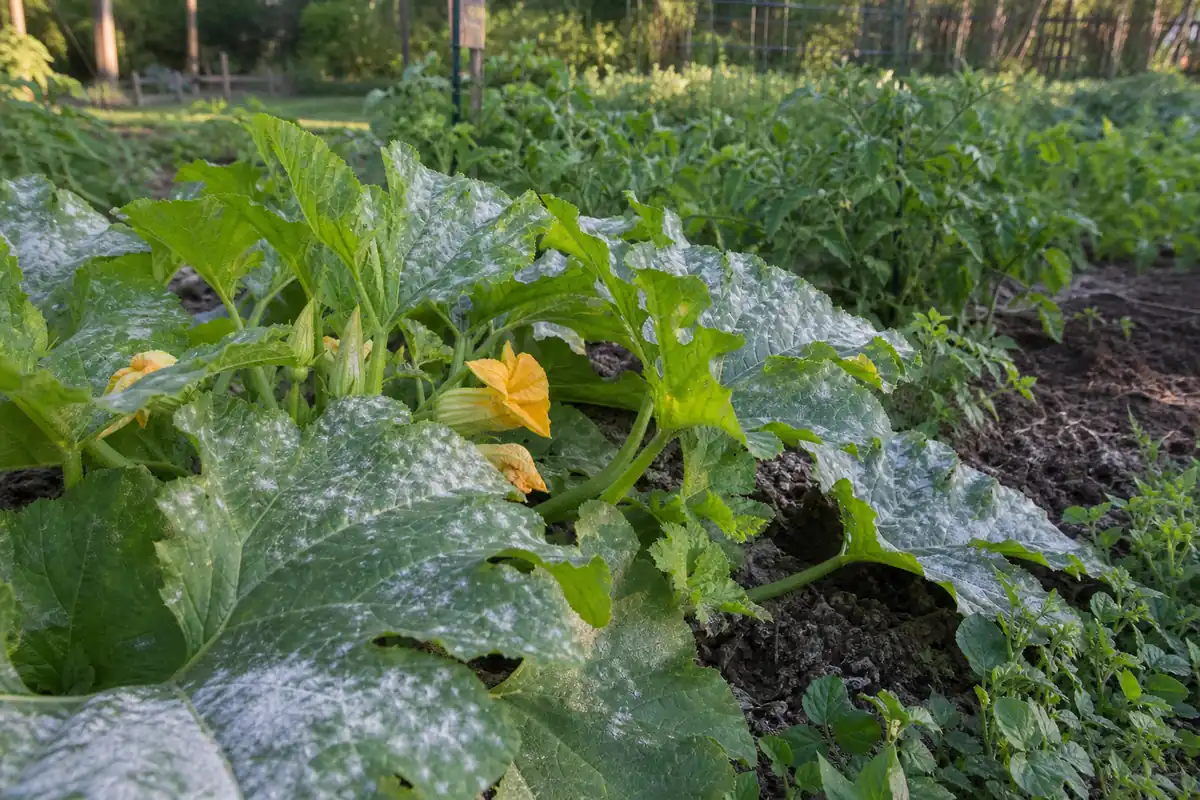
Periodic pruning of lower leaves and dense growth clusters enhances airflow and helps prevent the spread of powdery mildew, a common fungal issue in humid conditions. Always use sanitized tools when pruning to avoid introducing pathogens between plants. Pruning should be minimal during rapid growth to avoid stressing the vine and delaying flowering.
Stage 4 – Flowering Stage – Preparing for Pollination
The flowering stage marks the reproductive phase of zucchini, where pollination determines whether blossoms develop into harvestable fruits. Although flowers add visual interest, their primary function is reproductive – male and female blooms must connect through successful pollination. To ensure consistent fruit set, it’s important to recognize flower types and apply pollination techniques when natural pollinator activity is low.
The Importance of Flowers in Zucchini Production
Zucchini plants produce separate male and female flowers. Only female blooms can form fruit, but this requires successful transfer of pollen from male flowers. Each flower contains only male or female structures, never both, which makes cross-pollination essential for fruit development. Male flowers release pollen from their anthers, while female flowers contain the ovary that swells into a zucchini after successful pollination. Successful pollination is key to the growth and maturation of the fruits.

Encouraging Effective Pollination Techniques
Although bees and other insects typically handle pollination, gardeners can take proactive steps to boost fruit formation, especially during poor weather or in pollinator-scarce environments. Here are some techniques:
- Attract pollinators – Grow nectar-rich companion flowers nearby and maintain shallow water dishes to support local pollinator activity.
- Plant companion flowers – Use flowers like marigolds, calendula, or cosmos to increase pollinator visits and diversify garden ecology.
- Hand pollination – Use a soft brush or cotton swab to collect pollen from a male flower and gently transfer it to the stigma of a female bloom during early morning hours.
By paying attention to the flowering stage and optimizing pollination, you can increase the chances of a successful zucchini harvest. Take the time to observe the beauty of the flowers and appreciate their crucial role in producing the delicious zucchinis that grace your meals.
Stage 5 – Fruiting and Harvesting – From Blossoms to Bounty
After successful pollination, zucchini plants enter the fruiting stage, where flowers develop into fast-growing, edible fruits. This stage rewards proper care with visible growth, often producing harvestable zucchini within a few days of fruit set.
Signs Your Zucchini Are Ready to Harvest
Harvest timing directly affects flavor, texture, and plant productivity – recognizing ripeness signals is essential. Here are the key indicators to look for:
- Size – Harvest zucchini at 6 to 8 inches (15 to 20 cm) for best taste and tenderness. Oversized fruits tend to be fibrous and seed-heavy.
- Color – Choose fruits with uniform, deep green skin. Yellowing or dull surfaces suggest over-maturity or early rot.
- Texture – Zucchini should feel firm but slightly pliable under light pressure. Extremely hard skin may indicate overripeness.
By considering these signs, you can ensure that your zucchini is at its peak flavor and texture for your culinary creations.
Best Practices for Picking Zucchini
Proper harvesting techniques reduce plant stress and extend the productive life of your zucchini crop:
- Use sharp tools – Harvest with a clean knife or pruners, cutting the stem 1 inch (2.5 cm) above the fruit. Avoid tearing to prevent vine injury.
- Harvest frequently – Pick fruits daily during peak season to stimulate continued production and prevent oversized, low-quality zucchini.
- Handle with care – Avoid dropping or compressing harvested fruits. Bruised zucchini are more susceptible to microbial decay and have reduced shelf life.
By following these best practices, you can ensure that you harvest your zucchini properly and enjoy the fruits of your labor.
Conclusion
Zucchini develops quickly once warm soil and active growth are established. The most useful signals are visible changes in the plant: emergence of true leaves, rapid canopy expansion, appearance of male and female flowers, fruit swelling after pollination, and rapid elongation before harvest.
Use the stage sequence alongside your cultivar’s maturity estimate rather than treating calendar dates as fixed deadlines. During peak production, check plants frequently because zucchini can move from a newly pollinated flower to harvestable fruit within only a few days.
FAQ
What are the different growth stages of a zucchini plant?
The different growth stages of a zucchini plant include seeding, seedling, vegetative growth, flowering, and fruiting/harvesting.
What are the key factors to consider when seeding zucchini?
When seeding zucchini, it’s important to choose the right soil, ensure optimal moisture levels, and maintain the proper temperature for successful germination.
How deep should zucchini seeds be planted?
Zucchini seeds should be planted about 1-2 inches deep in the soil.
What spacing is recommended for zucchini seeds?
Zucchini seeds should be spaced about 3-4 feet apart to allow for proper growth and airflow.
How often should zucchini seeds be watered?
Zucchini seeds should be watered regularly to keep the soil moist, but not waterlogged. Aim to water the seeds at least once a day.
What are the light, water, and nutrient requirements for zucchini seedlings?
Zucchini seedlings require at least 6-8 hours of full sun per day. They also need regular watering to maintain soil moisture and should be fertilized with a balanced fertilizer every 2-3 weeks.
How can I tell when my zucchini are ready to harvest?
Zucchini are ready to harvest when they reach a desired size, usually around 6-8 inches long. They should also have a firm texture and a vibrant color.
What are the best practices for picking zucchini?
When picking zucchini, it’s best to use sharp tools to avoid damaging the plant. Cut the zucchini off the vine with a clean cut and avoid twisting or yanking them off.