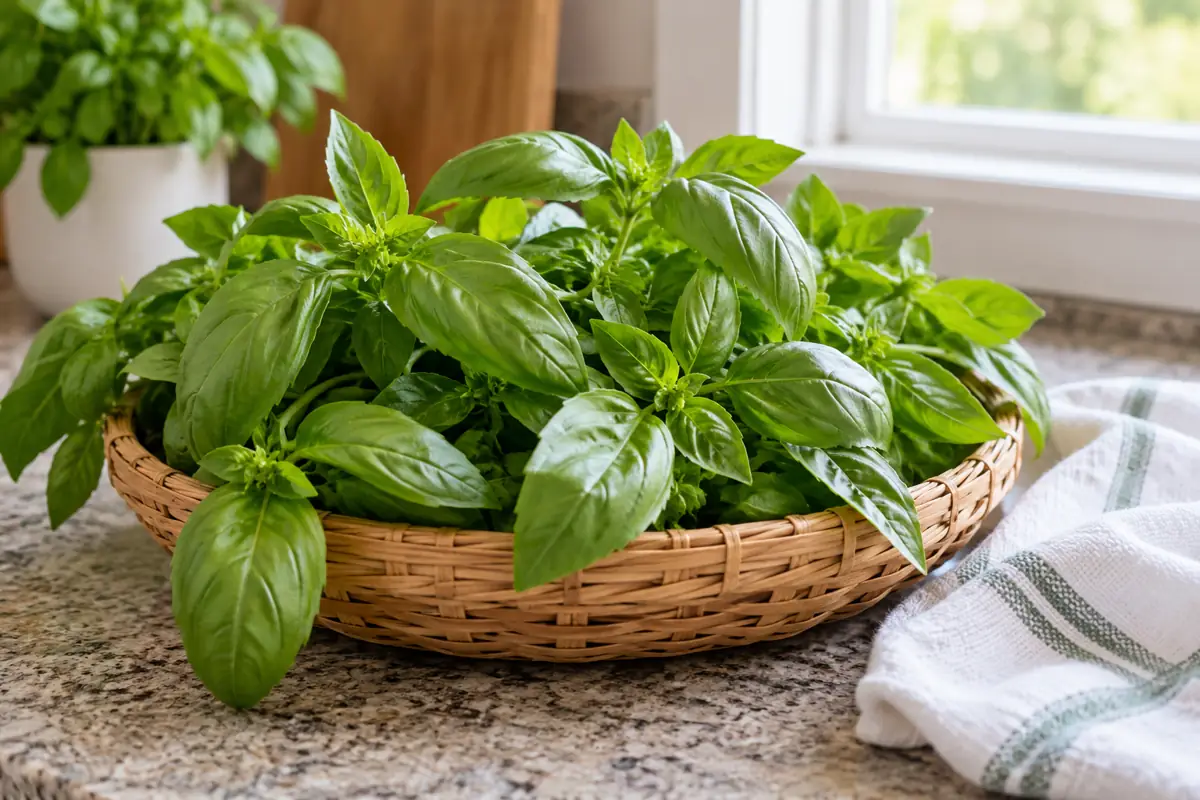
How to preserve basil depends on the texture and flavor you want when you cook. Freeze washed, dried leaves or small sprigs for later cooked dishes. Freeze chopped basil mixed with oil in small portions for sauces and soups. Dry the leaves thoroughly if you want a shelf-stored seasoning. Each method changes the fresh leaf, so choose its future use before processing the harvest.
Match the container to the method. Plain frozen leaves belong in freezer packaging. Seal fully dried basil in a dry airtight container. Homemade basil in oil or pesto needs refrigeration for no more than 4 days, or freezing for longer storage. A sealed jar on the kitchen shelf is not a safe substitute for that cold handling. Start with sound leaves, work in manageable batches, and label the result so a bag of sprigs and a container of oil cubes do not become anonymous freezer supplies.
Choose the form you will use
- Cooked dishes without added oil: wash, drain, pat dry, wrap leaves or sprigs, and freeze in a freezer bag.
- Oil-based seasoning or pesto: portion and freeze promptly. If refrigerating, use within 4 days.
- Dry seasoning: dry leaves rapidly with suitable airflow or low-temperature dehydration, then check that they crumble.
Frozen basil becomes limp after thawing. Keep fresh leaves for a garnish whose appearance matters.
Key Takeaways
- Choose freezing or drying according to the meal you intend.
- Wash, drain, and pat dry sound leaves before freezer packing.
- Freeze basil oil and pesto promptly in useful small portions.
- Dry leaves until they crumble before sealing them for storage.
- Keep homemade herb oils refrigerated briefly or frozen for longer storage.
Table of Contents
How to Preserve Basil for the Way You Will Cook It
Plain frozen basil is useful when a soup, sauce, or cooked vegetable dish needs the herb without extra oil. The leaf can soften after freezing and thawing, so a raw garnish is a different job. Keeping fresh leaves for that purpose prevents disappointment with a preserved leaf that has lost its upright shape.
Oil cubes concentrate a small amount of chopped basil in a portion you can retrieve from the freezer. They suit dishes where the added oil belongs. A cube prepared for a sauce may be a poor fit when you wanted dry herbs for a seasoning mix. Choose the amount and form around your actual cooking.
Dried basil occupies little space and can be stored outside the freezer once fully dry. Drying changes the flavor and reduces the volume. The different basil varieties also begin with different flavors, so label the type when it matters to your meals. A frozen Thai basil portion and a jar of dried sweet basil should not be treated as identical ingredients.
Sound Leaves and Gentle Handling Improve the Starting Batch
Sort the leaves before processing. Remove bruised, damaged, or spoiled material. Fresh basil should have recognizable leaf structure and a clean herbal aroma; a collapsing, slimy, or moldy batch is not a preservation opportunity. Freezing does not turn deteriorating food into sound ingredients.
Rinse sound leaves under cool running water, drain, and pat dry gently with paper towels. Avoid pressing them into a crushed wet pile. Water clinging between folded leaves adds unnecessary moisture to the freezer package and makes drying less efficient. Give a large harvest room to drain in several small batches.
Handle the sprigs carefully as you separate them. A firm leaf that releases its fragrance when gently bruised is different from a heap damaged during transport. Keep the selected leaves out of direct sun after harvesting. Begin the chosen preparation promptly so the kitchen counter does not become a long holding stage for a large basket.
Different culinary herbs dry at different speeds. Basil has tender, high-moisture leaves, which makes rapid moisture removal more important than copying the large hanging bundles used for tougher herbs. The preparation should fit the leaf you have.
Freeze Plain Leaves for Cooked Dishes Without Added Oil
The National Center for Home Food Preservation’s plain herb freezing preparation uses washing, draining, patting dry, wrapping, and freezer bagging. It does not require blanching as part of that method. Pack small amounts that you can remove without opening the whole harvest.
- Select sound leaves or small sprigs and rinse them.
- Drain and pat dry gently.
- Wrap a few leaves or sprigs in material intended for freezer wrapping.
- Place the wrapped portions in a freezer bag, close it, and label the contents and date.
- Freeze and keep the portions frozen until needed.
Use freezer packaging, not an open bowl tucked behind another frozen meal. A sealed package protects the herb from exposure and keeps small leaves together. If you have several basil types, separate them before packing. Variety information is harder to recover once the leaves have frozen and become dark or crumpled.
Expect a texture change when the leaves thaw. The frozen product usually becomes limp and is better suited to cooked dishes than a decorative fresh garnish. Choose a soup or sauce that can accept the softened leaf. Chopping the portion for cooking gives it a purpose without pretending the texture is unchanged.
Freezer preparation is crop-specific. Beet roots prepared for freezing are cooked first in their published method. Basil leaves can follow this plain herb preparation. Knowing that both foods go in a freezer does not establish that they need the same heat treatment.
Freeze Basil Oil and Pesto Before Cold Storage Runs Out
Chopped basil in oil offers another freezer route. Clean the leaves, combine them with oil, and process to a finely chopped mixture. Portion it into small ice cube trays and freeze promptly. Once the portions are frozen, remove them and pack in an airtight freezer-safe container. The tray is a portioning tool, not a place to hold fresh oil mixtures indefinitely.
The frozen-cube procedure appears in University of Vermont Extension’s basil preservation guidance by Andrea Knepper. It works for later soups, pasta, and vegetables where both basil and oil belong. Use only as much oil as your chosen preparation needs; there is no requirement to turn every surplus leaf into a large jar.
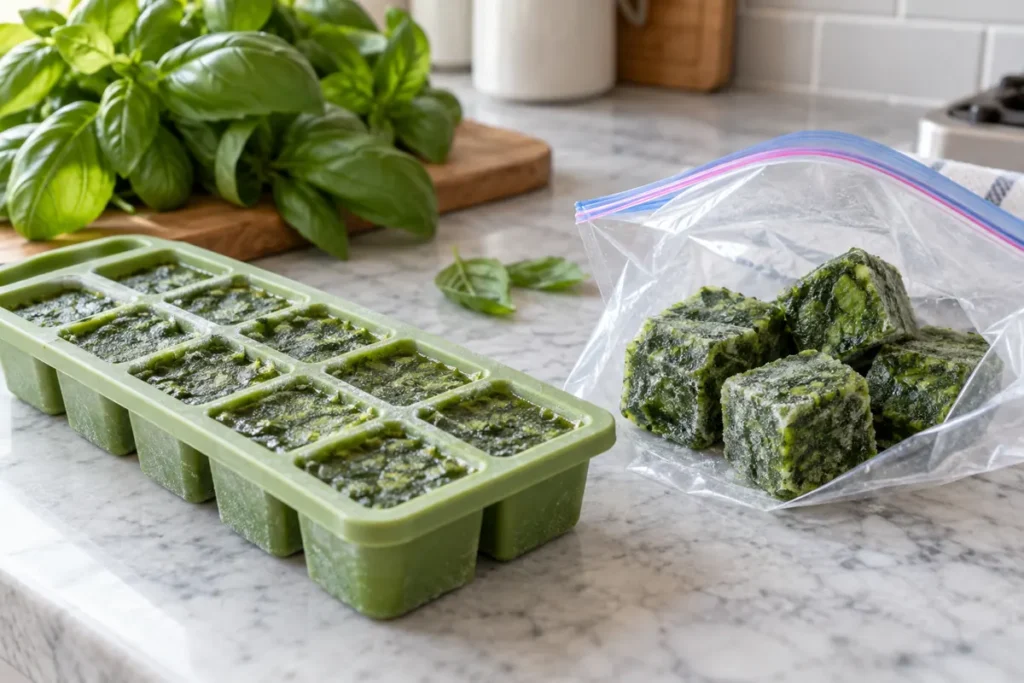
Homemade pesto and herb oils require cold storage because low-acid herbs in oil can create conditions favorable to the bacteria that cause botulism. The herb-oil and pesto storage rules developed by Oregon State food specialists Carolyn Raab and Margy Woodburn specify refrigeration for up to 4 days or freezing for longer storage. Label the preparation date and freeze the amount you will not use within that refrigerated window.
Keep the refrigerator at 40°F or below. Do not let a home-prepared basil-oil jar sit on a pantry shelf, and do not assume that a commercial shelf-stable product proves your home mixture is shelf-stable. Validated acidification processes are specific procedures; an arbitrary squeeze of lemon is not a replacement.
Dried herbs mixed into oil also follow Oregon State’s short refrigerated window or freezing rule. Dry leaf storage and storing leaves under oil are separate preparations. Do not home-can pesto by adapting a boiling-water or pressure-canning time from another food. The Oregon State publication does not supply a researched safe canning process for it.
Low Heat and Airflow Dry Leaves Before Mold Develops
Basil’s high moisture content makes slow drying risky for quality and mold development. A large dense bunch can stay wet in the center after the outside appears dry. Use a small amount with suitable airflow or a dehydrator whose temperature and air movement you can control.
Use the dehydrator’s low herb setting and check the leaves
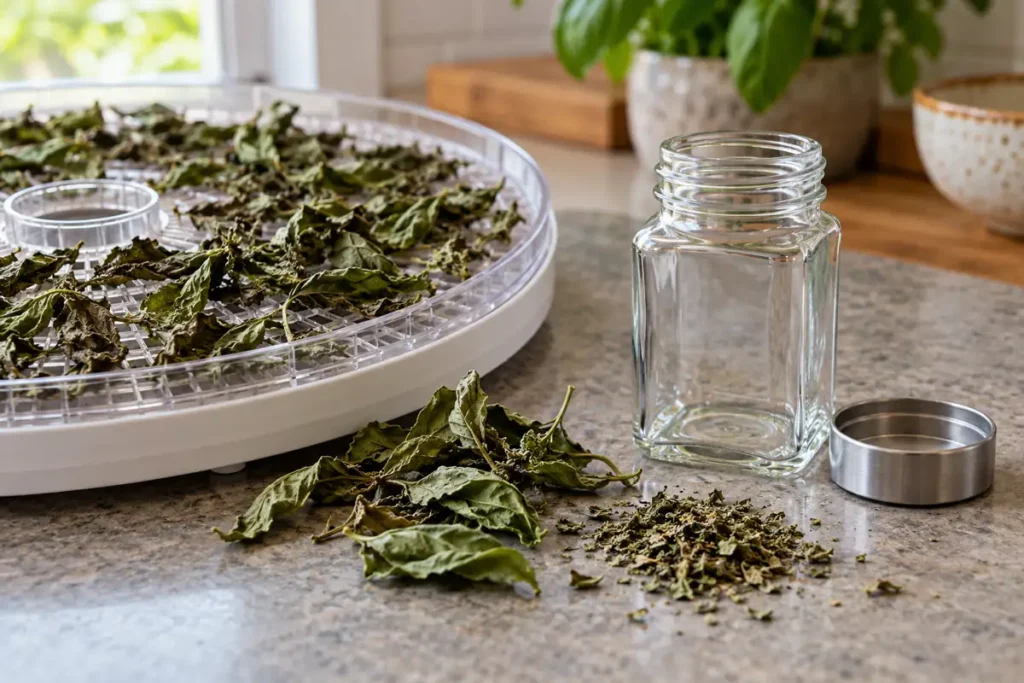
Preheat a suitable dehydrator to 95-115°F. NCHFP and Oregon State allow temperatures up to 125°F in more humid conditions. After rinsing and removing surface moisture, spread leaves in a single layer on the trays. Follow the appliance’s herb-drying directions as well, since its controls and airflow affect the process.
Check periodically. The published 1-4 hour range is guidance, not proof that every tray is finished at a particular minute. Leaves are ready when they crumble easily, and stems should be brittle enough to break when bent. A leaf that folds or feels damp needs more drying before it goes into an airtight jar.
Keep air-drying bundles small and ventilated
For a supported air-drying alternative, suspend a small bunch inside a paper bag with vent holes in the sides and top. Close the top around the suspended herbs with a rubber band and place it where air circulates through the bag. The bag catches leaves that fall as they dry. Large amounts can mold, so do not make a bulky bouquet just to fit more basil into one bag.
Choose another method when the room is humid and the leaves are drying too slowly. Do not pack moldy leaves for later use. Sun drying is not recommended for retaining herb color and flavor, and excessive heat can also weaken the aroma. A fast-looking method is useful only if it produces properly dry, usable leaves.
Keep Dry Leaves Whole and Freezer Portions Identifiable
Store fully dried basil in a clean airtight container in a cool, dark, dry location. Keep the leaves whole when practical and crumble them just before cooking. Crushing and grinding increase aroma loss during storage; a jar of powder has a different keeping pattern from whole dry leaves.
A dry leaf should crackle and break easily between your fingers, releasing its aroma as it crumbles. A pliable leaf can still contain too much moisture for the jar. Check leaves from several parts of the batch, including the center of the tray. Seal only the correctly dried product.
Oregon State’s drying guidance by Nellie Oehler uses 6-12 months as a best-flavor window for properly stored dried herbs. That is a quality target for dried herbs, not an exact basil-freezer expiration or permission to keep a damp jar. Write the drying date and herb name on the container so older supplies stay visible.
For a recipe calling for fresh herbs, start with roughly 1/4 to 1/3 as much dried herb by volume, then adjust to taste. Preservation and variety affect the flavor. A small amount of basil can season a cooked dish containing frozen pepper strips; choose plain leaves or an oil cube according to the rest of the recipe.
Use Texture and Storage History to Find the Next Correction
Limp thawed leaves are an expected freezer-texture change. Use them in cooked food. If your goal was a fresh-looking salad garnish, keep a fresh portion for that purpose next time. A change in leaf shape does not by itself mean the freezer method failed.
Mold during drying points toward a different problem. The leaves held moisture long enough for deterioration. Discard the affected batch and reassess bunch size, room humidity, airflow, or the choice of drying method. Sealing the leaves more tightly cannot undo that damage.
A faint dry-herb aroma can come from long storage, crushing before storage, or exposure to heat and light. Keep future batches whole, dry, and protected, and prepare an amount you will actually use. Adding more weak herb to a meal may change its bulk without restoring the flavor you wanted.
An oil mixture with an uncertain preparation date or cold-storage history needs a food-safety decision, not an aroma test. Follow the dated refrigeration or freezing rules from the start. Freezing an overdue or mishandled jar cannot reverse its earlier storage conditions. Keep a small labeled portion for current meals and freeze the surplus promptly.
Conclusion
Choose plain frozen leaves for cooked dishes without extra oil, frozen cubes for oil-based seasoning, or thoroughly dried leaves for a shelf-stored spice. Prepare sound basil in small batches and label each form. Keep homemade pesto and herb oils cold, and check dried leaves by how they crumble. A useful preserved harvest matches both the meal and the storage conditions you can maintain.