How to grow cilantro starts with giving this annual herb a cool growing window, loose soil, and time to make leaves before flowering. Sow directly where the plants will grow, keep the seedbed moist during establishment, and harvest lightly when the stems remain leafy. A sunny spring or fall bed often works better than trying to keep one plant productive through summer heat.
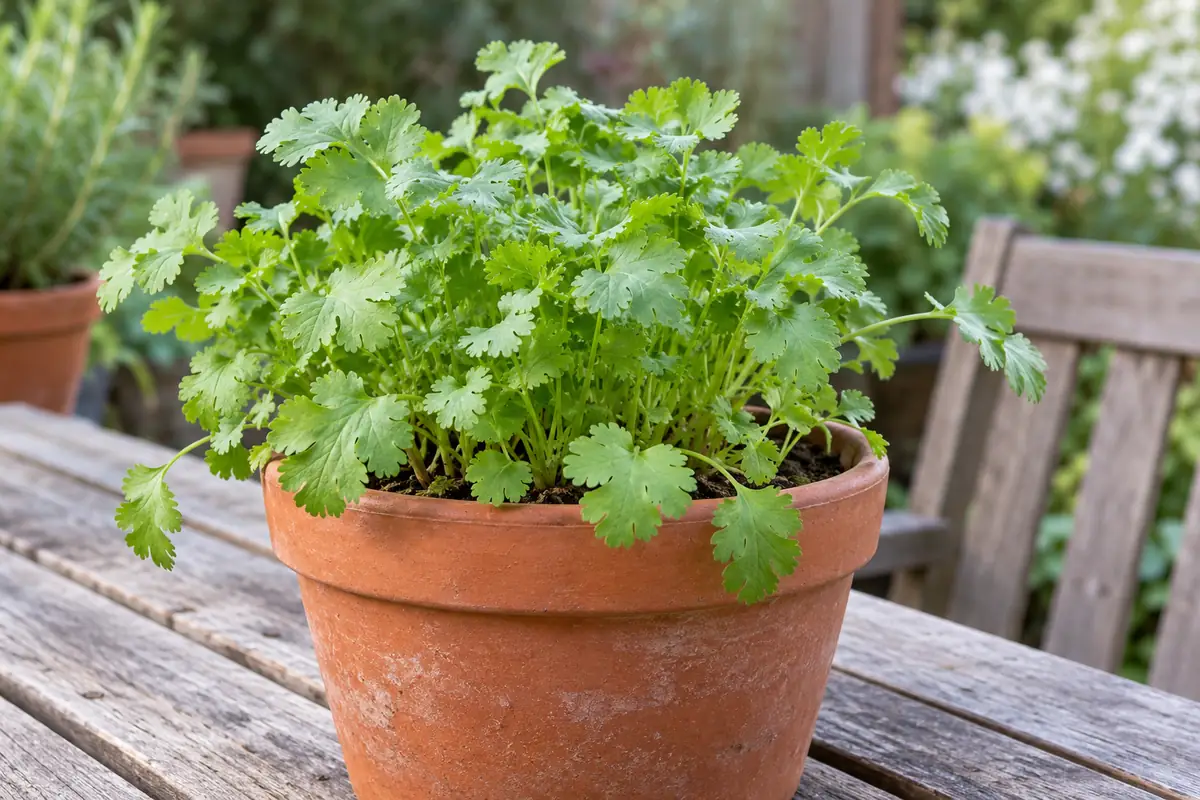
Look at the plant as well as the calendar. Rounded lower leaves suit a fresh leaf harvest. A rapidly lengthening stem, finer upper foliage, and flower heads mean the plant is moving toward coriander seed. Fertilizer does not turn that stage back into a young leaf crop. A second small sowing gives you a younger batch to pick from when the first plants flower. The same approach works in a drained container, provided the roots have room and the pot does not bake beside a hot window.
Plant for leaves or let the seed ripen
- For leaves: sow in a cool period, pick sparingly from young plants, and start another small batch every 2-3 weeks when conditions remain suitable.
- For a pot: use drainage holes, adequate depth, and a sunny position protected from excessive heat.
- For coriander: leave selected plants to flower and collect the mature brown seed heads.
Cutting flower stems may extend leaf picking briefly. It does not promise an endless supply from one annual plant.
Key Takeaways
- Choose a cool growing window before sowing your cilantro seeds.
- Sow directly or transplant gently without breaking the developing taproot.
- Thin seedlings according to leaf picking or coriander seed production.
- Check pot moisture and drainage before adding another watering.
- Resow small batches to replace plants that have reached flowering.
Table of Contents
How to Grow Cilantro When the Weather Stays Cool
Cilantro and coriander come from the same plant, Coriandrum sativum. Cilantro usually means the fresh leaves; coriander usually means the ripe seed in US kitchens. The plant is an annual, so its normal life ends with flowering and seed production. Treat the herb as a short-lived leaf crop that eventually sets seed.
Warm weather and longer days speed the transition to flowering. Oregon State University horticulturists Jim Myers and Ross Penhallegon describe both influences in their cilantro leaf and coriander seed growing advice. A plant that bolts quickly in June may make a much longer leaf crop in cooler weather. The difference does not necessarily mean you watered badly.
In a cold-winter garden, start with the local spring planting window and consider another sowing as summer heat eases. In a mild-winter region, fall can offer a longer cool period. Utah State University’s guidance distinguishes cooler locations from warmer areas within one state. Choose your planting date from local weather and the length of the coming cool period.
A position with light afternoon shade can reduce heat exposure. University of Maryland Extension includes that option for cilantro, especially as conditions become hot. Shade does not remove the effects of the season, and a dim indoor corner is not a replacement for useful growing light. Keep the plant bright enough to make sturdy leaves, and avoid a pot that becomes hot to the touch beside sun-warmed glass.
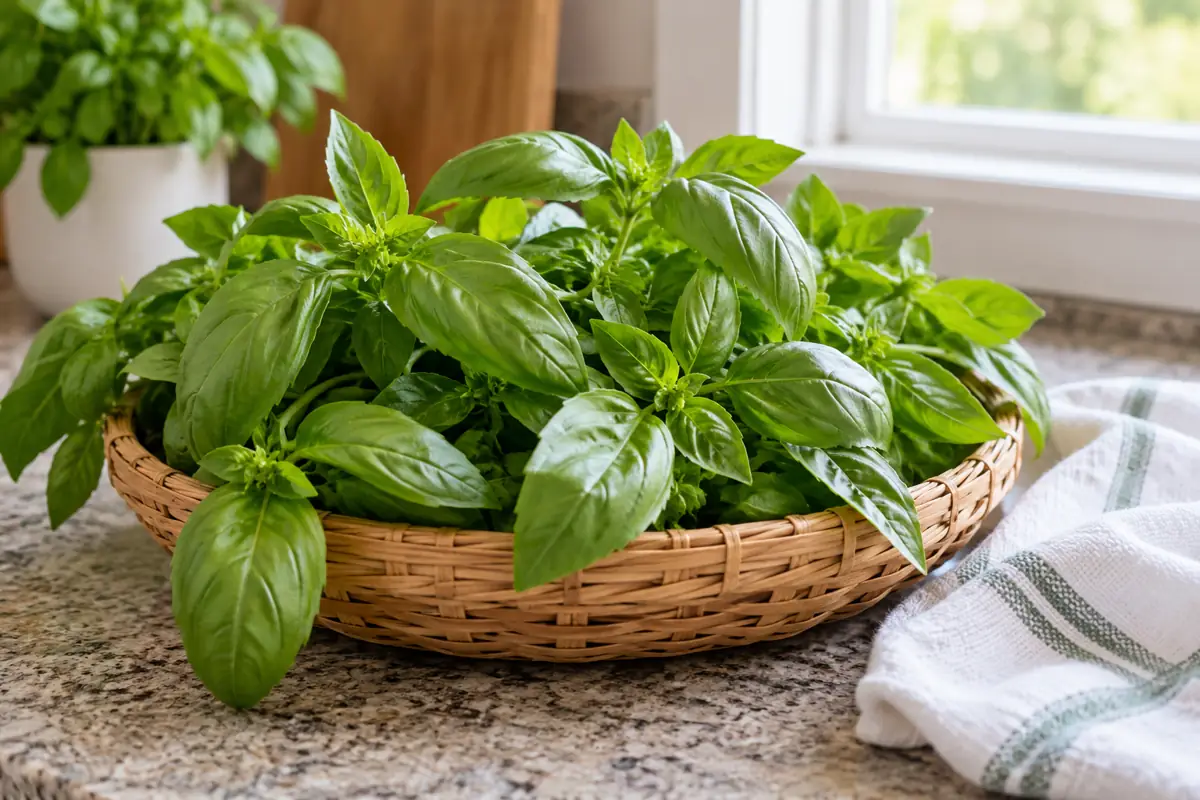
Warm-season basil varieties and cool-season cilantro need different timing. Separate their sowing decisions even if both will go into the same summer meal. Waiting for reliable basil weather may leave a much shorter cilantro leaf window.
Sow Where the Taproot Can Develop Without Disturbance
Choose soil that drains and breaks into small crumbs under gentle pressure. Seedlings must push through the surface when their roots enter the soil below. If a wet bed smears across a tool or closes into a dense crust, wait until it is workable. A thin, loose covering gives emerging shoots less resistance than large clods pressed over the row.
Direct sowing avoids moving the taproot. Make a shallow row, distribute the seeds, cover gently, and mark the date. The planting and spacing recommendations for cilantro by Colt Miller and Dan Drost at Utah State University use a depth of about 1/2 inch. Follow the seed packet if its instructions differ for your variety or sowing conditions.
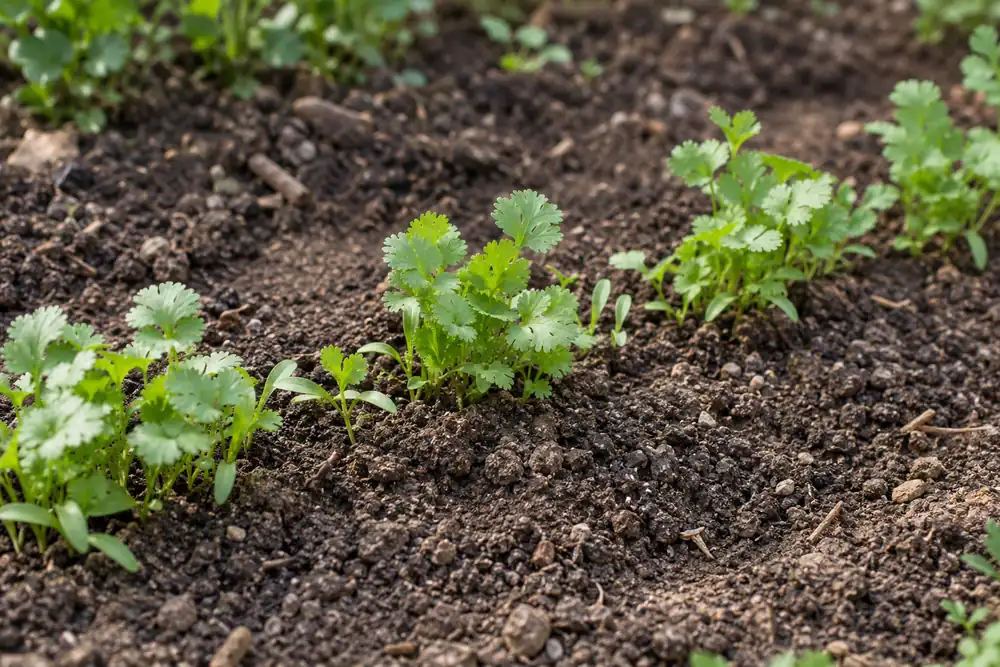
Moisten the covered row gently. A strong stream can uncover seeds or move them into one crowded patch. A perforated rose on a watering can distributes the water more gently than pouring from an open spout. Stop before the seedbed becomes a puddle, then check it as the surface begins to dry.
Do not write off a row just because it has not emerged in a week. The Utah guide gives about 21 days for germination in its growing context. Temperature and moisture alter the wait. Check that the seed zone has neither dried into dust nor remained saturated before adding more seed on top of the first sowing.
Move purchased starts with the root ball intact. A dense, root-bound plant already stretching toward flowers is a poor substitute for a young leaf crop. Set a small start into a prepared hole without pulling the roots apart. Minimize disturbance and water it in gently; direct sowing remains the easier way to avoid that transplant handling altogether.
Thin for the Plant Size and Harvest You Want
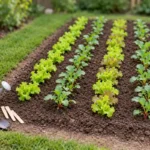
A close row for young leaf picking and a row of mature seed plants have different space requirements. Utah State University’s leaf-harvest spacing is about 2 inches, compared with 8-10 inches for coriander seed production. Maryland’s guidance uses 7-10 inches between larger individual cilantro plants. These are different growing approaches, not a reason to squeeze every seedling into the smallest spacing.
| Harvest goal | Growing approach | What to watch |
|---|---|---|
| Young leaves from a close row | About 2 inches between plants in Utah’s leaf system | Crowding and uneven access to water |
| Larger individual leaf plants | About 7-10 inches in Maryland’s guidance | Room for foliage and repeated light picking |
| Ripe coriander seed | About 8-10 inches in Utah’s seed system | Mature flowering stems and seed heads |
Thin when the seedlings are small enough to separate without a tangle of roots. Keep the strongest plants at the spacing chosen for the harvest. A crowded sowing does not become productive simply because all the shoots are green. Later, intertwined leaves make it harder to see the soil, water evenly, and pick without pulling neighboring stems.
Leave access beside the row. In a small vegetable garden, a short cilantro sowing can be easier to manage than a full bed planted on one date. You need room for another batch and enough reach to harvest without stepping on the growing soil.
Keep Container Roots Moist Enough to Grow and Free to Drain
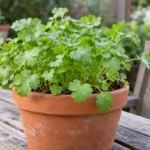
A shallow decorative bowl gives cilantro roots little room and dries unevenly. Choose a deeper pot with open drainage holes and a container growing mix. Use enough depth for the developing roots and enough width for your chosen plant spacing. The number of plants still needs to fit the chosen harvest system and the pot’s actual dimensions.
Water newly sown pots carefully enough to keep the seed zone moist. Once the plants have established, check the mix before adding more. A dry surface over a still-wet lower pot is different from a light pot whose mix is drying throughout. Pour gently, let excess water leave, and empty any saucer that traps it.
Persistent dampness and poor drainage are not solved by reducing the amount of water to a few daily drops. The roots need a drained environment, and the developing leaves need enough moisture to keep growing. If the pot stays heavy and wet, check the holes, growing mix, and location. If it dries rapidly in hot afternoon sun, move it to a cooler bright position and check more often.
A container of culinary herbs is easiest to water when each plant has similar needs. Cilantro beside a heat source may flower before it has supplied many leaves. Moving the pot reduces heat exposure without changing the plant’s annual life cycle.
Read Stem and Leaf Changes Before Flowering Takes Over
Bolting is the move toward flowering and seed. The central growth becomes taller, and upper leaves may become much finer than the broad, scalloped leaves near the base. Small white or pale purple flowers appear in flat clusters. That pattern is a developmental change, not automatically a nutrient deficiency.
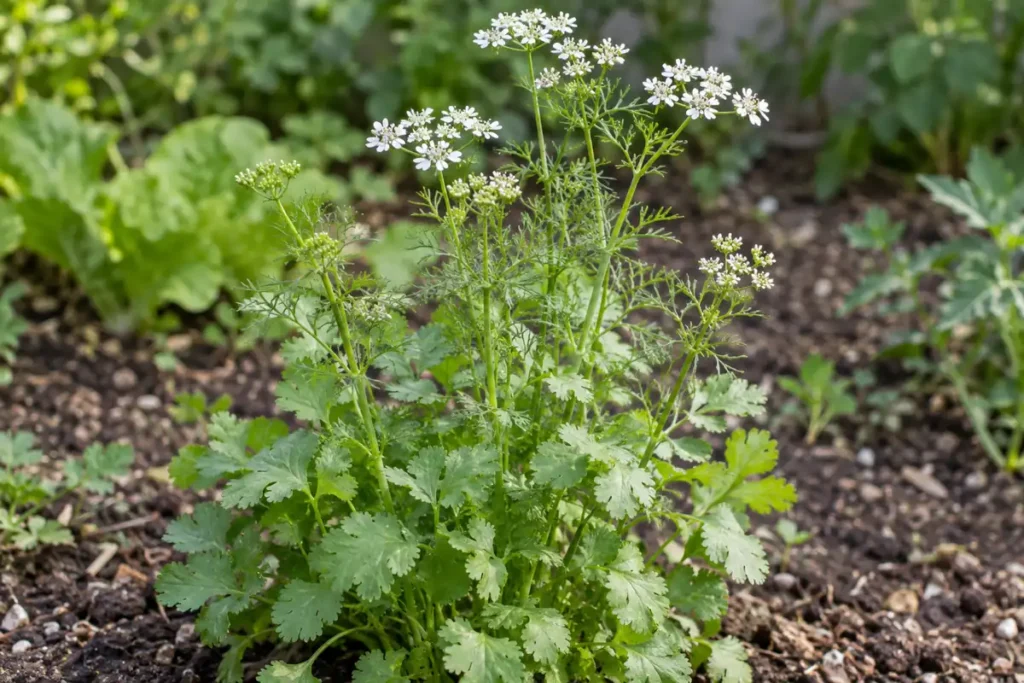
Pick usable leaves when they remain in good condition. Maryland’s herb guidance says pinching flower stems can extend leaf harvesting. Expect a limited extension of leaf picking. A plant responding to long days and heat may continue sending up new reproductive growth even after one stalk has been removed.
Choose a slow-bolting variety when the main goal is leaves. Utah’s examples include Leisure and Slow Bolting. A slow-bolting variety still flowers as it matures. Combine the variety choice with cool timing, suitable moisture, and another sowing.
If the plants are already flowering freely, decide whether to keep some for seed. The flower clusters also attract small beneficial insects, as Oregon State’s gardening advice describes. Leave a few plants where they will not shade the new leaf row. Let the old sowing complete its life as you continue picking from a younger batch.
Pick Leaves Without Removing the Plant’s Next Growth
Begin light picking when the plants are about 4-6 inches tall. Leave tiny seedlings to establish. Maryland distinguishes sparing leaf picking at that size from harvesting a plant around 6 inches high. Take a few sound leaves and leave enough active foliage for the plant to continue growing. Young plants and mature flowering stems will not respond alike.
Use clean scissors or pinch individual leaf stalks carefully. A fresh stalk feels tender and snaps cleanly; an older flowering stem is firmer and more fibrous. Avoid pulling upward on the whole clump, especially after watering, when a small plant can come out with its roots attached. Keep the remaining center undamaged when you want another leaf harvest.
Some new leaves can develop after a light cutting when the plant is actively vegetative. Cutting all the foliage or taking the growing point is a different intervention. Neither a healthy root nor a pot on a windowsill promises repeated full-size harvests. Watch for new rounded leaves before taking another cutting.
Freshly picked cilantro releases a strong aroma when the stalks are cut. Pick what you can use, and remove damaged leaves before kitchen preparation. If a plant gives you a small final harvest before flowering, that is a normal limit of the crop. Repeated feeding after bolting can produce more vigorous flower stems without restoring a young leaf crop.
Resow for Leaves or Let Coriander Seed Ripen
A succession starts with a small batch, a date marker, and space for the next one. Maryland suggests sowing every 2-3 weeks for a continuing supply. Use that interval when the season still favors leaf growth. If each new batch flowers almost immediately in extreme heat, wait for a cooler window before sowing more.
Compare batches before repeating the same setup. If the older plants are flowering when the younger row has broad leaves, succession is doing its job. Thin, weak growth in both rows calls for checks of light, crowding, and moisture. A sealed soil surface needs attention before the next sowing. Loosen only the unplanted area to protect established roots.
For coriander, leave selected plants to flower and form seed. Wait until the seed heads become brown and mature. Cut them into a paper bag and finish drying so loose seeds fall into the bag. Green, soft seed heads are not the mature culinary seed described in the extension harvest guidance.
Keep fully dried culinary seed in a sealed, dry container. Keep seed intended for sowing separately labeled, and use bought sowing seed if you cannot verify the saved lot’s suitability. Self-sown seedlings emerge at unplanned positions and dates. A marked new row gives you more control over spacing and the next leaf harvest.
Conclusion
Grow cilantro as a sequence of cool-season leaf crops, with a few plants allowed to finish coriander seed if you want it. Sow gently, thin for the harvest, keep roots drained, and pick before flowering dominates. When the first plants become tall and feathery, the next young row should take over.