


Updated April 16, 2026
The soil conditions for rosemary determine not just whether the plant survives, but how it tastes, how long it lives, and whether it collapses quietly in year two. Get them right, and rosemary grows for a decade in the same spot. Get them wrong, and the plant yellows slowly until root rot finishes what waterlogged soil started.
Rosemary evolved on the stony hillsides of the Mediterranean – southern France, Spain, the Greek islands – where shallow, calcium-rich ground drains almost immediately after rain. That origin shapes everything underground. Rich, moisture-retaining garden soil, the kind that makes tomatoes and peppers flourish, is exactly what rosemary was never designed to handle.
Understanding what this herb genuinely needs underfoot changes how you plant it, amend it, and troubleshoot it when it starts to fail. The soil mix that looks too poor for most of your garden is usually about right for rosemary.
Key Takeaways:
- Keep soil pH between 6.5 and 7.0 for maximum root health and essential oil concentration
- Test soil drainage before planting: water should clear a 12-inch hole at 2 inches per hour minimum
- Avoid peat moss amendments – they lower pH and hold moisture rosemary cannot tolerate
- Blend at least 30% coarse grit or perlite into any container potting mix
- Skip compost topdressing on established rosemary – nitrogen drives soft growth prone to disease
Table of Contents
Native Soil Origins – Why Lean And Rocky Points The Way
Rosemary (Salvia rosmarinus, reclassified from Rosmarinus officinalis by the Royal Horticultural Society in 2017) is native to coastal Mediterranean climates where soil is shallow, stony, and low in organic matter. Limestone underlies much of the region, keeping pH near neutral to slightly alkaline and drainage close to instantaneous after rain.
That lean environment does something most gardeners overlook: it concentrates essential oils. Research published in Industrial Crops and Products found that rosemary grown in low-fertility conditions produced significantly higher concentrations of camphor and 1,8-cineole – the compounds behind that sharp, resinous scent when you brush a stem. Rich soil produces more foliage. Poor soil produces better flavor.
This is also why rosemary is one of the few culinary herbs that performs better in native garden soil than in heavily amended beds. If your ground is lean, sandy, and drains fast, plant directly into it. If it is not, the following sections explain how to get it closer to what the plant actually requires.
Variety choice plays a small but real role here. Some cultivars, like Arp and Hill Hardy, show broader soil tolerance than their Mediterranean counterparts. If you are working with difficult ground, selecting a rosemary variety matched to your climate and soil type is worth doing before you invest in extensive amendments.
Rosemary Soil pH – The 6.5 to 7.0 Range That Matters Most
Rosemary is more tolerant of pH variation than most guides suggest. The University of Maryland Extension notes it will survive from 5.5 to 7.5. But survival and thriving are different outcomes.
The functional target is 6.5 to 7.0. Inside that window, three things happen simultaneously: phosphorus reaches maximum availability to roots, iron and manganese remain soluble (both deficiencies cause yellowing that is easy to misread as a watering problem), and the mild alkalinity mirrors the limestone-influenced soils of the plant’s native range. Below pH 6.0, growth slows and leaf color often dulls to a flat gray-green. Above 7.5, iron becomes locked up in the soil even when physically present.
Testing your soil
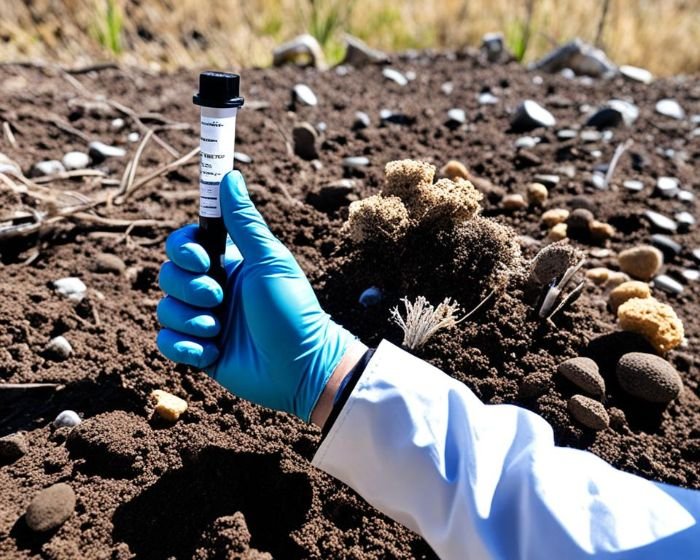
A digital pH meter gives a reliable reading in about 30 seconds on moistened soil. Paper strips measure to the nearest 0.5, which is not accurate enough when you are targeting a narrow window. Test three spots in the planting area and average the results.
Correcting pH
To raise pH: work in agricultural lime (calcium carbonate) at roughly 5 pounds per 100 square feet for sandy soil, or 10 pounds for clay. Retest after three months – lime acts slowly, and the change happens over weeks.
To lower pH: apply elemental sulfur at about half the lime rate and retest after six weeks. The process is faster in sandy soils with low buffering capacity than in clay, where the correction takes longer to move through the profile.
One thing worth flagging: peat moss is often recommended as a pH-lowering amendment. For rosemary, it causes two problems at once – it acidifies the soil below the preferred range and holds moisture. The relationship between soil pH and nutrient availability becomes relevant if you plan to grow multiple herbs in the same bed with different pH preferences, since an adjustment for one plant can work against another.
Drainage Above Everything – What Saturated Soil Does To Rosemary Roots
Saturated soil kills rosemary faster than drought, frost, or neglect.
The roots are fine and fibrous, optimized for rapid uptake in dry conditions. When surrounding soil stays wet for more than a day or two, two processes begin simultaneously. Fungal pathogens – particularly Phytophthora and Pythium species – move into the root zone, and roots begin to suffocate from oxygen deprivation. By the time foliage shows yellowing, wilting, or browning at the stem tips, root damage is typically 60 to 80 percent complete.
The drainage test
Dig a hole 12 inches deep and 12 inches wide. Fill it with water once and let it drain completely. Fill it a second time, then measure how far the water level drops in 60 minutes. Suitable ground for rosemary drains at least 2 inches per hour. Anything below 1 inch per hour requires intervention before planting.
Run this test even in what looks like sandy ground. Some soils have a hard pan layer 14 to 18 inches down that traps water above it – invisible from the surface. Rosemary planted without this check often survives one wet season and fails in the second.
Raising the bed
The most reliable fix for marginal drainage is mounding. Raise the planting area 6 to 8 inches above surrounding grade. Water moves by gravity, and the additional height lifts the root zone above any subsurface pooling. In heavy clay, combine mounding with a 4-inch layer of coarse gravel at the base of the planting hole before backfilling.
When the problem goes beyond soil texture – a high water table, compacted subsoil, or poor site grading – the options shift toward structural drainage solutions for heavy-clay gardens rather than amendment alone. Raised beds with open bottoms offer the most control in those situations.
Amending Clay And Heavy Soil – What Works And What Makes It Worse
Clay soil holds nutrients well but drains too slowly for rosemary. Amending it means breaking up its structure enough to let water move – the clay itself does not need to be eliminated.
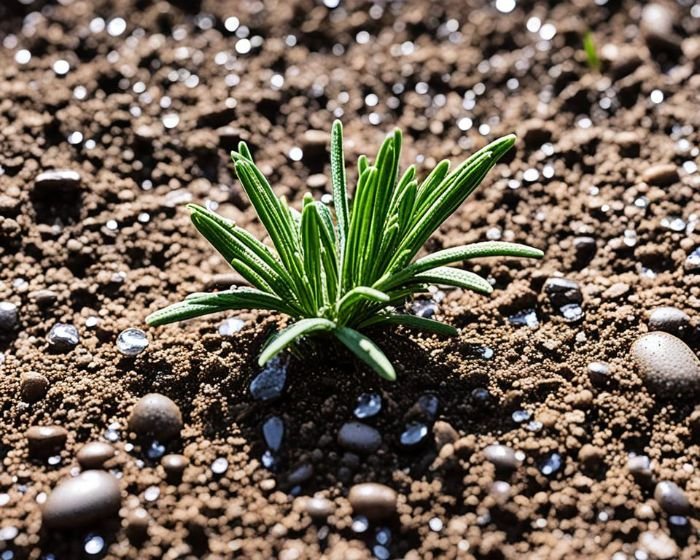
The amendment that performs most consistently is horticultural grit or coarse sand – not builder’s sand or beach sand. Builder’s sand has fine particles that fill pore spaces rather than open them, which can make drainage worse. Horticultural grit has angular particles between 2mm and 5mm. Mixed at 30 percent grit to 70 percent existing soil by volume, it opens drainage without depleting nutrients entirely.
For severe clay – soil that forms a firm ball when wet and cracks into hard chunks when dry – increase the ratio to 50/50. At that point you are effectively building a new soil profile rather than modifying the existing one, and the result behaves much more like a sandy loam.
When does amending clay stop being a fix and become an argument for just raising the bed entirely? That threshold is roughly 40 percent clay content. At that point, the volume of amendment required approaches the volume of soil you are supposedly improving, and a raised bed with controlled fill becomes the simpler and more reliable answer.
Compost is often added to clay as a structural amendment. With rosemary, this works against you in the long run. Compost improves drainage initially, but decomposes within 18 to 24 months – leaving a more fertile, moisture-retentive soil than you started with. If you use compost, limit it to 10 to 15 percent of total amendment volume and pair it with grit. The role of organic matter in soil amendment follows different rules for drought-adapted Mediterranean plants than it does for vegetable beds, where decomposition is part of the design.
I often notice that rosemary planted in amended clay performs adequately in year one, then declines in year two – right around the point when the organic matter in the amendment begins to break down and compact, reducing the air spaces that initially made it work.
Pro Tip: Drop a small handful of crushed limestone chips into the planting hole when working in heavy clay. The chips improve drainage slightly and keep pH in the alkaline range rosemary prefers, without the decomposition timeline of organic amendments.
| Soil Type | Amendment Approach | Notes |
|---|---|---|
| Sandy loam (ideal) | None needed | Plant directly, no amendment required |
| Moderate clay | 30% grit + 70% existing soil | Mound planting area 4 to 6 inches above grade |
| Heavy clay | 50% grit + 50% existing soil | Combine with raised mound 6 to 8 inches |
| Heavy clay with high water table | Raised bed with 12+ inches of controlled fill | Amendment alone will not resolve the drainage problem |
Container Soil Mix For Rosemary – Different Rules Apply
Potted rosemary lives in a closed drainage system. A container traps water within its own volume – water can move down, but not sideways into surrounding ground. Standard potting soil, even quality brands, holds too much moisture for rosemary to tolerate over more than one growing season.
The base mix that works across most climates: two parts potting soil, one part horticultural grit or perlite. Pick up a handful and squeeze it. The right mixture feels loose and slightly gritty between your fingers, falling apart rather than compressing into a cohesive ball. If it clumps, it holds too much moisture.
| Climate or Condition | Potting Soil | Coarse Grit or Perlite |
|---|---|---|
| Dry climate / under 30 inches annual rain | 70% | 30% |
| Moderate climate / 30 to 50 inches annual rain | 60% | 40% |
| Wet climate / over 50 inches annual rain | 50% | 50% |
| High-watering tendency | 50% | 50% |
A few ingredients to avoid in any rosemary container mix:
- Peat moss – acidifies the mix and retains moisture
- Moisture-control potting soils – engineered for the opposite of what rosemary requires
- Beach sand or builder’s sand – fine particles fill pore spaces instead of opening them
- Cactus mix used alone – often too lean in nutrients, and many brands use fine sand rather than coarse grit
Drainage holes are not optional. At least two holes in the base of a 10-inch pot, or three in a 14-inch pot, is the working minimum. If you use a saucer, empty it within an hour of watering. Rosemary sitting in standing water in a saucer follows the same failure path as rosemary planted in waterlogged ground.
Soil Care Through The Seasons – What To Do And When To Stop
Rosemary soil does not need constant attention. Most of what gardeners do to maintain soil health – adding compost, fertilizing, mulching with organic material – either has no benefit for this plant or actively harms it.
Spring is the one window where light intervention makes sense. Once new growth appears, a thin topdressing of mature compost – no more than half an inch – gives the plant a mild nutrient boost at its most active period. Texas A&M AgriLife Extension recommends against routine fertilization for rosemary, noting that lean growing conditions produce plants with better aromatic concentration and fewer disease problems. If you fertilize at all, use a low-nitrogen formula like 5-10-10 applied once in early spring. Nothing more through the year.
Through summer, the main risk is compaction from repeated watering and foot traffic near the root zone. A gentle pass with a hand fork around the base every six to eight weeks maintains air space in the top inch of soil without disturbing deeper roots.
Winter presents the most overlooked soil risk in cold climates. Wet, frozen soil that thaws and refreezes repeatedly saturates roots with each cycle and can physically heave plants upward. A 3-inch layer of coarse gravel over the root zone reduces this. It insulates less than organic mulch but holds almost no moisture itself, keeping the crown drier through the freeze-thaw cycles that cause most winter losses.
What to avoid in autumn: digging in amendments, adding compost, or disturbing roots. The plant is slowing its metabolism in preparation for dormancy. Root disturbance at this stage weakens cold hardiness going into winter.
Conclusion
Rosemary rewards a kind of intentional neglect that most garden plants never ask for. The soil it performs best in is lean, fast-draining, and slightly alkaline – conditions that most gardeners would instinctively try to improve. The plants that live longest are usually the ones planted directly into sandy or rocky ground without amendment, or into a purpose-built mix that gets as close to those conditions as possible.
The single decision that carries the most weight is drainage. Solve that first – whether through soil selection, grit amendment, raised mounding, or the right container mix – and pH, nutrition, and seasonal maintenance become secondary concerns. When drainage is right and pH sits between 6.5 and 7.0, rosemary has the conditions it was built for. In those conditions, it fills out, holds its color through winter, and pushes up its blue-gray flowers in spring for years running without asking for much in return.
FAQ
What pH does rosemary grow best in?
The optimal range is 6.5 to 7.0, though rosemary will survive from roughly 5.5 to 7.5. Inside the 6.5 to 7.0 window, phosphorus, iron, and manganese are all maximally available – the combination that supports strong root growth and deep leaf color. Below 6.0, nutrient uptake slows and leaves often take on a flat gray-green tone. Above 7.5, iron becomes locked up in the soil even when present, causing yellowing in new growth that is easy to misread as overwatering or drought stress.
Can rosemary grow in clay soil?
It can survive in clay with the right preparation, but it rarely performs well long-term without intervention. Clay drains too slowly between rain events and creates conditions for fungal root disease. The most reliable approach is to amend with 30 to 50 percent horticultural grit by volume, then mound the planting area 6 to 8 inches above surrounding grade to further improve drainage. In heavy clay with a high water table, a raised bed filled with a controlled mix is the more dependable solution – amendment alone cannot overcome that level of drainage restriction.
What happens if rosemary soil stays wet for several days?
Root rot begins within a day or two of sustained saturation. The fine roots suffocate from oxygen deprivation, and fungal pathogens – particularly Phytophthora species – move in quickly under those conditions. The first visible signs are wilting despite wet soil, yellowing lower leaves, and a gray-brown discoloration at the stem base near soil level. By the time these appear on the foliage, root damage is usually extensive. Plants caught very early can sometimes recover if moved to dry conditions, but rosemary with more than 50 percent root loss rarely bounces back fully.
Is peat moss a good amendment for rosemary?
No – and this is one of the more common soil preparation mistakes. Peat moss lowers pH and retains moisture, two effects that work directly against what rosemary needs. Gardeners sometimes reach for it to loosen clay soil, which it does accomplish initially, but the combination of acidified, moisture-retentive soil creates worse growing conditions than the original clay had. Horticultural grit or coarse perlite achieves the same structural loosening without the pH and drainage problems peat creates.
How much compost should I add to rosemary soil?
Very little, and only at planting time or in early spring. If amending soil before planting, limit compost to 10 to 15 percent of total amendment volume, always paired with coarse grit. As a spring topdressing on established plants, half an inch applied once per year is the upper limit. The problem with heavier compost applications is that improvement is temporary – compost decomposes within 18 to 24 months, leaving soil that is more moisture-retentive and fertile than it was before. For rosemary already growing in good conditions, no compost at all is often the better choice.
What is the best potting mix for rosemary in containers?
Two parts standard potting soil to one part horticultural grit or perlite performs well across most climates. In regions with more than 50 inches of annual rainfall, or for gardeners who tend to water frequently, a 50/50 ratio of potting soil to grit gives more margin for error. Avoid moisture-control potting mixes, peat-heavy formulas, and cactus soil made with fine sand rather than coarse grit. The right mix should feel loose and slightly gritty in your hand – if it compresses into a cohesive clump, it holds more moisture than rosemary can comfortably handle over multiple seasons.
Does rosemary need fertilizer?
Rarely, and less than most herb gardeners expect. Texas A&M AgriLife Extension specifically advises against routine fertilization for rosemary, noting that lean growing conditions produce plants with better aromatic quality and fewer disease problems. If a plant is in genuinely poor soil and growth is noticeably slow, a single application of a low-nitrogen fertilizer – 5-10-10 or similar ratio – in early spring is appropriate. High-nitrogen formulas push fast, soft growth that is more susceptible to powdery mildew and less aromatic than growth from lean conditions.
Can I plant rosemary directly into garden soil without amendments?
In sandy, fast-draining ground, yes – and that is often the preferred approach. Rosemary evolved in that type of soil, and planting directly into it without amendment produces plants that are more resilient and better flavored than those in heavily modified beds. In average loam, test drainage first using the 12-inch hole method. If water clears at 2 or more inches per hour, the soil is likely adequate without amendment. In anything denser than that, adding coarse grit at 30 percent by volume before planting will make a measurable difference in how the plant performs after its first winter.