
Last Updated June 03, 2026
Thyme becomes confusing when every nursery tag sounds useful. Common thyme, French thyme, lemon thyme, creeping thyme, woolly thyme, caraway thyme, silver thyme, and wild thyme may all sit on the same bench. They share a family resemblance and do different jobs.
The best thyme for roast chicken may be a poor choice between paving stones. The prettiest silver-edged plant may taste milder than the plain green one. A fragrant ground cover can be wonderful under bare feet and still disappoint a cook who wants a strong kitchen herb.
Choose thyme by use first: cooking, citrus flavor, ground cover, edging, containers, pollinators, fragrance, or herbal tea. Then check growth habit, winter hardiness, leaf texture, and whether the plant will be harvested often or mostly left to flower.
Key Takeaways
- Common, English, French, and German thyme are the main kitchen choices
- Lemon thyme and orange thyme add citrus fragrance to seafood, vegetables, and drinks
- Creeping thyme and woolly thyme work better as ground covers than main cooking herbs
- Silver and variegated thyme bring ornamental foliage with milder flavor
- Match the thyme type to drainage, sun, harvest frequency, and winter exposure
Table of Contents
Thyme Varieties – What Changes From One Type To Another
Thyme belongs to the genus Thymus, a group of low, woody, aromatic plants in the mint family. Most garden thymes like full sun, lean soil, sharp drainage, and light pruning after flowering. The differences that matter to gardeners are flavor, growth habit, leaf size, flower color, hardiness, and tolerance for foot traffic.
Upright thyme types produce harvestable stems for the kitchen. Creeping thyme types hug the ground and spread into mats. Citrus-scented thymes release lemon, orange, or lime notes when rubbed. Variegated types are grown for foliage as much as flavor.
The wide choice of thyme species and varieties includes plants with lemon or orange notes as well as classic culinary forms. The range is useful only when the plant’s job is clear before buying.
| Thyme Type | Growth Habit | Flavor Or Scent | Best Use | Use With Care |
|---|---|---|---|---|
| Common thyme | Upright, woody, small-leaved | Classic savory thyme | Everyday cooking and drying | Wet soil and heavy shade |
| French thyme | Compact upright | Refined, aromatic, slightly sweet | Soups, sauces, poultry, vegetables | Cold exposed sites in harsh winters |
| German thyme | Upright and hardy | Strong classic thyme | Cold-climate kitchen gardens | Overwatering in containers |
| Lemon thyme | Upright to spreading | Citrus and thyme together | Fish, chicken, salads, teas | Long cooking that buries the citrus note |
| Creeping thyme | Low mat-forming ground cover | Mild herbal fragrance | Paths, edges, pollinator patches | Replacing a strong culinary thyme |
| Woolly thyme | Very low, fuzzy, silver-gray | Subtle scent | Rock gardens and dry ornamental edges | Kitchen harvest and damp sites |
Named Thyme Varieties Gardeners Often See At Nurseries
Named thyme varieties should be judged by growth habit before the label sells the scent or flower color. A creeping cultivar, a culinary upright thyme, and a silver ornamental thyme may all be useful, but they do not solve the same garden job.
| Named Variety Or Retail Type | Usually Means | Best Use | Main Caution |
|---|---|---|---|
| Elfin thyme | Very low creeping thyme with tiny leaves | Dry stone edges, miniature paths, rock gardens | Too slow and low for regular kitchen harvest |
| Creeping pink thyme | Flowering creeping thyme sold for pink bloom | Path edges, dry slopes, pollinator patches | Needs sun and sharp drainage to avoid crown rot |
| Red creeping thyme | Low mat-forming thyme with strong flower color | Ground cover, pavers, sunny edging | Handles light foot traffic, not constant trampling |
| Juniper thyme | Compact thyme with resinous, woodsy scent | Dry herb beds, fragrance planting, specialty cooking | Use as a specialty plant, not the only kitchen thyme |
| Lavender thyme | Aromatic thyme selected for floral scent | Fragrance gardens, teas, light culinary use | Flavor can be less predictable than common thyme |
| Orange thyme | Citrus-scented thyme with orange notes | Drinks, seafood, chicken, summer vegetables | Late cooking can bury the citrus aroma |
| Silver thyme | Variegated ornamental thyme | Containers, edging, foliage contrast | Milder flavor than plain culinary thyme |
| Caraway thyme | Thyme with warm caraway-like scent | Roasted roots, pork, breads, savory herb blends | Too distinctive for every recipe calling for thyme |
Culinary Thyme Types For Cooking
Kitchen thyme should give clean flavor after cooking, drying, and repeated harvesting. Upright types usually perform best because their stems are easier to cut, strip, dry, and bundle. Their leaves are small, concentrated, and less likely to hold grit than low mat-forming ground covers.
Common thyme, often sold as garden thyme or English thyme, is the safest all-purpose choice. It has the familiar savory flavor used in soups, stews, roasted vegetables, beans, marinades, and herb blends. If a recipe simply says thyme, this is usually the flavor the recipe expects.
French thyme tends to feel slightly finer in the kitchen. It suits sauces, poultry, vegetables, fish stews, and dishes where thyme should season the background without taking over. It is a good choice for cooks who harvest often and want a tidy plant in a small herb bed.
German thyme is useful where winter cold makes French thyme unreliable. It keeps the classic thyme profile and is often a better perennial choice in colder gardens. If your goal is dependable dried thyme from a northern herb bed, German thyme deserves a closer look.
Caraway thyme has a warmer, more unusual scent that can lean toward caraway or spice. It fits roasted roots, pork, savory breads, and experimental herb blends. Plant it as a specialty herb, not as the only thyme in the kitchen garden.
Lemon, Orange, And Silver Thyme For Fragrance And Color
Citrus-scented thymes bring a different kind of usefulness. Lemon thyme is the most common. The leaves smell bright when bruised and work well with seafood, chicken, butter, summer vegetables, grain salads, fruit, iced tea, and herbal infusions.
Orange thyme and lime thyme are less common at retail and solve the same kind of kitchen problem. They give a fragrant top note where common thyme can feel too savory. Add them near the end of cooking, bruise a few leaves into drinks, or scatter tiny leaves over finished vegetables.
Golden lemon thyme and variegated lemon thyme add foliage color to herb beds and containers. Their flavor can be a little milder than plain green lemon thyme. Grow them where leaves will be seen as well as harvested.
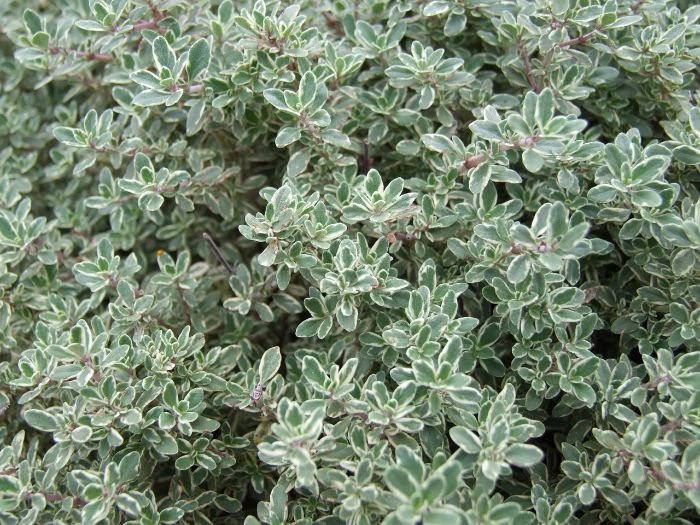
Silver thyme has pale-edged leaves and a neat, ornamental look. It can be used in cooking, especially for light seasoning, though it is usually chosen for mixed herb planters, edging, and dry garden contrast. It looks best when trimmed before stems become woody and open.
Creeping Thyme, Wild Thyme, And Woolly Thyme For Ground Cover
Ground-cover thyme is chosen for spread, flowers, fragrance, and drought tolerance. It fits along path edges, between stepping stones, in rock gardens, and across small dry slopes. It should not be treated like turf that handles constant running, turning, and heavy traffic.
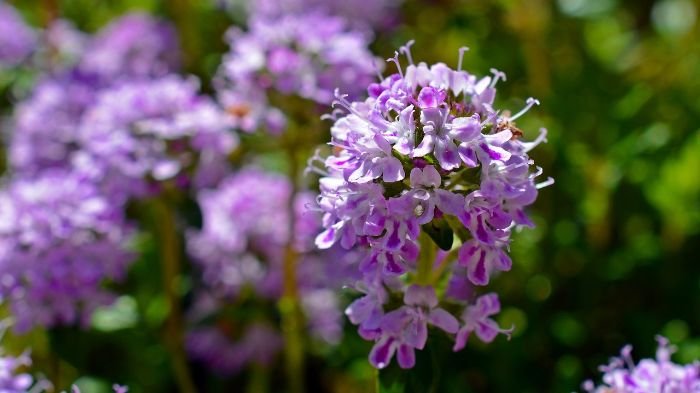
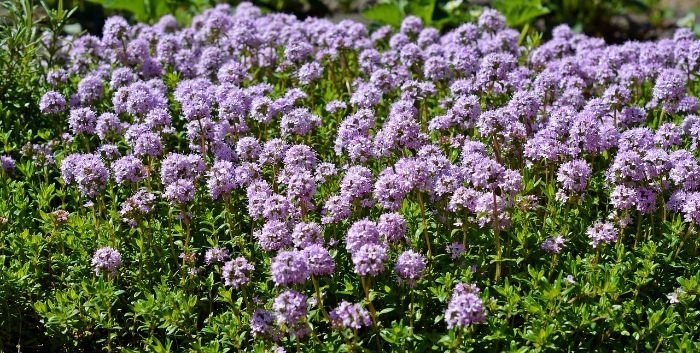
Creeping thyme is the broad nursery name for several low Thymus types. Red creeping thyme, mother of thyme, and creeping wild thyme are often sold for pink, red, or purple summer flowers. Bees visit the blooms heavily, so place it where pollinator activity is welcome.
Wild thyme can overlap with creeping thyme in common naming. It is usually lower and more spreading than upright culinary thyme. Some forms are edible, though flavor can be softer or sharper depending on the plant. Use labeled culinary plants for reliable kitchen harvests.
Woolly thyme is mostly ornamental. Its fuzzy silver-gray foliage makes a soft-looking mat in dry rock gardens and gravel edges. The texture works best as a visual ground-cover feature. It is a weak kitchen plant and dislikes wet crowns. Use it where drainage is excellent and harvesting is not the goal.
Ground-cover thyme succeeds only when the site is prepared correctly. Dry, sunny, gritty soil helps the plant knit together without rotting. Soil preparation for thyme matters even more for low creeping types because their crowns sit close to the surface.
Thyme For Containers, Edges, Pollinators, And Herb Gardens
Thyme grows well in containers when the pot drains fast and the plant gets sun. Upright culinary thyme fits kitchen pots where stems can be clipped often. Lemon thyme works well near outdoor dining areas because a brushed leaf releases fragrance quickly.
Low thyme can spill over container rims and soften raised-bed corners. Creeping thyme is useful at the front of herb beds, around stones, and in narrow strips where taller herbs would flop. Woolly thyme gives the same low shape with a softer color and less culinary value.
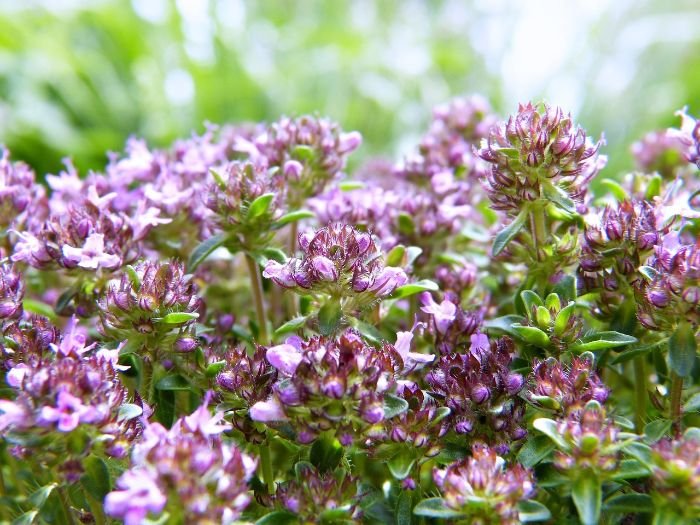
Pollinator value comes mainly from flowering. If every stem is clipped hard before bloom, bees lose the flowers. A good herb garden can keep one thyme plant for regular harvest and another patch for flowers. The split gives the cook and the garden both what they need.
Design use also changes variety choice. Upright thyme reads as a herb. Creeping thyme reads as a living edge. Silver thyme reads as foliage contrast. Lemon thyme reads as both kitchen plant and scent plant. Thyme in landscaping depends on matching paths, borders, and dry slopes to the plant’s growth habit.
Herbal Uses Of Thyme Without Overstating The Plant
Thyme has a long history in teas, steam, household fragrance, culinary preservation, and traditional herbal preparations. Those uses are part of why the plant appears in kitchen gardens, cottage gardens, and medicinal herb collections.
For home use, keep thyme practical and modest. Grow it for aromatic leaves, herbal tea blends, infused vinegar, herb salts, sachets, and steam fragrance. Use culinary-grade, unsprayed plants if leaves will be eaten or brewed.
Common thyme and lemon thyme are the most practical choices for tea and kitchen-adjacent herbal use. Common thyme tastes stronger and more resinous. Lemon thyme tastes brighter and is easier to pair with honey, mint, citrus peel, and mild green herbs.
Do not let herbal interest replace plant identification. Garden centers sometimes sell ornamental thyme forms with weaker flavor, and not every ground-cover selection is a good tea plant. For ingestion, use a correctly labeled culinary thyme and avoid plants treated with ornamental pesticides.
Choose The Right Thyme Type By Use
The fastest way to choose thyme is to name the job first. A plant chosen for chicken stock, a plant chosen for a pink path edge, and a plant chosen for a silver container accent should not be the same default purchase.
| Your Main Goal | Best Thyme Type | Why It Fits | Second Choice |
|---|---|---|---|
| Everyday cooking | Common thyme | Classic flavor, easy harvest, dries well | German thyme |
| Cold-climate perennial herb bed | German thyme | Good hardiness with useful kitchen flavor | Common thyme from a local nursery |
| Fine sauces and delicate savory dishes | French thyme | Refined aroma and tidy stems | Common thyme harvested young |
| Fish, salads, tea, and drinks | Lemon thyme | Citrus scent without lemon peel bitterness | Orange thyme |
| Path edges and pollinator flowers | Creeping thyme | Low spreading habit and summer bloom | Red creeping thyme |
| Dry rock garden texture | Woolly thyme | Soft silver foliage and low mat shape | Silver thyme |
| Mixed herb container | Lemon thyme or silver thyme | Fragrance, foliage color, and manageable size | Common thyme |
Climate, pot size, winter exposure, and harvest style shape selecting the best thyme variety after the broad type split. Decide whether the plant is for cooking, scent, ground cover, foliage color, or flowers, then match the final cultivar to the site.
Growing Traits That Matter Across Thyme Varieties
Most thyme varieties want sun, drainage, and restraint. Rich wet soil grows soft stems and weak flavor. Shade stretches the plant and reduces fragrance. Heavy watering can rot the crown, especially on low creeping and woolly types.
Harvest style affects plant shape. Upright culinary thyme should be clipped lightly and often so new shoots keep forming. Creeping thyme should be sheared lightly after bloom if it gets ragged. Variegated thyme should be trimmed before woody gaps open in the center.
Propagation also varies. Named thyme varieties are best kept true by cuttings or division because seedlings may not match the parent. Lemon scent, variegated foliage, and compact ground-cover forms are the easiest traits to lose through seed variation. Planting thyme should then focus on timing, spacing, and transplant care so the selected variety keeps its intended shape.
Flavor improves when the plant grows a little lean. A thyme plant in gritty soil, full sun, and a pot that dries between waterings often tastes stronger than a pampered plant in damp compost-rich soil. Treat thyme like a Mediterranean subshrub, not a soft leafy herb.
Conclusion – Match The Thyme To The Job
Thyme is easier to choose once the plant has a clear purpose. Common, French, and German thyme belong closest to the kitchen. Lemon and orange thyme bring citrus fragrance. Creeping and woolly thyme solve dry ground-cover and edging problems. Silver and variegated thyme add foliage contrast.
Read the plant habit before the tag sells you a use. Upright stems mean easy harvest. Low mats mean ground coverage. Citrus scent means lighter cooking and teas. Fuzzy silver foliage means ornamental texture. The right thyme type should make the bed, pot, path, or recipe simpler to manage from the first season.
FAQ
What Type Of Thyme Is Best For Cooking?
Common thyme is the best all-purpose cooking thyme. French thyme is excellent for more delicate savory dishes, and German thyme is useful in colder gardens. Lemon thyme is best when a dish benefits from citrus fragrance.
Is Lemon Thyme The Same As Regular Thyme?
Lemon thyme is a different thyme type or hybrid with citrus-scented leaves. It can be used in cooking. The flavor is brighter and less purely savory than common thyme. It works especially well with fish, chicken, vegetables, tea, and summer drinks.
Can Creeping Thyme Be Used For Cooking?
Some creeping thyme types are edible. Their flavor is often milder or less predictable than common culinary thyme. Use labeled culinary thyme for regular kitchen harvests, and grow creeping thyme mainly for ground cover, flowers, fragrance, and pollinators.
What Is The Difference Between Common Thyme And French Thyme?
Common thyme is the dependable all-purpose kitchen herb. French thyme is often slightly finer, more aromatic, and more delicate in cooking. French thyme can be less hardy in exposed cold gardens, so German or common thyme may be better in colder areas.
Which Thyme Is Best For Ground Cover?
Creeping thyme is the best thyme type for ground cover, especially along dry edges, between stepping stones, and in rock gardens. Woolly thyme is also low and beautiful, though it is mainly ornamental and needs sharp drainage.
Which Thyme Is Best For Herbal Tea?
Common thyme and lemon thyme are the most practical choices for herbal tea. Use unsprayed culinary plants, harvest clean young stems, and keep herbal use moderate. Lemon thyme gives a brighter, gentler cup than common thyme.