
Updated March 25, 2026
Overwatering kills more jasmine than drought does – and the roots are long gone before the leaves give any useful signal. Most gardeners who lose a jasmine in their first year were watering it on a fixed schedule, convinced they were being attentive.
Jasmine watering is a read-and-respond practice, not a calendar ritual. A climbing jasmine on a fence in Alabama in August may need water every two to three days. The same species in a north-facing window in Illinois in January might go two weeks without a drink. One rule fits neither situation.
The decision framework is consistent: check the soil at the right depth, account for the season and the container, and learn to tell overwatering from underwatering before the damage is irreversible. Get those three things right, and jasmine is not a difficult plant.
Key Takeaways
- Water in-ground jasmine once a week during summer; drop to once every two to three weeks once dormancy sets in
- Check soil moisture at 2-3 inches below the surface before watering – surface dryness alone misleads most gardeners
- Expect potted jasmine to need water every one to two days in hot weather; containers dry far faster than open ground
- Soft, translucent yellow leaves point to overwatering; dry, papery yellow leaves with bone-dry soil point to drought
- Withhold water from J. polyanthum in autumn – a dry cool rest triggers spring blooms, not a watering problem to fix
Table of Contents
How Often to Water Jasmine – Why Schedules Fail
A fixed watering schedule is the single most common reason jasmine dies. The plant’s water needs fluctuate with temperature, humidity, soil type, container material, and growth stage. None of those variables follow a calendar.
The working rule is simpler than any schedule: check the soil before you water, not the clock. For most jasmine during active growth, water when the top 1-2 inches of soil are dry. In winter, wait until the top 2-3 inches are dry. Those thresholds shift slightly by species – covered in the final section – but they apply broadly across the genus.
Newly planted jasmine is the exception. The RHS recommends watering regularly for at least the first year until the plant is well rooted. How long that establishment takes depends heavily on how jasmine was planted and what soil conditions it started in – a well-draining bed with organic matter holds moisture evenly, while dense clay holds water against the crown and extends the vulnerable period considerably.
Reading the Soil Correctly
The standard finger test works. Push your index finger into the soil to 1-2 inches. Moist and cool means wait. Dry and pale means water now.
The problem is that the finger test only reads the top layer. For a large container or established in-ground plant, the surface can feel dry while the root zone at 4-6 inches is still saturated. A narrow trowel or a basic moisture meter inserted deeper gives a more accurate reading – and this is precisely why so many jasmine plants are overwatered despite gardeners following the finger test faithfully. They stopped at 1 inch and assumed the plant was drier than it was.
Pro Tip: Water in the morning between 6 and 9 a.m. Evaporation rates are at their lowest, foliage dries before midday heat arrives, and roots absorb moisture before soil temperatures climb. Evening watering leaves foliage wet overnight – a reliable precondition for fungal leaf spot on jasmine.
Watering Jasmine by Season – the Gap Between Summer and Winter Is Larger Than You Think
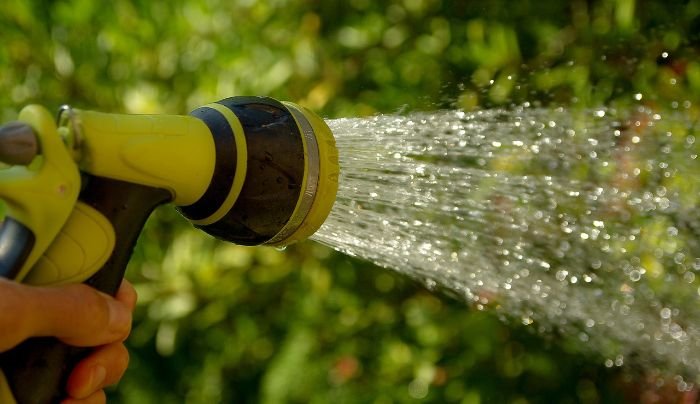
Summer is the high-demand phase. Established in-ground jasmine in full sun through a hot US summer typically needs 1 to 1.25 inches of water per week from rainfall or supplemental irrigation. If rainfall covers that amount, skip the hose. When dry heat sets in for more than a week, water deeply enough to reach the root zone – a slow soak over 20-30 minutes rather than a quick spray across the surface.
Spring reactivation requires a gradual approach. As soil temperatures climb above 50°F and new growth appears, increase watering frequency over two to three weeks rather than jumping to summer rates immediately. Roots coming out of a dry winter period absorb water more slowly; a sudden heavy soaking after a long dry stretch can briefly displace soil air around the root tips.
The autumn-to-winter transition is where most overwatering happens.
J. polyanthum – the pink jasmine commonly sold as a houseplant – requires a genuine dry rest period to set flower buds for the following spring. Four to five weeks of nighttime temperatures between 40 and 50°F, combined with reduced watering, trigger bud formation. Gardeners who keep indoor jasmine consistently moist through autumn are often puzzled by poor spring flowering. The cause is rarely insufficient light or temperature. It is usually the watering – soil that stays too moist during the cool-trigger period disrupts the chemical signals that initiate budding. This is one of the most widely missed facts about this species.
Outdoor jasmine in mild climates – zones 8-10 – slows down significantly in winter even without frost. The soil holds moisture longer, and plants have minimal water demand through their dormant phase.
I often notice that in mild US winters, gardeners continue watering outdoor jasmine on the same summer schedule through December and January. Established plants are barely drawing on that water; the soil stays wet for days. The root rot that results shows up as yellowing leaves in early spring – attributed to cold damage or pests when the actual cause was months of winter overwatering.
Watering Jasmine in Pots – Why Containers Change the Rules
Potted jasmine occupies a different category than in-ground plants, and treating them the same leads to either constant drought stress or root rot.
Three physical factors drive faster drying in containers:
- Limited soil volume: a 6-inch pot holds a fraction of the moisture buffer available to even a shallow-rooted in-ground plant
- Container material: terracotta evaporates moisture through its porous walls; glazed ceramic retains it longer; dark plastic pots in full afternoon sun can heat the rootball above 95°F, damaging fine feeder roots before the surface soil shows any stress
- Drainage speed: a perlite-heavy potting mix drains faster than a dense loam-based blend – useful for root rot prevention, but it requires more frequent soil checks
| Container Type | Drying Rate | Notes |
|---|---|---|
| Terracotta | Fast | Evaporates through porous walls; reduces root rot risk |
| Glazed ceramic | Moderate | Better moisture retention; suits indoor jasmine in dry, heated rooms |
| Dark plastic in direct sun | Fast with rootball heat | Avoid; overheats root zone on hot days |
| Self-watering pot | Slow | Works for J. polyanthum indoors; risky for root rot-prone J. sambac |
Technique matters as much as frequency. Water until liquid flows freely from the drainage hole – this confirms the entire root zone was reached, not just the top layer. Shallow frequent watering keeps the bottom half of the pot permanently dry, pushing roots upward toward surface moisture and away from the deeper anchor zone.
Do not leave pots sitting in saucers of standing water for more than 30 minutes. J. sambac (Arabian jasmine) is especially prone to root rot and tolerates brief drought far better than prolonged wet feet. A plant that is slightly root-bound in its pot drains faster and holds less excess moisture – a useful characteristic for this species specifically.
Indoor jasmine in a heated winter home presents one more challenge. Central heating drops indoor humidity below 30% RH in many US homes, which strips moisture from the soil faster than most gardeners expect – even when the plant has minimal active growth. A jasmine sitting in a 70°F heated room can go from adequately moist to dry in three to four days in January. Check it more frequently than the season seems to warrant.
Overwatered Jasmine – Signs You Are Already Late and How to Recover
Here is a question worth sitting with: if both overwatering and underwatering produce yellow leaves, what is your actual basis for diagnosing which one you have?
The texture of the yellowing leaves is the fastest diagnostic. Overwatered jasmine produces leaves that are soft, slightly translucent, and give slightly when pressed – the cells are swollen and beginning to fail. Underwatered jasmine produces leaves that are dry and papery, sometimes curled faintly inward at the edges. The soil confirms it: sour-smelling wet soil beneath an overwatered plant; pale, dust-dry soil beneath a thirsty one.
Stem condition is the second check. Soft, slightly spongy stems near the base of the plant point to waterlogging in the root zone. Woody, firm stems with wilted leaves at the tips usually point to drought.
The honest reality: root rot progresses faster in warm soil. A jasmine left in saturated soil at 75°F can develop fungal root rot in as few as 72 hours. By the time soft leaves and a sour smell appear, the root damage is already substantial. Recovery is possible but not guaranteed – a severely affected root system rarely returns the plant to its previous vigor, even after successful treatment.
Recovery from Overwatering – Step by Step
- Stop watering immediately. Move the plant to a sheltered spot out of direct sun.
- Unpot and inspect the roots. Healthy roots are white or cream and firm; rotted roots are brown or black and feel mushy.
- Trim all rotted material with sterilized scissors, cutting back to firm, healthy tissue.
- Let the root ball air in a shaded spot for one to two hours before repotting.
- Repot in fresh, fast-draining mix. Do not reuse the old potting soil.
- Dust cut root ends with powdered cinnamon or apply a diluted copper fungicide – both reduce further fungal spread.
- Wait five to seven days before watering lightly. Resume normal care once new growth appears.
For in-ground jasmine with suspected waterlogging, work coarse grit or perlite into the top 6 inches of soil in a ring around the plant to improve drainage. Adding 2-3 inches of bark mulch over the root zone reduces both future waterlogging and surface evaporation – a correction that also lowers overall watering frequency by slowing moisture loss between rains.
Jasmine Varieties and Water – Why One Rule Fits None of Them
Identifying which jasmine you are actually growing is the most important step in getting the watering right. The five varieties most commonly grown in the US behave quite differently once established.
| Variety | Water Demand | Key Watering Rule |
|---|---|---|
| J. officinale (Common jasmine) | Low once established | Water only during dry spells longer than 2 weeks |
| J. sambac (Arabian jasmine) | Moderate to high | Every 2-3 days in summer; reduce sharply below 65°F |
| J. polyanthum (Pink/indoor jasmine) | Moderate; dry autumn rest required | Top inch dry in growing season; top 2 inches dry in winter |
| T. jasminoides (Star jasmine) | Low once established | Deep soak every 7-10 days; drought tolerant in zones 7-10 |
| J. nudiflorum (Winter jasmine) | Low; reversed cycle | Water lightly through winter bloom phase; reduce in summer rest |
Star jasmine (Trachelospermum jasminoides) is widely sold alongside true jasmines and behaves very differently. NC State Extension classifies it as drought tolerant once established. The University of Florida IFAS Extension notes that Asiatic jasmine – a close relative – needs little supplemental watering with regular rainfall. New plants in their first season still need every-other-day watering through summer establishment, with deep infrequent soaks preferred over daily shallow watering. The ‘Madison’ cultivar, recognized by NC State Extension as more cold-hardy than standard star jasmine, also tolerates more winter-wet soil – a useful trait for gardeners in zones 6-7 where winter rains keep ground moisture high.
Winter jasmine (J. nudiflorum) is the one that trips up even experienced gardeners. It blooms on bare stems from December through February, which creates the impression of a dormant plant that barely needs water. In reality, winter jasmine is in its active flowering phase during those months and needs light, consistent moisture throughout. Its resting period falls in summer – exactly when most gardeners are actively watering everything else. Lorna Kring, an OSU Extension Master Gardener writing for GardenersPath, notes that this reversed cycle requires deliberate seasonal adjustment to avoid both winter drought and summer overwatering.
Conclusion
The single most reliable habit: check the soil at 2-3 inches before every watering decision, not at the surface. That one adjustment prevents more jasmine loss than any schedule or formula. The thresholds are consistent – 1-2 inches dry in summer, 2-3 inches dry in winter for most species – but the check has to reach the root zone, not just confirm what the surface already suggested.
A jasmine in its second or third year is a different plant from the one you were managing through its first season. The roots are deeper, the stems are woody, and the canopy is dense enough that the soil beneath stays cooler and holds moisture longer than it did in the beginning. Water deeply and infrequently from the start, check before you pour, and by midsummer, when the blooms open and the scent drifts across the garden, you will not be wondering what went wrong.
FAQ
How often should you water jasmine?
It depends on the season, soil type, and whether the plant is in a container or in the ground. Established in-ground jasmine needs water roughly once a week in summer during dry stretches; in winter, once every two to three weeks or not at all if rainfall is adequate. Potted jasmine dries out much faster – check it every one to two days in hot weather and water when the top 1-2 inches of soil are dry to the touch.
Can you overwater jasmine?
Yes, and it is the most common cause of jasmine death in the first year. Overwatered jasmine develops root rot in warm, saturated soil in as few as 72 hours of sustained waterlogging. The plant does not die suddenly – it yellows slowly, stems soften near the base, and new growth stops. By the time these signs appear, root damage is already advanced. The most reliable prevention is a well-draining soil mix and the habit of checking the root zone depth before every watering, not just the surface.
What happens if jasmine is underwatered?
Underwatered jasmine wilts noticeably, leaves curl inward slightly, and the whole plant looks pale and dry. In mild drought, jasmine recovers quickly once water is reintroduced – unlike overwatering, which leaves structural root damage behind. A plant that has wilted from drought should be watered deeply, then checked again in 24 hours. If it does not recover within a day of a thorough watering, the problem may be root damage rather than drought alone.
Should you water jasmine every day?
Almost never for established plants. Daily watering keeps the soil consistently wet, which is the fastest path to root rot regardless of species. Newly planted jasmine in peak summer heat may need water every two days for the first few weeks, but even that should be guided by soil checks rather than a daily routine. The only realistic exception is a very small container – under 4 inches across – sitting in full afternoon sun, which can genuinely dry to dust in a single hot day.
Why are my jasmine leaves turning yellow?
Yellow leaves have two primary causes that look different on close inspection. Overwatered leaves are soft, slightly swollen, and yellowing progressively from the base of the plant upward. Underwatered leaves are dry and papery, often with faint curling at the edges. Soil condition confirms the diagnosis: sour-smelling wet soil points to overwatering; pale, dust-dry soil points to drought. Other causes include iron deficiency in alkaline soil – which shows as yellowing between the leaf veins while the veins themselves remain green – and normal autumn leaf drop as older foliage is shed.
How do you water jasmine in a pot?
Water until liquid flows freely from the drainage hole – this confirms moisture has reached the entire root zone rather than just the top few inches. Then let the soil dry to the appropriate depth before watering again: 1-2 inches in the growing season, 2-3 inches in winter. Empty any water collecting in the saucer within 30 minutes. Avoid containers without drainage holes, and do not use dark plastic pots in full sun – rootball heat in those conditions damages fine roots faster than drought does.
Does jasmine need water in winter?
Less, but not none. Outdoor in-ground jasmine in zones 6-7 enters dormancy and needs minimal supplemental water unless there is an extended dry stretch without snow cover. Indoor and container plants still need occasional watering – the soil should not dry completely and stay that way for weeks. The important exception is J. polyanthum, which needs a deliberately dry autumn rest combined with cool nighttime temperatures to trigger flower bud formation for spring. Watering it consistently through autumn is the primary reason this variety fails to bloom the following year.
What is the best time of day to water jasmine?
Morning, between 6 and 9 a.m. Soil temperatures are at their coolest, evaporation is lowest, and foliage dries completely before midday heat arrives. Wet leaves sitting through afternoon heat encourage fungal leaf spot, which appears as dark circular marks on jasmine foliage and spreads quickly once established. Evening watering – common as a time-saving habit – is worse than afternoon in terms of fungal risk, as it leaves foliage wet through the entire night. If morning watering is not possible, midday is preferable to evening.