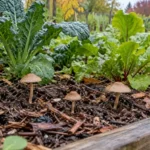
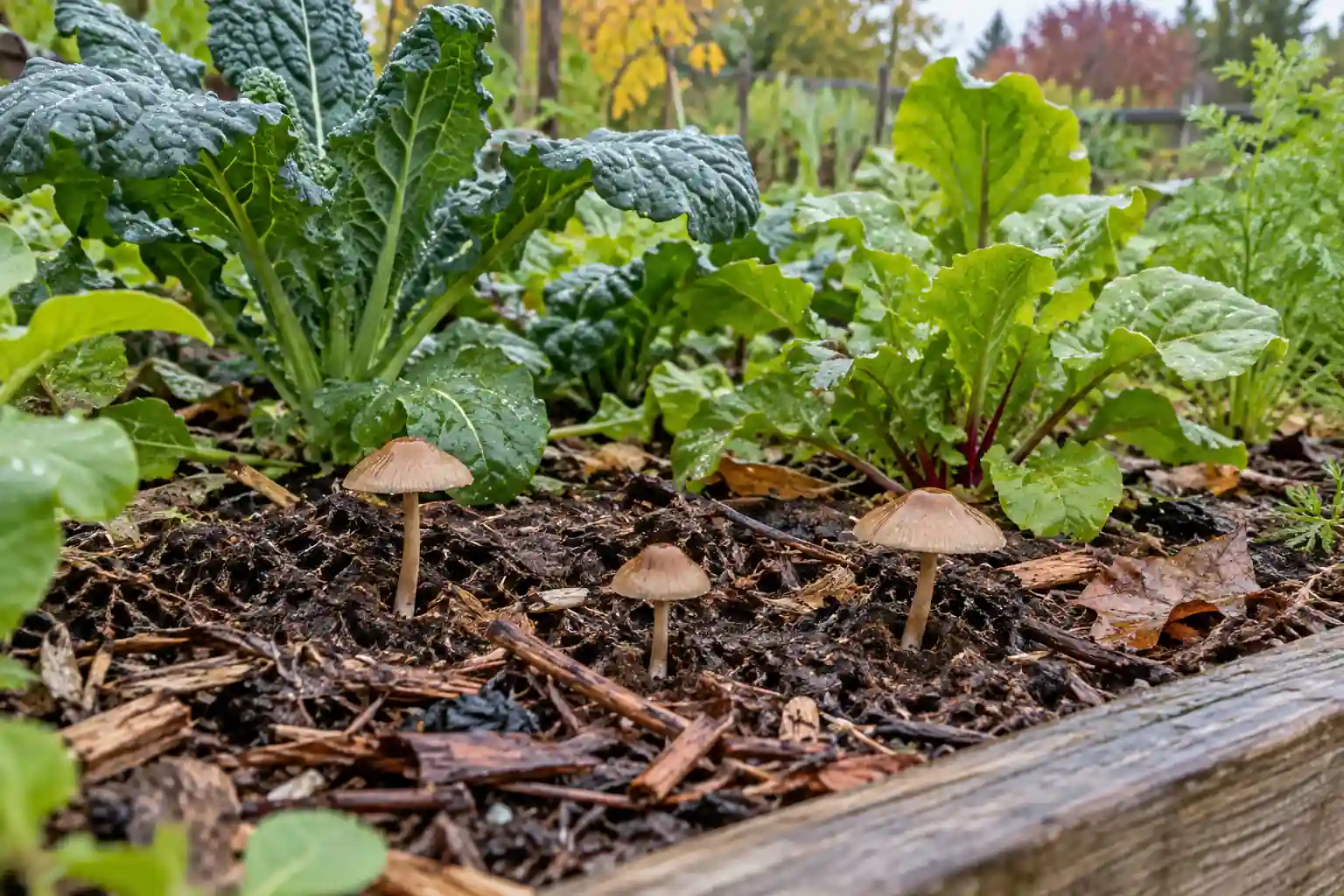
Mushrooms growing in raised garden bed soil usually need a closer look at the surrounding plants, not an immediate soil treatment. Many appear as fungi break down buried wood, old roots, compost, or mulch. A few caps beside vigorous vegetables after rain can be ordinary fruiting. The same bed still needs attention if water stands around the crops or their roots and crowns are deteriorating.
Keep the plant-health question separate from eating safety. An unidentified mushroom should never become part of the harvest, even when the nearby lettuce looks healthy. Remove reachable caps if children or pets might eat them. Then assess the bed itself: where the mushrooms emerge, how wet the root zone stays, and whether crop growth has changed. Those observations help you choose between leaving the fungi alone, removing the visible caps, and investigating an actual drainage or plant problem.
Choose by plant condition and access
Vigorous vegetables; caps in organic material: Leave the mushrooms or remove them for appearance. Their presence alone does not call for fungicide.
Persistently wet soil or standing water: Check root-zone moisture, irrigation and drainage. Mushroom counts cannot measure overwatering.
Wilting plants or damaged roots: Investigate the plant symptoms separately. A nearby cap cannot identify the cause of root decline.
Children or pets can reach unknown caps: Remove reachable fruiting bodies and prevent eating them. Plant health does not establish mushroom edibility.
Key Takeaways
- Check crop growth before treating fungi in the bed.
- Inspect root-zone moisture before changing the irrigation schedule.
- Leave ordinary fruiting alone when crops show no injury.
- Remove reachable unknown mushrooms from children and pets.
- Investigate damaged roots separately from fungi on woody mulch.
Table of Contents
Mushrooms Growing in Raised Garden Bed Soil Are Fruiting Bodies
The cap and stalk are the visible reproductive structures. Much of the fungus remains within its substrate as mycelium, a network of fine threads. Decaying wood, buried roots, and organic mulch can supply material for that network. Pulling a cap removes the visible structure; it does not excavate every thread beneath it.
Follow the location without disturbing crop roots. Caps emerging along a buried wood fragment tell you something different from a plant whose lower stem is collapsing. Note whether mushrooms sit in a mulch layer, beside an old root, or across the soil surface. Location gives a diagnostician context without establishing a species.
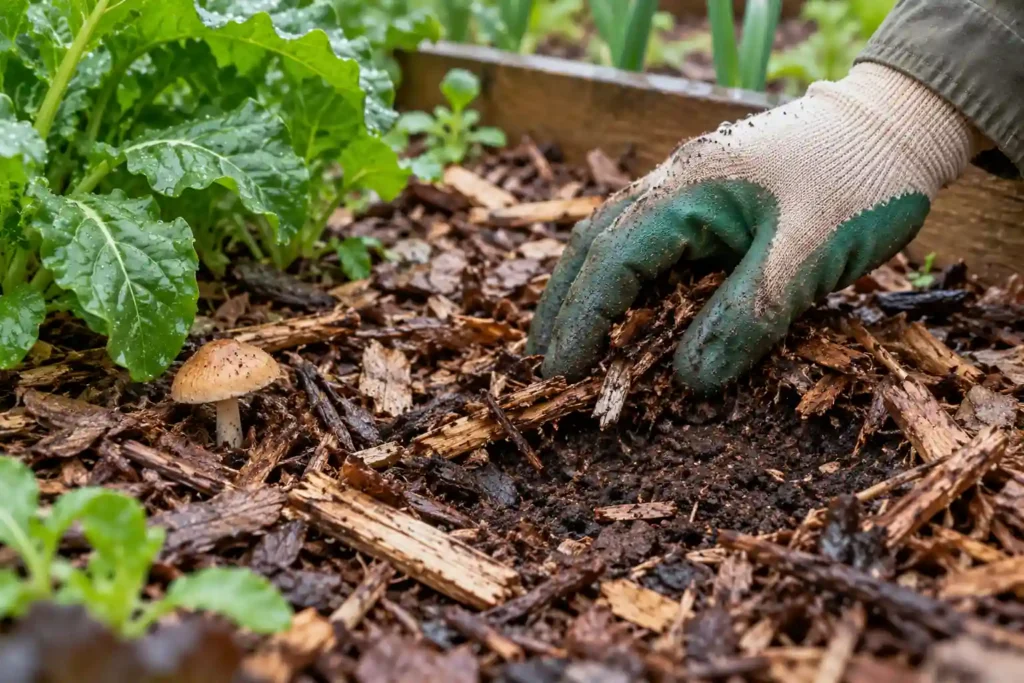
Woody material can persist after a bed is filled. The broader process of mulch decomposition continues as organisms use it. A mushroom appearing months later does not prove that a purchased soil mix was defective. The material and the conditions under which fungi fruit both matter.
A visible cap also cannot serve as a soil test. It does not reveal fertilizer needs, pH, or the amount of air reaching vegetable roots. Assess fertility with an appropriate soil test and evaluate drainage on its own. Healthy crop growth can be reassuring, though no single organism certifies every part of the bed.
Keep a short record of the bed’s materials and age. Note recent additions of compost or wood chips and any old roots left underneath. This history is more useful than trying to count every cap. It explains where decomposable material may remain without turning an ordinary observation into a diagnosis.
Moisture and Organic Material Can Trigger New Fruiting
Cool, damp conditions favor the appearance of many garden mushrooms. Other types have different preferences. A cluster after autumn rain fits a familiar pattern, yet irrigation and local shade can also create a damp pocket during a dry spell. The weather across the whole yard may differ from conditions beneath a layer of mulch.
Observe the timing. Did the caps appear after several rainy days, a new irrigation schedule, or the addition of woody material? Check the bed before the next planned watering. The soil beneath a dry-looking surface can remain moist, and a damp surface can sit above a root zone that is drying.
Small mushrooms can change appearance quickly. A firm cap may soften or collapse as conditions change. That short-lived display does not establish how long the underlying fungus has been present. Comparing photographs taken on different days helps distinguish repeated fruiting from the same aging caps.
Raised beds can drain well and also dry faster than surrounding soil, as University of Maryland Extension describes in its raised-bed vegetable guidance. Height alone does not settle the watering decision. Bed fill, crop demand, shade, rainfall, and the soil underneath all need to be considered.
Do not deliberately parch vegetables to remove a damp-soil organism. Check actual root-zone moisture and adjust irrigation to the crop. A plant with dry soil and wilting leaves still needs an appropriate response even if a mushroom appeared nearby earlier. Its water requirement cannot be inferred from the presence or absence of caps.
Repeated appearances in one spot can help you locate an organic-material pocket. Mark that position in a photograph and leave the planted bed undisturbed. The observation becomes useful if you later investigate the bed during routine renovation, after the crops have been harvested.
Plant Vigor and Root Symptoms Change the Response
Start with the vegetables. Look for new growth, reasonably firm stems, and leaves that recover normally as daily light and temperature change around the bed. Then compare affected and unaffected plants. A bed full of vigorous crops presents a different situation from one with spreading decline, regardless of how many mushrooms are visible.
| Bed observation | What it establishes | Action |
|---|---|---|
| Caps in mulch; vegetables growing normally | Fruiting without visible crop injury | Leave or remove caps; continue ordinary crop care. |
| Standing water; wet root zone persists | A moisture or drainage problem needs assessment | Check watering, bed fill, and outlets. |
| Repeated wilt, soft crown, or damaged roots | The plant needs a separate diagnosis | Document symptoms and consult Extension if unexplained. |
| Unknown caps within reach of children or pets | Possible ingestion access | Remove reachable caps and prevent eating them. |
The garden mushroom management answer from Iowa State University Extension supports leaving most ordinary garden mushrooms alone when nearby plants are not harmed. That advice concerns typical fruiting in organic material. It does not identify the species in your bed or explain a separate sick plant.
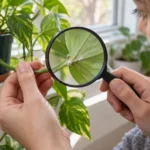
A wilting vegetable can have dry roots, saturated roots, insect injury, or a disease problem. Look beneath the surface before assuming it needs more water. If one plant is deteriorating and others remain vigorous, note the difference in location, stem condition, and soil moisture. These comparisons help narrow the next investigation.
Soft tissue at the crown, discolored damaged roots, or continuing collapse deserves attention. University of Maryland’s vegetable disease guidance emphasizes site conditions and diagnosis when managing disease. A mushroom cap beside the plant cannot establish which organism, if any, is attacking it.
Photograph the full plant, the injured tissue, and its position in the bed. Avoid digging up every healthy crop because one plant has symptoms. If inspection requires removing a declining plant, preserve useful diagnostic material according to the local clinic’s instructions. A sample chosen with guidance can answer more than a badly damaged specimen left drying on a bench.
Persistent Saturation Reduces the Air Available to Roots
Water occupying soil pores leaves less space for air. Roots in a persistently saturated zone can struggle even in a bed that stands above ground level. Check the root zone after rain and before irrigation; a dry crust at the surface or a nearby cap cannot show the moisture surrounding deeper roots.
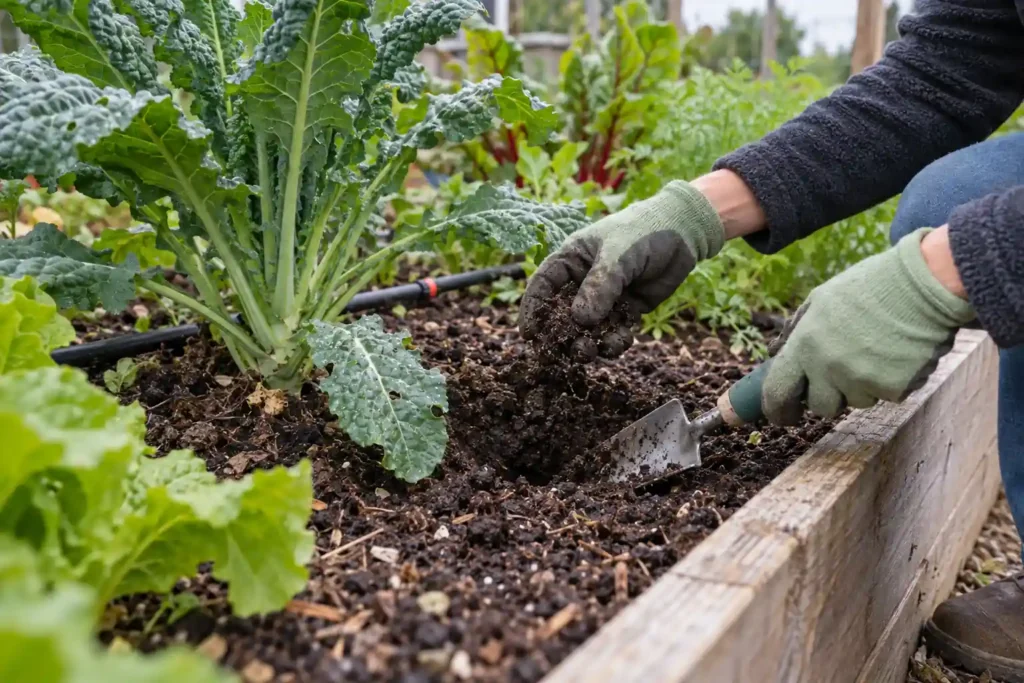
Take a small soil sample beside the crop without cutting through its root mass or unnecessarily disturbing the plants nearest the sampling point. Notice whether it crumbles, holds together moistly, or feels smeared and saturated. Soil texture changes how those signs should be interpreted. Compare the observation with recent rain, watering, and the plant’s condition and record the result as a field observation, not a precise moisture measurement.
Watch where excess water can leave. A compacted layer, an unsuitable barrier, or poorly draining fill can affect the profile. The choices involved in raised-bed construction matter after the frame has been installed. A raised edge does not guarantee that water moves freely through everything below it.
Review the mix as well. A bed’s moisture behavior depends on its materials and structure, so evaluate the raised-bed soil mix together with the underlying site. Do not replace productive soil solely because a few fruiting bodies appeared. A change in fill needs evidence of a growing problem.
If water remains around the root zone, reduce unnecessary irrigation and investigate the obstruction. Longer-term soil drainage improvements should address where water is held and how it can escape. Mushroom removal cannot perform that job.
Check again under different conditions. One observation immediately after a downpour may show temporary wetness; repeated saturation accompanied by declining crops deserves a fuller assessment. Keep the irrigation schedule, weather, soil observations, and plant changes together so you can judge whether an adjustment helped.
Cap Removal Changes Appearance Without Replacing the Soil
Use gloves and a small tool to lift unwanted fruiting bodies without cutting through nearby crop roots. Collect the pieces and dispose of them where children and pets cannot retrieve them. A gentle removal avoids tearing apart the mulch layer or exposing a vegetable’s roots for the sake of a cleaner-looking surface.
For a bed with vigorous plants and no ingestion concern, removal is optional. Choose it for appearance or access management. Recheck the bed because fresh caps can develop when conditions suit the fungus. A new cluster after removal does not mean the earlier cleanup was performed incorrectly.
Keep the scale of the action proportional to the evidence. Emptying the bed, stripping all compost, or removing every wood chip can interrupt productive growing without resolving an identified plant problem. Normal care should continue unless an independent drainage, contamination, or disease assessment calls for a change.
Do not apply a fungicide merely to stop unexplained caps. A crop-disease product needs a diagnosed target and permitted use, and ordinary decomposer fruiting is a separate situation. The appropriate response to actual disease depends on the crop and cause; an unidentified mushroom cannot supply either.
Work around the vegetables carefully. Loosen a cap at its base, avoid levering against a plant stem, and leave the surrounding roots undisturbed. Afterward, restore displaced mulch where it belongs. The finished bed should still protect its crops and retain a workable surface.
Where access is the concern, check the bed before children or pets enter the area and prevent unsupervised eating. Removing today’s caps reduces what is reachable today. It cannot establish that none will appear later. Supervision and access control remain relevant after a successful cleanup.
Unknown Mushroom Edibility Cannot Be Read From Crop Health
A thriving tomato beside a mushroom says nothing about whether the mushroom can be eaten. Keep unknown caps out of harvest containers and away from food preparation. Do not taste a small piece, and do not treat resemblance to a grocery-store mushroom as identification.
The wild mushroom poisoning precautions from Poison Control warn that dangerous lookalikes can mislead people and that cooking does not make poisonous mushrooms safe. Illness can also be delayed. Those risks apply independently of whether a fungus is harming garden plants.
If someone may have eaten an unknown wild mushroom in the United States, call Poison Control promptly at 1-800-222-1222. Do not wait for symptoms or for an online photograph identification. For a pet exposure, contact a veterinarian promptly. Save photographs or remaining material if professionals request them, without delaying the call.
Mushrooms appearing near vegetables are not, by themselves, evidence that the vegetables have become poisoned. Inspect harvested produce and use normal food-handling practices. A separate concern about contaminated soil, damaged produce, or an actual exposure needs its own evaluation; crop appearance cannot settle those questions.
Make the distinction clear to anyone helping in the garden. Vegetables grown for harvest and unknown fungi that appeared beside them are different items. Collect crops into a clean container and leave questionable material out. Children should know that finding something in an edible garden does not make it food.
Photographs can document an occurrence without supplying an eating decision. A cap’s underside, stalk base, substrate, and development may help an expert, but a general garden photograph cannot establish edibility. Avoid using a mushroom name guessed from appearance as a reason to keep accessible caps in a child’s play area.
Other Mulch Organisms Need Their Own Identification
Organic mulch can host more than familiar cap-and-stem mushrooms. Small cup-like structures, rounded fruiting bodies, unusual stalks, and foamy masses have different explanations. Iowa State Extension’s mulch-fungi guidance distinguishes bird’s nest fungi, puffballs, stinkhorns, inkcaps, and slime molds as examples.
A yellow or orange foamy mass can be a slime mold, which is not a true fungus. Its unusual surface does not automatically indicate vegetable disease. Inspect whether the material sits on mulch or whether living plant tissue is actually deteriorating. Keep the observation separate from any identification made without a specimen.
Texture and location are useful details to record: a soft mass across wood chips, tiny cups within mulch, or a cap emerging beside a buried root. A close photograph and a wider view give context. Do not scrape a suspect growth across healthy plants just to see how it behaves.
Ask a local Extension office what images or samples they need when the identity affects management. Include the bed materials, weather, irrigation, and condition of nearby crops. If a plant is declining, provide its symptoms separately. The visible organism and the damaged plant may require different diagnostic work.
Over time, compare crop performance and moisture with the recurrence pattern. Repeated fruiting in organic material can coexist with a productive bed. Declining crops still deserve investigation even on a day when no caps appear. Let the plants and root zone guide growing decisions, and keep unknown mushrooms out of anyone’s meal.
Conclusion
Look first at the vegetables and the soil around their roots. Vigorous growth beside a few caps often calls for ordinary care and observation. Persistent saturation or declining tissue calls for a separate investigation. Remove unknown mushrooms where they might be eaten, and preserve the bed’s useful soil and mulch unless the evidence calls for a change.
Frequently Asked Questions
Do mushrooms prove that the soil is fertile?
No. They show fungal fruiting under suitable conditions, often around organic material. They cannot measure nutrient levels, pH, or whether the crop roots have suitable drainage.
Should I replace newly purchased compost if mushrooms appear?
Appearance alone does not justify replacement. Review the material, crop performance, and moisture conditions. Investigate separately if there is evidence of a growing or contamination problem.
Can mushrooms return after the visible ones are removed?
Yes. The underlying fungus can remain in its substrate and fruit again under suitable conditions. Removing caps changes what is visible and accessible, without guaranteeing eradication.