



Does mulch attract termites? It supplies sheltered, moisture-retaining conditions where termites already present in the soil might forage, but a mulched garden bed does not automatically mean a house infestation. Around a building, the more useful checks are whether mulch touches wood, conceals the foundation, or stays wet from a leak or sprinkler. A fresh bag of shredded bark and a large piece of infested salvaged timber also represent different transport risks. Look along the wall before choosing another material. Deep chips pressed against siding, a hidden slab edge, and damp soil beneath a dripping faucet deserve attention regardless of whether the mulch is pine, hardwood, or gravel. Retain soil-cover benefits in appropriate beds, and keep the building visible and its existing termite protection intact.
Check the building edge first
Mulch touching siding or hiding the slab: uncover the inspection area without disturbing installed termite protection.
Wet soil from irrigation, plumbing, or a downspout: correct the water source. A different mulch will not repair a leak.
Mud tubes, suspicious indoor swarmers, or damaged structural wood: photograph the evidence and arrange a licensed local termite inspection.
Key Takeaways
- Inspect the foundation before replacing every mulched garden bed.
- Separate vertical siding clearance from horizontal mulch setback.
- Fix leaks and sprinkler overspray that wet building edges.
- Protect treated soil bands and installed termite bait stations.
- Review perimeter visibility after adding mulch or changing irrigation.
Table of Contents
Does Mulch Attract Termites Through Moisture and Shelter?
Subterranean termites forage from established colonies through soil and protected routes. Organic material outside is part of their environment. Finding workers in a damp chip bed does not, by itself, establish that they have reached a building or that the mulch delivered a viable colony.
The moisture-retention effect that makes mulch useful around plants also changes conditions beside a wall. Beneath a dry-looking surface, the lower chips and soil might remain cool and damp. Deep material additionally hides surfaces that would otherwise reveal termite access.
Assess the building connection. Chips against wooden siding, soil contacting structural wood, or an obscured foundation edge give a different risk picture from a bed separated from a building by open ground. Distance alone still does not certify protection; concealed entry elsewhere and the building’s construction remain relevant.
The biological setting is explained in UF/IFAS’s facts about termites and mulch. Its concern is greater for established termites on a property than for separated stragglers in ordinary chipped bags. Prioritize the perimeter where inspection reveals a building connection.
Keep garden and building needs separate. Mulching for soil health remains useful in appropriately placed beds. The correction beside a home is to preserve visibility, avoid wood contact, and manage water. Keep mulch clear of a tree’s root flare in planted beds too. Plant roots elsewhere still need an adequate water supply.
Chipped Mulch and Infested Timber Carry Different Risks
A few pale insects among shredded chips are not evidence of a complete functioning termite colony. Chipping damages termites, and separation from the colony reduces survival. Large intact pieces of infested wood offer a different environment and should not be grouped with ordinary bagged landscaping chips.
Reused railroad ties, salvaged timbers, and other substantial wood pieces deserve closer scrutiny before being placed near a home. UF/IFAS distinguishes that transport pathway from isolated workers in mulch. Inspect material identity and condition, not only the word wood on the receipt.
If insects appear when a bag is opened
Keep the material away from structural wood during identification. Photograph the insects sharply beside an object that gives scale, and retain a specimen if a local identification service requests one. Termites, ants, and other small mulch inhabitants are easily confused in a quick glance.
Record where the insects were seen. Insects inside a newly opened bag, workers beneath mulch laid weeks ago, and winged insects indoors are different observations. Existing foragers reaching a moist bed after installation do not prove contamination at the supplier.
A store return or disposal decision about a suspicious bag does not resolve a building problem. If the foundation already has mud tubes or damaged wood, arrange an inspection regardless of where the mulch came from. Avoid spraying unidentified insects with a homemade mixture and assuming the house is protected afterward.
For material already spread outdoors, inspect the accessible wall and obvious water sources. There is no need to dig deeply through an installed treatment perimeter just to search for every worker. Disturbing protective systems or hiding evidence beneath replacement mulch creates its own problem.
Mulch Depth, Setback, and Siding Clearance Differ
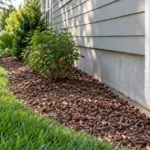
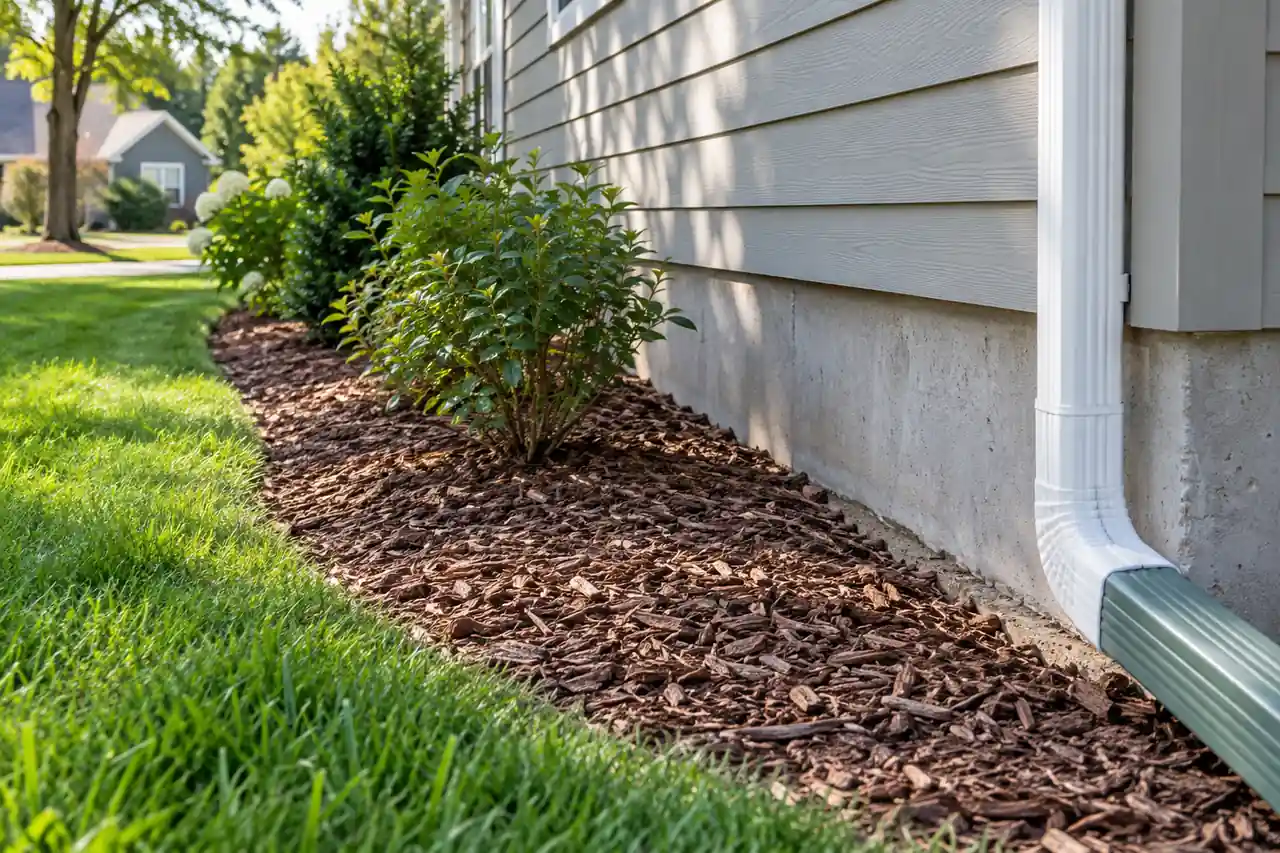
Three measurements describe three separate parts of a foundation bed. Depth is the thickness of mulch. Setback is horizontal distance away from the wall. Inspection clearance is the exposed vertical surface between the ground or mulch and the siding above it.
A wide bed setback does not compensate for soil already touching wooden siding. A visible section of concrete also needs protection from deep mulch buildup. Look at the complete arrangement, including grade, cladding, plants, and any installed protection.
| Measurement | Published guidance | What it means | Limit |
|---|---|---|---|
| Mulch depth near the foundation | UF/IFAS: less than 2 inches within 12 inches of the wall | A thin layer in the near-wall zone | Source-specific guidance, not permission to cover siding |
| Vertical inspection space | UF/IFAS: about 6 inches between ground or mulch and siding | Exposed building surface visible for inspection | Local construction requirements and provider instructions govern |
| Horizontal mulch-free strip | Mississippi State: approximately 2 feet beside the foundation | A more conservative clear band at ground level | Different from the vertical siding measurement |
The wider horizontal strip appears in Mississippi State Extension’s Common Questions about Termites and Termite Control. UF/IFAS permits a light nearby layer with inspection space preserved. Those are different approaches to the bed layout, not one national clearance formula.
Use the stricter applicable instruction from local requirements, a qualified inspector, or an existing termite contract. A slab, crawlspace, basement, foam-covered foundation, and masonry veneer do not present identical inspection details. Do not interpret a general gardening measurement as proof that your particular construction complies.
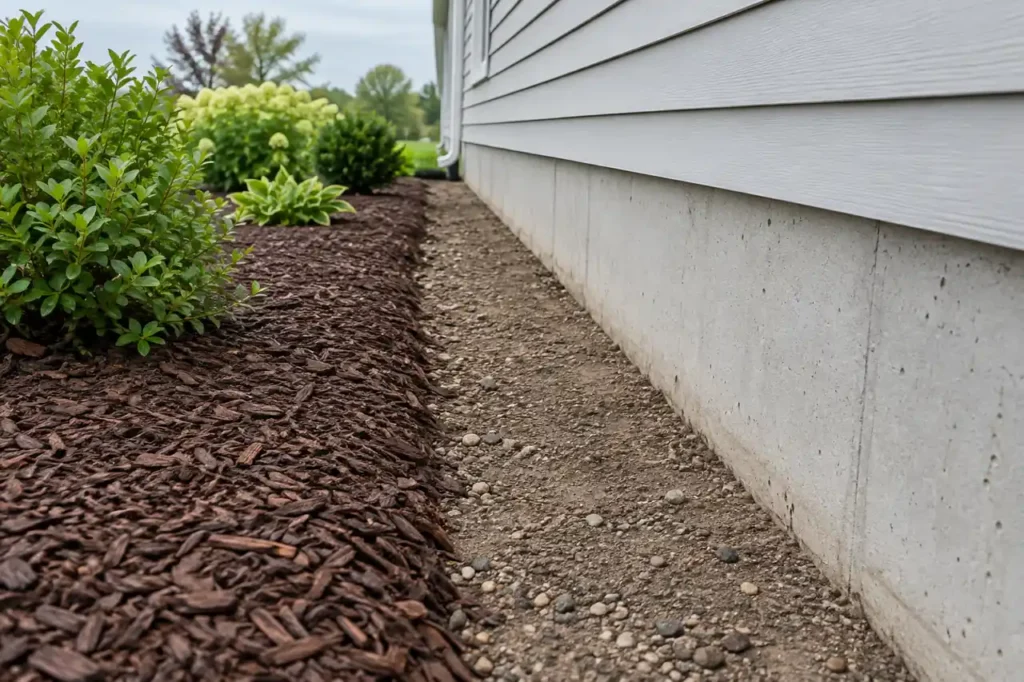
Before adding another seasonal layer, move aside a small section of old mulch where doing so will not disturb protection. Measure total accumulated depth, including material remaining from previous applications. Repeated thin applications eventually form a thick layer if the old material remains in place.
Leaks and Landscaping Changes Alter the Protected Perimeter
Water repeatedly delivered against a wall matters even when mulch is shallow. Inspect outdoor faucets, irrigation connections, downspout discharge, and low spots where water remains after rain. A damp patch beside one connector deserves a plumbing check before a shopping trip for cedar bark.
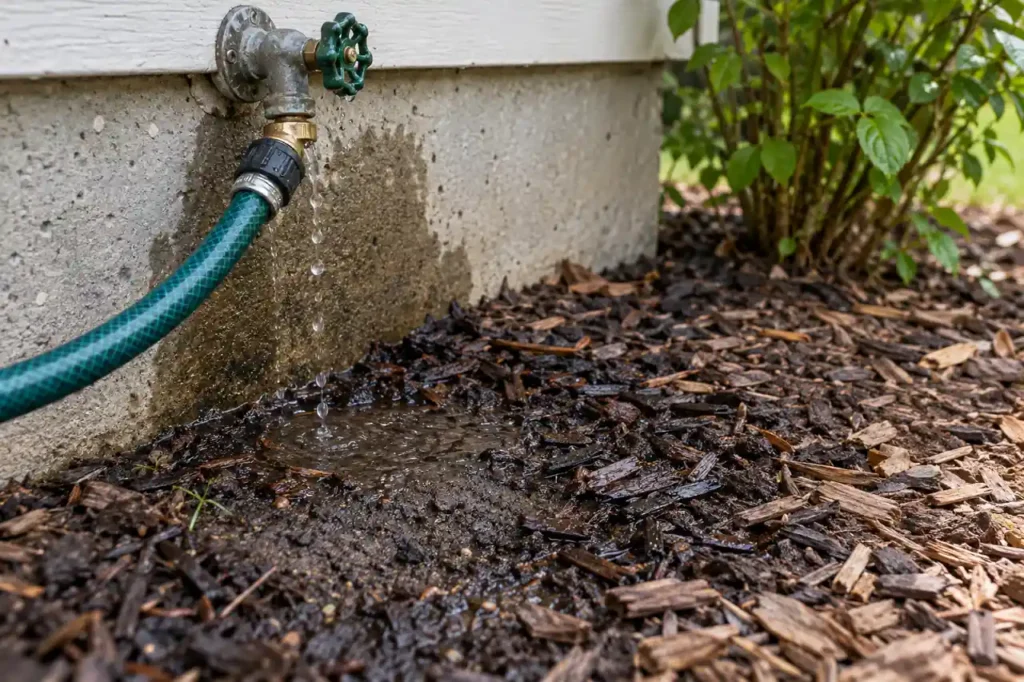
The effects of disturbed treated soil, covered inspection areas, moisture, and damaged bait stations are detailed in Mississippi State’s termite risk-factor guidance. Existing protection is a system. Moving soil, extending a bed, or installing new irrigation changes its surroundings.
Ask before digging through a treatment band
If a pest-control provider maintains your home, contact it before excavation beside the foundation. Explain the planned depth, location, and irrigation change. Do not assume a visible station is simply an obstacle to relocate or that adding soil above a treated area preserves its function.
Keep station lids accessible and protect them during edging or mowing. Some homes have treated soil, some rely on baiting, and some use other combinations. Identify the installed system through service records or the provider.
Water moving toward a building needs assessment appropriate to the site. Garden soil drainage and foundation drainage have overlapping water concerns. A trench beside structural footings requires site-specific assessment. Persistent pooling, settlement, or water entry warrants qualified advice.
Pro Tip: Photograph the visible foundation and station locations before a mulch delivery or landscaping change. The comparison helps identify newly buried surfaces or damaged equipment without excavating to find them.
Root-zone watering far from a building still needs to meet plant requirements. The adjustments used for moisture conservation should reduce unnecessary irrigation, including overspray against siding. They should not leave garden plants dry to compensate for an unrepaired leak.
Cedar, Cypress, and Gravel Do Not Replace Termite Protection
A material sold as insect resistant is not a structural protection system. Wood species, bark content, age, and processing differ between products. A claim about feeding preference or a particular material does not establish that termites cannot travel beneath it to reach a building.
Mississippi State’s Mulches for the Landscape describes material differences, including some insect resilience for cypress bark. Keep that narrower finding separate from a promise of termite prevention. Changing from pine bark to cedar does not make hidden siding, wet structural wood, or a disturbed treatment band acceptable.
Gravel removes wood chips from the bed but does not create an impenetrable surface. Termites forage through protected soil below inorganic covers too. A UF/IFAS-cited comparison found foraging beneath pea gravel; that finding does not prove gravel always produces a higher house-infestation rate.
First identify the area that must remain inspectable and the water source that needs correction. Then choose an appropriate surface cover for the remaining planted bed. The result might include organic mulch farther from the wall and a clear inspection band immediately beside it.
Consider maintenance access as well as appearance. Dense shrubs pressed against siding obstruct observation even when the surface below them is stone. Leave room to inspect the wall and reach equipment without crawling through tangled growth or disturbing the bed every time.
Removing all organic mulch from the property creates no reliable guarantee either. Termites also use other wood and concealed routes. Keep the building’s inspection and protection program in place after a material change, and assess any new timber edging, wood storage, or salvaged landscaping pieces separately.
Mud Tubes and Structural Signs Need Identification
Mud tubes on a foundation, suspicious winged insects inside, or damaged structural wood change the priority from routine bed maintenance to an inspection. Take clear photographs before scraping, covering, or treating the area. Surface evidence helps the inspector understand where access may occur.
UF/IFAS’s Termite Prevention and Control distinguishes termite groups and their signs. Subterranean and drywood termites do not have identical habits or control methods. A garden photograph of pale insects is insufficient to select a building treatment.
Where is the evidence relative to the house? Workers in an isolated rotting log, tubes climbing an exposed slab, and swarmers emerging indoors justify different next steps. Record that relationship when requesting help. Request an inspection of the building and its actual signs of access.
Use a licensed, reputable local service for structural termite assessment. UF/IFAS’s Homeowner’s Guide to Selecting a Pest Control Service addresses that choice. Ask what species or evidence was identified, what areas were inspected, how existing protection is affected, and what follow-up is included.
Do not attempt a general termiticide trench, injection, or improvised chemical barrier from landscaping instructions. Application methods and permitted products depend on the structure, site, label, and jurisdiction. Altering an existing treatment with an unsuitable product adds risk without demonstrating protection.
A clear wall and a repaired leak are useful corrections, but neither proves the building is free of concealed termites. After inspection, keep the recommended maintenance and service arrangements current. Recheck visibility whenever mulch, grade, irrigation, or nearby planting changes.
Conclusion
Before the next delivery, walk the building perimeter with your current termite-service information in hand. If the visible wall, soil level, or equipment location will change, resolve those details with the provider before spreading material.
Repeat the walk after irrigation runs or a soaking rain. Look for an exposed foundation, accessible stations, and water moving away from the wall, with the planted bed retaining the moisture its roots need farther out.
Frequently Asked Questions
Does a termite outside mean every garden bed must be treated?
No. Outdoor termite activity alone does not establish a structural infestation. Keep organic material away from building wood, inspect the relationship to the foundation, and obtain identification where the observation raises a building concern.
Can I move a bait station to make room for a shrub?
Ask the provider responsible for the system first. Moving or damaging a station changes the maintained protection arrangement. Preserve access during planting. Equipment relocation requires provider guidance.
Is the six-inch inspection gap always a horizontal strip?
The UF/IFAS foundation example concerns exposed vertical space between soil or mulch and siding. A horizontal mulch-free strip is a separate measurement. Local building details and applicable instructions determine the required arrangement.