

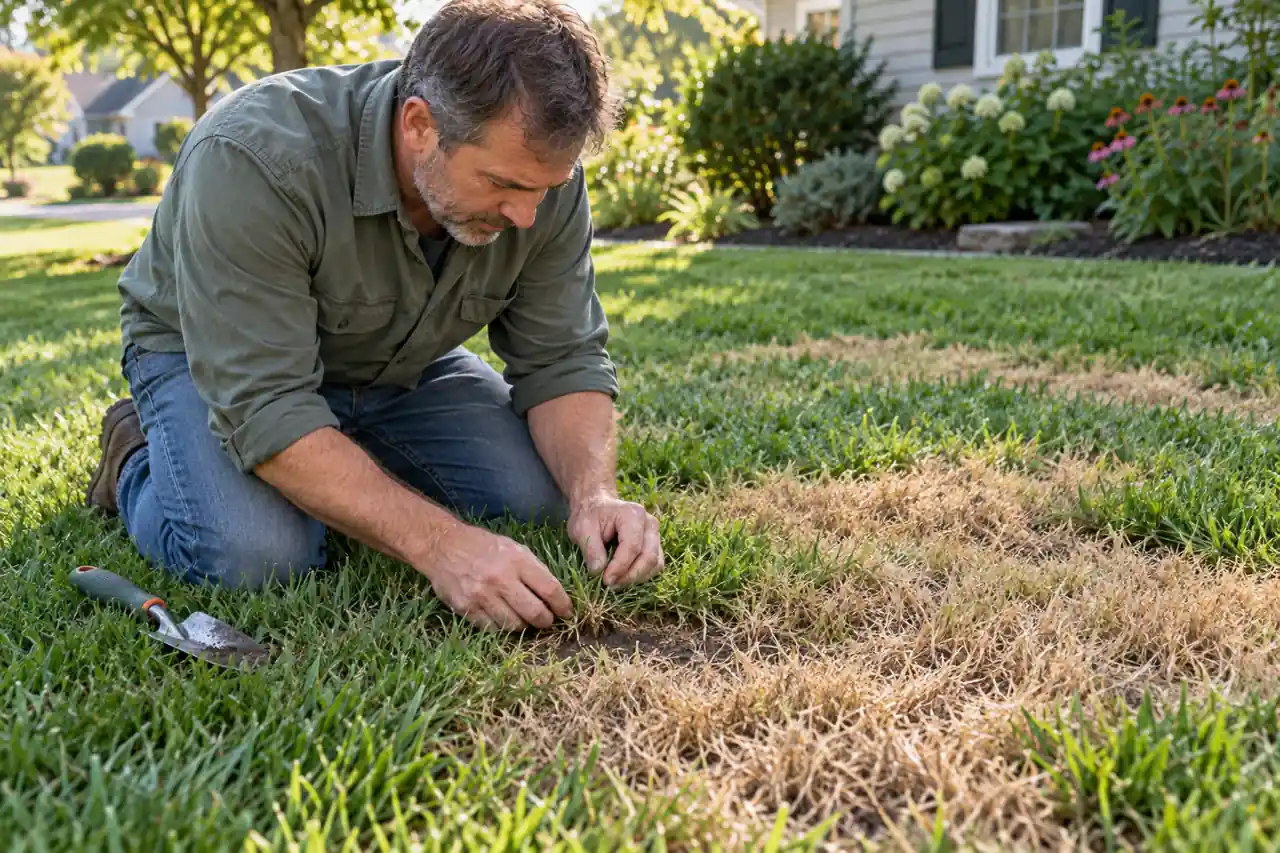
Dead patches in lawn need a cause check before reseeding, because brown blades sometimes remain attached to living plants. The growing point near soil level, called the crown, determines whether an individual grass plant has a chance to recover. A dry summer patch, a winter-brown zoysia lawn, a wet depression, and a small spot along a dog’s route demand different decisions. Start at the transition between damaged and green turf. Look at the blades, their bases, the roots, and the soil below them; then match those findings to weather, irrigation, traffic, and recent applications. Patch shape gives useful clues, but a ring alone cannot identify a disease. Once the cause is narrowed, decide whether to wait for recovery or replace lost turf during the growing window suited to that grass.
Before adding seed or treatment
Brown blades with possible living crowns: identify the grass and assess recent drought or seasonal dormancy.
Bare soil with lost plants: correct the recurring stress, then plan replacement for the local growing season.
Expanding damage or unclear roots and lesions: document the edge and ask local Extension for a diagnosis before choosing a pesticide.
Key Takeaways
- Inspect shoot bases before declaring brown grass permanently dead.
- Map irrigation gaps and repeated traffic before buying treatments.
- Compare damaged edges with nearby healthy turf during inspection.
- Confirm the pest or disease before selecting chemical control.
- Match repair timing to grass type and local growth.
Table of Contents
Dead Patches in Lawn Begin With Crown Survival
The visible blade is only part of a grass plant. Its crown sits near the soil surface, producing shoots above and roots below. Drought and seasonal dormancy reduce growth and turn leaves brown without necessarily killing that growing point. Severe stress, root loss, or crown injury changes the outlook.
Crown survival is the recovery condition described by turfgrass specialist Kelly Kopp in Utah State University Extension’s dead-versus-dormant lawn guidance. Its drought discussion concerns grasses traditionally grown in Utah. Apply the biological distinction broadly. Keep regional watering amounts and recovery seasons tied to the grass and climate described.
Identify the grass and recent stress
Warm-season grasses, including zoysia and bermudagrass, turn brown during cold-season dormancy. Kentucky bluegrass also browns under summer drought and retains a capacity to regrow if its crowns survive. Fescues have different drought responses. The identity of the turf explains which weather change should bring active growth back.
Record when the patch appeared. A lawn that gradually changed color during a dry spell tells a different story from one that developed sharply outlined marks after a fertilizer application. Notice whether surrounding lawns or unaffected parts of your own turf have entered the same seasonal state.
Compare the damaged edge with living turf
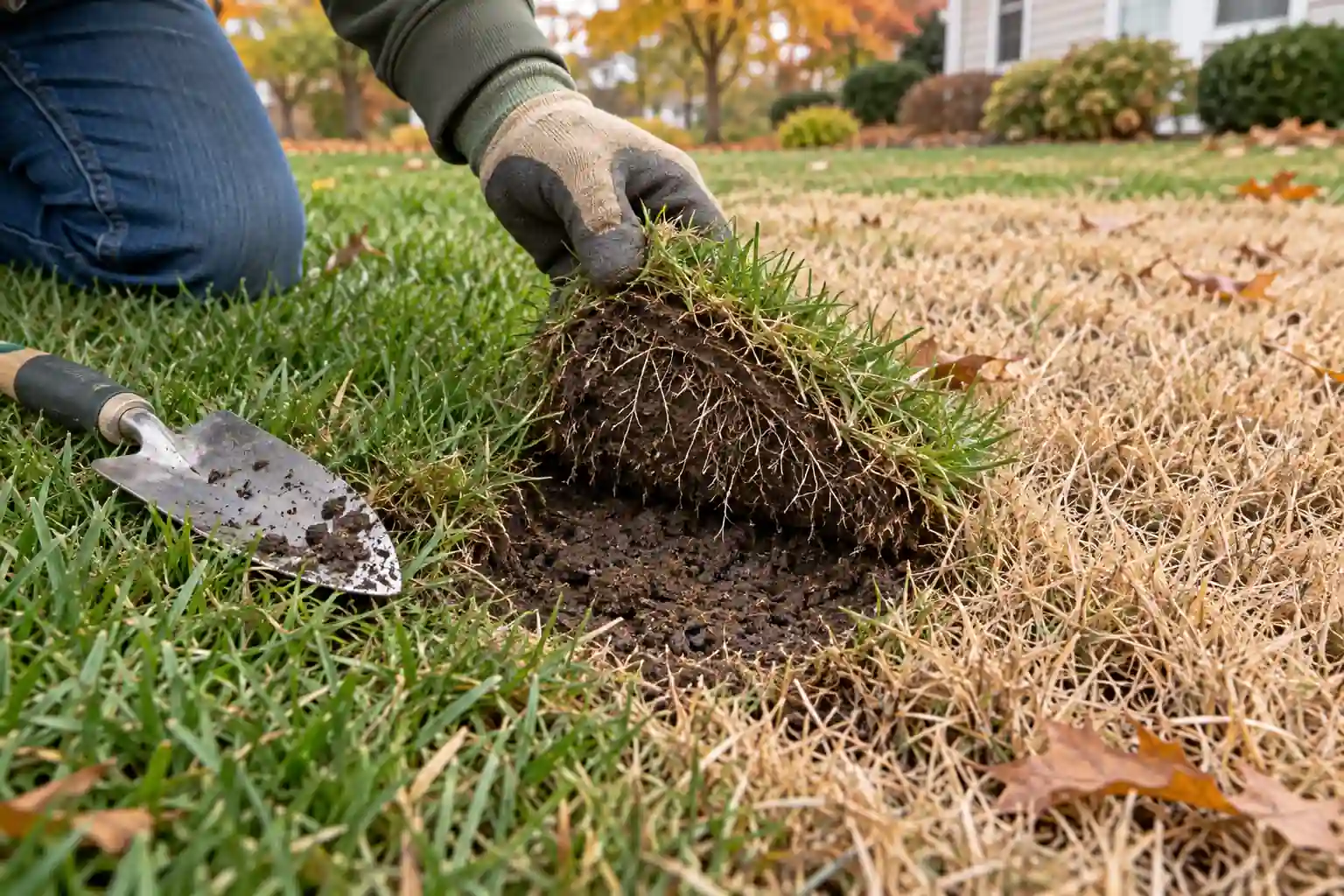
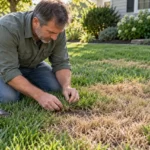
Lift a small plug at the boundary with a hand trowel, causing as little disturbance as possible. Separate several shoots gently and compare their bases and root attachment with nearby healthy grass. Dry blades crinkle between your fingers; soil below them might still be cool and moist. Inspect that difference before judging the plant from its surface color.
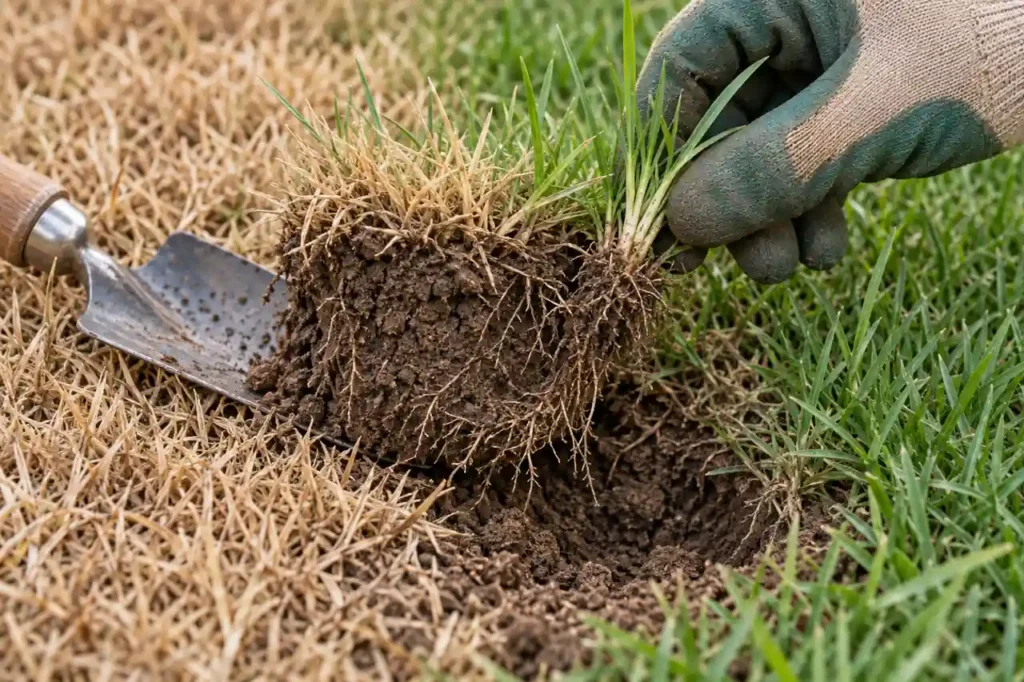
A tug, scratch, or crown-color check is not a universally reliable home test of life or death. Root attachment, tissue condition, and new growth under suitable weather belong together. If the decision involves substantial renovation or chemical treatment, send photographs and ask a local diagnostic service what sample it needs.
Trace Dry Patches to Root-Zone Water and Coverage
A sprinkler running nearby does not prove that water reaches the damaged area. A blocked head, wind, an obstructing shrub, or a poorly overlapping spray pattern leaves one strip short and supplies adjacent turf adequately. Root-zone moisture determines whether that pattern fits drought stress.
Look for dull blue-gray grass, folded blades, and footprints that remain visible after you walk away. These are water-stress clues in University of Maryland Extension’s established-lawn guidance. Compare the soil in that area with green turf before increasing irrigation. Compacted ground and disease also affect grass posture, so no single cue settles the diagnosis.
Insert a trowel or soil probe where you can safely examine the root zone. Hard, dry soil resists the tool and breaks into dusty crumbs; moist soil is cooler and holds together differently. Use nearby healthy turf as a comparison. A surface crust after a hot afternoon says less than the condition around the actual roots.
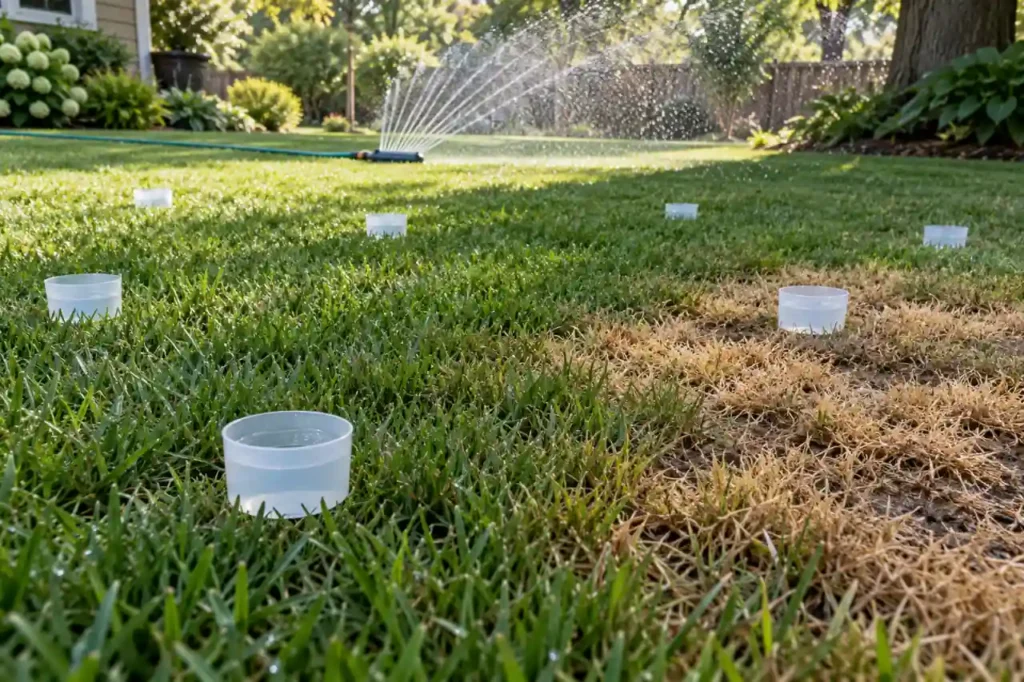
Set matching containers across the sprinkler’s working area, including the damaged patch and green turf, and compare the water collected during the same run. An uneven result identifies a delivery problem worth correcting. Reposition or service equipment before extending the runtime for the whole lawn; otherwise, the adequately supplied area receives additional water and the obstruction remains.
Dormant turf needs a different decision from actively growing turf. Fertilizer and unnecessary traffic add stress during drought dormancy in Minnesota Extension’s drought guidance. Forcing green color during extreme heat is a poor substitute for protecting surviving crowns and reducing stress. Obtain local survival-watering advice suited to your grass, soil, and climate.
Inspect areas over buried debris as well. A shallow obstruction reduces usable soil depth, so a repeat patch dries more quickly than the surrounding lawn. If the same small area repeatedly fails despite even irrigation, investigate below the surface before blaming the sprinkler again.
Wet Soil and Repeated Wear Restrict Root Oxygen
A saturated depression needs less added water and more attention to where existing water goes. Roots require oxygen in soil pores. When water fills those spaces for prolonged periods, or compaction closes them, grass loses access to the root environment needed for growth.
Compare the patch after rain with a nearby level area. Does it remain wet after the surrounding turf has drained? Is it directly below a downspout, beside a low path, or in wheel ruts? Wet soil that smears against a trowel and holds a shiny footprint tells a different story from dusty, crumbling soil in an irrigation gap.
Compaction worsens drainage and also makes dried soil harder to rewet, a relationship documented in University of Maryland Extension’s non-pest lawn diagnosis. A patch therefore changes symptoms through the year: saturated after storms, hard and dry during heat, and thin during recovery. Alternating those appearances does not rule out the same underlying soil problem.
Change the repeated pressure
Foot traffic, mower tires, children’s play, and a dog’s habitual route concentrate wear. New seed or sod initially covers the gap and faces the same pressure once use resumes. Redirect movement temporarily during establishment, vary a repetitive mowing route, or install an appropriate durable path where traffic cannot reasonably change.
Aeration and renovation timing should match active grass growth and suitable soil moisture. Avoid working saturated ground; it compacts readily and equipment adds damage. Persistent runoff or pooling requires evaluation of soil drainage and water movement before another planting is expected to last.
Separate shade from a treatment problem
Thin, pale turf beneath a dense tree canopy points toward limited light and root competition. Maryland and Minnesota diagnostic guidance both identify shade as a cause of decline. Wet shade also favors some diseases, so include blades and roots in the inspection.
Consider whether the site has enough light for the chosen grass. If realistic maintenance cannot improve the fit, another groundcover or mulched planting avoids repeated lawn repair. Keep excavation away from important tree roots; lawn improvement should not become damaging root removal.
Rings and Strips Need a Chemical or Disease History
A green rim around a brown center is a clue with several possible explanations. Concentrated dog urine injures grass; lighter exposure around the edge stimulates greener growth. Some fungal patterns also form circles. Match the shape to a history and a physical finding before assigning the cause.
Inspect the places a dog regularly stops, the route of a fertilizer spreader, and edges exposed to herbicide drift or spills. A sudden stripe following an application is different from patches expanding after a prolonged humid period. Photographs taken from the same position make those changes easier to distinguish.
| Pattern or finding | Possibility to investigate | Next check | First response |
|---|---|---|---|
| Dry strip near the edge of a sprinkler pattern | Uneven water delivery | Compare collection cups and root-zone moisture. | Correct coverage before replacing turf. |
| Wet low spot or compacted route | Restricted drainage or repeated wear | Observe rainwater and traffic patterns. | Reduce pressure and investigate water movement. |
| Small spot with greener perimeter near a pet route | Urine injury | Confirm repeated exposure and inspect for other symptoms. | Prevent recurrence; address fresh exposure where appropriate. |
| Stripes, overlap marks, or a spill-shaped patch | Fertilizer or chemical injury | Review application dates and the actual product label. | Follow product-specific response advice. |
| Expanding ring with blade or sheath lesions | Possible turf disease | Identify the grass, weather pattern, and affected tissue. | Seek a diagnosis before choosing a fungicide. |
| Poor root attachment with feeding evidence | Possible root-feeding insects | Look for actual larvae and compare damaged roots. | Confirm whether the feeding explains the injury. |
For fresh urine exposure, prompt watering reduces its concentration. It does not restore grass whose crowns have already died. Fresh fertilizer spills require the product-specific response, with excess material collected where appropriate. Do not add salt, vinegar, or another household substance to a damaged patch; another chemical exposure complicates both the injury and its diagnosis.
Brown patch is also a disease name
Rhizoctonia brown patch on cool-season turf and Rhizoctonia large patch on warm-season turf involve different pathogen groups. University of Georgia Extension distinguishes those diseases in its large-patch identification guidance. In Georgia, large patch is especially apparent around spring and fall transitions into or out of warm-season dormancy.
Inspect the tissue, not only the outline. Water-soaked or reddish-brown damage on leaf sheaths, the portions surrounding the shoot base, adds a different clue from crisp leaf tips after a dry spell. A susceptible grass, a pathogen, and favorable environmental conditions form the disease triangle. Species, moisture, and temperature help explain why one treatment does not fit every brown circle.
Reduce avoidable prolonged wetness and correct maintenance stress during the diagnostic assessment. Fungicide choice depends on the actual disease and a label suitable for the turf and site. A product applied to drought damage or urine injury leaves the underlying problem unchanged.
Inspect Feeding Damage Before Blaming Lawn Insects
Loose turf suggests poor root attachment. Identify the cause of the lost roots before treatment. Soil stress, disease, or root-feeding larvae need separate evidence. Finding an insect in lawn soil also does not establish that it caused damaging injury.
Examine the transition between green and damaged turf. Lift a small section gently to compare roots, keeping disturbance limited. Healthy attachment resists a light lift; root loss reduces that resistance. If larvae are present, record their appearance and the condition of the roots before choosing a control.
White grubs feed below the surface. Their role in the patch depends on the feeding injury, seasonal activity, and the numbers found across representative locations, not one larva in a single hole. Detailed thresholds and treatment timing require a separate assessment of grubs in lawn soil. Root damage alone does not justify assuming every brown area has the same insect problem.
Surface feeders leave a different trail
Southern chinch bugs are especially relevant to St. Augustinegrass. University of Georgia Extension associates their injury with yellowing and browning, with insects found near progressing patch margins. Their above-ground feeding produces a different injury from root-feeding white grubs.
Look carefully around living grass at an advancing edge, especially where a sunny patch appears to suffer despite adequate root-zone moisture. Save clear photographs or specimens according to local diagnostic advice. Do not identify a pest from color, location, or a distant phone image alone.
Most lawn insects are harmless or play useful roles, a point made in Maryland Extension’s home-lawn insect guidance. An insecticide applied without identifying a damaging pest adds an exposure without resolving an irrigation gap, compacted path, or dormant crown. Where injury is spreading and the evidence is unclear, local Extension is a better next step than alternating pesticide types.
Repair After the Cause and Growing Season Align
A replacement plant faces the same soil, traffic, and water pattern as the one that failed. Correct the continuing stress first, then decide whether surviving grass will fill the area or whether lost plants need replacing. Fertilizer does not revive a dead crown.
Watch the damaged area when temperature and moisture favor that grass’s growth. New shoots from surviving plants support waiting and protecting the recovering turf. Persistent bare soil, missing plants, and an established cause of death point toward replacement. If the outcome remains uncertain, a local sample assessment prevents a large renovation based only on the brown appearance.
If recurring yellowing or weak growth raises a fertility question, compare soil testing options before adding lime or fertilizer. Soil nutrient levels and pH help direct an amendment; the appearance of a bare patch alone does not identify a deficiency.
Grass growth habit changes the repair
Kentucky bluegrass and many warm-season turf species spread through underground or surface stems. They fill gaps differently from primarily bunch-forming tall fescue. The rate depends on grass type, patch size, season, and remaining stress. A spreading lawn is not guaranteed to close a large bare patch quickly, and bunch grass cannot be expected to creep across it.
Identify the existing turf before selecting seed, sod, or plugs. Randomly sowing a different grass into a patch changes texture, growth timing, and maintenance. St. Augustinegrass repairs commonly use vegetative material; a cool-season seed mix is not a universal substitute for the surrounding lawn.
Use the local establishment window
Northern cool-season renovation and southern warm-season establishment require different weather. Late summer into early fall is the principal renovation window in Minnesota Extension’s regional guidance, with spring a second option. Those regional dates do not make October a suitable active-seeding month throughout the country.
Where the active fall window has passed, dormant lawn seeding is a separate option for suitable cool-season situations. It places seed to wait for later germination; it does not create an immediate green repair. Warm-season sod or plugs also need conditions supporting active growth for successful establishment.
Record the corrected cause beside the repair date: sprinkler serviced, pet access changed, runoff redirected, or diagnosis confirmed. If the patch returns, that record helps distinguish a failed establishment from a stress that was never fully removed.
Keep recurring difficult sites in perspective. A shaded passage or heavily used play route might need a different surface. Which condition would a fresh patch of grass face tomorrow that caused the previous patch to fail? Addressing that condition determines whether new turf has a realistic chance.
Conclusion
Mark the edge of a recurring patch in a photograph and keep the inspection date with its water, traffic, and application history. If damage expands despite a corrected delivery or wear problem, return to the tissue and root findings before deciding on another repair.
Protect newly recovering shoots from the stress that weakened them. A lasting improvement starts with fresh growth at surviving crowns or well-rooted replacement turf, followed by a patch edge that stops retreating into the green lawn.
Frequently Asked Questions
Should I bag the clippings while investigating a patch?
The cause matters. Clipping removal is not a general cure for dormancy, irrigation gaps, or compacted soil. If a particular disease is suspected or confirmed, ask local Extension whether collection fits that disease and the current mowing conditions. Avoid mowing saturated turf or carrying contaminated equipment between suspect areas without advice.
Can a buried object make the same patch return each summer?
Shallow debris reduces the soil volume available to roots. Turf above it dries differently from grass with deeper usable soil, so the pattern returns when heat and drought intensify. Investigate carefully after irrigation coverage is checked, and locate utilities before deeper digging.
What should I send when asking for a lawn diagnosis?
Send a wide view showing the patch’s position and close views of its edge, blades, and affected shoot bases. Include the grass type if known, when the injury began, recent weather, irrigation, and product applications. Ask the clinic how to collect and deliver a sample before cutting a large piece of turf.